Category Archives: political news

SOTU won’t fill us with warm, fuzzy feelings

2011_State_of_the_Union

It never really had to be this way.

Barack H. Obama took office in January 2009 as the 44th president of the United States after an election that many had hoped would be a “transformational” political event for a country that had just elected its first African-American president.

Not long afterward, then-Senate Minority Leader Mitch McConnell announced that his top priority would be to make Obama a one-term president. Yes, that’s right. McConnell said that defeating the president’s re-election effort would be his No. 1 priority.

That set the tone — right off the top — for the kind of relationship that the White House would have with Congress.

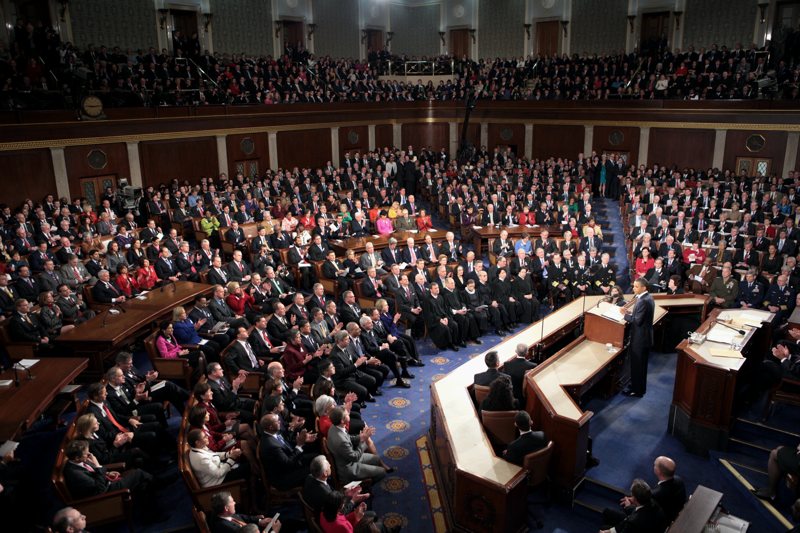
It hasn’t gotten any better, even as President Obama prepares to deliver his final State of the Union speech to a joint congressional session.

Ugly relationship coming to an end

To be blunt, the president didn’t do his part to develop a good working relationship with Congress. I’ve lamented before how the young president never learned how to build upon those relations with his congressional friends. To be honest, the president arguably served too little time in the Senate to have crafted a lot of friendships and political alliances among his fellow legislators.

I had hoped the president could have followed the Lyndon Johnson model of transferring his Senate experience into effective legislative accomplishment.

He didn’t.

However, Congress made it clear that it had no intention of giving any quarter to the president.

So, the president’s final State of the Union speech — which the White House says will be an “unconventional” presentation — isn’t expected to produce any bright lights of hope for a smooth and successful final year of the Obama presidency.

Republicans almost unanimously say that next to nothing will get done in this final full year of Barack Obama’s administration.

Perhaps, then, it will be left to the president simply to declare victory on the accomplishments that his presidency has delivered.

I’m wondering now if the president is going to remind us that Sen. McConnell’s top priority never came to pass.
 

The culling of the fields is about to begin

Leader

The American presidential nominating process is a grueling exercise.

It’s also a useful one.

The Iowa caucuses are about to begin in three weeks. Right after we’ll witness the New Hampshire primary elections.

The usefulness comes in the form of the culling of the fields that’s about to commence.

The candidates at the back of the Republican and Democratic packs have been able to retain their campaign viability by insisting that “no votes have been cast.” That argument ends in Iowa.

Who’ll pack it in?

Martin O’Malley will exit the Democratic Party race, leaving the field to just Hillary Rodham Clinton and Bernie Sanders.

On the Republican side, the outcome is a bit murkier.

It has become a battle for third place. The top two spots will go to Ted Cruz and Donald Trump. Third? It’ll be either Marco Rubio, Chris Christie or maybe Jeb Bush. After that, the rest of ’em ought to bail out.

Rick Santorum, Mike Huckabee, Ben Carson, Carly Fiorina, John Kasich, Rand Paul and Jim Gilmore (yes, the former Virginia governor’s still in the hunt) all need to exit the stage.

Of the also-rans, my biggest disappointment would be Ohio Gov. Kasich. He’s got a tremendous substantive argument to make: that he, as House Budget Committee chairman in the late 1990s, helped produce a balanced federal budget by working with President Bill Clinton.

That hasn’t worked with the GOP base, which lusts for the red meat being fed to it by the likes of Trump and Cruz.

The process, though, does produce winners. It’s often not pretty to watch. This year has been ugly, to be sure.

However, the process has worked every four years for as long as most of us can remember.

The serious winnowing of both parties’ fields will commence soon.

Let’s all stay tuned.


What? Discrepancies in Trump’s background?

CCm2tj

Karma can be a bitch.

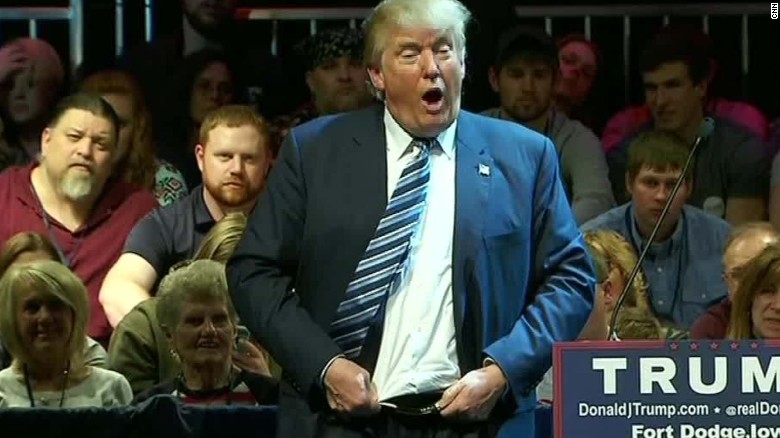
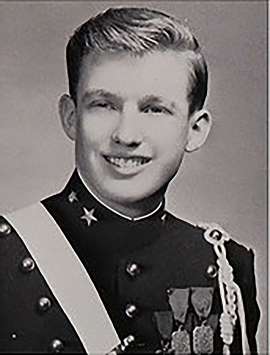
Donald J. Trump’s account of his years at a military academy is now being challenged.

The Republican presidential candidate has portrayed his years at the academy as sufficient preparation for making him commander in chief. Now come reports that Trump’s years in the New York military school weren’t nearly as rosy as he has portrayed them.

Trump had received medical and student deferments that kept him from serving in the military during the Vietnam War. Trump, though, has portrayed his enrollment at New York Military Academy as being the next best thing to serving in the military.

Some former classmates now say that Trump wasn’t nearly as attentive to the students under his command as he should have been . . .  and as he has portrayed himself as being.

Turnabout is fair play, yes? Trump and others have asked questions about Barack H. Obama’s past. His academic records at Columbia University; his birth records.

Now the proverbial shoe is on the proverbial other foot.

How will Trump answer these questions?

Others and I are waiting.


Rubio makes sense on immigration

Senator Marco Rubio of Florida speaks at the Conservative Political Action Conference (CPAC) at National Harbor, Maryland March 14, 2013. Two senators seen as possible candidates for the 2016 presidential election will address a conservative conference where Republicans will try to regroup on Thursday after their bruising election loss last year. REUTERS/Kevin Lamarque (UNITED STATES - Tags: POLITICS) - RTR3EZQO

Lo and behold . . . I heard Republican presidential candidate Marco Rubio make sense on one element of immigration policy.

When the young U.S. senator was serving in the Florida legislature, he backed a provision that would allow the children of illegal immigrants to be granted in-state tuition privileges.

Rubio today reaffirmed that view in an interview with ABC News’s George Stephanopoulos.

You go, Marco!

He was careful — naturally, given the nature of the GOP voter base — to say he doesn’t favor “amnesty” for those who are here illegally. He did say, though, that children who were brought here when they were young, say 5 years of age, and who grew up speaking English and whose only outward loyalty is to the United States of America deserve to be pay in-state tuition at public colleges and universities.

Does that sound familiar? It should. Two former Texas governors — Republicans George W. Bush and Rick Perry — stood tall on the same principle. Perry, though, was pilloried during the 2012 GOP primary campaign for standing on that notion; the TEA Party wing of the Republican Party would have none of it.

I’m no fan of young Marco. However, I was heartened this morning to hear him speak with a sense of humanity and compassion that has been lacking among many in the still-large field of GOP presidential candidates.

Donald J. Trump gets high-fives and hosannas from the base over his plan to round up all 11 million illegal immigrants and toss ’em out of the country.

Meanwhile, at least one of his Republican presidential candidate colleagues demonstrates that the Grand Old Party isn’t speaking with one voice on a critical national issue.


Trump gives ‘credit’ where it isn’t due

donald

World leaders of all stripes have said essentially the same thing about North Korean dictator/madman/goofball Kim Jong Un.

He’s nuts, unpredictable, dangerous.

Now comes Donald J. Trump, the leading Republican candidate for president of the United States, to give Kim “credit” for the ruthless manner in which he disposes of his political enemies.

Does the GOP White House hopeful include the way Kim had his uncle executed? There were reports that he fed his uncle to starving dogs, which then, well . . .  you know.

I’ll repeat once again: Being the leader of the world’s greatest nation requires a certain understanding of diplomatic nuance. Trump keeps revealing that he has no concept — none, zero — of that notion.

He wants to “make America great again”? How is he going to do that? By offering ill-timed words of encouragement to dangerous despots like Kim Jong Un?


Not just ‘un-Republican,’ but un-American

hamid

A woman stood up to protest some comments from Donald J. Trump during a campaign rally for the Republican presidential candidate.

She was booed. Why? Was she being hateful? Did she try to shout down the candidate? Did she present a threat to anyone?

No. She was booed because was wearing a hijab, the traditional scarf that Muslim women wear to shield their hair in accordance with Islamic tenets.

The woman was escorted out of the rally. Kicked out. She left the venue to a chorus of catcalls.

It was a disgraceful display of intolerance.

What did the candidate do to tamp it down? Nothing.

Fellow GOP presidential candidate Gov. John Kasich of Ohio called the event “un-Republican.” Yes. It’s also un-Democratic and, I shall add, un-American.

Rose Hamid is a flight attendant who came to the rally to hear for herself some of the things she’d read about Trump, who launched into a tirade about Syrian refugees being terrorists.

Hamid said later that the characterization was improper and demonstrated the kind of intolerance and hatred we’ve been hearing toward people who practice the Islamic faith. It’s aimed at actual Muslims, not the perverted cultists who have twisted the religion into something unrecognizable to practicing Muslims . . . such as Rose Hamid.

Yet they are the individuals — the terrorists masquerading as Muslims — who draw the fire from political candidates, who use such rhetoric to inflame their supporters against others whose only transgression is to express their faith and to wear garments that give their religious identity away.

Kasich is right to condemn Trump, not just for allowing the ejection of the protestor, but for failing to calm down the haters scattered in his crowd of supporters.


Irony abounds in Cruz citizenship debate

ted-cruz-sexy-eyes

There’s no denying the irony in this growing discussion over whether U.S. Sen. Ted Cruz is constitutionally qualified to run for president of the United States.

To my mind — and to many others who know a whole lot more about constitutional law than I do — there should be no question about the Republican presidential candidate’s eligibility.

He is eligible to run. Period. End of discussion. The Constitution spells it out. He is a “natural-born citizen” whose mother is an American; thus, he is granted U.S. citizenship by birthright, even though he was born in Canada.

The irony?

Well, this issue came up regarding Barack Obama, except that some individuals didn’t believe what Obama had said, which is that he was born in Hawaii. They kept harping on his alleged birth in Kenya. So, what’s the big deal? The president’s mother also was an American citizen; his father was Kenyan.

If either Obama or Cruz — or both of them, for that matter — had been born on Mars, their citizenship shouldn’t be an issue.

The other irony is that Cruz is relying on the opinion of courts comprising unelected federal judges. He calls this matter a case of “settled law.” Strange, actually, that he would say such a thing, given the disdain he expressed for the federal judiciary after the Supreme Court ruled in 2015 that gay marriage is now legal throughout the country, that the Constitution’s equal protection clause in the 14th Amendment applied to gay citizens seeking to marry people of the same gender.

I happen to believe that Cruz is right about the citizenship issue.

It won’t go away as long as Donald J. Trump continues to raise it along the GOP presidential campaign trail. Other Republicans now are beginning to echo Trump’s questioning of Cruz’s eligibility — although this concern seems born more out of Cruz’s rising poll numbers than of actual doubt over whether he’s a qualified U.S. citizen seeking the highest office in the land.

The volume is rising among those who are seeking to stall the Texas Republican’s campaign momentum.

It’s entertaining, to be sure, to watch the irony build on itself as this (non)-issue continues to fester.

I’m wondering: How does President Obama feel about it?

Conservatism takes new activist turn

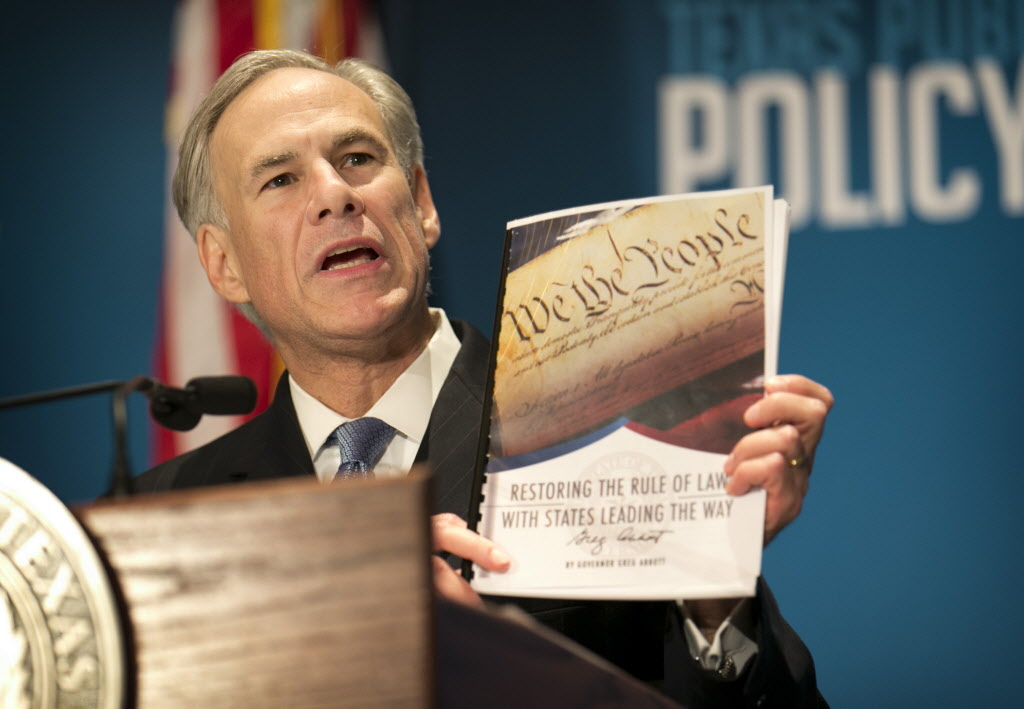
Gov. Greg Abbott calls for a convention of states to amend the Constitution during a speech at the Texas Public Policy Foundation in Austin, Texas, Friday, Jan. 8, 2016. Abbott called on Texas to take the lead in pushing for constitutional amendments that would give states power to ignore federal laws and override decisions by the U.S. Supreme Court. (Jay Janner/Austin American-Statesman via AP) MANDATORY CREDIT

Texas Gov. Greg Abbott calls himself a conservative.

Well, my understanding of conservatism traditionally has meant minimalist government; keep government quiet; don’t upset the status quo; let it ride, man.

Not these days.

Abbott has issued a seriously proactive call to remake the U.S. Constitution. He has called for a constitutional convention to craft some serious amendments to the nation’s governing document.  They include:

  • Disallowing federal law from regulating activities wholly within a single state.
  • Requiring a balanced federal budget.
  • Providing a way to override decisions by the U.S. Supreme Court.
All told, Abbott has offered nine proposals.
My favorite one involves the highest court in the land.
Abbott thinks two-thirds of the states should be empowered to overturn decisions by the Supreme Court. Interesting, yes?
I believe conservatives also believe in what’s called “strict construction” of the Constitution. They want to adhere to what the Founders wrote when they created the federal government.
One of the provisions they allowed was a totally independent federal judiciary. What Gov. Abbott is proposing — in my humble view — removes that a large portion of the independence envisioned by the founders. It puts ultimate authority in court decisions in the hands of state legislatures.
I am hard-pressed to find a more remarkable reversal of the traditional definition of “conservative government.”
What’s being proposed and discussed these days is a reform movement that puts “liberal activism” to shame.

Heading for ‘home stretch’ . . . already?

Horserace

The nation’s political media are misleading the public about the nature of the 2016 presidential campaign.

I’ve lost count of the number of times I’ve heard it said on broadcast and cable TV news shows that “we’re heading toward the home stretch” of the campaign.

What’s at the end? The Iowa caucus and the New Hampshire primary.

Is it me or are the media getting way, way ahead of themselves in declaring that the major-party contests for president of the United States are about to conclude?

I’m scratching my head — even as I write the words contained in this blog post.

The Republican Party primary still has about a dozen candidates running for the presidency. I agree with most “experts,” though, in limiting the front runners to four, maybe five of the GOP candidates. Who are they? Donald Trump, Chris Christie, Marco Rubio, Ted Cruz . . . and perhaps even Jeb Bush.

The Democratic Party primary has become a two-candidate match race: Hillary Rodham Clinton and Bernie Sanders.

So, do the Iowa caucuses and the New Hampshire primary signal the end of the race? Hardly. They symbolize the beginning of it.

I am continually amazed at the shallowness of the media coverage of both parties’ campaigns. The media gripe about the “horse race” aspect of this coverage, yet they continue to focus on it at the expense of serious examination of the candidates’ issues statements.

Oh, sure, the media have had plenty to say about Trump’s immigration plan, his ban-Muslims idea and a tax plan that doesn’t add up. But they couch it in terms of what these things do to his poll standing.

The media keep focusing on whether Clinton or Sanders are leading in either Iowa or New Hampshire.

The Iowa caucus doesn’t represent the end of the campaign. It’s just the beginning. We’ve got a long way to go before the conventions get underway.

What’s more, if none of the Republican candidates can sew up enough delegates to be guaranteed the nomination before the GOP convention begins, well . . . we’re going to have a serious donnybrook on our hands in Cleveland.

The end of the race is at hand? Nope.


Obama vetoes ACA repeal bill; what now?

obamacare-1

Who didn’t see this one coming?

Nobody. That’s who.

President Barack Obama today vetoed a bill that would have repealed the Affordable Care Act and cut federal funds from Planned Parenthood.

This was the mother of political statements. And I’m not talking necessarily about the president’s veto.

I’m referring to Congress’s insistence that the ACA — also known as Obamacare — isn’t working, that it’s an albatross, that it represents a government overreach.

It’s also the president’s signature domestic policy achievement. He said all along — going back to other efforts by Republicans in Congress to repeal the law — that he’d veto any such bill if it got to his desk. It did . . . and he did.

I believe Congress needs at this time to cut its losses. It doesn’t have the votes to override the president’s veto, even with its GOP majority in both legislative chambers. Republicans need a two-thirds majority to override; they don’t have it in the Senate.

We’ve got an election coming up. We’ll have a new president a year from now. Depending on who the parties nominate, Congress might have a dramatically different look than it does today — particularly if the Republican presidential nominee happens to have the name Donald J. Trump.

The current Congress still must work with a Democratic president who — on this issue — has drawn a line deep into the dirt between the White House and Capitol Hill.

The Affordable Care Act is going to stay; moreover, the government will continue to provide public money to Planned Parenthood. Don’t mess with either of them.

Let’s get on to the many other complex issues facing the nation.