Tag Archives: Ronald Reagan

Trump is no Reagan

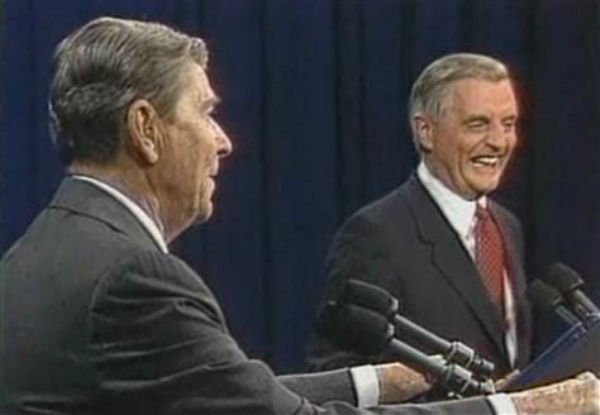
MondaleReagan1984DebateMomentNBCNews_600.jpg.jpg

Donald Trump keeps making bold comparisons between himself and, well, whomever.

Now he says the “revolution” he is leading is bigger than the one led by that one-time actor, turned California governor, turned 40th president of the United States: Ronald Wilson Reagan.

Allow me to differ with that view.

Trump’s contention is false on so many levels.

Ronald Reagan energized disaffected Democrats. They came to be known as “Reagan Democrats” or “Hard Hat Democrats.” They were blue-collar voters who had grown disaffected with their party.

Trump says the current revolutionaries following his campaign have more “intensity” than those who idolized The Gipper.

(Incidentally, I was not among those. But I am guessing you already know that.)

Allow me now to say a word about the nature of Reagan’s message. Yes, it was stern. He took great pleasure and pride in sticking it into the ear of his Democratic rivals. But his call for change had a certain good humor about it. Did that tamp down the intensity of his supporters? Hardly. It made them love him more.

I’m trying to imagine a President Trump (my hands quiver when I type those words) sitting down with political leaders from the opposing party, sharing an adult beverage and a few off-color jokes — as President Reagan often did with House Speaker Tip O’Neill. I can’t get there.

Did Reagan ever call his foes “stupid,” or “incompetent,” or “pathetic”? Did he ever use words like “weak” to describe this country?

He used language much more artfully and with much more nuance. Did that skill weaken the intensity of his supporters? Not even close.

The intensity of the late president’s supporters carried him to two landslide victories — the second of which came within about 2,000 votes of a 50-state Electoral College sweep!

Do you remember that great moment during the second presidential debate in 1984 with Democratic Party nominee Walter Mondale? The first encounter produced several stumbles, bumbles and mumbles from the president. Observers wondered aloud about the president’s mental fitness for the job.

Then came the question during Debate No. 2: Are you up to the job, Mr. President? “I am not going to exploit for political purposes my opponent’s youth and inexperience,” Reagan said.

You know who laughed the hardest at that line? Walter Mondale.

With that, I’ll paraphrase a line made famous by another great American politician, U.S. Sen. Lloyd Bentsen, the Texas Democrat who ran for vice president in 1988.

Mr. Trump, you’re no Ronald Reagan.


The 2016 GOP presidential nominee will be . . .

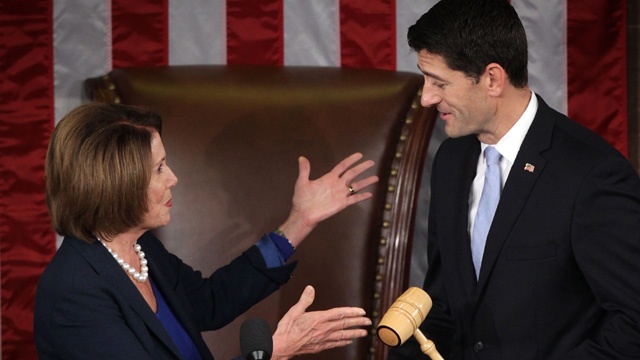
Pelosi-Ryan-jpg

. . .  Speaker of the House Paul Ryan.

OK, I didn’t just make that up. I read about such a scenario in Roll Call, which has put together an analysis that makes a Ryan nomination a distinct possibility.

Ryan had to be dragged kicking and screaming — or so he would have us believe — into the race for House speaker after John Boehner quit abruptly this past autumn. Boehner had grown weary of fighting with the TEA Party insurgents within his House GOP caucus. So, he quit the top job and quit his congressional seat, too.

Ryan emerged as the speaker after laying down some rules for how he wanted to become the Man of the House. He stipulated that he wanted every Republican to want him to take the job.

So, how does this guy become the 2016 nominee?

Roll Call thinks the Republicans might get a brokered convention in Cleveland next summer. None of the candidates still running will have enough delegates to secure the nomination outright. A floor fight will ensue. Someone will come up with the idea that they need a unifying candidate.

Enter . . . Paul Ryan.

There’s one way to look at this: Ryan at one time wanted to be president. He was, after all, the 2012 GOP vice-presidential nominee on the ticket led by former Massachusetts Gov. Mitt Romney. I’m going to presume that Ryan agreed that he could serve as president if by chance Romney got elected and something were to happen that would require Ryan to step into the top job.

It’s not beyond reason, thus, to believe Ryan still harbors latent presidential aspirations. Right? Right.

But apart from how Republican convention delegates settle this madhouse contest this summer, the very idea of a political convention actually being tossed into pandemonium intrigues the daylights out of me.

The closest a major-party nominating convention came to that level that I can remember was in 1976, when former California Gov. Ronald Reagan mounted a challenge to President Ford’s expected GOP nomination. The president prevailed, but only after some serious dickering on the convention floor.

Will this year’s Republican convention become the circus that the parties used to experience?

I hope so. It’s great political theater.

Scalia recuse himself from race cases? Not a chance

pelosi

U.S. House Minority Leader Nancy Pelosi is angry at Supreme Court Justice Antonin Scalia.

She’s mad at remarks that Scalia made during oral arguments involving an affirmative case involving the University of Texas. Scalia contended that African-American students might not do as well academically at UT as they would in “slower-track schools.” The statement has drawn much criticism against the outspoken justice.

Pelosi thinks Scalia now must recuse himself from future discrimination cases because of his bias.

Let’s hold on, Mme. Minority Leader.

Don’t misunderstand me. I dislike Scalia’s world view as much as the next progressive. But calling for him to recuse himself from these cases goes way too far. According to Politico: “It’s so disappointing to hear that statement coming from a justice of the Supreme Court. It clearly shows a bias,” Pelosi said. “I think that the justice should recuse himself from any case that relates to discrimination in education, in voting, and I’m sorry that he made that comment.”

Consider something from our recent past.

The highest court in the land once included two justices who were philosophically opposed to capital punishment. The late Justices Thurgood Marshall and William Brennan voted automatically in favor of capital defendants’ death sentence appeals. If a death row inmate’s case made it to the Supreme Court, he or she could depend on at least two votes in favor of the appeal.

In fact, Justice Marshall was particularly blunt about it. He said repeatedly that he opposed capital punishment, yet he took part in those appeals.

Did he ever recuse himself? Did pro-death penalty forces make the case that he should? No to the first; and unlikely to the second.

Federal judges — and includes the nine individuals who sit on the highest court — all have lifetime jobs. That’s how the Constitution set it up. Presidents appoint then; the Senate confirms them and then they are free to vote their conscience.

Scalia need not recuse himself. He is free — as he has been since President Reagan appointed him to the court in 1986 — to speak his mind. He has done so with remarkable candor — and even occasionally with some callousness — ever since.


GOP turns on itself over immigration

anti-immigration

It’s fascinating to the max to watch what has happened to today’s Republican Party.

It is at war with itself. Immigration is the catalyst that has ignited the spark among the gaggle of GOP pols seeking the party’s presidential nomination.

There once was a time when Democrats were torching each other. The Vietnam War split Democrats between the Hawk Wing and the Dove Wing. Stay the course in ‘Nam or get the hell out of there … immediately if not sooner!

Well, the intraparty division sent Democrats into the presidential electoral wilderness for a time. Then Watergate occurred and the nation elected Democrat Jimmy Carter for a single term in 1976; Republican Ronald Reagan’s election in 1980 launched a 12-year run of GOP White House control.

Democrats are relatively united these days.

Republicans? They’re fighting like the dickens over immigration.

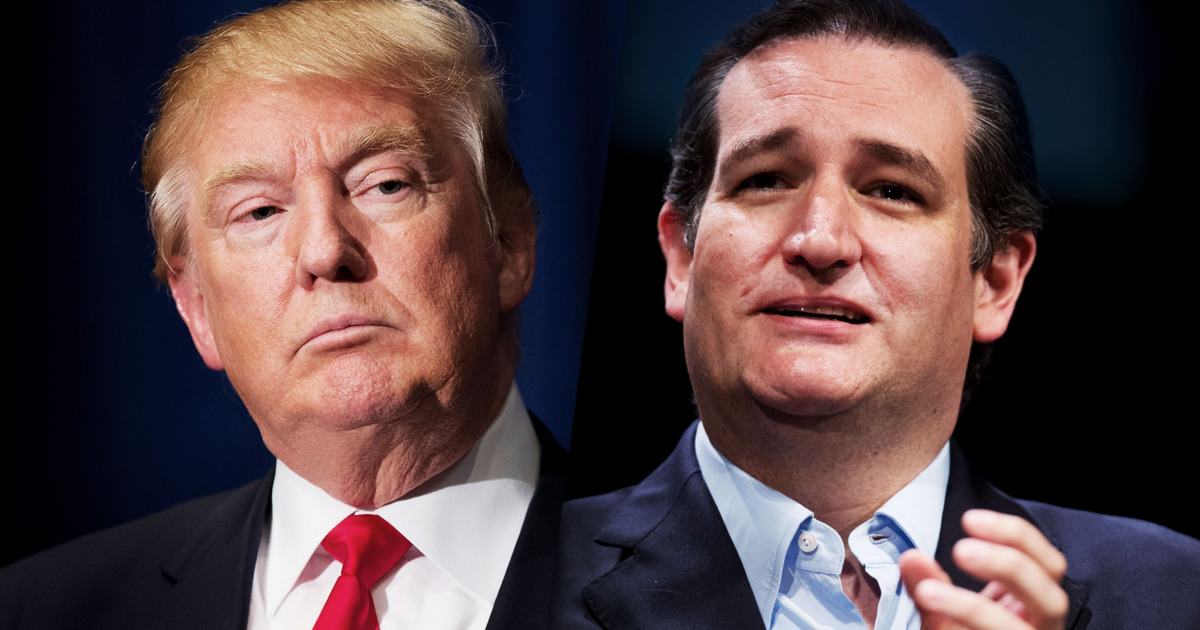
Two of the main protagonists are Sens. Ted Cruz of Texas and Marco Rubio of Florida. Rubio has accused Cruz of endorsing “amnesty” for illegal immigrants.

Cruz has fired back with his own allegations that Rubio has flip-flopped on the issue.

It’s all quite fun to watch, at least it is to me.

Cruz and Rubio both are playing semantics over what they — and each other — have said about immigration. Cruz seeks to become the most conservative of the Gang of 14 (GOP presidential candidates) on the issue. I don’t know what Rubio is trying to do, other than trying to muddy up Cruz’s stated positions on immigration.

They both share a common dislike of President Obama’s policies, which include granting temporary amnesty to millions of undocumented immigrants while sparing the children who were brought here by their parents illegally the misery of being kicked out of the only country they’ve ever called home; that would be the United States of America.

I don’t know when the pendulum will swing back to the old ways of Democrats tearing each other’s lungs out. I guess it will … eventually. For now, though, leave it to those silly Republicans to provide the entertainment.


What’s happened to the budget deficit?

BudgetDeficit

Remember the federal budget deficit?

Do you also remember how Republicans used to rail against it and how Democrats used to ignore it? Republicans said the deficit would keep growing and would bankrupt the nation. Democrats insisted that the government needed to “invest” public money on public projects.

Flash back to the 1980 presidential campaign.

  • GOP nominee Ronald Reagan’s campaign ran TV ads that parodied House Speaker Tip O’Neill and the Democrats in Congress as wasteful spenders. President Carter oversaw a deficit that “ballooned” to about $40 billion.

Reagan won the election in a landslide.

What happened then? President Reagan fought for tax cuts and exploded defense spending. The result: the federal deficit effectively tripled.

Let’s move ahead to the 1992 election.

  • Democratic nominee Bill Clinton ran against President George H.W. Bush, proclaiming “It’s the economy, stupid.” The nation was struggling through a recession. Clinton won the election. Then the Republicans took control of Congress after the 1994 mid-term election.

What happened after that? The Democratic president, working with the Republican-led Congress, balanced the budget. Clinton left the White House in 2001 and the budget was running a hefty surplus.

  • Republican George W. Bush was elected in 2000. Then came the 9/11 terrorist attacks. President Bush pushed through more tax cuts, but then took the nation to war against terror groups overseas. The result of that effort? The deficit returned and exceeded $1 trillion annually.

But the argument evolved into something else. It didn’t matter that the deficit was exploding, the president and his allies contended, because it constituted a minuscule portion of the Gross Domestic Product. Didn’t the vice president at the time say, “Deficits don’t matter”?

Well, I guess they did.

  • OK, now we come to the 2008 election. The economy has tanked. Financial institutions are going under. The housing market has crashed. So has the auto industry. The deficit was exploding.

Democrat Barack Obama won the election. He got Congress to kick in billions of dollars to jump-start the economy and bail out some of the leading industries.

What happened then? The economy began to recover. The jobless rate, which zoomed to 10 percent, began inching its way back down. Today it stands at 5.1 percent.

Oh, the deficit? It’s been cut by two-thirds.

It’s still too great. It’s a long way from the surplus delivered by President Clinton and his friends in the GOP-controlled Congress.

However, the traditional argument delivered by Republicans that deficits are bad and that Democrats are to blame for spending us into oblivion no longer is relevant.

Just think: The presidential campaign that’s unfolding before us has been called one that defies all conventional wisdom.

I believe the history of the federal budget deficit suggests conventional wisdom got tossed aside long ago.


Tilting left, most of the time

conservative-liberal-road-sign

Readers of this blog, specifically those with a conservative political outlook, have at times accused me of being a flamer, a lefty progressive.

One reader keeps referring to “liberal logic” when trying to counter whatever argument I seek to make.

It’s time, therefore, to set the record straight on a few issues.

On abortion, I believe in a woman’s right to control her own body. Do I condone abortion? No. Neither do I believe government should set laws that criminalize someone from making an intensely personal and heart-wrenching decision. I could not counsel any woman to terminate a pregnancy, but I will never condemn her for making that decision.

Wealth redistribution runs counter to my capitalist instincts. Bernie Sanders, a Democratic presidential candidate, makes no bone about it. He’s a socialist and he’s damn proud of it. Good for him. He wants to share the wealth. I don’t have much wealth, but my wife and I do have a nest egg that’s building and we intend to keep our hands on it.

War or diplomacy? I’ll take diplomacy every time whenever possible. I am weary of Republican critics of Barack Obama who contend he is too timid about the use of force against our adversaries/enemies. I have had a tiny exposure to war — back in the late 1960s. Some of you might remember that time. What angers me more than anything in this regard is hearing the get-tough talk from chicken hawks in Congress who fought like hell during the old days to avoid going to war while many of the rest of us were answering the call to duty.

I struggle with the term “gay marriage.” I happen to be a traditionalist on this matter. But I do know what the U.S. Constitution says about “equal protection.” It guarantees that anyone is entitled to marry whomever they wish, without regard to their sexuality. If that’s what the Constitution states — and if the Supreme Court affirms it, which it has done — then I accept the document’s intent.

I am not a partisan Democrat. Texas voting law gives people the opportunity to choose which primary in which they can cast votes. In the two-plus decades I’ve lived in the heavily Republican Texas Panhandle, I’ve cast many votes in the Republican primary. Why? Because here, the Republican primary is where the action is. Democrats often don’t field candidates for local offices. I want my voice heard on races involving county government and the Legislature. I’ll acknowledge here, as I’ve done before, that I haven’t yet voted for a Republican for president since I cast my first vote in 1972. I do, though, split my ticket liberally.

Rich people should pay more in taxes than middle-income folks. I have no difficulty insisting that wealthy Americans should pay more per capita than those of us who haven’t acquired as much wealth. I don’t want them to pay all of their wealth, just enough to help fund government. Hey, they can still be rich!

Finally, I believe in good government. I don’t believe necessarily in big government. I believe government can be a force to help people. I don’t believe, as Ronald Reagan said upon taking the presidential oath in 1981, that government “is the problem.” I want our elected leaders in Congress to stop using their anger at certain agencies to threaten to shut down the entire government. That is demagoguery at — or near — its worst.

There could be more examples. I’m sure some of you will challenge these few items. I just felt the need to lay it out there.

Do I lean left? Sure. There you have it.

“Four more years!” for Obama?

There can be no doubt about this: Barack Obama’s critics went ballistic when the president said he could win a third term in the White House if he had the chance to seek it.

He reminded his hosts in Ethiopia today that the U.S. Constitution prohibits him from seeking another term. But then he said he’s been a “good president” and well might win in 2016.

http://www.cnn.com/2015/07/28/politics/obama-third-term-win-ethiopia/

Ah, yes. And he’d say anything about it if he thought he’d lose? Hardly.

The 22nd Amendment was enacted in 1947, spearheaded by a Republican congressional majority that was alarmed by the four elections won by Democratic President Franklin Delano Roosevelt. They feared an “imperial presidency.” An earlier Democrat, Grover Cleveland, sought the office over the course of three consecutive elections, but lost his bid for re-election to a second consecutive term in 1888; he would come back four years later and be elected to a second term.

I am not at all thrilled about the term-limits provision for presidents, although I understand that the stress of the office has persuaded almost all the men who’ve held the office to bow out after a second term.

Still, Barack Obama isn’t the only recent president to look wistfully at the possibility of a third term.

Republican President Ronald Reagan said as much as his second term came to an end in January 1989. Twelve years after that, Democratic President Bill Clinton also mused aloud over whether he could win a third term.

I don’t recall President George W. Bush ever broaching the subject in public, given that the economy was collapsing when he left office in January 2009.

Whatever the motive for bringing it up this time, President Obama well might have been talking way past his audience in Africa and sticking it in the ear of his foes back home.

I’m quite sure they heard him … loud and clear.

Where have you gone, Capitol Hill collegiality?

A Facebook exchange with a friend today brought to mind a missing ingredient in today’s political recipe.

Collegiality is gone. Maybe forever, for all I know … although I hope it makes a comeback.

The exchange was precipitated by a blog I posted about President Reagan’s 11th commandment, which the late president decreed should prohibit Republicans from speaking ill of other Republicans.

https://highplainsblogger.com/2015/07/23/what-happened-to-the-gippers-11th-commandment/

My friend responded by saying the blog post reminded him of why he still missed The Gipper. He added that Reagan and the late House Speaker Tip O’Neill, the tough Boston Democrat, liked each other’s company, even though they agreed on virtually nothing.

This all brings to mind some other unusual political friendships on Capitol Hill: Republican Orrin Hatch and Democrat Ted Kennedy; Republican Bob Dole and Democrat Daniel Inouye; Republican Barry Goldwater and Democrat George McGovern; Republican Everett Dirksen and Democrat Lyndon Johnson. (Indeed, the Dirksen-Johnson friendship carried over into LBJ’s presidency.)

Two of those friendships — Dole and Inouye, and Goldwater and McGovern — were forged by common experiences during World War II. Dole and Inouye suffered grievous injury fighting in Europe and spent time in rehab together, where they formed a friendship that would last a lifetime; Goldwater and McGovern both flew combat missions as Army Air Corps pilots and they carried that common bond with them into the Senate.

These are the kinds of relationships we don’t see these days.

What we see instead is a continuation of what then-House Speaker Newt Gingrich once admonished of his Republican troops in the House of Representatives. It was to treat Democrats as the “enemy of normal Americans.”

The enemy? Yes, that was the word he used.

The parties today seem to have carried that outlook well into the 21st century.

It’s shameful in the extreme and it has resulted in the kind of gridlock that stalls the progress of worthwhile legislation. Democrats sought to throw roadblocks in front of Republican President George W. Bush and we’ve seen the payback in the form of even more intense opposition from congressional Republicans who seek to block everything that Democratic President Barack Obama pushes forward.

Each side is pulled away from the center by extremists. “Compromise” has become a four-letter word. Both sides ignore the basis of how legislation is conceived, created and completed.

Remember when Sen. Mitch McConnell declared in 2009 his “main goal” would be to make Barack Obama a “one-term president”?

There you have it. The Age of Collegiality has given way to the Age of Confrontation.

And they call this “good government.” Give me a break.

What happened to the Gipper’s 11th commandment?

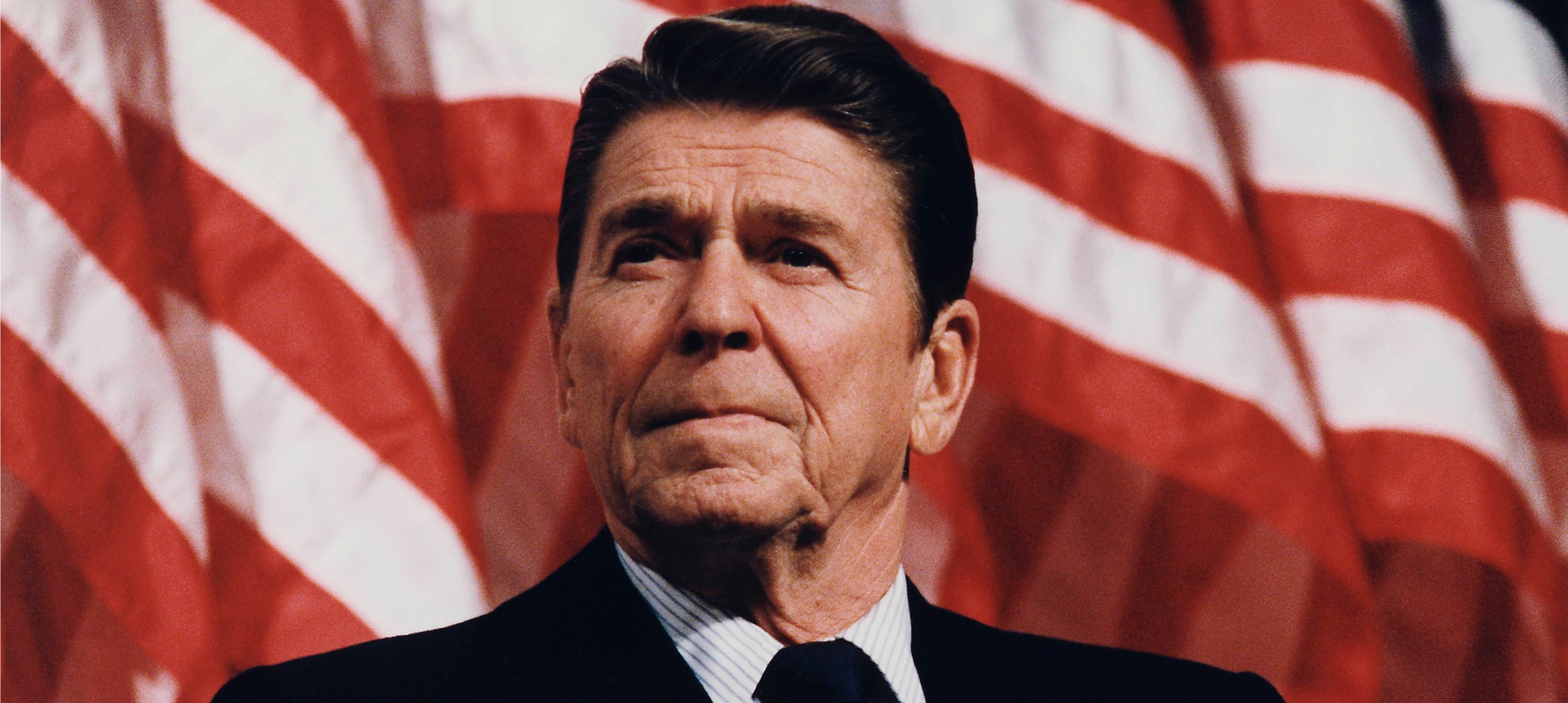
regean71615

Republicans these days fall all over themselves to wrap themselves in the mantle of the late Ronald Reagan, 40th president of the United States and one of the truly “transformative figures” of 20th century American politics.

OK, so the benefits of the transformation can be debated, and they certainly have been since Jan. 20, 1981, when the Gipper took office after thumping President Jimmy Carter in that historic landslide.

But why have we forgotten one of Reagan’s most cherished mantras? It’s the 11th commandment, in which the president urged his fellow Republicans to “not speak ill of other Republicans.”

Welcome to today’s reality, Mr. President — wherever you are.

One of your political descendants, Donald Trump, has tossed the 11th commandment into the crapper.

He’s trashed Jeb Bush for being a “lightweight,” Lindsey Graham for being an “idiot,” Mitt Romney for being a “loser,” John McCain for not being a real war hero, Rick Perry for wearing glasses in an effort to “make him look smart.”

There will be others who’ll receive verbal grenades from Trump.

And yet …

With all of that embarrassment spewing out of Trump’s mouth, he continues to enjoy relatively high poll ratings among all the GOP candidates running in 2016.

I find it impossible to believe that the Trump supporters actually want to disinherit the legacy that President Reagan left behind. However, by continuing to support this clown, that’s precisely what they’re doing.

Ronald Reagan sought to build a stronger Republican Party, partly by encouraging GOP pols to refrain from tearing down their fellow Republicans. He wanted a positive image to carry them through.

The strategy worked, more or less.

Now comes Donald Trump to rewrite the rules as he sees fit.

It’s a new day, yes?

Of course the question was intended to offend

Major Garrett, CBS News’s chief White House correspondent, and I have something in common.

We both worked for the same person, although at different times.

How’s that for name-dropping?

Garrett went to work for the Amarillo Globe-News back in the old days. The then-editor of the paper, Garet von Netzer, hired him; von Netzer later would become publisher of the paper and then he hired yours truly, although long after Garrett had moved on.

Having laid down that useless predicate, let me now say that Major Garrett asked a patently offensive question of President Obama, to which the president responded appropriately.

The question involved four Americans held captive in Iran and Garrett wondered how the president could be “content” that they’re still being held on trumped-up charges while he is “celebrating” the nuclear deal worked out with the Islamic Republic.

http://www.politico.com/story/2015/07/obama-major-garrett-shuts-down-press-conference-120156.html?hp=b2_r1

Obama took offense at the tone of the question. He scolded Garrett, saying he “should know better” than to ask a question that contained “nonsense.”

The president said he isn’t “content” over the Americans’ continued captivity and said he and his team are “working diligently” to secure freedom for the individuals.

What irks me about the question and its aftermath is how Major Garrett insisted it wasn’t intended to ruffle the president. He didn’t apologize and he said it was not asked to call attention to himself.

May I be blunt? That’s pure baloney.

That’s how it goes among the White House press corps. It’s always about getting in a question intended to call attention to the inquiry and to the person making it. Such gamesmanship has been going on for, oh, since the beginning of these televised events dating back to the days when President Kennedy introduced them to the public and turned them into some form of entertainment.

CBS’s Dan Rather famously sought to get under President Nixon’s skin during the Watergate scandal; ABC’s Sam Donaldson did the same thing to President Reagan over the course of many years; Fox’s Ed Henry does the same thing today with President Obama.

Well, now Henry and others have company in the “gotcha” hall of fame.

Major Garrett asked an appropriate question. He just inserted a certain word — “content” — that framed it in a way that got Barack Obama’s dander up.

I would bet that was his intent all along.