Category Archives: media news

VP used his private e-mail server? Why, I never …

Do you mean to say that Vice President Mike Pence, when he was governor of Indiana, used his private e-mail account to conduct public business?

Moreover, do you assert that then-Gov. Pence’s private server was hacked and that some sensitive material might have gotten out, possibly into the wrong hands?

OK. Where are the calls to “Lock him up!” Do you hear them? Neither do I. Nor do I expect to hear them.

Still, this is pretty serious stuff. If it was serious enough for those on the right to chant “Lock her up!” when it involved Hillary Rodham Clinton’s use of a private server while she was secretary of state, then does the former governor of one of our 50 states deserve to be roughed up in such a manner?

The Indianapolis Star first reported it.

Pence’s office said other Indiana governors had used their private servers as well. I guess that means it was OK for Pence to do it. Indiana law doesn’t prohibit such an occurrence. For that matter, there’s no federal law that prohibits secretaries of state from doing so, either. Indeed, Clinton said previous secretaries had used personal e-mail accounts.

I do not yet know to what extent the Indiana governor’s office produces material that would jeopardize national security. As for Clinton, her use of a private account was scrutinized thoroughly by the FBI, which determined — not once, but twice — that she didn’t do anything illegal.

This matter involving the vice president, though, does interest a lot of us because he was so very vocal during the 2016 presidential campaign about Clinton’s e-mail habits.

Karma can bite one right in the rear end.

NPR far from being a ‘propaganda’ vehicle

I hate disagreeing with one of the great editorialists of our time, but I feel the need to make a point or two about a news medium that is about to expand its presence in the Texas Panhandle.

Paul Greenberg, a winner of the Pulitzer Prize and a man I consider to be a friend, has referred to National Public Radio as “National Propaganda Radio.”

Ouch, man!

Greenberg is a noted conservative columnist who works these days for the (Little Rock) Arkansas Democrat-Gazette. So, his view of NPR perhaps is tainted a bit by his own political leaning.

The Panhandle version of NPR, High Plains Public Radio headquartered in Garden City, Kan., is set to launch an expanded news/information service that will be located at 94.9 FM on the radio dial. It will broadcast news 24/7. HPPR is having a ceremony on Monday at its downtown Amarillo office to mark the occasion.

This is a big deal on a number of levels.

Understand that the Texas Panhandle is as right wing in its outlook as any region in the country. It once was known to be fertile ground for isolationist groups such as the John Birch Society, the folks who disdain the United Nations, fearing it’s a cover for a worldwide takeover of every nation’s sovereignty.

But HPPR sought contributions from listeners in the region to launch the all-news system. It received them.

Public radio long has been the bogeyman of right wingers, who insist that it’s nothing but a liberal mouthpiece, that is spouts lies, tilts the news toward the left, that it serves as a propaganda organ for squishy liberal thinkers.

As Col. Sherman T. Potter would say: buffalo bagels!

A friend and former colleague of mine who used to work at HPPR in Amarillo once told me that NPR’s gurus made sure that on-air news presenters and reporters avoided using the term “reform” to describe the Affordable Care Act. “Reform,” my friend said, implies an improvement over existing policy and NPR wanted to be sure to avoid the appearance of bias in its reporting of this highly controversial public policy. NPR’s preferred term was “overhaul,” he said. Fair enough.

I learned long ago when I started my career in print journalism that bias — without exception — is a product of one’s own world view. If you disagree with someone else’s view, then that person is “biased.” One rarely sees or hears of people acknowledging their own bias. I received a good bit of that sort of criticism during nearly four decades in journalism, most of which I spent writing opinions for newspapers.

Do I have my own bias? Sure I do. Do I gravitate toward certain news media over others because I perceive some media taint their news with “bias”? Yes again.

Public radio, though, is a different animal altogether. Its presentation of news is as fair as fair gets. It even has fans and followers who often don’t want to acknowledge it.

I recall a conversation I had with a key aide to U.S. Rep. Mac Thornberry, the Clarendon Republican who has represented the 13th Congressional District since 1995. This source — who also happens to be a friend — actually whispered to me over the phone that many on Thornberry’s staff “listen to NPR.”

Why are you whispering? I asked. My friend said, “Oh, I don’t know. It’s just what we do around here.”

Fear not. NPR isn’t out to poison anyone’s mind. It’s here only to provide news we can use … in whatever way we choose.

And it damn sure isn’t propaganda.

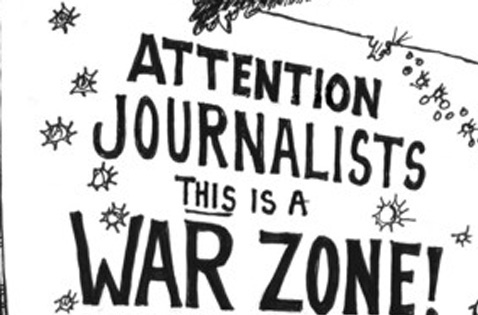
Journalists enter increasingly hostile environment

Those of who toiled as journalists — whether print or broadcast — have been forced to cope with the perception that the public hasn’t thought too much of us and the work we do.

There was a longstanding joke in the old days that reporters and used-car sales reps battled it out for the bottom spot on the public opinion totem pole.

These days, we now have the president of the United States tossing dung on top of reporters, calling them the “enemy of the people,” accusing them of outright dishonesty, suggesting they conspire to make up “fake news” and peddle it as the real thing.

Man, it’s even tougher these days to do the job I did for nearly 37 years.

I recently made the acquaintance of two young reporters for the Amarillo Globe-News, my final stop along my lengthy journalism journey — which ended on Aug. 31, 2012. They are both earnest and eager young reporters. I don’t know this as fact, but my sense is that the AGN is their first job out of college.

It’s a different type of profession now than it was when I got pointed in that direction way back when, before The Flood, or so it seems.

I never considered myself to be anyone’s “enemy.” My desire was to make a difference in the world and to chronicle events in my community and report them to the public. I spent most of my career in opinion journalism, but many of the principles that apply to reporting — such as fairness and accuracy — surely applied.

That was in the early 1970s. I had just finished a two-year hitch in the U.S. Army. I came home in the late summer of 1970, settled in with Mom and Dad and prepared to re-enroll in college the following January.

One evening, at dinner with my parents, Dad asked me if I had considered what my college major should be. I said I hadn’t thought it through. He asked, “Have you considered journalism?” I asked him, “Why that?”

He complimented me on the letters I wrote from Virginia and Vietnam, where I had served during my time in the Army. He called them “descriptive” and said he would share them with family members and friends. He thought journalism would be a good fit, enabling me to put my writing ability to good use.

“Sure thing, Dad,” I said. “I’ll consider that.” I did. I enrolled. I signed up for some mass communications classes. The bug bit me in the rear and, by golly, I was hooked. Of course, I learned right away that journalism isn’t just about whether one can write clearly; one needs to be able to learn how to gather information and determine its importance to the public.

I wonder today how many parents are having that kind of discussion with their college-bound children. I wonder if moms and dads are telling their kids to pursue this craft. Or have they bought into the tripe being peddled by the president that to be a reporter is to declare war on “the people,” to be their “enemy.”

For that matter, did those two young reporters I met recently whether they got that kind of pep talk from Mom or Dad at the dinner table.

The craft is changing rapidly. Newspapers are emphasizing their “digital content.” They are becoming — to borrow a distasteful term — “click whores” that are more interested in how many people click on their websites than in the number of people purchasing a newspaper.

I do wish all young reporters the very best as they seek to make their own way in this changing — and increasingly hostile — climate.

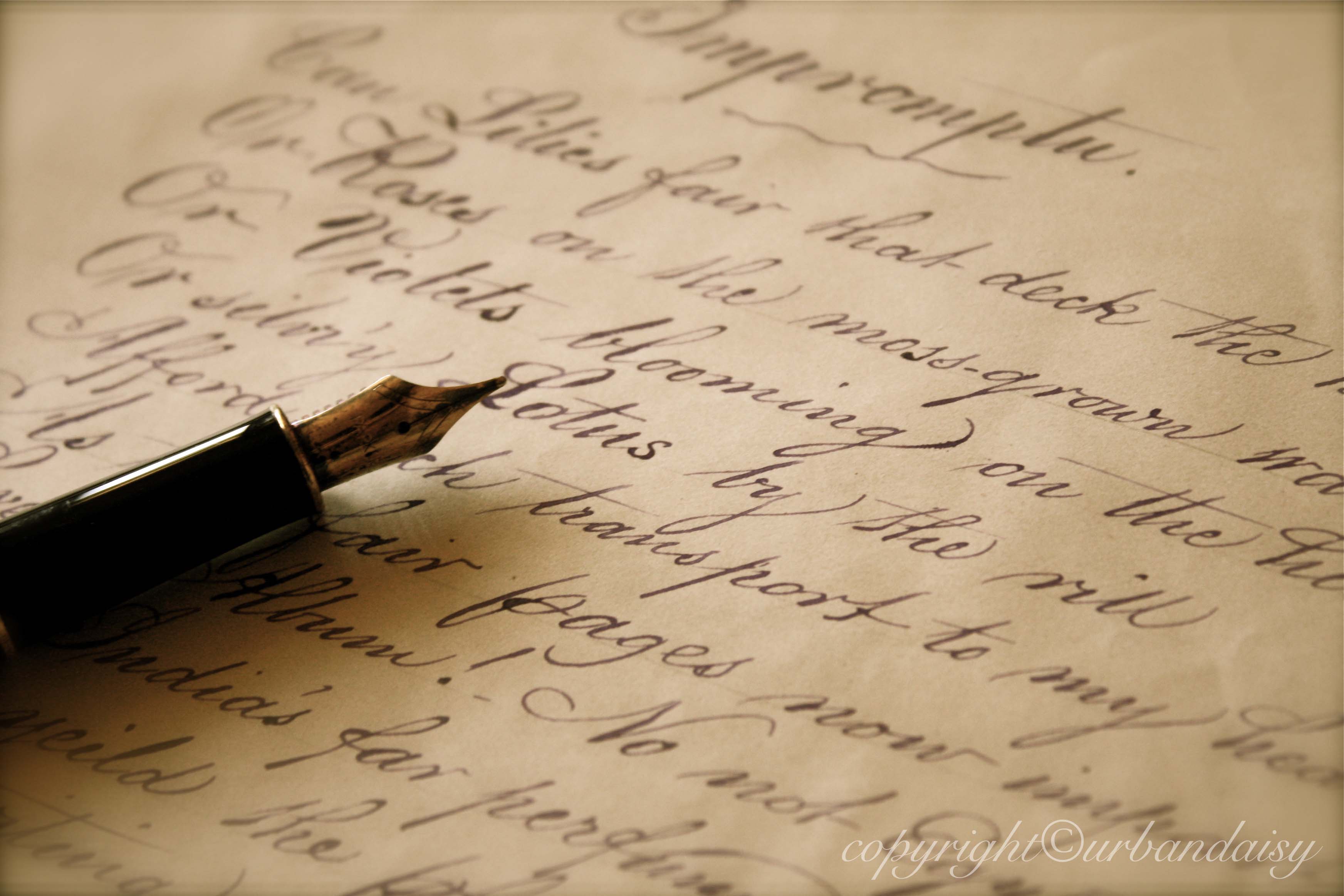
Penmanship: It’s a goner

My day is almost over, but before “I lay me down to sleep,” I want to offer this minor regret about the craft I pursued for 37 years.

My handwriting has gone straight to hell.

I was blessed with good penmanship as a child. I got good grades from my elementary school teachers who used to actually grade students’ penmanship. My parents both had exquisite penmanship. I have in my possession a stack of letters Mom wrote to one of her brothers in the late 1940s. Her handwriting was impeccable.

I came of age with that kind of handwriting. I was inducted into the Army in 1968 and wrote letters home constantly. Dad would share them with friends and other family members.

I came home from the Army in the summer of 1970, re-enrolled in college in January 1971 and started taking mass communications classes.

I became a reporter, which required those of us in the profession at the time to learn how to write rapidly. I had to take copious notes from subjects I would interview. When one has to write like that so frequently, it stands to reason that one’s penmanship is going to suffer.

I finished school, got started in journalism. I kept writing quickly. My handwriting kept deteriorating.

Now? It’s shot all to hell. My wife needles me good-naturedly about it on occasion. She remembers my good penmanship.

Yes, I know that penmanship no longer is even taught in school these days. Children operate handheld “devices” to communicate. Many of them can’t tell time by looking at an old-fashioned clock dial.

My handwriting got so bad that I actually fantasized about some judge issuing a subpoena ordering me to turn over my notes. Hah! Go ahead and try to decipher this scribble, Your Honor!

But I do regret that I no longer can write with precision.

Mom and Dad no doubt would be unhappy with this admission.

Comfortable in this retirement skin

This is the latest in an occasional series of blog posts commenting on upcoming retirement.

Today is Monday. It’s a “work day” for those who still have to work for a living.

It’s also a day in which I made a realization as I walked down the street to collect my mail, before I ran an errand to purchase a couple of musical tickets for my wife and me. It was the realization that I do not miss going to work each day.

I am now entirely comfortable in my retirement skin.

I still work a part-time job. There might be another one resurfacing down the road. However, the idea hit me like a slap in the face today that I no longer miss the daily grind, the deadline pressure associated with the craft I pursued for 37 years.

I damn sure don’t miss the phone calls from those who dislike something I wrote, some of which ended with someone impugning my integrity, my patriotism … and even my religious faith.

Daily journalism delivered many gifts to my family and me over many years. It enabled me to do something I still love to do, which is to share my opinions with others and to write editorials on behalf of the newspaper for which I worked. It provided me with a comfortable living — even as I was forced to take two cuts in pay during the latter years of my employment as my corporate employer struggled to rid itself of the mountainous debt it had accrued.

My job gave me the opportunity to see and do things most folks don’t often get to do: landing atop an aircraft carrier and then being catapulted off the deck is one of those things; flying over an erupting volcano is another; attending and reporting on two presidential nominating conventions ranks up there, too.

That’s all in the past. I remember the vast bulk of my career with great fondness. The final years? Well, not so much. The end of it and how it occurred? Not at all.

These days I am free to run errands during the middle of the work day, in the middle of the week. My wife and I avoid the crowds that way, you know?

This new life also enables me share these views with you on this blog, which keeps me — more or less — in the game, such as it is.

More travel awaits, too.

Yes, this retirement life is getting more fun all the time.

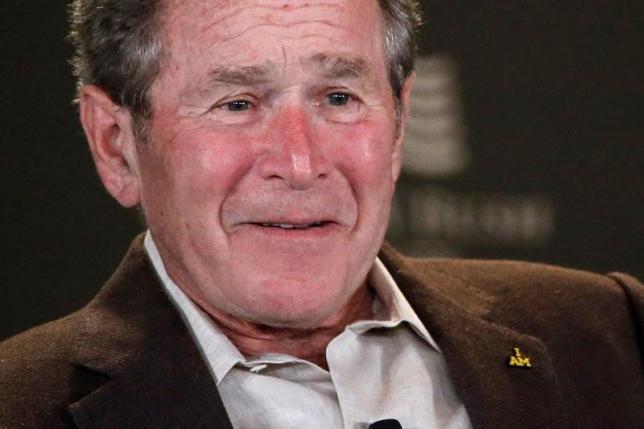
‘W’: Free press is ‘indispensable to democracy’

Maybe you remember the bumper stickers with President George W. Bush’s face on them, with the caption: Do you miss him?

The message was meant as a dig at President Barack H. Obama.

Well, I didn’t miss him then. I do miss him now that a new president is in charge … and who’s decided to wage open war against the media.

President Bush said on “Today” that a free and strong media are “indispensable to democracy.”

Trump doesn’t grasp the notion that the media play a critical role in assuring that public officials — even the president of the United States — always stay on the straight and narrow.

“I consider the media to be indispensable to democracy. … Power can be very addictive,” he told NBC’s “Today.” Do you think?

George W. Bush is among a handful of men who have held those reins of power. He did so for two terms. While his record is a mixed one, he always seemed to comprehend the limits inherent in the power of the presidency.

Two presidents later, we have a guy in the White House who is trying to manipulate the media in ways most of never have seen. He seeks to shut out major media organizations from press briefings; he seeks to curry favor with “friendly reporters”; he blasts reporters and organizations openly for being “dishonest” and purveyors of what he calls “fake news.”

The First Amendment guarantees a “free press.” It prohibits the government from interfering in the media’s effort to do their duty.

Trump doesn’t get it. President Bush does get it. “We need an independent media to hold people like me to account,” “W” said.

Do I miss the 43rd president?

Yes. I do.

Feeling a bit self-conscious

I am feeling a little self-conscious about one aspect of this blog I write.

It involves the way I distribute it. I use several social media to disseminate my musings about this and/or that. One of them is Facebook.

This week a young man with whom I am acquainted complained about the politicization of Facebook. He told he has grown weary of all the back and forth, give and take, the jousting over political matters on a social medium that — as he understood it — isn’t intended for such discussion.

“It’s supposed to be a place where people ‘congregate,'” he told me.

True enough.

I mentioned to him that I distribute my blog through Facebook and other social media; I don’t think he reads the blog, so perhaps he learned something about what I do in my “spare time.” The blog does produce its share — or more than its share, perhaps — of comments from those who spend a lot of time reading other people’s posts. They engage each other. They take me to task for my posts; others of them endorse whatever I am saying. They argue with each other, they get under each other’s skin.

I choose essentially to stay out of that kind of repartee. I prefer to post the item on my blog and then fire it off on Facebook, Twitter, LinkedIn,Google and Tumblr.

I don’t intend to politicize Facebook with these posts. I merely intend to get as much exposure as I can for my blog, which I enjoy writing immensely.

This exercise, which I pursue multiple times a day, is a form of therapy for me. It keeps me engaged in public affairs and the news of the day.

Sure, my blog content is mostly about politics and public policy; it’s also about slices of life and life experience — including retirement and grandparenthood. And, yes, I enjoy writing about our adorable puppy, Toby.

Perhaps my sharing this fit of self-consciousness will help clear my head — and my conscience.

Actually, I feel a bit less self-conscious at this moment than I was when I began writing this post.

See? The “therapy” works!

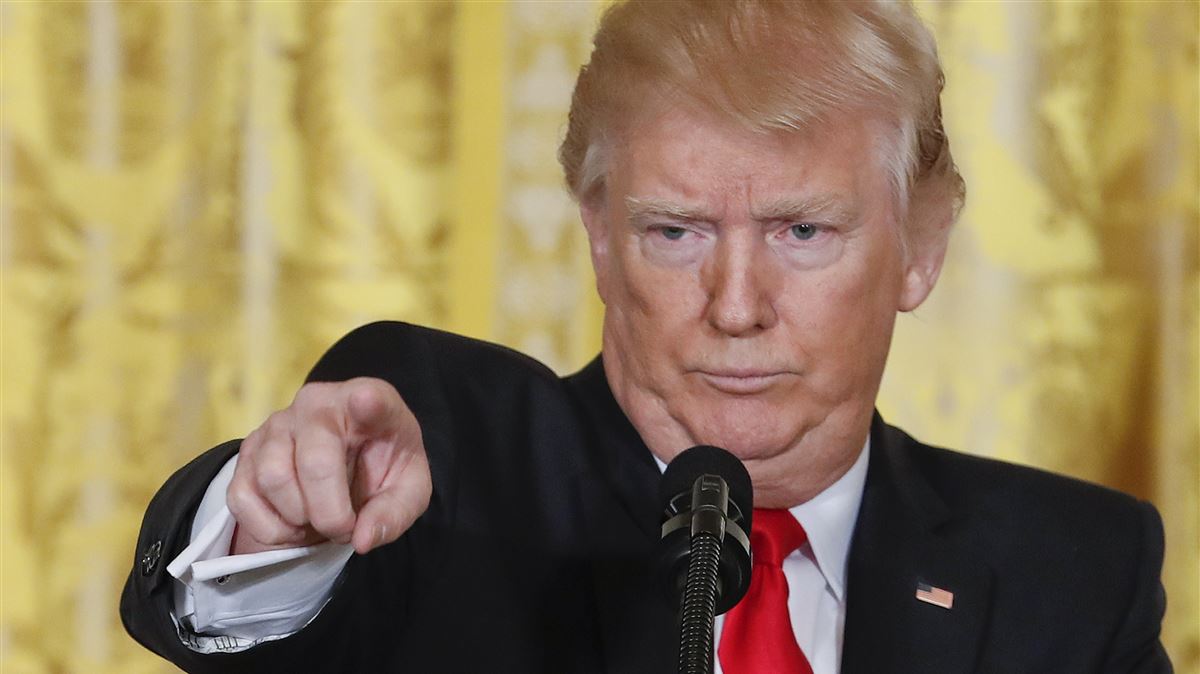
Trump declines to mingle with ‘the enemy’

We might have seen this one coming.

Donald J. Trump announced today he won’t attend the annual White House Correspondents Dinner, an event that attracts noted journalists, assorted celebrities and politicians — and usually features a blistering bit of self-deprecation and jabs at others from the president of the United States.

It’s a whole lot of fun for those who attend. At least it’s supposed to be fun.

Trump, though, will forgo the event. “I will not be attending the White House Correspondents’ Association Dinner this year. Please wish everyone well and have a great evening!,” Trump wrote on Twitter.

Is anyone surprised? Really? I didn’t think so. Trump, after all, has labeled the media the “enemy of the people.” Why would he want to mingle with such “dishonest” individuals and organizations?

The president has gone on the warpath against the mainstream media, going so far as to ban certain media organizations from attending routine White House press briefings. He has called them “fake news” outlets. He has accused the media of making stories up, of hiding their sources and attribution.

It is all — if I may borrow a term — “unpresidented” of the president to say these things about the media.

However, the White House Correspondents Dinner has been notable at many levels for many years. Perhaps the most notable event occurred in 2011, when then-President Obama joked about Trump — who was in the audience — concocting all sorts of conspiracy theories, starting with whether the president was born in the U.S. of A. Trump, at the time a mere real estate mogul and reality TV celebrity, took the ribbing stone-faced

What we didn’t know at the time, of course, was that earlier that day Obama had approved the commando mission to kill Osama bin Laden, who was holed up in a Pakistan compound. The president  carried on as if he didn’t have a care in the world.

The dinner, which occurs on April 29, will no doubt include plenty of barbs tossed at the president from the podium.

I’m willing to consider taking bets on whether Trump unloads via Twitter in response when they start flying at him. That shouldn’t surprise anyone, either.

Do as Trump says, not as he does

Donald J. Trump cracks me up.

Except that I’m not laughing with the president, but rather I’m laughing at him for the preposterous declarations he makes about the media — and what he does before and after he makes them.

Trump stood before the Conservative Political Action Conference audience this week and excoriated the media — the “enemy of the people,” remember — for using anonymous sources.

What, then, occurred that makes this attack so laughable?

His White House staff talked to a select group of media on the grounds that they be allowed to speak anonymously.

D’oh! Huh? Eh? What the … ?

Trump’s CPAC rant was the latest ramping up of his war against the media, the folks whose task is to report to their own constituents what is going on with the White House, the president’s staff and, by golly, the president himself.

This ridiculous and nonsensical rant in which he blasts the media for granting anonymity to sources only demonstrates the president’s utter ignorance of the traditional role between the media and the White House.

It’s supposed to be adversarial. Every single president — regardless of party or ideology — has bitched about his treatment by the media. Some have taken that complaint to more intense levels than others; President Nixon’s troubles come to mind.

However, every single one of them has said essentially the same thing: The media treat me unfairly; they’re too harsh; they’re too probing; they pry too much and too deeply.

The treatment Trump is getting is really no different than what has occurred since the founding of the Republic.

Now, for him to blast the media for granting anonymity — while allowing his staff to request it of the media — simply makes me shake my head in sheer amazement at this president’s ignorance.

Mr. President, now that you are talking about ‘fake news’ …

I would love to meet the reporter who stands in front of the president of the United States and asks him the following:

Thank you, Mr. President. You are complaining about “fake news,” which I take to mean is news with which you disagree.

I’m wondering, sir, how would you describe the “news” you kept promoting for about a half-dozen years that President Barack Obama was a foreign-born individual who wasn’t constitutionally qualified to serve in the office to which he was elected twice?

Was that news “fake,” sir? And how do you compare that outright lie with what you contend is taking place today?

***

I would bet the mortgage, the farm, my left leg that the president would go ballistic if he were to hear such a question from “the enemy of the American people.”