Category Archives: Uncategorized

‘Youthful indiscretion,’ anyone?

By John Kanelis / johnkanelis_92@hotmail.com

U.S. Supreme Court Justice Brett Kavanaugh had a contentious Senate Judiciary Committee confirmation hearing, to be sure.

He argued that he shouldn’t be held totally responsible for how he might have acted as an irresponsible teenager.

What, then, does one make of a decision he signed off on that keeps a man in prison for life after he killed a grandparent when he was just 15 years of age?

Brett Kavanaugh Remains As Incorrigible as Ever | The Nation

The Nation magazine, a left-leaning publication, calls Kavanaugh “as incorrigible as ever” and criticizes him for the decision he rendered regarding the young murderer.

I know one cannot possibly compare the act of someone who kills another human being with what Kavanaugh was accused of doing — sexual assault and assorted other related activities.

Still, The Nation’s Ellie Mystal does pose an interesting question about how one can ask for leniency for his own behavior but can dig in so deeply when a young man commits a crime and is being forced to spend his life behind bars for a “youthful indiscretion.”

What’s good for the proverbial goose … you know?

What happened to GOP?

By John Kanelis / johnkanelis_92@hotmail.com

This question needs asking: What in the world has happened to the Republican Party?

It was hijacked decades ago by conservatives who grew weary of the party’s longstanding tradition of liberal thinking, of outreach to racial minorities, even of reasonable fiscal restraint and limited government interference.

It now has become a cult of personality. A once-great party is driven by its belief in the lunacy of the Big Lie, that an election was stolen through something they call “rampant vote fraud.”

The cultist who leads this moronic notion is Donald Trump, a former one-term president who actually incited a mob of terrorist rioters to overturn an election he lost.

As CNN’s Fareed Zakaria has noted in a special on his cable network, “Trump is gone” but his movement lives on.

Yes, this is the party that Trump once led even though he lacked any knowledge, let alone experience, in political life.

In an odd way, today’s GOP has switched places with what used to constitute the bulk of the Democratic Party. The old Democrats — particularly in the South — was populated by segregationists who resisted efforts to grant equal rights to black Americans. That version of the Democratic Party did not adhere to the loony notions of an individual, however, the way that the current Republican Party has glommed onto the imbecilic notions pitched by The Donald.

It is distressing for me to watch this devolution of a once-great political party. I say that as someone who hasn’t yet voted for a Republican for president. I go back a ways, having cast my first presidential vote in 1972.

Now that I am older, I could be persuaded to vote for a Republican for the nation’s highest office — except that the party is an extension of what is now being called “Trumpism.”

It is a horrible — and horrifying — fit, to be sure.

Let the recount begin; it will change nothing

By John Kanelis / johnkanelis_92@hotmail.com

A ridiculous recount of votes is about to occur in the city where I once lived.

It is an appalling abuse of electoral prerogative. Not to mention time. I am glad to say it won’t be a waste of public money, as the candidate for mayor who wants the recount is going to foot the bill.

Claudette Smith finished far behind the winner of the Amarillo mayoral race on May 1. The winner was the incumbent, Mayor Ginger Nelson.

According to the Amarillo Globe-News: In unofficial combined election results from Potter and Randall counties, incumbent Ginger Nelson garnered 54% of the total with 10,922 combined votes. Smith, who got the second most votes in the race, was reported as getting 29% of the vote, with 5,861 combined votes. To trigger a runoff election, which would be hosted June 5, Nelson would have to lose 816 votes through the recount. 

Amarillo officials outline recount schedule for mayoral election

54 to 29 percent. That’s a 25-point spread between first and second. And yet … Claudette Smith thinks there could be an 816-vote swing in a recount to trigger a recount? A recount would occur if no one finished with 50 percent plus one vote in the election.

Oh, my. This is a fool’s errand being pushed by a foolish candidate who emerged from nowhere to challenge the mayor. Why? Well, I am not privy to any inside info on that one, other than Smith’s virtually nonexistent local public service record suggests she has a bone to pick over something the mayor allegedly did during her highly successful tenure in office.

I’m just baffled as to why this recount has to proceed, other than Smith meeting the requirements needed to launch such a goofy initiative.

The second-place candidate isn’t going to find anything wrong with the ballots. Of that I am absolutely certain.

Cheney vs. Stefanik? Weird, man

By John Kanelis / johnkanelis_92@hotmail.com

I have done a little sniffing around about the individual who is likely to succeed U.S. Rep. Liz Cheney as the House Republican Conference chair.

Rep. Elise Stefanik is campaigning hard for the post among her GOP colleagues. She wants to be a leader among House Republicans. She has gotten the endorsement of the ex-POTUS, Donald Trump.

But … why?

Here’s what I have found out. Stefanik is not a mainstream or a Trump conservative. Her sole qualification for the job apparently is that she stuck up for Trump when he got himself in trouble over trying to seek political favors from a foreign government and then for inciting the insurrection.

A quick look at Stefanik’s still-scant congressional record reveals some interesting things.

Conservative political action groups rate her pro-Trump voting record at around 77 percent; Cheney’s is at about 92 percent. You want more? Let’s try these:

Stefanik voted against the Trump tax cut proposal in 2017; she voted in favor of the Equality Act that stood for greater rights for gay Americans; Stefanik opposed Trump’s decision to ban entry into the United States of people coming from certain Muslim countries; Stefanik was one of 14 Republicans to vote with all House Democrats to override Trump’s veto of a measure unwinding the latter’s declaration of a national emergency at the southern border.

Do you get where I’m going with this? She opposed Trump on several key Trump-supported initiatives. She was decidedly less conservative than Rep. Cheney.

Do you think for a nano-second that Donald Trump gives a rip about such mundane matters as, um, legislation and government policy? Hell no! All he wants is blind loyalty.

He isn’t getting it from Liz Cheney. Elise Stefanik has provided the requisite brown-nosing that the ex-POTUS demands.

A cult of personality? There you have it.

Silence is deafening

By John Kanelis / johnkanelis_92@hotmail.com

Donald Trump’s silence in the aftermath of the Derek Chauvin guilty verdict has been deafening.

Yet I almost can hear what the former president might have told those sitting around him when he got the news along with the rest of the nation. I sense that he believes Chauvin got hosed by the jurors who convicted him of murdering George Floyd on that Minneapolis street a year ago.

You might wonder: Why is this guy (me) even discussing this? Because it was on Donald Trump’s watch for the past four years that this type of crime — with the cops exercising brute force against African-Americans — became so prevalent.

Therefore, it stands to reason to believe that Donald Trump would have something to say publicly about a criminal trial that captured the public’s attention in a way not seen since, oh, the one involving O.J. Simpson in 1995.

But he hasn’t said anything about the verdict.

Barack Obama has spoken out. So has President Biden, as has George W. Bush and Bill Clinton. They all have said essentially the same thing, that the verdict was correct.

Donald Trump’s term was punctuated by a sharp increase in hate crimes against various ethnic and racial groups. Big surprise, eh? Hardly. The man began his campaign for president in 2015 with a full frontal attack on Mexican immigrants who he said were “rapists, murderers” and drug dealers seeking to enter the United States illegally for the expressed purpose of committing crimes against Americans. It went straight into the crapper from that point.

He failed to address the issue of crimes against minorities. He looked the other way when hate against them erupted into violent crime. The result was the emboldening of Americans who knew that Trump had their back.

Trump is now gone. He likely never will return to the White House that he defiled during his time in office. Trump’s silence on the Derek Chauvin trial and on the death of an American under the knee of a rogue cop speaks loudly enough for me to understand the gravity of the mistake this nation made by electing this guy in the first place.

‘No’ on ‘constitutional carry’

By John Kanelis / johnkanelis_92@hotmail.com

They’re calling it “constitutional carry” legislation.

I will call it foolishness that carries some dire peril for many Texans.

The Texas House of Representatives has voted along partisan lines for a bill that will allow any Texas resident to carry a handgun around with them even without a permit issued by the state. Yep, the House – led by its Republican Party majority – wants to liberalize (if you’ll excuse that verb) the state’s concealed-carry law to enable anyone to pack heat on their person.

House Bill 1927 passed on an 84-56 vote and now goes to the Texas Senate, where it might meet some needed resistance, particularly from Lt. Gov. Dan Patrick, the Senate’s presiding officer and a politician who has expressed serious reservations about the bill.

I can’t believe I am going to say this, but I concur with Lt. Gov. Patrick’s squeamishness.

Texas’ concealed carry law has proven to be nothing close to the monster that many of us thought it would be when the 1995 Legislature enacted it. I opposed it then but grew to accept it over time. I feared an outbreak of road-rage violence involving those who were licensed to carry weapons. That hasn’t happened. For which I am glad and grateful.

Now this new law might be on the horizon. Texas does not require stringent knowledge of firearms to issue a concealed carry permit. Applicants need to take a brief course on firearm safety and pass a proficiency test with the firearm while of course clearing the necessary background check to ensure they lack a criminal record.

Why in the word, then, do legislators feel the need to allow everyone who lives here to pack heat without so much as a rudimentary test to acquire a permit?

As the Texas Tribune reports: Lt. Gov. Dan Patrick … has previously expressed hesitation over the measure, saying in 2017 … that “with all the police violence today we have in our state … law enforcement does not like the idea of anyone being able to walk down the street with a gun and they don’t know if they have a permit or not.”

I hope Patrick hasn’t swilled the gun-toting Kool-Aid and become a convert to the cause championed by gun-rights activists. Indeed, he ought to heed law enforcement officials who oppose this nutty notion. Newly hired Dallas Police Chief Eddie Garcia was among those speaking against the legislation, along with members of the clergy and veterans.

https://www.texastribune.org/2021/04/15/texas-constitutional-carry/

Texas has more than enough guns out there already. We already have a concealed-carry law that seems to work well enough.

The U.S. Constitution’s Second Amendment guarantees our right to “keep and bear arms.” The state’s provisions requiring Texans to take a test to demonstrate that they know how to handle a firearm ought to be enough to help keep these weapons out of the hands of those who shouldn’t have them.

NOTE: A version of this blog was published originally on KETR.org.

Texas AG’s office needs a pro

By JOHN KANELIS / johnkanelis_92@hotmail.com

What follows is a brief response to an earlier item I published on this blog.

A social media friend responded via Facebook that he doesn’t think much of Texas Land Commissioner George P. Bush’s legal credentials as he considers whether to run for Texas attorney general.

George P. might run for AG? Yes! | High Plains Blogger

My friend wrote this, which isn’t his entire comment, but which deals with a key point in his rejoinder: It would be nice to have a state AG who is a professional — a prosecutor, a judge, a law professor — after the embarrassments of Paxton and Ted Cruz, who never missed an opportunity to sue (and lose) over any federal action they didn’t like, contributing to the image of Texas politicians as right-wing clowns.

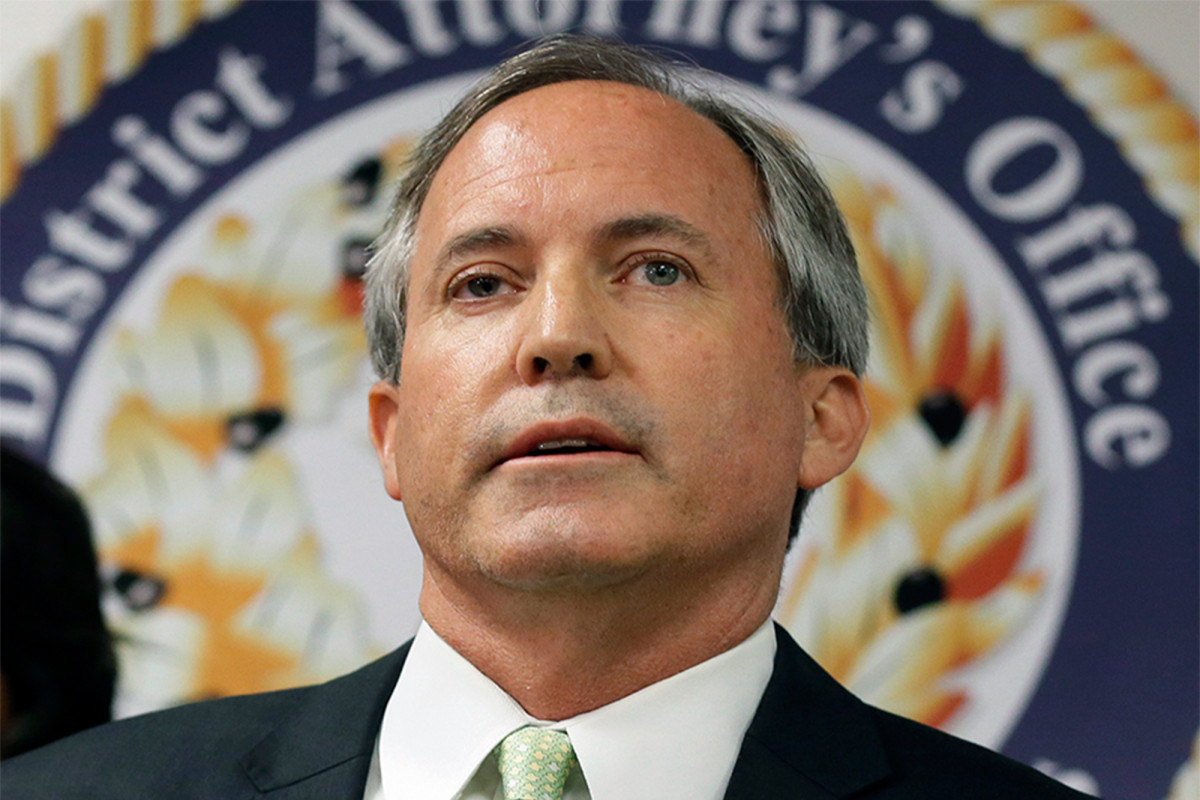
I am going to agree with him on this point: The state’s top legal official ought to be someone with notable legal experience. Ken Paxton, before he was elected to the Texas House, was a mediocre lawyer with a Collin County practice. Then he ratcheted up his game to run in 2014 for Texas AG. He won. He was re-elected four years later, but between his election and re-election, he got his sorry behind indicted by a grand jury in his home county.

My friend notes that P’s legal experience is pretty limited, too.

He is, however, a fellow of impeccable integrity, as near as I can tell … which to my way of thinking is a huge step forward from who we have now in the AG’s office.

‘Infrastructure’ needs redefining

By JOHN KANELIS / johnkanelis_92@hotmail.com

Here’s a thought or two about “infrastructure.”

If we’re going to talk about it, let us broaden its scope beyond simply roads, bridges, highways, airports, seaports and rail lines.

Let’s also talk about energy production, not to mention the development of new sources of energy and Internet research to broaden our power infrastructure.

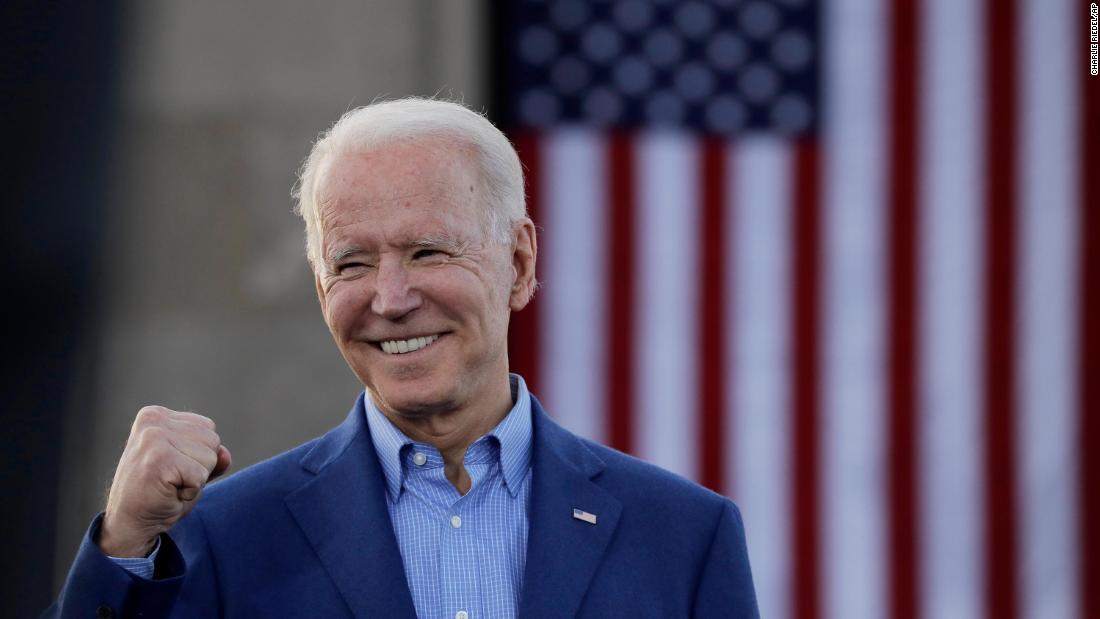
President Biden is trying to sell a $2.2 trillion infrastructure package that he is calling a “jobs bill.” He intends for it to produce millions of jobs over the next several years. Biden calls it a “generational” approach to improving our nation’s infrastructure.

To no one’s surprise, he is getting hammered from both political extremes. Republicans dislike the bill because it raises corporate taxes to help pay for it. Progressive Democrats don’t like it because it doesn’t go far enough; they want to spend even more than what the president is proposing.

Both extremes are all wet. They are mistaken.

Joe Biden says no one who earns less than $400,000 a year will see a tax increase. That doesn’t satisfy the GOP caucus in Congress, which rammed through a huge corporate tax cut during the first year of the Trump administration. What they never tell us is that President Biden’s proposed corporate tax rate — 28 percent — is still less than what it was before the Donald Trump tax cut took effect. Fiddlesticks!

On the other side, the far lefties among the Democrat want to spend $10 trillion. That’s 10 trillion bucks, man! Where in the world are they planning to come up with the revenue to pay for that kind of price tag? If they intend to tax middle-income Americans as well as the richest of us, well, good luck with that one.

I am growing weary of hearing Republicans say that too little of the president’s plan deals with “infrastructure.” I differ with them on that complaint. If you factor in all the jobs created by developing clean energy and, oh yes, broadband Internet capability then the infrastructure package seems about right.

Republicans remain too wedded to an outdated notion of what comprises “infrastructure.” I am willing to redefine the term to fit a growing and changing 21st-century world.

‘Earmarks’ coming back?

By JOHN KANELIS / johnkanelis_92@hotmail.com

Phil Gramm used to speak with pride about all the “pork barrel projects” he brought home to Texas, which he represented in the U.S. Senate from 1985 until 2002

“I’ve brought home so much pork,” the Republican Gramm would boast, “that I have contracted trichinosis.”

The euphemistic term is “earmarks.” Congress banned them in the early 2000s when earmarks became tied to scandal. They might be coming back and Texas might be set to benefit materially from their return, according to the Texas Tribune.

The Tribune reports: There’s no legal definition of earmarks. You know them when you see them. A lawmaker wants a bridge or post office or some other project built in their district. They write a small proposal committing federal funds for the job and try to to inject it into one of Congress’ massive spending bills each year. They shop the idea around to colleagues, and with the right cajoling and horse trading, their small request is granted and that new post office is on the way, perhaps even to be named after the lawmaker who wriggled it through.

I’ll be candid. I am filled with terribly mixed emotions when I consider earmarks. When do earmarks become pork barrel? When is the process necessarily a bad thing?

As the Tribune noted: Before their demise, earmarks shepherded by Texas legislators supported cybersecurity education at the University of Texas at San Antonio, the dredging of the Port of Houston, wind energy studies at Texas Tech University, desalination in El Paso and cancer research at MD Anderson Cancer Center, among other things.

If Congress restores earmarks, will Texas partake? | The Texas Tribune

Those are worthwhile projects, right? Yes. They are. However, earmarks can be scandalized and used for nefarious — even criminal — purposes. The Tribune reports: Back in 2006, the Republican-controlled Congress was mired in scandal. On the House side, prosecutors charged a war hero who claimed to have inspired the fictional movie “Top Gun” — U.S. Rep. Randy “Duke” Cunningham — with taking bribes in exchange for earmarks, including $2 million, prostitutes and even a French commode. Then we had the infamous “bridge to nowhere” pushed by GOP Sen. Ted Stevens, which received $223 million for a span to an island in Alaska that was home to fewer than 50 people.

We elect our senators and House members to benefit us at home. Earmarks are one way for lawmakers to demonstrate their ability to help the people they represent. They also can be abused.

I will remain on the fence as to whether earmarks should be allowed. They do plenty of good for states and congressional districts. They also provide opportunities for abuse. If they do return, then let’s be sure the congressional watchdogs are alert to any effort to corrupt the system.

Welcome back, DST

By JOHN KANELIS / johnkanelis_92@hotmail.com

The grumbling has begun.

About what? Oh, the annual switch from Standard Time to Daylight Saving Time. We’re going to make the change on Sunday, “springing forward” to DST just as we do every year. We “fall back” to Standard Time in the autumn of the year.

If only the complaining would stop.

I might be the only American around who has no particular problem with this time-change deal. It doesn’t bother me.

Folks gripe about it every year, right? They bitch about losing that hour of sleep at night. Then they moan that their bodies cannot adjust to the time change. Please, man.

If the Texas Legislature can get through its more important matters, such as finding solutions to our state’s power grid problem, perhaps it will try once again to decide how to repair this time-change thing … as if it needs repair.

The 2019 Legislature came within a whisker of putting a time-change issue on the ballot. It ran out of time. The thought was to let Texas voters decide (a) whether to go to Standard Time all year long, (b) go to Daylight Saving Time all year or (c) keep it as it is.

My choice, if I had been given the chance to vote, would be to switch to a year-long DST regimen. Why? I like the extended daylight in the evening. I cannot explain precisely why that is the case. It just is … you know?

Absent that choice, I generally do not complain out loud about the time change. I won’t do it this spring. I don’t plan on doing so when we switch back again in the fall to Standard Time.