Tag Archives: JFK

Good riddance, El Comandante

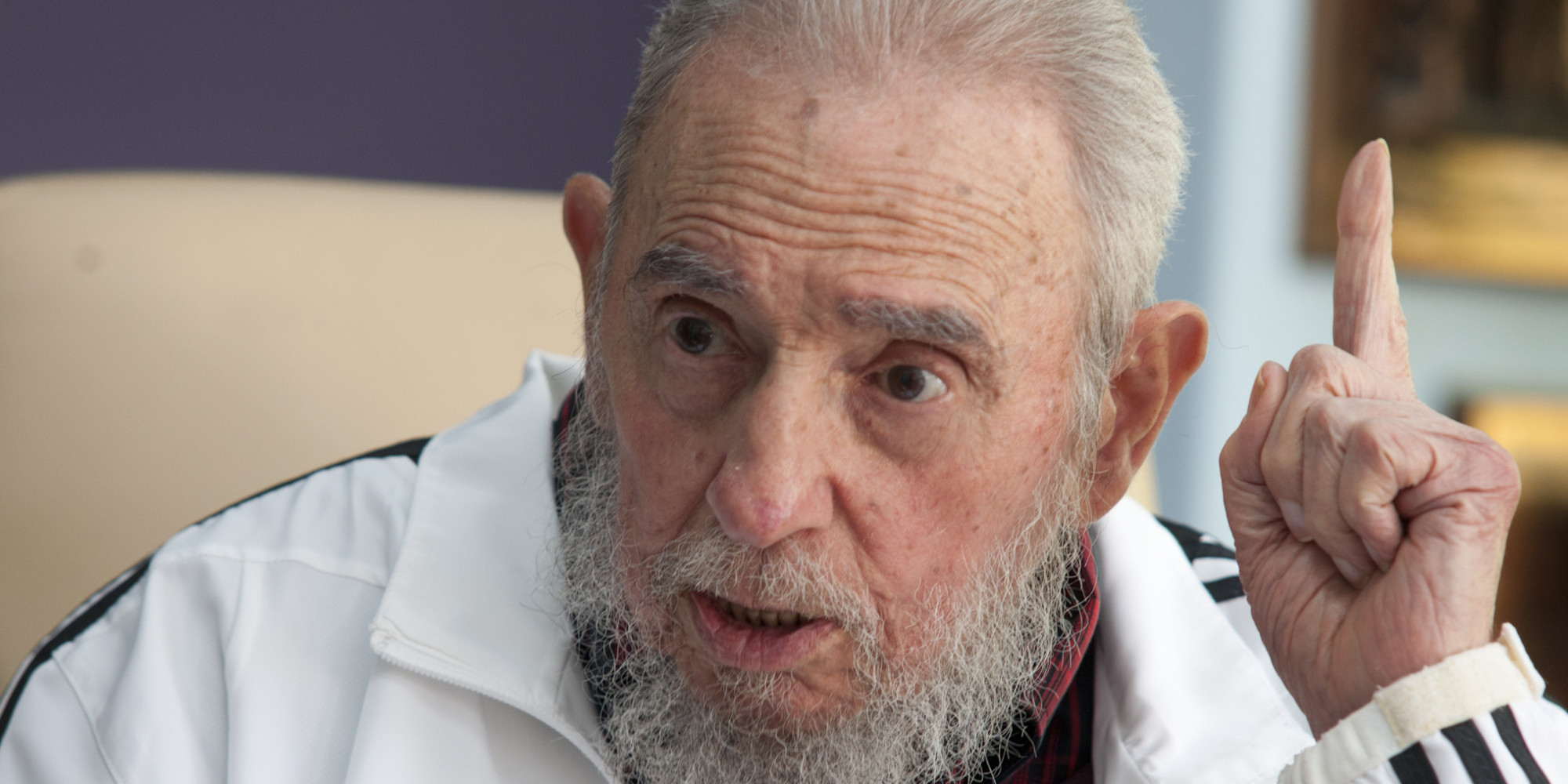
FILE - In this July 11, 2014 file photo, Cuba's Fidel Castro speaks during a meeting with Russia's President Vladimir Putin, in Havana, Cuba. Social media around the world have been flooded with rumors of Castro's death, but there was no sign Friday, Jan. 9, 2015, that the reports were true, even if the 88-year-old former Cuban leader has not been seen in public for months. (AP Photo/Alex Castro, File)

It’s been said of prominent world leaders that single acts result in what would be written about them in their obituary.

For Fidel Castro, such an act that no doubt will appear in obits around the world must read, “… who took the world to the brink of nuclear annihilation.”

The Cuban dictator is dead at the age of 90. He outlasted 10 American presidents in one of the more peculiar political standoffs of the past century.

But it was a two-week span in October 1962 that remains the lynchpin of Castro’s reign of the island nation that sits just off the tip of Florida. He allowed Soviet engineers to build missile launch platforms in Cuba capable of sending nuclear-armed missiles against the United States or anyone else in the hemisphere. U.S. spy planes spotted the installations; President Kennedy got wind of them. The president then went nose-to-nose with Castro and his Soviet benefactors.

The Cuban missile crisis ended when the other side “blinked” after Kennedy ordered a complete naval blockade of the island and he did that after advising the nation in a televised address that any strike from Cuba against any nation in the hemisphere would be met by the full force of the U.S. nuclear arsenal.

Castro led a “revolution” in 1959 that overthrew a hideous dictator. Cubans thought they were being liberated from repression. They were mistaken. Castro’s repression was every bit as severe. His fellow Cubans suffered economic deprivation, loss of human rights and dignity, imprisonment, loss of liberty across the board.

Despite all that, the continued economic sanctions imposed by the United States stopped making sense a long time ago, especially after the Soviet Union evaporated in 1991. The Cubans themselves never did pose much of an economic or military threat to this nation.

President Obama finally moved to end the embargo and restored a semblance of normal relations Cuba.

Still, Fidel Castro’s legacy will not be a glowing one.

Obama’s remarks in response to Castro’s death were appropriately neutral. As the Washington Post reported: “We know that this moment fills Cubans — in Cuba and in the United States — with powerful emotions, recalling the countless ways in which Fidel Castro altered the course of individual lives, families, and of the Cuban nation,” Obama said in a statement. “History will record and judge the enormous impact of this singular figure on the people and world around him.”

Enormous impact? Powerful emotions? Singular figure? Yes to all of that. Indeed, in the Little Havana area of Miami, they’re celebrating Castro’s death. I certainly would call that a “powerful emotion.”

So it is that this individual finally has departed the scene.

My feelings are a bit mixed. I am glad the United States has lifted its economic sanctions against Cuba. Still, the world is better off without Fidel Castro.

So long, El Comandante.

JFK murder recalls a curious interview

brooks-at-lbj-swearing-in

Take a good look at this picture. You know the moment it has recorded.

Standing behind the grieving Jacqueline Kennedy, just over her right shoulder is a fellow I used to know pretty well. He is U.S. Rep. Jack Brooks, a Democrat from Beaumont, Texas, and arguably the crustiest, most partisan member of the Texas congressional delegation at that time … or perhaps any time.

Brooks died just a few years ago. He was one of the Democrats who lost his re-election bid in that historic Republican “Contract With America” tide that swept over Congress in 1994.

The previous year, I sat down with Brooks to interview him about the events that occurred in Dallas 30 years earlier. I sought to get into the man’s soul, into his heart. I wanted him to share with his constituents — through this interview to be published in the Beaumont Enterprise — what he felt that day.

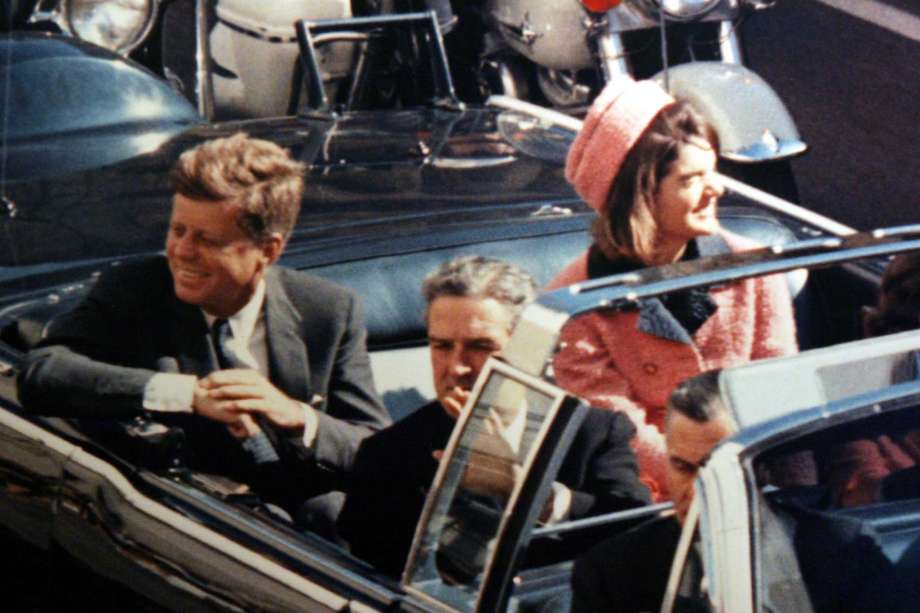
Jack was riding in the motorcade that beautiful day in Dallas. It was Nov. 22, 1963. He was riding several vehicles behind the presidential limo that was carrying the Kennedys and Texas Gov. John Connally and his wife, Nellie.

Rifle shots exploded from the sixth floor of the Texas School Book Depository Building, hitting the president and Gov. Connally. Their car took off at full speed for Parkland Hospital. The world held its breath when news broke that “shots were fired” at the motorcade.

Then the terrible result flashed around the globe: The president was dead.

I sought to plumb deep into Rep. Brooks’ heart and soul that day.

But I learned something that day about Brooks that I knew intuitively all along. He wasn’t prone to thinking like that. I recall being disappointed at the seeming lack of pathos this man.

Brooks wasn’t the most gracious fellow I’ve ever met. He could be as mean as they come. Perhaps he wasn’t comfortable talking to a media representative about that terrible day.

Surely he knew, I speculated to him out loud, about the immense burden that his mentor and friend — President Lyndon Johnson — was carrying at that moment. Did he sense it? Did he grasp in the moment that the world was watching everyone’s move that day? Brooks didn’t confide much to me during our visit that day.

That interview stands perhaps as the most glaring missed opportunity I experienced during nearly four decades in daily journalism.

Oh, how I sought far more than I got from a veteran Texas politician.

Hillary need not heed activists’ plea to challenge election

aakd1s4

Activists, by definition, I suppose are those who cannot let certain things go.

Their belief in their correctness makes them a bit frenzied in their desire to achieve a desired result.

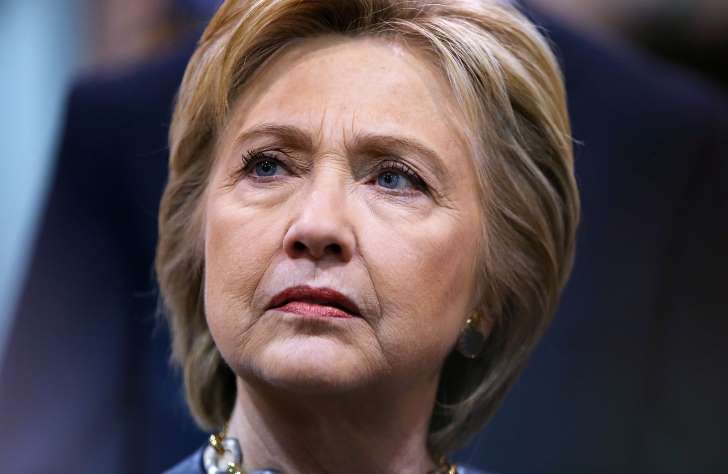
Thus, we hear that some political activists are encouraging defeated presidential candidate Hillary Rodham Clinton to challenge the election results in three key battleground states in an effort to overturn Donald J. Trump’s Electoral College victory.

Don’t do it, Mme. Secretary.

http://www.msn.com/en-us/news/politics/activists-urge-clinton-campaign-to-challenge-election-results-in-3-swing-states/ar-AAkD4w7?li=BBmkt5R&ocid=spartandhp

The three states in question are Wisconsin, Pennsylvania and Michigan. Clinton lost all three of them to Trump — although Michigan hasn’t yet been called officially for the president-elect, as it’s still determined to be too close to call.

According to the Daily Intelligencer: “Hillary Clinton is being urged by a group of prominent computer scientists and election lawyers to call for a recount in three swing states won by Donald Trump, New York has learned. The group, which includes voting-rights attorney John Bonifaz and J. Alex Halderman, the director of the University of Michigan Center for Computer Security and Society, believes they’ve found persuasive evidence that results in Wisconsin, Michigan, and Pennsylvania may have been manipulated or hacked. The group is so far not speaking on the record about their findings and is focused on lobbying the Clinton team in private.”

This would be a futile exercise. It also would be virtually unprecedented. Moreover, how long would it take to prove such an event occurred and how much damage could such a probe do our political system if the plaintiffs fail to make the case?

I feel the need to remind these activists of other close elections in which the loser chose to let the results stand. The most fascinating example occurred in 1960. Vice President Richard Nixon lost the presidential election to Sen. John F. Kennedy by fewer than 150,000 votes nationally, out of more than 60 million ballots cast. Questions arose about the vote totals in Cook County, Ill., which Kennedy won handily and which helped tip Illinois into the Democrat’s column.

Nixon didn’t challenge the result. He chose instead to let it stand. Kennedy went on to take the oath of office, over the expressed anger of the GOP activists who wanted Nixon to make an issue of an outcome that didn’t square with their desire.

Hillary lost the election under the rules set forth by the Founding Fathers. Even those of us who dislike the outcome ought to be able to accept it.

Just as many of us said in dismissing Trump’s assertion of a “rigged” election, I don’t believe that is what produced the stunning result.

Pols say mean things, then they change their tune

romneyandtrumpmeet

My friends and acquaintances on the right are fond these days of reminding me of something I knew already.

It is that U.S. Sens. Barack Obama and Hillary Rodham Clinton said angry things to and about each other when they ran for the Democratic Party’s presidential nomination in 2008.

Then Sen. Obama was nominated. He went on to be elected president. Then he hired Sen. Clinton to be secretary of state in the first Obama administration.

All was “forgiven,” more or less. The rivals became allies. Then they became friends … or so they said.

The pushback on this issue comes from those on my right and far right who keep yapping at my continuing observation about Donald J. Trump’s former foes/enemies are now lining up for spots in the president-elect’s Cabinet.

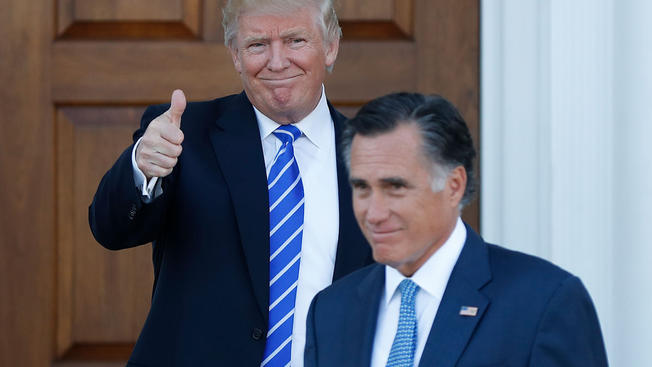
Mitt Romney is being considered for secretary of state; Mitt called Trump a “phony” and a “fraud.”

Rick Perry is being considered either for secretary of defense or energy; the former Texas governor called Trump a “cancer on conservatism.”

Chris Christie once led the Trump transition, then he got pushed aside and now he’s back in Trump’s semi-good graces; Christie once said Trump was “unfit” to be president.

The list of “establishment Republicans” who have condemned Trump is long and distinguished. Here they are, though, lining up behind the new president.

Sure thing. Democrats do the very same thing. John F. Kennedy and Lyndon Johnson weren’t exactly BFFs when they ran against each other in 1960; then JFK picked LBJ to run with him on the winning ticket.

I guess one’s reaction to this kind of political mood swing depends on your own point of view.

Therefore, I won’t apologize for overlooking how Democrats have played this very same game … at least not until my Republican friends acknowledge publicly what’s occurring at this moment in history with their guy and his former foes.

A little perspective seems to be in order

jfk

I’m still in a bit of shock over the election results. It’s going to take some time to get over the notion that a first-time candidate for any public office has just been elected president of the United States of America … for crying out loud!

But I’ll tell you this: There is something of a silver lining at the prospect of Donald J. Trump taking the oath of office and assuming the multiple roles of head of state/head of government/leader of the Free World/commander in chief of the world’s greatest military machine.

It lies in what we’ve endured already as a nation. We have survived — in my view — worse crises than what many of us are feeling now.

Fifty-three years ago, TV news networks flashed bulletins on our screens to inform the nation that “shots were fired” at a presidential motorcade in downtown Dallas. The news trickled in at first. Was the president hurt? Did the gunman hit our nation’s leader?

Then we found out. Yes! The president was taken to a hospital. Doctors were treating him for gunshot wounds.

After that, the worst news possible was flashed around the world: President John F. Kennedy was dead.

I was 13 years old at the time. I have vivid memories of how I felt in that moment. I just knew in my gut that the Russians were responsible. They did it! They killed our president and were planning to invade us. The Soviet Union was going to take over the world, just as they threatened they would. Hey, we were locked in a Cold War with those guys, who had as many nukes as we did.

We would learn in short order — later that very day — that a non-Russian pulled the trigger … allegedly. Lee Harvey Oswald was charged with murdering our president. He, too, would be gunned down a couple of days later in the Dallas Police Department garage. All hell broke loose once again.

Crisis begat another crisis.

How did we do? We got through it.

A new president took the oath of office aboard a jetliner dubbed Air Force One. He flew back to the capital with the body of his slain predecessor. President Lyndon Johnson asked for his nation’s help and God’s strength to see him — and the rest of us — through this terrible moment.

Yes, we’ve exhibited tremendous resilience over many years. World wars, economic collapse, constitutional crises and all manner of conflicts large and small haven’t taken us down.

Donald Trump’s election, while still shocking to many of us, was conducted in accordance with the rules and laws prescribed by our founders. He won this contest fair and square. And, no, the results were not “rigged.”

Understand this: I am not equating a presidential election with a presidential assassination. I mention the JFK tragedy only to put matters into what I believe is their proper perspective.

Remember this, too: If the new president messes up — as many folks believe he will — we have a civilized method to embark on a course correction. We call them “elections.”

Election result: no ‘authoritative command’

mandate-gif

My dictionary describes “mandate” thusly: an authoritative command or instruction.

That’s pretty clear, correct?

So, it’s fair to ask: Does a presidential election in which the winner captures more electoral votes than the other candidate, but who fails to win — by an apparently growing margin — the popular vote deliver a “mandate” for the victorious candidate?

I would say categorically, “no!”

Here is what we are facing with the election of Donald J. Trump as the 45th president of the United States. He won, by a comfortable margin, the electoral votes he needed. His opponent, Hillary Rodham Clinton, is continuing to pile up more actual votes than Trump.

The president-elect made some bold pledges while winning. He’s going to build a wall across our southern border, ban Muslims from entering the country, repeal Obamacare, revoke trade deals.

He said that “I alone” can fix what he believes is wrong with the country.

Does an election result that we’ve witnessed give him license to do what he promised to do?

I do not question the legitimacy of Trump’s election. He won this race fair and square. The system wasn’t “rigged” to ensure his election. Sure, some will argue that it was. Keep saying it. It’s not so.

However, I do not sense that voters delivered a “mandate” for him to make sweeping changes.

Richard Nixon was elected in 1968 with 43 percent of the vote. Bill Clinton was elected president in 1992 also with 43 percent of the vote and was re-elected four years later with 48 percent; George W. Bush was elected in 2000 with one more electoral vote than Al Gore, who won more popular votes than Bush. Neither of those men’s victories commanded “mandates” any more than Trump’s. Their victories were equally valid.

For that matter, John F. Kennedy was elected in 1960 with slightly less than 50 percent of the vote, and by a margin of fewer than 140,000 ballots. Is that a mandate … an “authoritative command”? Hardly.

Trump’s fans are continuing to crow about the mandate that their guy captured while defeating a candidate virtually every media pundit, politician and so-called “expert” knew would become the next president.

The Trumpkins need to tone down the boasts. They need to understand that effective and constructive governance is a shared responsibility, that the winners must work with those they defeat.

In this case, more than half of those who voted ended up on the losing end of this election, which adds volume to their voice.

Trump’s mandate? He needs to proceed with great care and caution.

‘Rigged election’ talk creates serious concern

trump

It’s been said many times by historians that the United States is the world’s model for peaceful transition of power from president to president, particularly in times of crisis and tragedy.

1963: John F. Kennedy was gunned down and Lyndon Johnson took the oath of office shortly after doctors announced the death of the president. We didn’t skip a beat.

1974: Richard Nixon resigned from office in the midst of a profound constitutional crisis and Gerald Ford became president, declaring “Our long national nightmare is over.” The beat went on.

* 2000: George W. Bush won election by the narrowest margin imaginable over Al Gore. The Supreme Court settled it in accordance with constitutional law. The government continued to function.

Three earlier presidents — Abraham Lincoln, James Garfield and William McKinley — were murdered while they were in office; their vice presidents took power, also without incident.

That history of relative tranquility is being threatened in 2016 by an ominous drumbeat from Republican nominee Donald J. Trump, who keeps harping on a “rigged election” determining who will become the next president. He continues to foment anger among his supporters who talk openly about “revolt” against the system if — and/or when — their guy loses to Democratic nominee Hillary Rodham Clinton.

http://www.politico.com/story/2016/10/donald-trump-rigged-elections-republicans-229846

This is nasty stuff, man.

According to Politico: “Donald Trump is laying the groundwork to lose on Nov. 8, refuse to concede the election, and teeter the country into an unprecedented crisis of faith in government. Republicans and Democrats, in Washington and beyond, fear that the aftermath of the 2016 election will create a festering infection in the already deep and lasting wound that the campaign is leaving on America.”

On top of what he’s been saying about “rigging” the election, he asserts that Clinton should be thrown in jail. Due process? Presumption of innocence? Forget about it!

There’s this, also, from Politico: “And, they say, only Republican leaders who speak up will have any chance of stopping it.”

They’re quiet — so far.

There needs to be a dialing back of this crackpot rhetoric. Trump likely will ignore all pleas to restore some semblance of reason. After all, he said recently he’s been “unshackled” by House Speaker Paul Ryan’s declaration that he no longer can “defend” Trump over the accusations that he assaulted women sexually.

Trump’s foes have declared him to be a demagogue who presents a serious “danger” to the United States of America.

Trump is proving them to be absolutely correct.

This ‘debate’ didn’t elevate the discussion

jfk-nixon

Of all the analyses I’ve heard and read about the second presidential debate between Democratic nominee Hillary Clinton and Republican nominee Donald J. Trump, one of them stands out.

It came from a talking head who referred to the initial 1960 debate between then-Vice President Richard Nixon and then-U.S. Sen. John F. Kennedy.

It was a serious affair. No audience in the room. Just the candidates and the questioners.

The analyst suggested that there was great hope in 1960 that these events might elevate the quality of the discourse. That it would force the candidates to be civil, collegial and serious. After all, the theory went, they were being beamed into voters’ living rooms. Who wants to hear such trash talk from candidates seeking to become the head of state?

Well, so much for high expectations.

Clinton-Trump II didn’t sink to the level that many prognosticators thought it might. But it damn sure didn’t rise to anything approaching a high-minded discussion about issues.

The overarching issue, of course, was that infamous video recording of Trump talking in 2005 about how he sought to do certain disgraceful things with and to women.

All of that context managed to lower the bar to a horrible level. It made the debate seem small.

As Chuck Todd, the NBC newsman and “Meet the Press” moderator, noted: The debate didn’t do much to enhance the principle of democracy.

Cruz does it … he endorses Trump!

cruz-and-trump

Politics can be a fickle endeavor. Your enemy becomes your friend at times for the most dubious of reasons.

History is full of such examples: John F. Kennedy and Lyndon Johnson battled for the Democratic nomination in 1960; JFK then picked LBJ as his vice president. George H.W. Bush accused Ronald Reagan was espousing “voodoo economics” in 1980; then the Gipper picked Poppy to be his No. 2. Barack Obama told Hillary Clinton she was “likable enough” during a 2008 Democratic primary debate; then Obama tapped Clinton to serve as secretary of state.

Now we have Ted Cruz, the Republican senator from Texas — the guy who called Donald J. Trump a “pathological liar,” a “serial philanderer,” and an “amoral bully” — endorsing the GOP presidential nominee.

The Cruz Missile is going to vote for Trump in November, he said. Why the change of heart? It looks for all the world like an anti-Hillary endorsement.

http://www.politico.com/story/2016/09/trump-rival-cruz-to-throw-support-to-gop-nominee-228584

Frankly, I thought Cruz might withhold his endorsement throughout the campaign, given the hideous things Trump said about the senator, his wife Heidi and his father. It got intensely personal for Cruz and I believed he was right at the GOP convention to urge the delegates to “vote your conscience.”

Well, it didn’t happen.

The fickle nature of politics has shown once again how foes can set aside hurtful comments to achieve a common end.

Will it help or hurt? Many of Cruz’s most ardent conservative supporters believe Trump is an imposter to their principles.

What the heck. Politics in this raw form can be downright ugly.

Don’t give in to endorsement pressure, Sen. Cruz

trump_cruz_jpg_800x1000_q100

It pains me to say something positive about U.S. Sen. Ted Cruz, R-Texas.

I don’t like the guy. He appears in my view to be far more interested in self-aggrandizement than service to Texans. He’s a loudmouth, a showboating self-promoter.

But shoot, man, I have been happy to see him stand by his principles — even if I disagree with them — in his dispute with GOP presidential nominee Donald J. Trump.

Cruz hasn’t endorsed Trump’s bid for the presidency. Why? Because he believes — as I do — that Trump is a fraud, a charlatan, a con man, an unprincipled opportunist, a phony.

Now, though, I hear reports of Cruz reportedly warming up to Trump. He said some nice things about Trump recently.

Dammit, Ted! Don’t go there, young man!

https://www.texastribune.org/2016/09/22/the-brief/

Trump inserted some amazingly harsh innuendo into the GOP primary campaign as he sought to vanquish Cruz’s challenge. He actually implied that Cruz’s father, a Cuban immigrant, had been seen in the company of Lee Harvey Oswald, the guy who murdered President Kennedy. The suggestion was that the elder Cruz was somehow, in some way, complicit in that act.

Plus, let’s not forget how Trump insulted Heidi Cruz, the senator’s wife, with that unflattering Twitter photo. Sen. Cruz was rightfully outraged by that tactic and called Trump a coward.

Against that backdrop, are we now going to believe that Cruz is going to make nice with this guy? That he’s going to say “Hey, let bygones be bygones” and endorse Trump’s bid for the presidency?

I happen to share Cruz’s previously stated outrage at Trump’s behavior, which I believe firmly would carry over into a Trump presidency.

Let’s not forget, either, that Cruz urged his fellow Republicans at the party’s nominating convention to “vote your conscience” this fall.

Stay true to your own conscience, Sen. Cruz.