Tag Archives: JFK

Is U.N. ambassadorship a training position?

Welcome to the real big leagues, Heather Nauert.

Donald Trump wants the former Fox News correspondent and morning talk-show co-host to lead the U.S. diplomatic effort in the United Nations. I am left to wonder if the president values the U.N. as much as his national security adviser, John Bolton, does. It was Bolton who (in)famously said you could remove the top 10 floors from the U.N. Building in New York and not lose a thing. Then he became the U.S. ambassador to the world body.

Nauert brings far less foreign policy experience to this most delicate of posts. She did serve as State Department spokeswoman for a year after leaving Fox News.

You know, I actually thought that Nauert wasn’t the first rookie to take this job. My thoughts turned to the late John Scali, the former ABC News correspondent who was U.N. ambassador from 1973 to 1975. However, a quick check of Scali’s record showed something quite revealing.

He helped mediate an end to the Cuban Missile Crisis in 1962 while working for ABC, carrying messages from President Kennedy and Attorney General Robert Kennedy to the Soviet embassy, warning them of the dire peril they were putting the world in by installing offensive missiles in Cuba. Scali then left ABC to work for the Nixon administration as a foreign policy adviser before becoming U.N. ambassador in 1973.

Thus, Scali had experience.

Nauert does not. In a way, though, she more or less mirrors the experience level of the man who nominated her. Donald Trump brought zero government or public service experience to the presidency when he got elected.

And it shows.

I fear the absence of any foreign policy chops is going to show itself yet again at the United Nations. Heaven help us.

1968: It ended with profound discovery

Those of us of a certain age and older remember 1968.

As we were living through it many of us wondered if we could survive, literally, and wondered if the nation could endure the tumult that tore at its soul.

The year began with that terrible Tet Offensive in Vietnam, where we were fighting a war that killed thousands of American service personnel that year. Two iconic figures, Martin Luther King Jr. and Robert Kennedy, died at the hands of assassins. The Democratic Party nominated a presidential candidate while thousands of people rioted in the streets outside.

Then in December of that terrible year, three men launched from Earth toward the moon, produced the image I have posted on this blog. They read from the Book of Genesis while orbiting the moon’s surface.

These men — Frank Borman, Jim Lovell and William Anders — reminded us of the fragility of our existence and produced a never-before-seen image of our “good Earth,” as Apollo astronaut mission commander Borman described it in his Christmas message back home.

The Apollo 8 moon mission was more than just a competitive event between the United States and the Soviet Union. President Kennedy in 1961 had declared that we should “send a man to the moon and return him safely to the Earth” before the end of the 1960s. We would accomplish that mission in 1969, beating the Soviets in that race to the moon.

Before that, though, we had to send a space ship to the moon to orbit it and to return. Little could we have foreseen the symbolism embodied in that mission at the end of a terrible, tumultuous year.

It could not have ended more perfectly than it did just before Christmas 1968. It could not have been a more apt remedy to help restore some semblance of hope in the face of the mayhem that gripped the nation and the world.

The mission was, shall we say, one for the ages.

Those three men saw fit to read from the Holy Bible about God’s creation of the universe. The words from Genesis served to remind us that the Almighty was looking after us.

The year began and progressed through storm after storm.It ended with the image flashed around the world for the first time ever of Earth rising in the black sky all by itself.

It is our home. Turmoil and all.

A feud ended 55 years ago today

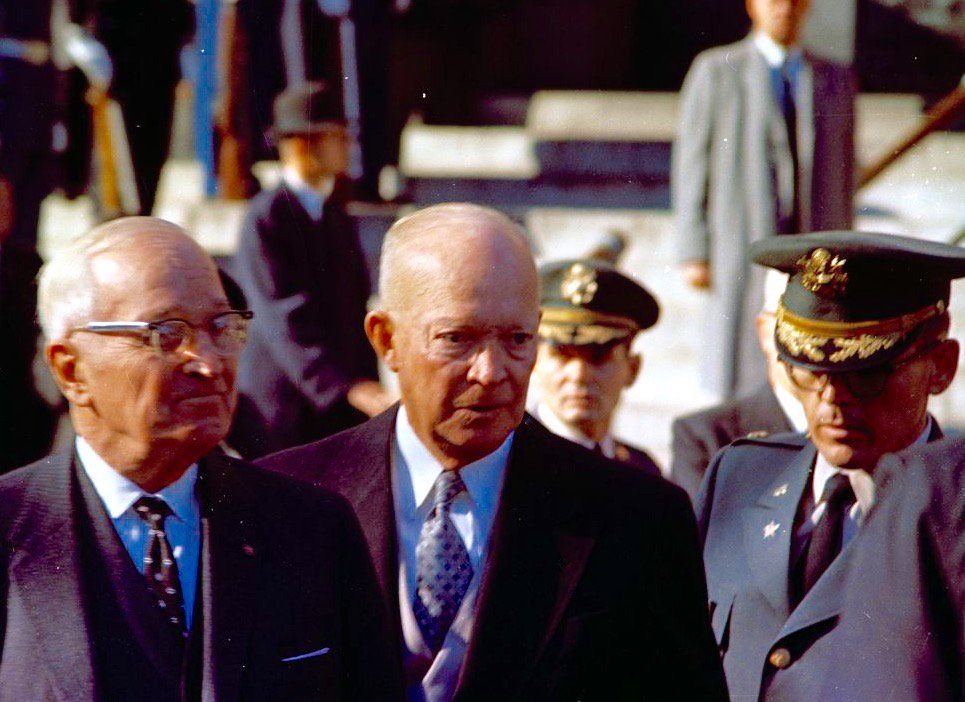
Ex-Presidents Truman and Eisenhower outside St. Matthew’s Cathedral after President Kennedy’s funeral, 55 years ago today.  According to , this picture was taken after they saw young JFK Jr. salute his father. On this day, Truman and Ike ended their 11-year feud.

This Twitter message came from presidential historian Michael Beschloss, who posted it with this picture I am sharing here.

The photo was taken at JFK’s funeral. It shows his two immediate predecessors, President Harry Truman (left) and President Dwight Eisenhower. The “ClintHill_SS” referenced in the above tweet is the name of the Secret Service agent who climbed aboard the limousine carrying the president and first lady as gunshots rang out in downtown Dallas on Nov. 22, 1963.

The two men disliked each other intensely. Their domestic and foreign policy differences became personal between them. Ike succeeded Give ‘Em Hell Harry in January 1953 and the two men barely spoke to each other for the decade that preceded President Kennedy’s brutal murder.

Then the two former presidents came to pay their respects to their slain successor.

And while there they buried the hostility they held toward each other. As Beschloss noted in his tweet, the picture was taken as the two men saw John Kennedy Jr. salute his father’s casket as it wheeled past him.

I had learned long ago about the Truman-Eisenhower feud. It ended when they sat together and listened to the tributes to the young president who succeeded Ike in 1961. The youngest elected president was laid to rest and the two old warriors laid their antipathy toward each other to rest at the same time.

It’s a long-forgotten, but still poignant testimony to the fragility of Earthly life. Ike and Truman got to live to become old men, something denied to JFK. The two presidents came to that realization when President Kennedy was laid to rest.

It’s one of life’s most valuable lessons.

Why stay mum on shooters’ names?

I declared my intention recently to no longer identify mass shooters by name when referring to these tragic events in this blog.

A reader of High Plains Blogger than wondered: Why refer to people such as Sirhan Sirhan, James Earl Ray and Lee Harvey Oswald by name?

Fair question. I’ll take a stab at answering it.

First of all, these men all killed notable public figures and officials. Sirhan murdered Sen. Robert F. Kennedy, Ray gunned down the Rev. Martin Luther King Jr., and Oswald assassinated President John F. Kennedy. Of the three of these shooters, only Sirhan is alive; he is serving a life term in a California prison.

Their names were thrust into the public domain the way, say, John Wilkes Booth’s name has been in that domain since he murdered President Abraham Lincoln in 1865.

All these men changed the course of history. Thus, I have felt justified in referencing them by name whenever I felt like commenting on the incidents to which they all are linked forever.

These latest string of murderers don’t ascend to that level. They have sought publicity. Thus, I have taken a vow to keep their names off this blog for as long as I am writing it.

I even have acted retroactively, back to 1966, when the madman opened fire from atop the University of Texas Tower. I used to refer to him by name; no longer. He now joins the lengthy — and tragically growing — list of lunatics who have sought to make names for themselves through hideous acts of violence.

One more point: Even the loons who die, either by their own hand or by law enforcement, in the commission of their heinous deeds will not be ID’d in this blog with their name.

That’s my story. I am sticking to it.

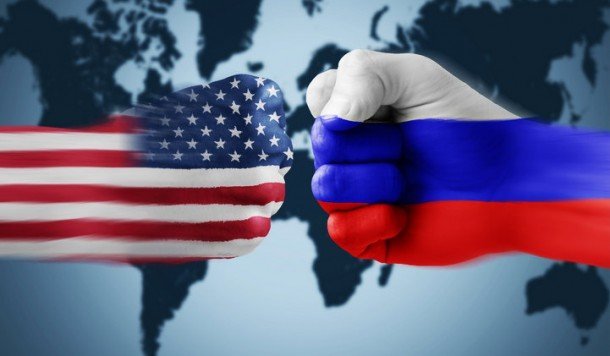
Toughest POTUS ever on Russia? Aww, c’mon!

Donald J. Trump has no shortage of hyperbole. The president trots it out whenever he damn well feels like it.

Such as this: “I have been the toughest president on Russia … ever!”

Really? Hmm. Let’s review that bit of bluster, shall we?

October 1962: President Kennedy gets intelligence that the Soviet Union was building offensive missile sites in Cuba. He consults with his national security team. They debate whether to attack the sites, invade Cuba, do nothing, or impose a blockade on the island nation. JFK chooses to blockade Cuba. He then speaks to the world on national TV and warns the communists that an attack on any nation in the Western Hemisphere would result in a “full retaliatory response” from the United States.

The Soviets backed off. They took down the missile sites. World War III was, thus, averted.

June 1987: President Reagan ventures to West Germany. He already has described the communist regime in Moscow as the Evil Empire. The president goes to the Brandenburg Gate separating East and West Berlin and bellows, “Mr. (Mikhail) Gorbachev, tear down this wall!”

There have been other instances of U.S. presidents acting sternly in response to Russian (or Soviet) aggression. President Carter ordered a U.S. boycott of the 1980 Olympics in Moscow after the USSR invaded Afghanistan in the previous year. President Bush 41 oversaw the collapse of the Berlin Wall in 1989 and the eventual dissolution of the Soviet Union in 1991.

Presidents Truman, Eisenhower, Johnson, Nixon, Ford, Clinton, Bush 43 and Obama all had their instances of spine-stiffening resolve as they involve the Russians. I include the Soviet Union era in this discussion because, well, the Soviets were Russians, too.

And yet the current president of the United States, Donald Trump, keeps insisting — without any demonstrable evidence — that he’s the toughest president of all time against the Russians.

Give me a break.

Anyone with a rudimentary understanding of history knows better.

How about returning to the moon? How about going farther?

President Kennedy already had initiated the race to the moon. The United States was a distant second to the Soviet Union when he declared his intention to ensure that we “send a man to the moon and return him safely to the Earth” by the end of the 1960s.

Then the president implored us on. “We don’t do these things because they are easy,” he said. “We do them because they are hard.”

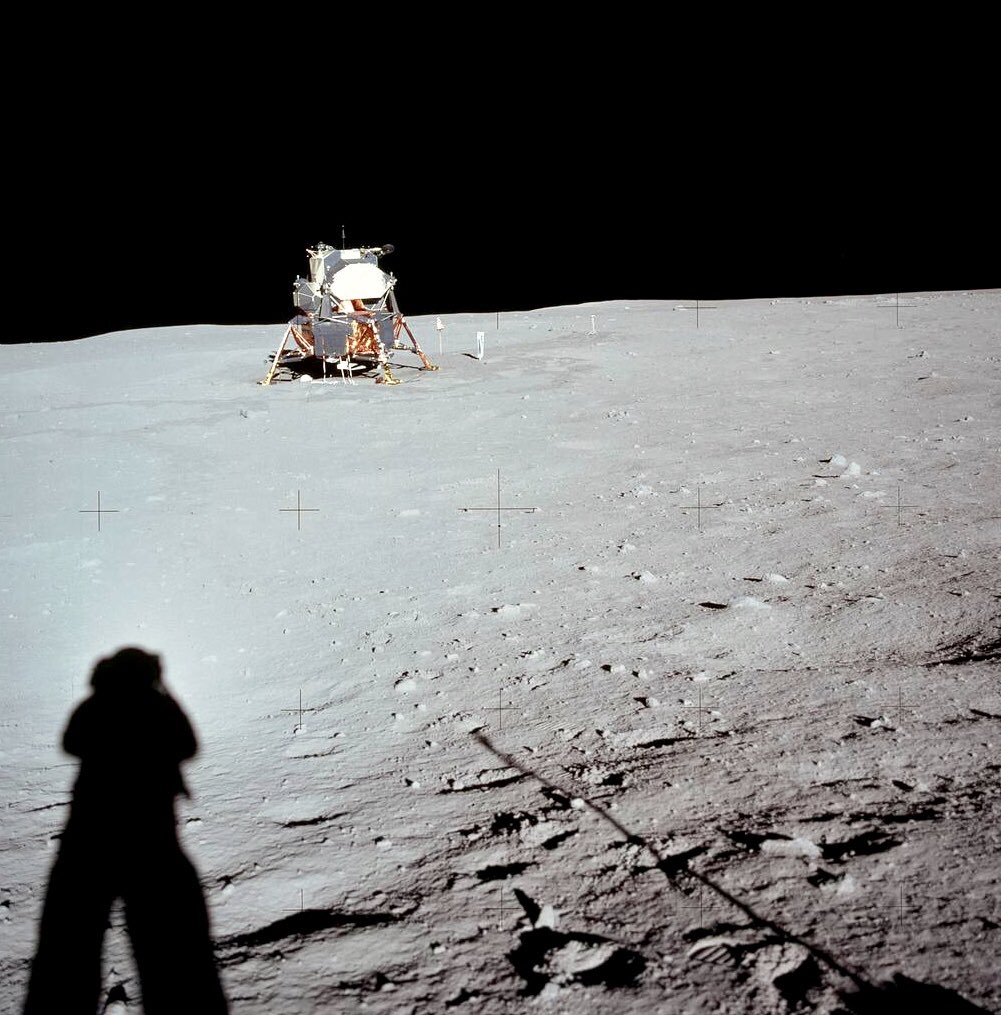
Well, Americans got to the moon first. It was 49 years ago today that the late Neil Armstrong stepped off the ladder onto the moon’s dusty surface and pronounced, “That’s one small step for (a) man, one giant leap for mankind.”

He thrilled the folks back home. Not just in our country, but everywhere. Perhaps even in the Soviet Union.

Mission accomplished.

We sent several more missions to the moon. Astronauts planted flags, dug up lunar dirt and brought it back, they drove around on “lunar dune buggies,” and one of them — the first American in space, the late Alan Shepard — even hit a chip shot that went for “miles and miles.”

Then we stopped going to the moon. It became too expensive. The public lost interest. We won the race. The act of launching three people into space aboard a flaming rocket carrying many thousands of pounds of flammable fuel no longer fascinated the American public.

I am one American who lived through that exciting time. I want them to return.

Subsequent presidents have given somewhat tepid support for the initiative of returning to deep space. The end of the Cold War in 1991 removed the Soviet Union from the world landscape. The Soviet descendants, though, have continued to send explorers into space. They now carry passengers with them. Some of them are Americans.

I am acutely aware of the expense of such exploration. However, it was what we were put on this Earth to do, to reach beyond our planetary comfort and to learn more about the world beyond.

Donald J. Trump has continued the presidential push — such as it’s been — to return one day to space. I want NASA to redevelop its own manned program. It’s what we do — and we do it well.

My sense is that enough time has passed since the last moon mission that we’ll get quite excited when the next rocket blasts off into the heavens with crews that will take the next “giant leap for mankind.”

‘Deep State’ emerges as villain

I was waiting for this to occur.

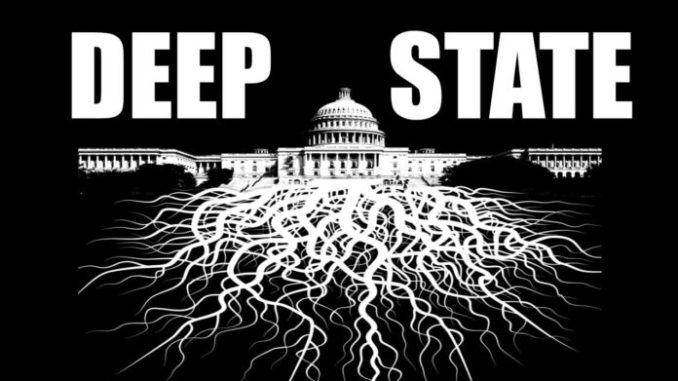
A member of Congress, a Republican and a founder of something called the Freedom Caucus, has now accused the “Deep State” of conspiring to get him tossed out of Congress.

Several former Ohio State University wrestlers say they were sexually abused by a team doctor and that Jim Jordan — an assistant coach at the time — looked the other way. They say he did nothing to stop it.

Gordon says the Deep State is working to conspire against him.

Who or what is the Deep State? I understand it is supposed to mean those in power who are immune from voters’ wishes. Wikipedia describes it thusly: It is a term used “within political science to describe influential decision-making bodies believed to be within government who are relatively permanent and whose policies and long-term plans are unaffected by changing administrations.”

So, it’s the Deep State at work against Jordan, a champion of the little guy. Right along with Donald J. Trump, the billionaire who became president after spending his entire professional life engaged exclusively in self-enrichment, self-glorification, self-aggrandizement and self-adoration.

The Deep State has now become a throwaway term. It’s right up there with the “mainstream media” and the “Washington elite.”

Deep State is fairly new to the American political vernacular, even to those who spend a good bit of time studying politics and the people who practice it.

However, like most conspiracy theories, any Deep State notion presumes that its members — whoever the hell they are — are able to concoct some plot, execute it and then keep it all secret.

This notion is as nutty as the conspiracies that linger over the murder of President Kennedy, that President Bush masterminded the 9/11 attack or that President Obama was born in Africa.

Deep State? It’s fake news, man!

Still missing this great American

Forty years ago, on the Fourth of July, 1978, I walked into my house and got the news from my wife.

My grandmother had just passed away. She is the one on the right in the picture above. My reaction kind of surprised me then: She was in her 80s and I knew she had been sick; still, I put my arms on the fireplace mantle and sobbed, cried like a baby.

The picture, by the way, is of three of my grandparents. There was Diamontula Filipu and her husband, George, my mom’s parents; the lady on the left is my dad’s mother, Katina Kanelis.

This is a poignant remembrance. For starters, I always remember Yiayia’s death, as she did die on the anniversary of the birth of her adopted home country. My wife reminded me a few days after learning of Yiayia’s death that she picked the Fourth of July just to be sure I’d remember.

We called her Yiayia, because that’s Greek for “grandmother.” Indeed, her southeast Portland, Ore., neighbors called her Yiayia; the store clerks did, too. The mailman, the milkman called her Yiayia.

I have referred to Yiayia in previous blogs as a “great American.” She was a diminutive patriot who stood taller than anyone around her when she talked about her country.

She emigrated here from Turkey in the early 20th century. Her husband, my Papou George, already had relocated to Portland to await Yiayia’s arrival. She got off the boat at Ellis Island in New York City, processed through immigration, then asked someone how long it would take her to get to  Portland. The person she asked presumed she meant Portland, Maine, and told her it would take about four hours.

Four days later, she ambled off the train on the other side of a vast nation. Intrepid? Yeah, she embodied the meaning of the term.

She shares this date of Earthly departure with two other great Americans: Presidents John Adams and Thomas Jefferson, both of whom died on the same day, July 4, 1826 — precisely 50 years after the nation they helped create came into being.

I hold up Yiayia’s American greatness to any who have lived in this country. Whether they were born here or came here of their own volition, Yiayia stood tall among them.

She never returned to her native Turkey. She always said she was “home” and had no desire to return to where she entered this world as an ethnic Greek in what the current president of the United States might call a “sh**hole” country.

She might not have been allowed into this country that seeks a “merit-based” immigration system. She lacked formal education. She didn’t have any professional skills that I can recall. She merely was a loving wife, mother and grandmother. My sisters and I spent much time with her, playing silly games and laughing at stories she would tell about her beloved husband, George, who died when I was a baby.

Yiayia also was a patriot. She adored FDR and JFK.

I miss her to this day. So should the country she loved with all her heart.

‘We knew what we were getting’

The person who made the above statement is a friend of mine. I’ve known him for many years. We’ve shared a lot of laughs and even a bit of heartache together.

The knowledge of which he speaks concerns the presidency of Donald John Trump. My friend has said that Trump wasn’t his first choice as president, but given the choice he had in 2016 he felt compelled to vote for him.

Baggage and all.

I think my friend speaks for a lot of Americans who continue to sing the president’s praises. The reasons for those praises likely will escape me for as long as this man is in office, or even perhaps even longer.

My friend is an educated man. He is erudite and sophisticated. I wouldn’t classify him as one of the “deplorables” who — in the infamous words of Hillary Rodham Clinton — back Trump to the hilt come hell or high water.

However, I have trouble understanding whether he actually accepts the idea that a presidential candidate would denigrate a Vietnam War hero by saying he likes “those who aren’t captured” by the enemy, as Sen. John McCain was in 1967. Or that he gives a candidate a pass for mocking the physical disability of a noted journalist. Or that it’s OK for someone to boast to a TV host about grabbing women by their genitals because he’s a “star.”

Then there’s the lying. Yes, I know about politicians’ penchant for exaggeration, or for self-aggrandizement, or how they twist the truth to take on different meanings. Trump lies. Flat out! He says things that are demonstrably false.

What’s more, his lies often border on defamation of others. To wit:

Barack Obama ordered the wiretap of his 2016 campaign office: wrong. Millions of illegal immigrants voted for Hillary Clinton in 2016: wrong. Ted Cruz’s father might have been involved in President Kennedy’s murder because he was seen talking to Lee Harvey Oswald prior to the tragic event: false. Trump’s investigators had “evidence” that Barack Obama wasn’t born in Hawaii, but that he was born in Kenya: false.

I won’t get into the serial philandering and the endless array of failed business enterprises and the thousands of Americans who lost everything investing in these deals.

Trump’s supporters knew all this and still they elected him?

Maybe so. It simply blows my mind.

But there’s good news to report. Our friendship will persevere despite our political differences. For that I am eternally grateful.

Another NASA celebrity astronaut leaves us

There once was a time when astronauts were celebrities. We knew their names. We followed their careers. We got up early to watch them blast off from the Cape Canaveral, Fla., launch pad.

Another such astronaut — and please pardon this intended pun — has left this Earth for keeps. Alan Bean died today at age 86.

He was the fourth man to walk on the moon, aboard Apollo 12 in November 1969. He made the flight to the lunar surface with the late Charles “Pete” Conrad.

Alan Bean didn’t achieve the kind of celebrity status of, say, Neil Armstrong, Buzz Aldrin, the seven men selected to fly in the initial Mercury missions, or most of the Gemini astronauts who came along later.

Bean was among those picked for the third group of space pioneers, the Apollo program. He joined NASA in 1963 after serving as a Navy test pilot.

My years in the Texas Panhandle makes me remind you that Bean hailed from that part of the world. He was a native of Wheeler, a tiny town east of Amarillo.

My most glaring memory of Bean’s time on the moon stems from some innovative measures he took to deploy a camera on the lunar surface. The camera wouldn’t start taking images. What did Bean do? He grabbed a hammer and beat on the device! Then it worked.

NASA doesn’t have a manned space program of its own these days. We’re sending our astronauts into space aboard Russian rockets. I’m trying to imagine how Presidents Kennedy and Johnson would react to that bit of aerospace irony.

Back in the day, though, Alan Bean was among those individuals we prayed for when they rocketed into space. As President Kennedy said about the goal of sending astronauts to the moon and returning them safely, “We don’t do these things because they are easy. We do them because they are hard.”

Alan Bean and his colleagues just made it look easy. It wasn’t. He needed to beat on a state-of-the-art camera with a hammer to enable the device to record his history-making adventure for the rest of time.

May he now rest eternally.