Tag Archives: World War II

Sen. Dole reminds GOP of its dignified past

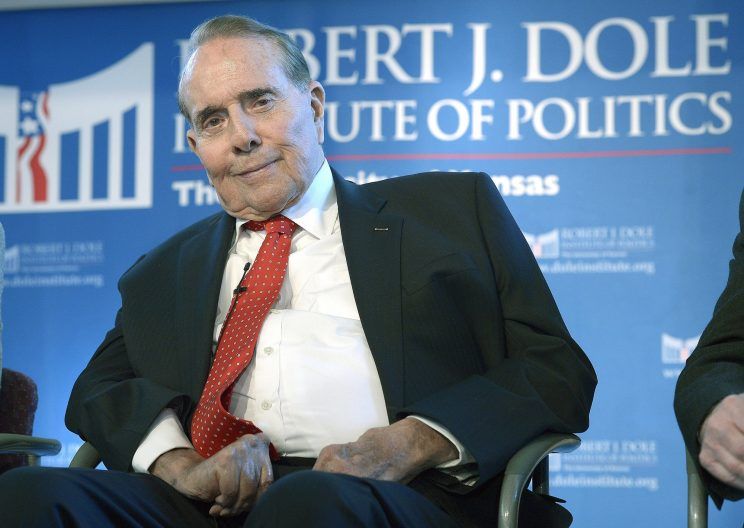
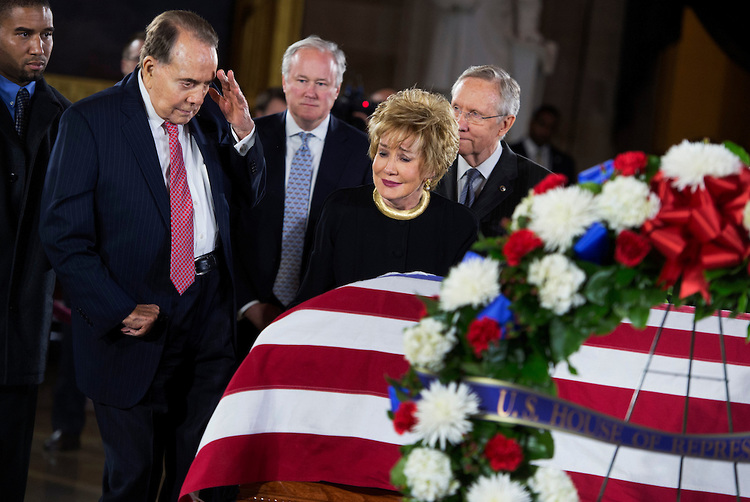
UNITED STATES - DECEMBER 20:  Former Sen. Bob Dole, R-Kan., salutes the casket of the late Sen. Daniel Inouye, D-Hawaii, as his body lies in state in the Capitol rotunda, as Dole's wife, former Sen. Elizabeth Dole, R-N.C., looks on.  Bob Dole and Inouye knew each other since they were recovering from World War II battle wounds.  Dole was assisted to the casket saying "I wouldn't want Danny to see me in a wheelchair."  (Photo By Tom Williams/CQ Roll Call)

Many Republican luminaries are staying away from the Republican Party’s national presidential nominating convention.

But not all of them.

A serious man attended today’s opening of the convention in Cleveland.

He is former U.S. Sen. Bob Dole, the Kansas Republican who represented his state and served our country with tremendous honor.

Sen. Dole was there to support presumptive presidential nominee Donald J. Trump. That’s what party loyalists do, whether they’re Democrat or Republican. Dole is a loyalist to the core.

He also represents another time in this country when Republicans and Democrats could be political adversaries, not enemies.

MSNBC commentators took note of Dole’s distinguished career in public life. They brought up his years in the Senate. They mentioned how, in 1976, President Ford selected him as his running mate to assuage conservatives’ concerns. They talked also of Dole’s conservative principles as he ran for president in 1988 against fellow Republican George H.W. Bush.

Of course, they mentioned his losing 1996 presidential campaign against President Clinton.

Here’s another element of Dole’s service they mentioned: They talked about his heroic service in the Army during World War II, in which he suffered grievous injury while fighting the Nazis in Italy.

It was right after coming home from the battlefield that young Bob Dole would meet another young American with whom he would undergo rehabilitation. The forged a friendship in the rehab hospital that would last a lifetime.

The other young man was Daniel Inouye, who would become a U.S. senator from Hawaii, and who was as loyal to his Democratic Party as Dole is to the GOP.

Inouye also suffered near-mortal wounds during World War II. He would receive the Medal of Honor for his battlefield heroics.

“Meet the Press” moderator Chuck Todd took particular note today of when Sen. Inouye died and his friend Bob Dole stood in front of Inouye’s casket to salute him. He told the honor guard that his “good friend Danny wouldn’t want to see me sitting here” in a wheelchair, Todd said.

Dole represented a time when senators could disagree, but maintain personal affection and friendship.

I was gratified to see this member of the “greatest generation” one more time.

If only his political descendants — on both sides of the partisan divide — would follow the example of collegiality that he and his “good friend Danny” set for politicians all across the land.
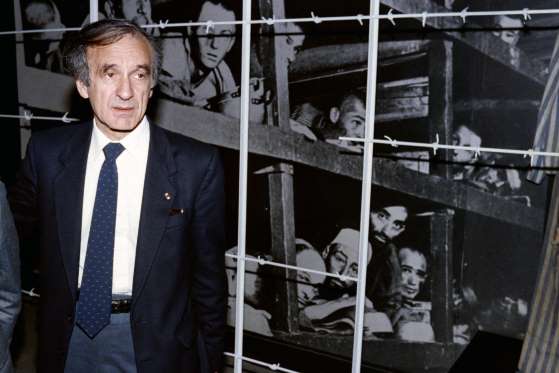
Elie Wiesel: ‘Messenger to mankind’

wiesel

The Nobel Peace Prize citation said it with simple eloquence.

Elie Wiesel, the document stated, had been the “messenger to mankind.”

His message was to alert the world of the horror that occurred in Europe prior to and during World War II. The Holocaust became thrust onto the world’s conscience thanks to the Wiesel, who died today at the age of 87.

He was born in what is now Romania and became a captive of the Nazi tyrants who rounded him up and kept him captive in one of the death camps scattered throughout Europe.

That he survived Auschwitz in itself is a miracle. That he found his voice later to bring to light the horror that occurred throughout Europe is his lasting contribution to humankind.

http://www.msn.com/en-us/news/world/elie-wiesel-auschwitz-survivor-and-nobel-peace-prize-winner-dies-at-87/ar-AAhVt8M?li=BBnb7Kz

It would be Wiesel who would remind the world of a once-little-known truth. It was that the opposite of “hate” wasn’t “love,” he said. The opposite was “indifference.” Indeed, Wiesel reminded us that “indifference” was the antithesis of many human emotions, such as love and compassion.

He was courageous, scolding President Reagan for touring a cemetery in Bitburg, Germany, where many SS officers are buried. The president should be with the “victims of the SS,” Wiesel said.

President Obama paid tribute today to Wiesel: “He raised his voice, not just against anti-Semitism, but against hatred, bigotry and intolerance in all its forms,” the president said Saturday in a statement. “He implored each of us, as nations and as human beings, to do the same, to see ourselves in each other and to make real that pledge of ‘never again.’”

The world has lost a powerful and eloquence voice against evil.

May this courageous and good man rest in the eternal peace he deserves so richly.

Ex-SS guard gets five years for atrocities … enough?

hanning

This one is giving me fits and I’m likely to ask for some guidance on what to think about it.

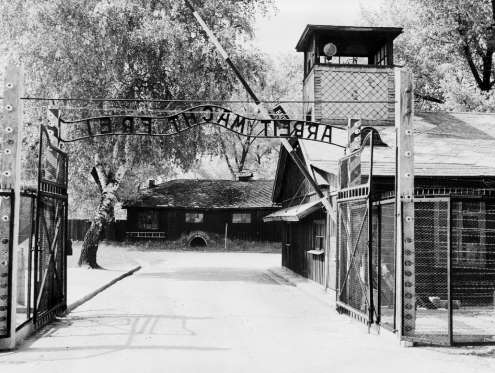
A court in Germany has just sentenced a 94-year-old former SS guard to five years in prison for complicity in the atrocities that occurred at Auschwitz, the infamous Nazi death camp where many thousands of people were sent to their death.

Reinhold Hanning accepted the sentence apparently without emotion.

My questions are many:

Is the sentence long enough for a man nearing 100 years of age? Is it tantamount to life in prison? What has this man done with his life since the end of World War II? Would any contribution to society be enough to erase what he was accused of doing? Has he sought spiritual salvation for what he did?

“This trial is the very least that society can do to give… at least a semblance of justice, even 70 years after and even with a 94-year-old defendant,” chief judge Anke Grudda said.

“The entire complex Auschwitz was like a factory designed to kill people at an industrial level… You were one of those cogs” in the Nazi killing machine, she told the accused on convicting him as an accessory to murder in 170,000 cases.”

http://www.msn.com/en-us/news/world/ex-ss-guard-94-convicted-for-complicity-in-auschwitz-murders/ar-AAhc6I3

auschwitz

As the son of a World War II veteran who saw intense combat against Hitler’s war machine, I grew up believing that the men who carried out the madman’s orders bore a large measure of responsibility in the crimes against humanity they committed in Fuehrer’s name.

My hatred for Hitler over what he did in committing the atrocities hasn’t wavered.

I’m struggling, though, with the punishment being handed out so many decades later to those who were following orders. Did they understand fully — in the moment — that they were committing unspeakable atrocities?

Just seven years ago I had the honor of touring the Yad Vashem memorial and museum near Jerusalem, which chronicles the story of the Holocaust from its victims’ point of view. One cannot come away from seeing that exhibit without feeling the combined sense of horror and shame over what human beings are capable of doing to other human beings.

Therein lies the crux of my conflict.

I am inclined to believe the sentence was as just as one can expect, given the defendant’s age. I also am inclined to hope that his time in prison is made as miserable as is humanly possible. I know, of course, that the German prison system must not inflict on Hanning the same horrors he’s been convicted of inflicting on his victims at Auschwitz.

Your thoughts on this?

But … senator, you cast your vote in secret

dole

Bob Dole says he just cannot support Hillary Rodham Clinton’s quest for the presidency.

The former Republican U.S. senator from Kansas said he’s been a Republican all his life. Donald J. Trump, his party’s presumed presidential nominee, is “flawed,” according to Dole, but he’s getting his vote anyway.

“I have an obligation to the party. I mean, what am I going to do? I can’t vote for George Washington. So I’m supporting Donald Trump,” Dole explained Friday on NPR’s “Morning Edition.”

I think I want to reset this for just a moment.

I have great respect and admiration for Sen. Dole. I admire him for his valiant service to the country in the Army during World War II, for his years in the Senate and for his ability to reach across the aisle to work with Democrats; he and fellow World War II hero Sen. George McGovern, for example, were great personal friends and occasional legislative partners, particularly on programs involving agriculture.

He said, though, that he has to put party first and he must support Trump in his upcoming fight against Clinton.

The reset is this: Sen. Dole can say it all he wants — until he runs out of breath — that he’s going to vote a certain way.

But one of the many beauties of our political system is that we get to vote in private. It’s a secret. We all can blab our brains out over who we intend to vote for, but when the time comes we can change our mind.

https://www.yahoo.com/news/bob-dole-endorses-donald-trump-000000912.html

I think of Bob Dole as more of a patriot than a partisan.

He had been involved with government for many decades. He ran for president himself in 1996, losing in an Electoral College landslide to President Bill Clinton.

I don’t intend to sound cynical about what Bob Dole is going to do when the time comes to cast his vote. However, his party’s presidential nominee is like a volcano waiting to erupt.

I wouldn’t be at all surprised if Sen. Dole changes his mind over the course of the next few weeks and perhaps decide to keep that spot on his ballot unchecked.

A part of me would like to prove it.

Obama endorses ‘most qualified’ candidate for POTUS

barack-obama-and-hillary-clinton-2012

I admire President Barack Obama.

His two terms as president of the United States will be judged ultimately as a success, no matter what his critics keep harping at today with statements of his alleged “failed presidency.”

Thus, I accept his endorsement today of Hillary Rodham Clinton as a potentially decisive event in the upcoming election.

He called his fellow Democrat Clinton the “most qualified” person ever to seek the presidency.

Right there, Mr. President, I will beg to differ.

The most qualified individual ever to seek — and hold — the office is a Republican … in my humble view.

That would be George H.W. Bush, the 41st president.

I’ve taken note before about President Bush’s sparkling pre-presidency credentials: Navy combat aviator during World War II; successful businessman; member of Congress; special envoy to China; CIA director; Republican Party chairman; U.N. ambassador; vice president of the United States.

I don’t want to quibble too much with the president over this. Indeed, Hillary Clinton is supremely qualified to be president and commander in chief. Her resume includes first lady of the United States, U.S. senator and secretary of state.

“Most qualified,” though, is a stretch. Her record is stellar, but not as stellar as the one compiled by President Bush.

Partisan politics being what it is, though, a Democratic president isn’t going to offer credit to someone from the other party while endorsing a member of his own party to become the next president.

The credit that extends across the aisle is left to be handed out by those of us out here in the proverbial peanut gallery.

Thus, I am doing so here.

They fought to save the world

On June 6, 1984, President Ronald Reagan went to the Normandy coast of France to honor the 40th anniversary of the invasion that took place there.

He paid tribute to “the boys of Pointe du Hoc,” the U.S. Army Rangers who scaled the cliffs overlooking Omaha Beach on that horrifying day.

They had sailed across the English Channel to free Europe from tyranny.

Thirty-two years after that memorial commemoration, President Reagan’s speech is worth watching yet again.

I won’t try to glorify it here.

These men saved the world. God bless them all.


Three words launched campaign to save the world

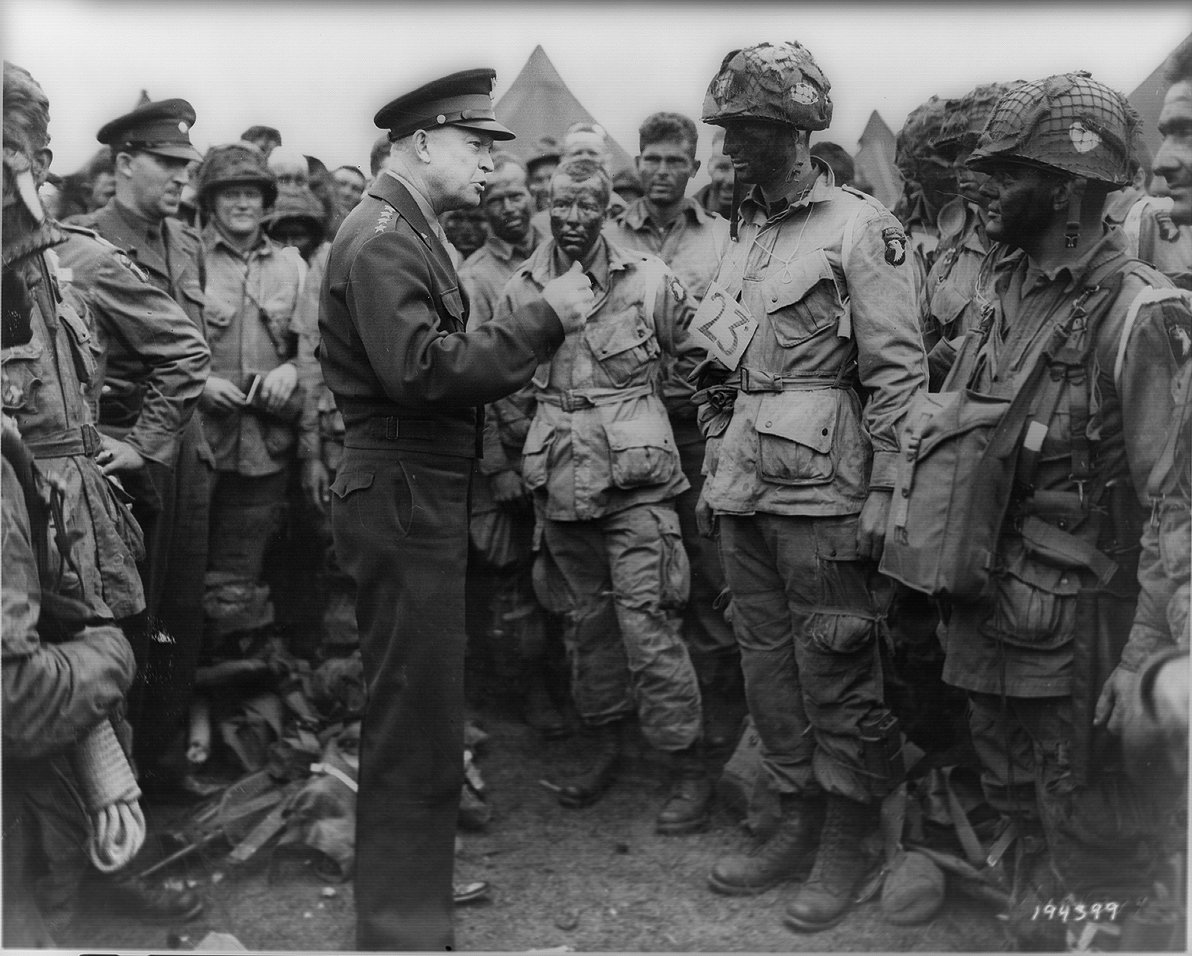
Eisenhower_d-day

“OK. We’ll go.”

Right then and right there, with those words, the order went out from the supreme commander of Allied forces in Europe.

The invasion of Europe was on.

General of the U.S. Army Dwight D. Eisenhower faced a terrible dilemma. The weather over the English Channel had been horrible. The invasion of France had been delayed once already. Hundreds of thousands of men had assembled and prepared in Great Britain for Operation Overlord.

Ike then caught a bit of a break. The weather was going to cooperate — more or less — on June 6, 1944. That’s when he decided to issue the order.

The men set out in ships. They boarded landing craft and hit the French coastline along five beachheads. American and British soldiers stormed four of them; Canadians stormed the fifth one.

Eisenhower had drafted two statements in preparation for that event, one to proclaim victory on the beach, the other to take full responsibility in case it went badly. He didn’t have to deliver the latter statement.

It has become fashionable in the present day to invoke Ike’s memory as we discuss the merits of the individuals seeking the U.S. presidency. Those who defend the current Republican presumptive nominee’s lack of government experience often cite Eisenhower’s own lack of such qualifications when he ran for president in 1952.

No, he didn’t have that kind of experience. All he did, though, was save the world from tyranny.

Eight years after saying simply, “OK. We’ll go,” the presidency became his for the taking.

So it was on this day 72 years ago that thousands upon thousands of young men followed their commander’s order.

May God bless them all.

Did we make a ‘mistake’ in Hiroshima?

90

I am drawn by a particular passage from remarks President Obama made while visiting Hiroshima.

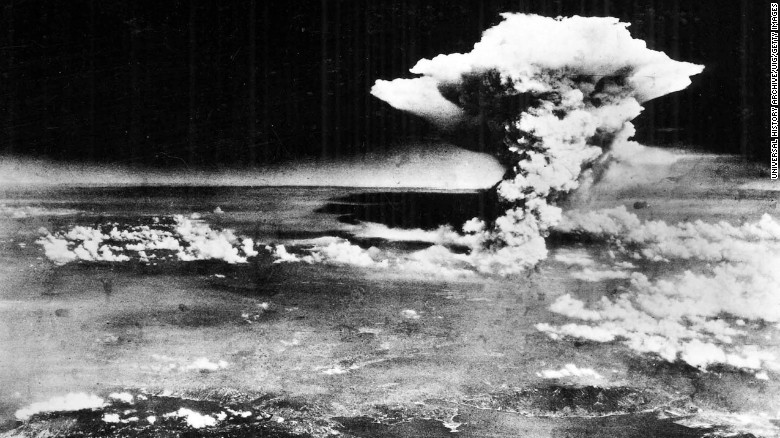
“We’re not bound by genetic codes to repeat the mistakes of the past. We can learn. We can choose. We can tell our children a different story,” Obama said in remarks at the memorial that commemorates the dropping of the atomic bomb on the Japanese city on Aug. 6, 1945.

To be sure, the president did not deliver an apology for the decision one of his predecessors, Harry Truman, made in seeking an end to the bloodiest war in human history.

Nor should he.

But the statement seems to imply that the decision was a “mistake.”

I beg to differ, Mr. President. I think many of your fellow Americans beg to differ as well, particularly those of us who are descended from those who were participating in that theater of operations at the end of the war.

The president’s speech was far-reaching and it spoke to a “moral awakening” that the event brought to the world. Indeed, it did, and for that awakening we should be grateful. The world saw first hand in 1945 just destructive these weapons can be.

http://www.politico.com/story/2016/05/obama-hiroshima-visit-223645

President Truman, who took office upon the death of Franklin D. Roosevelt, felt at that moment he had to make a decision that would (a) end the war quickly and (b) change the world forever.

It did both. President Truman said late in his life that he never regretted the decision to drop the bomb on Hiroshima and, three days later, on Nagasaki.

For me personally, he might have saved my own father’s life. Dad was in the Philippines serving in the Navy and well could have taken part in the campaign against the Japanese homeland. The bombs prevented that campaign from occurring.

Those of us who have this connection with what happened that at the end of World War II perhaps see the event with a different form of clarity than others.

I’m glad President Obama has spoken out about the need to remain alert to the tragedy of these terrible weapons.

Was its use in Japan a “mistake”?

No. It was not.


Now … about dropping that nuclear bomb

bomb

It’s been called the “elephant in the room.”

Barack Obama is about to become the first sitting U.S. president to visit Hiroshima, Japan. The question of the day: Will he apologize for a decision one of his predecessors made to order the dropping of a nuclear bomb on the Japanese city? A corollary question: Should he apologize?

The late-May visit so far doesn’t include remarks from the president that amount to an apology.

Here’s some unsolicited advice, Mr. President: Don’t do it. There is no compelling need to apologize for a decision that President Truman made as a way to end the bloodiest conflict in human history.

http://www.cnn.com/2016/05/10/politics/obama-hiroshima-visit-japan/index.html

The president said early in his time in office that he wanted to visit Hiroshima, which was targeted on Aug. 6, 1945 as the place where the United States would drop this then-secret weapon.

Many thousands of civilians died in that horrific blast. Are there regrets today for what happened then? Yes.

Let’s set this in some context.

Nazi Germany had surrendered in May 1945 to advancing Soviet, American, British and Allied troops. The war in the Pacific Theater was still raging, although Japan had retreated from all the territory it had claimed. The U.S.-led onslaught had brought the war to Japan’s homeland.

President Roosevelt died in April 1945 and the new president, Harry Truman, was briefed immediately about a project of which he knew next to nothing during the brief period he served as vice president.

He made the decision to use the weapon to persuade Japan that its continuing the fight would be futile.

Knowing what he knew at the moment, President Truman made the correct call.

My hope is that the current president, 71 years later, will recognize that his predecessor did what he believed at the time he had to do, which was to use the weaponry at his disposal to end the world’s bloodiest conflict.

Let me be clear about one more point …

I have a direct interest in President Truman’s decision. My father, who saw intense combat while serving in the Navy in the Mediterranean theater of operations from 1942 through 1944, had arrived in The Philippines in early 1945 and quite likely would have taken part in the effort to invade and conquer Japan.

I cannot prove this, but there’s a decent probability that the president’s decision to drop The Bomb on Hiroshima and later, on Nagasaki, might have saved my dad’s life.

For that reason, I say: God bless President Truman.


Hitler is dead already! Let’s keep him that way!

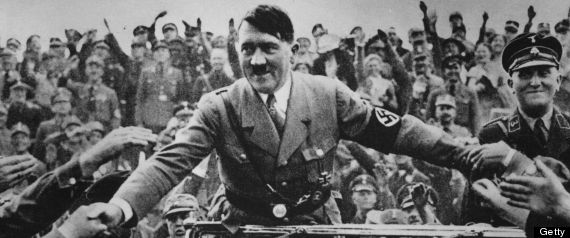
1933:  Adolf Hitler (1889 - 1945), chancellor of Germany, is welcomed by supporters at Nuremberg.  (Photo by Hulton Archive/Getty Images)

Adolf Hitler is dead.

What passes for his spirit remains very much alive in the guise of contemporary political debate … although I hesitate to use such soaring terminology to identify much of the back-and-forth that’s been occurring these days.

The latest object of the Hitler comparison is Donald J. Trump, the leading Republican Party candidate for president of the United States.

Do not misunderstand me on this point: I find Trump to be among the most repulsive major U.S. political figures of my lifetime. With every idiotic utterance that flies out of his pie hole, he moves closer to the very top (or bottom) of my unofficial list of despicable American political leaders.

I am weary to the max, however, of the Hitler references.

Of all the beasts who have passed themselves off as human beings, Hitler stands alone. The Holocaust defies any human being’s ability to comprehend such a dastardly act. The murderous regime he led for a dozen years and the war he started in Europe produced a bloodbath beyond all reckoning.

Hitler is without question the 20th century’s most hideous tyrant.

Trump’s world view — such as it is — deserves to be critiqued on its own. That said, I do not care to see these Hitler references attached to anything Trump has to say.

To be sure, the current president of the United States has been demonized in this manner as well, as have have previous presidents of both major political parties.

Many politicians provide ample grist for criticism. Is it really necessary to invoke Hitler’s name whenever we disagree with what a contemporary U.S. politician has to say?

To my ears, doing so seems to fall into the category of foul-mouth comedians. Someone once said that comics who depend on verbal filth usually have run out of clever things to say.

Politicians and pundits who invoke Hitler’s name to offer criticism, then, might be falling into the same category.