Code of conduct? Go for it!

right_way

Amarillo’s City Council might be heading for perhaps its most productive round of change yet.

Council members are considering the adoption of a code of conduct for the governing body.

The five-member body met in a work session and decided to consider such a code that governs now council members interact with the public, city staff and each other — and how the council should operate in executive, or closed, session. As Councilman Brian Eades — the council’s senior member — noted of the proposed code of conduct, “It’s something we’ve never had to have before.”

Perhaps it’s time.

Yes, council members have behaved badly at times since the new crew took office this past spring. There’s been a good bit of public sniping, some snarkiness among council members and allegedly some hard feelings among council members and certain city staff members.

The code ought to include how the council should conduct itself when it’s meeting officially in public session. It also ought to stipulate — and I do not know if city guidelines do so already — that council members should not interfere with staffers’ performance of their duties as instructed by their administrative supervisors.

I had heard through some back channels that there had been a bit of administrative meddling from council members in that regard; if so, that has to stop.

The three newest council members ran on a platform of “change.” Some of it has been good; some of it has been, well, weird.

If the change agents who were elected are ready to adopt a comprehensive code of conduct that ensures professionalism and collegiality — even in the face of disagreement — then the city will be making some serious progress.

Go for it, gentlemen.


May the right university system win

reg_vet-img

My pal Jon Mark Beilue — a columnist for the Amarillo Globe-News — as usual, has laid out a fascinating critique of a growing dispute between two highly regarded Texas university systems.

One of them, Texas Tech, just announced plans to build and develop a college of veterinary medicine in Amarillo.

The other one, Texas A&M, has fired a shot across Tech’s bow, implying it will resist the effort to build an animal doctor school in the Texas Panhandle.

Beilue, himself a Tech alumnus, has taken up for his alma mater. But he’s right on the merits of his argument to argue that A&M is better than to exhibit a petulant streak in seeking to block Tech’s entry into the world of veterinary medicine academia. A&M’s credentials as a premier veterinary medicine institution are impeccable.

But let’s boil this possible tempest down to a more personal level.

Two men are leading their schools’ efforts. They both have at least one political thing in common: They both served in the Texas Senate.

Bob Duncan is chancellor of the Tech System. He’s a Republican who left the Senate this past year to take over the Tech job after Kent Hance retired to become something called “chancellor emeritus.”

Duncan’s Senate reputation is sparkling. He was named routinely by Texas Monthly magazine every two years as one of the top legislators in the state. His job now as chancellor is to raise money for the Tech System and he gets to lobby his friends in the Senate for help in that regard.

John Sharp served in the Senate quite a while ago, from 1982 to 1987; prior to that he served in the Texas House of Representatives. He’s a Democrat, who left the Senate to serve on the Texas Railroad Commission and then as Comptroller of Public Accounts. He, too, developed a reputation as a solid legislator, although he has fewer individuals with whom he served in the Legislature than his rival chancellor, Duncan.

This face-off will be fun to watch, particularly if it develops into something more than it appears at the moment.

I hope it doesn’t grow into anything more serious. Texas Tech is entitled to develop school of veterinary medicine anywhere it so chooses. That the system brass decided to bring it to Amarillo is a huge plus for the Texas Panhandle.

My hope would be that if Sharp stiffens his resistance that Duncan could call on his fellow Republican buddies in the Panhandle legislative delegation to use their own considerable muscle to make the veterinary school a reality.

As Beilue pointed out in his essay, the value of a veterinary school to any region of this state should rise far above petty politics.


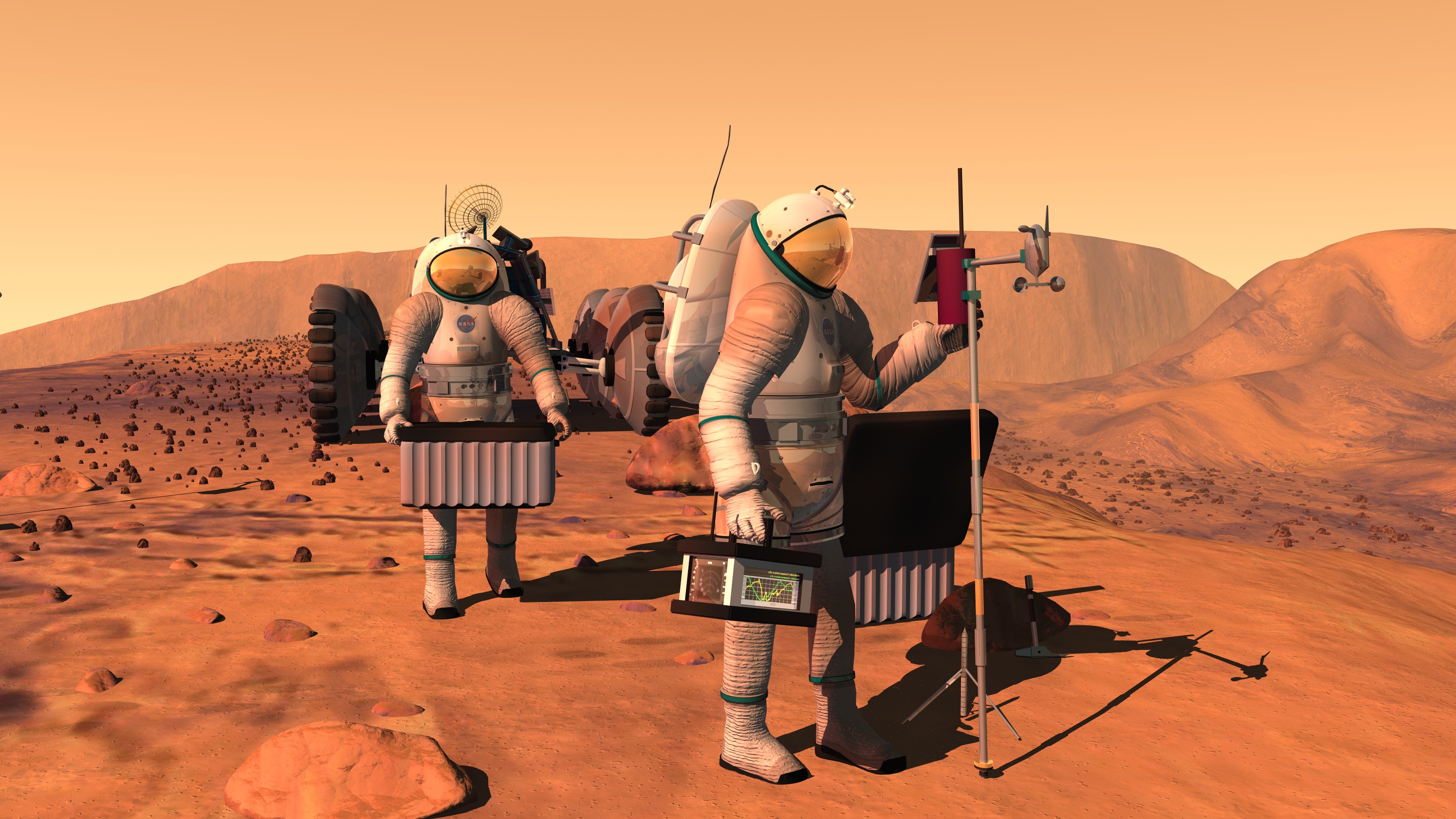
How do you prepare for a trip … to Mars?

Manned_mission_to_Mars_(artist's_concept)

Space travel always has intrigued me.

I wanted to fly into space. Indeed, I applied once for NASA’s “journalist in space” program, hoping the space agency would pick me to be the first working journalist to report from Earth orbit.

The program ended on Jan. 28, 1986, when the shuttle Challenger blew up, killing all seven crew members — including the first teacher ever chosen for a space mission.

Well, we’ve been to the moon. Twelve men walked on its surface, making them quite an exclusive club of adventurers; there should have been 14 of them, except that Apollo 13 didn’t make it to the moon’s surface.

One of those men was interviewed by the AARP magazine and was asked about a possible — if not probable — flight to Mars.

Edwin “Buzz” Aldrin, the second man to set foot on the moon during the Apollo 11 mission, said the greatest danger facing those who land on Mars will be “mental status. It is the growing isolation, the irritation, the realization that this is the way it’s going to be.”

Think about Aldrin, by the way, for just a moment. Does anyone know off the top of their head the name of the second person to fly solo across the Atlantic Ocean? Or the second person to break the sound barrier in a jet? Most of us, though, do know the name of the second man to walk on the moon. Hey, I’m just thinking out loud for a moment.

I’ve tried to ponder over the years as a Mars mission became more of a probability: How does NASA find the right person to participate in a mission that will take years to complete?

What in the world does the space agency ask the prospective candidate?

How will you cope with knowing you’re going to be many millions of miles from Earth? How willing are you to accept the possibility that you might not return home? The moon missions were a relatively simple mission compared to this one; do you have what it takes to spend years in a space suit?

I guess I am intrigued by the psychological makeup of the individuals chosen to make this journey.

Aldrin has written that we could land on Mars by 2040. Let me see: I’ll be 91 by then. That’s too old to make the trip.

However, if my luck holds out, I’ll be around to see it and if my luck is even better, I’ll have enough of my marbles still intact to know and appreciate what’s happening in real time.

Aldrin thinks the commitment to land on Mars will come during the next president’s administration. “The next president,” he told AARP, “will use the 50th anniversary of the Apollo missions to say the U.S. will lead international efforts to land on Mars within two decades.”

I pray that he’s right.


Is this a form of socialism?

Wrestlemania_jpg_800x1000_q100

Greg Abbott, the candidate for Texas governor in 2014, spoke differently about subsidizing sports and entertainment events than when he became the actual governor.

Back when he was running for the office — and on his way to trouncing Democratic opponent Wendy Davis — Abbott frowned on the state pouring public money into private ventures.

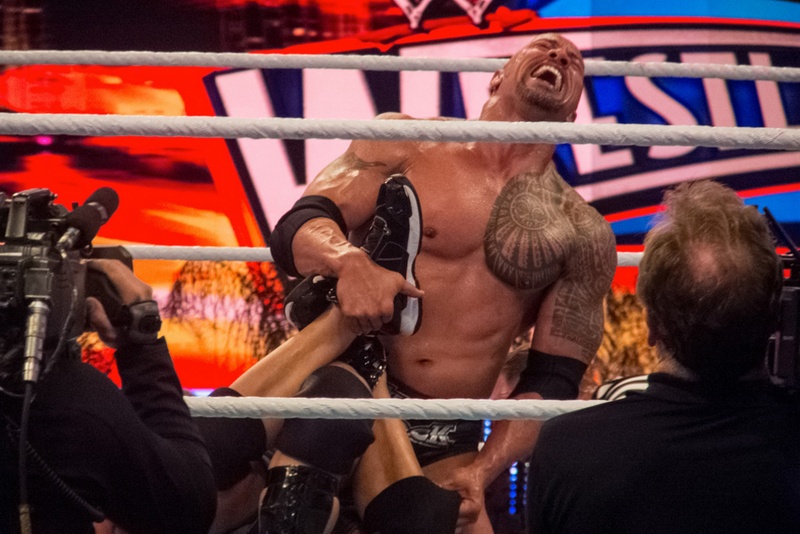
Hey, but what happened? He’s governor now and he’s just committed $2.7 million in public money to help support a World Wrestling Entertainment event next spring at AT&T Stadium in Arlington … aka Jerry World.

WWE, for those who’ve been living under a rock since the beginning of time, produces fake wrestling events. However, it’s huge, man!

Gov. Abbott signed off on a plan to bolster the Events Trust Fund, which the state set up to help defray the cost of these extravaganzas.

If you want to know the truth, I kind of like Candidate Abbott’s view better than Gov. Abbott’s idea.

According to the Texas Tribune: “The Events Trust Fund is designed to defray the costs of some large events by paying state taxes collected during the events, such as those levied on hotel reservations and car rentals, back to event organizers. Local governments or nonprofits they authorize must approve the events, and the cities that host them are required to chip in some of their local tax receipts, too. State officials only calculate the size of the payment from the fund after an event is held and the economic activity has been documented, according to the governor’s office. ”

http://www.texastribune.org/2015/12/11/texas-spending-27-million-wrestlemania/

OK, I get that WWE’s big shows produce a lot of economic activity to any community that hosts them.

Then again, this also seem to smack a bit of what some have called “sports socialism.” Public money gets kicked in to support a private enterprise event. Granted, the $2.7 million that Abbott authorized is veritable chump change when compared to the entire state budget, if not the entire amount of money set aside in the Events Trust Fund.

These events ought to be able to stand on their own. It’s not as if the venue that’s going to play host to WrestleMania is a dump. It’s a state-art-of-the-art stadium where the Dallas Cowboys play professional football under the ownership and management of Jerry Jones, who — last I heard — wasn’t worried about where he’d get his next meal.

What’s more, the money going to this event is public money. Meaning, it’s my money, and yours.

With the price of oil plummeting and the state perhaps looking for ways to recover from the revenue shortfall that’s coming, let’s hope we don’t come up short because we’ve contributed money to help pay for a fake wrestling show.


Executive orders go with the job

Law-Concept-300x270

Presidents serve as the nation’s “chief executive” and, therefore, have the constitutional authority that goes with the title.

An interesting graph came across my radar this afternoon. It comes with a year-old story, but it’s still rather fascinating.

Republicans have been pummeling President Obama by alleging that he’s too quick to issue executive orders, that he circumvents Congress too willingly.

The graph tells a fascinating tale of just how the 44th president has under-utilized the executive authority granted to him by the U.S. Constitution.

Take a look at the graph. You’ll see a number of interesting things.

One is an obvious point. President Franklin Roosevelt is the all-time champ at issuing presidential executive orders. No surprise there: He served three full terms and was elected to a fourth term before dying in office in April 1945.

It’s interesting, though, to look at who’s No. 2 in the executive authority rating. It’s FDR’s immediate predecessor, President Hoover, who served just one term.

A Democrat is No. 1, a Republican is No. 2, while Democratic President Woodrow Wilson is a close third.

That power-hungry and allegedly “lawless” 44th president, Barack H. Obama? He’s issued the fewest executive orders since President Grover Cleveland. (I’ll add here that the numbers of presidential executive orders are as of Oct. 20, 2014.)

So, I guess my question is this: What’s the beef with the current president’s use of the executive authority?

‘Tis the season … of the polls

Polls%20and%20Surveys%20pic

Donald Trump loves polls, especially when they show him leading the still-large pack of Republican presidential candidates.

Barack Obama isn’t so much in love with them.

However, the great underreported story has to be Congress’s continued miserable standing among American voters, according to those pesky polls.

I follow RealClearPolitics summary of polls. I like tracking the president’s poll standing, not to mention the candidates seeking to succeed him a year from January.

But look at how poorly Congress is faring.

The RCP polls are a compilation of leading public opinion surveys. The last one, which I have attached to this blog post, puts Congress’s rating at 12 percent.

Twelve percent!

Nearly nine out of 10 Americans surveyed think Congress is doing a crappy job of governing.

President Obama’s latest poll standing, while not great, is at around 43 percent. There’s an 8-point difference between those who approve of the job he’s doing and those who disapprove. The congressional approval/disapproval spread? How about 63.8 percent?

I’m not usually one to rely too heavily on polls. I understand their nature, that they serve merely as snapshots that capture a political moment. Polls go up and down like Yo-Yos.

However, while Obama’s critics keep lambasting his lackluster poll numbers, they don’t seem to take into account that Congress’s poll standing is far worse — and it, too, hasn’t moved much at all for, oh, about the past three years.

Obama is a member of one party; Congress is controlled by the other party.

The president’s polling isn’t great. Congress’s standing is downright miserable.


Obama fails to channel LBJ

claire

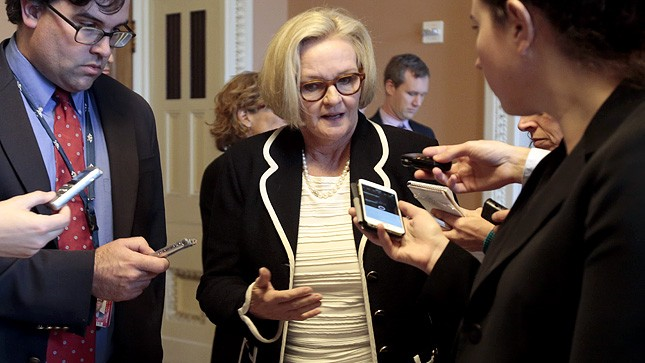
Claire McCaskill calls herself a “friend and supporter” of Barack Obama.

But the Democratic U.S. senator from Missouri has issued a candid assessment of the job her fellow Democrat has done as president of the United States.

The president’s major failing, according to McCaskill? He did not learn how to work with Congress.

The Hill reports on McCaskill’s remarks about Obama: “But one of the president’s shortcomings is that sometimes he sees the world through his eyes and doesn’t do, I think, enough work on being empathetic about how other people view things.”

McCaskill blisters president

In truth, McCaskill might be a bit behind the curve when critiquing the job the president has done.

I don’t think he’d mind my saying this, but a now-retired college administrator told me much the same thing during the president’s first term in office.

Former Amarillo College President Paul Matney and I were having lunch one day when Matney lamented the president’s testy relationship with congressional leaders. Matney wished that the president would employ the skill that the late President Lyndon Johnson used to great effect.

Johnson, of course, rose from the Senate to the executive branch of government, as Obama has done. LBJ served as vice president from 1961 until Nov. 22, 1963. Then he became president in the wake of tragedy.

When LBJ moved into the Oval Office, he harnessed all his legislative skill to shepherd landmark legislation through Congress. He was a master of working not just with fellow Democrats, but with Republicans.

Matney bemoaned that President Obama had not developed that kind of bipartisan rapport and it cost him dearly.

McCaskill now — near the end of Barack Obama’s presidency — echoes much of what Paul Matney said years ago. LBJ’s legacy, which was tainted for many years after he left office in 1969 by the Vietnam War, is beginning to look better all the time.

He understood that he needed the legislative branch to make government work, that he couldn’t do it all alone.

As Sen. McCaskill has noted, Barack Obama hasn’t seemed to have learned that lesson.


Get back into the game, Jerry Patterson

RailRoadCommissioner_2_jpg_800x1000_q100

The Texas Railroad Commission is a misnamed panel that does important work for the state.

It no longer regulates railroads. It does regulate the Texas energy industry.

So it is with some anticipation that I read today that Railroad Commissioner David Porter won’t seek re-election next year to the three-member panel.

Patterson may run for RRC.

His decision is spurring some activity among Texas Republicans. One of them happens to be someone I happen to respect and admire very much.

He is Jerry “The Gun Guy” Patterson, the former Texas land commissioner and a one-time state senator from the Houston area.

Patterson is a proud Marine and Vietnam War veteran. He also has delightful self-deprecating sense of humor; he once told me he graduated in the “top 75 percent of my class at Texas A&M.”

Patterson also was the author during the 1995 Texas Legislature of the state’s concealed-handgun-carry law. I opposed the law at the time, but my view on it has “evolved” over time. I am not an active supporter of the concealed-carry law; I just don’t oppose it.

Patterson did a great job running the General Land Office. He helped he GLO provide low-interest home loans for Texas military veterans.

I cannot speak to any expertise he might have on oil and gas issues. I do, though, respect him greatly as a dedicated public servant — and I hope he decides to get back in the game.


MPEV as parade staging area?

ballpark

I used to say to my mother, “Mom, I was thinking …”

To which Mom would quip, “Oh, beginners luck?” Mom had a million of ’em.

Well, I was thinking the other day as Amarillo’s Electric Light Parade was tooling down some downtown streets: Wouldn’t the multipurpose event venue be a suitable location for the parade either to begin to end?

The MPEV development is moving forward. Critics of the venue keep insisting that there’s insufficient uses for the proposed building, that it wouldn’t be kept busy enough.

Well, the Electric Light Parade is just one event in which the MPEV could play a part. Yes, it’s just one night a year. But it symbolizes a number of one-nighters that could occur at the venue, given the right amount of creative marketing.

Back in the old days, when I was growing up in Portland, Ore., my parents would take my sisters and me to the Rose Festival Grand Floral Parade. It’s a big event that clogs downtown Portland every June when the roses are in full bloom and the City of Roses celebrates the flowers for which Portland is famous.

We usually would find a spot to sit along the parade route.

But one year I remember Mom and Dad taking us to Memorial Coliseum, which once was a state-of-the-art athletic arena. It was built in 1960; its cost then was $8 million. It became home eventually to the Portland Trail Blazers professional basketball team.

It also used to be the starting point for the Grand Floral Parade.

Mom and Dad took us there one year to watch the parade take off. The marchers and the floats would exit the building, move across the Burnside Bridge that spanned the Willamette River and through downtown.

It served a marvelous purpose back then.

Why not use our very own venue for such a thing here?


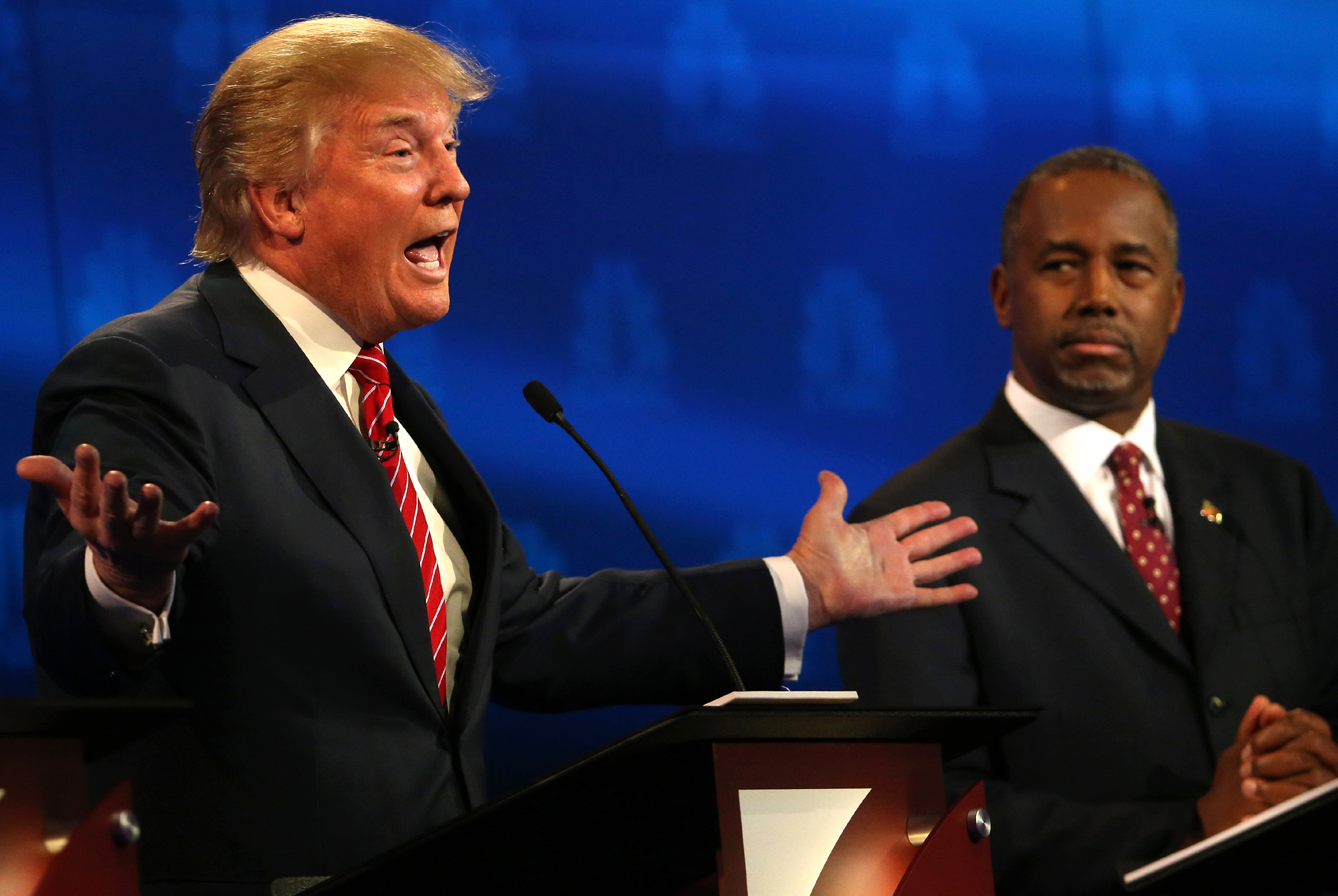
Command decision: no-politics policy to be lifted …

trump and carson

… The day after Christmas.

I’ve made a call on the immediate future of High Plains Blogger. I can do that, because it’s my blog.

I had pondered whether to maintain the “no-politics zone” policy on the blog through the entire holiday season. I stated it publicly here. My hope initially was to keep presidential political commentary out of this blog through Christmas and through the week between Christmas and New Year’s Day.

I no longer can maintain my silence in this forum for that long.

We’ve only got 15 more days until Christmas. I believe I have the intestinal fortitude to keep presidential political commentary out of High Plains Blogger through Christmas.

After that? No can do.

There’s too much material out there. Too much low-hanging fruit. Too many fish in that barrel. Too many targets of opportunity. The environment is just too damn target-rich.

I won’t name names. You know who  I’m talking about.

For now, I’ll leave it at that.

I’ll keep offering brief commentary via Twitter, which feeds to my Facebook news feed.

High Plains Blogger, though, will remain a no-politics zone.

For now …