Third party looking more like an option … really

ORLANDO, FL - SEPTEMBER 22:  Former New Mexico Gov. Gary Johnson speaks in the Fox News/Google GOP Debate at the Orange County Convention Center on September 22, 2011 in Orlando, Florida. The debate featured the nine Republican candidates two days before the Florida straw poll. (Photo by Mark Wilson/Getty Images)

I am a dedicated two-party presidential election traditionalist.

My tendency is to dismiss third-party candidacies. My thought always has been that they have no chance of winning, therefore I won’t waste my vote, which I value greatly.

I am now about to announce that I am considering following the lead of one of my sons, who declared just the other day that he’s likely to vote for someone other than Donald J. Trump and Hillary Clinton.

There, I’ve announced it.

Two former moderate Republican governors have teamed up as Libertarians seeking to run for president and vice president.

New Mexico’s Gary Johnson is running for president; he’s tapped Massachusetts’ William Weld as his running mate.

The Libertarian Party must nominate them. My strong hunch is that they will.

This won’t be Gov. Johnson’s first rodeo. He ran four years ago and collected about a million votes. I’ll bet you some serious money he and Gov. Weld will do a lot better than that this year.

The last major alternative to the two parties came in 1992 when Henry Ross Perot challenged President George H.W. Bush and Arkansas Gov. Bill Clinton. He won 19 million votes, but not a single Electoral College vote.

And, no … he didn’t cost President Bush his bid for re-election. I’ve seen ample polling data that suggest that even without Perot on the ballot that Clinton would have won by roughly the same margin he rolled up in 1992.

Why am I thinking about a third party? I’m not entirely thrilled with Hillary Clinton as the Democratic nominee. Trump never — in a zillion years — would get my vote.

Don’t misinterpret me here. I haven’t yet committed to a third party candidate. I’m merely thinking about it, which by itself represents a major shift from my normal political thought process.

Johnson’s major claim to political fame was his call for legalization of marijuana. I was working for a newspaper — the Amarillo Globe-News — at the time he issued that call and the paper’s corporate ownership never would support legalization of marijuana; therefore, I wrote editorials criticizing Gov. Johnson’s “wacky” notion. I’m now writing my own blog, under my own name, and my view on that issue is, well, evolving.

Weld is another moderate former GOP governor. No single stands out, but I’ve long perceived him to be far from what’s becoming the Republican “mainstream” that wants to round up illegal immigrants, wants to criminalize abortion and wants to send American troops into battle at the slightest sound of gunfire.

Yes, this is just another example ofĀ how wacky this election campaign has become.
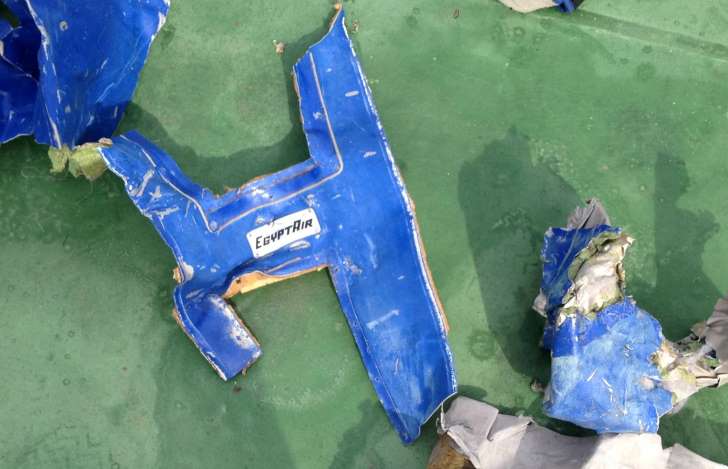
 

Was it a terror attack … or something else?

egypt air

I’m puzzled.

Republican presidential nominee-in-waiting Donald J. Trump bellowed that he is absolutely certain it was a terrorist attack.

Democratic nominee-to-be Hillary Rodham Clinton said in more restrained tones that it appears to be an act of terror.

Greek aviation officials said mechanical failure likely wasn’t the cause.

FBI director James Comey has dispatched the finest investigators in the world to the scene of the tragedy.

Everyone seems to think the downing of EgyptAir 804 was the act of the Islamic State, or al-Qaeda, or some other nefarious, evil group.

Where, though, are the claims of responsibility?

History tells us that ISIS is quick to take “credit” for these evil acts. Al-Qaeda is a little slower to do so, but not this slow.

Indeed, terrorist groups want the world to know they have succeeded in committing these terrible deeds. In the case of this tragedy, 66 people have died. The jetliner was en route from Paris to Cairo when it veered 90 degrees and then spun in a circle before apparently plummeting into the Mediterranean Sea near the Greek island of Karpathos.

So, the question must be asked: Was it an act of terror?

The latest news is that sensors reportedly detected smoke inside the plane moments before it plunged into the sea.

Was it mechanical or electrical failure after all?

Let’s turn for just a moment to the politics of it all.

Perhaps you heard Trump say immediately that terrorists did this, that anything less than an all-out retaliatory strike against ISIS would be a sign of weakness.

Clinton didn’t want to be left on the sidelines, as she, too, sought to lay blame, although not with the bellicosity that Trump exhibited.

There remains a good chance that search teams will find the flight data recorders on the sea bottom. Absent any declaration of responsibility from terrorists, it would be wise in the extreme to see what’s contained in those recorders.


Has conflict frayed Trump’s fundraising efforts?

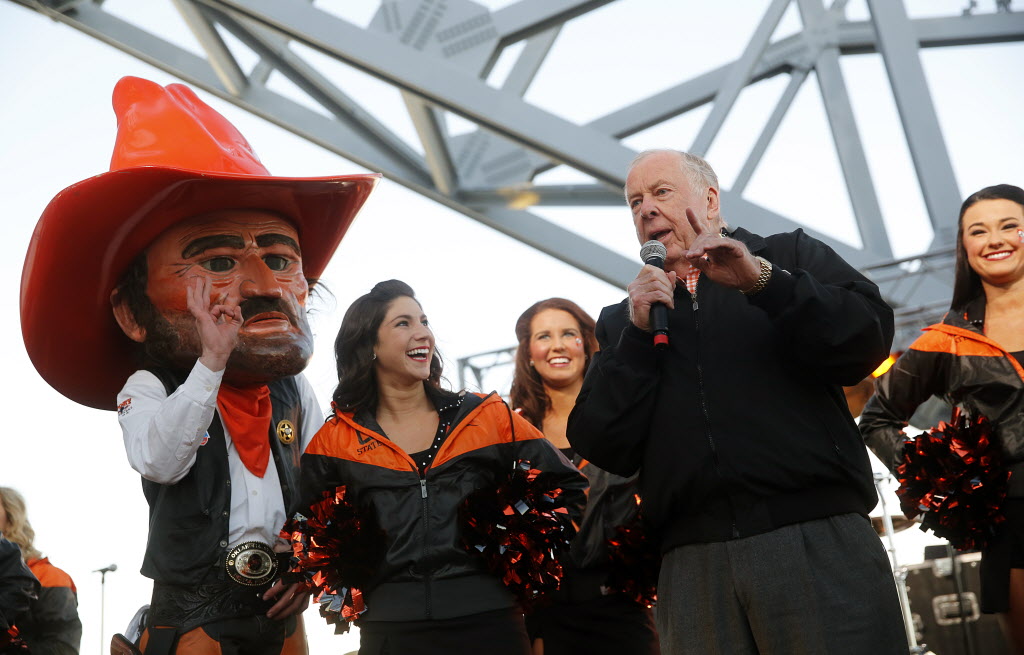
Oklahoma State alum T. Boone Pickens, Jr. fires up the Cowboy fan base during a tailgate party on the East Plaza of AT&T Stadium before the Cotton Bowl game against Missouri, Friday, January 3, 2014 in Arlington, Texas. (Tom Fox/The Dallas Morning News) 01042014xSPORTS

T. Boone Pickens says he’s committed to electing Donald J. Trump as the next president of the United States.

Trump, the presumptive Republican nominee,Ā is far friendlier to the oil and natural gas industry than his likely DemocraticĀ foe this fall, Hillary Rodham Clinton. Pickens —Ā a former Amarillo resident — made his immense fortune in oil and natural gas.

It follows, then, that Pickens would be in Trump’s camp.

But there’s been a hiccup. Maybe. Perhaps.

Pickens was going to play host to a meeting at his sprawling Mesa Vista Ranch north of Pampa on June 11-3. The meeting was for a super-PAC supporting Trump. It’s been called off.

Why? Pickens’ spokesman blamed it on “scheduling conflicts,” which often becomes kind of a throwaway excuse for anything that gets postponed, or canceled.

There have been reports, though, of strife and turmoil among the Trump campaign and its fundraising machine, according to the Dallas Morning News.

http://trailblazersblog.dallasnews.com/2016/05/t-boone-pickens-postponing-major-fundraising-event-for-donald-trump.html/

Which is it? Scheduling and logistics? Or is there trouble in Trump World?

I’ve had the pleasure of interviewing Pickens three times — the most recent time just two weeks ago. I don’t know him well.Ā  I know a lot more of him, though, having studied him from some distance over nearly 30 years.

A part of me just doesn’t believe he would have announced a big event at his ranch without having nailed down all the particulars he needed to make it a reality.

And that kind of makes me wonder if the issue doesn’t lie within the Trump apparatus.

Pickens’ team says the event will occur later this summer, after the Republican convention.

We’ll just have to wait and see … yes?


Pay attention, Gov. Abbott

abbott

There’s little I can add to this blog post by Brian Sweany of Texas Monthly.

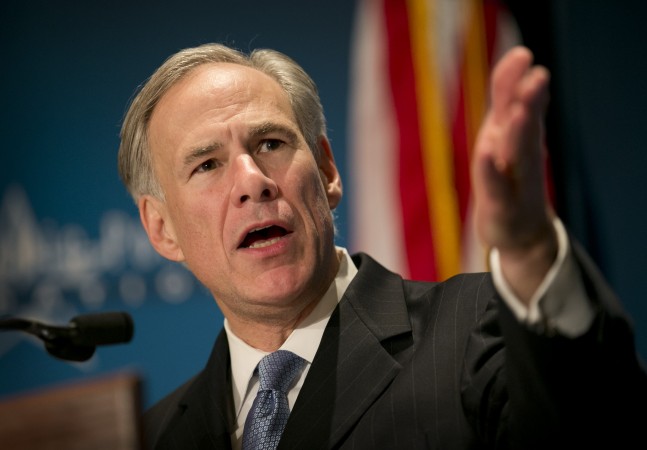
Except, perhaps, this: Texas Gov. Greg Abbott has a sharp legal mind and he ought to know more than he’s acknowledging regarding the conduct of the state’s attorney general, Ken Paxton.

Here’s Sweany’s blog post:

http://www.texasmonthly.com/burka-blog/abbotts-feigned-ignorance/

Sweany asks a pertinent question: Why doesn’t the governor know more than he knew more than a year ago about Paxton’s conduct?

The AG has been indicted by a Collin County grand jury on felony accusations of securities fraud. The Securities and Exchange Commission has filed a complaint as well. Paxton is accused of failure to disclose properly income he earned while giving investment advice.

As for Abbott’s “feigned ignorance,” as Sweany calls it, I’ll just add this.

Abbott was a trial judge in Houston before being elected to the Texas Supreme Court. He then was elected as the state’s attorney general, a post he held until January 2015 when he became the state’s governor.

Paxton succeeded Abbott at the AG’s office.

It would seem implausible that the governor knows nothing more now than he did a year ago. I don’t want Abbott to convict his Republican colleague, either, through statements to the media.

Still, to borrow a phrase: Gov. Abbott, what did you know and when did you know it?


Yes, it’s a cutthroat business

21tampapaper2-master675

Media companies operate in a highly competitive and often ruthless environment.

A take-no-prisoners approach to wheeling and dealing is commonplace. Consider the recent acquisition by the Tampa Bay Times of the Tampa Tribune. The Times bought the Tribune and then shut the paper down after a 123-year run on the other side of the Florida bay.

According to the New York Times article attached here, former Tribune employees felt betrayed by the takeover. They didn’t see it coming.

Well, let me be among the many individuals who’ve worked in print journalism to offer this bit of solace, not that it will soothe the pain: It could’ve been worse.

I worked for nearly 11 years for the Hearst Corporation, which has exhibited its own heavy hand in acquiring competing newspapers. Although I wasn’t affected directly by Hearst’s takeover strategy, I know many former colleagues who were.

In the late 1980s, Hearst was operating the San Antonio Light, which was in the midst of a nasty newspaper “war” with the San Antonio Express-News, which was owned by Rupert Murdoch’s company. Hearst decided to take the offensive, so the company moved the publisher of the Beaumont Enterprise, where I worked at the time, to San Antonio to take over as head man at the Light; I believe it was in 1988.

The new Light publisher — George B. Irish — was given the task of preparing for a serious corporate takeover.

Hearst decided to purchase Express-News — and then it promptly shut down the Light. Yes, the company “rewarded” its loyal employees, who had fought the good fight against the E-N, by giving almost all of them their pink slips.

A handful of Light hands were kept on. Most were let go. If memory serves, they were given severance packages. Still, the pain was palpable.

In 1995, Hearst went after the Houston Post. It purchased that paper, closed it down and left the state’s largest city with just one paper, the Chronicle, which Hearst already owned.

It’s a tough world, man.

I feel for my former colleagues in Tampa. Please know this: You are not alone.

Now, that is going to be some ballpark

baseball

Amarillo is getting ready — soon, I hope — to unveil plans for construction of a baseball park downtown.

Its price tag has inflated a bit, from $32 million to around $50 million — give or take. The plan is to lure a Class Double-A baseball team that’s affiliated with the San Diego Padres of the National League. The team would relocate here from San Antonio, which is seeking to bring a Class Triple-A team from Colorado Springs.

Musical chairs, anyone?

Get a load, though, of what they’re planning for Arlington, Texas, where the Texas Rangers play hardball in the American League.

The city leaders want to replace a 22-year-old ballpark with a $900 million structure. Good deal, yes? I guess so. These ballparks cost a lot of dough these days.

I only wish the Arlington folks would drop the idea of putting a roof on the new stadium, presuming it will be approved by voters who will be asked for their blessing.

Read about it here:

http://www.star-telegram.com/news/local/community/arlington/article78764147.html

I happen to be a baseball traditionalist. I dislike playing an outdoor game under a roof. You play basketball in gymnasiums, not baseball. For that matter, you also play baseball on grass, not something called “artificial turf.”

Don’t get me started on the designated hitter, pine tar and all the body armor that batters wear when they’re facing a fastball-throwing pitcher.

When the Amarillo ballpark gets rolled out, my sincere hope is that the architects that the Local Government Corporation will hire will keep it simple.

I am not thrilled at the escalated cost of the ballpark — aka the multipurpose event venue — but it can be kept somewhat in check if we dispenseĀ a measure of theĀ glitz and glamor that’s likely to be built into that showcase down yonder in Arlington.

Politicians muck up public education

texas-education-hat

I’ve lived in Texas for more than 32 years and have gotten quite accustomed the state’s penchant for electing people to so many public offices.

The Texas Constitution was set up as a document designed to decentralize power. I get it. Honest, I do.

But one elected body doesn’t need to be an elected body. I refer to the State Board of Education.

Fifteen individuals sit on that board, representing districts carved out of the state. They’re Texas residents who have varying degrees of expertise in public education, in curriculum, in all the issues affecting students and teachers.

But the upcoming Republican Party runoff election set to occur next week in East Texas reveals one of the hazards of this system of having politicians setting public education policy.

Mary Lou Bruner is running for a seat representing District 9. Her opponent is Keven Ellis, who by all rights should win. Bruner, though, is the favorite. She’s also an individual who has made some absolutely astounding public statements that make many of us question her fitness for the job.

She says the president of the Unites States once was a male prostitute; she says dinosaurs became extinct because the baby lizards couldn’t fend for themselves once Noah’s ark made land in Turkey. There’ve been other equally weird statements.

In reality, Bruner exemplifies just part of the problem with the SBOE. The other politicians on the board keep fighting among themselves over curriculum. Some folks want public schools to emphasize texts that rely on religious faith. Others disagree with that. The board once got into a serious battle over school fund investment policy.

What’s a credible alternative to electing these individuals?

Perhaps we could have the governor appoint them, selecting people from academia and/or from business. The state is full of qualified academic champions and business titans.

Have these folks stand for confirmation by the Texas Senate. Have them serve, say, six-year terms.

The state at one time used to appoint its state education board. The Legislature, though, returned the issue to the voters, asking them to decide on a constitutional amendment returning to an elected board. Texans voted “yes” and aren’t likely to give up that right.

But the state’s political structure seems to have flown off the rails, as we’re quite possibly going to see in East Texas if SBOE District 9 voters elect Mary Lou Bruner.

She shouldn’t be in a position to be taken seriously. However, the state’s extreme rightward lurch speaks — in my view — to the need to reform the Texas State Board of Education.


Thanks for listening, Gov. Fallin

Oklahoma-Governor-Mary-Fallin-Vetoes-Abortion-Bill-650x488

Oklahoma Gov. Mary Fallin likely didn’t read my earlier blog post about a bill that landed on her desk that would have made abortion illegal in her state.

Then again …

OK, I’ll take all the credit I deserve. How’s that?

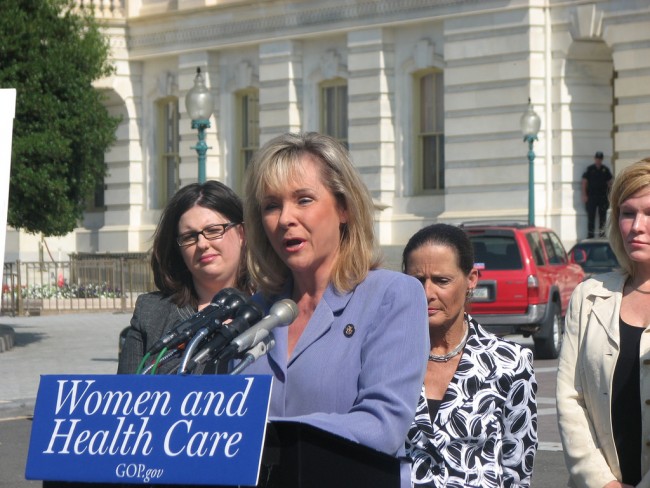
Fallin vetoed Senate Bill 1552 this afternoon, calling it too ambiguous. The Republican governor remains fervently pro-life, but she’s also a realist. She knows that SB 1552 likely wouldn’t withstand a constitutional challenge.

http://www.msn.com/en-us/news/us/okla-governor-vetoes-sweeping-abortion-ban-bill/ar-BBti0bA?li=BBnb7Kz

Roe v. Wade, the landmark 1973 Supreme Court decision that made abortion legal in most cases, remains the law of the land. That’s the entire land, which includes Oklahoma.

There actually was a voice of reason among the Oklahoma legislators who sent SB 1552 to Fallin’s desk. It came from a Republican senator, who also happens to be a physician.

Dr. Ervin Yen was the lone GOP senator to vote against the legislation. He described it as “insane.”

I’d bet real American money that Gov. Fallin likely disagrees with the insane description. Still, she did the right thing by vetoing a bill that clearly violated established federal law.

Why not debate climate change in public schools?

books

As a believer in the view that human beings are contributing to Earth’s changing climate, itĀ causes me some pain to say the following.

I believe the Portland Public Schools system has made a mistake in banning texts that question the causes of climate change.

Oregon’s largest public school district has issued a directive that bans texts that cast doubt on what many scientists have said: that human activity has created a global warming crisis that threatens the planet’s ecosystem.

http://www.usnews.com/news/articles/2016-05-20/portland-public-schools-ban-educational-materials-denying-climate-change?src=usn_fb

I grew up in suburban Portland, Ore., so this decision strikes me close to my heart. I attended Portland schools until the seventh grade;Ā my parents moved us to the ‘burbs in East Multnomah County in 1962.

I have long feared that human activity — deforestation and the emission of carbon gases into the atmosphere — have contributed to the changing climate. Did you see the latest report that said April was the 12th consecutive month of record temperatures worldwide?

That doesn’t mean, though, that we cannot allow our students access to those who doubt the results of such activity.

This isn’t even close to the same thing as teaching the biblical version of Earth’s creation alongside Charles Darwin’s evolutionary theory. One theory is based on a faith-based belief; the other is based on science. Teach the scientific theory in public schools and teach other in church.

Climate change and its causes, though, seems to be fair game for an open discussion in our public schools.

The Portland school system has slammed the door on those who have raised legitimate concerns about the notion that Earth’s climate is changing and that humans are the primary cause of that change.

Do I accept those concerns? No. That doesn’t mean they’re coming from crackpots.

The students would do well to be exposed to competing ideas on this important global issue.


Get ready for big abortion fight

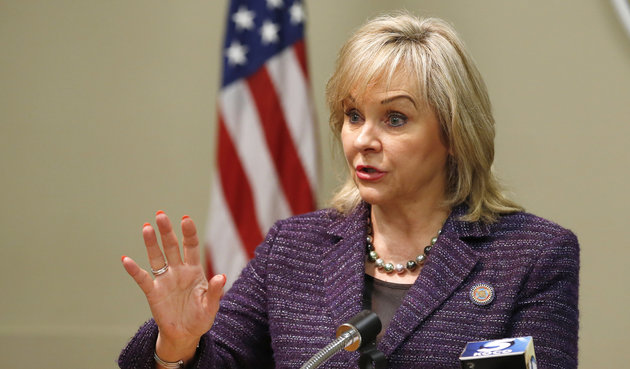
Oklahoma Gov. Mary Fallin speaks during a news conference in Oklahoma City, Thursday, Oct. 8, 2015. Fallin said “it became apparent” during discussions with prison officials last week that the Department of Corrections used potassium acetate, not potassium chloride, as required under the state’s protocol, to execute Charles Frederick Warner in January. "Until we have complete confidence in the system, we will delay any further executions," Fallin said. (AP Photo/Sue Ogrocki)

In 1907, Oklahoma became the 46th of 50 states to join the United States of America, an event that subjected the residents of that state to all the “laws of the land.”

That meansĀ Oklahomans are bound to adhere to mandates handed by the U.S. Supreme Court, which interprets the constitutionality of the law.

Get set, then, for a big fight as Oklahoma tries to defend itself against challenges to a bill that makes abortion illegal in the state.

Why the fight? Because the Supreme Court ruled in 1973 that the practice of terminating a pregnancy is legal in all 50 states and that women could make that decision until the time that the unborn child is determined to be “viable.”

The Oklahoma Legislature has sent a bill to Gov. Mary Fallin’s desk that makes performing an abortion a felony, except in the case of rape or incest or if carrying the pregnancy to full term endangers the mother’s life.

The landmark Roe v. Wade decision in January 1973 didn’t spell out any exceptions. It said that women who choose to end a pregnancy have that right guaranteed under the U.S. Constitution. Thus, the practice was declared legal.

http://www.huffingtonpost.com/entry/oklahoma-abortion_us_573df1b9e4b0aee7b8e94b41

The Oklahoma law is seen as being a mostly symbolic gesture, even if Fallin signs it. She has until Wednesday. Gov. Fallin, a pro-life politician, hasn’t yet said whether she’ll sign it.

The cost to state taxpayers, though, could be substantial if abortion-rights groups challenge the law and subject the state to expensive legal proceedings.

Oklahoma lawmakers have made a profound political statement. They have thumbed their noses at the highest court in America and have determined independently that they are able to flout federal law that the judicial system has reaffirmed.

Gov. Fallin should vetoĀ the bill. If she wants to make abortion illegal, she should haveĀ to wait — and hope — for the chance to change the philosophical composition of the U.S. Supreme Court.


Commentary on politics, current events and life experience