Tag Archives: LBJ

Anger will get POTUS nowhere — in a hurry

Presidents of the United States usually manage to cultivate friendships in the least-expected places.

Democrat Lyndon Johnson had strong alliances with Republican Sen. Everett Dirksen; Republican Ronald Reagan had a marvelous after-hours social friendship with Democratic House Speaker Thomas “Tip” O’Neill; Democrat Bill Clinton worked with Republican Speaker Newt Gingrich to produce a balanced federal budget; Republican George W. Bush and Democratic Sen. Ted Kennedy worked hand-in-glove to craft education reform legislation.

They all sought each other out in the search for common ground. It worked. The government found a way to get things done. The outreach extends in both directions.

That’s how good government works.

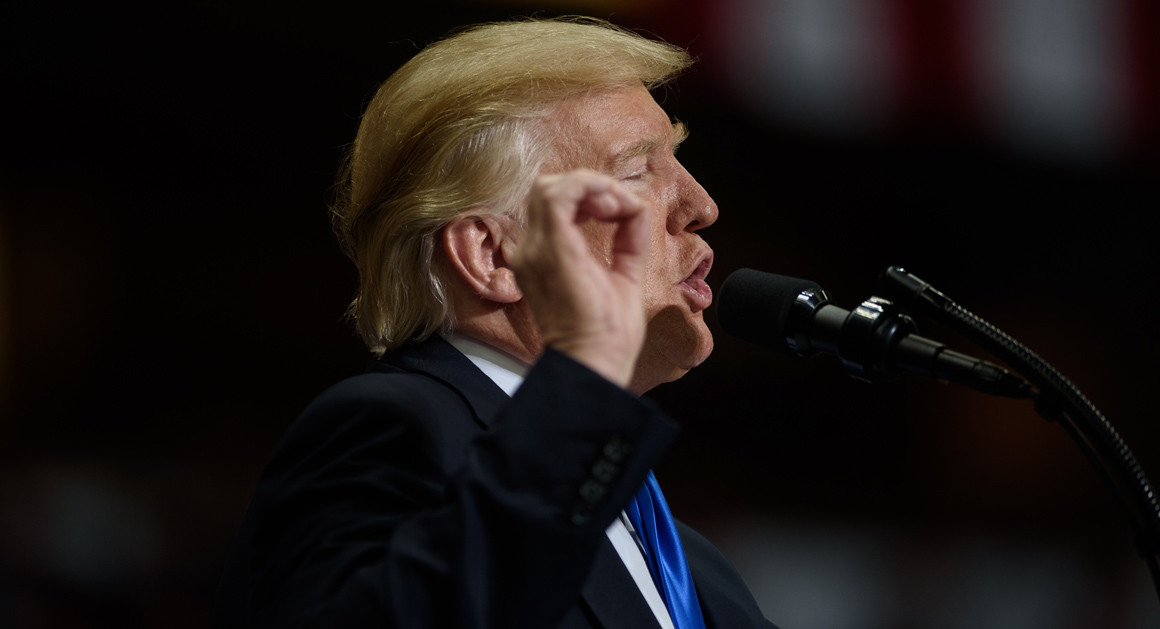
Donald Trump’s approach? Bash ’em all. Democrats and Republicans alike all feel the sting of Trump’s Twitter tirade. Criticize the president on policy differences? You’d better don your hard hat to avoid getting your bell rung by rhetorical abuse delivered — of course! — via Twitter.

Trump is at it again. He calls for “national unity.” Then unleashes yet another Twitter broadside.

The president is an angry man. His anger is threatening to stall everything in Congress. He has impugned the very people he needs: Senate Majority Leader Mitch McConnell, Speaker Paul Ryan, Senate Armed Services Committee Chairman John McCain … and on and on it goes.

Everyone has his or her limits to their level of anger. How far is Donald Trump going to take his myriad feuds with members of both parties in Congress?

I’m going to presume we’ll know when it occurs when Trump’s anger hits the proverbial wall.

Primary challenge awaits POTUS?

A version of the term “primary” has become a verb, in addition to it being an adjective and a noun.

Its verb form is used in a political contest, as in so-and-so is going to get “primaried.” Donald J. Trump, for the purposes of this blog post, is the “so-and-so” under discussion for a moment or two.

The president of the United States has managed to p** off damn near the entire Republican Party establishment with his hideous behavior and his tirade of insults against leading GOP politicians, namely those on Capitol Hill.

It’s tough, naturally, to predict any outcome as it regards this individual. He wasn’t even supposed to get elected in 2016 after a string of ghastly comments, campaign deeds and his generally acceptance ignorance of anything having to do with the federal government.

But … there he is. Sitting in the Oval Office and making an utter ass of himself, not to mention disgracing the presidency.

If this clown faces a primary challenge in 2019 and 2020 — presuming he’s still in office — how does that bode for his re-election? Recent political history doesn’t look kindly on these things.

* In 1968, U.S. Sen. Eugene McCarthy challenged President Lyndon Johnson in the Democratic primary in New Hampshire. LBJ won, but Clean Gene got a substantial vote. Then U.S. Sen. Robert F. Kennedy entered the primary race — and LBJ bowed out. The party’s eventual nominee, Hubert Humphrey, lost the presidency to Richard Nixon later that year.

* Former California Gov. Ronald Reagan decided to run against President Gerald Ford for the GOP nomination in 1976. Ford was running for election after taking over from President Nixon in 1974. Reagan didn’t think Ford was conservative enough. The men fought for the nomination until the convention. Ford was nominated, but then lost to Jimmy Carter.

* President Carter got a challenge of his own in 1980 from U.S. Sen. Ted Kennedy, who thought Carter wasn’t liberal enough. Carter fought back that challenge, but then got trampled by Reagan in that year’s general election.

What lies ahead for the current president?

One of the men he beat on his way to the White House, Ohio Gov. John Kasich, was utterly appalled at the president’s remarks in the aftermath of Charlottesville. He sounds like someone who’s going to “primary” the president. He was asked directly the other day whether he intends to run for the GOP nomination in 2020. Kasich gave that classic non-answer: “Look, I have no plans to run … ”

“I have no plans” is code for: I am thinking reeealll hard about running. Actually, given that Gov. Kasich was my favorite Republican in the 2016 primary campaign, I hope he does take the leap one more time.

Trump’s poll numbers keep plummeting. He keeps stuffing both feet in his mouth. He continues to embarrass the nation that managed to elect him. And, oh yes, we have that Russia investigation proceeding with all deliberate speed.

Indeed, history is unkind to presidents who face challenges from within their partisan ranks. Will this president defy conventional wisdom yet again?Ā 

And then there’s the 25th Amendment

The United States of America functioned for nearly two centuries before it ratified a constitutional amendment dealing with presidential succession and the appointment of a vice president.

The 25th Amendment was ratified in February 1967. It came in reaction to the assassination of President Kennedy in 1963. The new president, Lyndon Johnson, served the remainder of JFK’s term without a vice president. LBJ got elected in 1964 and Hubert Humphrey joined the administration as vice president. President Truman took office in April 1945 after Franklin Roosevelt died just a month into his fourth term; Truman served nearly a full term, therefore, without a vice president.

The amendment has been used exactly once. Vice President Spiro Agnew resigned in 1973 and President Nixon appointed House Minority Leader Gerald Ford to become vice president. The new VP then settled into the Oval Office Big Chair when Nixon resigned in August 1974.

I mention this today because the 25th Amendment is getting some attention these days. It allows for a temporary replacement of the president if a majority of the Cabinet determines he is unable to continue doing his presidential duties.

Donald John Trump is in trouble. A special counsel is examining whether his campaign colluded with Russian hackers seeking to meddle in our 2016 election. There might be some issues relating to Trump’s myriad business holdings, too. Oh, and then the president declares that “both sides” were at fault in the Charlottesville riot, causing a serious rift between the White House and members of Congress of both political parties.

There have been some questions about the president state of mind, his ability to actually govern and, yes, his mental competence.

I’m not qualified to offer a psychological diagnosis, let alone from half a continent away. So I won’t go there.

The 25th Amendment is meant to ensure the executive branch continues to function even in these difficult times. Just how difficult will they become? I guess that depends on how the president responds to the mounting pressure.

I keep hearing about how angry he is getting. He’s been cutting people loose all over the place: national security adviser, gone; press secretary, gone; communications director, gone; chief of staff, gone; FBI director, gone; senior strategist, gone.

Trump popped off about neo-Nazis and Klansmen. The Joint Chiefs of Staff have effectively rebuked the commander in chief, although not by name. Congressional leaders are starting to weigh in. There might be some diehard Trumpkins among them, but the vast majority of public response has been highly critical.

Republican leaders are aghast. Never mind what Democrats think; it’s a given that they detest the president already.

In the meantime, the 25th Amendment looms as a serious talking point among the chattering class in Washington, D.C. Don’t for a single moment believe that the president is ignoring the chatter.

LBJ must be laughing loudly

Lyndon Baines Johnson, wherever he is, must be enjoying the spectacle that’s unfolding down here, in Washington, D.C.

One of his successors as president of the United States is now trying to do something that LBJ was expert at doing: persuade U.S. senators to vote for a bill the president wants to see become law.

Donald Trump is facing a grim political reality. He is backing a Senate Republican health care overhaul bill. He says it would replace the Affordable Care Act. There’s this problem: public opinion polling suggests that it is highly unpopular with Americans; meanwhile, senators — who must answer to those Americans — are getting queasy about the bill.

Senate Republicans knew it and decided this week to postpone a vote on the bill until after the Fourth of July recess. The GOP has a slim Senate majority. Republicans can afford only two defections; any more than that then the health care overhaul effort is toast. Eight GOP senators have said they oppose the draft bill.

How does Trump persuade them to vote for the bill? This is something that Trump does not understand. Lyndon Johnson understood it better than arguably any president of the past century.

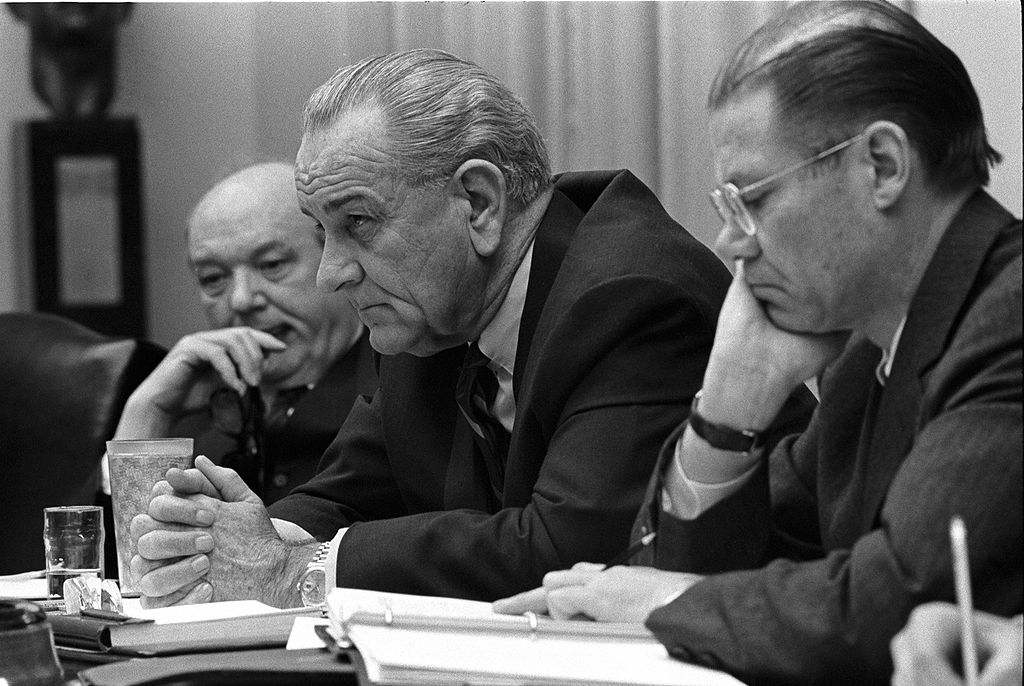
Before he became vice president in 1961 and later president in 1963, Johnson was the Senate majority leader. The Texan had vast experience as a legislator. He had many friends in the Senate; Republicans as well as Democrats were his pals. He could count on them when the going got tough. Sen. Johnson had an amazing capacity to persuade senators to vote his way. He took that skill with him to the Oval Office.

LBJ was unafraid to use the power of the presidency to, um, bully senators and House members. Somehow, though, it worked.

The current president has zero experience at governing anything. He had never sought a public office until June 2015, when he announced his presidential candidacy. Trump had no direct knowledge of Congress, or any understanding of how it works. He never developed any relationships with those who run the legislative branch of government, which is something that even relatively inexperienced presidents before him had acquired.

President Reagan was chided for being a film actor. He also served two terms as California governor. President Carter took D.C. by storm, but he, too, had governmental executive experience as a single-term governor of Georgia.

Donald Trump has none of that kind of experience. None!

President Johnson set the gold standard, though, for presidents knowing how to legislate, how to persuade lawmakers, how to push legislation through both chambers of Congress.

I suspect the former president is laughing out loud.

Bipartisan era gone forever? Looks like it

I am thinking at this moment of an earlier era when presidents and members of Congress reached across the great partisan divide to ponder their joint legislative agendas.

The thought came to me when I heard that Donald J. Trump is going to meet this week with Republican congressional leaders to talk about upcoming projects.

No Democrats need not attend. Nope! Stay away, you folks. We don’t need you.

I’ll go back a few decades for a moment.

* Lyndon Johnson needed Republicans to help him enact landmark civil-rights legislation.

* Richard Nixon needed Democrats to run interference for his environmental agenda.

* Ronald Reagan developed a great personal and professional relationship with congressional Democrats, such as House Speaker Tip O’Neill.

* Bill Clinton relied on congressional Republicans to assist in producing a balanced federal budget.

* George W. Bush sought Democratic help in crafting education-overhaul legislation. I should add that President Bush had plenty of practice working with Democrats, as he did quite well in that regard while he governed Texas and became partners with Democrats who controlled the Legislature.

That’s when it seemed to end. Barack Obama didn’t develop many relationships with key Republicans, who — lest we forget — made clear their intention to block damn near everything the president intended to accomplish. And now we have Donald Trump seeking to push through a legislative agenda with zero Democrats in his corner.

I also recall those photo ops when presidents would sign bills in front of large bipartisan gatherings of lawmakers. He’d hand out ceremonial pens left and right. They’d all clap and slap each other on the back while extolling the virtues of working together for the common good.

Do you expect to see anything like that with the current president occupying that office in the White House?

Me neither.

JFK’s life will be forever unfinished

It sounds strange to consider that John F. Kennedy would turn 100 years of age today.

Those of us who are old enough to remember the 35th president of the United States remember him as a young man who, even stranger as it seems, seemingly gets younger the older we all become.

JFK was the youngest man ever elected president in 1960. He was 43; the youngest ever to become president was Theodore Roosevelt, who ascended in 1901 to the highest office at 42 upon the death of President William McKinley.

Less than three years after taking the oath of office, President Kennedy’s life ended as he took a rifle shot on that street in downtown Dallas.

I have resisted the temptation to rank President Kennedy among the greatest who ever held that office. I consider his life to be an unfinished work. I bristle a bit at those surveys that place JFK at or near the top of such lists. How can we measure what he actually accomplished? The truth is we cannot.

I prefer to think of the president in terms of what he might have done. Even that is an exercise in futility because we cannot know with absolute certainty how history would have played out had he served the entire length of his presidency. I’ll presume he would have been re-elected in 1964. Then what? How would the Vietnam War have gone? What would he have done, say, by the end of his second term?

His life is frozen in time. For the president, it ended after just 46 years on Earth.

Still, the man’s legacy remains in large part due to the work done by those who came after him. President Lyndon Johnson’s “war on poverty,” his landmark civil rights legislation and, yes, the tragedyĀ that continued to unfold in Vietnam all are part of JFK’s historical record.

I have trouble even grasping the notion of John F. Kennedy becoming an old man, let alone one who might have lived long enough to celebrate his centennial birthday.

If only he could have finished his marvelous life. JFK will remain, as the song suggests, “forever young.”

Trump launches potential war of attrition

I long have thought that every human being has a limit to the amount of emotional baggage he or she can lug around.

Accordingly, it’s fair to wonder just how much bedlam Donald John Trump can endure as he continues — in some form or fashion — to govern the United States as its president.

His first 100-plus days as president have been a stunning exercise in chaos, controversy and confusion.

It’s making me wonder — and I’m quite serious about this — whether Trump has the stamina to continue to function in this manner. My memory of presidential transition goes back to when John Kennedy took over from Dwight Eisenhower in 1961. No one has managed to create the number of firestorms so early in their presidency as the 45th man to hold that office. Not even Lyndon Johnson, who became president in 1963 in the midst of a horrifying national tragedy; or Gerald Ford, who ascended to the presidency in 1974Ā in the wake of a crippling constitutional crisis and scandal.

In a related matter, it’s also fair to ask just how much of this the public can withstand.

Just in the past week, we’ve seen the president fire the FBI director and ignite a political wildfire that continues to rage out of control. Trump cannot formulate a cogent message. His White House communications team is flummoxed hourly it seems by contradictory statements pouring out of the president’s pie hole.

How do they handle it? How can they withstand this level of chaos?

And I haven’t even mentioned what seems like an increasingly real possibility that we might have an impeachment process starting to take shape in the U.S. House of Representatives.

There might be an obstruction of justice charge leveled at the president over the threat he leveled at James Comey two days after he fired the FBI boss; Trump well might have sought to bully the FBI into backing off its investigation of the president’s campaign and whether it colluded with Russians seeking to sway the 2016 election.

Then we have the Emoluments Clause issue, and questions about whether Trump’s businesses have been enriched by contracts with foreign governments. The U.S. Constitution prohibits presidents from obtaining any such financial gain, yet the president continues to hold onto his worldwide business interests.

I suppose I could mention the continuing string of lies and defamatory statements he makes about his predecessor as president, the woman he defeated in 2016 and any number of individuals and organizations opposing him.

What happens, too, if he crosses yet another “red line” by restricting the media from doing their job, which the Constitution guarantees them the right to do without government interference?

Ladies and gents, we have elected someone who continues to demonstrate every single day that he doesn’t know what the hell he is doing. He is unfit for the office he holds. He is making a mockery of the presidency and, sad to say, of the greatest nation on Earth.

His legislative agenda — whatever it is! — is going nowhere. Jobs bill? The wall? Tax reform? Health care overhaul? How does he do any of it while the tempest over what the Trump calls “the Russia thing” continues to boil over?

Are you frightened yet? I damn sure am.

45th POTUS keeps trying to rewrite the rules

Listen up, Donald John “Smart Person” Trump.

You cannot tell major media organizations which news to cover and which to ignore. The U.S. Constitution — the document with which you are patently unfamiliar — simply doesn’t allow presidents of the United States to coerce a “free press.”

It’s in the First Amendment. The founders had crafted the Constitution with those articles, then they started to amend the government framework. So they started with 10 civil liberties they wanted to protect.

That First Amendment? It protects freedom to worship, freedom to assemble peaceably to protest the government and — yep! — the freedom of the press to report the news.

NBC News believes the Russian hacking story is important enough to cover fully and completely.

It doesn’t please you, Mr. President? That’s tough dookey, sir. It doesn’t matter whether you’re unhappy with the way the television network does its job.

And quit the tweeting, too

You keep blazing away on your Twitter feed with that juvenile nonsense. You act more like a teenager than the leader of the free world. And do you actually believe that NBC News or any media outlet is going to do what you want just because you’re the president and you can say whatever the hell you feel like saying?

That’s not how it works in this country.

Just so you know, I just watched a great PBS special on KLRU-TV, based out of Austin, Texas. It told us plenty about the presidency, the White House and the families who have occupied “the people’s house.”

One of your predecessors, President Lyndon Johnson, was ravaged by protesters during the Vietnam War. What do you suppose the president said at the time. He said he wanted to ensure that presidents always work to preserve the right to dissent, to disagree with decisions made in the Oval Office. “I know all about dissent,” LBJ said.

You are occupying the Oval Office now, Mr. President. The dissent? The disagreement? The occasional anger? Get used to it.

Oh, and quit trying to bully the media.

The Constitution protects them from people like you. Honest. It’s in there. In the First Amendment. You ought to read it.

NASA gets big boost to its manned program

Human beings were put on this Earth to explore.

We’ve sought new worlds on our own planet. We’ve committed to seeking new worlds “out there,” beyond our worldly confines.

To that end, Donald J. Trump has signed into law a bill that commits $19.5 billion to NASA with the aim of launching human beings into deep space, possibly for exploration of Mars.

Oh, how I want to live long enough to see that day.

The president signed the bill into law in a ceremony at the White House surrounded by astronauts and politicians. It was a jovial affair that — I’m sorry to say — got overshadowed this week by the rancorous and raucous debate over overhauling the nation’s health care insurance system.

The NASA appropriation is worth the money, the effort, the emotional capital and the anxiousness that goes along with what many of hope will transpire: a mission to Mars.

“For almost six decades, NASA’s work has inspired millions and millions of Americans to imagine distant worlds and a better future right here on Earth,” Trump said during the signing ceremony. “I’m delighted to sign this bill. It’s been a long time since a bill like this has been signed, reaffirming our commitment to the core mission of NASA: human space exploration, space science and technology.”

As the Albany (N.Y.) Times-Union reported, “The measure amends current law to add human exploration of the red planet as a goal for the agency. It supports use of the International Space Station through at least 2024, along with private sector companies partnering with NASA to deliver cargo and experiments, among other steps.”

I was among the Americans disappointed when NASA grounded its shuttle fleet. We now are sending Americans into space aboard Russian rockets. I’m trying to imagine how Presidents Kennedy and Johnson would feel about that idea, given their own commitment to the space program and the defeating the then-Soviet Union in the race to the moon … which we won!

Space exploration isn’t a “frill.” It ought to be part of our political DNA. It’s already ingrained in human beings’ desire to reach beyond our grasp.

I spent many mornings with my late mother waiting for Mercury and Gemini space flights to launch. Then came the Apollo program. Our nerves were shot as we waited for astronauts to return home walking on the moon.

I grieved with the rest of the country when that launch pad fire killed those threeĀ astronauts on Apollo 1, when the shuttle Challenger exploded 73 seconds after liftoff and when the shuttle Columbia disintegrated as it flew over Texas on its way to landing in Florida.

I’ll be a real old man — I hope — when they send humans to Mars.

This new NASA appropriation could take us a bit farther along on that journey.

Chaos need not be the new White House norm

As I watch Donald J. Trump’s chaotic first few weeks as president of the United States, I have to keep reminding myself: Does it really need to be this way?

Of course it doesn’t. We’re watching Trump stumble-bum his way through controversy after controversy and his ridiculous rants and riffs with foreign leaders.

Now we’re watching an potentially unfolding major-league scandal involving the president’s former national security adviser, who quit this week in the wake of reports that he had inappropriate — and possibly illegal — discussions with Russian government officials prior to Trump taking office.

Two presidents in my lifetime have taken office amid terrible tragedy and tumult. In both cases, these men grabbed the reins of power and assumed the role of president as if they’d been there all along.

Example one: Lyndon Baines Johnson took the oath of office on a jetliner sitting on a tarmac at Love Field in Dallas on Nov. 22, 1963. His predecessor’s body was in a casket in the back of the plane and the nation was in utter shock over what had happened earlier that day when a gunman murdered President John F. Kennedy.

LBJ flew back to Washington and asked the nation to pray for him. We did. He convened his team and got to work immediately.

The nation buried JFK a few days later, President Johnson went to Congress and declared “all that I have I would surrender” to avoid standing before the nation in that moment.

The nation marched forward.

Example two: Gerald Rudolph Ford became president on Aug. 9, 1974 as his predecessor resigned in disgrace. The House of Representatives stood poised to impeach Richard Nixon for high crimes and misdemeanors relating to the Watergate scandal. It took a stalwart Republican U.S. senator, Barry Goldwater, to tell the president his time was up. He had no support in the Senate, where he would stand trial after the House impeached him.

President Nixon quit. President Ford took the oath and then told us, “Our long national nightmare is over.” He told us he was “acutely aware” he hadn’t been elected vice president or president. But he was the right man for the job.

He, too, called his team together and instructed them to get back to work.

President Ford would lose his election battle in 1976 to Jimmy Carter. It was Carter who, upon taking the oath of office in January 1977, would turn to his predecessor and begin his inaugural speech by thanking the former president for “all he had done to heal our country.”

Presidents Johnson and FordĀ had something in common: they both had extensive government experience prior to assuming their high office. They knew how the government worked. LBJ had served as Senate majority leader before becoming vice president in 1961 and had many friends on both sides of the partisan divide. Ford had served as minority leader in the House of Representatives before Nixon tapped him to be vice president in 1973 after Spiro Agnew quit after pleading no contest to a corruption charge. Ford also had many friends on both sides of the aisle.

These men assumed the presidency under far more trying circumstances than Trump did, yet they made the transition with relative ease … compared to the madness we’re witnessing these days with the 45th president.

We are witnessing in real time, I submit, the consequences of electing someone who brought zero public service experience to the most difficult and complicated job on Planet Earth.