Tag Archives: Congress

Declare war against ISIS?

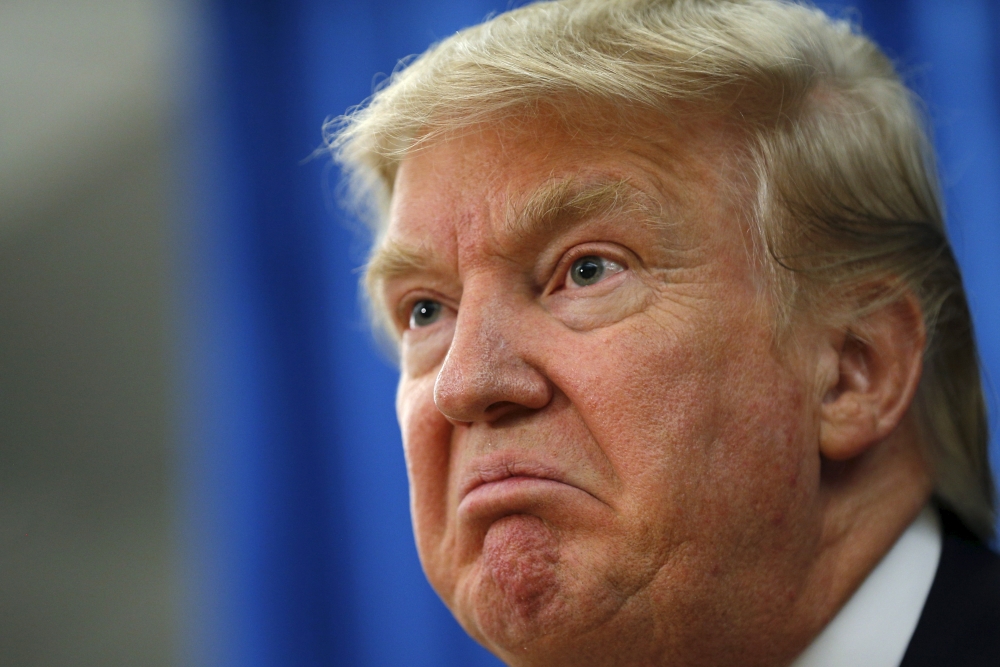
donald-trump

Donald J. Trump has this annoying habit of talking past whatever point he’s trying to sell.

The presumptive Republican presidential nominee told Fox News’s Bill O’Reilly last night he’d be willing to consider asking Congress for a declaration of war against the Islamic State and other terrorist organizations.

I’ve talked already about that in this blog. It’s not an altogether nutty idea, unlike so many of the things that fly out of Trump’s mouth.

https://highplainsblogger.com/2014/09/time-for-a-declaration-of-war/

Then he goes on.

Trump told O’Reilly that the United States is letting “tens of thousands” of terrorists into the country.

Really? Tens of bleeping thousands of ’em, Donald?

http://www.politico.com/story/2016/05/trump-terror-declaration-war-223497

There you have it. The candidate of fear strikes again.

He tosses out statements with no basis in fact. There is not a single shred of evidence that “tens of thousands” of terrorists have taken up residents in the United States. Indeed, the Department of Homeland Security, the FBI, the Border Patrol, state and local police agencies, Drug Enforcement Agency and the whole array of agencies charged with protecting us are rounding up bad guys every single day.

As for the war declaration, I don’t have a particular problem with that, either.

However, I see it more as a proactive approach to fighting terrorists rather than as a reactive one.

Will it ever occur? I doubt it, not even if Donald Trump were to (here comes that shudder again) become the next president.

Why not Kasich, indeed?

cruz and kasich

No one is talking about him this morning.

The political story line of the day — and perhaps for the rest of the week — will be the epic crash of U.S. Sen. Ted Cruz’s Republican Party primary presidential campaign and the pending nomination of one Donald J. Trump as the party’s next standard-bearer.

But there is Ohio Gov. John Kasich, all alone in the corner, wondering what in the name of political punditry he’s got to do to get anyone’s attention.

As the co-founder of RealClearPolitics, Tom Bevan, has noted: Kasich is the one Republican candidate who polls ahead of Hillary Clinton — but the GOP voter base is rejecting him.

http://www.realclearpolitics.com/video/2016/05/03/tom_bevan_will_bernie_voters_shift_to_trump.html

From my vantage point out here in Middle America, it appears Kasich’s dilemma serves as a fitting metaphor for the demise of what we used to know as the Republican Party.

Kasich is a traditional Republican. He’s been a player in the “establishment” for more than two decades. He served in Congress and became a party leader. He chaired the House Budget Committee and worked with Democrats and fellow Republicans to balance the federal budget.

That’s a big deal, dude.

However, he’s getting zero traction — none! — on that record.

The GOP voting base is now turning its attention and showering its love on a guy who’s got zero government experience, no philosophy and seemingly not a scintilla of grace.

Those voters are angry. So they’re going with the guy who shares their anger.

Can this guy govern? No.

What the hell. That doesn’t matter.

The Grand Old Party as we used to know it appears to have died. Its demise wasn’t entirely peaceful. It’s being replaced by something that is still taking form.

One of those formerly important Republicans — Gov. Kasich — is now among its casualties.


Who’s ‘qualified’ to be president?

trust-1

I am now going to weigh in on who I believe is qualified to become the 45th president of the United States.

The qualification issue has arisen in the Democratic Party primary. The candidates keep yapping about the other’s qualifications, or lack thereof.

But look, we’ve got four men and one woman running for president. Why not, then, take a quick look at each individual’s “qualifications.”

First, let’s stipulate the obvious: They’re all technically qualified, even Rafael Edward Cruz, the Canadian-born U.S. senator from Texas who earned his constitutional qualification by virtue of his mother’s U.S. citizenship.

No question about any of the others in that regard.

So, here goes, for what it’s worth — which ain’t much. In order:

Hillary Rodham Clinton is the most qualified. She served as first lady during her husband’s two terms as president. She was elected twice to the U.S. Senate from New York. She has served four years as secretary of state. She ran for president in 2008 and won many Democratic state primaries, including the Texas primary, that year.

She knows how government works and has a good knowledge of the limitations of the office of president. She once was a lawyer, after all.

John Kasich is a very close second. The Republican Ohio governor has a record as a member of Congress that should make him proud. He helped balance the federal budget as chairman of the House Budget Committee. He exhibits a good dose of the “compassionate conservatism” touted by former President George W. Bush. He reaches across the aisle and knows to compromise without sacrificing his principles.

He’s developed a solid record as Ohio governor. Kasich, too, understands government and its limitations.

Ted Cruz comes in a distant third. This one really is nearly a tossup with the next person. At one level, he might be the scariest candidate running for the White House. This freshman GOP U.S. senator keeps invoking theology, apparently disregarding that the Founding Fathers worked real hard to create a secular government. Cruz also seems too quick to “carpet bomb” Islamic State targets, which quite naturally is going to produce civilian casualties in direct contradiction to military policies established by two presidents, one Republican and one Democrat.

Bernie Sanders is fourth, but barely so. He’s served in Congress a lot longer than Cruz. However, his campaign for the Democratic nomination has begun to bore me. Why? He says the same thing over and over: Wall Street banks bad; wage inequality preys on women and minorities; we need to make the “top 1 percent” pay more in taxes.

Foreign policy? He remains strangely uninterested in talking about that.

Donald J. Trump is patently, categorically and unequivocally unsuited for the presidency. Sure, he’s a natural-born American. So … he’s “qualified.” But he is clueless about the limits of the office he seeks to occupy. He has vaulted to the top of the GOP heap by appealing to Americans’ darker instincts. His insults go so far beyond the pale that many of us have run out of words to describe them.

Read any transcript of the leading Republican candidate’s answers to direct questions and you are going to be blown away by his absolute incoherence.


Speaking of polls, take a look at this

PollingFundamentals

Now that public opinion polls have become a staple of American political coverage, it’s good to look at the latest survey of Americans’ views of the job the president is doing.

RealClearPolitics posts a national average of polls daily.

The numbers are instructive.

President Obama now stands at 2.7 percent approval-over-disapproval in the average of polls that RCP posts.

Why is this important? It’s important because most of the remaining candidates for president — Republican and Democrat — keep talking about polls and their relative standing among them.

Donald J. Trump bellows constantly when the polls show him beating fellow Republicans Ted Cruz or John Kasich. Cruz counters with favorable poll reports when they suit his cause. Kasich keeps saying the polls show him as the only GOP candidate who can beat Hillary Clinton.

Oh yes. Bernie Sanders keeps talking about the polls that show him “closing the gap” for the Democratic nomination with Clinton.

Polls, polls, polls …

Remember when pols said “the only poll that counts is on Election Day”? Not only longer. They keep yapping about the polls and the media keep reporting it.

Thus, they have become important.

Back to the RCP poll average.

President Obama’s poll ratings had been in the tank for most of his second term. They weren’t necessarily horrible; just flat, lingering in the mid-40 percent range. What’s most interesting is that his favorable ratings were usually significantly less than his unfavorable ratings.

Today, though, it’s different. His favorability rating, according to the RCP average, stands at 49 percent, nearly 3 percent greater than his unfavorable rating.

Two more quick points.

One is that the RCP average takes into account all the major polling results done. Conservative polling outfits are measured, along with liberal polling companies. They’re tossed in altogether and you get the average of all the polls.

The second point is that RCP’s average of polls about the job Congress is doing shows a 14 percent job approval rating.


Little to fear from Trump? Here’s why

checks balance

I’ll admit to being one of those millions of Americans who is horrified at the notion of a President Donald J. Trump.

The horror comes not so much from whether he can achieve all the idiotic policy goals he’s set out. It comes from the idea of this guy speaking his mind in public, of having his words heard around the world by people who expect high-minded rhetoric from the head of state of the world’s greatest nation.

Yep, by golly, we’re still the top dog on Planet Earth — and whatever Trump says to the contrary is just so much horse manure.

I’m going to offer, though, a view that might put your mind to rest at least a little bit over what makes some of us afraid … very afraid.

That stuff about building the wall and making Mexico pay for it? How about the notion of banning Muslims from entering the country because of their religious faith? How about the idiotic tax plan that economists say simply will not work? Or the idea that he’ll single-handedly bring jobs back that have been lost to Japan, China and Mexico?

Trump’s not going to get any of that done without help from Congress. Who controls the legislative branch of government? Republicans, that’s who.

Yes, the very Republicans who at this very moment are working overtime, behind closed doors, sweating bullets … trying like holy hell to deny Trump the presidential nomination of their party.

Imagine what might happen, thus, if they fail in their bid to deny him the nomination. Now imagine — and this is the real stretch — Trump actually defeating the Democratic nominee to become the 45th president of the United States.

The Democrats are almost certain to nominate Hillary Rodham Clinton. Sure, she’s got baggage of her own. However, she possesses a formidable political machine.

If hell freezes over and lightning strikes multiple times in the same spot — and the sun starts rising in the west — Trump could be elected.

If that happens, do you really think he’s going to have any easier of a time getting anything done in a Congress dominated by Republicans — presuming the GOP even manages to maintain control of the Senate? And that seems like a potentially tall order in any event, given the electoral matchups involving many potentially vulnerable GOP senators.

And if Democrats take back control of the Senate competing fiercely against a Republican ballot led by Donald J. Trump, well, then Trump’s myriad cockamamie ideas become even more remotely doable.

There. Do you feel better now?


Still a carpetbagger

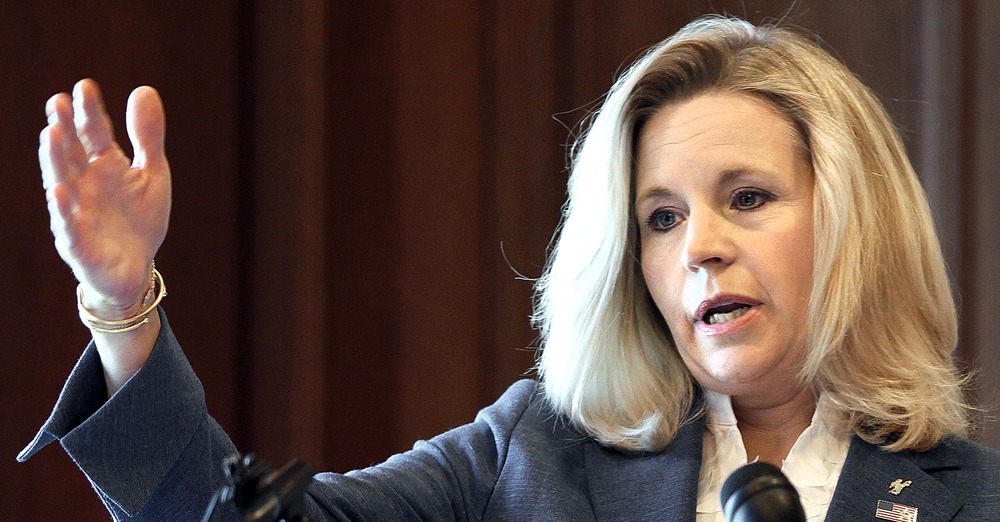
CHEYENNE, WY - JULY 17: Wyoming Senate candidate Liz Cheney holds a news conference at the Little America Hotel and Resort in Cheyenne, Wyoming on July 17, 2013. Cheney, the daughter of former Vice President Dick Cheney, will run against longtime incumbent Sen. Mike Enzi (R-WY). Cheney launched her campaign yesterday following Enzi's announcement that he will run for a fourth term. (Photo by Marc Piscotty/Getty Images)

Liz Cheney didn’t get it. She didn’t learn her lesson.

Cheney is the daughter of former Vice President Dick Cheney. She once thought about running for the U.S. Senate from Wyoming, which her dad once represented while serving in the U.S. House of Representatives until he was named defense secretary during the administration of President George H.W. Bush.

She ran into this problem, though. Actual residents of Wyoming accused Liz Cheney of being a carpetbagger, someone who had not lived in the state since she was a little girl.

She has lived in Virginia her entire adult life.

Liz Cheney dropped out of the race for the Senate.

Now, though, she wants back in as a Wyoming politician. She has declared her intention to run for the state’s only House seat.

Cheney posted her announcement on her Facebook page.

Oops! She forgot to delete a reference on the Facebook post that revealed a tiny detail. It contained the place from where she issued the post: Alexandria, Va.

Check it out.

She still lives there. Cheney, though, did remove the reference to Alexandria.

Will this bring about more carpetbagger accusations? It might.

I know what you’re thinking. What’s the big deal? Other “carpetbaggers” have been elected to public office. Hillary Clinton moved to New York and then got elected to the Senate from that state in 2000. My favorite carpetbagger was the late Robert F. Kennedy, who also got elected to the Senate from New York in 1964; he, too, faced the same accusation.

Still, Liz Cheney needs to prepare to answer the questions about where she lives and whether she really knows much about the state she wants to represent on Capitol Hill.


Can politics intrude on a politician’s day job?

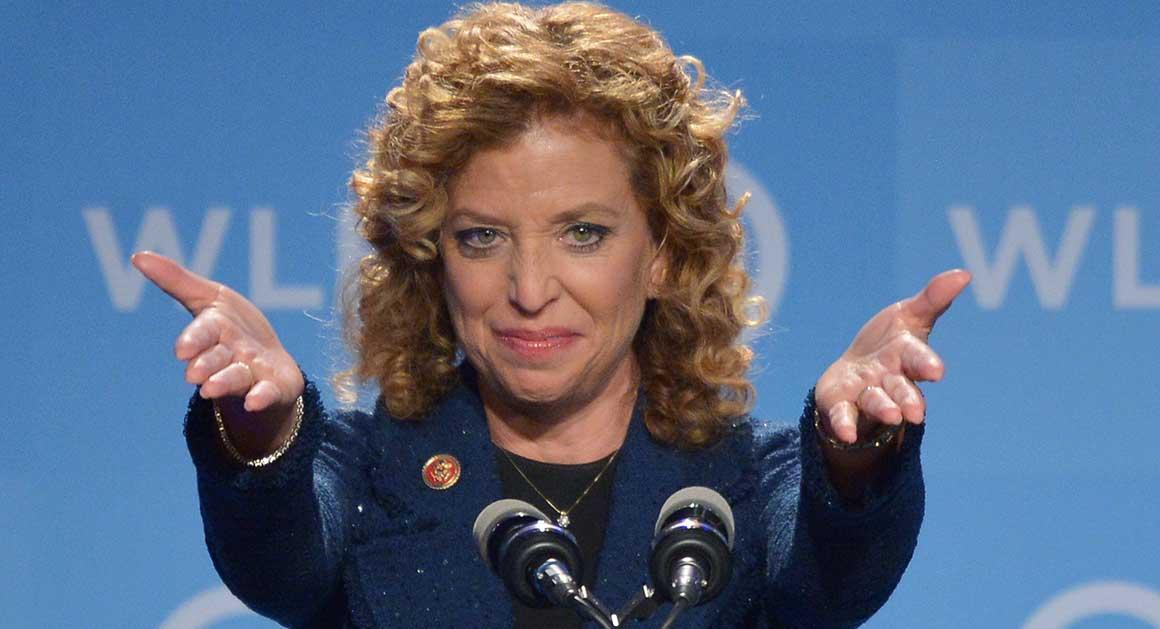
DNC Chair Rep. Debbie Wasserman Schultz, D-FL, speaks at the Democratic National Committee's Womens Leadership Forum Issues Conference in Washington, DC on September 19, 2014. AFP PHOTO/Mandel NGAN        (Photo credit should read MANDEL NGAN/AFP/Getty Images)

I’ve long wondered something about full-time politicians who take on jobs outside of the job they were elected to do.

Debbie Wasserman Schultz? Well, she’s my latest example.

Schultz is a Democratic member of Congress who represents southern Florida. She also is chair of the Democratic National Committee.

She’s certainly not the first full-time pol to assume duties unrelated to her congressional work. Former U.S. Sen. Bob Dole once represented Kansas while serving as chair of the Republican National Committee. Interestingly, he resigned his Senate seat when the GOP nominated him to run for president in 1996; he said he couldn’t do both things at the same time, so he decided to set aside his Senate duties.

Schultz doesn’t do that. No, she runs the Democratic Party while serving her constituents in south Florida.

How well does she do either job, or both?

This issue of running for a higher office while holding down an elected job already has come up during the 2016 presidential campaign. GOP contender Marco Rubio has been criticized for missing many Senate votes while stumping for his party’s nomination. New Jersey Democrats made noise about seeking Gov. Chris Christie’s ouster after Christie declared he wanted to be the Republican nominee this year.

Other members of Congress are seeking the presidency this year. To my knowledge there’s been little said about how well they’re doing their current job while they seek to be elected to another one.

Schultz was re-elected in 2014 by a wide margin, so I guess her constituents think she’s doing all right.

It’s fair to wonder though: How does she deal with purely local issues? How much attention do her constituents get from her — or her staff — when they have concerns about their Social Security or military pension checks?

Schultz has a big job running a major political party. She also has a big job representing her constituents on Capitol Hill; the latter job also pays her $175,000 annually, plus all the ancillary perks she and her colleagues get while serving in Congress.

I occasionally wonder whether politicians who hold down full-time government jobs can do those jobs adequately when other matters divert their attention from the duties they were elected to perform.


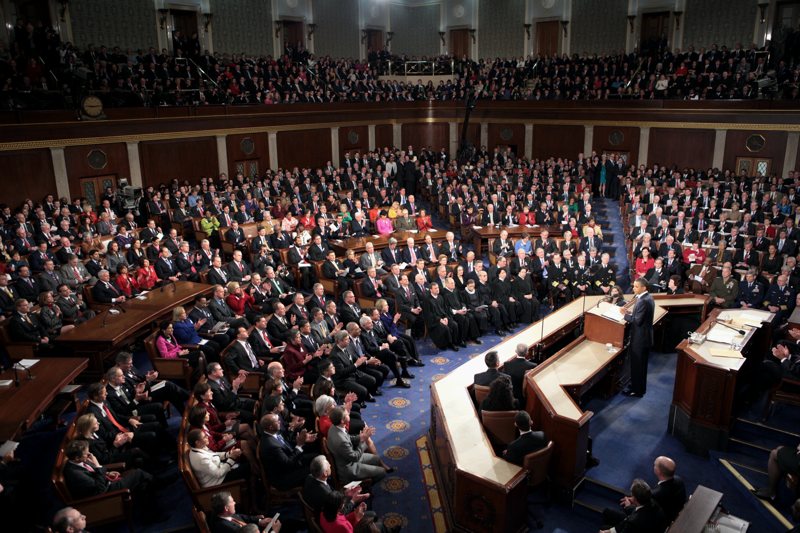
SOTU won’t fill us with warm, fuzzy feelings

2011_State_of_the_Union

It never really had to be this way.

Barack H. Obama took office in January 2009 as the 44th president of the United States after an election that many had hoped would be a “transformational” political event for a country that had just elected its first African-American president.

Not long afterward, then-Senate Minority Leader Mitch McConnell announced that his top priority would be to make Obama a one-term president. Yes, that’s right. McConnell said that defeating the president’s re-election effort would be his No. 1 priority.

That set the tone — right off the top — for the kind of relationship that the White House would have with Congress.

It hasn’t gotten any better, even as President Obama prepares to deliver his final State of the Union speech to a joint congressional session.

Ugly relationship coming to an end

To be blunt, the president didn’t do his part to develop a good working relationship with Congress. I’ve lamented before how the young president never learned how to build upon those relations with his congressional friends. To be honest, the president arguably served too little time in the Senate to have crafted a lot of friendships and political alliances among his fellow legislators.

I had hoped the president could have followed the Lyndon Johnson model of transferring his Senate experience into effective legislative accomplishment.

He didn’t.

However, Congress made it clear that it had no intention of giving any quarter to the president.

So, the president’s final State of the Union speech — which the White House says will be an “unconventional” presentation — isn’t expected to produce any bright lights of hope for a smooth and successful final year of the Obama presidency.

Republicans almost unanimously say that next to nothing will get done in this final full year of Barack Obama’s administration.

Perhaps, then, it will be left to the president simply to declare victory on the accomplishments that his presidency has delivered.

I’m wondering now if the president is going to remind us that Sen. McConnell’s top priority never came to pass.


Obama vetoes ACA repeal bill; what now?

obamacare-1

Who didn’t see this one coming?

Nobody. That’s who.

President Barack Obama today vetoed a bill that would have repealed the Affordable Care Act and cut federal funds from Planned Parenthood.

This was the mother of political statements. And I’m not talking necessarily about the president’s veto.

I’m referring to Congress’s insistence that the ACA — also known as Obamacare — isn’t working, that it’s an albatross, that it represents a government overreach.

It’s also the president’s signature domestic policy achievement. He said all along — going back to other efforts by Republicans in Congress to repeal the law — that he’d veto any such bill if it got to his desk. It did . . . and he did.

I believe Congress needs at this time to cut its losses. It doesn’t have the votes to override the president’s veto, even with its GOP majority in both legislative chambers. Republicans need a two-thirds majority to override; they don’t have it in the Senate.

We’ve got an election coming up. We’ll have a new president a year from now. Depending on who the parties nominate, Congress might have a dramatically different look than it does today — particularly if the Republican presidential nominee happens to have the name Donald J. Trump.

The current Congress still must work with a Democratic president who — on this issue — has drawn a line deep into the dirt between the White House and Capitol Hill.

The Affordable Care Act is going to stay; moreover, the government will continue to provide public money to Planned Parenthood. Don’t mess with either of them.

Let’s get on to the many other complex issues facing the nation.

So, just who really needs an assault rifle?

Some of the weapons collected in Wednesday's Los Angeles Gun Buyback event are showcased Thursday, Dec. 27, 2012 during a news conference at the LAPD headquarters in Los Angeles. Mayor Antonio Villaraigosa's office says the weapons collected Wednesday included 901 handguns, 698 rifles, 363 shotguns and 75 assault weapons. The buyback is usually held in May but was moved up in response to the Dec. 14 massacre of students and teachers at Sandy Hook Elementary School in Newtown, Conn. (AP Photo/Damian Dovarganes)

Let’s talk about guns for a moment or two.

A Rhode Island congressman, Democrat David Cicilline, has pitched the Assault Weapons Ban of 2015 to his colleagues in the House of Representatives.

The ban has drawn the support of a number of Democrats. However, Republicans control Capitol Hill, which likely means the assault weapon ban won’t see the light of day.

Cicilline issued a statement: “Assault weapons are designed for the sole purpose of killing as many people as quickly as possible,” he told The Hill newspaper. “We need to do everything we can to reduce the toll of gun violence by keeping these weapons out of our communities.”

Here’s what I believe will happen to the bill, although I likely am wrong about some of the nitty-gritty details of the debate.

They’re going to tell us that the Second Amendment says categorically that the right to “keep and bear arms shall not be infringed.” They’ll look past the first part of the amendment that talks about a “well-regulated Militia.” I’m not going to argue the point here, given that I believe the amendment was written poorly in the first place; it seems to contain a non sequitur … but that perhaps is just me.

The congressman’s bill would allow those who currently possess an assault weapon to keep it, but it could become difficult for someone to sell it.

So, does this proposed legislation water down the Second Amendment to an unacceptable level? I do not believe it does.

Then again, I’m not in Congress and I don’t have to listen to the wishes of constituents who think otherwise. In fact, an ABC News poll says Americans now oppose a ban on assault weapons, believing that authorities are unable to stop “lone wolf” attacks by someone toting an assault weapon.

Despite my concern about the verbiage contained in the Second Amendment, I accept the notion that gun ownership is a protected right. I own a couple of weapons. They’re hidden.

The notion I cannot accept is that assault weapons are part of the package envisioned by the Founders who wrote the Second Amendment — in the late 18th century.

Nice try, Rep. Cicilline.