Tag Archives: Vietnam War

Is this when Trump’s campaign unravels? Hold that thought

trump

The Sunday television talk shows are full of discussion this morning about Donald J. Trump’s horrible week.

He provides three to five positions on abortion in the span of 48 hours.

Trump refuses to rule out the use of nuclear weapons against the Islamic State — even in Europe!

His campaign manager is arrested and charged with battery against a reporter.

He’s been pilloried, punched and pounded over all of this — and more!

Is this the end of the Donald Trump Phenomenon? Do not take this to the bank.

My own thoughts on this man’s presidential candidacy have been blown aside by almost every unpredictable circumstance imaginable.

I thought he was toast when he:

Denigrated U.S. Sen. John McCain’s heroic service during the Vietnam War.

Got into that hideous feud with TV journalist Megyn Kelly over her questioning his views on women during the first GOP presidential debate.

Made fun of a journalist’s physical disability.

Declared his intention to ban Muslims from entering the country because of their faith.

Announced his plan to build a giant wall along our entire southern border.

Insulted a former fellow Republican presidential candidate over her physical appearance.

Engaged in that childish series of debate put-downs with Sen. Marco Rubio.

What have I missed?

He keeps returning stronger than before. He energizes those who like how he “tells it like it is.”

I’ve seen the polling about how women view him unfavorably. I’ve read all the data about how this guy loses to Hillary Clinton big in a general election matchup.

None of it seems to matter to the Trumpsters who are as angry as he says he is.

Is this the most bizarre election cycle any of us ever have seen? For my money, uhh, yes … it is!

For that reason, I am not going to declare Donald Trump’s candidacy “dead at the scene.”
 

It wasn’t just a ‘war on drugs’

d4b7e386cc6a496090a245c74d94bd6c

I’m still trying to process this bit of news from our nation’s past.

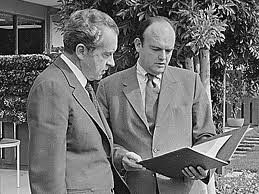
John Ehrlichmann, one of President Nixon’s chief aides, reportedly told an author that the president’s “war on drugs” had a more insidious meaning within the walls of the West Wing.

Erhlichmann supposedly said the drug war was meant as a way to shore up Nixon’s “southern strategy” that curried favor with white voters while targeting African-Americans and hippies who were opposed to the Vietnam War in particular and to Richard Nixon’s presidency in general.

A lot of Americans remember Ehrlichmann. He was the president’s chief domestic adviser and a leading figure in the cover-up of the Watergate scandal that eventually brought down the Nixon presidency.

He died in 1999, so he isn’t around to defend himself against the remarks that are just now being published in Harper’s magazine.

A part of me believes that President Nixon was quite capable of concocting such a nefarious strategy. Another part of me wishes and hopes it isn’t true.

Ehrlichmann’s five children have said the statements attributed to their father are false. They stand behind his character and say they weren’t raised that way.

According to reporter Dan Baum, writing in Harper’s, Erhlichmann said: “You understand what I’m saying? We knew we couldn’t make it illegal to be either against the war or black, but by getting the public to associate the hippies with marijuana and blacks with heroin. And then criminalizing both heavily, we could disrupt those communities. We could arrest their leaders. raid their homes, break up their meetings, and vilify them night after night on the evening news. Did we know we were lying about the drugs? Of course we did.”

The war on drugs is still being waged. It produced mandatory sentencing policies that federal judges have to follow. It was supposed to get tough on those who produce, buy, sell and consume the hard drugs such as heroin and various hallucinogens.

Has it worked? Well, drug use hasn’t abated in the nearly 50 years since the feds declared war on it. Moreover, I’ve seen the studies that suggest that African-Americans have been imprisoned at far greater rates than the rest of the U.S. population.

As for the motives behind the declaration in the first place, it saddens me beyond belief — if they are true.

The late president’s views on minorities, anti-war protesters and anyone who didn’t support his foreign and domestic policies are well-known to historians. They have been revealed in those infamous recordings of the president speaking to his top aides.

And what about John Erhlichmann’s personal motives? Did he buy into a hideous effort to fight back against the president’s enemies?

My own hunch is that he was loyal to the boss — Richard Nixon. When the boss told him to do something, then he followed orders. Does that make Erhlicmann a racist? We can’t ask him directly, so we’re left to speculate.

This isn’t the first time Americans have heard from officials seeking to atone for their mistakes. The late secretary of defense, Robert McNamara, revealed in the mid-1990s that he thought the Vietnam War was doomed to failure, even as he counseled two presidents to keep escalating the fight.

If only Ehrlichmann was around to clear the air about these revelations …

Many of us who are, sadly, are left to think the worst.

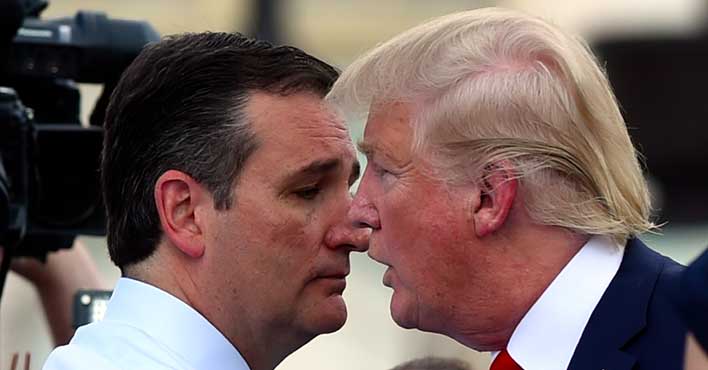
Who will join Cruz in stopping Trump?

cruz

Ted Cruz has a problem.

He wants to become the “anti-Trump” candidate for president of the United States. He’s seeking a way to get Ohio Gov. John Kasich to bow out. He believes he can coalesce enough “true conservatives” behind him to derail Donald J. Trump’s march to the Republican Party presidential nomination.

The junior U.S. senator from Texas, though, needs some help from his colleagues in the Senate. But as Politico reports, he is nearly universally detested by his fellow senators. And that’s just the Republicans with whom he serves.

Cruz needs to build some relationships. I don’t mean “rebuild.” He’s got to start from scratch.

He’s been in the Senate for slightly more than three years. He’s halfway through his very first term in the very first elected public office he’s ever held.

As Politico reports: “Cruz’s relationship with his colleagues is now a central paradox of his campaign: He’s openly arguing for the party to rally behind him, but Republican senators are plainly wary of going anywhere near him. Those who feel burned by Cruz in the past say he’ll come to them only if he decides it’s in his self-interest. ”

The man who leads the Senate — the body’s top Republican — once was on the receiving end of a barrage that Cruz leveled at him. Remember when the Cruz Missile called Majority Leader Mitch McConnell a “liar” in a speech on the floor of the World’s Greatest Deliberative Body?

How does McConnell put that epithet behind him? How does McConnell gather the forces to help one of their own take down this “interloper” named Trump.

Moreover, Sen. John McCain — the GOP’s 2008 presidential nominee — has taken Cruz to task in public for his intemperate remarks about a couple of fellow Vietnam War combat veterans, John Kerry and Chuck Hagel.

Finally, he’s been campaigning against the very “Washington establishment” where he works these days. He’s an “outsider,” he says.

Something tells me Cruz’s efforts to put distance between himself and his Senate colleagues ain’t going well with the ladies and gents with whom he serves.


Not exactly a repeat of ’68 in this campaign

RFK

Those talking heads are comparing the anger we’re hearing at Donald J. Trump’s campaign rallies to what we heard 48 years ago when that year’s presidential campaign turned really ugly at the Democratic National Convention in Chicago.

I beg to differ.

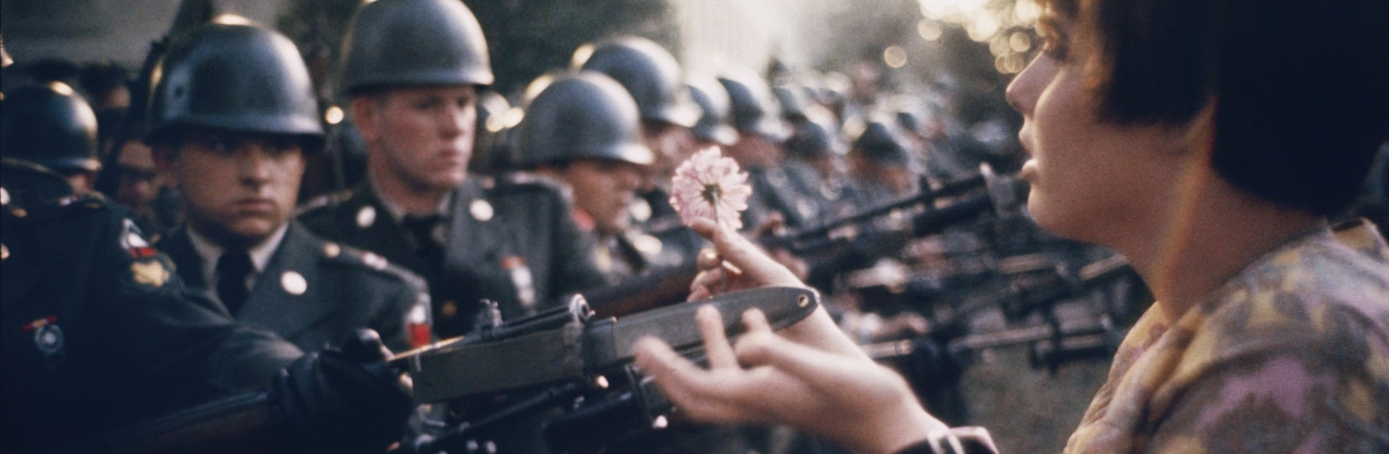
Yes, the convention turned into a bloodbath. Anti-Vietnam War protesters stormed the streets outside the convention hall and battled with police. Reporters and delegates were beaten up on the convention floor.

But prior that tragic event, we heard at least one candidate seek to speak to our better angels, to try to quell the anger.

Robert Francis Kennedy was that man. He had entered the Democratic campaign relatively late. He launched a frenetic, mad dash for his party’s nomination. President Johnson bowed out. Sen. Eugene McCarthy’s young legions were rising up against the “establishment.” Vice President Hubert Humphrey was in the race, too.

Then, as columnist Mike Barnicle notes, tragedy struck in Memphis, Tenn. The Rev. Martin Luther King Jr. was shot to death.

Sen. Kennedy got word of it. He climbed aboard a truck bed in Indianapolis and told the largely African-American crowd what had just happened. They gasped.

He went on.

“What we need in the United States is not division; what we need in the United States is not hatred; what we need in the United States is not violence or lawlessness, but love and wisdom and compassion toward one another and a feeling of justice toward those who still suffer within our country, whether they be white or they be black.

“So I shall ask you tonight to return home, to say a prayer for the family of Martin Luther King, that’s true, but more importantly to say a prayer for our own country, which all of us love—a prayer for understanding and that compassion of which I spoke.”

Many cities erupted in violence that night. Indianapolis did not.

I watched that campaign unfold in the spring and early summer of 1968 before I was inducted into the Army, at which time my own life changed forever.

Not one time did I hear a candidate in either party exhort his supporters to punch protesters in the face. Nor did I hear any candidate offer to pay an assailant’s legal fees after being arrested for sucker-punching a demonstrator.

Sure, we were an angry nation back in 1968. We had reason to be worried. A bloody war in Asia was going badly and many Americans wanted an end to that conflict.

It came to a head at the Chicago convention that year.

One reason for the violence was that the man who sought to tell us the truth about our anger and sought to offer solutions to ending it himself was gunned down in that Los Angeles hotel kitchen.

Robert Kennedy’s death came nearly two months to the day after the night he stood on that truck bed and offered words of consolation and healing.


Wounded warriors deserve much better than this

160311-wwp-nardizzi-giordano-composite-2_a43fcc97b08f4c1c7a40243264827e7f.nbcnews-ux-600-480

You hear about scandals occasionally involving high-profile charities.

They usually involve extravagance. Such is the case with the Wounded Warriors Project.

For the life of me I’m having trouble mustering the right words to convey the outrage I’m feeling at what’s been reported.

CEO Steven Nardizzi and chief operating officer Al Giordano have been fired by the WWP board, which said an “independent study” confirmed some grotesque “irregularities” in the way the organization was spending money donated to help care for heroes wounded in battle.

The outrage should sweep the nation. Politicians keep telling us how we must treat our wounded veterans with all the care and compassion we can deliver. People give to organizations expecting their money to go toward that care. Sure, there are “administrative costs” to be paid.

The WWP, though, reportedly was funneling roughly half of the money it gets to far more than paying salaries and buying stationery.

There were reports of extravagant parties at posh resorts. Nardizzi reportedly rappelled down the side of a hotel to make a grand entrance.

One report revealed that in 2014 alone, the organization spent $26 million on parties. Twenty-six million dollars!

I don’t know if there will be any criminal prosecutions involved with the two individuals who’ve been canned by the board. A part of me wishes they would just vanish from the face of the planet. Another part of me thinks there ought to be an examination into possible criminal malfeasance.

The Wounded Warriors Project is supposed to help the 50,000 or so vets who’ve been injured in the Iraq and Afghanistan wars. People give money to this group expecting the money to do good for those who need the help.

We’ve come a huge distance from the Vietnam War era when our veterans were virtually scorned by the country that sent them into battle.

This hideous story must not dampen our resolve to continue to help our wounded veterans.

Indeed, it should cause us to redouble that effort.


Who are you callin’ ‘antique’?

AAgyrHD

Man, I’m feeling old today.

My body isn’t aching. I’ve got most of my marbles. My memory’s still pretty keen.

I just read a headline about “antique” weapons of war being used against the Islamic State.

The picture attached to the story is of an OV-10 Bronco, a twin-engine airplane used during the Vietnam War.

I remember the Bronco. I saw them take off almost hourly from an airfield in a place called Marble Mountain, just a few miles south of Da Nang.

I was assigned to an Army aviation battalion on the western side of the airfield. The OV-10s were piloted by Marines assigned on the other side of the strip. The Marines were stationed with a group called MAG 16, which is shorthand for the 16th Marine Air Group. They flew Broncos, Cobras, Hueys and the Marines’ version of Chinook twin-rotor helicopters.

OK, so I didn’t work on the Broncos, which look vaguely like the old P-38s of World War II; both planes had the twin-fuselage design.

They were effective weapons back then. I guess they’re doing the job now against the Islamic State.

According to the Daily Beast, the Broncos’ mission is somewhat hush-hush. They’ve been used to test updated equipment installed on the birds.

I recall the Broncos being fairly fast and agile aircraft. They would provide firepower to aid ground troops working in the I Corps region of South Vietnam. Today, they’re being used in a similar capacity against Islamic State terrorist fighters.

As the Daily Beast reports: “There are plenty of clues as to what exactly the Broncos were doing. For one, the Pentagon’s reluctance to provide many details about the OV-10s’ overseas missions implies that the planes were working in close conjunction with Special Operations Forces. In all likelihood, the tiny attackers acted as a kind of quick-reacting 9-1-1 force for special operators, taking off quickly at the commandos’ request and flying low to hit elusive militants with guns and rockets, all before the fleet-flooted jihadis could slip away.”

It’s interesting — and somewhat gratifying — to me that tried-and-tested equipment still has its place in this new world of high-tech warfare.

However, to call them “antique” makes those of us who watched these birds fly in their prime feel, well, a bit older than our years.

I can do without the reminder.

Romney speech put in perspective

mitt

I watched Mitt Romney blister the daylights out of Donald J. Trump on Thursday morning and all but cheered at my TV set as I watched the speech.

Then I thought a bit more about it and realized: Didn’t the 2012 Republican nominee support many of the positions for which he’s now blasting the 2016 GOP frontrunner? And isn’t the party to which he belongs culpable of the things associated with Trump?

One example stands out. You’ll recall Romney saying four years ago that he would make life so miserable for illegal immigrants that they would “self-deport” themselves back to their home country. Now he says Trump’s anti-immigrant position is inhumane.

The New York Times noted: “He also listed Mr. Trump’s offenses — ‘the bullying, the greed, the showing off, the misogyny, the absurd third-grade theatrics.’ Did Mr. Romney have any sense of irony when he said those words? For far too long, they could have been used to describe many in his party: legislators, congressional leadership, its policy makers.”

There was much to commend Romney’s remarks Thursday morning. Perhaps the most skillful put-down related to Trump’s denigrating the heroism exhibited by U.S. Sen. John McCain during the Vietnam War. Romney noted the “dark irony” of Trump saying McCain was a “war hero because he got captured.” Romney said that while McCain was being tortured by his North Vietnamese captors, Trump was gallivanting with married women.

I want Romney’s remarks to stick. I want them to make Republicans think long and hard about the man who says he wants to be their party’s nominee.

The reverse of what I want might occur. Instead of forcing GOP voters to turn away from Trump, Romney’s scathing rebuke might solidify Trump’s support among those primary voters who want to send some kind of message to the party high command.

Think about this, too. Mitt Romney embodies the very public policies embraced by the Republican establishment that’s become Donald Trump’s punching bag.


Well, I’ll be dipped …

1scarolina

Dear old Dad had a saying he would use whenever he was mortified, surprised, confused or amazed.

“Well, I’ll be dipped in sesame seeds,” he would say.

Tonight, my dad is being dipped and covered in ’em. I don’t have any other way to describe the news out of South Carolina that TV celebrity/real estate mogul Donald J. Trump has rolled to another Republican Party presidential victory.

The fight is on at this moment for second place. The combatants are U.S. Sens. Ted Cruz of Texas and Marco Rubio of Florida.

I’ve admitted already, but it’s worth another admission, a confession, a mea culpa: I was wrong about Trump’s staying power. Many times along the way I thought he’d said something that would doom him.

It started with his denigration of Sen. John McCain’s status as a Vietnam War hero. “He’s a hero because he got captured,” Trump said. “I like people who aren’t captured, OK?”

There would be many other instances of profound crassness. None of them mattered in the eyes of those who continue to support this guy.

I am no longer going to make such predictions as they relate to Trump.

This campaign has become a case study in weirdness.

The insults keep piling up — right along with the victories this individual keeps winning.

He’s two-for-three at the moment. Cruz won the Iowa caucuses, barely. Trump rolled to victory in New Hampshire and appears to be rolling in South Carolina.

If the Republican National Committee still harbors any hope of stopping Trump, of denying him the party’s presidential nomination, my advice is simple and straightforward.

Y’all have to get real busy. Like right now!

Oh, and Dad? Wherever you are, I’m just as baffled as you might be.


‘Establishment’ now the target of the right

Vietnam-War-Protests-H

Once upon a time, the term “establishment” became a four-letter word to those on the left.

That was during, oh, the Summer of Love — 1967, or thereabouts, the year I graduated from high school. Protesters were taking to the streets to chant slogans and carry signs against the Vietnam War and, yep, the establishment that supported that effort.

Little did I realize at the time that I’d be joining that conflict … but that’s another story for another time — maybe.

The establishment comprised old guys in dark suits who sat around big conference room tables in Washington, D.C., making decisions that affected young people’s lives.

In too many tragic cases, those old guys’ decisions ended young people’s lives — if you know what I mean.

Well, here we are in the present day. Nearly 50 years later, and the term “establishment” is still a four-letter word. Only now the righties have taken up the cudgel. They’re beating the daylights out of establishment politicians because, I reckon, they aren’t radical enough to suit the righties’ point of view.

Presidential candidates are split into two camps: establishment and, well, something else. Outsiders? TEA Party faithful? Rabble rousers?

The establishment is getting pummeled now by those on the right and the far right, much like it got battered in the old days by those on the left and the far left.

To be sure, the establishment is taking its share of hits today from the left. One presidential candidate, the “democratic socialist,” is taking aim at the top 1 percent, the very wealthy and seeks to level the playing field to aid the rest of the country.

The heaviest fire against the establishment these days is coming from the right.

Those poor establishment guys — the fellows who still wear the dark suits — just can’t get a break.

As the song from the old days tells us, “There’s something happenin’ here, what it is ain’t exactly clear.”


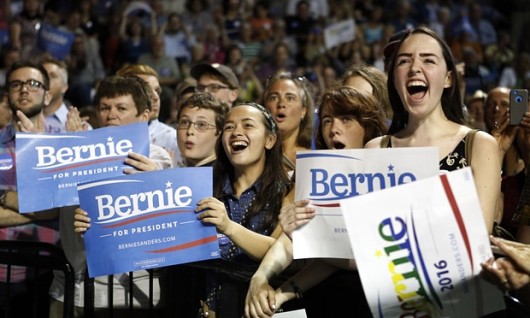
How does Bernie attract young voters?

Young-Voters-For-Sanders-530x318

Many of my friends seem to think I live, eat, drink and breathe politics.

Not true. I actually have a life outside of the political world. Still, I enjoy the give-and-take of political discussion.

This morning a friend of mine and I were talking about the presidential race. The conversation turned to Bernie Sanders, the independent U.S. senator from Vermont who’s running for the Democratic nomination.

“Why do young people like him so much?” my friend asked.

I haven’t given it that much thought as I’ve watched Sanders chip away at Hillary Rodham Clinton’s one-time inevitability as the Democratic nominee.

Then it dawned on me as my friend posed the question: Sanders has a grandfatherly appeal.

Back in the very old days, when I was a twentysomething idealist, I joined an army of young voters who supported the late Sen. George McGovern. His campaign centered on a single issue: ending the Vietnam War.

By 1972, the war was still raging. My own interest in the war was a bit different from many of my peers. They faced the prospect of going there. I had been there and returned. I came back after my Army stint as confused and confounded about our mission in ‘Nam as I was when I went over in the spring of 1969.

Sanders’ appeal to young voters today — more than four decades later — is a bit more elusive. I have trouble understanding his economic appeal, but then again, maybe it’s just me; I might be a bit slower on the uptake than I used to be.

I’ve concluded that perhaps a lot of Sanders’ appeal rests on the fact that he’s a bit longer in the tooth than any of the other candidates running for president this year — although Clinton isn’t that much younger.

Hillary Clinton faces an authenticity challenge. Sanders doesn’t. He seems to be precisely how he presents himself: a loveable curmudgeon.

I’ll admit that I haven’t talked to that many young people about Sanders’ candidacy. Another young friend with whom I’ve recently gotten acquainted asked me this morning about Michael Bloomberg — the former New York mayor who’s pondering an independent/third party candidacy for president.

I haven’t a clue what would drive a Bloomberg candidacy, other than be a spoiler, I said. He, too, is an older gentleman. Would my young friend support Bloomberg because he reminds her of Grandpa? I might ask next time I see her.

Yes, this election season is the most unconventional many of us ever have seen. This fascinating love affair that Old Man Bernie has developed with younger voters just might be yet another result of the unrest that’s gripped so many Americans.