Tag Archives: Barack Obama

Trump lays the POTUS bar on the ground

Let’s talk for a moment about the 2020 presidential election, OK?

I want Americans to elect someone next time with actual government experience. I want a candidate to emerge from the tall grass, to surprise us all with his or her wisdom, smarts and vision.

Yes, I realize I’m asking for a lot. A lot of the early favorites emerging on the Democratic Party front are fine folks. They’re mostly warhorses who we have seen already. We have seen a couple of fresh faces getting some of the chatter, too.

I guess I am asking for political perfection.

However, think for just a moment about this: The guy who got elected in 2016 managed to reset the standard for minimum qualifications. Donald Trump not only lowered the bar, he laid the damn thing on the ground. One cannot go any lower in terms of qualifications for the highest public office in the land — if not the world — than what Donald Trump presented.

He brought zero government experience. Zero public service experience. Zero campaign experience. It turns out he brought next to zero business acumen. He built his political profile on a cache of exaggeration and lies.

Yet he tapped into some wellspring of anger that had been simmering out there among enough voters in the correct states to win an Electoral College victory over a candidate who was eminently more qualified to hold the office of president of the United States.

Barack Obama, the first African-American to be elected president, was fond of telling us that his personal story proved that anyone could assume the nation’s highest political office. With all due respect to the 44th president, compared to what Donald Trump brought to the 2016 campaign, former President Obama’s resume looked as if it bursts with qualifications.

Trump’s ignorance of all aspects of government only confirms what many of us believed when he rode down that Trump Tower escalator to announce his presidential candidacy: He offers nothing of substance, only bluster, bravado and boastfulness.

By golly, folks bought it! Who woulda thunk it?

Whoever challenges the president in 2020 — whether it’s in the Republican primary or in the general election (presuming he even runs again, let alone gets nominanted!) — had better bring his or her A-game of rhetorical aggression.

You know Trump will spare none of it as he fights for re-election.

I’m still going to hold out for the nearly perfect candidate.

Trump doesn’t ‘know’ his key anti-ISIS diplomat? Huh?

Brett McGurk, who I do not know, was appointed by President Obama in 2015. Was supposed to leave in February but he just resigned prior to leaving. Grandstander? The Fake News is making such a big deal this nothing event!

— Donald Trump

Let’s consider this statement for a moment, OK?

It came from the president’s Twitter fingers. He doesn’t “know” the man who has resigned as the administration’s top diplomat who works with forces that seek to destroy the Islamic State.

Brett McGurk quit to protest the manner in which the president announced the planned withdrawal of 2,000 troops from Syria. Trump declared that ISIS is “defeated.” So he’s leaving the fight to, I guess, the Russians and the Turks.

Defense Secretary James Mattis also quit to protest the president’s decision and the manner in which he arrived at it.

But for the president to say — again, via Twitter — that he doesn’t know the man charged with working to destroy the pre-eminent terrorist organization speaks volumes about the president’s astonishing inattention.

Think of it. Donald Trump declares his intention to destroy the Islamic State. He campaigned for the presidency saying he knows “more about ISIS than the generals, believe me.” He said ISIS’s destruction would be among his major foreign policy priorities.

And he doesn’t “know” the guy charged with leading the diplomatic effort in conjunction with our allies?

Astonishing.

Brett McGurk’s resignation is far more than a “nothing event.”

The cascade continues

I’ll admit to not knowing anything about Brett McGurk . . . until today.

That’s when I learned that our nation’s leading envoy in the fight to eradicate the Islamic State has decided to quit early. He is angry with Donald J. Trump’s decision to pull out of Syria, to abandon the fight against ISIS in that country. It was a decision that prompted Defense Secretary James Mattis to quit.

Now it’s McGurk who’s hitting the road.

This is a big deal, too.

McGurk had planned to leave in February, but decided to submit his resignation to Secretary of State Mike Pompeo.

McGurk joined the George W. Bush administration and stayed on through the Obama administration, where he was appointed to his current post.

Two years into the Trump administration, McGurk seems to have had enough.

As NBC News reported: Trump’s decision left McGurk flat-footed, unable to explain to U.S. allies who have been fighting ISIS with the United States why they were neither consulted nor informed in advance. Nor have senior Trump administration officials been able to tell allies and Kurdish forces whether U.S. air strikes will continue in Syria to support the mission against ISIS.

Mattis was quite clear in his resignation letter that part of where he differed with Trump is in the treatment of our allies. They cannot trust us to be faithful to our pledges and commitments.

Neither can key administration operatives who are charged with doing the most serious work possible. In McGurk’s case, it is the task of working with allies in the fight to defeat the monstrous terrorists known as the Islamic State.

The chaos is showing signs of taking a terrible toll on U.S. influence in a world that has grown accustomed to what we once touted as our national indispensability.

No longer can we make that make assertion.

Time of My Life, Part 6: Kudos to NPR

There once was a time — and it wasn’t that long ago — when newspaper editors’ opinions were of some value, that others actually sought them out.

I got to play the part of a media “expert,” but I use the term loosely, as in quite loosely.

The 2008 presidential campaigned exposed me to the marvels of radio editing and the magic that radio hands perform with raw audio “copy.”

National Public Radio was looking for two newspaper editors who plied their craft in politically disparate parts of the country. They settled on Kevin Riley, editor of the Dayton (Ohio) Daily News and, um, yours truly . . . me!

Dayton is a heavily unionized community in southern Ohio. In 2008 it was considered to be part of the electoral “battleground” where U.S. Sens. Barack Obama and John McCain were fighting in their quest to become the next president of the United States. Riley was editor of the paper. I don’t know the fellow.

I was editorial page editor of the Amarillo Globe-News, deep in the heart of McCain Country. There wouldn’t be any fight in the Texas Panhandle over voters’ preferences. Our readers were solidly behind Sen. McCain.

NPR wanted to talk to the two of us to get our take on how our communities viewed the upcoming election.

I showed up at the High Plains Public Radio studio in downtown Amarillo, got comfortable sitting amid all this radio equipment. My good friend Mark Haslett — who worked for HPPR at the time — set up the studio nicely. The call came from NPR, I introduced myself to Liane Hansen, the NPR host, and to Riley, who was on the other end of the line in Dayton.

We chatted for about 30 minutes or so. I was terribly nervous, more so than Riley; at least that’s how I figured it, given that he stammered and stuttered far less than I did when he was answering questions from Hansen.

The bottom line was that Riley said the race in Ohio between Obama and McCain would be tight; meanwhile, I told NPR that McCain was likely to win the contest in the High Plains of Texas, Oklahoma, New Mexico and Kansas in a walk.

NPR boiled the interview down to about a 4-minute presentation on its “Morning Edition” broadcast on Sunday.

Here’s the most astounding part of it: NPR’s editing team made me sound much smarter and erudite than I am. They edited out the fits and starts, the “uhs” and “ums” and the occasional mangled sentence structure.

What’s more, they did it without changing any context! They broadcast my remarks completely and correctly, but without the mess I made of it.

I tell you all this to make two points: First, given the decline in print journalism and the explosive growth in other forms of media, newspaper editors no longer are deemed to be as valuable a resource as they once were; I am proud to have taken part in that discussion. Second, National Public Radio comprises geniuses who are very good at what they do . . . and I was proud to be a part of NPR’s broadcast.

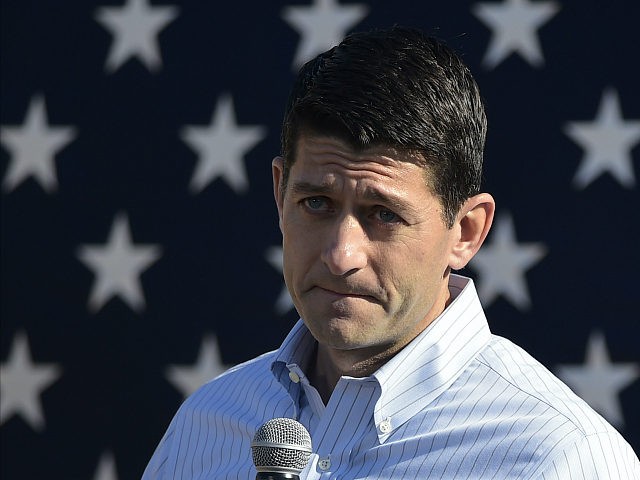
Paul Ryan: big-time letdown

I had high hopes for Paul Ryan when he was dragged kicking and screaming into the speakership of the U.S. House of Representatives.

The Wisconsin Republican reportedly didn’t want to become the Man of the House when John Boehner resigned his speakership and left public office in 2015. Ryan had to be talked into it.

He took the job. I was hopeful that this policy wonk, a serious young man who knows the ins and outs of public policy would be able to manage the House effectively and work to enact meaningful legislation. I had hoped he could work effectively with the Democratic minority in the House chamber.

Then I had hope that after Donald Trump was elected president in 2016 that he could resist some of the new president’s more bizarre impulses.

Well, he didn’t deliver the goods. He didn’t work well with the other party. He certainly didn’t resist the president. He became a Trump Man. Not a Republican Party Man. But a Trump Man. He became the president’s enabler.

Ryan ran on the 2012 GOP ticket for vice president. He and Mitt Romney lost that election to President Obama and Vice President Biden. He went back to the House, resumed his post as Budget Committee chairman. Then fate — and Speaker Boehner’s frustration with the TEA Party wing of his party — delivered him to the House’s highest post.

If only he could have shown a bit of spine as the Republican In Name Only president proceeded to hijack a great political party. There were faint signs of spine-stiffening, such as when he would offer mild criticism of some crazy Trump utterances.

But then he would roll over as Trump pushed through the House a tax cut that over time will benefit only the wealthiest of Americans.

Speaker Ryan gave a farewell speech today, bidding goodbye to the House where he served for two decades. He lamented the “broken politics” that afflicts the House. Uh, hello, Mr. Speaker? You helped break it.

I, of course, live far away from Janesville, Wis., from where Ryan hails. However, given that he managed the legislative body that approves legislation that affects all Americans, I have a significant stake in the job he did.

Thus, I shall declare that I won’t miss Paul Ryan.

ACA ruling puts GOP in a bit of a pickle

Donald Trump, obviously, is happy that a Texas-based federal judge has declared the Affordable Care Act to be unconstitutional.

However, are his fellow Republicans thrilled with Judge Reed O’Connor’s wide-ranging ruling? Not . . . exactly.

Many GOP congressional candidates campaigned for election and re-election in this year’s midterm election promising to protect one of the ACA’s key provisions: to cover “pre-existing” medical conditions for those who have purchased insurance under the landmark legislation.

But the judge said the ACA violates the Constitution because of legislation that stripped out the individual mandate provision, which requires Americans to have insurance or else face civil penalties. You can’t do that, Judge O’Connor said.

U.S. Sens. John Cornyn and Ted Cruz, two Texas Republicans, have remained quiet about the ruling. So has Texas Gov. Greg Abbott. You’d think they would join the president in extolling the decision.

Here’s the deal, though: The ACA remains popular among Americans. National Public Radio reports that a Kaiser Family Foundation poll declares that 53 percent of Americans like the ACA. What’s more, the U.S. Supreme Court already upheld the legislation enacted in 2010 during President Obama’s first term and stands as the former president’s landmark domestic legislative triumph.

So, what are GOP politicians going to do? Will they buy into the judge’s ruling and then try to explain to voters why they campaigned in favor of key ACA provisions?

This matter surely is headed for an appeal that well could end up in front of the nation’s highest court eventually. A single judge’s ruling isn’t likely to pull the plug on the ACA; it will remain in effect until a higher court makes the definitive decision.

The nation’s Republican politicians, though, now find themselves squirming and wiggling for ways to justify what they said on the campaign trail while praising a judge’s decision to scrap the Affordable Care Act.


Trump inaugural actually dwarfed Obama inaugural . . . yes, it did!

Donald Trump has bragged about the stupendous size of the crowd that witnessed his inauguration. He, um, misspoke, er, lied about it.

What he’s never bragged about is the amount of money he raised for an event that in truth was a good bit smaller, with less bling than either of the inaugurations of Barack Obama or George W. Bush.

And that has become yet another focus of federal prosecutors who are looking at this man’s presidency.

Trump reportedly raised $107 million for his 2017 inaugural. Compare that with the $53 million raised for Barack Obama’s 2009 inaugural, the one that heralded the start of a truly historic presidency.

The Obama inaugural featured headline artists galore, not to mention a crowd that totaled more than 1 million spectators. The Trump inaugural had, um, a lot fewer acts, a lot less pizzazz and drew a lot fewer spectators to watch the 45th president take the oath of office.

However, the Trump inaugural team banked a lot of cash.

That has presented prosecutors with a series of questions. Why did they raise so much money? For what purpose did the donors give that kind of dough? Is it all above board, legal, transparent? Did the new president’s team turn back any of it, the way Obama’s inaugural team did with some of the donations it received prior to the president taking office?

It looks to me as if we have a mushrooming investigation. It started with a look into alleged collusion between the Trump campaign with Russian operatives who interfered with our 2016 election. It appears to be spreading to include the president’s business dealings in Russia, along with the conduct of members of Trump’s transition team.

Hey, this kind of thing happens with these probes. Special prosecutor Ken Starr started looking at an allegedly shady real estate deal in Arkansas involving President and Mrs. Clinton; it veered into another area altogether, an inappropriate relationship between the president and a White House intern. Starr summoned the president to testify to a grand jury, the president lied to the grand jury about the relationship and, thus, handed congressional Republicans a pretext to impeach him.

Now we’re looking at inaugural fundraising?

Oh, brother. This is getting more confusing by the hour.

Pence’s stony silence most disturbing image

Look at the picture. The person to Donald Trump’s right is none other than the vice president of the United States, Mike Pence.

Of all the chatter we’ve heard about that meeting, the one image that continues to stick in my craw is of Pence sitting there, silent, not saying a single word. Meanwhile, the president argues with House Minority Leader Nancy Pelosi and Senate Minority Leader Charles Schumer about the federal budget and financing construction of The Wall on our southern border.

The image of Pence sitting there mute reminds me of what President Barack Obama and Vice President Joe Biden said of their relationship during their eight years in power.

Obama has made it abundantly clear, and Biden has affirmed it, that Biden was the last person to leave any room where the two men were present. Biden would argue with Obama, telling him — sometimes with great emphasis — where he believed the president was wrong. The president would fire back. The two men would go at it tooth and nail.

But through it all, as the former president has recounted their service together, they forged a lasting friendship and partnership.

Do you think the current vice president and the current president have anything approaching that kind of relationship, let alone any semblance of a friendship? Of course not!

Trump comes from a world where he was The Boss. He made decisions. Those who worked for him did what they were told to do. If they didn’t, they were out. Indeed, we’ve seen evidence of that background even as he has morphed into what passes for the chief executive of the federal government.

Thus, when Trump, Pelosi and Schumer were haranguing each other in the Oval Office, one couldn’t possibly expect VP Pence to chime in with his own view. I mean, after all, he’s only the No. 2 man in the executive branch of government. He was elected right along with Donald Trump to lead the nation. Isn’t that right?

Doesn’t that by itself give him any “cred” to say what he believes, to tell the president anything at all that might contradict whatever passes for the president’s world view?

One would think. Except that we are talking about Donald Trump, who is unfit for the office he holds. He wanted an obsequious lap dog to serve as VP and, by golly, he got one.

Don’t stop tweeting, Mr. POTUS

I’ve turned the corner. I used to wish Donald Trump wouldn’t tweet so much; now I want him to keep it up.

Why? Because his Twitter tirades provide such a trove of grist that highlights his utter hypocrisy, duplicity . . . not to mention his idiocy.

This has just surfaced. In 2012, he fired off a tweet criticizing then-President Barack Obama for “burning through” three White House chiefs of staff in three years. Oh, but hold on! Trump just announced the departure of his second chief of staff in less than two years, and he’s about to bring aboard his third chief of staff in, oh, the same amount of time — a year less than Obama did!

See how it goes? Trump says these things, either via his big mouth or via his Twitter account. Then he demonstrates a propensity for doing the same thing, only more of it.

Obama’s golf outings? Trump said he wouldn’t “have time” to break away from his plans to “make America great again” to play golf. Well now. He’s lapped the presidential field several times in the number of golf outings.

Sounding more “presidential”? Hasn’t happened. His tweets show us a continuing pattern of juvenile petulance.

Now we find the chief of staff matter.

Ain’t it just grand? Keep it up, Mr. President. You keep digging yourself deeper into that proverbial hole.

The Twitter universe has gone bonkers. Take a look.

Foes can, and do, become friends

I have been listening intently to the testimony of a former foe of the late President George H.W. Bush about how they became friends.

Former President Bill Clinton defeated President Bush in 1992. Bush was seeking re-election, but a faltering economy and a broken campaign pledge to never raise taxes did him in.

Clinton and Bush went nose-to-nose — along with the banty rooster Dallas billionaire Ross Perot. Clinton won with 43 percent of the popular vote, but also with a substantial Electoral College majority.

Bush and Clinton were drawn together in 2004 when President George W. Bush assigned them to raise money for tsunami relief for Southeast Asia. That was when their friendship formed. It grew over time and cemented itself indelibly.

Theirs is not the only friendship formed out of political adversity.

I think also of how two earlier adversaries became BFFs over time. President Gerald Ford lost his bid for election to Jimmy Carter in 1976. That campaign was equally harsh and ferocious. Moments after taking the oath of office on Jan. 20, 1977, President Carter turned to his predecessor and thanked for “all he did to heal the country” after the Watergate scandal of 1972-74.

The two men forged a close friendship that lasted until President Ford’s death in 2006.

These friendships, I am saddened to say, seem to be too rare of an occurrence.

President George W. Bush isn’t exactly best of pals with Al Gore and John Kerry, the men he defeated in 2000 and 2004. One didn’t see President Carter and President Reagan chumming around after Reagan defeated Carter’s bid for re-election in 1980. President Obama did deliver some touching and heartfelt remarks at Sen. John McCain’s funeral earlier this year, but those 2008 foes didn’t spend a lot of time off the clock with each other; nor do President Obama and Mitt Romney, his defeated 2012 opponent.

I’ll add that George W. Bush and Clinton have become friendly over the years, given Clinton’s professed “love” of Bush 41 and the notion that the elder Bushes “adopted” Clinton as another of their sons; that means “W” and Clinton see themselves as brothers with different mothers.

That brings me to the current president. What kind of relationship can Donald J. Trump ever have with the foe he vanquished in 2016, the woman he calls “Crooked Hillary” Clinton? Indeed, how many political friends has the president cultivated during his time in office and will those relationships last after he leaves the presidency?

Still, I take pleasure in listening to the tales of how political foes can become friends. It’s one of the shining virtues of our nation’s extraordinary political makeup.