Evolution, creationism? Why not both?

Problems-with-the-Creationism-vs-Science-Debate

Polls occasionally drive me a bit crazy.

Take the one discussed in a Slate.com article that says young Americans favor Charles Darwin’s theory of evolution over the belief that God created the world in six calendar days.

May we hit the pause button for a moment?

I am a Christian. I’ve read the Bible many times in my life. I know what the Bible says about how the world came to be.

I also believe that the world was populated by dinosaurs and other creatures for zillions of years before human beings made themselves known.

Thus, I believe that the two ideas are not mutually exclusive.

Is it possible that God created the world and allowed it to evolve into what it has become? I believe that is precisely what occurred.

The Slate article was written by Rachel E. Gross, who it is clear to me believes exclusively in Darwin’s theory. She writes: “Now, at long last, there seems to be hope: National polls show that creationism is beginning to falter, and Americans are finally starting to move in favor of evolution. After decades of legal battles, resistance to science education, and a deeply rooted cultural divide, evolution may be poised to win out once and for all.”

She adds: “The people responsible for this shift are the young. According to a recent Pew Research Center report, 73 percent of American adults younger than 30 expressed some sort of belief in evolution, a jump from 61 percent in 2009, the first year in which the question was asked. The number who believed in purely secular evolution (that is, not directed by any divine power) jumped from 40 percent to a majority of 51 percent. In other words, if you ask a younger American how humans arose, you’re likely to get an answer that has nothing to do with God.”

Read the whole story here

I get the divide over how to teach science in classrooms. Fundamentalists want to teach creationism as it is written in the Bible. They also want to present evolution as just as much of a theory as creationism. This issue has been kicked around at the highest level of public education governance in many states, none more so arguably than in Texas, where we elect State Board of Education members who run for the office as politicians.

Creationism, though, is a religious doctrine. Evolution is a secular one. That doesn’t mean — to my way of thinking — that one of them is invalid.

What it means to me is that the biblical version of creation was written as a metaphor. “Days” can’t be measured in 24-hour increments; for that matter, it might be possible that every element of time takes on meanings that we cannot comprehend.

Does any of this discount the role that God played in creating our world? Not in the least.

As for whether we should teach creationism in our public schools alongside evolution, well, I do not believe that’s appropriate.

Creationism should be taught in places of worship, which I also believe also is part of God’s plan.

Boy, family seek $15 million … for what?

ahmed

Ahmed Mohamed once was in the news.

He was doing a science project for his school in Irving, a Dallas suburb. Ahmed brought a homemade clock to school. But the clock was confiscated, Ahmed was detained, questioned intently by school officials and police who thought he had made a bomb. He then was suspended.

The incident brought a lot of attention because Ahmed and his family are Muslim.

Mr. and Mrs. Mohamed were so upset — and rightfully so — that they took their son out of school and moved to Qatar.

That should have been the end of the story.  It isn’t.

The family is now seeking reparations from the school district totaling $15 million.

That’s right. Fifteen million bucks! They also want a written apology from the school district.

Ahmed’s reputation, they family says, has been damaged beyond repair. They want the Irving district to pay them.

I’m generally in favor of allowing plaintiffs the right to sue for as much as they can get … within reason, of course.

However, not for something like this.

Ahmed’s detention and the publicity he got over the bogus bomb scare brought him a great deal of positive attention. President Obama invited him and other science students to the White House for an astronomy demonstration project.

Ahmed’s damages, such as they are, pale in comparison to what his parents’ reputation will endure by making such an unreasonable demand for reparations.


We are a nation of refugees

founders

The debate over how — or whether — to welcome refugees to our land is continuing at full throttle.

It is dismaying to hear talk from presidential candidates that we should slam the door shut on Syrians — or Muslims — out of fear that some of them might be terrorists intent on harming Americans.

President Obama has declared several times, “That’s not who we are.”

Well, who are we?

By my reckoning, we are a nation founded and built by refugees.

You’ve learned about these individuals. They sailed to the New World to flee religious and political oppression. They came here in search of a new life. They encountered the indigenous population here and were met with mixed feelings by their new “hosts.”

The refugees persevered throughout most of the 17th century and into the 18th century. They rebelled eventually against the empire from which they had fled. They launched a revolution. The fighting ended in 1781 and a nation was created.

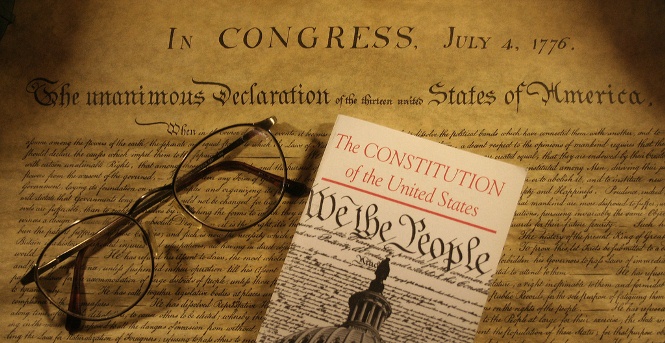
Those refugees then crafted a government built on a document that specified certain things. One of them would be that they would apply no religious test for those seeking political office.

However, some politicians today actually have said in the current climate that people of a certain religion are not “qualified” to seek public office. That’s not who we are, either.

Do we intend to live in fear? Are we doing to forsake the very principles on which those first refugees founded this great nation?

How about we take a break, look inward at just who we are as a people — as a nation?

How might those first refugees think of what has happened to their descendants and their reaction to world events?


Time to suspend politics

political-debate

The business card I have been handing out for some time now talks about High Plains Blogger’s intent, which is to comment on “politics, current events and life experience.”

Well, dear reader, I’ve made a command decision regarding this blog.

I am suspending the “politics” part of this blog’s mission effective on Thanksgiving Day. My intention is to stay out of the political dialogue through Christmas. Heck, I might be inclined to wait until New Year’s Day before re-entering the fray.

Why the change?

I am weary of the anger and the nonsense that’s coming out of the mouths of all the presidential candidates … in both major political parties. What’s more — and this is even more to the point — I am weary of the back-and-forth that has ensued, not just among the candidates but also among their legions of supporters and opponents.

I’ve at times entered the fray with my own commentary, only to be sniped at by those who disagree with me. I don’t mind the disagreement. I’ve merely had it up to here with the anger that such commentary — not just from me — has engendered in partisans on both side of the aisle.

So, High Plains Blogger is going to take a breather from all of that.

Will this blog comment on current events as they occur? Certainly. It will not, though, engage in the political discourse that emanates from those events. And by all means the blog will comment on life experience, both personal and of things the author — that would be me — observes on his journey.

Rest assured on this point: I am not giving up totally on politics cold turkey. I will continue to comment on politics through my Twitter and Facebook feeds.

I do not intend to use this blog as a forum to state my own political bias. The way I figure it, Twitter only gives me 140 characters to make a statement. That’s efficient and doesn’t require too much emotional energy on my part; plus, my tweets are posted automatically to my Facebook feed, so — pow! just like that — I’m able to perform a two-fer.

But I’m also thinking of scaling back significantly the political commentary on those two social media outlets. Nor am I going to argue any point.

So, those of you who spend a lot of time engaging others in political debate and name-calling on social media are welcome to knock yourselves out; I will not join you in that exercise in futility.

Here’s my final thought on all of this.

Thanksgiving is a time to give thanks for all that we have. I am grateful beyond measure for the many blessings in my life. Christmas? Well, that is the time we celebrate the birth of Jesus Christ. What more can I say about that?

In keeping with the Christmas spirit, I hereby refuse to be dragged into the emotional gutter by politicians whose mission is to distort the other guys’ world view.

Thanksgiving is almost here. High Plains Blogger will stay in the game for a little while longer.

After that? I’ll see you on the other side.


Refugee fight pits states vs. the feds

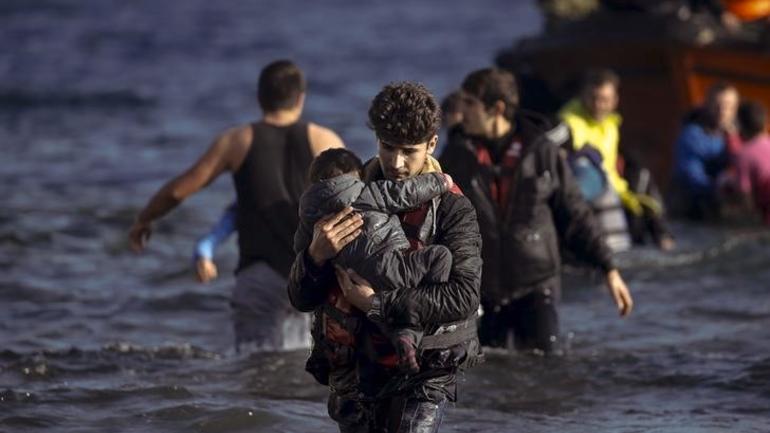
A young man carries a child as refugees and migrants arrive on a boat on the Greek island of Lesbos, November 7, 2015. REUTERS/Alkis Konstantinidis

Just about any day now I expect some governor to declare that his or her state has the right to protect residents against foreigners, that the governor is preserving the “state’s right” to self-protection.

This might become the leading back story coming out of governors’ refusal to let Syrian refugees into their states.

But according to a University of Michigan law professor — not to mention constitutional scholars all over the place — the governors don’t have the authority to supersede federal law.

The bottom line, according to Richard Primus is this: “They can’t do it. The decision to admit a person to the United States belongs to the federal government exclusively. Once a person is legally admitted to the United States, she can live wherever she chooses. States don’t issue visas any more than they declare war. Indeed, putting foreign affairs under the firm control of one central government was one of the primary motivations of the Founders in creating the Constitution in the first place.”

Primus argues, though, that governors resisting the feds — such as what Texas Gov. Greg Abbott has done fairly routinely — makes good politics, even though it runs directly counter to what the law allows.

Primus writes that the states do have some say in refugee resettlement: “That’s not to say governors are totally powerless to shape the flow of refugees. There are things states can do to make themselves less attractive destinations. Most refugees need help getting their lives restarted—housing, language education, employment leads, and other social services. A fair amount of that resettlement work is run through state social-service agencies with the support of federal dollars. The states are the one with the boots on the ground in education, housing, and so forth—and they could simply decide not to take the federal money and not to provide resettlement services. Several governors have actually taken this line, saying that they’ll cease providing resettlement assistance.”

But to declare categorically that Syrians — or any other foreigner — cannot come to this country? That’s the federal government’s call.


Memo to GOP: You don’t want to anger Trump

donald

Donald Trump’s latest shot across the bow of the Republican Party leadership leaves me with decidedly mixed feelings.

He again has refused to rule out categorically an independent run for president if he doesn’t get the GOP nomination next summer.

He wants fair treatment by the party. He wants to be treated, I gather, with respect.

Well, if I were to advise Republican National Chairman Reince Priebus, I’d tell him to be very nice to Trump. Treat him right. Baby the fellow. Tell him constantly how bright he is and how right he is … on everything.

I’m not sure what Trump means by insisting on fair treatment by the GOP.

Suppose he shows up in Cleveland next summer without the party presidential nomination locked up. Suppose another candidate has the delegate count in the bag. I’m guessing Trump will want a prime-time slot to make his speech.

Based on what we’ve heard so far along the campaign trail, such a concession could blow up in the chairman’s face. You’ve heard Trump, yes? He tends to, uh, ramble a bit. He says some rather insulting things about world leaders, his fellow politicians and tends to shoot from the hip on, oh, just about any subject under the sun.

However, does the party want to deny him that chance and risk having him bolt the GOP and launch that independent candidacy, which surely is going to siphon off more votes from the Republican nominee than from whomever the Democrats nominate?

Chairman Priebus, I reckon this is why the party pays you the big bucks.


Time for ‘kinder, gentler’ America

myrna

Myrna Raffkind writes frequently for the Amarillo Globe-News.

Her most recent opinion column appeared in today’s paper. I don’t subscribe to the paper; thus, I don’t see its online edition.

A Facebook friend posted Myrna’ column on his news feed. I picked it up and want to share it here.

If you have a moment, take some time read it. Myrna is one of the more thoughtful and, yes, “kinder and gentler” people I’ve ever known.

***

“An eye for an eye ends up making the whole world blind.”
— Mahatma Gandhi

After Dylann Roof’s mass shooting at Emanuel African Methodist Episcopal Church in June in South Carolina, the major focus of media attention was on the display/removal of the Confederate flag and the controversy surrounding this issue. Scarcely noticed was another incident following the shooting; this incident being the reaction of the victim’s families when they were allowed to address Roof at the bond hearing. Over and over, the victim’s family members sent the same response — “We forgive him.”

Forgiveness, the willingness to suppress the urge to retaliate, is a concept that seems foreign and almost nonexistent in today’s society.
An “I’ll get you back” mentality seems to permeate the minds and hearts of many Americans. Interestingly, it seems that those who have suffered the most from genocide and abuse are often willing to forgive.

I often think of the words of Elie Weisel, a Holocaust survivor, a man who watched all of his family tortured and killed, a man who speaks for six million Jews who were killed in the Holocaust. Weisel’s words of wisdom were that we should “forgive but not forget.”

Forgive, but not forget. This is the concept echoed by the greatest leaders of our times — Martin Luther King Jr., Mahatma Gandhi, Nelson Mandela and Pope Francis. All of these men are speaking on behalf of a minority group that has been abused and mistreated for generation after generation. And yet, they saw the power of forgiveness and the futility of resentment. Their own words send a powerful message.

MLK said, “We must develop the capacity to forgive. He who is devoid of the power to forgive is devoid of the power to love.”

Gandhi’s words were, “The weak can never forgive. Forgiveness is the attribute of the strong.”
Speaking on resentment, Mandela said, “Resentment is like a glass of poison that a man drinks; then he sits down and waits for his enemy to die.”

And more recently, Pope Francis stunned the Catholic world and aroused controversy when he declared forgiveness for women who have had abortions.

In Simon Weisenthal’s classic book, “The Sunflower,” he examines the possibilities and limitations of forgiveness. Wiesenthal, while a prisoner in a Nazi concentration camp, was taken to visit a dying member of the SS. The German soldier asked Wiesenthal for forgiveness, and Wiesenthal’s response was one of silence. For the rest of his life, Wiesenthal wondered if he had taken the correct action. He asks 53 distinguished theologians, human rights activists, political leaders and writers what they would have done had they been in Wiesenthal’s situation. Their responses are thought-provoking as well as insightful.

Several said that forgiveness was possible, but only if it is accompanied by justice. Those who have committed atrocious acts must be punished so that we will never forget.

Other respondents, thinking of the many Germans who hid Jews in their homes or helped them escape, said that those who have a sense of collective guilt for the crimes that their leaders had engaged in could be forgiven, but never their leaders or those who perpetrated acts of genocide.

Another often-given response was that it made little difference what course of action Weisenthal took; ultimately the only one with the power to forgive was God.

Interestingly, none of the respondents advocated revenge. They note retaliation only hurts. Those consumed by anger lose their capacity for love.

It was not that long ago that President George Herbert Bush argued for a kinder, gentler America — an America that exemplified compassion and respect.

As I listen to the Republican presidential candidates, I wonder what has happened to Bush’s advice. It seems to me that the major tone of most politicians, regardless of political party, is one of anger and retribution. In the debates, there is so much bickering that little time is left for discussion of constructive and workable solutions to our nation’s pressing issues. Perhaps this is just “politics as usual,” but I cannot help but wonder if the time could have been spent more productively.

Would our country not be better off if we followed the example set by the Charleston families — of Weisel, Mandela, Gandhi and Pope Francis? If we opened our minds and hearts to forgiveness?

As Thanksgiving approaches, we reflect on our many blessings, some of which are the freedom to think for ourselves, to express ourselves and to recognize the greatness of our country rather than its shortcomings. Let us bear this in mind as we say our Thanksgiving prayers, and as we strive for a kinder, gentler America.

G.W. Bush would be laughed at … by GOP base

UNITED KINGDOM - JUNE 16:  U.S. President George W. Bush waves upon arrival at RAF Aldgerove in Belfast, Northern Ireland, on Monday, June 16, 2008. Gordon Brown, U.K. prime minister said Britain is pushing the European Union to impose new sanctions against Iran, including freezing the assets of its biggest bank, to pressure the nation to give up its nuclear program at a press conference with Bush in London today.  (Photo by Paul McErlane/Bloomberg via Getty Images)

President George W. Bush sounded like the voice of reason in the days immediately after 9/11.

We aren’t fighting Islam, the president said. We are fighting those who have perverted a great religion, he added. “Islam means ‘peace,'” he cautioned.

The response today among some of the individuals seeking the Republican nomination for president? Let’s keep eyes on all Muslims. Kids. Moms and dads. Old folks. All of ’em!

Let’s mount an aggressive “surveillance” campaign against them, says Donald Trump.

OK, so let’s all live in abject fear, shall we?

To do that we’ll need to stay away from schools, churches, movie theaters, shopping malls … places where violence has erupted in this country already. As near as I can tell, none of those incidents involved foreign terrorists. They all were done by home-grown, corn-fed good old American terrorists, who sought to exact revenge on innocent people.

Would those who comprise today’s Republican base believe the rational views — about the identity of the enemy we are fighting — expressed by the president who took us to war in the first place?

My gut tells me “no.”


Why aren’t we ‘all Kenyans’?

kenya

Evans Wadongo asks a pertinent question.

Where was the sustained international outrage over radical Islamic attacks on victims in the east African nation of Kenya?

Indeed, the response to the Paris attack that killed 130 victims and injured many more should have occurred when terrorists killed Kenyans in two attacks earlier.

Yet it didn’t happen, Wadongo — a native of Kenya — has asserted.

I’ll be candid and admit that I am one of perhaps billions of people who did not react as strongly to the Kenya carnage as I did to the Paris tragedy.

Sixty-seven people died in a 2013 attack at Westgate Mall in Nairobi; in April of the year, 147 people died at Garrissa University College. The perps in both attacks were murderous jihadists.

I heard it said the other day that the response to the Paris attacks has been more visceral because millions of people  either “have been to Paris or want to go there.” They feel a certain kinship with the City of Light, it was said. Thus, their reaction to the Paris attack hits people closer to where they live, so to speak.

I don’t know what the answer really is.

Kenyans are hurting, too.

Wadongo, who runs a non-profit relief agency, stops short of suggesting race plays a major role in the world’s different reaction. He said it’s more a lack of understanding. He said: “It’s just that people are so used to negative things coming out of certain parts of the world — of Africa, of Asia, of South America. It’s the norm. People expect bad things to happen. When something bad happens in Europe or the U.S., it’s unusual. If something bad happens in some other part of the world, it’s usual.”

Whatever the case, the world needs to react as angrily to these attacks wherever they occur … and not just in these romantic locations where we don’t expect them.

Louisianans try a new way

david_vitter_0

Edwin Edwards once was, shall we say, a colorful Louisiana politician.

When I think of the former Democratic governor I think of two quotes attributed to him. One was that the only time he’d ever lose an election is if he got “caught with a dead girl or a live boy.” Another alleged Edwardsism goes that the people of his state not only expected their politicians to be crooked, they “demanded it” of them.

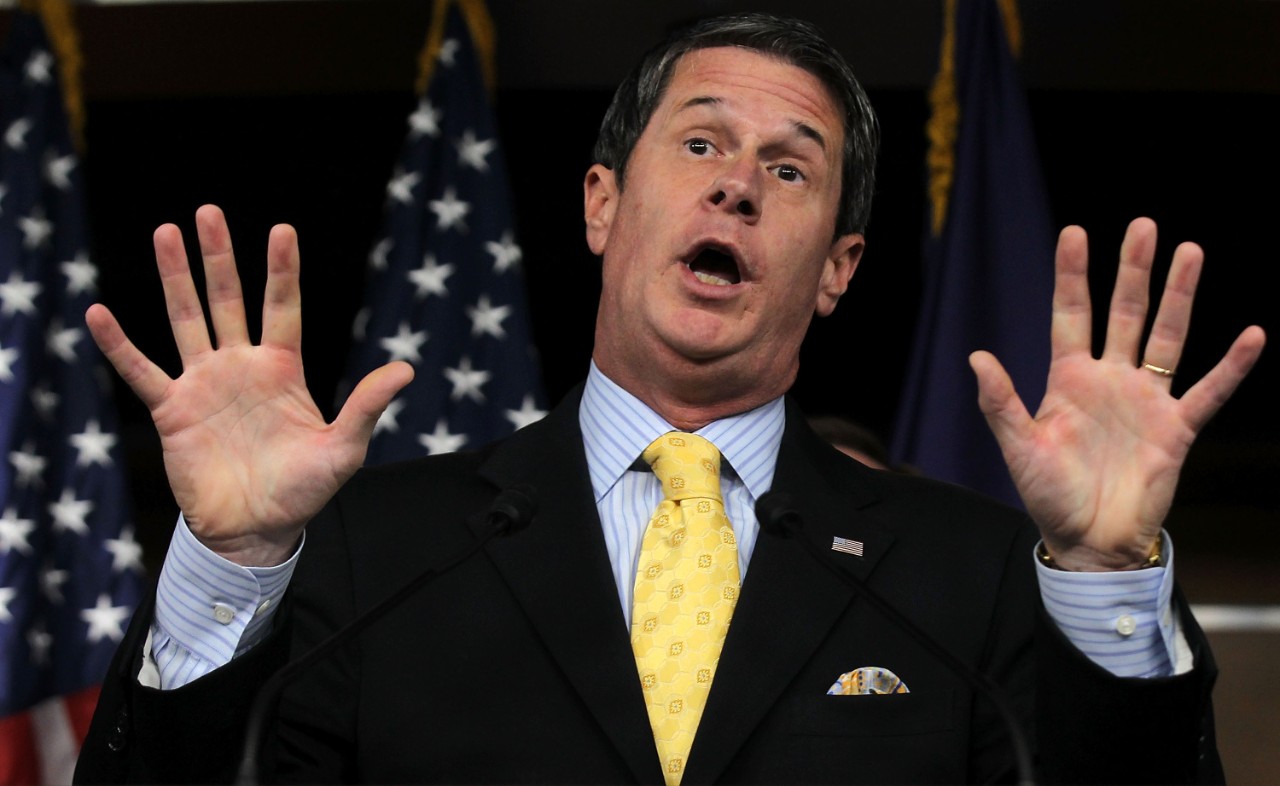
Well, today the voters of the Pelican State showed a different side of themselves. They rejected Republican candidate David Vitter’s bid to become governor and elected instead a Democratic state senator, John Bel Edwards … no relation to the infamous former Gov. Edwards.

Vitter, you see, is a sitting U.S. senator who in 2007 was caught fooling around with a prominent District of Columbia madam. His name appeared in some hookers’ black books.

His tawdry conduct became part of Edwards’s campaign strategy.

In deeply conservative and Republican Louisiana, Vitter was thought to be the prohibitive favorite to become the next governor, replacing Republican Gov. Bobby Jindal. Then Edwards, a former Army Ranger who had served in Iraq, launched a vicious attack ad that accused Vitter of “choosing prostitutes over patriots”; the ad took aim at Vitter’s Senate votes against veterans benefits.

Vitter’s campaign sought to portray Edwards as a liberal in the mold of President Obama, hoping that the president’s unpopularity in Louisiana would — if you’ll pardon the pun — turn the trick.

It didn’t.

I am heartened, though, to see that Louisianans decided they’d had enough of Vitter’s foolishness. They turned their back on a well-known incumbent senator who had sought another office back home — in the state that knows him well.

Perhaps, it turns out, they know him a little too well.