Category Archives: political news

Time of My Life, Part 5: Conventions bring serious tasks

Every now and then journalists get to see the most serious tasks imaginable in a totally new context, especially when you’re thrust into a front-row seat.

I had a couple of those experiences while working for the Beaumont (Texas) Enterprise. I want to share them with you briefly here.

In 1988 and again in 1992 I was privileged to attend two Republican National Committee presidential nominating conventions. Beaumont lies between two major cities — New Orleans to the east and Houston to the west. The GOP nominated Vice President George H.W. Bush as president in 1988 in New Orleans; then the party nominated him again for re-election in 1992 in Houston.

I got to witness all of the hubbub, the whoopin’ and hollerin’ up close both times.

The 1988 convention placed me behind the speaker’s podium inside the Superdome in New Orleans, where I witnessed President Reagan deliver a stirring speech to the faithful crowd. After the president finished his speech — and as the crowd cheered the Gipper — he and his wife, Nancy, turned and walked off the stage and so help me as God is my witness, he looked straight at me as we made eye contact. I have to say that was quite a thrill.

I worked in the same media room with some fine reporters and columnists. One of them is Chris Matthews, who at both conventions was a “mere” columnist for the San Francisco Examiner, which was owned by the same Hearst Corporation that owns the Beaumont Enterprise. I got to know Matthews, I like to say, “before he became ‘Chris Matthews,'” the current star of prime-time cable TV coverage on MSBNC. He and I enjoyed a cup of coffee at the Houston convention, chatted for a few minutes. He wouldn’t remember it, but it happened.

The 1992 gathering in the Houston Astrodome was notable as well for a couple of speeches. Conservative firebrand Pat Buchanan sought to wrest the GOP nomination from President Bush and delivered the frightening speech in which he implored the delegates to “take our country back” from some nefarious evil forces Buchanan thought had hijacked the nation. I also got to hear former President Reagan bring down the house when he mentioned the Democrats’ nominee, Bill Clinton, who Reagan said fancied himself to be another Thomas Jefferson. He responded, “Let me tell you, governor. I knew Thomas Jefferson. Thomas Jefferson was a friend of mine, and governor, you’re no Thomas Jefferson.”

The former president’s timing was picture perfect, owing to his well-known skill as a film and TV actor.

The biggest takeaway from both conventions was the sight of serious men and women doing the most serious work imaginable — nominating candidates for president and vice president of the United States — while wearing goofy elephant hats, with vests festooned with buttons and labels and generally carrying on like children at a birthday party.

I simply had to suspend my disbelief as I watched these individuals performing this most serious of tasks.

Yes, it was representative democracy in its raw form. It was a joy to watch and to cover it for the newspaper that employed me.

Corker might vote for a Democrat? Big . . . deal!

Lame-duck U.S. Sen. Bob Corker, R-Tenn., says he “might vote” for a Democrat for president in 2020.

To which I say: Big . . . bleeping . . . deal!

Does it really matter one bit what a U.S. senator might do when he gets a chance in a couple of years to vote — in private! — for the candidate of his choice?

No it doesn’t.

I grow weary of hearing from these politicians who believe that expressing their voting preferences in public somehow gives their ballot-casting some added significance, some gravitas.

Corker is a fine man. He announced about a year ago that he wouldn’t run for re-election to the Senate from Tennessee. That’s when he grew a pair of ’em and started speaking out against the president of his own party. If only he had been as stern prior to his becoming a lame duck. But . . . whatever.

Now he says he might vote for a Democrat.

The founders made sure we could vote in private for a reason. It was to protect citizens against recrimination, coercion and pressure. Sure, I occasionally reveal my own voting preferences on this blog. I also know that it doesn’t mean anything to damn near anyone because readers of this blog have their minds made up already; I just choose to use this forum to vent.

So, to Sen. Corker I only want to add, feel free to vote for whomever you choose, sir. You are entitled to write in The Man in the Moon if that’s your choice. You’re under no obligation to tell us about it.

Indeed, I care about that as much as I care about knowing you might cast your ballot for a Democrat next time around.

Term limits for congressional leaders? Why not?

I dislike the idea of term limits for members of Congress.

However, the idea of imposing such limits on congressional leaders is another matter. To that end, the next speaker of the House of Representatives is on to something constructive.

Nancy Pelosi, the leader of the House Democratic caucus, has agreed to serve only two terms as speaker once she takes the gavel in January. She is set to favor a vote among congressional Democrats to impose similar limits on committee chairs, following the lead set by their Republican colleagues.

Pelosi getting push back

I like the notion of imposing those limits on leadership, despite my aversion to mandatory limits on the number of terms House members can serve on Capitol Hill. I have said all along that we already have limits on terms; they occur in the House every two years and every six years for senators. The 2018 midterm election demonstrated quite vividly the power of the electorate to give incumbents the boot.

Congressional leaders, though, aren’t necessarily beholden to the voters for the power they obtain in the halls of Congress. They are beholden to their fellow lawmakers.

Why not enact mandatory regular changes in committee chairmanships — as well as the speaker of the House?

It’s a good call from the new speaker.

The 2020 horse race has begun

Candidates say they dislike it. So do journalists who cover these events.

But bet on it! The 2020 presidential campaign/horse race has commenced. The media are all over themselves in covering who’s up and who’s down in the upcoming Democratic Party presidential primary campaign.

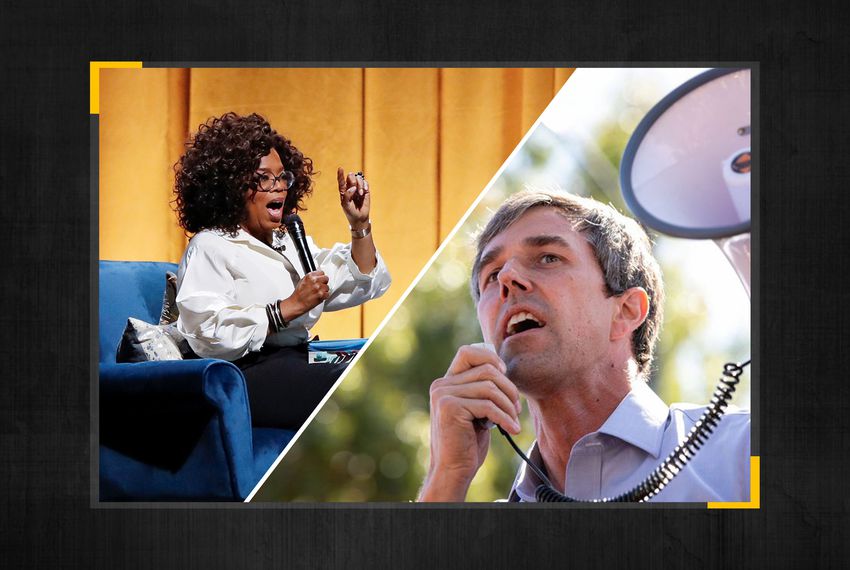
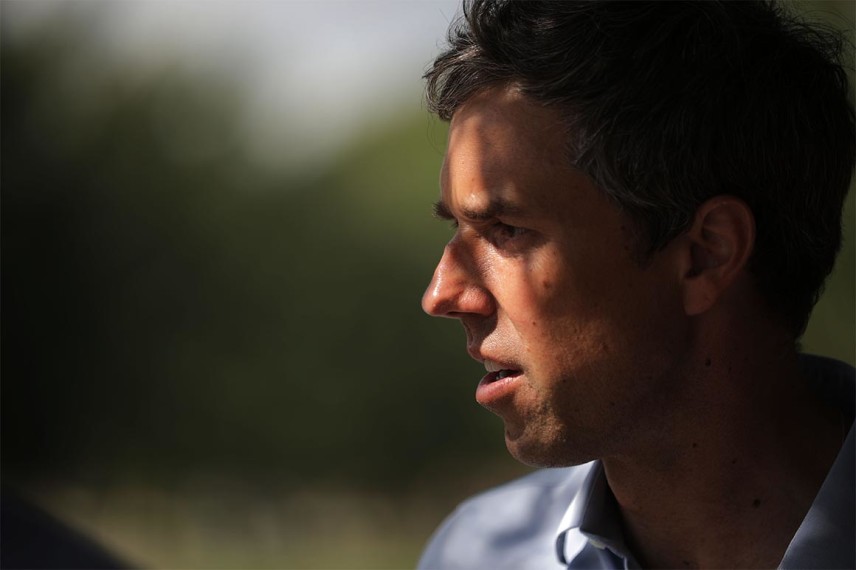
MoveOn.org, the left-leaning political action group, now has Texas congressman Beto O’Rourke narrowly ahead in the race to become the Democrats’ next presidential nominee. Former Vice President Joe Biden is right behind him.

Beto’s fans are no doubt going nuts. Fine. Let ’em whoop and holler!

I find this kind of coverage annoying in the extreme. Why?

For starters, Beto O’Rourke’s poll standing doesn’t mean a damn thing. It won’t matter at the end of this week, let alone next week. It could change overnight. These polls are as fluid as running water.

The 2016 Republican primary campaign revealed the same kind of shallowness of the media coverage of these issues. The media become fixated on the “horse race” element, not the issues on which the candidates are running.

So it is shaping up for the 2020 Democratic primary campaign.

Beto is up this week. Last week it was Joe Biden. Sen. Kamala Harris might emerge as next week’s media favorite. Then there’s former San Antonio Mayor Julian Castro, who has formed an exploratory committee to assess whether he wants to run for president in 2020.

The media are going to be all over this horse race matter.

I tend to tune this stuff out fairly quickly once the coverage begins. The media — the very people who say they detest this sort of political coverage — are forcing me to close my ears early.

Yes, there is a church-state ‘separation’

A former colleague of mine used to insist that because the United States Constitution doesn’t contain the phrase “separation of church and state” that the concept somehow is not relevant.

Well, I would remind him that the First Amendment about a prohibition against writing laws that establish a state religion implies the separation graphically.

Enter the new man nominated to become the U.S. attorney general, William Barr. He has declared his skepticism about the “secular” state the founders created in the late 18th century. He wants to invoke “God’s law” when enforcing the laws of the land.

I am going to presume he means the laws of the Christian God. But what about the laws of all the other gods that Americans worship? The Islamic god, the Jewish god, the Hindu god, the Buddhist god, the Shinto god? Do they matter? Of course they do! Or at least they should.

Except the founders created a Constitution that say there should be no law passed “with respect” to a particular religion. It stipulates there should be “no religious test” for anyone seeking public office.

The words “Christian,” “Christianity” or “Jesus Christ” are not mentioned in the Constitution. Nor does it mention “Jewish” or “Muslim” or “Buddhist” or “Hindu.”

So, to the AG-designate, I merely want to urge him to stick to enforcing the laws of the land, as enacted by Congress, signed by the president and affirmed by the courts.

How’s this for religious bigotry?

To think that Texas’s third-largest county is home to a cabal of religious bigots who want to oust a local Republican Party vice chairman because — get ready for it — he’s a Muslim!

Ye gads, this story disgusts me.

At issue is the faith practiced by Shahid Shafi, a Southlake trauma surgeon. He ran twice for the Southlake City Council and was elected on his second try. He was informed by friends that as a Muslim, he would have difficulty being elected to any office in Texas in this post 9/11 era.

That didn’t dissuade him. So he ran and won eventually.

Now he’s vice chair of the Tarrant County GOP. But wait! He barely had taken office when a local Republican raised a phony alarm. A precinct chairwoman, Dorrie O’Brien, urged the county’s GOP chair, Darl Easton, to pull Shafi out of the vice chair’s office.

The bigot said, without any evidence, that Shafi believes in Sharia law and that he’s a closet terrorist.

Good grief!

I feel the need to remind everyone yet again that the U.S. Constitution is unambiguous about this point: There shall be “no religious test” applied for anyone seeking elected office in the United States of America. It’s written in Article VI, Clause 3 of the nation’s founding government document. Yep, that includes city council member and political party leadership.

The bigoted move has drawn immediate condemnation from some high-profile Republicans, such as Texas Land Commissioner George P. Bush and lame-duck Texas House Speaker Joe Straus. The Texas GOP Executive Committee has approved a resolution endorsing religious freedom in a move to stop the xenophobia that might erupt if the Tarrant County removal motion is allowed to proceed.

Here is how the Texas Tribune reports it

Yes, this story sickens me. It should sicken anyone who has an understanding of what the Constitution says about religion in politics.

Then there’s the issue of innuendo and unfounded accusation, which has become one of the dubious trademarks of the nation’s top Republican, Donald Trump.

Disgusting.

Trump needs to find better speechwriters

I feel the need to cut Donald John Trump a little bit of slack, so bear with me.

He gets pilloried for the speeches he delivers. Why? Because they don’t sound sincere. He reads them while seeming to squirm while he recites someone else’s words.

Now, for the slack.

Every president has a staff of speechwriters. Writing a speech for a politician is the trickiest of rhetorical businesses. The guts of a speechwriter’s task lies in his or her ability to write words as if they are originated by the individual who speaks them. 

As the nation pays tribute to the late President George H.W. Bush, we are recalling some of the words he spoke to the nation that elected him to lead it. Much of that high-minded rhetoric he delivered came from speechwriters. I think of one in particular, Peggy Noonan, who’s now a Wall Street Journal columnist. Noonan is one of the premier wordsmiths around. She writes golden prose in her column — and she delivered the goods while writing for President Reagan and then President Bush.

David Gerson is another notable speechwriter. He now writes for the Washington Post, but he once wrote speeches for President George W. Bush. Gerson managed to maintain W’s essential character while penning remarks he would deliver in the wake of 9/11.

Some presidents are compulsive editors. Ronald Reagan and Bill Clinton were known to edit the daylights out of speech drafts. President Obama’s speeches often comprised soaring rhetoric. Do you think the president wrote every word? Of course not! He, too, had a speechwriting team at his disposal.

Back to Trump.

Where the current president seems to fall short in the delivery of his prepared remarks is that whoever pens those words for him do not capture the personality of the man. One can see and hear the difference the instant Trump veers from the prepared text and launches into one of his off-the-rails riffs.

It’s been said that Trump did little to prepare for the presidency after he was elected and during the transition to the day he took the oath of office.

The president keeps seeking to assure us he surrounded himself “with the best people” and that he knows the “best words.” I do not believe he has done the former and he certainly doesn’t qualify as an extemporaneous orator.

Bush 41’s death means end of ‘old’ GOP? Let’s hope not

More than a few talking heads have ruminated since the death of former President George H.W. Bush about the future of the Republican Party and whether the party of which Bush was a proud member will return in its former image.

Some have said “no.” I don’t subscribe to that idea.

Today’s Republican Party has been taken over by those loyal to a president who doesn’t define his own ideology — such as it is — by anything resembling traditional GOP values.

The GOP has taken a dramatically different course from where it used to travel. I’ll offer three examples

  • President Bush was a supreme coalition builder. He did that very thing when assessing how to kick Iraqi forces out of Kuwait in the late summer of 1990. He brought together more than 30 nations to (a) provide fighting forces on the field or (b) give money to finance the military initiative that became known as Operation Desert Storm; some nations, of course, did both.
  • The Republican Party of old once touted fiscal responsibility. It loathed a federal budget deficit. It preferred to curb spending and, yes, curb taxes. The current GOP has enacted a tax cut but has done damn little to curb spending. Thus, the deficit is ballooning again.
  • The Party of Lincoln used to be an inclusive outfit. It welcomed people of all races, ethnicities, creeds. It has become another kind of party these days. It is seeking to shut the door on those seeking asylum from tyranny in their homelands. Politicians who belonged the former Republican Party helped a Democratic president, Lyndon Baines Johnson, enact the Civil Rights Act and the Voting Rights Act of the mid-1960s over the objection of many southern Senate Democrats who clung to their segregationist history. Imagine that happening today.

I cannot predict whether the old Republican Party will return, let alone when that might occur. I try like the dickens to avoid cynicism. My hope still springs forth that there will be a better day ahead.

President George H.W. Bush — although he was far from perfect — still in many ways embodied the ideals of a once-great political party. Those ideals have been pushed aside. We’ll bury Bush 41 in a few days. While we’re at it, how about trying to exhume the remains of a Republican Party that he represented?

Two quick Bush stories tell a bit about these men

I want to share two quick stories I have about men named Bush.

The first one is about George H.W. Bush, the 41st president of the United States who died Friday at age 94.

President Bush went to Amarillo in 2007 to speak to the community about leadership. They had a reception and lunch at the Globe-News Center for the Performing Arts. Because I worked as editorial page editor of the Amarillo Globe-News at the time, I got invited. We had lunch, then we got to stand in a long line.

At the head of that line was President Bush. He was meeting and greeting those who got to stand in that line. It was your classic “grip and grin” session.

My time came. I walked up to Bush and said simply as I extended my hand, “I just want to thank you, Mr. President, for your long and distinguished service to this country.” He bowed his head slightly as he said, “Thank you for that, sir.” We exchanged a couple more thoughts, then we turned to face the photographer who took our picture.

We were gripping and grinning at the camera. I cherish that picture to this day. Why? I had this feeling in the moment that the former president actually appreciated the expression of thanks from a complete stranger — me. Believe this: I offered it sincerely and with maximum gratitude.

A dozen years earlier, in 1995, I had the pleasure of meeting the newly elected governor of Texas, George W. Bush. I flew from Amarillo to Austin to meet with Gov. Bush in his Capitol Building office.

I arrived at the Capitol and found my way to the governor’s office. I was shown the way to the governor’s receiving room just outside the actual office. We shook hands, exchanged pleasantries and I told him that one of my sons had expressed many times his admiration for the governor’s father, the former president.

Gov. Bush nodded and said, “Your son has picked a wonderful man to admire.”

I was told I would get 30 minutes with the governor. I interviewed him on the record for about an hour plus 20 minutes.

The younger Bush clearly adored his father, whose pride in his son was well-known.

Now, to give you an idea of how effective a politician George W. Bush had become, there’s this addendum:

Gov. Bush was running for re-election in 1998. He came to Amarillo to be interviewed by the Globe-News editorial board. He walked briskly into our conference room, pointed at me and said in a loud voice, “There’s a good man. So, tell me, how’s your son?”

“W” learned well from Bush 41.

Here come the comparisons: 41’s era vs. today

You knew it would happen — comparisons would surface between the era that encompassed the service of the late President George H.W. Bush and the era in which we live today.

Remembrances are pouring in from around the world about the death Friday of our 41st president. They are heartfelt, sincere and affectionate. They recall a time when politicians of opposing parties weren’t “enemies,” but merely opponents with differing views on how to achieve the same goal: to make the United States a better place.

Some comments have alluded to what has called the passing of an era that we’ll never see again in our political life. I don’t share that view. I maintain hope that we’ll return to that time when public service matters more than personal aggrandizement. I believe we’ll have a day yet again when humility and modesty informs the actions of our political leaders.

Yes, it’s missing now. We all know it. We see it, hear it and feel it 24/7; it’s impossible to avoid it, given the incessant news cycles that bombard us.

President Bush embodied a seemingly quaint era. He didn’t want to dance on the proverbial grave of the communists who saw their empire crumble at their feet in Europe in the late 1980s and early 1990s. He chose instead to work behind the scenes, to forge international relationships and to welcome the sea change in concert with our allies.

There was no “America first” policy coming from the White House in those days. President Bush operated on a different set of standards and ideals, far from what we get nowadays.

Yes, the comparisons will continue for a good while. The nation will mourn its loss of a great American. We also should smile at the full and astonishing life he led and the service he delivered to the public through the myriad tasks to which he was assigned.

He did so without glitz, glamor or self-proclaimed glory.

What a man!