Category Archives: military news

Trump throws down on Pakistan

There’s quite a bit to parse about Donald Trump speech tonight about a change of strategy in our nation’s ongoing war in Afghanistan and its military policies regarding South Asia.

Let’s look briefly at Pakistan

The president has declared that Pakistan has to step up and become a significant U.S. ally in the fight against the Taliban, ISIS and al-Qaeda in Afghanistan.

I actually agree with the president’s view on Pakistan, a nation I never have trusted fully to be a valuable partner in that struggle. You’ll recall that in May 2011 our SEAL and CIA commandos killed Osama bin Laden in a compound where he lived for years inside of Pakistan. No one has yet produced evidence that the Pakistanis were totally ignorant of bin Laden’s presence inside their country.

So, yes, the Pakistanis have to demonstrate their commitment to fighting the terrorists in Afghanistan.

Then the president reached across Pakistan and tapped its arch-rival India to play a larger role in this effort. Can there be a more stinging slap in the Pakistanis’ face than that?

The strategy change as delivered tonight lacks detail. Trump’s decision to wage war until circumstances dictate a possible end creates the potential for an open-ended conflict. Are we ready for that?

He also laid down a marker at the feet of the Afghan government. Trump wants to see “real results” in an effort to end corruption. He wants to see the Afghans demonstrate a military capability that prevents the Taliban from return to power.

The president talked for quite a long time before running for office that the Afghan War was a foolish contest. Then he took his seat behind the Oval Office desk, he said tonight, and saw things differently. I’m glad he recognized how perspectives change when you obtain power.

Something is gnawing at my gut that we’ve just heard the president of the United States commit this country to continuing fighting a war that still seems to lack a strategy for winning.

U.S. forces won far more battles in Vietnam than they lost. Conventional wisdom held that we should have actually won that war. We didn’t. The Vietnamese outlasted us. We left and the enemy we “defeated” on the battlefield took control of the government we sought to protect and preserve.

Is there a similar outcome awaiting us in Afghanistan?
Will the president recognize his Afghan reversal?

Donald John Trump is preparing to speak to the nation tonight about Afghanistan. The word that’s being reported is that the president is planning to announce the addition of several thousand more troops to the conflict that’s been raging for the past 16 years.

The president is getting high marks for recognizing the difference between campaigning and governing. Indeed, President Barack Obama campaigned for office pledging to close the terrorist internment camp at Guantanamo Bay, Cuba; the camp is still open.

Trump has been a huuuuge critic of the Afghan War. He tweeted repeatedly prior to and during his presidential campaign that the war is a lost cause, that we shouldn’t shed any more American blood in Afghanistan.

Now he’s the commander in chief. He’s expected now to say something quite different from what he said while campaigning for the job.

Will the president take a moment tonight to acknowledge that maybe — just maybe — he might have been incorrect in his prior world view? Might he concede finally that he didn’t see the picture as completely as he does now?

That’s what grownups do. They atone for previous statements.

What’s more, my hope — if not my expectation — is that the president will accept responsibility for any potential setbacks that occur once the troops are deployed to Afghanistan. Will he, as commander in chief, realize that he is ultimately responsible for any result stemming from the decisions he makes — be they good or bad?

The record to this point doesn’t portend much maturity coming from the president.

I hope I am wrong.

49 years later, the day remains as vivid as ever

Forty-nine years ago today, I said so long to my father, piled into a car with my mother and drove into downtown Portland, Ore., to begin two of the most important years of my life.

I was about to be inducted into the U.S. Army. I kissed Mom goodbye and reported to the induction station near the Greyhound bus stop. I took the oath, gathered my belongings and rode about three hours north to Fort Lewis, Wash.

I completed basic training nine weeks later and got my orders for where I would report for my advanced individual training: Fort Eustis, Va., where the Army would turn me into an aircraft mechanic.

We boarded a plane after graduation from basic and flew to Richmond, Va. En route from Boeing Field to Richmond, I chatted with one of the flight attendants.

“You must dread these flights with a bunch of military guys,” I said to her. “Oh, you guys are angels,” she replied. “The last military charter flight I worked carried a plane full of sailors who’d been on a submarine for six months.” I got the picture.

Sixteen weeks after arriving in Fort Eustis, I completed by training and then awaited my orders: Vietnam.

This is my segue into my discussion topic for the next brief period: The Ken Burns-Lynn Novick documentary film on “The Vietnam War” that will air on Panhandle PBS beginning Sept. 17. It’s a must-watch TV event. At least it is for me.

***

I arrived in-country at Bien Hoa Air Base, South Vietnam in the spring of 1969 and was bused immediately to Long Binh, the huge logistics center near Saigon. I was there only for about four days before I got my orders for Marble Mountain, a secure base just south of Da Nang. While at Long Binh, though, I had to perform some of the usual duties assigned to newly arrived soldiers, such as burning fecal matter from the latrines scattered throughout the sprawling compound.

I flew to Da Nang aboard a C-130 transport plane and reported for duty.

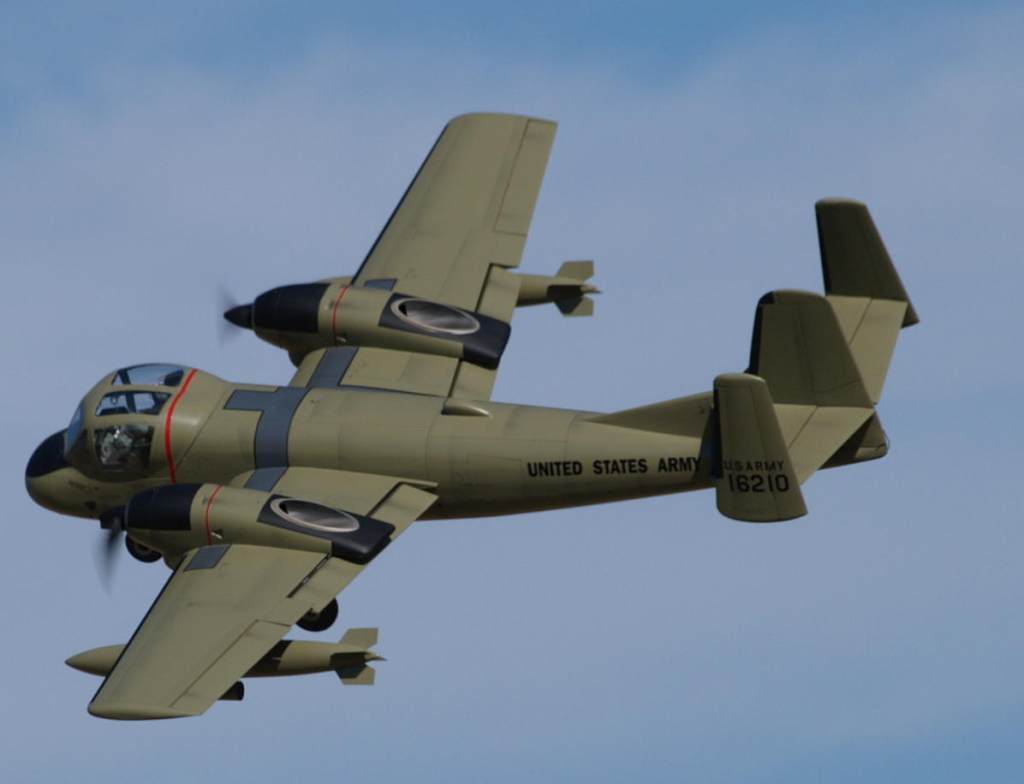
I was what the grunts called a REMF, which stood for “rear echelon mother-f*****.” I didn’t take it personally. I knew we were doing important work there. Our task was to keep OV-1 Mohawk reconnaissance planes in flying condition to perform their duty. Later, I would be assigned to another station at the I Corps Tactical Operations Center, where I became a “flight operations specialist”; my task there was to communicate with aircraft — and to scramble missions on an as-needed basis.

My time in Vietnam was largely uneventful, although we weren’t entirely immune from occasional mortar and rocket barrages from the bad guys camped inside Marble Mountain.

I served and then came home. I remained somewhat confused about a couple of aspects of that conflict in which I participated.

What were we doing there? And for what purpose?

The PBS documentary I hope helps resolve some of that confusion for me. That’s my goal in my plan to watch every single moment of it. I suspect as well that many millions of other fellows my age will want to understand that period of our nation’s history.

I hope Burns and Novick provide us all with the understanding we want — and which some of us need.

The Vietnam War will be told through rare archival film, interviews with those on both sides of the conflict — and through some of the coolest music ever recorded.

I am waiting with bated breath.

Two were nation’s founders; two sought to destroy the nation

Four men have been thrust posthumously into the front of the national debate over the removal of statues.

The president of the United States launched an impromptu press conference this week at Trump Tower. Donald Trump began answering questions about the Charlottesville, Va., riot that left three people dead. White supremacists, neo-Nazis and Ku Klux Klansmen were protesting the removal of a statue of Robert E. Lee. Counter protesters clashed with the racist protesters.

It got real ugly real fast.

Then the president weighed in. He said “many sides” were at fault. Then he blamed the hate groups. Then on Tuesday he doubled down on his initial response, saying “both sides” were to blame for the mayhem.

Then his press conference veered into some truly bizarre territory.

I mentioned Gen. Lee already. Trump decided to mention that Confederate Gen. Stonewall Jackson’s statue also is targeted for removal. Then he asked: Should we take down statues of George Washington and Thomas Jefferson? They were slave owners, too, just like Lee and Jackson, he said.

Time out, Mr. President.

If Donald Trump had a clue about history he would realize this:

Yes, Washington and Jefferson enslaved human beings. They were imperfect men. However, they led a revolution that resulted in the creation of the United States of America. Washington commanded our armed forces fighting against the British Empire; Jefferson penned the Declaration of Independence and was a key author of the U.S. Constitution. Those contributions to the founding of the nation does not pardon them for their slave ownership, but it is a mitigating factor that grants them greatness.

As for Gen. Robert E. Lee and Stonewall Jackson, they fought to destroy the Union that Washington and Jefferson helped create. Gen. Lee struggled whether to fight for the Union or to fight for the Confederate States of America. He chose to side with Virginia, which seceded from the Union. Jackson joined him in that terrible, bloody Civil War. Those men were traitors. Moreover, they were responsible for the deaths of hundreds of thousands of Americans who died in the bloodiest war this nation has ever fought.

To his everlasting credit, President Lincoln declared during his second inaugural address — just weeks before he would be gunned down at Ford Theater — that the nation should bind the wounds that had torn it apart. “With malice toward none and charity for all,” the president said, signaling that Confederate leaders wouldn’t be prosecuted for their high crimes against the Union.

Donald John Trump doesn’t grasp any of that, as he made abundantly clear when he attached moral equivalence between two of our nation’s founders and two men who sought — and fought — to destroy the nation.

Swastikas are back in the news … for the wrong reasons

The “Greatest Generation” of Americans marched off to war in 1941.

Millions of them went off to fight the Empire of Japan in the Pacific; millions of others went in the other direction, to take up arms against the Third Reich and its fascist allies in Italy.

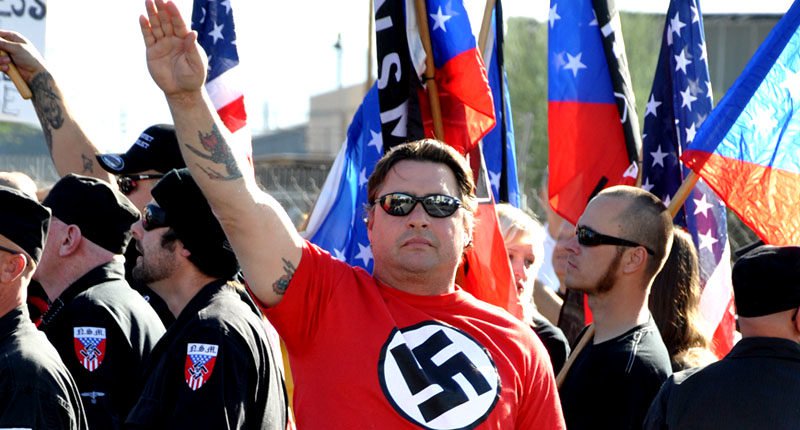
The Nazis who governed Germany did so under the banner featuring the swastika, which has remained the symbol of unequivocal evil over the decades since the end of World War II.

Events of the past few days have brought that symbol back to the fore in the United States. It’s good to ponder for just a moment the very notion that Americans would associate themselves with that symbol in any fashion.

The Charlottesville riot over the weekend involved Nazis who marched under that very banner yet again. They wore the swastika on their t-shirts, on arm bands. They adhere to the very philosophy that perhaps their grandparents or great-grandparents fought. Perhaps they lost ancestors in that conflict.

How in the name of all that is holy can anyone associate themselves with that philosophy? How can they in good conscience stand with that symbol of evil? Oh, wait! I guess I assumed that such sociopaths even have a conscience. Silly me.

I have my own deep-seated bias against that symbol. My late father enlisted in the Navy in early 1942, not long after our country entered World War II. He wanted to get into the fight right away and Uncle Sam obliged, sending him to Europe to wage war against that swastika.

And he did. His involvement in the Mediterranean theater of operations was intense. It was brutal. Men who fought under that swastika tried to kill my father — repeatedly and I am quite certain with maximum malice. Dad responded with equal intensity.

Quite obviously, he was able to come home at the end of the war. He got on with the rest of his life.

Over time, he talked occasionally about his war experience. He didn’t hate Germans. He did hate the symbol under which those young men fought against him. As I grew up, I was imbued with the feeling of hate as well for that swastika.

As we’ve seen over many years, though, not all Americans share that hatred. Some of us embrace that symbol. For the life of me I cannot fathom it.

But here we are, talking to each other once again about an emblem that symbolizes the very worst in our human existence.

And to think that the president of the United States has just elevated those who today are marching yet again under that evil symbol effectively to the same level of those who oppose them.

What does Kim Jong Un want? Part 4

The United States of America has followed a nuclear policy that, so far, has worked pretty well.

Call it a policy of “containment and deterrence.”

Thus, is it possible for the United States to get North Korea to toss its budding nuclear stockpile into the crapper? Hardly.

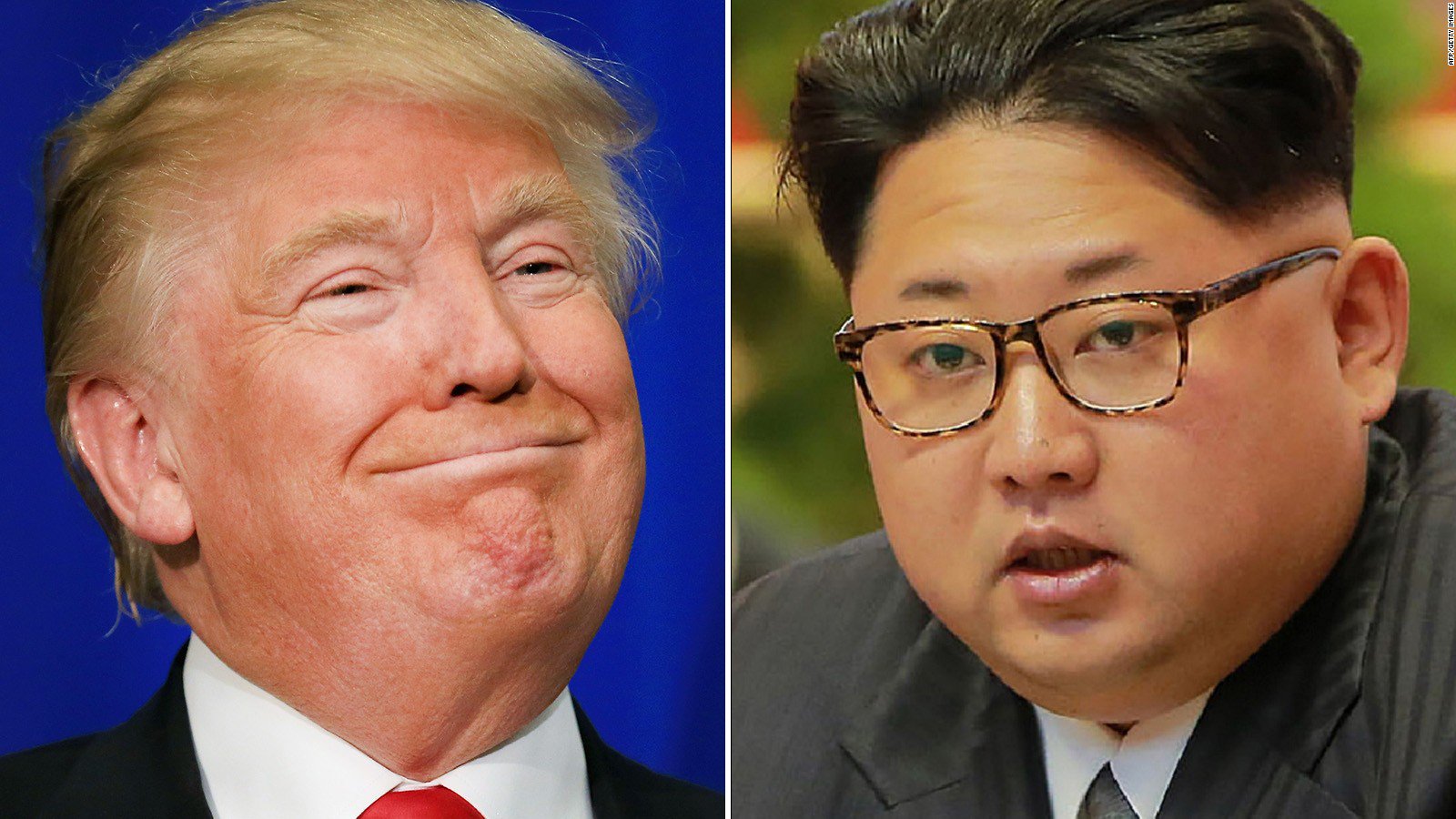
Which brings me to one of Kim Jong Un’s demands: He wants to keep his nuclear arsenal. USA Today’s list of five demands contains this one, which might be central to the current tensions that have escalated between the United States and North Korea.

Check it out here.

You’ve heard of “mutually assured destruction,” aka MAD. It kept the United States and the Soviet Union from nuking each other during the Cold War. The world is full of trouble spots occupied by nuclear-powered nations: India and Pakistan; Israel has them, too; South Africa has been thought to possess nuclear weapons.

Yes, we negotiated an agreement designed to rid Iran of its nuclear weapon capability and the jury is still out on whether that will work ultimately.

North Korea presents a tremendously different situation for us. Donald Trump is blustering, bellowing and bloviating about what he intends to do if Kim’s regime keeps making “overt threats” against the United States and our allies. A “threat” doesn’t constitute military action, so the president is treading on some highly dangerous ground if he intends to hit the North Korean’s first.

My advice to the president — which he won’t ever see, let alone heed — would be to dial back the fiery and furious rhetoric and possibly accept the notion that North Koreans are going to do what they intend to do, no matter how many threats we level against them.

However, the commander in chief can make it known — through back channels — what Kim knows already: Don’t even think about using those nukes.

What does Kim Jong Un want?

USA Today has peeled away five key demands that North Korean dictator/goofball Kim Jong Un is making on the United States and the rest of the world.

I want to examine them briefly over the course of the next couple of days. I’ll do so one at a time in this blog.

Here is one demand: A peace treaty that ends the Korean War.

The carnage ended in 1953 after three bloody years on the Korean Peninsula. Kim Il Sung, the current dictator’s grandfather, decided to “unify” the peninsula by invading South Korea in 1950. The United Nations responded with a substantial military force dominated by — who else? — American troops.

The U.N. force pushed the North Koreans back across the 38th Parallel and got to China’s doorstep in the north. That’s when the People’s Republic of China intervened. The PRC deployed hundreds of thousands of troops against the U.N.

All told, nearly  50,000 Americans died in that struggle.

They signed a ceasefire. But no peace treaty. As a result, South and North Korea remain to this very day technically “at war.”

What does a peace treaty mean? Does it mean a unified Korea? Or might it put in place a permanent divide between the sovereign nations?

The PRC won’t tolerate a unified Korea under the guidance of a democratic Republic of (South) Korea. The Chinese will insist on having a fellow communist state along its border. And you can bet that there’s no way in the world that the United Nations, let alone the United States, is going to agree to a communist dictatorship governing the entire peninsula.

Remember, the North Koreans started the fight in 1950. Does anyone believe the U.N. is going to allow them to be rewarded by giving them the entire land mass?

I suppose the only solution is to keep the two Koreas separate, with the commies running the northern portion and the democrats running the southern area.

But who in the world can trust the North Koreans to remain faithful to a peace treaty after we take down the massive armaments on both sides of the so-called “demilitarized zone”?

A peace treaty, thus, remains a major impediment to resolving this serious crisis.

Doubling down on ‘fire and fury’? What the … ?

Donald J. Trump says his “fire and fury” riff the other day didn’t go far enough.

If he had to do it over, the president said he would have spoken even more aggressively against the North Korean regime.

What? Eh? Are you serious, Mr. President?

Trump is vacationing in New Jersey. This past week, he held a “media opportunity” in which he declared that if North Korean dictator/goofball Kim Jong Un kept up with the “threats” against the United States, he would be met with “fire and fury the likes of which the world has never known.”

Trump improvised that comment. It’s been seen throughout the political world in this country and abroad as an unnecessary provocation. The North Koreans responded by offering a specific threat to launch a nuclear-armed missile at Guam, the U.S. island territory within range of a missile launched by North Korea.

Why Guam? It’s home to a significant military presence. The North Koreans surely understand what would occur if they were to launch a missile. In case they don’t, I’ll explain right here: They would be wiped off the face of the planet.

Do they want that? The obvious answer would be a resounding no.

I believe the obvious answer would be a resounding no.

Why, then, does the president of the United States insist on ratcheting up the rhetoric against North Korea?

The world is a jittery place right now. We can “thank” the president of the United States for adding to our worldwide fear.

‘Threats’ produce possible war?

Donald J. Trump is now threatening to wipe North Korea off the face of the planet because of “threats” the rogue nation is making toward the United States.

Have the North Koreans made any demonstrable moves against the world’s only super-duper power? Have they proved they are even capable of inflicting damage on this country? No.

They are threatening to do bad things. So that prompts the president of the United States to say he’ll bring unprecedented “fire and fury” to bear on North Korea, which has the ability now to deliver a nuclear weapon on board a missile.

As usual, the president isn’t thinking about what he is saying. He isn’t pondering how North Korea is going to respond to threats of maximum force. Oh, no. He’s simply popping off once again.

His statement delivered while on vacation has drawn some rebuke from military experts and from leading Republicans in Congress.

One of the critics is Sen. John McCain, R-Ariz., a man who knows combat and the consequence of war. “I don’t know what he’s saying and I’ve long ago given up trying to interpret what he says,” McCain said during an interview with a local Arizona radio station. “That kind of rhetoric, I’m not sure how it helps.”

It doesn’t.

McCain added: “In other words, the old walk softly but carry a big stick, Teddy Roosevelt’s saying, which I think is something that should’ve applied because all it’s going to do is bring us closer to a serious confrontation. I think this is very, very, very serious.”

A first-strike response against North Korea is going to prompt a major ground war on the Korean Peninsula. Is that what the president wants to occur? Of course not, but that is going to be the inevitable consequence.

Trump must be able to deliver on his tough talk. McCain and others are unsure he can and are mortified that he would say out loud that he would issue such a careless threat.

But … the president “tells it like it is.”

Now it’s Sen. Blumenthal in the crosshairs

Donald J. Trump Sr. has pressed his foot hard on the presidential petulance pedal.

He fired off a series of tweets today attacking Democratic U.S. Sen. Richard Blumenthal after Blumenthal appeared on TV over the weekend to criticize the Justice Department’s emphasis on rooting out leakers.

Did the president call into question the specifics of Blumenthal’s criticism? Oh, no. He attacked Blumenthal for a lie he told about serving “in Vietnam” when in fact the senator — a Marine Corps reservist — didn’t set foot in the country during the Vietnam War.

Let’s see. That story came out during the 2010 campaign for the Connecticut U.S. Senate seat that Blumenthal was contesting. He apologized for his mischaracterization. As one who actually did set foot in Vietnam during the war, I was appalled at the time that Blumenthal would say such a thing. I chastised him heavily for it.

But that was then. It’s over.

Here is what I wrote about it at the time:

https://highplainsblogger.com/2010/05/scandal-crosses-partisan-divide/

However, since Trump did bring it up, I guess it’s OK to remind readers of this blog that young Donnie Trump didn’t exactly distinguish himself either during that period in our nation’s history.

He got a boatload of student and medical deferments to keep him away from the war. Trump did suggest during the 2016 campaign that his attendance at a military high school in New York was essentially the same thing as serving in the military. Umm. No. It’s not. Honest.

Check out Trump’s tweets here.

I read somewhere in the past few days that new White House chief of staff John Kelly might be able to bind up the president’s Twitter finger. I guess that hasn’t happened, at least not yet.

In the meantime, Donald Trump continues to demonstrate with startling effectiveness that he possesses the temperament of a child. To think this individual also has control of nuclear launch codes that could destroy the world.