Tebow can play hardball, too!

Call me surprised … in a most pleasant way.

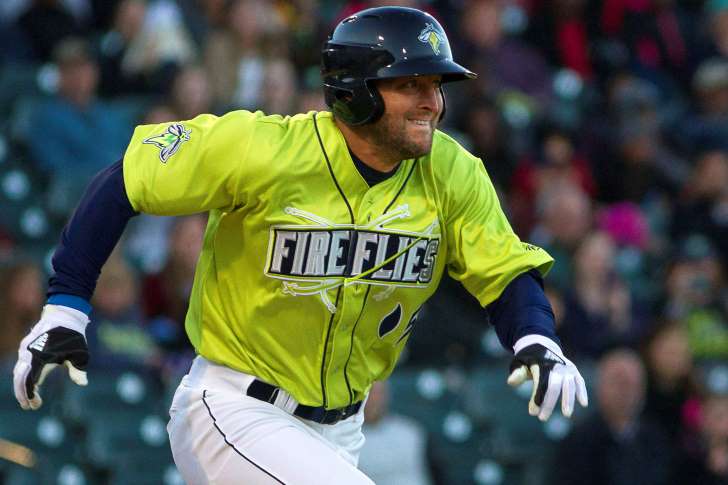
Tim Tebow, the one-time standout college football quarterback who didn’t cut it as a pro, has turned to baseball.

I once thought the Heisman Trophy winner’s stint with the New York Mets organization was little more than a publicity stunt.

You may dip me in sesame seeds. It turns out Tebow is starting to get the hang of the game he didn’t play seriously since high school. Tebow is learning how to hit pro baseball pitching while playing for the Columbia (S.C.) Fireflies. He started out abysmally, but has gone 9 for 20 of late, raising his batting average to a respectable .246.

Tebow’s status as a bit of a cult figure goes a good bit beyond his athletic prowess. He is known as an devout Christian who introduced a new verb to the English language: Tebowing. It’s meant to describe the kneeling pose Tebow would use whenever he scored a touchdown. Tebow would kneel while saying a brief prayer of thanks to God.

Yes, I was skeptical about his baseball adventure. I feared the Mets had denied another more deserving young man a shot at making it in the big leagues by giving a high-profile celebrity-athlete a chance to play some hardball.

Tebow gave up football after being unable to make the grade with a number of National Football League teams. He fell victim to the curse that occasionally hits Heisman Trophy-winning athletes, those who are unable to lift their game to a competitive level in the pros even after excelling at the college level.

Baseball, though, is providing him with another opportunity.

I wish the young man well and hope he continues to improve.
Why the Ivanka criticism? Because she’s a player

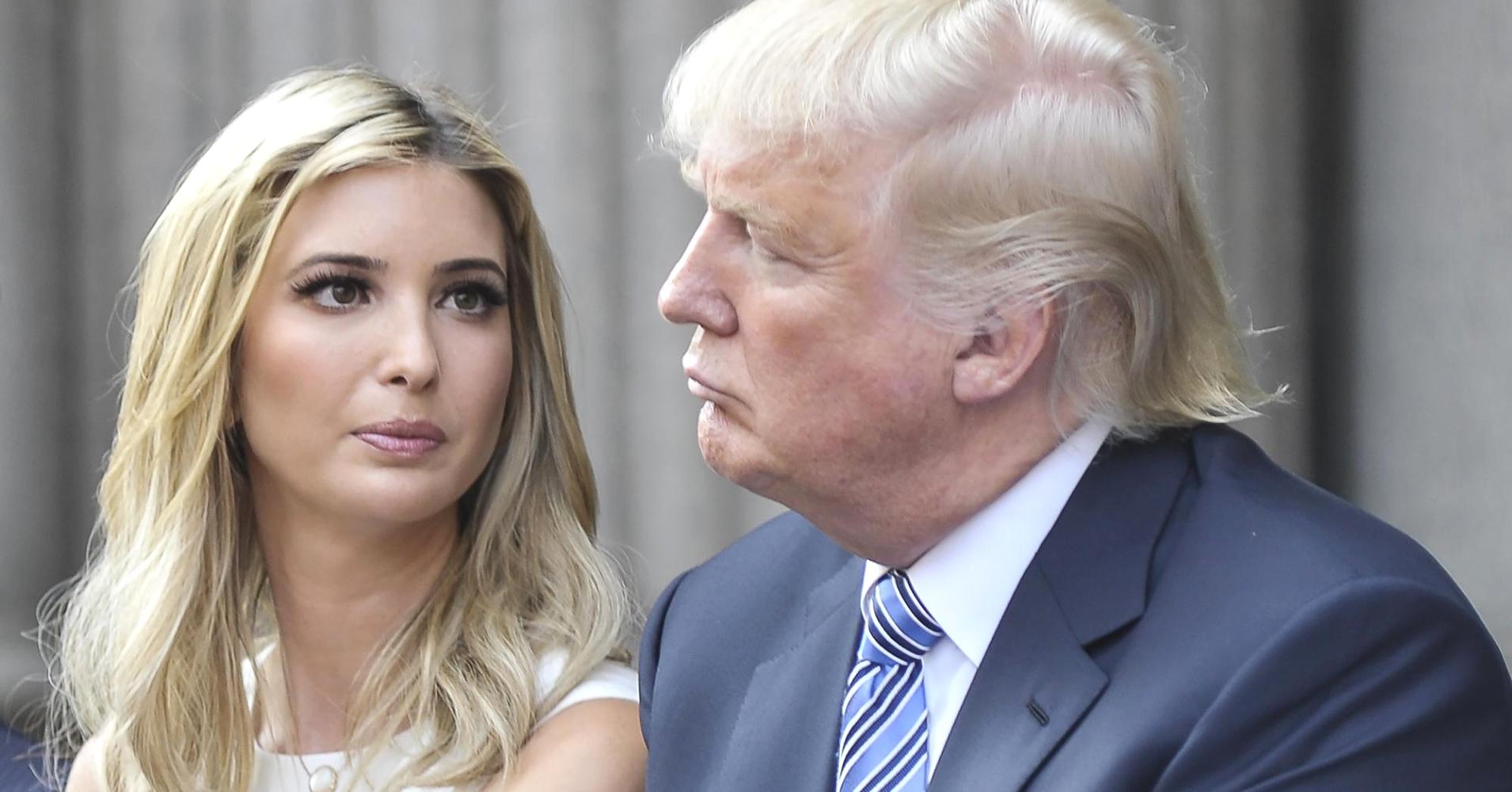
Howard Kurtz, Fox News’s media critic and analyst, asks a perfectly valid question: Why are the media beating up on first daughter Ivanka Trump?

I believe I have an answer. Not the answer, mind you.

It’s because Ivanka has become part of her father’s key advisory team, along with husband Jared Kushner. She’s no longer just a charming, poised entrepreneur who stood by Dad while he campaigned for the presidency. She’s now part of the team, part of the inner circle, one of the president’s key advisers.

Kurtz seems a bit alarmed at the apparently sudden turn by the political media. Hmm. Why should it surprise him?

The media have done this many times in the past — and for reasons that have nothing to do with presidential children’s role in shaping public policy.

George W. Bush’s twins — Barbara and Jenna — became media fodder after they got into some trouble in college; conservative critics of Bill and Hillary Clinton turned their guns on Chelsea during their time in the White House over the teen’s awkward appearance; Malia Obama got her share of snark from media critics, too, after she enrolled at Harvard.

By the way, is it me or do the media take special aim at presidential daughters while looking the other way when presidents are the fathers of sons?

Ivanka Trump is treading down uncharted paths as a presidential child who’s been handed a portfolio that enables her to speak publicly about policy matters. She and Jared aren’t getting paid for their presidential posts, but they still have a big influence on Daddy Donald.

I respect Howard Kurtz and his role as a media critic. He’s done it for some time at the Washington Post, the Daily Beast, CNN and now at Fox.

I’m betting Ivanka Trump knows what’s coming as she exerts greater influence on the policies that emanate from her father’s administration.

I do agree with one element of Kurtz’s questioning of the media. Challenging the advice that Ivanka gives her father is one thing. The insults and innuendo are quite another.

As a brief aside, I’ll note that one of Kurtz’s colleagues at Fox, Jesse Watters, has just announced he is going on “vacation” after he made some ghastly, sexually charged remarks about Ivanka after her appearance in Berlin with German Chancellor Angela Merkel and International Monetary Fund chair Christine LeGard.

The president was dialed in to life in the public eye as a successful businessman. Ivanka and her brothers Don and Eric had managed to stay pretty much out of the media glare. Then dear ol’ Dad had to run for — and get himself elected — president of the United States.

That’s when it all changed.

These projects don’t pay for themselves

Donald J. Trump’s proposal to cut taxes — notably for the wealthiest Americans — is getting considerable play in conservative media and political circles.

The president thinks he’s on to something. He has pitched what his team has called the most sweeping “tax reform” package in U.S. history.

Now …

Let’s get real for a moment.

* The president also wants to enact a few big projects. He has proposed spending an additional $54 billion next year alone on the Department of Defense. He contends the military is depleted and, of course, blames the previous administration for all but rendering us defenseless against our enemies.

* He also wants to rebuild our nation’s roads, bridges and airports. The price tag for that? A cool $1.2 trillion. This is a project worth doing, given the sorry state of our highways and airports. I’m still baffled as to how this plays among fiscal conservatives who (a) voted for Trump in 2016 and (b) say they dislike spending money the government doesn’t have in the bank.

* The president also wants to build that “big, beautiful wall” along our southern border. The price tag varies on this matter, but I’ll go with the bigger number that’s been floated: $25 billion. I do not believe the wall will be built. Nor should it be built. Still, the president insists that it will and he no longer is saying at every campaign-style rally that “Mexico will pay for it.”

These things do not pay for themselves. Thus, Americans across the land need to ask themselves: Are we willing to step up to shoulder the cost of all these projects or are we going to ignore the reality that the money must come from each of us?

The tax cut mantra has become standard Republican Party policy. President Reagan famously sought to cut taxes while “rebuilding” the military. He railed against President Carter’s budget deficits, only to preside over a skyrocketing deficit during his two terms in office. President George H.W. Bush challenged us to “read my lips” while vowing at the GOP convention in 1988 to never raise taxes; which helped get him elected. He then raised taxes — wisely, in my view — and it cost him votes among his conservative GOP base in 1992. President George W. Bush cut taxes in 2001, then went to war with international terrorists after the 9/11 attacks; the deficits exploded.

A new Republican president is now proposing another massive tax cut while at the same time seeking to do big things. With what, Mr. President? Where’s the money coming from?

I hate the wall idea. If the president wants to stem illegal immigration, then invest more money in better enforcement along both of our lengthy borders — north and south — and at ports of entry along all three coasts.

The defense buildup doesn’t need to cost nearly what Trump is proposing. Our military remains the strongest in the world.

Infrastructure improvement makes sense, but it’s going to cost Americans a lot of money to get it done.

Are we going to fall for the GOP tax-cut dodge because we don’t want to pay for the things we insist that government do for us? Or are we going to understand that our government requires us to spend a bit of our money to make it work?

NAFTA on the ropes, now it’s back on its feet

This just in: Donald J. Trump has decided that the United States will not withdraw from the North American Free Trade Agreement.

Well. How about that?

Word came out today that the president might pull out of NAFTA, an agreement he criticized throughout his campaign for the White House.

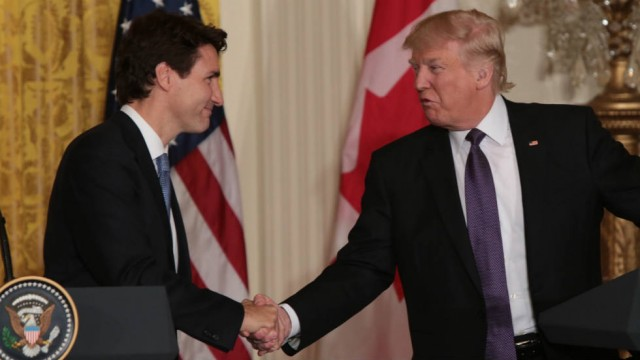
Then he got on the phone today with Canadian Prime Minister Justin Trudeau and Mexican President Enrique Pena Nieto. Both men talked to our president and apparently persuaded him to pull away from his threat to abandon NAFTA.

This is good news.

I have long supported NAFTA. I believe free trade among the North American nations has been good for all of them and it has helped strengthen the alliances among them. I hope this means Trump will cease his NAFTA-bashing and try to smooth the tension that has developed between the United States and the other two nations individually.

The president has proposed a 20 percent tariff on Canadian lumber shipped to the United States; and, of course, he and the Mexican government have been arguing over who’s going to pay for construction of a wall along our southern border.

The NAFTA pullout is now off the table. May it never return.

Remember when deficits mattered to GOP?

Donald J. Trump’s tax “reform” plan appears to be a prescription for doing something that used to be anathema to Republicans.

It will blow apart the national budget deficit.

I recall a day when deficits actually mattered to Republicans. The GOP spent a lot of political energy and capital during the eight years of Barack Obama’s presidency to lambaste the president for expanding the national debt, even though the annual budget deficit was cut by two-thirds during Obama’s two terms.

Flashing back to 1980, I want to recall how Ronald Reagan managed to be elected president. He and his fellow Republicans tore congressional Democrats — and President Carter — to pieces because they were running deficits that exceeded $40 billion annually.

Forty billion dollars!

Don’t you wish that were the case today?

Well, deficits no longer seem to matter. Republicans have joined their Democratic colleagues as political spendthrifts. Trump is going to cut taxes for his fellow wealthy Americans; his administration calls it the greatest tax cut in history. The spending will go on. The deficits are likely to soar. Won’t that pile more money onto our national debt?

Where is the outrage over that?

Hoping for smooth City Council transition

We’ve all suffered from motion sickness while watching the new president of the United States take command of the federal government.

Will there be a similarly rough ride at Amarillo City Hall when the new City Council takes over after the May 6 election? Oh, I don’t expect it. Then again, I didn’t expect the outcome we got after the 2015 municipal election … let alone the outcome we witnessed just this past November when Donald J. Trump got elected president!

However, my hope springs eternal at many levels.

We’re going to get a new majority on the council. One of the incumbents who’s not seeking re-election, Place 3 Councilman Randy Burkett, has been a key player in the rocky ride we’ve been through at City Hall. That he’s leaving office after just one term bodes well for calmer times. He’s been a disappointment to many Amarillo residents, although I acknowledge that many others view him as a champion for their point of view — whatever it is.

With a new chief administrator on the job, City Manager Jared Miller, it also is my sincere hope that the new council will let him do the job he was hired to do.

It is to run the city, to ensure that each department functions well, to hold department heads accountable and to make sure the public’s money is being spent prudently and efficiently.

I look forward eventually to meeting the new manager. Since I’m now a former full-time journalist, I’m likely to have to pursue that opportunity myself. I pledge to do so.

As for the council, I am hoping for a more tranquil atmosphere than what we’ve witnessed for much of the past two years.

Voters got angry two years ago. The source of that anger continues to baffle me, given the city’s economic vitality and the tangible progress that has occurred on many fronts. But they were steamed enough to oust two incumbents; a third incumbent didn’t seek a new term, so voters selected a new majority two years ago.

One of the new guys, Mark Nair, then decided to ask for Jarret Atkinson’s resignation as city manager. It took Atkinson a few weeks, but he bailed.

The city then brought in an interim manager, Terry Childers, who took no time at all to demonstrate his ability to turn a simple mistake into a full-blown controversy; I refer to the episode in which Childers misplaced his briefcase, called the emergency dispatch center and bullied a dispatcher over the phone. It didn’t get any better for Childers, who eventually quit after muttering into a hot mic that a constituent is a “stupid son of a b****.”

There was open bickering between council members. There were instances of a council member — Burkett — speaking out of turn regarding negotiations to lure a baseball franchise to Amarillo. Mayor Paul Harpole walked out of an executive session because of a supposed lack of trust in council members.

We’re getting a new bunch this time around. May the new majority offer a semblance of tranquility for a municipal government that likely has exhausted its motion-sickness remedies.

What has the president learned in 100 days?

Let’s turn away for a moment from what Donald Trump might have accomplished during his first 100 days as president to what he might have learned during that time.

The president’s list of accomplishments is pretty damn skimpy.

His learning curve, though, has been steep. I hope it’s beginning to flatten out.

What’s the most glaring eye-opener for the president? It’s that you cannot run the federal government the way you run a business.

At virtually every turn along the way since taking office, the president has been forced to swallow that bitter pill. A man who became used to getting his way because he demands it has learned that the federal government is structured — on purpose — to function on an entirely different set of dynamics.

The nation’s founders crafted a brilliant governing document. When you think about it, while the U.S. Constitution grants the president significant executive authority, it does not imbue the office with ultimate governing authority. The founders divvied up power among three branches of government: executive, legislative and judicial.

It’s that darn legislative branch — the U.S. Congress — that has a say in what becomes law. Donald Trump’s business experience doesn’t mean squat to many of the 535 men and women who comprise both chambers of Congress. They, too, have their constituencies to which they must answer. Yes, the president represents the nation, but Congress — as a body — also represents the very same nation.

Can you govern the nation like a business? No. Never. Not a zillion years.

Trump needs to understand that governance is a team sport. He cannot threaten members of Congress if they resist his legislative proposals. He cannot exclude members of the “other” party from key negotiations. He must abandon the “I, alone” mantra — which he bellowed at the Republican National Convention this past summer — that threatens to haunt him for as long as he is president.

And then there’s the judicial branch. The federal judiciary comprises individuals who hold lifetime appointed jobs. Their mission is to ensure that laws do not violate the Constitution. The founders granted them independence from the executive and legislative government branches.

Those judges have the constitutional authority to knock down executive orders, or to put the brakes on laws enacted by Congress. They aren’t “so-called judges” whose status as “unelected” jurists doesn’t diminish their authority.

I hope the president has learned at least some elements of all this during his first 100 days. If he doesn’t, then we’re all going to be in for an extremely rough ride.

However, we’re all just spectators. The president will need to hold on with both hands if he has any chance of getting anything done during his time in office.

We are witnessing the consequence of electing someone with zero public service experience. Mr. President, the federal government bears no resemblance — none! — to the businesses you built.

Executive authority now becomes OK, yes, Mr. President?

I recall hearing time and again during the 2016 presidential campaign that Barack H. Obama’s use of executive authority was somehow a bad thing.

The president shouldn’t govern by executive fiat, said many of his critics, such as the Republican nominee for president, Donald John Trump.

Hmm. Well, times have changed, haven’t they?

Trump is now the president. He’s assumed the role of chief executive of the federal government. By golly, the man has found that executive authority isn’t such a bad thing after all.

Indeed, as that supposedly “phony” 100-day threshold approaches, the current president is left to proclaim the only victories of his new term have come via executive order.

Oh, and he’s also suffered some embarrassment through this activity as well, such as when the federal judiciary knocked down two of his travel bans for those coming here from Muslim-majority countries.

Through executive authority, Trump is demonstrating his ability to use the power granted to him by virtue of his election. I get that. I respect the authority granted to the president and I won’t condemn him for using it, per se.

What boggles my mind is how he continues to get away with the rhetorical gymnastics he performs routinely and how he manages to bluster his way out of what he said earlier.

He said while campaigning he wouldn’t have time for golf; he said would be at the White House 24/7 working to bring back all those jobs that have gone offshore; he promised to repeal the Affordable Care Act and replace it with something else.

He’s done essentially two things during his first 100 days as president: He nominated a Supreme Court justice, who was confirmed by the U.S. Senate and he ordered a missile strike against Syrian military targets in response to Syrians’ use of chemical weapons against civilians.

Legislative accomplishment? Nothing, man. The president has relied almost exclusively on his executive authority — which he condemned when another president did the same thing.

Tax ‘reform’ unveiled … now let’s see how it affects POTUS

I believe another mega-rich guy, the Texan H. Ross Perot, once said that the “devil is in the details.”

With that, one of the details of Donald John Trump’s tax proposal must include just how this “reform” affects the individual who has pitched it.

Yes, I’m talking about tax returns. Release them, Mr. President.

Treasury Secretary Steven Mnuchin says the president will not release those tax returns. There’s been enough information released already, he said. I disagree, quite naturally, with what the secretary suggests.

The major points about the president’s tax plan include a dramatic reduction — from 35 percent to 15 percent — in corporate income taxes for small businesses and a huge increase in the standard deduction for individuals’ tax returns.

As The Hill reported: “The plan would repeal taxes that mostly affect wealthy Americans, such as the alternative minimum tax for individuals and the estate tax. But it would also ‘eliminate targeted tax breaks that mainly benefit the wealthiest taxpayers,’ according to the one-page outline released Wednesday.”

Why is release of the president’s tax returns relevant? He has not divested himself of his huge business interests. Therefore, he stands to be affected in some fashion by what he has pitched. Americans have the right to know just how Donald Trump’s portfolio is affected.

He isn’t likely to release those returns just because many of his fellow Americans want him to do so. Still, it’s worth making the demand yet again. I believe I will keep yammering about the returns during Trump’s time in office.

But here’s another wrinkle.

How does the tax plan affect revenue to pay for at least two major Trump proposals: infrastructure repair and, yep, that dadgum wall.

Trump wants to spend about a trillion bucks to fix highways, bridges and airports. Will these tax cuts reduce cash flow into the Treasury, making it impossible to “pay as you go” on these projects?

Oh, and the wall is going to cost — according to varying estimates — as much as $25 billion. How does the president intend to pay for that project? Do not tell me “Mexico is going to pay for it.” That will not happen. 

As it’s often said: The president proposes, Congress disposes. You can bet your last nickel that congressional progressives will continue to insist that Trump release his tax returns as condition for any tax overhaul.

My gut tells me the disposition of this tax plan — absent the president’s release of his tax returns — continues to be one of the great mysteries in the nation’s capital.

Now it’s NAFTA in the crosshairs

Let me try to figure this out.

Donald J. Trump gets elected president and then launches a war of words with Mexico’s President Enrique Pena Nieto over whether Mexico will pay for construction of “the wall” between our two countries.

Then this week the president announces plan to impose a 20-percent import tariff on lumber coming from Canada, which shares an even longer border with the United States.

Oh, and today we get word that the Trump administration is considering a wholesale withdrawal from the North American Free Trade Agreement, which would bust up one of the largest trade agreements in world history.

Yes, the president is trying to put “America first,” but at what cost?

NAFTA has been demonized wrongly as a job killer. It’s been no such thing. It has sought to open up trade lanes among these three giant North American neighbors, allowing a freer flow of goods in and out of the United States to two of our strongest allies.

NAFTA order being drafted

Automation has been the No 1 job killer in this country. No trade war, or blustering about putting America first, or any chest-thumping on the world stage is going to reverse the automation trend that has occurred in industrialized nations around the world.

For the life of me I cannot figure the president out.

He calls China a “currency manipulator” and then backs totally away from that assertion, looking for China’s help in stopping North Korea’s march toward becoming a nuclear power. Trump has yet to condemn Russia fully for meddling in our 2016 presidential election, although he has sounded a bit angrier about Russian involvement in the Syrian civil war. He scolds Australia’s prime minister over the phone and then hangs up on him. Trump declines to shake hands with German Chancellor Angela Merkel in a White House photo op.

He’s now launching trade wars against two of our largest trading partners.

Someone … pass the Pepto. Please.

Commentary on politics, current events and life experience