Downtown mechanism needs attention

downtown

A former colleague and dear friend, the late journalist Claude Duncan, used to say, “There are about as many original ideas as there are original sins.”

That was his way of saying that it’s all right to capture others’ ideas and use them as your own.

I’ve heard some folks with expertise in civic development say out loud in Amarillo that they are concerned about the push to move the city’s downtown revival efforts forward. Chiefly, they wonder whether the machinery that had been set up to start the process has been dismantled too abruptly.

Here are some cases in point from those with whom I have spoken.

City Manager Jarrett Atkinson quit after determining he couldn’t work with the newly elected Amarillo City Council. City Hall also lost other key senior administrators, such as City Attorney Marcus Norris and Assistant City Manager Vicki Covey. They all played a key part in administering the city’s Strategic Action Plan that laid the foundation for what has transpired to date.

Downtown Amarillo Inc. executive director Melissa Dailey quit as City Hall absorbed many of the economic development activities that had been left to DAI.

Amarillo Economic Development Corporation CEO and president Buzz David has left his post. He, too, has been a key player in moving the downtown processes forward.

The Local Government Corporation has said goodbye to a lot of intellectual firepower, such as Amarillo lawyer Richard Brown, who is widely considered to be the godfather of the Tax Increment Reinvestment Zone that has helped breathe new life into the downtown district.

Where do we stand now?

The LGC is moving forward with plans to develop the multipurpose event venue and ballpark. It has decided to pursue an affiliated minor-league baseball franchise and put that team into the downtown ballpark when it is built.

Construction has begun on the Embassy Suites convention hotel and the parking garage across the street from it. There appears to be a legitimate chance for a big announcement soon relating to the future of the long-abandoned Herring Hotel.

The MPEV price tag has escalated from $32 million to something north of $50 million. Yes, voters approved the lesser price  when they endorsed the citywide referendum this past November. The LGC, though, has signed on to the double-A baseball recruitment effort and has accepted that it requires a little more money to finance it.

Against the backdrop, though, of the dismantling of the machinery that set this process up, it is fair to wonder whether the city and its affiliated agencies have the know-how to finish the job that others have started.

The city is looking for a permanent city manager. DAI’s future is cloudy at best. The AEDC’s mission might be reconfigured as the city looks for a new executive director.

Moreover, the City Council itself will have to find someone to succeed Dr. Brian Eades, who’s leaving office this summer. Eades has been a stellar champion of downtown’s revival efforts and has been a staunch supporter of the multi-faceted apparatus that has been so critical in moving those efforts along.

I remain hopeful that the city will be able to take this process to the finish line.

I also am getting mildly nervous about the potential hazards that lie ahead and whether the newly created apparatus will be alert enough to avoid them.
 

Panhandle-Plains museum in good ‘interim’ hands

museum

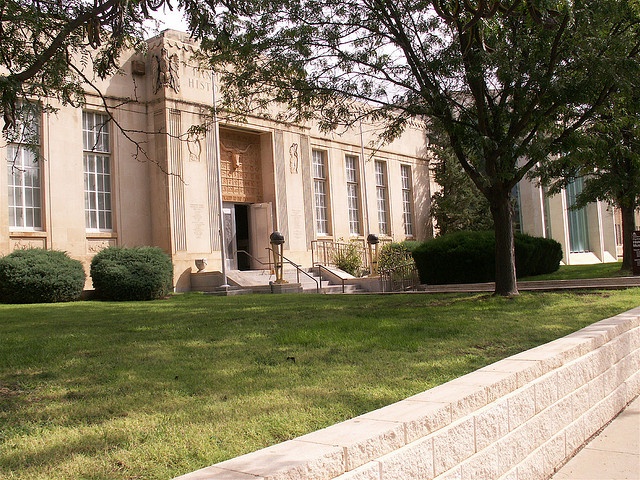
I was heartened to hear the news about the Panhandle-Plains Historical Museum, one of the great assets of this part of the state.

The news was that Carol Vahue Lovelady had been named interim director of the PPHM. She succeeds, for the time being, another good friend of mine. Cliff Vanderpool has gone on to become director of the Amon Carter Museum in Fort Worth.

I wish Cliff all the very best. And Carol, too.

Lovelady has a long history of philanthropy and civic involvement in the Panhandle. Indeed, she comes to it through her family heritage.

Her dad was Ray Vahue, a former Amarillo mayor. Her mom, Helen made her mark through many civic activities.

The PPHM sits on a street corner at West Texas A&M University and tells a compelling story about the history of this region. It has been in good hands under Vanderpool’s leadership.

I am not in the loop at PPHM, so I don’t know whether Lovelady would be a candidate for the permanent directorship.

I know her well enough, though, to believe the museum — a true treasure for the region — will be in good hands during this interim period while the PPHM board searches for a permanent replacement.

Carol Lovelady’s philanthropic contacts well could be brought to bear on behalf of the PPHM. Not a bad resource to have on hand.


Trump, GOP draw closer … still have a long way to go

90

Now we hear that Donald J. Trump and House Speaker Paul Ryan have closed the rift between them.

Fine, if you’re a Republican. I guess.

Are they anywhere near closing the deal in the wake of their 45-minute meeting in Washington, D.C.?

Let’s see:

— Trump won’t touch entitlement spending, but he vows to erase the budget deficit quickly.

— Trump opposes trade agreements that allow for freer trade between the United States and our international partners.

— Trump wants to ban Muslims from entering the United States.

— Trump says he’s fine with Japan and South Korea developing nuclear arsenals.

— Trump says President Bush lied about weapons of mass destruction in a deliberate deception to start a war with Iraq.

— Trump wants foreign governments to pay us back for the assistance we give them.

— Trump is open to the United States withdrawing from the North Atlantic Treaty Organization.

— Trump says rich people should pay more in taxes.

I’m pretty sure that Speaker Ryan disagrees fundamentally with all those views. The presumptive presidential nominee’s view on tax policy and trade run completely counter to standard conservative Republican orthodoxy.

I know I’m missing a few examples. Those are the ones that come to mind immediately.

Trump has said “party unity” is overrated. Now he’s all in favor of it.

I will await the outcome of this run-up to the GOP convention in Cleveland along with the rest of the nation.

If Trump caves in to GOP policy, he risks ticking off his ardent followers.

If the “GOP establishment” surrenders to Trump, then the true-blue Republican faithful will be left standing in the rain.

Ryan today talked about standing firm on “core principles,” which I believe he possesses. Trump’s principles? I’m still waiting for him to reveal them.


‘No’ never really means no for VP hopefuls

Rob Portman Pictures12

U.S. Sen. Rob Portman of Ohio said “no” when NBC News asked him if he’d consider running as Donald J. Trump’s vice-presidential nominee this year.

Does that mean he would refuse to run with Trump if he asks him to do so? Does it mean the Republican will have none of it … ever?

Hardly.

It means only that he intends — at this moment — to seek re-election to the Senate.

How many times have these politicians  said “no” only to change their minds when the phone rings? A zillion?

I’m going to flash back for a moment to a conversation my colleagues and I had in Beaumont with the late, great U.S. Sen. Lloyd Bentsen.

It was 1988. The Democratic senator was running for re-election. He visited us at the Beaumont Enterprise to talk about that campaign. The presidential primary campaign was winding down. Massachusetts Gov. Michael Dukakis was pondering a VP pick. Bentsen’s name was being kicked around.

So … I asked him: Would you run for vice president if Dukakis asked?

I don’t recall precisely how Sen. Bentsen answered, but I do recall he said “no,” or words to that effect. He said he was focused only on his re-election campaign against Republican nominee U.S. Rep. Beau Boulter of Amarillo.

About a week later, his phone rang. It was Gov. Dukakis. The governor asked Bentsen to run with him on the Democratic ticket. His “no” turned to “yes.”

My memory of that conversation makes it difficult for me to accept a “no” at face value when the subject of running for vice president comes up.

In this election cycle, though, it strikes me as plausible that saying “no” to a presidential nominee as weird and unpredictable as Donald Trump actually might carry more weight.


Decency is alive and well after all

zimmerman

I am happy to report that decency lives.

It’s alive and well. It exists in many quarters and in many human beings. The particular example of decency worth citing here exists in an auction house that was set to put a firearm on the block for the highest bidder.

Then it took the firearm off the auction market.

http://www.bbc.com/news/world-us-canada-36281438?ocid=socialflow_facebook&ns_mchannel=social&ns_campaign=bbcnews&ns_source=facebook

It belongs to a fellow named George Zimmerman. You remember this guy, right? He shot a 17-year-old boy to death in February 2012. Trayvon Martin died from a gunshot fired by Zimmerman as the boy was walking through a Florida neighborhood.

Zimmerman claimed he acted in self-defense. A trial jury agreed with him, acquitting him of murder charges.

The case, though, became the source of international outrage.

Zimmerman has continued to find himself in the news. He got into some kind of beef with a girlfriend; it involved assault and, yes, a gun was involved in the altercation.

He’s acted like a dirt bag since being acquitted.

Now he wants to sell the gun, presuming — I reckon — that he’ll get big bucks for the notorious pistol.

It was a disgusting notion that he’d put the gun on the auction block.

It was equally gratifying to hear that the auction house decided to pull the gun down, take it off the market and presumably give it back to Zimmerman.

Zimmerman told a Florida radio station, “I’m a free American, and I can do what I’d like with my possessions.” Sure you are, George. You also are a public figure and your every move is now subject to public scrutiny.

That’s the price one pays in a free society for one’s actions, for better or worse.

Other “free Americans” are able to decide whether they support those actions. An auction house has chosen to do the right thing.


Release the tax returns already!

tax-return-form

Here’s how you give birth to rumor.

You refuse to do something that others in your position have done for decades. You then offer lame excuses for the refusal, which then start to breed gossip around the country about the alleged real reasons for the refusal.

Presumptive Republican presidential nominee Donald J. Trump is refusing to release his tax returns. He says the Internal Revenue Service is in the midst of an audit; the IRS responds that an audit does not preclude someone from releasing the returns.

Other candidates for the presidency have routinely released their returns for public review. It’s part of the examination process to which the public is entitled as they consider who should become the nation’s head of state and government and commander in chief.

Trump should release the returns. Now.

I am not going to weigh in on what’s been said by those who think Trump might be hiding something. Such allegations have come from, say, 2012 GOP presidential nominee Mitt Romney.

This might seem like a diversion. It really isn’t.

The refusal to comply what’s been customary among presidential candidates speaks to the character of the candidate.

Recall that Democratic presidential candidate U.S. Sen. Bernie Sanders balked initially at releasing his returns, and he faced questions from an inquiring public. He said his wife prepared them and he described the findings as “boring.” He finally did.

Trump has been bellowing for decades about his immense wealth. He’s boasted about what a “world-class businessman” he’s been.

Well, OK. Let’s open up the books and let the public see for itself.

The world is chock full of equally world-class certified public accountants and tax lawyers who can parse the details for us.


Why aren’t we cheering this news?

federal-budget-2013

I am a lousy psychoanalyst.

I’m not educated in it. I’m not an expert at anything, truth be told. I just try to observe my surroundings and keep myself somewhat centered.

Still, I am inclined to believe that human beings are drawn more readily to negativity than they are to positive news.

That might explain the contents of this link:

http://www.msnbc.com/rachel-maddow-show/the-public-has-no-idea-the-deficit-shrinking

The writer suggests that Americans don’t know that the budget deficit is shrinking at a greater rate under the Obama administration than at any time in recent history.

Why don’t Americans know this? Why aren’t they cheering the news?

I think it’s because the naysayers have won the argument. How is that? Because human beings are drawn to their message.

Hey, I can relate to it. The TV Guide we get at our house has a “Cheers and Jeers” section in the back of the magazine. I am drawn instinctively to the “Jeers” the magazine gives before I read the “Cheers.” Do you know what I mean here?

Deficit spending used to be Republicans’ major bogeyman. They pilloried Democratic politicians in 1980 because the federal budget deficit exceeded $40 billion annually. Oh, to have a deficit that small these days.

The deficit exceeded $1 trillion when Barack Obama took office in January 2009. It’s now down to less than half that amount. Remember when we actually balanced the budget during the administration of another Democrat, Bill Clinton? A failed Republican president candidate this year, John Kasich, played a big role in making that happen, but he never was able to parlay that positive record into votes among GOP base voters … who are too enthralled by the negativity being sold by Donald J. Trump.

The negativity proponents are winning the national argument about the federal budget deficit.

It’s not the essence of their message. It’s that they’re outshouting those who know the truth, which is that it is shrinking.

How, then, do we get past humans’ instinct to embrace news that angers them?

Unity? It’s not necessary, according to Trump

12TRUMPMANDATE-master768

There once was a time when political unity spelled success for candidates who traded on it.

In 1968 and again in 1972, Democrats nominated candidates for president who sought to win with their party in shambles.

In 1976, Republicans nominated an incumbent president who had to fight for his political survival against an insurgent.

In every case mentioned here, the disunited party lost the election.

Is that going to happen in 2016? Those of us who’ve been proven wrong at almost every turn about the Republican primary campaign should hold our thoughts to ourselves.

http://www.nytimes.com/2016/05/12/us/politics/donald-trump-campaign.html?hp&action=click&pgtype=Homepage&clickSource=story-heading&module=first-column-region&region=top-news&WT.nav=top-news&_r=0

Donald J. Trump says unity isn’t a prerequisite for him winning the election this fall. The Republican Party is ripping itself into pieces over this individual’s pending nomination for president.

Big deal, says Trump. He has a “mandate” to keep doing what he’s been doing, Trump says. According to the New York Times:

“Mr. Trump, in a telephone interview, compared his candidacy to hit Broadway shows and championship baseball teams, saying that success begot success and that he would be foolish to change his behavior now.

“’You win the pennant and now you’re in the World Series — you gonna change?’ Mr. Trump said. ‘People like the way I’m doing.’”

Still, he’s going to meet Thursday with House Speaker Paul Ryan and some other leading Republicans to talk about, oh, unifying the party.

I’ve become more of a political traditionalist as I’ve gotten older. I once worked real hard to elect the late Sen. George McGovern in 1972. It didn’t work out for us.

I now believe unity is better for the candidate than disunity.

Trump needs virtually all Republicans — and a lot of Democrats and independents — to vote for him if he intends to take the presidential oath next January. My own sense is that he’s still got a gigantic hill ahead of him.

Far more women view him unfavorably than favorably; same with Hispanics and African-Americans. He’ll need far more of them if he has a prayer against the Democratic nominee, who likely will be Hillary Clinton.

Does he obtain majorities with those key voting blocs by leading a divided, disjointed and dysfunctional Republican Party?

For the life of me, I don’t know how he does that.

Then again, I don’t know how this clown finds himself on the doorstep of a major-party presidential nomination.


When did political spouses deserve the blame?

kennedys

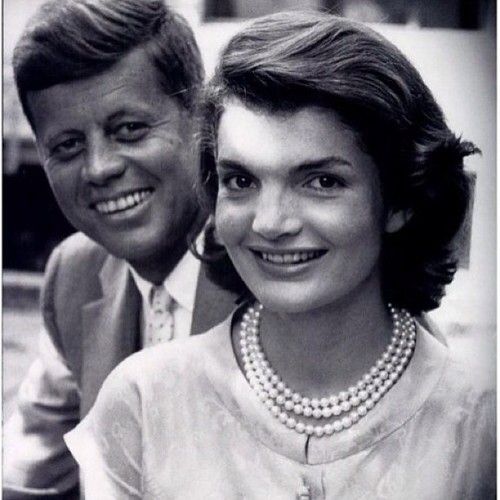
A picture showed up on my Facebook feed with the caption: No one blamed Jackie for what Jack did.

Hmm. Interesting, yes?

Now we’re getting a lot of blame being tossed around at the wife of another president.

Times really have changed.

President John F. Kennedy was a seriously unfaithful husband. During the time he was president — from January 1961 until November 1963 — his transgressions went unreported by the media that knew about it, but kept it secret through an understanding: If it doesn’t affect his performance as president, it doesn’t matter.

Years later, long after JFK had been buried and his wife had remarried, the world knew of what he had done behind his wife’s back.

Have we blamed Jackie for what the president did?

No. Today, the calculus is different.

Republican candidate for president Donald J. Trump is now blaming Hillary Rodham Clinton for being an “enabler.” That’s a reason to vote against her for president, said Trump. Why? Because she was mean to other women who accused her husband, Bill Clinton, of being unfaithful to her.

The House of Representatives impeached President Clinton for lying under oath about his relationship with a young White House intern. The Senate acquitted him in the trail that ensued.

Does any of that have an impact on how Hillary Rodham Clinton would govern the country if she’s elected president this fall? No.

In fact, I saw another social media post that suggested that Hillary Clinton’s response to her husband’s transgression should be saluted, not condemned. The Clinton family stayed together. They worked through their anger and heartbreak.

Of course, none of us knows what they have said to each other in private. Nor should we know. It’s their business exclusively.

Perhaps the most ironic twist of all in this game of blaming a political spouse for her husband’s behavior is the reputation of the individual who’s leveling the blame.

Given his own highly publicized history of marital infidelity, Donald Trump has no standing — zero! — to challenge the moral rectitude of any other human being in public life.

Mayor to Trump: Thanks, but no thanks

Sadiq Khan

Sadiq Khan made history by becoming the first Muslim ever elected mayor of London.

He’s a distinguished man who apparently doesn’t like other politicians patronizing him.

So, when presumptive Republican Party presidential nominee Donald J. Trump offered to grant the mayor-elect an “exception” to a proposed ban on Muslims visiting the United States, Khan offered a terse “no thanks.”

This is precisely the kind of reaction Trump should have gotten in response to his ridiculous — and patently unconstitutional — proposal to ban people from entering the United States on the basis of their religious belief.

Trump issued the call in the wake of the Paris terror attacks. He said he would, if elected president, work to ban all Muslims from entering the United States. Why? He said the threat of Islamic terrorism coming to this country is too great.

Trump does not grasp the idiocy of this proclamation.

Mayor-elect Khan has rejected Trump’s offer to exempt him from the ban. He wonders about how other Muslims would react if they want to come to the United States “on holiday.” What if they want to go to Disneyland, Khan asked, but they can’t because “President Trump” says they aren’t welcome here?

The First Amendment to the U.S. Constitution allows absolute freedom to worship as one believes. It has been interpreted during the past two-plus centuries to mean that no one should be discriminated against because of their religious faith.

Trump has proposed something that utterly flouts one of the basic tenets on which this country was founded.

Sadiq Khan — the duly elected mayor of one of the world’s truly great cities — saw through it immediately.

He understands what it means to be an American more than the individual who is poised to be nominated to run for the presidency of the United States.


Commentary on politics, current events and life experience