VA scandal far from ‘overstated’

veterans affairs

Hillary Rodham Clinton could not be more wrong than she was the other night when she said that the Department of Veterans Affairs health care scandal was “overstated.”

You’ll recall the VA matter. Veterans seeking medical care in Phoenix were made to wait for too long for the care — and then some of the died while waiting.

Meanwhile, the VA cooked the books, so to speak, and hid that information from agency watchdogs in order to protect the medical staff at the VA medical center in Phoenix.

Veterans Affairs Secretary Eric Shinseki had to quit and the agency went under the microscope to correct the hideous situation that resulted in the veterans’ deaths.

News flash to Hillary: None of it — zero — was “overstated.”

Veterans should be offended by what the Democrats’ leading presidential contender told MSNBC’s Rachel Maddow the other evening. I know I am.

Yes, Clinton is right to say that most veterans get good health care. I can attest to the quality of care I am getting in Amarillo at the Thomas Creek VA Medical Center. Then again, I enjoy good health.

My hope is that when I do need some specialized care that it will be available to me in a timely fashion. I damn sure don’t want to die waiting to receive it.

Most veterans do receive good care. The veterans who have died because of too-long wait times, though, did not.

For the Democrats’ leading presidential candidate to suggest it’s all “overstated,” overblown and overplayed is dishonest on its face.
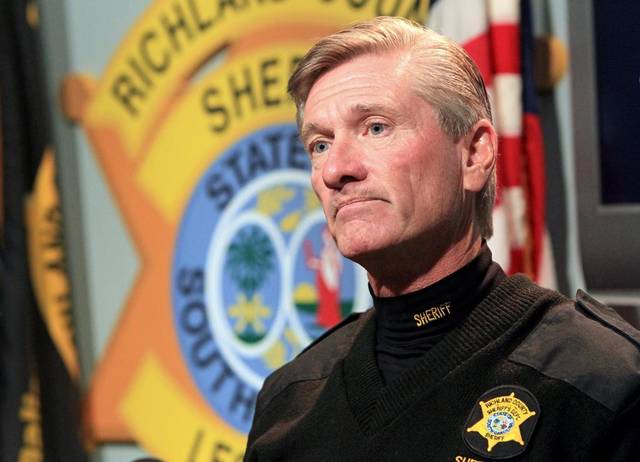
S.C. deputy out of a job

LeonLott

Ben Fields is now a former South Carolina sheriff’s deputy.

I’ve got to hand it to Sheriff Leon Lott for acting swiftly and decisively in terminating Fields for tossing a high school student across the room in an altercation that erupted at Spring Valley High School in Columbia, S.C.

We’ve all seen the video. It involves — yes, that’s right — an African-American student and a white law enforcement officer.

Video shows brutal response

A female student was disrupting a class. Her teacher told her to put her cell phone away. The girl refused. The teacher called a school administrator. The girl continued to disobey instructions to put the phone away. Then the call went out to Fields, a Richland County deputy sheriff serving as a school resource officer at Spring Valley.

How did Fields respond. The burly deputy picked the girl out of her chair and threw her across the room.

That’s where the deputy messed up, according to Lott.

Surely the girl needs to be punished for her part in escalating the altercation.

Sheriff Lott, though, acted appropriately in terminating Fields. Lott informed the media this morning that deputies receive ample training on de-escalating tensions. Fields, shall we say, did quite the opposite.

Whatever happens next to the girl remains in the hands of the school and her parents.

It appears to me that she needs a visit to the proverbial woodshed … which is a task that belongs to Mom and Dad.

With all the talk these days about slow response from law enforcement agencies to situations such as this, it appears that Sheriff Lott has listened and has acted.

Speaker’s parting gift to country? A budget deal

boehner

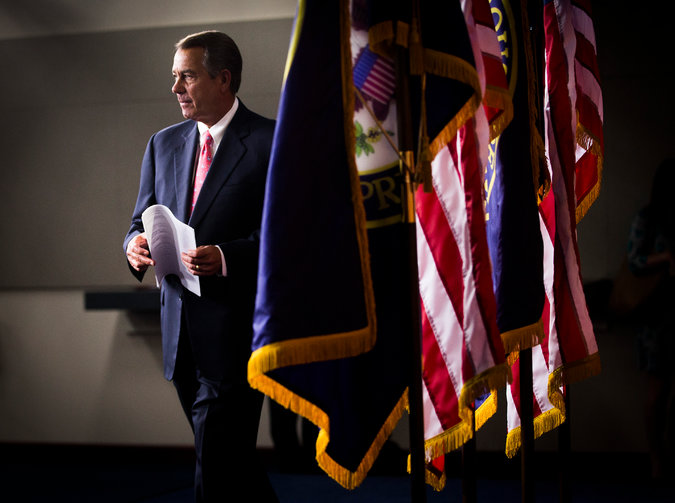
John Boehner is about to leave the House of Representatives’ speakership, but he also is set to leave the country with  thoughtful parting gift.

A two-year budget deal he and the White House hammered out.

What does this mean? It means that President Obama won’t have any more threats of government shutdowns during the remainder of his time in office. It also means — with Congress set to approve the deal — that Boehner is sticking it in the eye of the TEA Party cadre of legislators who have bedeviled him and the White House.

Deal averts crisis

Perhaps the best part of the deal is that is recognizes the need for the United States to honor its debt obligations by increasing the debt ceiling. This is sure to anger the TEA Party folks, who keep insisting on fighting with others in Congress — including the so-called “establishment Republicans” — over whether to honor our obligations or default on them.

Boehner has made no secret of his disdain for this tactic. The pressure from the far right of his party, though, got to him. He packed it in.

The presumed next House speaker, Paul Ryan, is on board with the deal.

Well, I and millions of other Americans will accept the speaker’s parting gift gladly.


Hey, didn’t JFK settle this religious thing already?

deadstate-Ben-Carson

I’ve always thought — or hoped, at least — that John F. Kennedy’s 1960 speech in Houston settled the notion that a candidate’s religion should have no bearing on whether he could serve as president of the United States.

He told some Protestant clergy that the Vatican would not dictate to the Catholic candidate how he should govern, that he would swear to be faithful only to the U.S. Constitution.

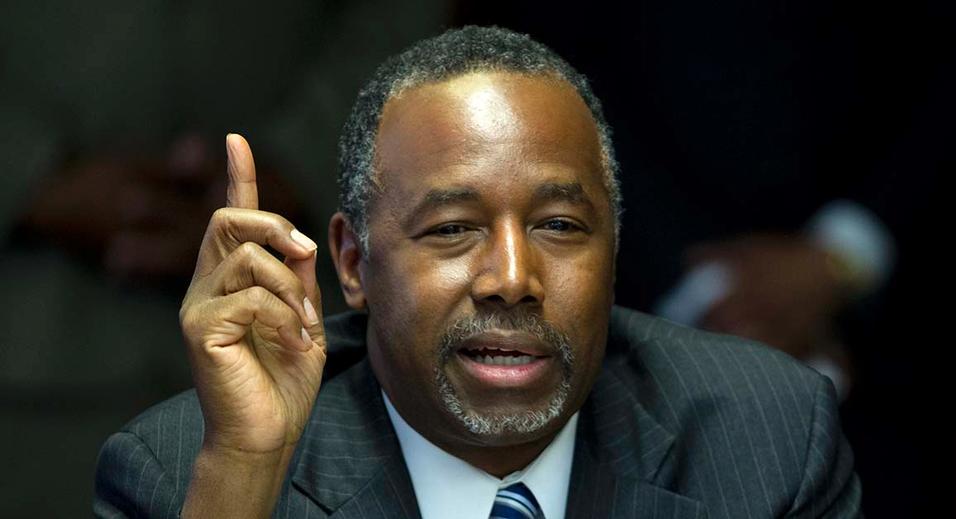
Well, silly me. The issue is coming up again. The target this time is Dr. Ben Carson, the famed neurosurgeon whose faith is of the Seventh-day Adventist variety.

Donald Trump raised the issue the other day in typical tactless Trump fashion. Now comes a well-known lefty commentator, David Corn, editor of Mother Jones, to wonder aloud whether Carson’s faith would inform the way he would govern should he “take control of the government.”

This is a ridiculous debate.

First of all, presidents don’t control the government. We have this notion that power is spread among two other governmental branches — the courts and the Congress.

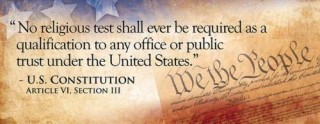
The Constitution says there should be “no religious test” for candidates seeking any public office. That includes the presidency.

Yes, Carson has brought up his own faith. He’s talked about how his faith would guide him. He hasn’t said he would toss the Constitution aside any more than then-Sen. Kennedy said he would more than five decades ago.

Corn is playing to voters’ fears when he says of Carson: “Now, he is running on the basis that he has faith. And I think it’s going to open, you know, a big can here. Because, you know, he does come from a church that believes in end times, prophesies, and he’s said he believes in the church’s teachings.”

A simple declarative question is in order: Dr. Carson, do you vow to uphold the law under the Constitution of the United States?

I believe he’s already pledged to do so.


Positive vs. negative in MPEV debate

amarillo MPEV

Amarillo’s campaign on the multipurpose event venue is heading for the home stretch. Early voting ends Friday.

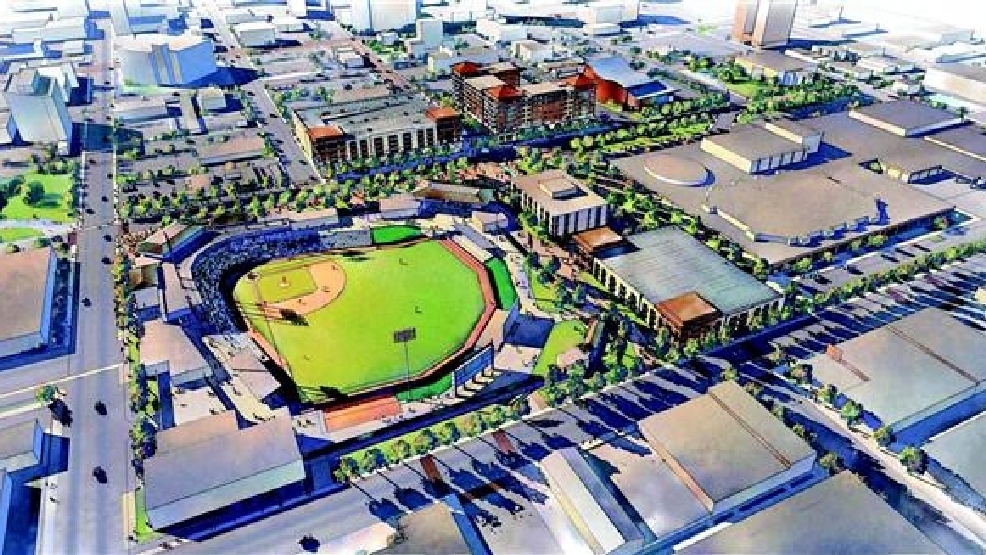
A week from today, the polls open and those who haven’t voted early will get a chance to vote on whether to build an MPEV that includes a ballpark, a place where a minor league baseball team can play a little ball for about 50 or 60 dates annually.

Have you heard about an alternative to the ballpark if voters nix the notion? Me neither.

Which brings to the point today: The Against Crowd hasn’t delivered an alternative. It has, as near as I can tell, relied on a purely negative message.

That’s expected. An “anti-anything” campaign by definition must be negative. You don’t like something? Say “no.”

On the other side of the divide is the pro-MPEV group. The leading advocates belong to something called Vote FOR Amarillo. The very name implies a positive message.

And that message is?

Well, as its leading spokesman, retired Amarillo College President Paul Matney, has stressed: The MPEV will put Amarillo on baseball’s “radar” by providing a first-rate sports venue; it will create several dozen permanent jobs and hundreds of temporary construction jobs; the bonds to pay for the $32 million construction will be retired using hotel/motel tax revenue; it will become an essential element in downtown Amarillo’s rebirth; and that rebirth will spur further economic expansion throughout the city; the MPEV could play host to a variety of activities throughout the year that have nothing to do with baseball.

That’s a positive message, yes?

Of course it is.

Those who oppose the MPEV say the Civic Center needs renovation first. How do we pay for that? With, um, public money. They contend the city shouldn’t acquire debt to build an MPEV, but don’t seem to mind acquiring such debt on the Civic Center, with a cost that will far exceed the price tag attached to the MPEV.

They keep bringing up things such as secrecy, nefarious motives, the failed master developer (who was nowhere in sight when the MPEV idea was first floated around 2006).

If only we could hear some options from those who oppose the MPEV — for whatever reason.

If there are alternatives on some hidden table, then let’s not talk among yourselves. Share them with the rest of us.

I’m planning on going with the positive message.


Faith should be off limits on the campaign trail

No-religious-test-of-office-320x1241

I keep coming back to a simple phrase in the U.S. Constitution.

Article VI says there will be “no religious test” for anyone seeking public office.

Isn’t that clear? As in crystal clear?

Why, then, is Donald Trump injecting faith in the Republican Party’s presidential primary campaign by questioning whether one of his opponents, Ben Carson, worships outside the mainstream?

Trump proclaimed the other day he is a Presbyterian. “I’m Presbyterian. Boy, that’s down the middle of the road, folks, in all fairness. I mean, Seventh-day Adventist, I don’t know about. I just don’t know about.”

Carson is a Seventh-day Adventist.

How does this guy get away with saying these things about his political adversaries?

A candidate’s faith is supposed to be off the table. The Constitution — the document that politicians, Democrat and Republican and alike say they revere — lays it out there in stark terms. There must be “no religious test.”

Trump, though, flouts his professed respect for the Constitution while questioning whether another candidate’s faith is mainstream enough to suit the voters both men are courting as they fight for their party’s presidential nomination.

What’s more … the guy is getting away with it!

God help us …


We need more ‘quiet places’

Cell-Phone-Use-Sign-NHE-17873_300

Amtrak has a “quiet car”? Seriously?

I learned that bit of information this week when I heard about New Jersey Gov. Chris Christie getting booted from the train’s quiet car after he began blabbing loudly on his cell phone.

He was en route from Washington to New Jersey after appearing on a Sunday morning news talk show to discuss his Republican presidential candidacy.

The governor whipped out his phone and began talking — apparently quite loudly — on his phone where such activity is prohibited.

The train operator asked him to leave the quiet car. He did. No problem.

I give Gov. Christie kudos for being compliant and for not raising a further ruckus.

But now comes the question: Why not have more of those quiet places?

Have you been annoyed, say, in the grocery store line? How about waiting at an airport terminal gate sitting next to some loudmouth businessman/woman talking about the biggest business deal ever struck?

I could go on. There are many place where I’d like to see cell phone use restricted.

Frankly, I’m proud of Amtrak for establishing the quiet car. Christie’s spokesperson acknowledged the governor’s mistake, but said he had talked inappropriately in Amtrak’s “notorious” quiet car. Notorious? Surely, that’s meant as a tongue-in-cheek reference.

Yes, I pack my cell phone with me everywhere. I feel oddly lost without it. (Man, it takes a lot for me to admit that.) I do cherish those moments when I do not have to listen to others gabbing, blabbing and yammering on their phones.

I think Amtrak is onto something. Maybe we can start a “quiet zone craze.”


But … all I wanted was a burger

burgers

Technology is driving me nuts.

Batty and bonkers, too.

Cell phones are doing more and more. Everyone is in touch 24/7 with everyone else on the planet. It all makes my head spin.

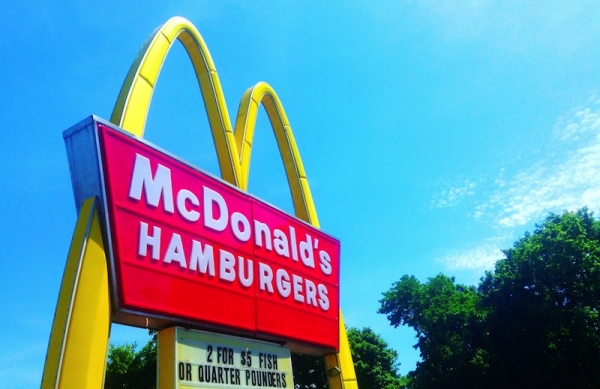
Then came a moment this morning when all I wanted was a fast-food hamburger at a well-known chain of burger joints. I busted out laughing.

I had finished a fascinating session this morning talking to high school juniors about whether they wanted to pursue a career in journalism. The event occurred at the Discovery Center in Amarillo and — just as in previous years — the kids were attentive, articulate and engaged in what my fellow panelists and I were telling them.

I was driving down Soncy Road to one of my part-time jobs. I peeled off the street and stopped at McDonald’s.

I needed a quick bite to eat before I went to work. I walked in. A nice lady greeted me with a “Good morning, sweetheart,” and then pointed me to this enormous electronic touch-screen board where I could order my meal.

Did I want to build my own burger? Did I want small or large fries? Did I want a drink to go with it? Was I going to pay with cash or with a credit card?

I touched the screen to answer all those questions.

My head was spinning. I just wanted to walk to the counter, order my lunch, pay the person and wolf it down before heading off to work.

The high-tech wizardry made me recall when I worked at McDonald’s back in the day. That would be in the mid-1960s, an era before minimum wage; I earned one whole dollar an hour.

Burgers cost 19 cents; cheeseburger cost 29 cents; milk shakes cost a quarter; a fish sandwich cost 29 cents, too;  big burger was the double-meat burger … and I forget how much it cost (might have been 49 cents). We had a short array of soft drinks — Coke, root beer, orange drink — and coffee. That was it.

These days you have to learn a whole new skill set … just to order a burger!

Hey, I like technology as much as the next guy — most of the time.

I just don’t expect to get headaches while ordering a hamburger.


Blair apologizes for Iraq War … more or less

<> on April 7, 2015 in Sedgefield, England.

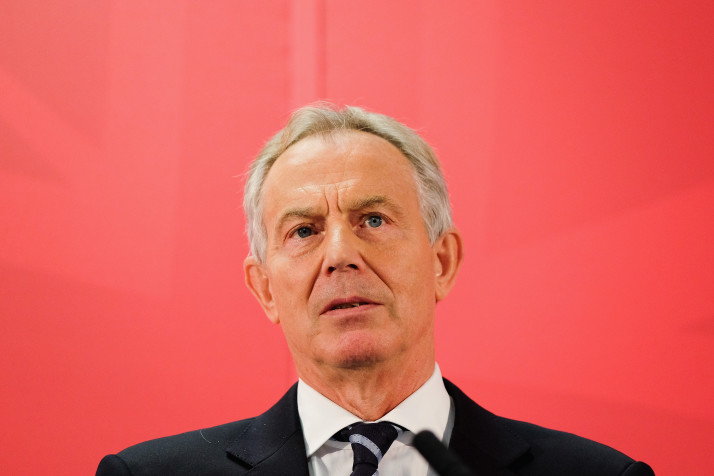
Tony Blair had me going there for a little while.

I thought the former British prime minister actually was going to say he was sorry for joining the parade into war with Iraqi dictator Saddam Hussein.

Then he backed away.

Blair tempered his apology by saying it was not a mistake to get rid of Saddam, but then said he regrets following the faulty intelligence that persuaded his country and the United States that Saddam possessed weapons of mass destruction.

You know how it turned out. We invaded Iraq, tossed Saddam out, captured him, tried him, hanged him … all the while scouring Iraq for those WMD.

They weren’t there.

Am I glad Saddam Hussein is gone? Of course I am! The price we paid in thousands of American lives lost, however, was too great.

Blair’s almost-apology, though, does go a lot farther than President Bush, Vice President Cheney and Defense Secretary Donald Rumsfeld ever have done — or likely ever will do.

If only the U.S. brass would acknowledge the mistake. If only it acknowledge the war’s impact on the enabling of the Islamic State, the Sunni militant group that is waging war against the Shia government in Iraq.

That won’t happen. Instead, we hear from Cheney (mostly) about how they were right and how others, namely the Obama administration, have squandered all the progress we made in Iraq.

Well, the Iraq War was a war of choice.

Saddam Hussein was being contained within Iraq. He posed barely a fraction of the threat that he was said to pose.

And, oh yes. Let’s not forget that Saddam Hussein and his Baath party had nothing — zero — to do with the 9/11 attacks, which was another pretext that the Bush administration used to justify our invasion of Iraq in March 2003.

I don’t expect an apology from the Bush administration. I was hoping one might be forthcoming from our allies across The Pond.

It came. Sort of …


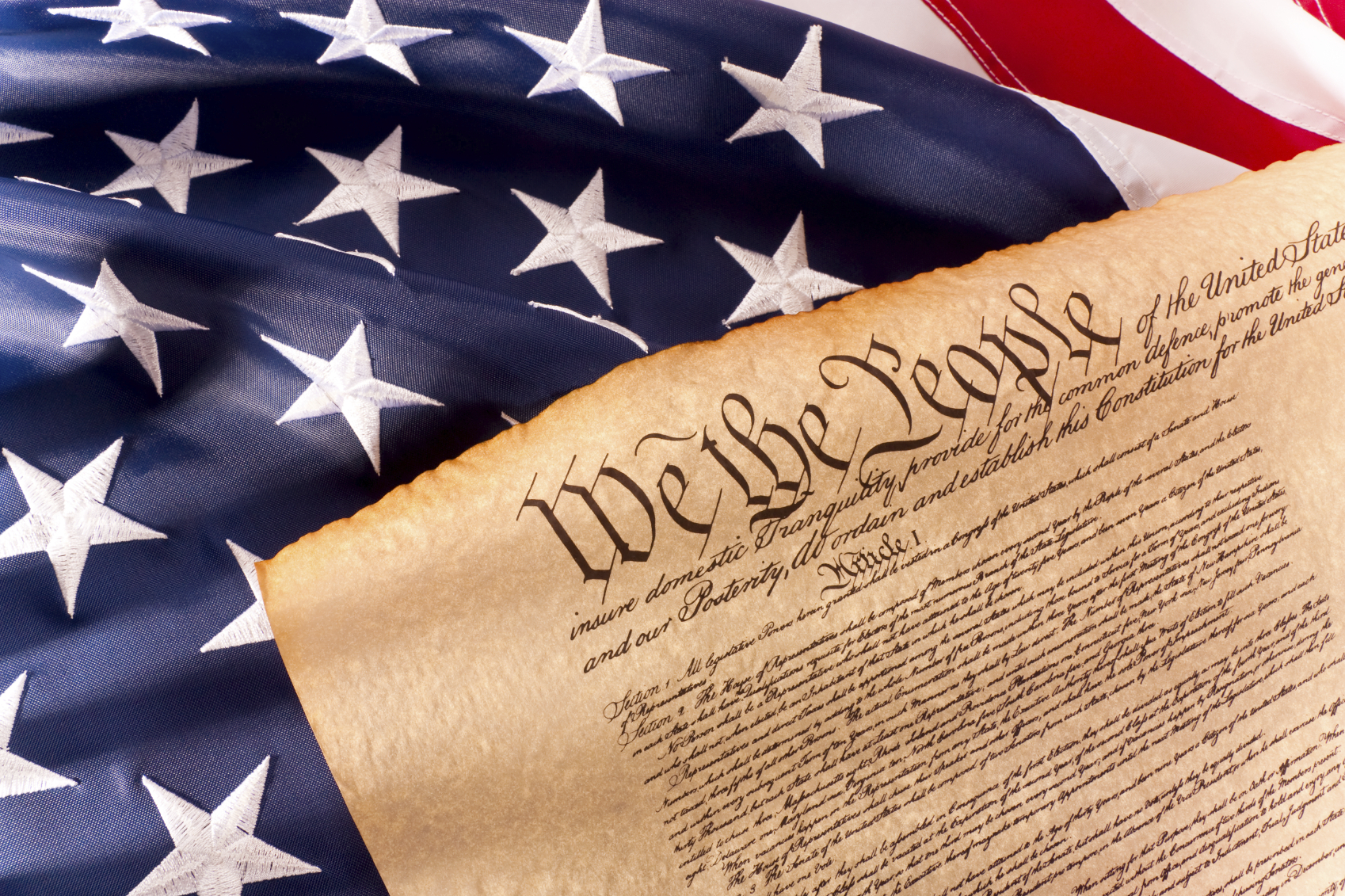
Will local election serve as bellwether?

Old fashionet American Constitution with USA  Flag.

This won’t take long.

The upcoming Amarillo election on the multipurpose event venue well could determine whether the wackiness that’s driving the national political debate has found its way to the Caprock.

The pro-MPEV forces in Amarillo are well-funded and well-organized.

The anti-MPEV forces are neither of the two.

The pro-MPEV side is seen as the “establishment.”

The anti-MPEV folks are seen as “anti-establishment.”

Nationally, the anti-establishment side is winning the argument, particularly as it relates to who should become the Republicans’ presidential nominee.

Locally, well … the jury is still out.

I’m pulling for the establishment — in both instances.

Commentary on politics, current events and life experience