It’s wrong now … and was wrong then

Sen. Chuck Schumer, D-N.Y., expresses his dismay at Russian Vladimir Putin leader granting asylum to American secrets leaker Edward Snowden, at a news conference at the Capitol in Washington, Thursday, Aug. 1, 2013. Defying the United States, Russia granted Edward Snowden temporary asylum on Thursday, allowing the National Security Agency leaker to slip out of the Moscow airport where he has been holed up for weeks in hopes of evading espionage charges back home. (AP Photo/J. Scott Applewhite)

I believe it was that great fictional Native American sidekick — Tonto — who said to the Lone Ranger, “Two wrongs don’t make a right.”

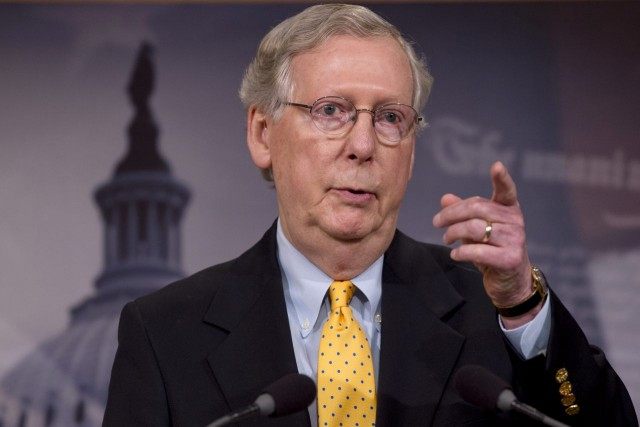
Thus, it amuses me when I hear critics of this blog and others take note of Democratic U.S. Sen. Chuck Schumer’s declaration in 2007 that the Senate shouldn’t approve any of President Bush’s Supreme Court appointments.

They bring that up to — more or less — justify a statement by Republican U.S. Sen. Mitch McConnell to do the same thing regarding the vacancy on the U.S. Supreme Court.

If Schumer can make a wrongheaded declaration then it’s OK for our guy to do it, they seem to suggest.

Schumer was wrong then and McConnell is wrong now.

Neither man has distinguished himself on this matter of constitutional authority and presidential prerogative.

So, Schumer’s assertion in 2007 got past me. He absolutely was wrong to say what he said. The U.S. Constitution gives presidents the authority to make appointments to the federal bench and I’ve long given deference to the presidents’ prerogative on these issues. If the president nominates a qualified individual to these posts, then the Senate should grant the appointee a fair hearing — and then vote.

George W. Bush was re-elected in 2004 with voters knowing he would appoint conservative judges to the federal courts. His final Supreme Court appointment came in 2006 when he selected Samuel Alito. Thus, Schumer’s ill-advised admonition a year later became a moot point.

It doesn’t give Senate Majority Leader McConnell any license to erect barriers to the current president doing what he was re-elected to do.


Mitch McConnell: chief obstructionist

Supreme-Court-blue-sky

Mitch McConnell declared out loud and in public shortly after Barack Obama became president that his top priority would be to make Obama a “one-term president.”

His wish went unfulfilled when the president won re-election in November 2012.

Now that McConnell is the Senate majority leader, he’s made another pledge. He is going to oppose the president’s next appointment to the U.S. Supreme Court.

Does he know who the president will nominate? No. Does he have any inside information on Obama’s short list? Again, no.

But without the faintest idea who the president will select, the Senate’s leading Republican is going to obstruct the president. He vows to prevent the president from doing what the Constitution empowers him to do. For that matter, he and other Republicans are going to prevent the Senate from doing what the Constitution requires of that body.

Obama is going to nominate someone to replace the late Antonin Scalia on the U.S. Supreme Court. He’s entitled to put someone forward. The Senate also has the power to consent to the nomination.

There’s much that boggles the mind about the eruption that has occurred since Scalia’s untimely death. I cannot quite rank them in order, but McConnell’s declaration that he intends to block any nomination to be considered must rank near the top.

Yes, the stakes are huge. The president is a liberal/progressive politician who likely will select someone who is a good bit to the left of the man who led the Supreme Court’s conservative movement. Thus, Senate conservatives are vowing to protect their court majority — as best they can — by seeking to hold up this confirmation until after the November election. Their hope is that a Republican will win the presidency.

We have a president with one year left in his term. As they say, elections have consequences. A majority of Americans re-elected President Obama understanding full well how he would fill a vacancy on the highest court in the land if he was given the chance to do so.

He now has that chance.

Meanwhile, the nine-member high court has been reduced to eight members. The even split among the justices could produce some tie votes on key cases yet to be argued before the court.

This is not good governance.


Election-year vacancies . . . all the rage

ap_mitch-mcconnell_ap-photo9-wi-640x427

As long as we’re talking about filling a Supreme Court vacancy during an election year . . .

Republican senators don’t want to consider a potential nominee who’ll be offered by President Obama. They want the next president to send someone for their consideration. Barack Obama is a “lame duck,” they say.

The last lame-duck president to send a nominee to the Senate was Ronald Reagan. The Senate confirmed Anthony Kennedy to the Supreme Court in 1988.

So, you might be asking: Is it a common occurrence for the president to send a Supreme Court nominee to the Senate during an election year, lame-duck status or not?

I looked it up. Here’s what I found.

Franklin Delano Roosevelt nominated Frank Murphy, who was confirmed in 1940.

Dwight Eisenhower recommended William Brennan; the Senate confirmed him in 1956.

Richard Nixon sent two nominees to the Senate during an election cycle: Lewis Powell and William Rehnquist; the Senate confirmed them in 1972.

Let’s go back a bit farther. William Howard Taft nominated Mahlon Pitney, who was confirmed in 1912. Woodrow Wilson nominated Louis Brandeis and John Clarke, both of whom were confirmed in 1916.

This election-year moratorium nonsense being promoted by the likes of Senate Mitch McConnell and other Republicans should be revealed for what it is: a cheap political ploy to deny a Democratic president the opportunity to fulfill his constitutional duty.

Granted, all the examples I cited here — except for President Reagan’s nomination of Justice Kennedy — do not involve “lame duck” presidents.

The phoniness of McConnell’s desire to block any attempt by Obama to fill a vacancy created by Justice Antonin Scalia’s tragic death is transparent and obvious, given what has transpired in the past 100 years.

How about allowing President Obama to do the job to which he was elected twice to perform?


Who’s ‘lawless’ now?

donald

Donald J. Trump went on one of his stream-of-consciousness riffs today at a press conference in South Carolina.

In the midst of his 45-minute press conference, the Republican presidential primary frontrunner answered a hypothetical question about what he would do as a governor regarding immigrants.

He wouldn’t let them into his state, Trump said, ignoring the concern from many experts who say that immigration is a federal issue and that governors don’t have the authority to deny someone from entering their state.

Then he said, “I don’t care what the rules and regulations say.”

He would work around them as a governor to make it so difficult for immigrants seeking to enter his state that they would want to go somewhere else.

There you have it.

He doesn’t care about the law. He’ll do what he wants.

I believe that’s the definition of “lawlessness.”


Take a bow, Sen. Marzian

marzian-800x430

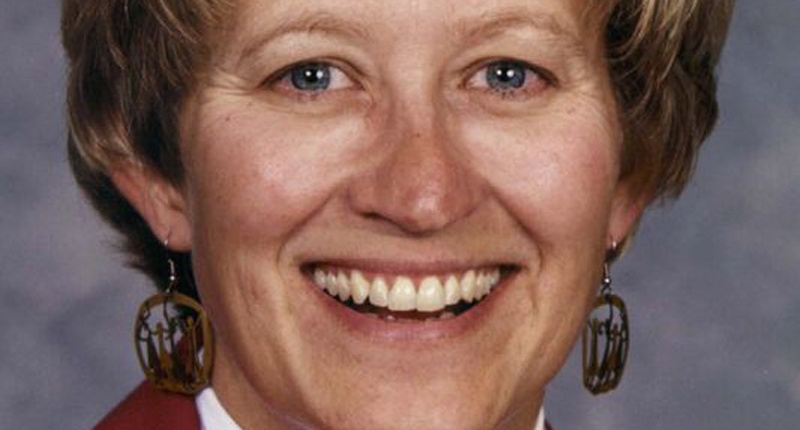
Mary Lou Marzian is my newest political hero.

She is a Kentucky state senator who’s seeking to make a point about male legislators getting into women’s private lives.

Marzian, a Louisville Democrat, has introduced legislation in Frankfort that would require men seeking to have notes from their wives if they want to obtain prescriptions for medication to correct erectile dysfunction.

Can there be a stronger statement than that?

Marzian’s legislation likely won’t ever see the light of day. I do admire her guts, though, in making a statement on behalf of women who believe the government should not dictate to them on one of the most deeply personal issues possible: whether to take a pregnancy to full term.

In so many cases we have men making these decisions. Sen. Marzian’s bill makes a significant statement on behalf of women who have grown weary of men deciding how women should control their bodies.


Sen. McConnell then . . . and now

Supreme-Court-blue-sky

A colleague and acquaintance of mine has shared an item on social media that I’d like to share here.

It comes from Senate Majority Leader Mitch McConnell who in 2005 made a fascinating point about defending the right of presidents to make appointments to the federal judiciary.

It states:

“The Constitution of the United States is at stake. Article II, Section 2 clearly provides that the President, and the President alone, nominates judges. The Senate is empowered to give advice and consent. But my Democratic colleagues want to change the rules. They want to reinterpret the Constitution to require a supermajority for confirmation. In effect, they would take away the power to nominate from the President and grant it to a minority of 41 Senators.”
“[T]he Republican conference intends to restore the principle that, regardless of party, any President’s judicial nominees, after full debate, deserve a simple up-or-down vote. I know that some of our colleagues wish that restoration of this principle were not required. But it is a measured step that my friends on the other side of the aisle have unfortunately made necessary. For the first time in 214 years, they have changed the Senate’s ‘advise and consent’ responsibilities to ‘advise and obstruct.'”

Interesting, yes?

Well, 11 years later, the majority leader himself is proposing to “advise and obstruct” by seeking to delay a presidential appointment to the U.S. Supreme Court until after the November general election that, McConnell hopes, will produce a Republican president.

Well, Mr. Majority Leader, has Article II Section 2 of the Constitution changed?


A mystery of life needs solving

eggs

Life is full of mysteries.

There are too many of them to list, but given that one of this blog’s stated missions is to discuss “life experience,” I am going to veer far, far away for a moment from politics, policy and the future of American jurisprudence in the wake of a Supreme Court justice’s death to discuss one of those mysteries.

Perhaps you’ve tuned in to one of cooking shows that tells you the secret of peeling an egg.

Here’s what just happened to me.

I boiled two eggs this morning for breakfast. I left both of ’em in the water for exactly the same length of time. I peeled the first egg and tore it ribbons. Half of the egg white stuck to the shell as I struggled to remove the shell.

Then I turned to the second one. The shell came off almost in a single piece. Slick is a whistle, man. No sweat.

I’ve never bought into this theories one hears from the likes of Racheal Ray or Martha Stewart about how to perform this simple, mindless task. Put salt in the water? Put cooking oil in it. Heat the water that’s already warm? Heat it when it’s cold? Mutter some ancient Native-American chant? Cross my eyes, stick out my tongue and stand on one leg?

These eggs came from the same carton. For all I know they might have come from the same damn chicken!

It’s a bloody mystery, I’m telling ya.

Whoever can solve this mystery — definitively! — is my candidate for a Nobel Prize of some kind. I’m willing to make up a category.


Unanimous picks loom as favorites for high court

untitled

Politics rules on Capitol Hill. It swings both ways, influencing both political parties.

Consider what might be about to happen.

President Barack Obama, a Democrat in the final full year of his second term and final term, is likely to name someone to fill a vacancy created by the death of Supreme Court Justice Antonin Scalia.

The U.S. Constitution grants him the authority to do so. It also grants the Senate the authority to approve anyone nominated to the court.

The Senate is controlled by Republicans.

Democrats and Republicans don’t like each other much these days. Republicans really dislike the Democrat in the White House and the feeling appears to be quite mutual.

What’s the president going to do about this high court vacancy?

One theory getting kicked around in the hours and days after Scalia’s death is that the president could name an appellate judge who’s already been approved by the Senate. One name has emerged as a possible favorite, Judge Sri Srinivasen, an Indian-American who was approved unanimously the Senate before he took his federal appeals court seat.

He’s apparently thought of as a moderate. He doesn’t lean far left. He surely doesn’t lean far right. He shoots straight down the middle, according to a number of legal experts.

So, will this fellow breeze through the confirmation process as he did when the Senate considered him for a lower court?

OK. You can stop laughing.

Republicans are vowing to deny the president any action on a pending nomination. They want to wait until after the November presidential election in which they hope a Republican wins the White House.

Democrats will have none of that. They want the president to make a nomination and they want the Senate to vote on it. Quickly.

Why not select someone who’s already been vetted by the Senate? Would a judge like Sri Srinivasen be just as qualified to sit on the Supreme Court as he is on a lower court?

Well, in my version of a perfect world, it would seem like a natural for the president to find a moderate judge who’s already been approved. Except that he would be succeeding a towering figure of the judicial conservative movement.

Scalia led what has been called a “conservative renaissance” on the Supreme Court. Anyone — regardless of credentials, standing among peers or legal brilliance — is going to be run through a political sausage grinder.

Politics. Sometimes it’s downright ugly.

And sometimes it doesn’t serve the nation well.


Confusion has a strangely familiar Texas feel to it

111005_antonin_scalia_ap_605

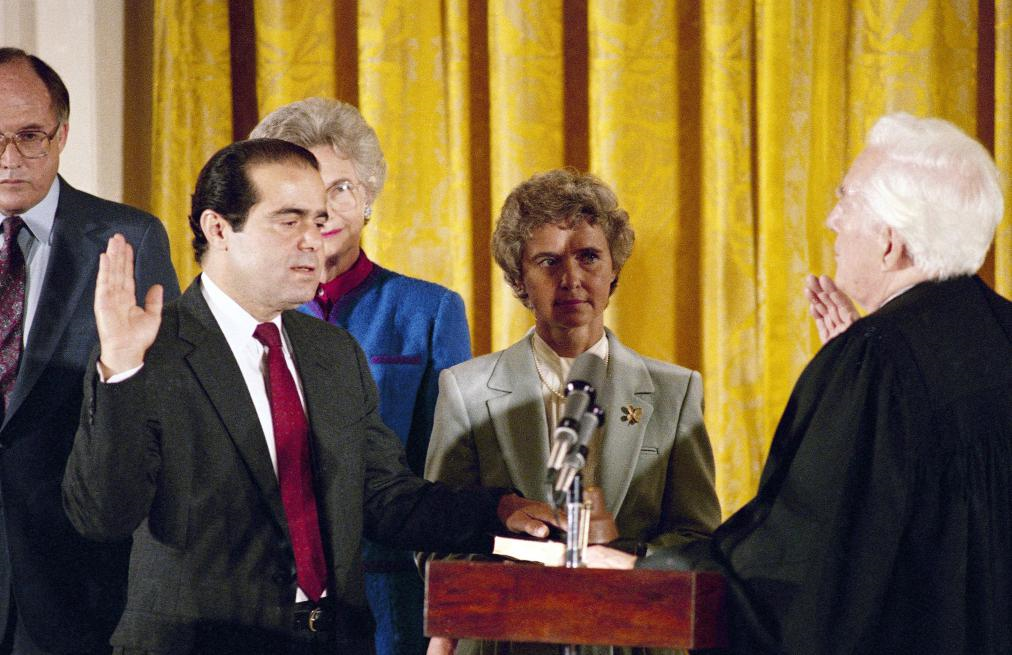
Antonin Scalia’s tragic death in far West Texas has taken on an air of weirdness that somehow only seems possible in this state.

The U.S. Supreme Court justice — the senior member of the nation’s highest court — died in Marfa while on a hunting vacation.

How did he die? It seems that a justice of the peace issued a cause of death without ever seeing the late justice’s body. There also was a significant amount of time before anyone was able to contact a JP to make the pronouncement in the first place.

As the Washington Post reported, Justice Scalia’s life was one of order, process and decorum. The hours after his sudden and shocking death have been an exercise in confusion and chaos, the Post reported.

These rather startling circumstances bring to mind some of the criticisms that have been leveled at this level of Texas jurisprudence — and I use the term loosely.

It’s that justices of the peace are empowered to make these declarations with little or no actual medical training to do so. We put this responsibility in the hands of elected politicians who, as often as not, are laypeople with little or no formal training in the law, let alone in medicine.

What’s worse in this instance is that the JP allegedly made the call in absentia. How in the world does someone do that? How is it possible that the death of a member of the United States Supreme Court can be handled so sloppily and be the subject of so much confusion?

Only in Texas, it seems, is such a thing even remotely possible.

I am sensing an investigation into the madness that ensued after Justice Scalia’s death is in order.


Is this the year the U.S. gets hit?

ISIL%20fighters

Well before the sun set on Sept. 11, 2001, defense analysts and terror experts were almost unanimous in their assessment of our nation’s future.

If was not a matter of “if” we would be hit again, but “when.”

The head of the Defense Intelligence Agency, Lt. Gen. Vincent Stewart, told the U.S. Senate Armed Services Committee, that he believes this is the year it will happen.

The Islamic State, he said, is going to continue to hit Europe and well might plan a coordinated attack on our shores.

When will it occur? The general didn’t say. He cannot know.

In reality, though, he didn’t provide a serious scoop on what’s been understood since the terror attacks of 9/11.

That attack on the World Trade Center and the Pentagon was so daring, so audacious, so brilliantly executed that it prompted President Bush and his national security team to create an entirely new Cabinet agency assigned to protect us. The Department of Homeland Security has been on the job ever since.

Now, the question always has been: Will this country be able to protect itself forever against the next terror attack? There can be zero guarantee against another attack that could rival the horror that al-Qaida brought to our shores on the beautiful Tuesday morning in New York and Washington.

But then again, had we been fully alert to the dangers that always have lurked, perhaps we shouldn’t have been so totally shocked at what transpired that day.

The Bush administration — once it gathered itself after the horror of that day — managed to keep us safe for the remainder of its time in office. The Obama administration has kept up the fight and has continued to keep the terrorists at bay.

But Gen. Stewart’s prediction of another terror attack — this time by the Islamic State — shouldn’t be seen as a big-time news flash.

Al-Qaida managed to get our guard up. Our task always has been to ensure we stay on the highest alert possible.

The enemy, though, is as cunning as they come. Many of us will not be surprised when they strike again.


Commentary on politics, current events and life experience