Weirdness overtakes reason on campaign trail

sophiepope

It’s been like this for some time now.

Probably since the day in June 2015 when Donald J. Trump — the one-time reality TV celebrity and real estate mogul — entered the Republican Party presidential primary campaign.

Events of the past 24 hours, though, have brought about a level of weirdness that I don’t think many of us ever saw coming.

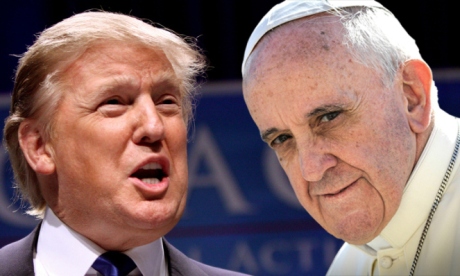
It involves Trump and — of all people — his Holiness, Pope Francis I, the head of the Catholic Church.

The pontiff is touring Mexico and he said that anyone who wants to build a wall to bar immigrants is “not Christian.” He said Scripture doesn’t condone such a thing. I should note that Pope Francis made his remarks in Spanish and they have been interpreted into English; I trust the translation is accurate.

Trump fired back, calling the pope’s criticism of an American politician’s faith “disgraceful.”

Trump kept up his criticism of the pope. To my knowledge, the pope hasn’t yet answered the GOP frontrunner’s criticism of him.

I am just not certain now where this campaign goes from here. Nor do I have a clue as to how it could get even stranger.

But you know what? Given that I never thought it would devolve to this level — with the pope and a leading American politician at odds over a proposal to build a wall — I am preparing myself for the weirdness level to keep escalating.
 

Religion collides with politics

B-5

Didn’t someone once suggest that you shouldn’t ever discuss religion and politics?

Here we are, then. Talking about both things in the same sentence.

Pope Francis I decided to weigh in with remarks about Republican presidential frontrunner Donald J. Trump’s proposal to build a wall across our southern border to keep illegal immigrants from entering the United States.

Anyone who’d propose such a thing, the pontiff, said isn’t a Christian.

Trump fired back. Trump called the pope’s view “disgraceful” and said, by golly, he’s a devout Christian.

Others on the right are criticizing the pope for engaging in this political discussion in the first place. Who is this guy? they wonder. What qualifies him to comment on the American political system?

Let’s take a breath.

Maybe the pope made his statement in Spanish, or Italian, or Latin and it got mistranslated.

Surely, too, he isn’t the first public figure — American or otherwise — to drag religion into a campaign for a secular political office. U.S. Sen. John F. Kennedy faced intense suspicion over his Catholic faith in the 1960 campaign and he ended up dispelling much of it with a speech in Houston in which he said he’d follow the Constitution and would not — contrary to allegations — be a puppet for the Vatican.

And there have been others as well.

I don’t think it’s unreasonable for the pope — a renowned international public figure — to weigh in on a U.S. public policy discussion. He’s entitled to his view.

It’s that it has ignited a firestorm that makes me uncomfortable when I hear politicians feeling forced to defend their religious beliefs while seeking an office to which they will take an oath to protect and defend a wholly secular document.

That would be the Constitution of the United States.


‘Decency’ got lost amid the politics

la-na-scalia-race-20151210

This blog provokes its share of scolding from critics.

A scolding came in overnight that I want to share here. It comes from a High Plains Blogger critic who revealed something to me I should have known was there all along: Politics can blind people. It blinded me.

I wrote an earlier blog post suggesting that President Obama made the wrong call in declining to attend the funeral of Justice Antonin Scalia. I cited all kinds of “political” reasons for his decision. I looked past the obvious one.

Here’s part of what my critic noted:

“Could I add another reason or two to go? How about decency? How about respect for a high-ranking member of your government? How about to show support for the family and unity to the country in a time of loss? I guess all of those pale in comparison to the politics of it all.”

Well …

I suppose I could say that “None of us is perfect” and go on to the next topic. That would tend to lessen the sting of criticism. I won’t go there.

The individual’s comment goes on to suggest that the toxic atmosphere in Washington — and, indeed, all across the land — has tainted many people’s view of things.

I am no exception.


Obama should have decided to attend funeral

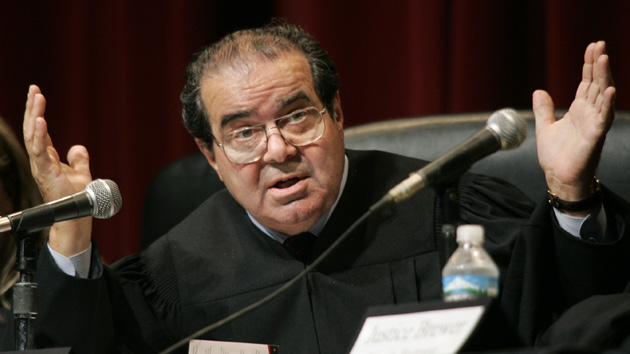
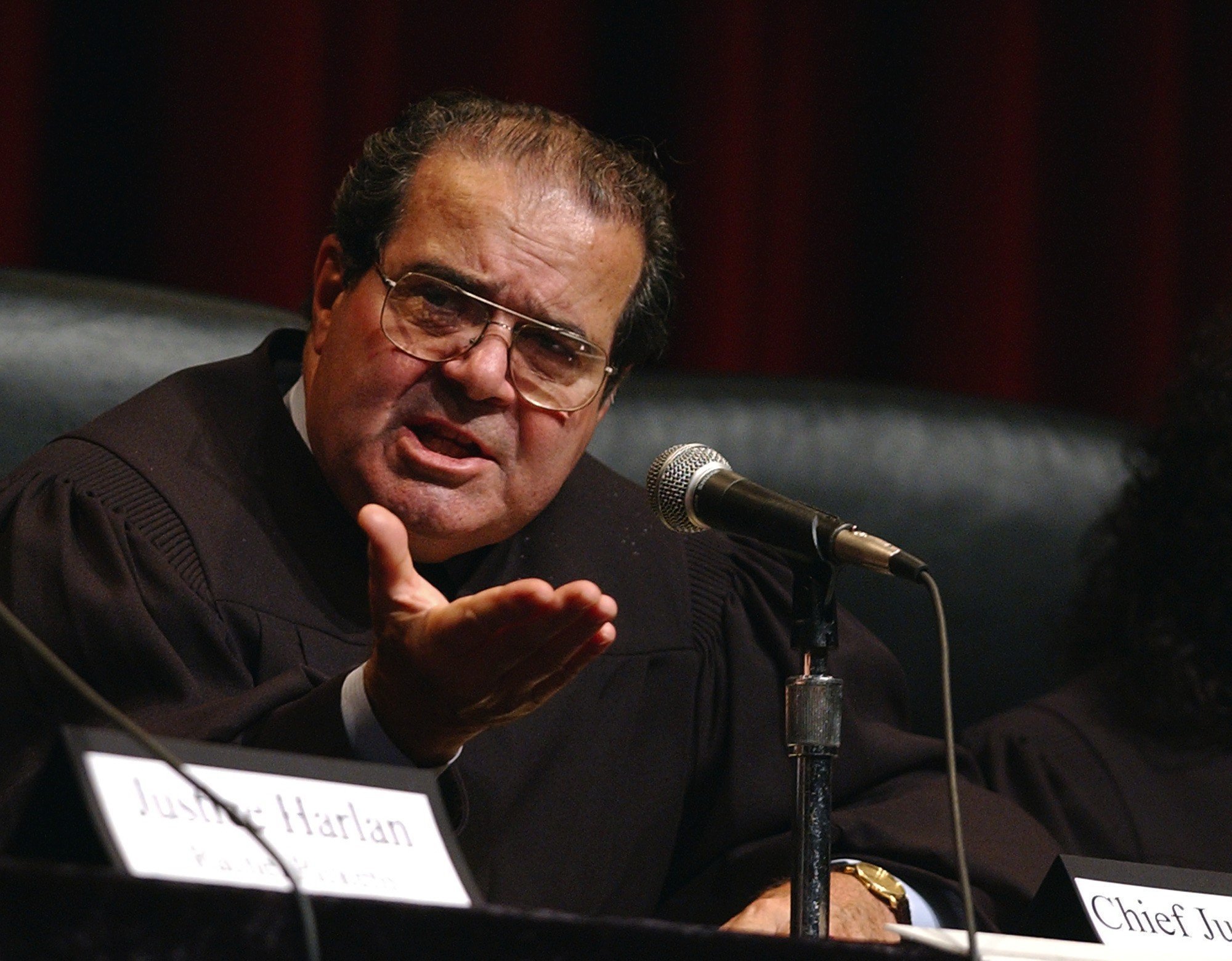
chapman.0830 - 08/29/05 - A Supreme Court headed by Supreme Court Justice Antonin Scalia has questions for Chapman University Law School professor John Eastman as he and California Attorney General Bill Lockyer argue the 1905 ''Lochner v. State of New York'' case during a re-enactment Monday afternoon at Chapman University. (Credit: Mark Avery/Orange County Register/ZUMA Press)

No one asked me for advice on this, but I’ll offer it unsolicited — and without reservation.

President Obama should have decided to attend the funeral this weekend for the late Supreme Court Justice Antonin Scalia.

To me, it’s a no-brainer.

The president will not attend. Vice President Joe Biden and his wife, Jill, are going to attend, as they share Scalia’s Catholic faith.

But look at it this way. The optics of seeing the president of the United States paying his respects at the funeral of someone with whom he had profound political and judicial disagreements are invaluable.

Yes, the president will attend a ceremony at the Supreme Court building to honor the late justice. He also has been quite gracious in his public comments in reaction to the shocking news of Scalia’s death while on a hunting trip in West Texas.

Indeed, some on the right have given Obama a pass on attending. Scalia’s own son even has suggested that the president made the right call by deciding against attending the justice’s funeral.

However, Obama has given his fierce critics in the conservative media ammunition now to fire at him for declining to attend the funeral. White House press officials haven’t disclosed how the president will spend Saturday while much of official Washington and the nation’s legal community is honoring the memory of Justice Scalia. My hope is that he lays low and spends it quietly.

He’s got a huge decision to make — possibly within the next few days. It involves his choice to succeed Scalia — a gigantic and booming voice for conservatives on the court. Senate Republicans don’t even want to consider an appointment. Others insist that the president make the choice. I am one of those who believes the president should fulfill his duties by selecting a nominee for the high court.

OK, so no one asked me for my opinion about the funeral. Why should they? I’m way out yonder in the political peanut gallery far from the government epicenter.

It’s just that as someone noted in the link attached to this blog post indicated, if you’re questioning whether you should go to the funeral … go to the funeral.

‘Lame duck’ needs finer point . . . perhaps

Lame-Duck-Congress-a

An acquaintance of mine asked an interesting question regarding President Obama’s upcoming battle over how he intends to fill a key vacancy on the U.S. Supreme Court.

He wondered how one should define the term “lame duck”?

His understanding of the term meant that an officeholder became a lame duck when his or her successor in office had been determined.

Here’s how the American Heritage Dictionary defines the term: “An elected officeholder continuing in office during the period between and election and inauguration of a successor.”

My reaction was that the definition of the term has become a bit more “fluid” these days.

Senate Republicans say they don’t want Obama to fill the vacancy created by the death of Supreme Court Justice Antonin Scalia because he’s a “lame duck” president. They want the next president to make the call.

I tend to have a broader view of the term “lame duck.” I suppose one could argue that any president who wins a second term becomes a lame duck the moment the election returns are finalized. The Constitution prohibits the president from running again, so the clock begins ticking on the president’s term. If that reasoning holds up, then the American Heritage dictionary definition could be interpreted as being germane.

Whatever the case, or however one defines the term, there remains an indisputable truth. The president is in office until the very moment the successor takes the oath of office.

Therefore, the president is entitled — lame duck or not — to all the perks, privileges and power that the office commands.

President Obama is entitled to appoint someone to fill the late Justice Scalia’s seat on the Supreme Court. The Senate, thus, is entitled — and obligated, in my view — to consider that appointment in a timely manner and then vote on whether to approve it.

The president’s lame-duck status should not be an issue.

But it has become one, thanks to the obstructionists who are now in charge of the U.S. Senate.


Likability vs. irascibility

hillaryclintonselfie_021416getty

The Hill is reporting a story that seems to define — for me, at least — just how confusing and confounding this election cycle has become.

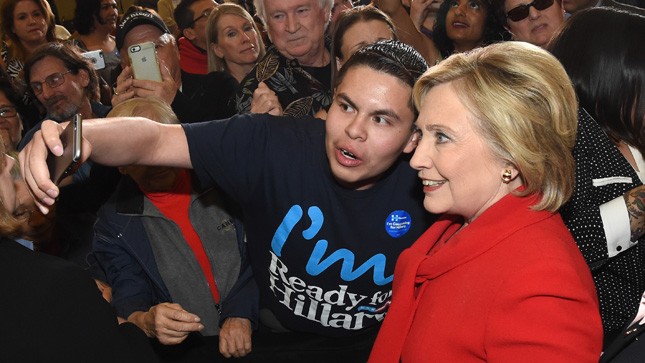
Hillary Rodham Clinton is trying to enhance her likability. She’s taking selfies with voters and celebrities. Remember when Sen. Barack Obama told her during a 2008 campaign debate that “You’re likable enough, Hillary”? Apparently not this time around.

She’s fighting image woes that seem to suggest she isn’t authentic, let alone likable.

Do her Democratic primary voters want her to become warm and fuzzy? Do they insist that she show her grandmotherly side more often? I have no clue.

Read the link.

Now, for the Republicans.

Likability isn’t part of the formula that’s propelled Donald J. Trump to the top of the GOP presidential candidate heap.

He’s not likable. Frankly, for my taste, he’s not a lot of things: He’s not presidential; he’s not sophisticated; he’s not grounded in a philosophy other than, say, narcissism.

But there he is. He’s leading South Carolina’s GOP primary polls after threatening to sue Ted Cruz over whether he’s qualified to run for office; after saying President Bush “lied” to get us into the Iraq War; after insulting candidates, a bona fide war hero, disabled people, voters, media types . . . anyone within earshot.

I’m not sure what this might say about any possible differences between Democratic and Republican “base” voters. I hope it doesn’t reveal that Democrats inherently are softer and that Republicans just as inherently love nastiness.

But now I’m beginning to wonder.


Police academy training can open one’s eyes

DSC_0419

Calling all cadets!

Randall County is looking for some good men and women who want to get a taste — and that’s all it’ll be — of police work.

Take it from me: It’s an investment in time well worth making.

The sheriff’s department is looking for participants in its next Citizen’s  Academy. Read about it here.

I went through an Amarillo Police Department Citizen’s Academy some years ago. I did so on something of a challenge from a senior officer at the PD, who had read a column I wrote for the Amarillo Globe-News that was mildly critical of something I  witnessed involving an APD officer.

My friend called me and said, in effect, “OK, buster, if you think you know so much about police work, apply for a spot in the citizen’s academy and we’ll show you how it really works.”

I accepted his challenge.

The academy lasted about 11 weeks, if memory serves. It was an eye-opener, to say the very least.

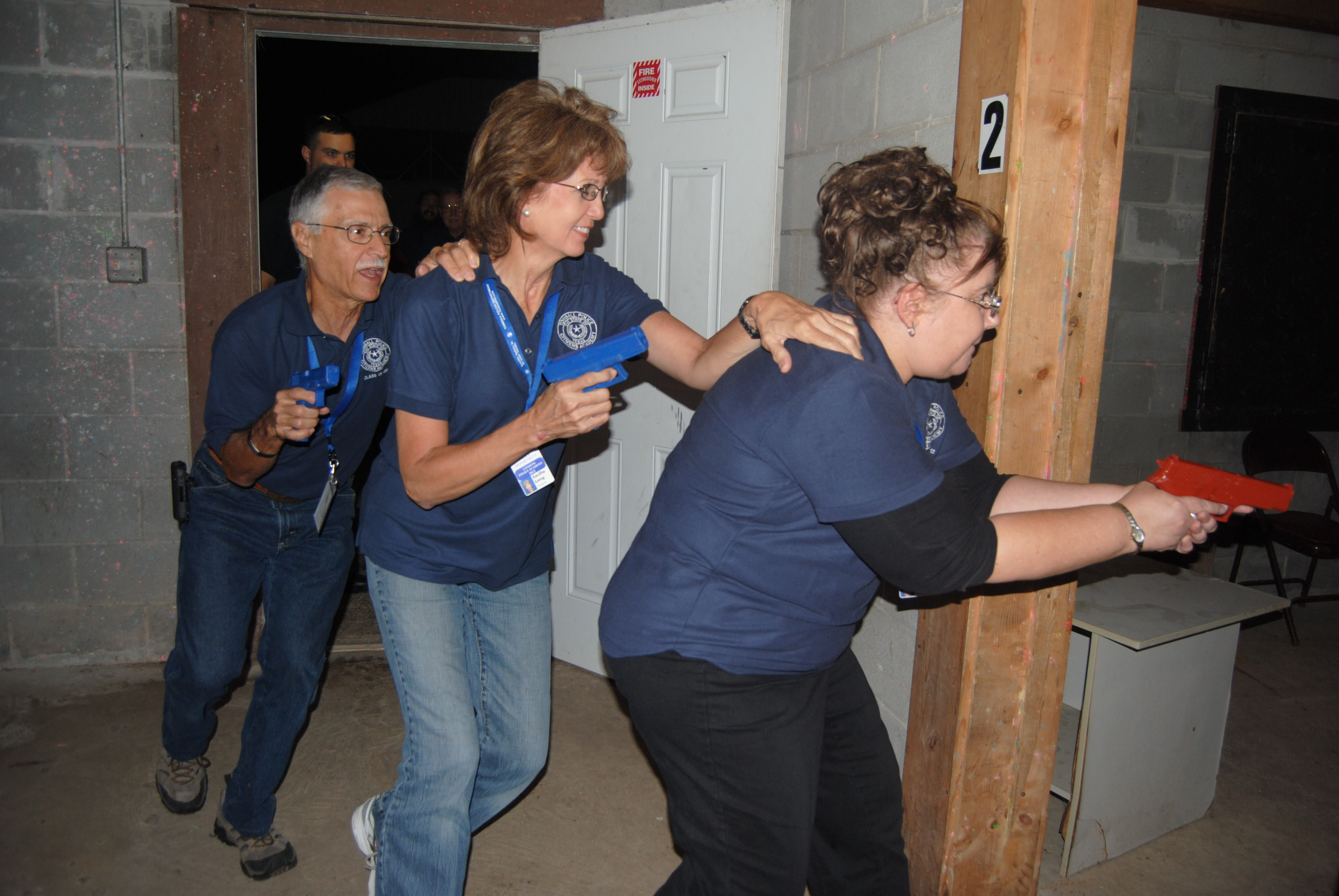
My classmates and I learned about dispatching calls, aerial surveillance, drug-sniffing dogs, the use of a Taser, simulations of the kinds of calls officers have to answer, firing pistols and other firearms. We all had a chance to be stung with a Taser; I chose not to do that.

We all got to ride along with officers and we received essentially a lifetime pass if we want to ride along in the future. All we have to do is request and the PD will make it happen.

I told my friend who challenged me to attend the academy that he would find no greater supporter of those in law enforcement than yours truly.

My support only grew as I attended the police academy.

Yes, it’s good PR for law enforcement agencies to ask constituents to take part in these sessions. I get that part of it.

It’s also good education for constituents to get a small — but important — taste of what these men and women do every day they go to work.

It’s sometimes dangerous. It’s damn sure never “routine.”


State ed board: Now there’s a rancorous bunch

texas_board_of_education_messes_with_history-460x307

You want rancor? Anger? Tumult? Turmoil?

Here’s a place where it shouldn’t exist, but it does. It’s contained among the members of the Texas Board of Education.

The Texas Tribune reports that this year’s election cycle could reintroduce some of the bad feelings that erupted on the board in recent years.

The state education board is empowered to set public education policy for Texas’ 6 million students. But here’s the deal: It comprises politicians who run for the 15 seats on the board. The SBOE comprises essentially three wings: social conservatives, mainstream conservatives and, well, others who are neither of the first two stripes.

They have fought many times over curriculum. Social conservatives have sought to approve textbooks that place greater emphasis on issues that are friendlier to their beliefs. Some years ago, the SBOE sought to downplay the historical significance of certain individuals whose agendas didn’t comport with certain board members’ political leanings.

There has been plenty of debate over whether to teach the Biblical account of the creation of the universe alongside evolutionary theory.

Well, the election this year could bring a return of some of the acrimony that at times has taken center stage at SBOE meetings.

There once was a time — and it was a fairly brief time — when the SBOE was an appointed body. Texans decided to return to an elected board, which returned policymaking to politicians who run for the office.

I prefer to put public education policy decisions in the hands of academicians. Today, the board comprises a whole array of laypeople with varying political leanings and interests.

The Panhandle’s representative on the SBOE is Marty Rowley, an Amarillo lawyer and a former clergyman. He is among the social conservatives serving on the state board; Rowley doesn’t have any opposition this election year, according to the Texas Tribune.

This is a contentious election cycle, starting with all the insults and vivid name-calling we hear from the candidates for president of the United States.

So, I guess the Texas State Board of Education’s election cycle just might fit in nicely with what’s happening all around us.

Let’s hope the state’s public school students don’t suffer as a result.


Obama, GOP both spoiling for a fight to the finish

founders

Here’s where we appear to be standing with regard to that vacancy on the U.S. Supreme Court.

President Obama said today he intends to select an “indisputably qualified” person to fill the seat vacated by the sudden death of Justice Antonin Scalia.

U.S. Senate Republicans say they intend to block anyone the president nominates.

Who’s on the right side? In my view, it’s not even close.

The president is right. GOP senators are wrong.

Indeed, it’s looking now as though that no matter who gets the call from the president that he or she is going to face a serious fight.

My hunch now is that Barack Obama welcomes the fight. Why? He will wage it from a position of strength.

He’s got the Constitution on his side.

This appointment could change the makeup of the court, which has a slim conservative majority among its members.

Right there is the crux of Republican obstructionism.

Justice Scalia was the shining light among the conservatives serving on the court. He led what’s been called a “conservative renaissance.” His brilliance was beyond question. So was his commitment to conservative principles.

President Obama has another year left in his term. Some have suggested that if Republicans were to get their way, they effectively would eliminate the fourth year of the president’s term. They oppose — on some made-up principle — the idea of a lame-duck president making an appointment to the Supreme Court. They want the next president to make the call.

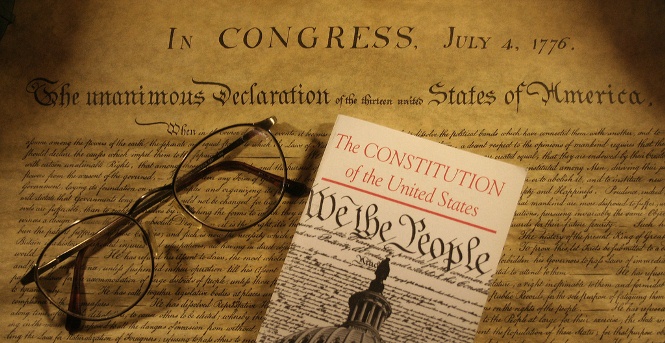
Well, as Obama said today, those who claim to adhere to strict constitutional principles are creating them out of thin air. The Constitution says the president should nominate people to the federal bench and that the Senate should vote up or down on those nominations.

Both sides are spoiling for a fight. So, let’s have at it.

Barack Obama is set to throw the first punch when he nominates someone to the highest court in the land.

Go for it, Mr. President.


Biking gets a big boost

52966

Let’s get real. Texans love their cars, trucks and just about any vehicle that burns fossil fuels.

We pull a lot of fossil fuel out of the ground here. The Spindletop oil gusher in 1901 brought us the Texas oil boom and it has continued ever since, with all of its ups and downs.

There’s nothing inherently wrong with that. Heck, our 21-plus years in West Texas have given us a keen appreciation of how much distance one must travel . . . to get anywhere. It almost always involves a motor vehicle.

So it is with that I noticed this story — yes, it’s a bit dated, having been reported initially in the fall of 2014 — about a proposal to build a 64-mile bicycle trail between Dallas and Fort Worth.

KERA-TV reported more than a year ago that a study of Dallas residents reveals a significant portion of folks would support greater emphasis on bicycle trails in their city.

It’s being called a “superhighway.” It marks a remarkable departure from the love affair Metroplex residents have had with their motor vehicles.

So now comes the question from me, a resident of another community in the midst of some serious urban living change.

Is such an emphasis possible here, in Amarillo?

It’s a creative notion to connect two cities the size of Dallas and Fort Worth with a bicycle trail network.

It prompted this thought: Is such a network possible that would connect Amarillo with Canyon?

Amarillo’s downtown district revival already has begun. They’ve busted up plenty of pavement and begun erecting some structures in the central business district. More construction is on the way.

I am wondering, though, about the city’s effort to connect neighborhoods with bike trails. That project began about a decade ago. Then it stopped. Indeed, we have bike lanes marked off in my neighborhood, which is great. Except that they don’t go anywhere.

I have been told that the city Parks and Recreation Department plans to finish the bike trail network — eventually.

The reality is that the weather here is conducive to that kind of activity. The unseasonably warm winter we’re having is an aberration. Spring can be a bit dicey; summer isn’t oppressively hot; autumn is the most pleasant season of all.

The Metroplex bicycle “superhighway” is still a couple of years away, according to KERA. I do applaud the innovation that’s gone into planning for it.

Might there be a potential for something like that here, way up yonder?


Commentary on politics, current events and life experience