Tag Archives: Electoral College

Still cannot connect two words directly to each other

I am in the midst of a deepening dilemma.

Donald J. Trump has been president of the United States for 150-plus days and I still cannot connect the words “President” and “Trump” consecutively when I refer to this individual.

It troubles me a little bit. A part of me wants to do it. A bigger part of me refuses to allow it.

I’ve written already that I accept that Trump won the 2016 presidential election. He pulled in the requisite number of Electoral College votes to defeat Hillary Rodham Clinton, who won just a shade less than 3 million more popular votes than the guy who beat her.

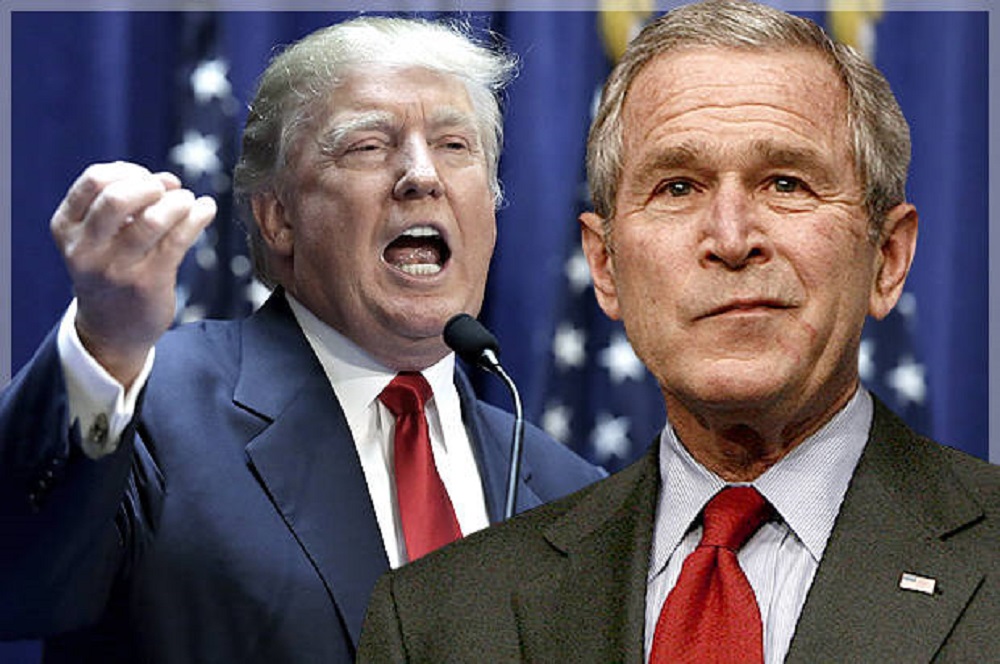
The electoral disparity isn’t what keeps me from total recognition of Trump as president. Heck, if that had been the driver, then I wouldn’t have referred to George W. Bush as “President Bush” during his two terms in the White House. The difference is that President Bush stepped into the role to which he was elected. The 9/11 attacks barely nine months into his presidency defined him and he rose to the challenge.

Trump is different. Trump continues to demonstrate — through all sorts of actions and utterances — that he remains unfit for the office. His Twitter tirades provide more than ample evidence of his unfitness.

I’ve been scolded by critics of this blog for declining to attach the president’s title directly to his name. They’re entitled to their view. I am entitled to mine.

With that, I’ll continue to resist giving the president his full measure of respect until he can demonstrate — to my satisfaction — that he has earned it.

As long as POTUS keeps talking about the election …

I’m going to presume that as long as the president of the United States insists on talking about the 2016 election that it’s OK for the rest of us to bring it up, too.

Donald Trump won. He got the requisite number of Electoral College votes he needed to take the presidential oath of office on Jan. 20. But as a story in the New York Times notes, he keeps feeling the impulsive tug to remind visitors to the White House that — by golly! — he won.

Trump get past the win

The story relates how Trump hands out cards showing the electoral map, which gave the president a reasonably comfortable margin over Hillary Clinton. He doesn’t mention to visitors, though, that Hillary won nearly 3 million more popular votes. But that’s all right; Hillary’s “victory” meant far, far less than Trump’s actual win.

The story draws an interesting comparison between Trump’s victory and the previous win by a president who collected fewer popular votes than his opponent. That would be, of course, George W. Bush in 2000.

How did President Bush deal with his skin-of-the-teeth victory? Here’s how the Times analyzed it:

“After President George W. Bush lost the popular vote in 2000 but won the narrowest of Electoral College victories after the Supreme Court stopped a hotly disputed Florida recount, he did not publicly dwell on the way he had gotten into office.

“Instead, Mr. Bush plowed forward with his agenda and put the election behind him, rarely speaking of it again. He also made a point of reaching out to Democrats in the early days of his administration on issues like education and tax cuts to try to heal some of the wounds caused by the election, eventually winning bipartisan votes on major legislation in his first year.

ā€œ’He knew he won, but he knew many people didn’t see him as a legitimate president and needed to reach out,’ said Matthew Dowd, a senior strategist for Mr. Bush in 2000 and chief strategist for his 2004 re-election campaign. ‘But he didn’t look back in any kind of insecurity because he knew he could only control what was happening today or in the future.’ā€

That’s how a grownup deals with close calls. If only we had one in the White House these days.

President still in campaign mode … get over it, you won!

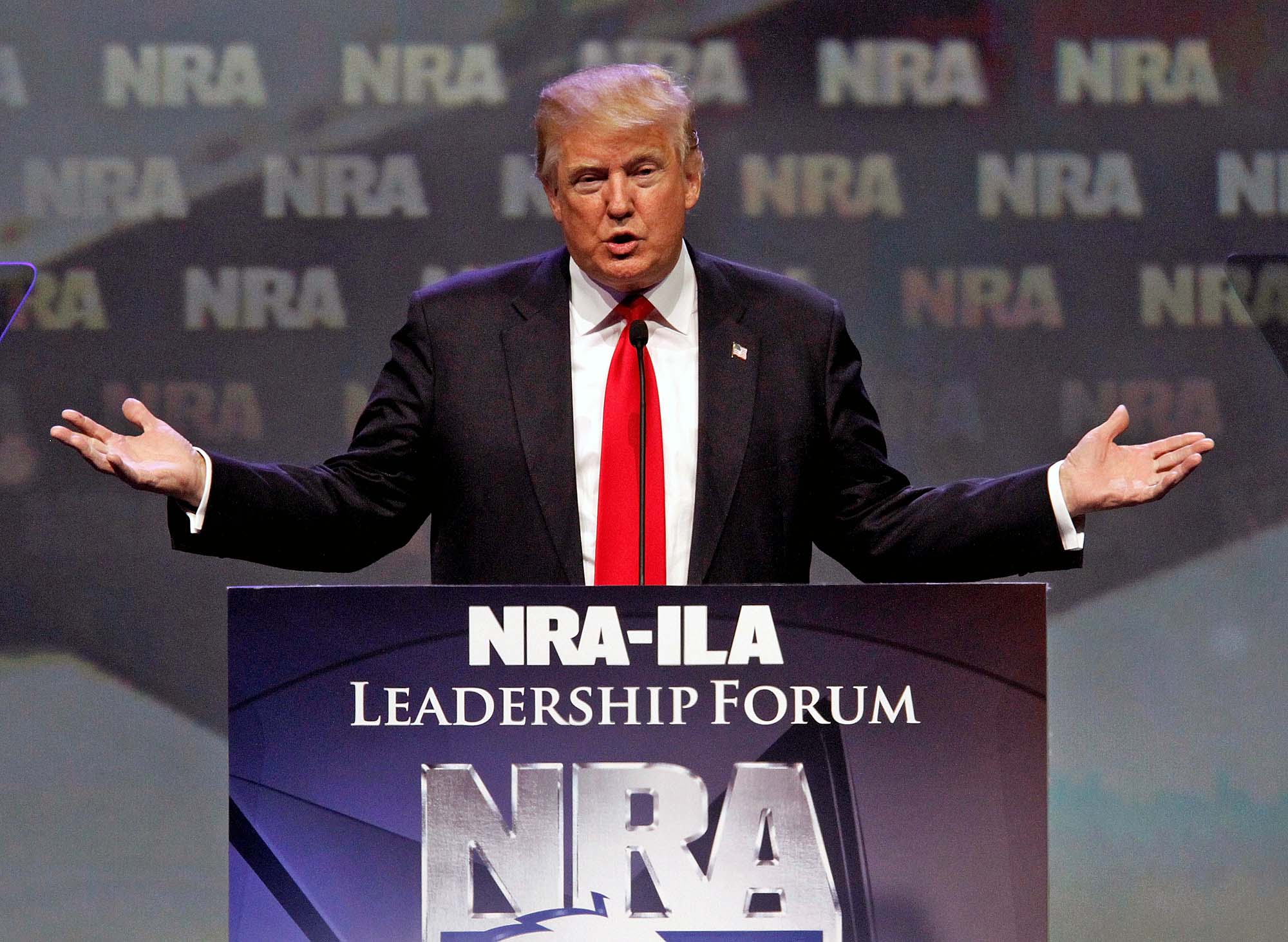
Donald J. Trump jetted off today to the National Rifle Association annual convention and then commenced to boast about something that is patently obvious.

He won the 2016 presidential election!

Yes, the president won. He captured more Electoral College votes than his opponent, Hillary Rodham Clinton. He won more than the majority he needed to become president. The president won those formerly Democratic-leaning states — Ohio, Pennsylvania, Wisconsin, Michigan, Iowa. We get it, Mr. President. Honest, we do.

Indeed, your audience in Atlanta damn sure knew you won. Most of those in the room voted for you, more than likely.

When is this guy going to cast his gaze exclusively forward? When will he stop reliving, in the words of the Bruce Springsteen song, the “glory days”?

We’re about to welcome the 100th day of the Trump administration. We haven’t yet seen a major legislative triumph logged by the president. He’s signed a mountain of executive orders, which he is entitled to do.

It’s time nevertheless to look ahead, perhaps to the next 100 days and beyond.

But today, he spent a lot of time telling the NRA audience what it already knew.

Perhaps, though, the NRA crowd forgot — if only for a moment — that the president promised to do a lot of things in those first 100 days. He said he would make a lot of things happen: NAFTA repeal, Affordable Care Act repeal and replacement, tax reform, final approval to build that “big, beautiful wall.” How’d he do? Not well.

IfĀ the president isĀ going to look back on his election victory, then perhaps he ought to tell us some of the rest of the recent past, which isn’t quite so glorious.

So, enough of restating the obvious, Mr. President. Where do we go from here?

No, not everyone loves the border wall idea

Before I launch into my latest criticism of Donald J. Trump, I want to stipulate something up front.

I recognize that politicians of all stripes play to their “base.” Whether on the left or the right, they know from where they draw their political strength.

There. That said, the president’s belief that the border wall he wants to build between the United States and Mexico is popular with his base and, thus, is worth doing is utter nonsense.

He isn’t just the president of the Republican Party faithful who got him elected — along with a few million formerly loyal Democrats. He represents all 300-plus million Americans. Take it from me, Mr. President, not all of us are the least bit fond of the idea of walling off this country from one of our nation’s most loyal allies.

The wall won’t work. It won’t keep bad guys from coming into the country. It will separate families. It will create untold misery. It also is highly impractical — if not impossible — to build, given all the technical and legal issues involved with property condemnation and how the two countries were to settle the myriad issues relating to its construction.

According to the Washington Post: In a recent interview with the Associated Press, Trump said: ā€œPeople want the border. My base really wants the border. My base really wants it.ā€

Really, Mr. President? Do I need to remind this individual that the base comprises a tiny minority of Americans. Indeed, this man finished second in the popular vote count to Hillary Rodham Clinton. Sure, he won where it counted — the Electoral College — but the popular vote disparity wasn’t even close.

He’s not the first pol to proclaim his base’s support for controversial policy initiatives. He won’t be the last.

However, he is the man of the moment. Remember, sir, that you are every American’s president, whether you — or millions of your constituents — care to admit it.

‘Re-litigate the election’? Really, Kellyanne?

KellyanneĀ  Conway might need a dose of something to enhance her memory.

Donald J. Trump’s senior policy adviser now says the anti-Trump protesters are seeking to “re-litigate” the 2016 presidential election. She’s calling on Democratic Party officials to implore the demonstrators to tone down their protests.

Wow, young lady.

I believe I’ll revisit a thing or two with Conway.

I believe the president himself has been guilty of continuing to “re-litigate” the election. He has done so repeatedly while fielding questions regarding geopolitical matters. The president has gotten queries about this or that international problem and he would launch into some recital of his “massive electoral landslide.”

Well, there’s nothing “massive” about the “landslide.” It was even a landslide.

Protests offer a glimpse of divisionĀ throughout the land.

I need not remind Conway that her boss polled nearly 3 million fewer votes than Hillary Rodham Clinton while winning enough Electoral College votes to be elected president.

Critics of this blog are welcome to spare me the lecture about how Trump won the election outright. I get it! However, he has done next to nothing to bring the country together since winning the presidency. He has continued to sow seeds of division and conflict among demographic groups.

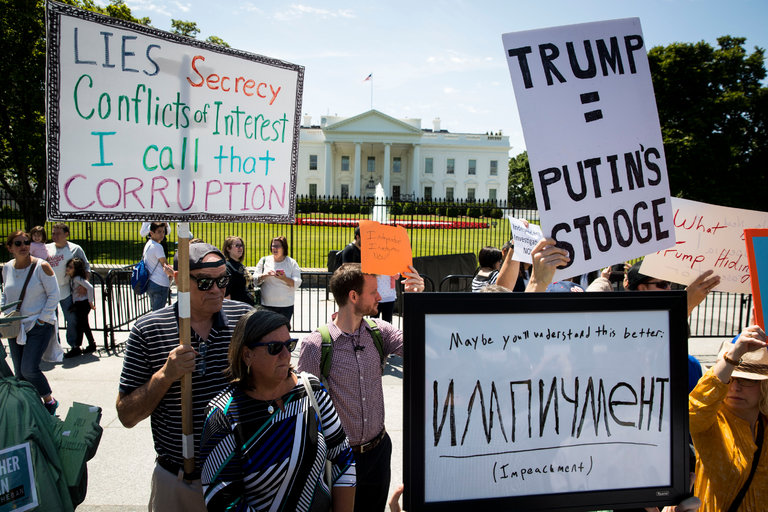
As for the protests that continue to plague his presidency, Trump and his team — which remains largely under construction 80-plus days after the inaugural — will have to learn how to deal with it. They don’t need to accept the protests, but they need to understand that protest and dissent are quintessentially American activities.

The nation was founded, after all, by dissenters.

Conway does make a valid point about the violence that has erupted at some of these protests. No one should want to see Americans attacking other Americans simply over political differences.

However, must I remind the young woman that there have been recorded instances of violent treatment by Trumpkins against those who have demonstrated against him? Furthermore, must I also remind her of the things the presidential candidate said about demonstrators while they were being hauled away from his political rallies?

A bit of self-awareness would provide needed perspective and context to these concernsĀ expressed byĀ Kellyanne Conway.

End of judicial filibuster? A mixed blessing

I’ve long had a terrible conflict of emotions as it regards the filibuster, a tactic employed in the U.S. Senate designed to stall the progress of legislation … and appointments.

The Senate this week did away with its 60-vote rule to end filibusters. The rule change allowed the confirmation of Judge Neil Gorsuch to the U.S. Supreme Court.

But it’s the filibuster itself that gives me pause.

My own political bias clouds my view of what the Senate did as it regarded Gorsuch’s nomination. Given that the Republican-controlled Senate blocked an earlier high court nomination because a Democratic president had put a name forward to succeed the late Antonin Scalia, I saw some justification in what Senate Democrats sought to do with Gorsuch’s nomination.

But is the filibuster really an essential element of governance? I’ve long questioned it. A filibuster occurs when senators object to an issue before the body. They can filibuster in a number of ways, but the classic method is to hold the floor for hours, days, weeks — however long it takes — to talk about anything under the sun.

The Senate has had some champion filibusterers. I think of the late Wayne Morse from my home state of Oregon and the late Strom Thurmond of South Carolina. Those fellows could bluster seemingly forever on anything in order to talk a bill to death.

We operate our government on the principle of “majority rule.” The word “majority” doesn’t imply “super majority,” which is what the former Senate filibuster rule required. Majority means one vote greater than half. The Senate comprises 100 members; therefore, 51 votes constitute a majority. Shouldn’t that be enough to settle a policy argument on the floor of the Senate?

We elect presidents with a simple majority of the Electoral College. All it takes is 270 electoral votes, out of 538 total, to elect a president. Is there a more important electoral decision to be made than that? We don’t require in the U.S. Constitution a super-majority of electoral votes to choose a president. So, why do senators insist on filibustering and then require 60 votes to end it.

The filibuster seems to be an obstructionist’s tool. As one who believes in “good government,” this activity appears to me to work against that principle.

Democrats becoming the new ‘Party of No’

Accuracy is the first rule of journalism.

Fairness, arguably, is the second rule.

I always sought to be accurate and fair during my nearly 37 years toiling in daily print journalism. Therefore, my sense of fairness compels me to suggest that the Democratic Party should refrain from becoming the new Party of No.

Democrats were poised to seize control of the federal government once the ballots were counted during the 2016 presidential election. Then the unthinkable happened: Donald J. Trump defeated Hillary Rodham Clinton, the Senate didn’t flip to Democratic control and the House remained solidly in Republican hands.

Democrats found themselves, quite unexpectedly, in the political wilderness.

I was one of those commentators — using this blog as my forum — to rail, rant and rave against Republicans’ obstruction of every damn thing that Democratic President Barack Obama sought to do. Health care reform, economic stimulus, you name it. If Obama wanted, Republicans were sure to oppose it.

The GOP proved their obstructionist mettle with the president’s nomination of Merrick Garland to join the Supreme Court after Antonin Scalia’s death a year ago.

So, what are Democrats supposed to do?

Do they return the “favor” and become the new Party of No?

I hope not.

Don’t misunderstand me. I detest the idea that Donald Trump is president as much as many millions of other Americans. However, he is the president. He won the Electoral College majority he needed.

Just as I always have believed that “good government” requires compromise and cooperation between the two major parties, I believe that principle still can apply as Democrats do battle with the Republican in the White House and the Republicans who control both chambers of Congress.

Should they sacrifice whatever principles for which they stand? No more than anyone should expect Republicans to sacrifice their own principles.

IĀ understand the anger that many in Washington are feeling right now. Just two months in the presidency of Donald Trump, Democrats still cannot get past the idea that they managed to snatchĀ defeat from the jaws of victory.

Is that Republicans’ fault? Democratic chieftains need to own it.

They have their agenda, although to be honest, I’m not yet entirely sure what it is. They’ve just elected a new party chairman and they need to get their ducks lined up. They need to dust off their policy books.

They need to argue their point with Republicans. Somehow there needs to be some common ground. Health care overhaul? Federal budgeting? Environmental regulations? The myriad foreign policy trouble spots?

Party of No

It’s not enough to just say “no” to everything Republicans want to do. Good government requires a loyal opposition to perform in a manner that the very term defines: to oppose the party in power, but to be loyal to the government they all take an oath to uphold.

I dislike this Party of No business that’s beginning to take form in Washington. Republicans played the part badly when we had a Democrat in the White House. I don’t envision Democrats doing so with any moreĀ grace now that a Republican has taken his seat behind that big desk in the Oval Office.

Trump no more believable now than before

Donald J. Trump has leveled a patently preposterous notion that Barack Obama “ordered” a wiretap at Trump Tower in New York City.

The president wants us to believe him. He’s a truth-teller. He’s the man now. He says it’s a “fact” that the former president broke the law, committed a felony. Does this individual — Trump — have a record of believability?

How about a quick review. Donald Trump has said:

* Thousands of Muslims cheered the collapse of the Twin Towers during the 9/11 terrorist attack. They didn’t.

* President Obama was born in Kenya and was not qualified to serve in the office to which he was elected twice. Another falsehood.

* U.S. Sen. Ted Cruz’s father might have been complicit in the murder of President Kennedy. False.

* “Millions of illegal immigrants” voted for Hillary Clinton, providing her with her significant popular vote plurality over Trump in the 2016 presidential election. Didn’t happen.

Must I add that at no time did the candidate-turned-president offer a shred of proof for any of the things he had uttered out loud? Yet many voters believed him. Trump “tells it like it is,” they insisted. No, he made it up. He fabricated it. He lied through his teeth.

I also should remind you that when he said during his press conference three weeks ago that he scored the biggest Electoral College victory “since Ronald Reagan,” he said that it was something “I was told.” That was the defense he mounted after being challenged directly by “enemy of the people” media reps that his assertion about his electoral vote victory was patently false.

With that string of prevarications and lies, we now are being told to believe this latest whopper, that Barack Obama “ordered” wiretaps.

I cannot believe to this very moment that Donald John Trump was actually elected president of the United States.

But he was.

And no … I won’t “get over it.”

Robby Mook: campaign loser lands on his feet

I occasionally become amazed at how failed political operatives have this way of continuing to land on their feet.

They lose national elections and yet the TV news networks — cable and broadcast — seek them out for their “expert analysis” on all things political.

Robby Mook is the latest such example of that.

It puzzles me a bit.

Mook managed Hillary Rodham Clinton’s 2016 presidential campaign. Clinton was the prohibitive favorite to win that election. Every pundit from coast to coast to coast said she’d clobber Donald J. Trump. Some of them predicted a landslide … for Hillary!

Well, it didn’t happen. She lost, albeit narrowly. Sure, she won the popular vote and finished ahead of Trump by about 2 percentage points, which is about where the polls had pegged it.

However, the campaign missed a number of key strategic opportunities in critical Rust Belt states. Trump captured those traditional Democratic strongholds.

Who’s to blame for all of that? You’ve got to lay it squarely in the lap of the campaign manager. Mook called the shots. He ran the show. He was supposed to ensure his candidate won. It was his job to make sure Hillary spent her time where it counted the most.

He blew it, bigly.

How does this guy hold up as an expert?

Oh, wait! He’s “telegenic.” That’s got to be it.

Trump tells another whopper — about Sweden!

It appears that every public appearance by Donald J. Trump produces a signature line, one that provokes astonishment and disbelief.

The other day he held that wild-and-woolly press conference in which he declared he scored the greatest Electoral College win since Ronald Reagan. It was false.

Then he jetted off to Melbourne, Fla., for a campaign-style rally. He baited his worshipers with more promises to end “radical Islamic terrorism.” Then he singled out Sweden — Sweden! — as a place that had been victimized by terrorists.

“You look at what’s happening in Germany, you look at what’s happening last night in Sweden — Sweden, who would believe this?” Trump bellowed during his rally.

The remark provoked astonished expressions from the Swedes. What? Huh? Terrorist attack? Where? By whom?

Of course, there was no such terror attack in Sweden. Trump made it up. He improvised yet another riff that produced — once again — the kind of thoughtless, careless and reckless rhetoric from the commander in chief.

Each time he does this, the president undermines the nation’s standing, let alone the standing of the high and (formerly) dignified office he occupies.

And what about our relationship with Sweden,Ā a nation thatĀ has beenĀ famously neutral in world conflicts, but which remains an important ally of ours? Do the Swedes trust the U.S. president? Can they trust him to speak with clarity and precision?

For that matter, can we Americans trust the president?