Tag Archives: Ronald Reagan

Trump tells another whopper — about Sweden!

It appears that every public appearance by Donald J. Trump produces a signature line, one that provokes astonishment and disbelief.

The other day he held that wild-and-woolly press conference in which he declared he scored the greatest Electoral College win since Ronald Reagan. It was false.

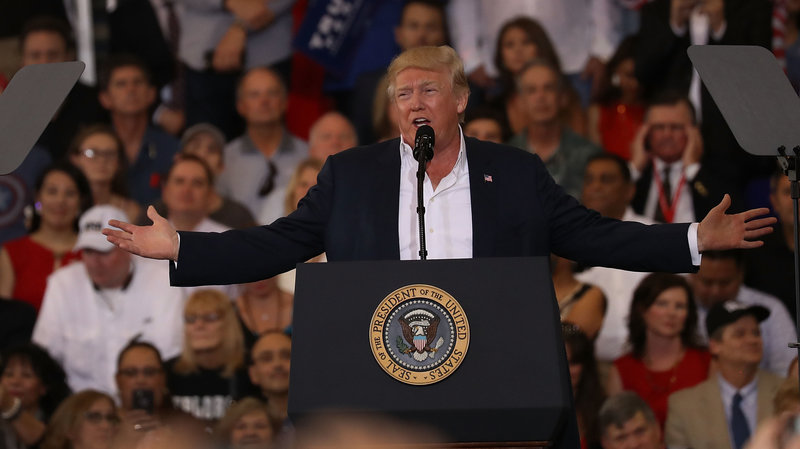
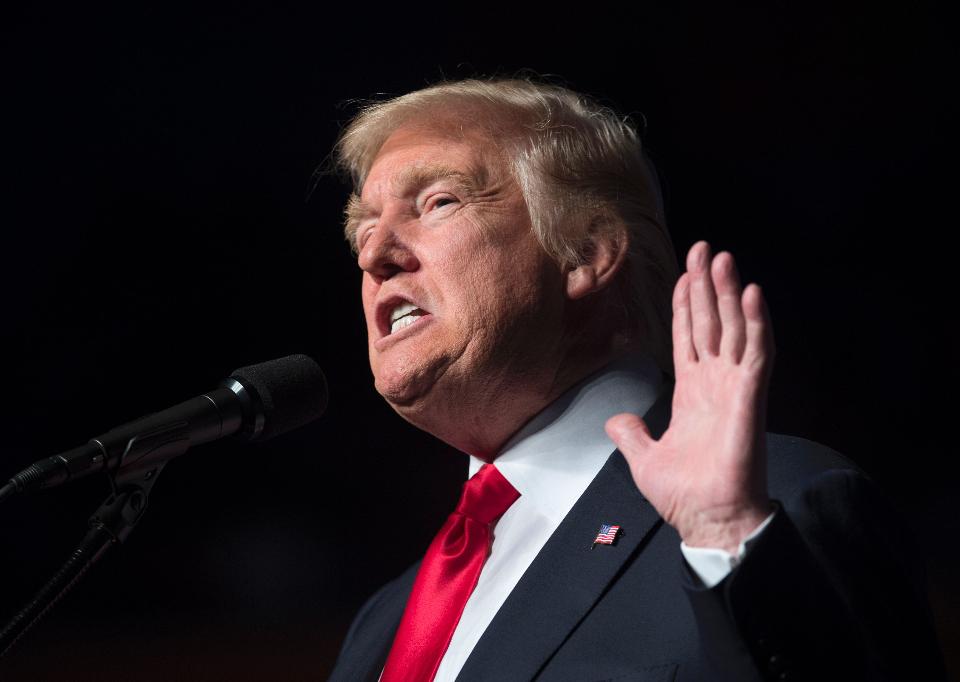
Then he jetted off to Melbourne, Fla., for a campaign-style rally. He baited his worshipers with more promises to end “radical Islamic terrorism.” Then he singled out Sweden — Sweden! — as a place that had been victimized by terrorists.

“You look at what’s happening in Germany, you look at what’s happening last night in Sweden — Sweden, who would believe this?” Trump bellowed during his rally.

The remark provoked astonished expressions from the Swedes. What? Huh? Terrorist attack? Where? By whom?

Of course, there was no such terror attack in Sweden. Trump made it up. He improvised yet another riff that produced — once again — the kind of thoughtless, careless and reckless rhetoric from the commander in chief.

Each time he does this, the president undermines the nation’s standing, let alone the standing of the high and (formerly) dignified office he occupies.

And what about our relationship with Sweden, a nation that has been famously neutral in world conflicts, but which remains an important ally of ours? Do the Swedes trust the U.S. president? Can they trust him to speak with clarity and precision?

For that matter, can we Americans trust the president?

A true GOP leader passes from scene

Today’s congressional Republicans don’t invoke the name of Bob Michel these days.

Why is that? Well, Michel represented another Republican Party, one that knew how to legislate, to govern even when it was in the minority. The former Illinois congressman had friends and allies who happened to be Democrats. The GOP of today is more partisan, angrier, more committed to ideology than to actual governance.

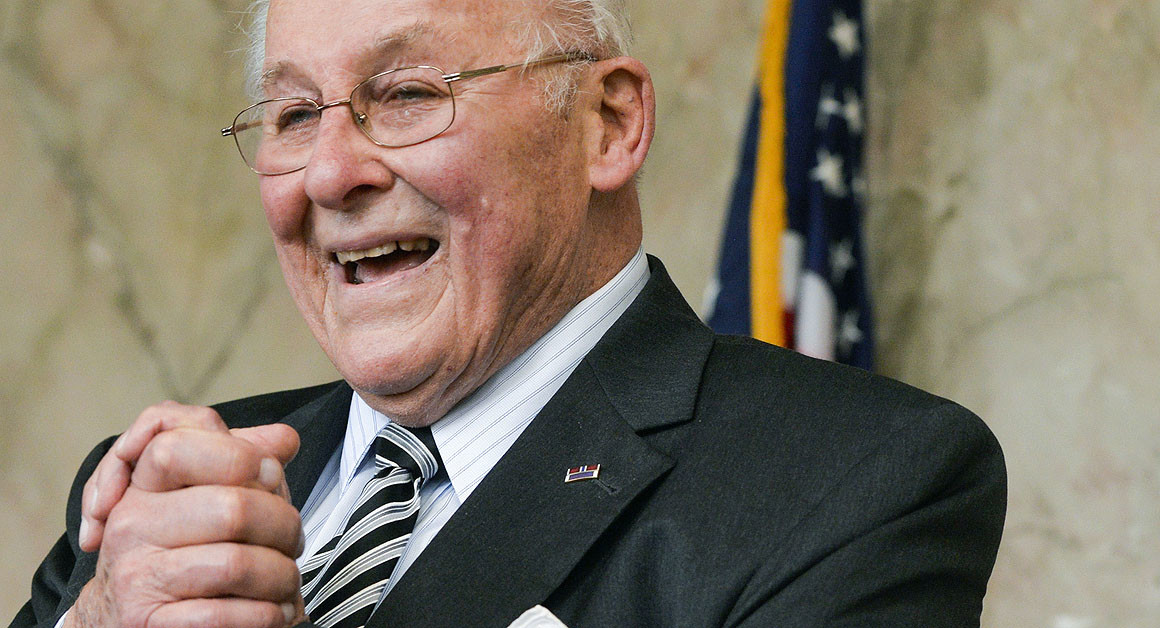
Bob Michel has died at the age of 93. He won’t be feted with a huge state funeral. There might be the perfunctory words of praise for his service to the country.

Actually, though, this man represented a kinder, gentler — and more effective — time in government.

Michel served as GOP leader in the House of Representatives. Then he got pushed aside by firebrand Newt Gingrich, the GOP congressman from Georgia who led that Contract with American revolution that took command of Congress in January 1995.

As Politico reported, Michel often car-pooled to and from work at Capitol Hill with crusty Democratic Rep. Dan Rostenkowski, a fellow Illinoisan. He didn’t shy away from his across-the-aisle friendships.

He also was a fierce champion for President Reagan’s conservative Republican agenda. But he fought hard while maintaining his friendships with those on the “other side.”

If only more lawmakers — Democrats and Republicans — could mirror the temperament exhibited by Rep. Michel. There actually could be some effective legislation enacted that would become laws that most of us — if not all of us — could embrace.

Let’s set the record straight, Mr. President

I know it’s not a hu-u-u-u-ge deal.

However, I feel the need to set the record straight on another one of those prevarications that flew out of Donald J. Trump’s mouth.

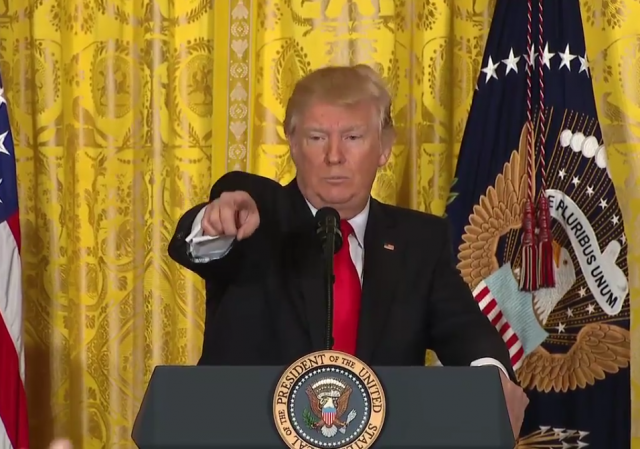
The president called a press conference today and spoke — and jousted — with the media for more than an hour. Among the mistruths he spoke today dealt with his assertion that his Electoral College victory over Hillary Rodham Clinton was the biggest “since Ronald Reagan.”

Uh, Mr. President, no sir. It isn’t. Not by a long, long shot.

Let’s review, shall we?

1984: President Reagan was re-elected with 525 electoral votes.

1988: Vice President George H.W. Bush was elected with 426 electoral votes.

1992: Bill Clinton was elected with 370 electoral votes.

1996: President Clinton was re-elected with 379 electoral votes.

2008: Barack Obama won with 365 electoral votes.

2012: President Obama was re-elected with 332 electoral votes.

2016: Donald Trump won with 304 electoral votes.

There are the numbers. Trump’s victory wasn’t the biggest since Reagan. Oh, here are some more numbers to put Trump’s victory into, um, a little different perspective.

Clinton collected 2.8 million more popular votes than Trump. The president’s victory was sealed in three states — Wisconsin, Michigan and Pennsylvania — which he won by a total of 77,000 votes, out of more than 120 million ballots cast nationally.

If Clinton had won those states, she would have been elected. She lost them to Trump. I am acutely aware that Trump won the contest where it counted, so please spare me the lecture and accusation that I’m still choking on all those sour grapes.

A reporter — NBC’s Peter Alexander — today challenged Trump’s statement about the size of his victory. The president said he was referring only to “Republican” presidents. Oh. I see. Then Bush 41’s victory didn’t count?

Trump’s bogus assertion about the size of his victory isn’t a big deal by itself. It does illustrate the man’s propensity for playing fast and loose with facts.

Perhaps, though, they merely are those “alternative facts” to which his senior policy adviser, Kellyanne Conway, referred.

Donald Trump is no Gipper

Two weeks into the presidency of Donald “Smart Person” Trump and I’m still trying to digest what it all means and where this will lead the nation he was elected to lead.

An interesting comparison came my way today at lunch. I was meeting with a gentleman I have known in Amarillo for more than a decade. He’s an accomplished member of the Texas legal community and I respect him greatly.

He asked me for my thoughts on Trump’s first few days. I offered him a tepid “Well … I just don’t know” kind of response. My friend harkened back to when Ronald Reagan was elected president and how the president would say the most “unbelievable things.” The Gipper, my friend added, would go on to become “the greatest president in my lifetime.”

He believes we need to give Trump the same measure of patience that the nation granted Reagan.

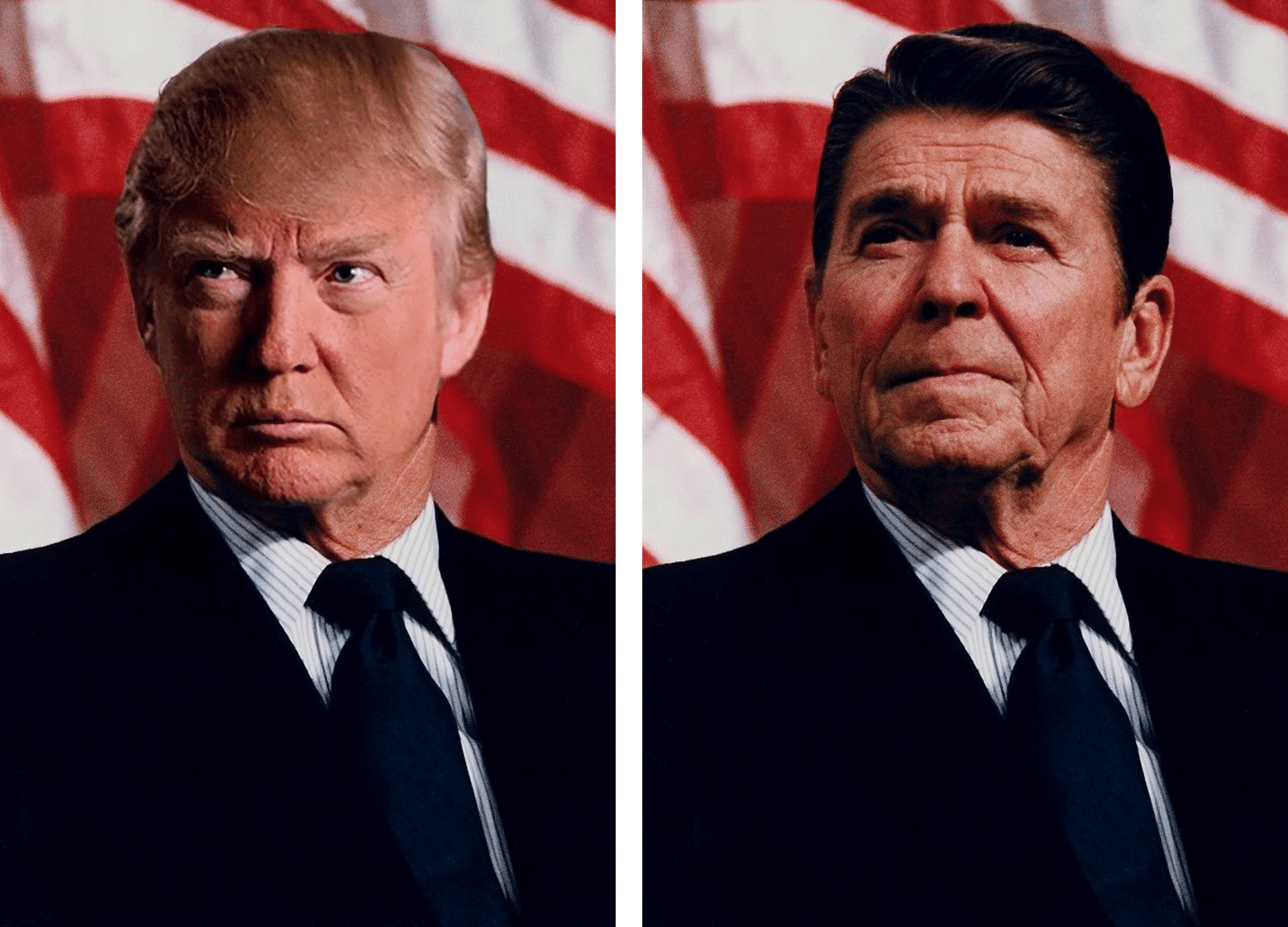
I’m not sure the comparison is valid. As much as I respect my friend’s knowledge and his perspective, my biggest objection to the comparison lies in this indisputable piece of history: Ronald Reagan at least had experience in government when he became president in 1981. He had served two terms as California governor and by many people’s accounts, they were successful terms at that.

Sure, he entered the White House with a reputation as a “cowboy,” a B-movie actor and someone without a lot of interest in the nuts and bolts of government. President Reagan dealt looked only at the “big picture,” my friend said. I get that.

Reagan, though, at least had been exposed to the complexities of governing.

Trump’s entire life — every single aspect of it — has been geared toward personal enrichment. He has focused his entire professional career on making money for himself and his family. He had zero public service experience, none, when he took the oath of office as president of the United States just two weeks ago.

Thus, as steep as Ronald Reagan’s learning curve was when he became president 36 years ago, Donald Trump has embarked on a 90-degree vertical climb.

Even a “smart person,” as Trump has called himself, must find such a thing to be daunting in the extreme.

Will he succeed? For the sake of the nation he now leads, I certainly hope so. Do I expect that to happen? The first two weeks do not fill me with encouragement that he has learned a thing about how to govern. His “ready, fire and aim” approach to dealing with our allies abroad gives me serious concern.

It’s totally fair and reasonable to wonder: What in the world would The Gipper think of this guy who now sits in the Oval Office?

As my friend said today of the president’s tumultuous start, “It’s OK to shake things up.” Sure it is … if you have a clue as to what you are seeking to accomplish.

When guys like Frank are sweating it …

My friend Frank doesn’t get rattled too easily.

He’s in his early 60s. Frank has been around. He told me he has witnessed a lot of presidential transitions. None of them prior to what’s about to occur has him as concerned — even a bit frightened — as the one that’s coming up.

Barack H. Obama is going to hand the presidency over to Donald J. Trump.

Frank is deeply concerned. As am I.

We chatted for a bit and we agreed on at least one fundamental point: It’s that Trump’s absolute lack of public service experience has left him woefully ill-prepared for becoming president of the United States of America.

I reminded Frank that we’ve had a number of dramatic transitions in our respective lifetimes. I mentioned Ronald Reagan taking over from Jimmy Carter in 1981. Sure, some folks considered Reagan little more than a B-movie actor who starred in those films with a chimpanzee named Bonzo.

But as I told Frank, even Reagan had government experience. He had administrative experience at that, as a successful two-term California governor.

Trump? He has spent his entire adult life in pursuit of a single goal: personal enrichment. He got a head start with a healthy inheritance from his wealthy father and then parlayed that nest egg into a vast fortune.

Public service? None. Zero.

Frank wondered, “What kind of thing is he going to do? What in the world does he stand for?” I told him that we don’t know. The president-elect campaigned for this office espousing zero core values. He didn’t articulate an ideology. Instead, he boasted at seemingly every campaign stop about how rich he is and how he intended to use his business acumen to “Make America Great Again.”

We did agree on this point, too. We both want Trump to succeed. We’re hoping for the best. Failure, we reminded each other, is going to cost all Americans dearly. Therefore, neither Frank nor I will wish the kind of failure for Trump that many of Barack Obama’s foes wished for him when he became president eight years ago.

Frank has another thing quite right: Now is the time to pray real hard for our country.

I’m with him on that, too.

Trying to decide whether to watch inauguration

Some friends and a couple of family members have asked: Are you going to watch Donald Trump’s inaugural?

I don’t yet know.

I have made no secret of my disappointment in the outcome of the 2016 presidential election. Sure, my candidates have lost before. This one, though, feels different in a way I cannot yet define clearly and concisely.

It might be that I do not consider Trump fit or qualified at any level to become president of the United States. That’s not how it turned out at the ballot box. He collected enough electoral votes to win the election. That’s that.

Inaugural speeches usually are filled with high-minded, soaring rhetoric. A few of them over the years have produced phrases for the ages: President Lincoln’s “with malice toward none and charity for all” at his second inaugural in 1865; President Franklin Roosevelt’s “We have nothing to fear but fear itself” at his first inaugural in 1933; President Kennedy’s “ask not what your country can do for you, but what you can do for your country” in 1961; President Reagan’s “government is the problem” at his first inaugural in 1981.

The rest of them? Well, I don’t remember certain phrases, although I do recall all the presidents spoke of high ideals and grand goals.

I’m trying to imagine Donald Trump expressing himself in such a fashion. I’m also trying to speculate as to whether the 45th president will even be able to maintain his focus long enough to read the text on his Teleprompter; or will he spin off on one of those tangents, one of those stream-of-consciousness riffs.

My tendency has been to watch these speeches. I try to soak it all in. I seek to glean some sense of hope from the president.

With this guy Trump, though, such optimism remains a distant dream for me. His campaign was too steeped in anger, bigotry and exclusion for me to feel any sense that he ever can appeal to what’s best in Americans.

Inaugurals are meant to set a tone for the presidency. They are intended to give us hope. How in the world is Donald Trump going to deliver such a message after running the kind of campaign that propelled him to the highest office in the land?

Decisions, decisions …

Still waiting to turn the corner on the new president

I believe I need counseling.

Here’s my dilemma. I have declared my willingness to “accept” that Donald J. Trump has been elected president of the United States. I can count electoral votes as well as the next guy; Trump got more than enough of them to win. He’s likely to sew up the victory today as the Electoral College votes for president.

However — and this is where the dilemma gets really serious, in my view — I cannot yet write the words “President” and “Trump” consecutively. (Take note that I have just avoided doing so.)

I intend to comment frequently on the new president. I’ll be watching him closely. I won’t be alone, quite obviously. I cannot speak for others bloggers/writers/commentators out there. I only can speak for myself.

It has become something of an obstacle for me to refer to the 45th president the way I have been used to referring to every single one of his predecessors. I routinely type the words “President Obama,” or “President (George W. or George H.W.) Bush,” or “President Clinton,” or “President Reagan” and so forth. I didn’t vote for all of those men to whom I refer in that fashion.

This new guy who will take office on Jan. 20? That’s somehow different. I cannot quite get to the root of it.

trumpscandal_pageant

Perhaps it is Trump’s singularly repulsive temperament. It might well be the endless litany of insults he hurled along the way to winning the highest office in the land. Maybe it’s the way he denigrated so many individuals and groups of people. It well could be the notion that he has presented himself — brazenly — as the smartest man ever to inhabit Planet Earth.

I’ll be careful in the future always to refer to Trump as the president. I accept the outcome of the election. However, my instinct — or perhaps it’s the latent childishness that I cannot let go — instructs me to avoid attaching the man’s title directly to his last name.

I cannot go there. I might not ever get there.

Help!

Trump redefines electoral ‘landslide’

trump-won-election-landslide

Donald J. Trump is measuring electoral landslides with a different set of parameters than most of us.

The president-elect keeps saying he won the election this past month “in a landslide” over Hillary Rodham Clinton.

Hmm. I wonder about that.

When I was studying political science in college, I always believed an electoral landslide — when talking about presidential elections — usually meant something akin to a 10-percentage-point popular vote margin, give or take.

The landslide elections in my lifetime occurred in 1952 and 1956, with Dwight Eisenhower’s two election victories over Adlai Stevenson; 1964, with Lyndon Johnson’s landslide win over Barry Goldwater; 1980 and 1984, with Ronald Reagan’s wins over Jimmy Carter and Walter Mondale.

The 1988 election with George H.W. Bush defeating Michael Dukakis came close to a landslide.

Then you can measure Electoral College landslides, which often don’t coincide with popular vote landslides. George H.W. Bush scored an Electoral College landslide over Dukakis; Bill Clinton rolled up big Electoral College margins over Bush in 1992 and Bob Dole in 1996; Barack Obama’s electoral-vote victory in 2008 over John McCain could be called a landslide.

Now, back to the president-elect’s preposterous assertion of a “landslide” victory over Hillary Clinton.

He’s now trailing the loser by 2.6 million votes nationally. Yes, Trump won the Electoral College vote by a comfortable margin, at 306-232 — but it ain’t a landslide by what I consider to be most people’s measuring stick.

By all means, Trump won the election. He’s going to be the next president. However, the president-elect needs to stop with the delusion that he won by a landslide.

It was a squeaker, dude, in a deeply divided nation. Furthermore, he would do well to listen to the views expressed by the majority of those who voted against him.

Sooners are the deepest red among us

Vote Voting Election Politic Decision Democracy Concept

I have confirmed a bit of fairly useless political trivia that I’ve suspected all along.

The most Republican state in the United States of America is just a bit down the road from where my wife and I live.

It’s Oklahoma, man.

Forget them Deep South Dixie bastions that have gone from decidedly Democratic to reliably Republican since the days of, oh, the signing of civil rights and voting rights legislation in the 1960s.

My Okie neighbors now hold the title of living in the Most Republican State in America.

I checked a website I like looking at and discovered that for the past four presidential elections, the Republican candidate has carried every one of Oklahoma’s 77 counties. The 2004, 2008, 2012 and 2016 elections all went the GOP’s way in Okie Land. Democrats fared pretty well, even picking off three counties in the 1984 Ronald Reagan landslide. Richard Nixon won all counties in 1972 … no surprise there.

It’s interesting in this sense. Oklahoma has two sizable public universities — the University of Oklahoma in Norman and Oklahoma State University in Stillwater. One might be led to believe, if you adhere to the dogma put out by conservative thinkers, that these “liberal bastions” would have some kind of nefarious influence on young minds and even on the community at-large.

Well, not so. The GOP has locked down its own vise-grip on the Sooner State.

Stand tall, Sooners. Your guy won again! I’m sure y’all are hoping you chose wisely.

http://uselectionatlas.org/RESULTS/

Comey deserves some blame, however …

hillary-and-comey-500x300

Hillary Rodham Clinton’s shocking loss to Donald J. Trump in the 2016 presidential election can be laid at the feet of many culprits.

Clinton has chosen to single out, though, the director of the FBI. James Comey’s letter to Congress just 11 days before Election Day informing lawmakers that he had more information to examine regarding those “damn e-mails” stole the Clinton campaign’s “momentum,” she said. By the time Comey said nine days later that the information wouldn’t result in any further action, the damage had been done, Clinton told campaign donors.

Let’s hold on a second.

I don’t doubt that Comey’s 11th-hour intervention had some effect on the campaign outcome. However, I believe a bit more introspection is required of the defeated candidate before we start writing the final history of what no doubt will be logged in as the strangest presidential campaign in U.S. history.

Hillary Clinton should have iced this campaign long before the Comey letter became known.

Think about a few factors here … and bear with me.

Clinton is eminently qualified to become president of the United States: former first lady, U.S. senator and secretary of state. Boom! Right there, she has a dossier that commends her for the top job. Trump is not qualified: reality TV celebrity, commercial real estate developer, thrice-married rich guy with zero public service commitment on his lengthy record in private business. The endless litany of insults and hideous proclamations that poured out of Trump’s mouth throughout the campaign are too numerous to mention. You know what he said. It didn’t matter to the Trumpkins who backed him to the hilt.

It is true that Clinton’s enemies made a huge story out of something that had been declared dead and buried — the e-mail controversy — which gave life to the corpse near the end of an insult-driven campaign.

Clinton’s qualifications, her knowledge of world affairs and her contacts around the globe made her an excellent — if not perfect — choice to lead the greatest nation on Earth. Many observers — me included — considered it possible that Clinton would roll up a historic election victory that could have eclipsed, say, the Lyndon Johnson, Richard Nixon or Ronald Reagan landslides of 1964, 1972 and 1984, respectively.

If only, though, she could have demonstrated some innate quality of authenticity that could have fired up her base. She didn’t. Clinton was unable to light the fire that burned brightly when Barack Obama ran twice successfully for the presidency.

She was a flawed candidate who brought much more to the table than she was able — or perhaps willing — to reveal.

Comey did his part, for sure, to run the Clinton campaign over the cliff. The FBI boss wasn’t the sole reason. The candidate herself deserves much –indeed most — of the blame for what transpired on Election Day.