Tag Archives: LBJ

Don’t look for these rivals to make up

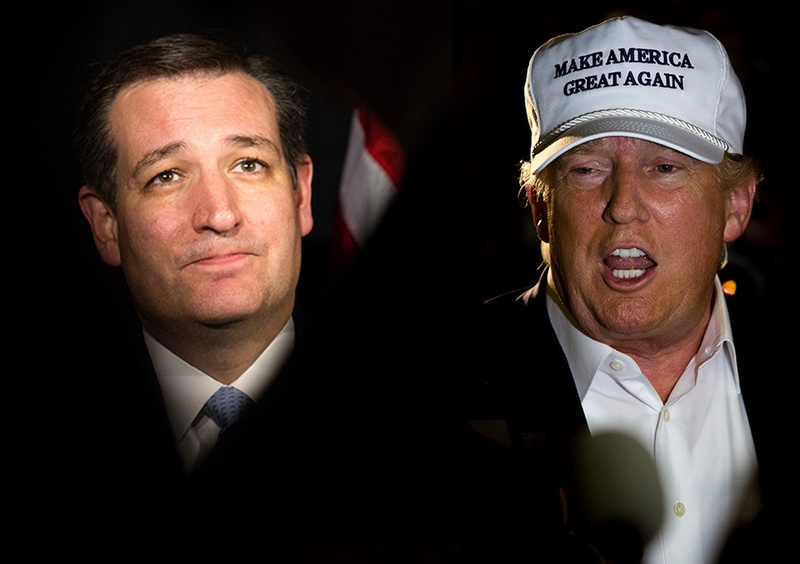
cruz-trump_jpg_800x1000_q100

Recent political history is full of examples of how rivals for the presidency have said means and occasionally disgusting things to and about each other … and then hooked up as allies.

In 1960, U.S. Sens. John Kennedy and Lyndon Johnson fought each other for the Democratic presidential nomination. JFK was nominated and then picked LBJ to run with him. They won the election and the rest is, well, history.

Twenty years later, former Gov. Ronald Reagan and George H.W. Bush battled for the 1980 Republican nomination, with Bush labeling Reagan’s tax plan as “voodoo economics.” Reagan won the GOP nod and then picked Bush to run alongside him as vice president.

In 2008, the combatants were Sens. Barack Obama and Joe Biden fighting for the Democratic nomination. Biden dropped out, Obama won the nomination and picked Biden to run with him. President-elect Obama then turned to another campaign rival, Sen. Hillary Rodham Clinton, and selected her to be secretary of state.

In 2016, well, matters are quite a bit different.

The battlers this time are Donald J. Trump and Sen. Ted Cruz. They are fighting for the Republican nomination.

The gloves are off. The brass knuckles are on. The men loathe each other. Trump calls Cruz “Lyin’ Ted.” Cruz is now responding with attacks on Trump, referring to him as a “pathological liar” and a “serial philanderer.”

Trump now says that Cruz’s father might have been a principal — are you ready for this one? — in the assassination of President Kennedy. Cruz’s response was classic: “Let’s be clear: This is nuts. This is not a reasonable position. This is kooky,” Cruz said in Evansville, Ind. “While I’m at it, I should go ahead and admit yes, my dad killed JFK, he is secretly Elvis and Jimmy Hoffa is buried in his backyard.”

Cruz is likely to get battered badly in today’s Indiana GOP primary. He’s going all-out against Trump. The men seem to truly despise each other.

https://www.texastribune.org/2016/05/03/bracing-indiana-loss-cruz-unloads-trump/

Trying to predict any outcome in this year’s wacky presidential contest is a dicey proposition at best.

I feel comfortable, though, in asserting that Trump and Cruz will not team up for the fall campaign.

Do these guys represent the state … or not?

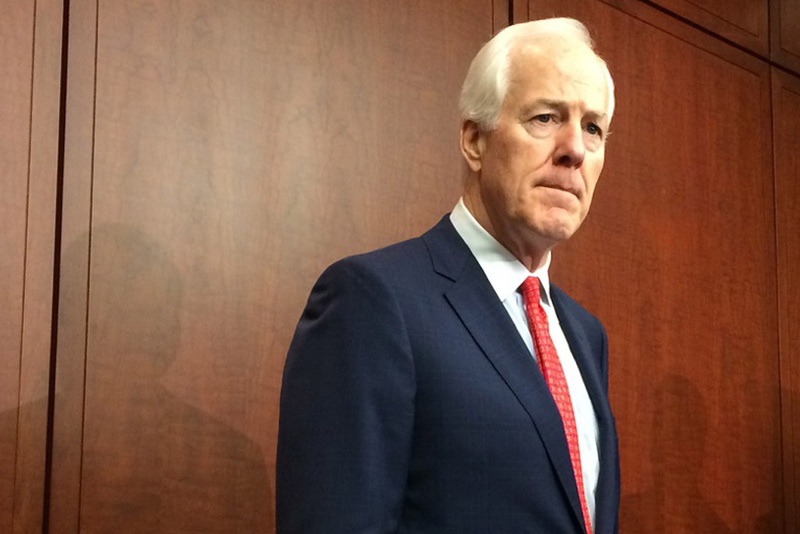
Cornyn_jpg_800x1000_q100

Hurricane protection is a real big deal if you live along the Texas coast.

My family and I lived there for nearly 11 years before high-tailing it to the High Plains more than two decades ago. We still have dear friends there who face the threat of being wiped out by killer hurricanes that blow in from the Gulf of Mexico.

The Texas Tribune reports that many of the state’s congressional delegation, including some House representatives from the imperiled region, aren’t yet willing to commit to spending what it takes to protect coastal cities from potential destruction.

https://www.texastribune.org/2016/04/17/congress-mostly-silent-hurricane-protection-texas/

What’s up with that?

They don’t want to spend the money it will take, for example, to buttress the seawall protecting the Houston-Galveston region. It’s not politically prudent, apparently, in this age of penny-pinching for the sake of penny-pinching.

“While state officials say the project enjoys the full support of Texans in Congress, almost every member has been silent on the issue, including those who hold the most sway,” the Tribune reports.

Don’t these individuals represent the state that sends them to Washington to certain things for us, such as argue for legislation that benefits the state?

Sen. John Cornyn, the senior man from Texas, isn’t weighing in on the coastal protection plan. Texas’ other senator, Ted Cruz, is too busy running for president to give much careful thought to the needs of the home folks … or so it seems.

The Tribune reports that Texas Land Commissioner George P. Bush has placed coastal protection at the top of his own agenda. Bush hopes Cornyn will climb aboard the protection bandwagon. If he does, he figures to bring considerable political clout to the battle, which matters a lot, given that Cornyn is a key member of the Senate Republican leadership team.

The issue is money. As the Tribune reports: “But with a price tag sure to reach into the billions, the spine will almost certainly require a massive infusion of federal money, state officials agree. Whether Texas’ congressional delegation has the political backbone to deliver the cash remains to be seen.”

I’m trying to imagine an earlier generation of Texas pols — guys like Lyndon Johnson and Sam Rayburn — sitting on their hands.

Lady Bird had the right idea

flowers

DRIPPING SPRINGS, Texas — Lady Bird Johnson well might have been the most intuitive first lady ever to grace the White House.

The picture accompanying this blog post illustrates my point.

The picture is of a small meadow just down the road and around the corner from my brother-in-law’s home in this tiny burg near Austin.

The flowers brightened our day as we drove to his house after a lengthy drive from Amarillo.

Lady Bird became first lady in November 1963 under the most dire of circumstances. Her husband’s predecessor as president, John F. Kennedy, had been murdered in Dallas. The nation, indeed the world, was in shock. We were grieving deeply.

That was the context the Johnsons inherited when Lyndon Johnson became president and “Bird” became first lady.

Understand this: I have no earthly idea whether Lady Bird was reacting to our national tragedy when she came up with the beautification initiative. First ladies have “themes” they promote while they live in the White House. Mrs. Johnson chose to make beautification her signature effort.

She embarked on a campaign to promote wildflower planting along public rights of way throughout the nation. Texas, of course, became a sort of “ground zero” for that effort. And why not? She and Lyndon were native Texans, so she might have felt obligated to gussy up her home state.

I’m happy to report that in the Spring of 2016, Lady Bird Johnson’s flower-planting initiative has taken root.

The flowers in this picture are wildflowers. Of that I’m quite sure.

So, too, are the bluebonnets and the Indian paint brush we saw spread for miles along Texas 71 between Llano and the outskirts of Austin. I regret I didn’t take pictures of them; you’ll just have to take my word for it. They’re gorgeous.

With that, I want to bow in honor of Lady Bird Johnson. She helped lift the nation — whether she intended to or not — from its deepest despair.


Hey, Hillary … take a look at what these guys are saying

BudgetDeficit

Hillary Rodham Clinton may be the inevitable Democratic Party presidential nominee.

It’s not a done deal just yet, given Sen. Bernie Sanders’s big wins this weekend in Washington, Alaska and Hawaii. Clinton, though, still has the big lead in delegates and the primary campaign is heading into more Clinton-friendly territory.

But here’s the thing, according to Bill Moyers (yes, that Bill Moyers) and Michael Winship: She remains captive to the big-money interests that are poisoning the political system. It’s time for Clinton to stand up, spit into her palms and then do what she needs to do, they say, which is call for the immediate resignation of Chicago Mayor Rahm Emmanuel and Democratic National Committee Chairwoman Debbie Wasserman Schultz.

They ask a valid question: Is she the candidate of the past or of the future?

If it’s the latter, then she needs to demonstrate it. Forcefully.

These two figures — Emmanuel and Schultz — represent what’s wrong with the Democratic Party, say Moyers and Winship.

Emmanuel’s tenure as mayor has been rocked by controversy. The shooting death of an African-American teenager, Laquan McDonald, went unreported for months. Laquan was shot to death by Chicago police while he was strolling down the street. He presented no weapon; his hands were in the air. A cop shot him multiple times dead in the street.

Emmanuel then took responsibility for the shooting, given that he’s the mayor and the chief of police answers to him.

But before he became mayor he was a three-term Illinois congressman and White House chief of staff for President Obama. He is soaked in corporate money. Emmanuel, Moyers and Winship write, “chaired the fundraising Democratic Congressional Campaign Committee (calling on his Wall Street sources to get in on the gravy by electing so-called New Democrats over New Deal Democrats), and soon was back in the White House as Obama’s chief of staff. There, he infamously told a strategy meeting of liberal groups and administration types that the liberals were ‘retarded’ for planning to run attack ads against conservative Democrats resisting Obamacare. Classy.”

He’s a longtime ally of Hillary and Bill Clinton, which is why he continues to loom so large on the Democratic Party landscape.

Schultz is just as tainted by money, say Moyers and Winship, who write that “she embodies the tactics that have eroded the ability of Democrats to once again be the party of the working class. As Democratic National Committee chair she has opened the floodgates for Big Money, brought lobbyists into the inner circle and oiled all the moving parts of the revolving door that twirls between government service and cushy jobs in the world of corporate influence.”

Of the two essayists, Moyers — of course — is the better known. He’s an East Texan who came to prominence during the Lyndon Johnson administration, where he served his fellow Texan as White House press secretary. He then went on to become a fixture on public television.

The Sanders campaign has lit a fire all by itself with the candidate’s call for reform of the political financing system. His sole aim is to finance presidential campaigns solely with public funds, while seeking to overturn the Citizens United Supreme Court ruling that unleashes corporate donors.

Moyers and Winship make the case fairly persuasively that Hillary Clinton is too wedded to the deep-pocketed donor class that they say has corrupted the political system.

She well might want to consider seriously what these men are suggesting, which is to cut her ties to the past and demonstrate that she’s the Democratic Party’s best hope for the future.


Not exactly a repeat of ’68 in this campaign

RFK

Those talking heads are comparing the anger we’re hearing at Donald J. Trump’s campaign rallies to what we heard 48 years ago when that year’s presidential campaign turned really ugly at the Democratic National Convention in Chicago.

I beg to differ.

Yes, the convention turned into a bloodbath. Anti-Vietnam War protesters stormed the streets outside the convention hall and battled with police. Reporters and delegates were beaten up on the convention floor.

But prior that tragic event, we heard at least one candidate seek to speak to our better angels, to try to quell the anger.

Robert Francis Kennedy was that man. He had entered the Democratic campaign relatively late. He launched a frenetic, mad dash for his party’s nomination. President Johnson bowed out. Sen. Eugene McCarthy’s young legions were rising up against the “establishment.” Vice President Hubert Humphrey was in the race, too.

Then, as columnist Mike Barnicle notes, tragedy struck in Memphis, Tenn. The Rev. Martin Luther King Jr. was shot to death.

Sen. Kennedy got word of it. He climbed aboard a truck bed in Indianapolis and told the largely African-American crowd what had just happened. They gasped.

He went on.

“What we need in the United States is not division; what we need in the United States is not hatred; what we need in the United States is not violence or lawlessness, but love and wisdom and compassion toward one another and a feeling of justice toward those who still suffer within our country, whether they be white or they be black.

“So I shall ask you tonight to return home, to say a prayer for the family of Martin Luther King, that’s true, but more importantly to say a prayer for our own country, which all of us love—a prayer for understanding and that compassion of which I spoke.”

Many cities erupted in violence that night. Indianapolis did not.

I watched that campaign unfold in the spring and early summer of 1968 before I was inducted into the Army, at which time my own life changed forever.

Not one time did I hear a candidate in either party exhort his supporters to punch protesters in the face. Nor did I hear any candidate offer to pay an assailant’s legal fees after being arrested for sucker-punching a demonstrator.

Sure, we were an angry nation back in 1968. We had reason to be worried. A bloody war in Asia was going badly and many Americans wanted an end to that conflict.

It came to a head at the Chicago convention that year.

One reason for the violence was that the man who sought to tell us the truth about our anger and sought to offer solutions to ending it himself was gunned down in that Los Angeles hotel kitchen.

Robert Kennedy’s death came nearly two months to the day after the night he stood on that truck bed and offered words of consolation and healing.


If Hillary comes close to Sanders, she’ll declare ‘victory’

08CLINTONHISTORY-span-master1050

Politics has this way of giving those who lose tough races a chance to declare victory.

Eugene McCarthy did it in 1968 when he lost the New Hampshire primary to President Lyndon Johnson; George McGovern did the same thing in 1972 when he finished third in a primary that was won by Edmund Muskie; ditto for Bill Clinton in 1992 when he lost to Paul Tsongas.

History well might be about to repeat itself Tuesday — if Hillary Clinton moves to within shouting distance of Bernie Sanders in the Granite State’s Democratic primary.

She’s trailing now. She might be closing the gap, according to some polls. If she loses to Sanders by, say, 8 or fewer percentage points, I can hear it now: Hillary Clinton will proclaim herself to be the “second comeback kid.” The first, of course, was husband Bill.

When Ted Cruz won last week’s Iowa caucus, we heard to other “losers” proclaim victory. One of them was Donald J. Trump, who reminded voters that the polls he loves to trumpet said he didn’t have a prayer in Iowa when he entered the race; he finished second behind the Cruz Missile.

Even more fascinating was how third-placer Marco Rubio declared victory in that astonishing speech to his supporters. Hey, Marco . . . you finished third, young man!

Of course, actually finishes don’t mean much in political terms. Candidates have perfected the art of the spin for as long as the process itself. These days the necessity is made more important given the presence of social media and 24/7 cable news networks.

The trick is to get the “victory” declarations out there before anyone has a chance to catch their breath. Get ahead of the story and make damn sure you stay ahead of it.

Bill Clinton declared victory 24 years ago. He didn’t actually win. He just made sure voters thought he did.

I’m almost willing to bet real American money that his strategy has not been lost on his wife’s campaign team.

Sanders’ ‘revolution’ might be overstated

revolution

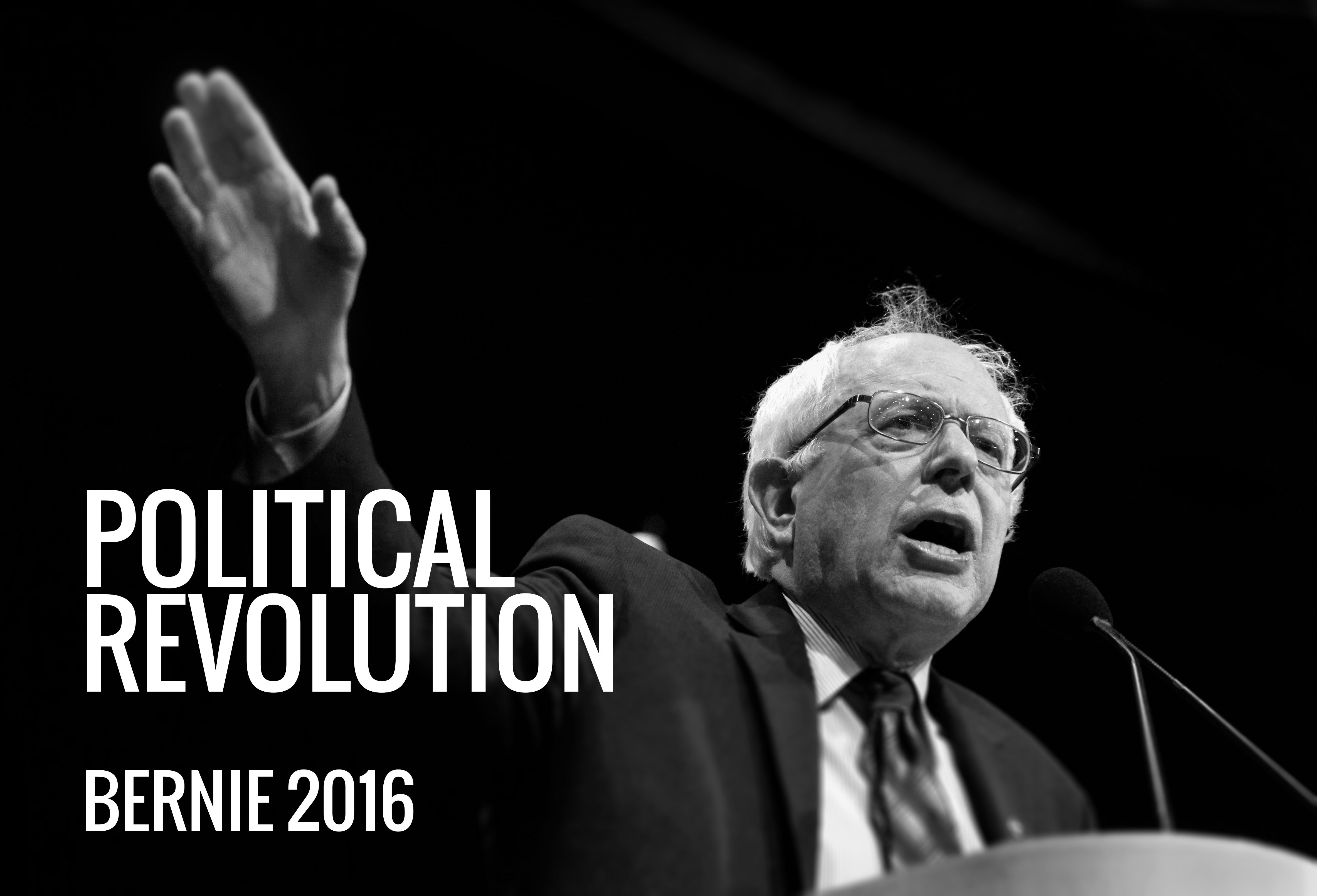
Sen. Bernie Sanders is now using the word “revolution” to describe the nature of his bid to become president of the United States.

He’s leading Hillary Clinton in every poll there is in New Hampshire, which I think is filling the Vermont senator’s head with visions of overinflated grandeur.

It’s not that his Democratic support is fake. It’s real. But let’s cool the “revolution” talk for a bit.

Three presidential campaigns of the late 20th century also were labeled “revolutions” in some quarters. How did they do?

1964: Sen. Barry Goldwater of Arizona took the Republican Party presidential nomination by storm, defeating “establishment” candidates, such as New York Gov. Nelson Rockefeller in a wild primary fight. He went on to lose the general election that year to President Lyndon Baines Johnson in a historic landslide. LBJ, of course, traded a good bit on the legacy of his slain predecessor, John Kennedy, and vowed to continue pursuing JFK’s unfinished agenda.

1968: Just four years later, the Vietnam War caused another revolution. LBJ’s popularity had gone south. Democrats looked for an alternative. They turned to one in Sen. Eugene McCarthy of Minnesota, who stunned LBJ with a stronger-than-expected showing in the New Hampshire primary. In came another anti-war candidate, Sen. Robert F. Kennedy of New York, brother of the murdered president and a political hero to many Americans — including yours truly. Vice President Hubert Humphrey, another “establishment” candidate, won the nomination, but then lost to Republican Richard Nixon by a narrow margin that fall.

1972: Let’s call this one the Anti-Vietnam War Revolution 2.0. The flag bearer this time would be U.S. Sen. George McGovern of South Dakota, who beat the party “establishment” led by Sen. Ed Muskie of Maine to win the nomination. McGovern drew big crowds to rallies, too, just like Sanders. Did they equate to votes that November? Ummm, no. President Nixon won 49 out of 50 states and buried McGovern’s “revolution” under the landslide.

Yes, some “revolutions” succeed. Ronald Reagan’s landslide victory in 1980 is one. Barack Obama’s election in 2008 could be considered another one. But they required extraordinary circumstances. The Iranian hostage crisis hurt President Carter grievously in voters’ minds in ’80 and the economic free-fall of 2008 helped lift Sen. Obama into the White House eight years ago.

Sanders might think he’s carrying the torch for another revolution. Then again, Republicans such as Donald Trump, Ted Cruz and perhaps even Marco Rubio might want to say the same thing . . . for entirely different reasons.

I just want to remind the revolutionaries out there that the political establishment doesn’t get to be so entrenched and powerful by being made up of pushovers or patsies.


Let’s just call him ‘Silent Clarence’

clarence-thomas-federalist-society-ap

I actually thought it had been longer than a mere decade since Supreme Court Justice Clarence Thomas had asked a question during oral arguments before the nation’s highest court.

Nope. It’s only been 10 years.

The New York Times article attached here spells out what Justice Thomas has settled on as his reason for remaining silent.

It’s discourteous, he told the Times.

Discourteous? You mean if a lawyer says something that you believe needs clarification, but none of your court colleagues wants to seek some clarity, that you don’t want to be rude by asking the lawyer a question?

I don’t quite get that.

On second thought, it makes no sense at all.

Justice Thomas was President George H.W. Bush’s pick in 1991 to serve on the court. He succeeded perhaps one of the most argumentative men ever to serve there, the late Justice Thurgood Marshall, who earned his Supreme Court spurs by arguing successfully before the court on the historic Brown v. Board of Education decision that ended desegregation in public schools.

President Lyndon Johnson made history by appointing Marshall to the court in 1967, making him the first African-American to serve there.

Justice Thomas is a decidedly different type of high court jurist, both in judicial philosophy and temperament, apparently, than the man he succeeded.

I believe President Bush offered a serious overestimation of Clarence Thomas when he called him the “most qualified man” to sit on the high court.

That said, Thomas has been true to his conservative principles over the past quarter century.

As for the next time he asks a question of a lawyer, you can be sure the media will make a big deal of it.


Obama fails to channel LBJ

claire

Claire McCaskill calls herself a “friend and supporter” of Barack Obama.

But the Democratic U.S. senator from Missouri has issued a candid assessment of the job her fellow Democrat has done as president of the United States.

The president’s major failing, according to McCaskill? He did not learn how to work with Congress.

The Hill reports on McCaskill’s remarks about Obama: “But one of the president’s shortcomings is that sometimes he sees the world through his eyes and doesn’t do, I think, enough work on being empathetic about how other people view things.”

McCaskill blisters president

In truth, McCaskill might be a bit behind the curve when critiquing the job the president has done.

I don’t think he’d mind my saying this, but a now-retired college administrator told me much the same thing during the president’s first term in office.

Former Amarillo College President Paul Matney and I were having lunch one day when Matney lamented the president’s testy relationship with congressional leaders. Matney wished that the president would employ the skill that the late President Lyndon Johnson used to great effect.

Johnson, of course, rose from the Senate to the executive branch of government, as Obama has done. LBJ served as vice president from 1961 until Nov. 22, 1963. Then he became president in the wake of tragedy.

When LBJ moved into the Oval Office, he harnessed all his legislative skill to shepherd landmark legislation through Congress. He was a master of working not just with fellow Democrats, but with Republicans.

Matney bemoaned that President Obama had not developed that kind of bipartisan rapport and it cost him dearly.

McCaskill now — near the end of Barack Obama’s presidency — echoes much of what Paul Matney said years ago. LBJ’s legacy, which was tainted for many years after he left office in 1969 by the Vietnam War, is beginning to look better all the time.

He understood that he needed the legislative branch to make government work, that he couldn’t do it all alone.

As Sen. McCaskill has noted, Barack Obama hasn’t seemed to have learned that lesson.


Rubio steps in it with Senate speech

Republican presidential candidate, Sen. Marco Rubio, R-Fla., presides over Senate Foreign Relations Committee, subcommittee on Western Hemisphere, Transnational Crime, Civilian Security, Democracy, Human Rights, And Global Women's Issues hearing on overview of U.S. policy towards Haiti prior to the elections, Wednesday, July 15, 2015, on Capitol Hill in Washington.   (AP Photo/Manuel Balce Ceneta)

I’ve been all over the pea patch on this one, but I’ve decided to give U.S. senators seeking higher office a break … most of the time.

Marco Rubio, the Florida Republican who’s running for president of the United States, has become the object of some criticism because of his lousy attendance record in the Senate. He’s been busy seeking the presidency and doesn’t have time to the job to which he was elected.

Hey, a guy can be only in one place at a time, right?

Rubio’s been absent a lot

I do not begrudge Rubio’s ambition to become commander in chief, leader of the Free World, the Man with the Veto Pen. Other senators are spending a lot of time on the road running for the White House: Bernie Sanders, Rand Paul, Ted Cruz, Lindsey Graham. A couple of governors have gotten into some hot water back home for spending too much time away from the statehouse; Chris Christie and Scott Walker (before he dropped out of the race) come immediately to mind.

They all have the right to pursue the big prize.

Texas has had its share of senators aspiring to higher office. In addition to Cruz, we’ve had the likes of Lyndon Johnson and Lloyd Bentsen taking their fair share of time away from the job.

So, I’d say give Rubio a break. Leave him alone.

Except for this: Rubio took to the Senate floor to say, “All we’re saying here is if you work at the (Veterans Affairs Department) and aren’t doing your job, they get to fire you. This should actually be the rule in the entire government – if you aren’t not doing your job you should be fired.”

Ohhhh, Marco.

Dadgummit, young man. You shouldn’t have said such a thing.