Tag Archives: US Constitution

We still have our guns … imagine that

?????????????????????????????????????????????????????????????????????????????????????????????????????

Plenty of doomsday scenarios were put forward by Barack Obama’s enemies when he became president in 2009. Most of them made no sense. One of them was particularly absurd.

I refer to politically active groups, such as the National Rifle Association, which fomented fear among the ranks of gun owners that the president was going to order federal agents to disarm us all. He would flout the Second Amendment and push legislation through Congress that would deprive of us of our constitutional right to “keep and bear arms” … they said.

Do you remember all that crap? I do.

It was all meant to scare the daylights out of us, to suggest that this president — who really isn’t one of “us,” if you’ll recall that other “birther” baloney as well — was hell bent on coming after our guns.

One of the social media themes that made the rounds not long ago was that the president had endorsed the Australia law that essentially took away everyone’s gun. The result of that law was a precipitous decline in gun violence Down Under; Obama thought that was a good result.

That never happened. It won’t happen, either, as long as we have a Constitution that includes the Second Amendment.

What the gun-owner-rights fearmongers ignored, too, was that the president lacks absolute power to impose his will over the nation. I hope the new president understands that, too. The president has that other co-equal government arm with which he must deal: Congress, which is populated by members who get lots of campaign dough from the gun lobby.

I mention this — as we draw closer to the end of President Obama’s time in office — to remind us all of the fearmongering that at times can overcome reasonable discussion of serious public policy issues.

Enter the white nationalist in Aggieland

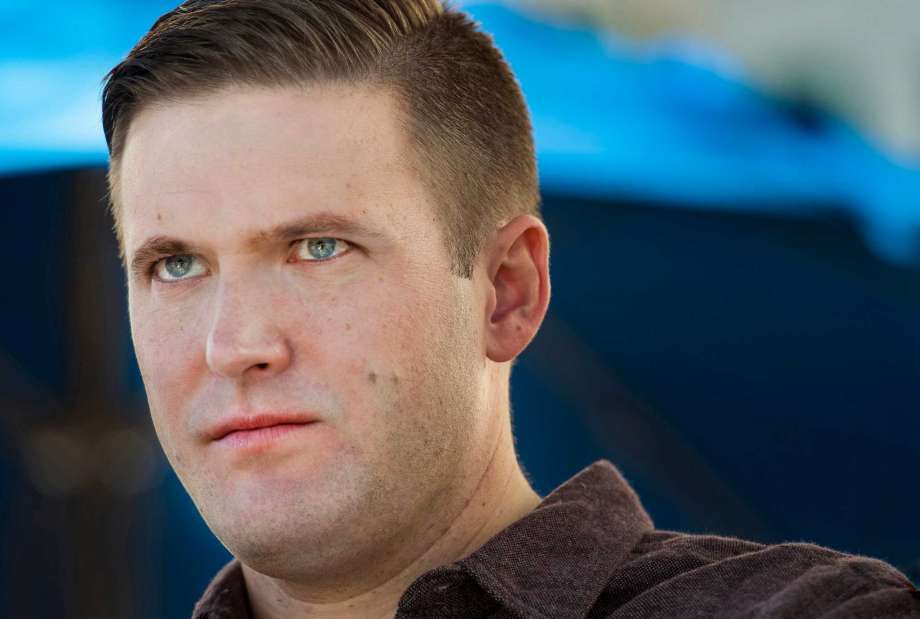
spencer

This is the kind of story that gives First Amendment purists — such as yours truly — a serious case of heartburn.

Richard Spencer is slated to deliver some remarks at Texas A&M University. Just who is this fellow? He’s the founder of a white nationalist group — the National Policy Institute — that’s been in the news lately.

I use the term “white nationalist” only because that’s what he calls himself. He’s actually a white supremacist. A flaming racist, if you will.

Spencer is a young man with an agenda that isn’t going over too well with a lot of us. I include myself in that category of Americans repulsed to the core by what this guy espouses. He recently exhorted a roomful of supporters with a salute hailing the election of Donald J. Trump as president that looked for all the world like something the Nazis used to do in Adolf Hitler’s presence.

Why the heartburn?

Spencer is entitled to speak his peace. He happens to be an American citizen. The First Amendment protects people’s right to express their political views freely.

Some students and I’ll presume faculty at Texas A&M don’t want Spencer to speak Dec. 6 at the student center. They’re planning a protest. Some are petitioning the school to disinvite him.

As much as it pains and aggravates me to say this, they are mistaken if they intend to ban this guy from having the floor for his scheduled 30 minutes in College Station.

A university is a place that is supposed to promote a wide range of ideas, ideologies, philosophies and theories. Yes, even those many of us find offensive.

Here’s what the Houston Chronicle reported: “The university issued a statement Wednesday denouncing Spencer’s rhetoric and sought to distance itself from the event. The university had no immediate comment on whether it would try to cancel the speech.

“‘To be clear, Texas A&M University – including faculty, staff, students and/or student groups – did not invite this speaker to our campus nor do we endorse his rhetoric in any way,’ Amy Smith, a university spokeswoman, said in the statement.”

The Chronicle continued: “Private citizens can reserve space on campus for private functions, Smith said. The event organizer will pay all rental expenses, including security costs, she said.”

Here’s the whole story:

http://www.chron.com/local/education/campus-chronicles/article/White-nationalist-to-speak-at-Texas-A-M-10632460.php?cmpid=fb-desktop

Even though the university didn’t “invite” this fellow, his presence on the campus ought to some credence to the notion that all ideas should be heard within that environment, even if they aren’t welcome.

Conservative speakers have been shunned before on university campuses. I dislike that notion, even as someone who identifies more with progressive than with conservative causes.

However, if we believe in the constitutional protection of free speech and expression, then we need to adhere wholly to it.

Richard Spencer’s message no doubt will disgust and enrage many who hear it. Let the young man speak … then show him the door.

This election’s fallout will take time to settle

constitution-burningb

I usually am not one to fret too much about the future of our country.

My belief always has been that our national resilience and the framework established as our governing document — the Constitution — would see us through the most troubling times.

The fallout from this just-completed presidential election is testing my faith in that resilience. I won’t throw in the towel … at least not yet.

Donald J. Trump’s election as president has challenged just about every conventional political norm we’ve all known.

Hillary Rodham Clinton had the money, the organization, the backing, the experience, the whole package that should have enabled her to win the presidency.

It all failed her.

As a result, we’ve got a lot of Americans all across the country lugging around a ton — or three — of bitter feelings.

We’re a “divided nation,” the pundits and pols are telling us. Really? Do you think?

We’ve been divided sharply perhaps since the 2000 election, which Al Gore won more popular votes but lost the election to George W. Bush. Except for a brief respite from that division — which occurred in the weeks and months right after 9/11 — we’ve drifted far apart.

Barack Obama’s election in 2008 was thought to be a monumental moment in our history. In many ways it was, with the election of the first African-American president. Then came the opposition not just to Obama’s presidency, but to the very idea from some quarters that the president wasn’t really legit. The “birther” movement sought to delegitimize the president. It became ugly on its face.

Do not for one moment excuse this hideous movement as anything less than a race-inspired hate campaign against Barack Hussein Obama.

Now we’ve turned yet another corner by electing Trump.

I’ve stated my piece already about Trump’s “qualifications” to hold the highest office in the nation. I won’t revisit those thoughts … at this moment.

I am hoping that as we move along toward Trump’s inauguration and as he commences his term in office that we can argue points of policy differences without the hideous personal attacks that punctuated the campaign we’ve just concluded.

Sadly, my faith that we can do such a thing, that we can set aside our personal anger over the result is being tested sorely.

This country has endured world wars, deep scandal, serious constitutional crises, a civil war, assassination of its leaders and economic free fall. We’ve managed to stumble and bumble our way out of the morass — as well as fight heroically against our enemies.

We’ve been resilient and resolute.

I am hoping we can find the resolve to argue our differences intelligently, even though we shouldn’t harbor any serious hope of settling them.

Can the president go over Congress’s head on Garland pick?

aptopix_supreme_court_senate-0e1dc-1233

This would require some serious stones on the part of the president of the United States.

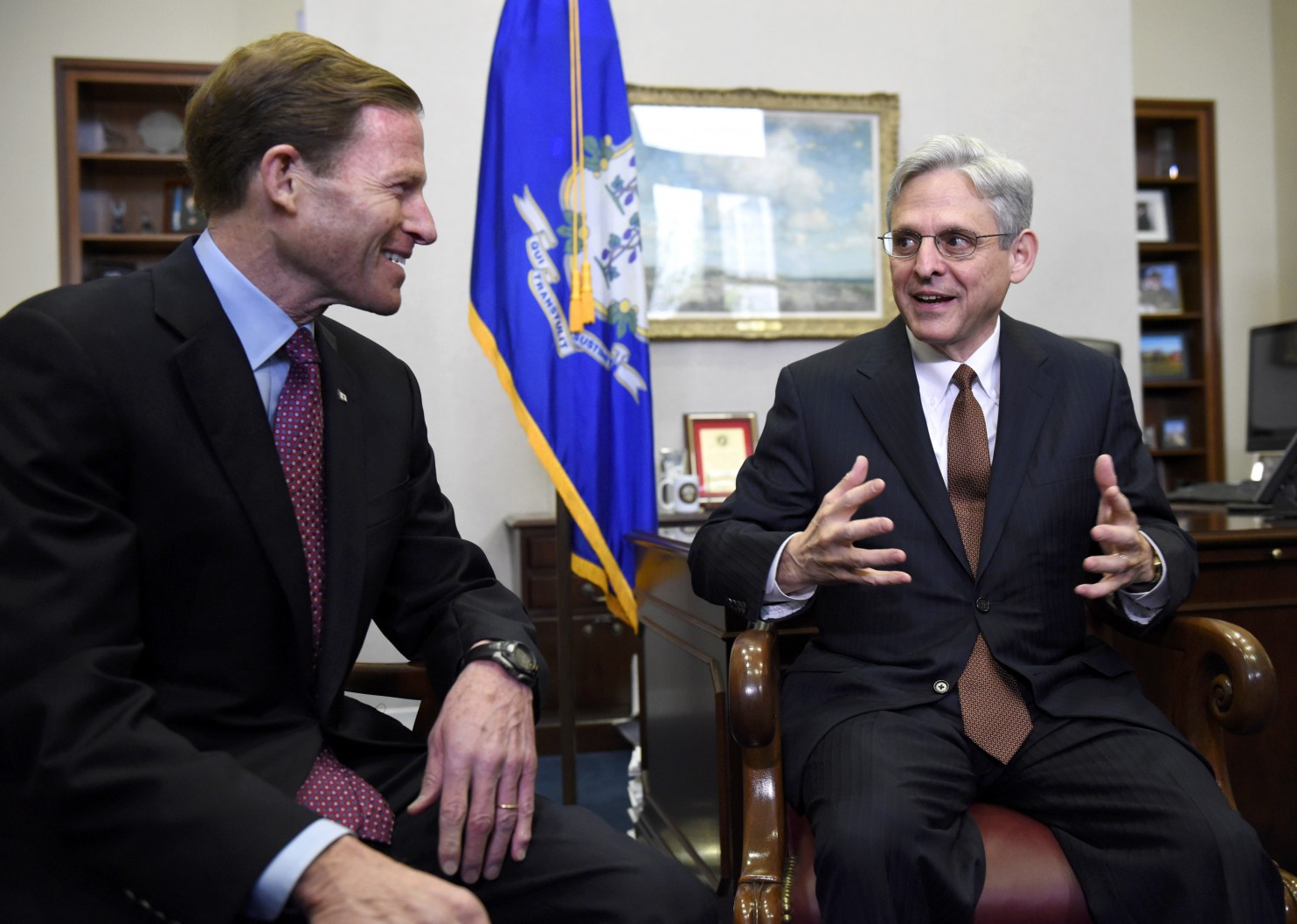
But consider what a legal scholar, Gregory L. Diskant, is offering: Barack Obama can appoint U.S. Chief District Judge Merrick Garland to the Supreme Court without Congress providing its “advice and consent.”

The question for me: Does the president have the guts to do it?

Diskant, writing for the Washington Post, asserts that the Constitution has a provision that allows a presidential appointment if the Senate “waives” its responsibility to provide its consent. Thus, the notion goes, the president is within his right as the nation’s chief executive to simply seat someone on the highest court because the Senate has refused for an unreasonable length of time to fulfill its constitutional responsibility.

Diskant cites President Ford’s appointment of John Paul Stevens to the court in 1975. Nineteen days after the president nominated Stevens, the Senate voted 98-0 to confirm Justice Stevens.

https://www.washingtonpost.com/opinions/obama-can-appoint-merrick-garland-to-the-supreme-court-if-the-senate-does-nothing/2016/04/08/4a696700-fcf1-11e5-886f-a037dba38301_story.html?postshare=6971479245651399&tid=ss_fb

President Obama nominated Garland months ago after the tragic death of longtime conservative Justice Antonin Scalia. The Senate refused to give his nominee a hearing, let alone a vote, saying that a “lame duck” president shouldn’t have the right to fill a vacancy on the court; that job should belong to the next president, according to Majority Leader Mitch McConnell, R-Ky.

“No Drama Obama” could go out — if he so chose — with a serious boom if he follows Milbank’s suggestion.

Given the obstruction that Senate Republicans have thrown in front of the president for nearly his entire two terms in office, it would serve them right if Barack Obama took the dare being offered.

Gay marriage is ‘settled law’ … how about abortion?

blackmun

Donald J. Trump says the U.S. Supreme Court has settled the issue of gay marriage, ruling that the 14th Amendment to the U.S. Constitution provides “equal protection” under the law to gay couples, thus allowing them to marry legally.

The president-elect made the right call there.

But wait a second!

What about abortion? The High Court also has ruled that women have a constitutional right to make decisions regarding their own bodies, that they are allowed to terminate a pregnancy. They cited the same 14th Amendment’s “right of privacy” provision, as noted in Justice Harry Blackmun’s opinion.

Is it settled law? One would think so.

Trump, though, has said he’s going to find someone to fill the vacancy on the Supreme Court who opposes abortion, who would help overturn the landmark Roe v. Wade decision of 1973.

Isn’t the Roe v. Wade decision “settled law” as well, just as much as the gay marriage decision of just a couple of years ago?

I should note, I suppose, that Trump once was adamantly pro-choice on the abortion issue. Now he is just as adamantly pro-life on the matter.

Trump now plans to apply the abortion litmus test to whomever he selects to the court post vacated by the death earlier this year of longtime conservative icon Justice Antonin Scalia.

Presidents normally say they don’t set up such tests for potential Supreme Court nominees … but of course they do. I’ll give Trump credit at least for all but admitting out loud he has established one critical benchmark for whomever he chooses to fill the court vacancy.

The credit, though, must be tempered by the “settled law” notion that the president-elect applies to one key social issue of our time while refusing to apply it to another.

Gay marriage, where Trump and GOP base part company

facebook-marriage-equality-rings

Here it comes.

The millions of Republican voters who stood by their man, Donald J. Trump, during the acrid presidential campaign might be feeling the first of many pangs of regret over one of their guy’s core beliefs.

Trump has told “60 Minutes” correspondent Leslie Stahl that gay marriage is the law of the land and that he’s “fine” with that. The U.S. Supreme Court decided it, legalized gay marriage in all the states. The issue is done, said Trump — quite correctly. There, you see? I actually can say something complimentary of the president-elect.

I almost could hear the teeth-gnashing while sitting in my study at home when he said that.

http://thehill.com/blogs/blog-briefing-room/news/305803-trump-diverts-from-gop-fine-with-supreme-courts-gay-marriage

Do you think the president-elect has upset those among his base, the folks who stood by him while he insulted prisoners of war, mocked a disabled reporter, admitted to groping women, denigrated a Gold Star family?

All of those things, taken separately, should have been enough to disqualify this guy from being nominated by a major political party, let alone from being elected president.

The GOP base — the true believers — stood by the nominee despite not even understanding what he believed.

Trump has vowed to appoint a conservative to the U.S. Supreme Court to succeed the late Justice Antonin Scalia. The court, though, has settled the gay marriage issue, citing the 14th Amendment to the U.S. Constitution and its “equal protection under the law” clause.

Trump tonight has indicated — finally! — that he understands the concept of “settled law.” The base of his party will be unhappy with the man they backed to the hilt.

Now … about the Electoral College

electoralcollege

Election Night 2016 proved to be one for the books.

Donald J. Trump got elected president of the United States despite being outvoted by Hillary Rodham Clinton.

But wait! He won more electoral votes.

They’re still counting ballots and it appears that Clinton’s vote lead will expand before they’re all done.

Then came the question from one of the folks attending an election watch party at some friends’ house: Is the Electoral College in the U.S. Constitution?

Yes it is. Article II lays out the rules for the Electoral College. You know how it goes: We aren’t voting directly for president; we’re voting for electors who then meet in December to cast their votes for president in accordance — supposedly — with the majority of voters from their respective states.

I’ve found myself defending the Electoral College to people abroad who cannot understand how it works, or why the founders created the system. In November 2000, for example, my wife and I were in Greece, the cradle of western civilization and the birthplace of democracy. The Greeks are quite sophisticated about these things. However, they couldn’t quite grasp the idea of one candidate — Al Gore — getting more votes than George W. Bush, but losing the election. The 2000 presidential election was still in doubt while my wife and I were touring Greece. I defended the Electoral College as best I could.

Sixteen years later, we’ve had another circumstance with the “winner” getting fewer votes than the “loser.”

It’s the fifth time in our nation’s history where this has occurred. Three of them occurred in the 19th century; two of them have occurred within just the first two decades of the 21st century.

I’m not yet ready to jump on climb aboard the dump-the-Electoral College bandwagon. I have to say, though, that that I am beginning to grow less enamored of the archaic system that was devised by men who — in their time — didn’t grant rights of full citizenship to women or to blacks. Women didn’t get the right to vote until 1920, for crying out loud and it took landmark civil rights legislation in the 1960s to guarantee full citizenship rights to African-Americans.

The gap in time — just 16 years — between the last two elections in which one candidate wins the “popular vote” but loses a presidential election is giving me serious pause about the wisdom of a system that hasn’t changed with the nation.

Let’s not despair a Trump victory

(c) 2006 Bonnie Jacobs

Social media are fluttering all over the place with despair.

Those who supported Hillary Rodham Clinton’s bid for the U.S. presidency are predicting gloomy days, months and years ahead as Donald J. Trump prepares to become the next president.

I make no apologies for my own loyalties. I preferred Clinton to win, too.

I just want to put a little perspective on what I believe lies ahead for the nation … and the new president.

Trump says he intends to do a lot of things: He will “build a wall,” he’ll revoke the Affordable Care Act, he’ll ban Muslims from entering this country, he’ll revoke trade deals.

Here’s this little impediment to all those things he intends to do: the United States Congress.

The founders got it exactly right when they built a three-tiered system of government: the executive, legislative and judicial branches.

As a friend and mentor once reminded me: A president proposes, Congress disposes.

So, there you have it. The president can declare his intention to do all kinds of things, but Congress stands in the way of all those bold — and occasionally nutty — intentions.

Factor in, too, that Trump — who has zero military or government experience — has damn few friends in Congress. He has built no relationships on Capitol Hill. The Republican “establishment” pols who run both congressional chambers dislike Trump, who spent a great deal of his political capital trashing the work they do; of course, it’s understood that congressional Democrats despise the president-elect.

Does anyone seriously believe the Congress is going to give the new president a free pass on anything, let alone some of the more controversial — and ridiculous — ideas he has pitched to American voters?

You also ought to consider that members of Congress are going to watch Trump carefully to ensure he doesn’t stray too far off the constitutional trail.

Trump is going to learn in very short order that the Constitution grants the president limited authority. He will be unable to the things he wants to do unilaterally. What about executive authority? Well, he’d better take care with how he uses that power as well.

I continue to have faith in the system of government that our founders created. These were wise men who, I’ll concede, didn’t grant a perfect government document. They didn’t give women the right to vote, nor did they grant equal rights to our nation’s black citizens; those reforms came later.

However, they did place plenty of power in the legislative and judicial branches of government, which they can use to blunt an executive branch that seeks to reach beyond its grasp.

Donald Trump campaigned for the presidency as if he didn’t quite understand all of that.

He will learn it quickly.

This is how you treat political protest

President Barack Obama has given us all a lesson on how you treat political protesters.

Watch the video and you see the president of the United States — speaking at a rally on behalf of Democratic presidential nominee Hillary Rodham Clinton — defend a gentleman who was waving a Donald J. Trump banner.

The crowd booed. It jeered the fellow. The president sought to get the audience’s attention.

Then he said, “We live in a country that honors free speech.”

The video is worth your time. It’s not long.

Once you watch it, think for a moment how Trump has handled similar incidents in which protesters raised a ruckus at his rallies. I believe he said he wished his fans would “knock the crap” out of protesters. He also said something about paying the “legal fees” for anyone sued if they reacted violently to protests.

You’ve got someone who understands the Constitution.

You also have someone who, well, doesn’t seem to understand the liberties the nation’s governing document guarantees to all citizens.

KKK newspaper ‘endorses’ Trump: enough said

donald

Hillary Rodham Clinton has loaded up on newspaper endorsements.

Donald J. Trump has gotten, well, just a few of them.

Then he received a most telling send-off from — I trust y’all are sitting down for this one — the official newspaper of the Ku Klux Klan.

This one takes my breath away.

https://www.washingtonpost.com/news/post-politics/wp/2016/11/01/the-kkks-official-newspaper-has-endorsed-donald-trump-for-president/

Check this out from the Washington Post:

“While Trump wants to make America great again, we have to ask ourselves, ‘What made America great in the first place?’ ” the article continues. “The short answer to that is simple. America was great not because of what our forefathers did — but because of who our forefathers were.

“America was founded as a White Christian Republic. And as a White Christian Republic it became great.”

I guess the publisher of the Crusader needs to read the U.S. Constitution, which he obviously hasn’t read. The “forefathers” created a secular nation … but I digress.

The Crusader speaks for the Klan, arguably the nation’s most infamous hate group.

The guy who runs the Crusader said the paper isn’t “endorsing” Trump. OK, but the paper sure likes what the Republican presidential nominee is peddling.

I’m out.