Tag Archives: US Constitution

Oh, and let’s toss reporters into prison, too, shall we?

Amid all the political shrapnel that’s flying around after the latest explosion from inside the White House, we have this little item that went virtually unnoticed.

The president of the United States sat down earlier this year with the FBI director and opened a conversation with a statement about whether the FBI should “imprison reporters” who report on leaked classified information.

Yep, that would be Donald J. Trump telling that to James Comey. I reckon Comey didn’t precisely buy into that line of crap from the president, but I’m just guessing at this point.

What in the world is Donald J. Trump trying to do here?

To my way of thinking, his complete ignorance of the America’s foundational basis is being put on full display.

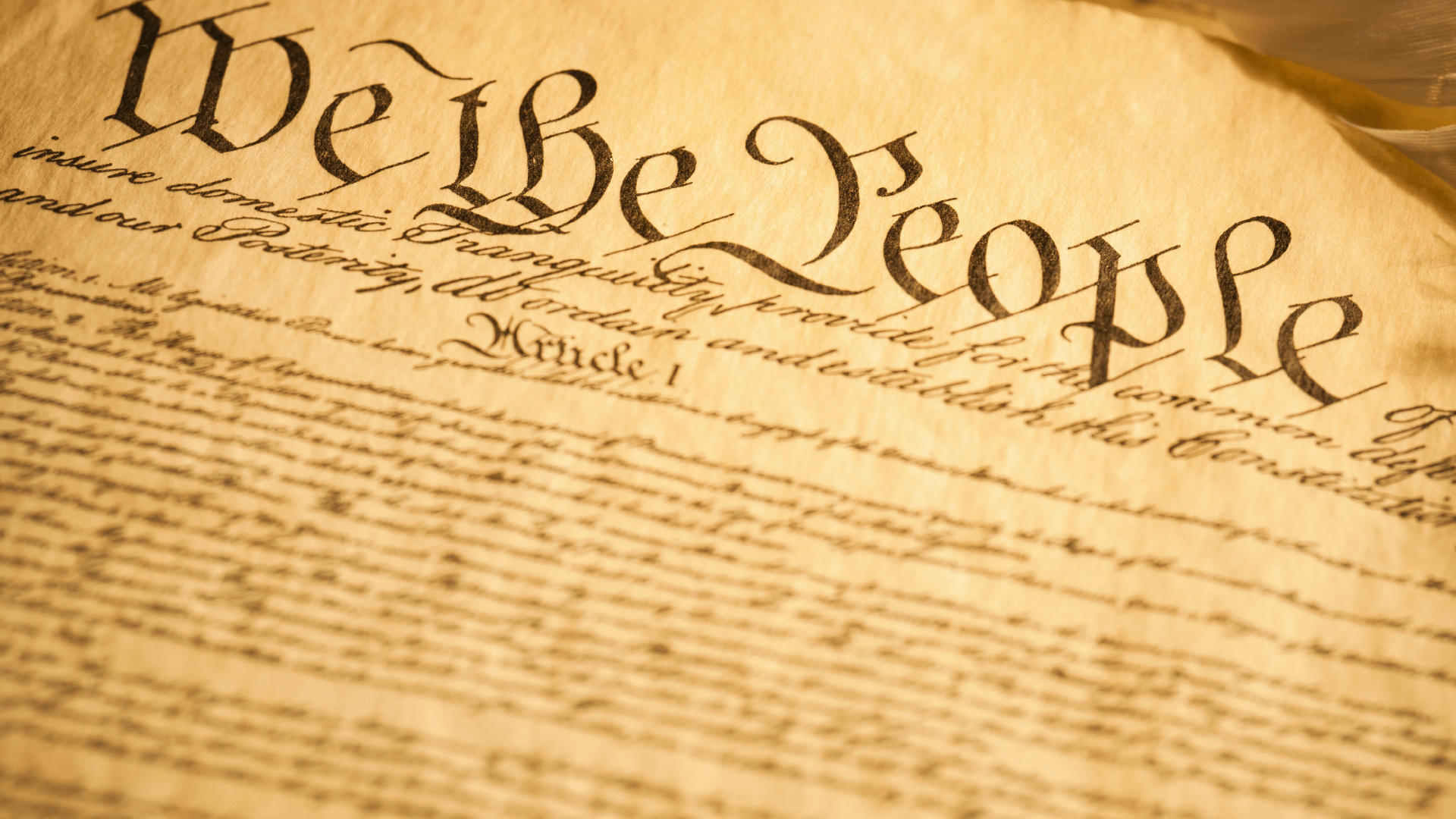
Mr. President, the U.S. Constitution’s First Amendment does not allow the government to do the very thing you suggested should be done. You do not understand that. I am now absolutely certain that at 70 years of age, you never will.

We’ve been caught up in the Big Story of the Week, which is that the president possibly committed a criminal act by asking Comey to shut down an ongoing FBI investigation into former national security adviser Michael Flynn’s contacts with Russian government operatives. This is getting serious, folks.

However, we narrowed our focus a bit too hastily. The bigger picture suggests a president infected with paranoia over how the media do their job. It is to report the news. If the news is about those who leak information to the public, then the media have an obligation to perform their duty.

Threats of imprisoning reporters cannot be tolerated.

Just as a refresher, here is what the First Amendment says in its entirety; I will italicize and bold-face a specific point for emphasis:

“Congress shall make no law respecting an establishment of religion, or prohibiting the free exercise thereof; or abridging the freedom of speech, or of the press; or the right of the people peaceably to assemble, and to petition the Government for a redress of grievances.”

Are we clear?

Hold up on ‘impeachment’ talk

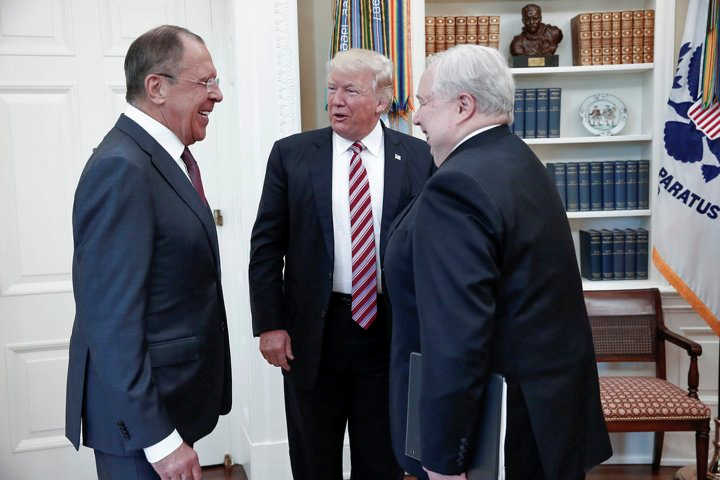
Donald J. Trump may have committed a monumental mistake by divulging highly classified information to visiting Russian diplomats.

He well might have put some intelligence operations in jeopardy; indeed, let us pray we don’t lose any lives as a result of whatever he might have told the Russians who he welcomed into the Oval Office.

Social media are buzzing with talk about impeachment, that the president might have committed a treasonous act.

Let hold on here.

I detest Trump as much as the next guy. However, it’s good to realize that in order to be impeached by the House of Representatives and tried by the Senate, a president needs to commit a “high crime and misdemeanor.” Trump likely didn’t do anything illegal.

You can bet that he might have done something that is far more “careless” and “reckless” than anything Hillary Rodham Clinton did when she used her personal e-mail server while she was secretary of state. Did the president commit an impeachable offense?

It’s not likely.

Trump pops off

There well might be other grounds on which to impeach the president. I can think of obstruction of justice, for one thing, dealing with his decision to fire FBI Director James Comey, who at the time of his firing was in the middle of an investigation into whether Trump had an improper relationship with Russian government officials.

The Emoluments Clause in the U.S. Constitution also might prove problematic for Trump as he continues to have interests in businesses that have dealings with foreign governments.

As outrageous as Trump’s relationship with Russia is proving to be, his reported carelessness with classified information doesn’t rise to the level of impeachment.

The founders set a high standard for such an action, although President Clinton’s impeachment did seem to stretch far beyond what one would constitute grounds for impeachment. Congressional Republicans hung their impeachment vote on the president’s failure to speak the truth under oath to a federal grand jury which asked him about his relationship with that White House intern; U.S. senators, though, acquitted him in the trial that ensued.

It’s good to scale back the impeachment talk regarding Donald Trump as it relates to this latest bombshell. What he might have done stinks to high heaven and there well could be blowback. Impeachment? It doesn’t appear to be a natural consequence of what the president might have disclosed to his Russian guests.

Trump launches potential war of attrition

I long have thought that every human being has a limit to the amount of emotional baggage he or she can lug around.

Accordingly, it’s fair to wonder just how much bedlam Donald John Trump can endure as he continues — in some form or fashion — to govern the United States as its president.

His first 100-plus days as president have been a stunning exercise in chaos, controversy and confusion.

It’s making me wonder — and I’m quite serious about this — whether Trump has the stamina to continue to function in this manner. My memory of presidential transition goes back to when John Kennedy took over from Dwight Eisenhower in 1961. No one has managed to create the number of firestorms so early in their presidency as the 45th man to hold that office. Not even Lyndon Johnson, who became president in 1963 in the midst of a horrifying national tragedy; or Gerald Ford, who ascended to the presidency in 1974 in the wake of a crippling constitutional crisis and scandal.

In a related matter, it’s also fair to ask just how much of this the public can withstand.

Just in the past week, we’ve seen the president fire the FBI director and ignite a political wildfire that continues to rage out of control. Trump cannot formulate a cogent message. His White House communications team is flummoxed hourly it seems by contradictory statements pouring out of the president’s pie hole.

How do they handle it? How can they withstand this level of chaos?

And I haven’t even mentioned what seems like an increasingly real possibility that we might have an impeachment process starting to take shape in the U.S. House of Representatives.

There might be an obstruction of justice charge leveled at the president over the threat he leveled at James Comey two days after he fired the FBI boss; Trump well might have sought to bully the FBI into backing off its investigation of the president’s campaign and whether it colluded with Russians seeking to sway the 2016 election.

Then we have the Emoluments Clause issue, and questions about whether Trump’s businesses have been enriched by contracts with foreign governments. The U.S. Constitution prohibits presidents from obtaining any such financial gain, yet the president continues to hold onto his worldwide business interests.

I suppose I could mention the continuing string of lies and defamatory statements he makes about his predecessor as president, the woman he defeated in 2016 and any number of individuals and organizations opposing him.

What happens, too, if he crosses yet another “red line” by restricting the media from doing their job, which the Constitution guarantees them the right to do without government interference?

Ladies and gents, we have elected someone who continues to demonstrate every single day that he doesn’t know what the hell he is doing. He is unfit for the office he holds. He is making a mockery of the presidency and, sad to say, of the greatest nation on Earth.

His legislative agenda — whatever it is! — is going nowhere. Jobs bill? The wall? Tax reform? Health care overhaul? How does he do any of it while the tempest over what the Trump calls “the Russia thing” continues to boil over?

Are you frightened yet? I damn sure am.

No surprise that POTUS skips correspondents dinner

The White House Correspondents Association is having its annual dinner tonight.

One of the normal attendees is missing. That would be the president of the United States. Are you surprised? Me neither.

Donald J. Trump has declared the media to be the “enemy of the people.” He has accused the media of peddling “fake news.” He said just today that the media have “purposely” reported “negatively” his first 100 days in office.

Did anyone really expect the president to stand before a large banquet room full of media representatives, wisecrack his way through a routine, slap a few backs as if he really harbors no ill feelings toward the media? Of course not!

What the president has done, of course, is attack an institution that was guaranteed protection from government bullying and coercion. That guarantee is written explicitly in the First Amendment to the U.S. Constitution. That has not mattered to the president, who has banned certain media outlets access to his administration and scolded certain media members harshly in public for allegedly reporting falsehoods.

How ironic it is. You’ll recall that in 2011 Trump — then just a mere real estate mogul and reality TV celebrity — sat among the media at a White House correspondents dinner. That was the event in which President Barack Obama poked fun at Trump, needling him for promoting the “fake news” about the president’s place of birth and assorted other mistruths. He did all that, by the way, on the same day he ordered the CIA-Navy SEAL operation that resulted in the death of Osama bin Laden.

Hey, maybe Donald Trump believes Barack Obama’s act is too difficult to follow, given the former president’s impeccable comic timing. Nah, probably not.

Maybe the president will bury the hatchet with the media and recognize publicly that the media have a job to do, which is to hold public officials — including the president of the United States — accountable for their actions and decisions.

Break up the 9th U.S. Circuit? C’mon, get real

Donald J. Trump keeps ratcheting up his open combat with the federal judicial system.

The president wants to break up the 9th U.S. Circuit Court of Appeals because — doggone it, anyway! — the judges keep issuing rulings with which he disagrees.

Poor guy. That’s how it goes sometimes, Mr. President.

The 9th Circuit has ruled against the president’s ban on refugees seeking entry into this country from majority-Muslim countries. That just won’t stand in Trump’s world. So his solution is to dismember the court, which is based in San Francisco and is considered to be arguably the most liberal appellate court in the federal judicial network.

He said lawyers shop for friendly judicial venues and the president believes the 9th Circuit is a favorite forum to hear cases pitting the federal government against anyone else.

Give me a break.

Conservative courts have ruled against liberal presidents. Indeed, liberal courts have ruled against conservative presidents as well. Have presidents of either stripe been so thin-skinned that they’ve sought to break up an appellate court? Not until this one took office.

Leave the court alone, Mr. President.

A better option for the president would be to craft laws that can withstand judicial challenge. Federal judges in Hawaii, Washington state and Maryland all have found sufficient fault with the Trump administration’s effort to ban refugees to rule against them. Appellate judges have upheld the lower court rulings.

In a strange way this kind of reminds me of when President Franklin Roosevelt sought to tinker with the federal judiciary by “packing” the U.S. Supreme Court with justices more to his liking; he sought to expand the number of justices on the nation’s highest court. He didn’t succeed — thank goodness.

To be sure, Trump isn’t the only recent president to bully the federal judiciary. Barack Obama called out the Supreme Court while delivering a State of the Union speech in 2010 over its Citizens United ruling that allowed unlimited political contributions by corporations. The president was wrong to do so — in that venue — with the justices sitting directly in front of him.

The nation’s founders sought to establish an independent federal judiciary that ostensibly should be immune from political pressure. The president is seeking to bully the court system through a number of methods: He calls out judges individually and criticizes the courts’ decisions openly and with extreme harshness.

The 9th U.S. Circuit Court of Appeals needs to remain intact and the president needs to live with the consequences of how it interprets the U.S. Constitution.

What has the president learned in 100 days?

Let’s turn away for a moment from what Donald Trump might have accomplished during his first 100 days as president to what he might have learned during that time.

The president’s list of accomplishments is pretty damn skimpy.

His learning curve, though, has been steep. I hope it’s beginning to flatten out.

What’s the most glaring eye-opener for the president? It’s that you cannot run the federal government the way you run a business.

At virtually every turn along the way since taking office, the president has been forced to swallow that bitter pill. A man who became used to getting his way because he demands it has learned that the federal government is structured — on purpose — to function on an entirely different set of dynamics.

The nation’s founders crafted a brilliant governing document. When you think about it, while the U.S. Constitution grants the president significant executive authority, it does not imbue the office with ultimate governing authority. The founders divvied up power among three branches of government: executive, legislative and judicial.

It’s that darn legislative branch — the U.S. Congress — that has a say in what becomes law. Donald Trump’s business experience doesn’t mean squat to many of the 535 men and women who comprise both chambers of Congress. They, too, have their constituencies to which they must answer. Yes, the president represents the nation, but Congress — as a body — also represents the very same nation.

Can you govern the nation like a business? No. Never. Not a zillion years.

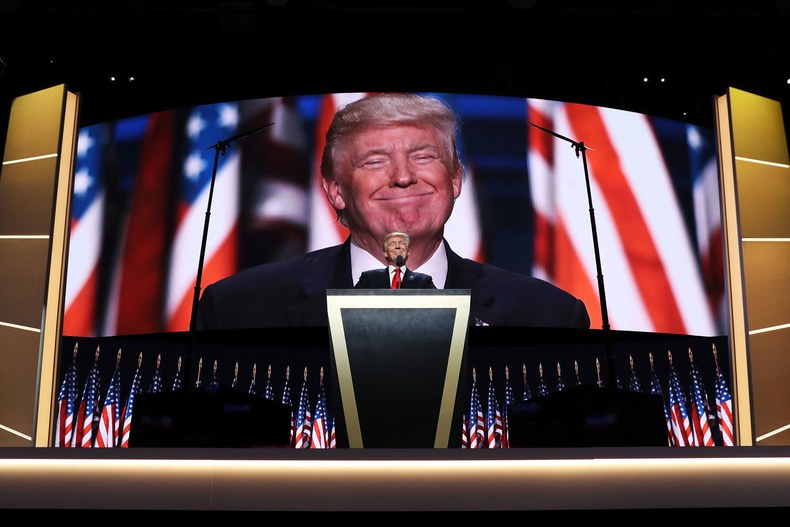
Trump needs to understand that governance is a team sport. He cannot threaten members of Congress if they resist his legislative proposals. He cannot exclude members of the “other” party from key negotiations. He must abandon the “I, alone” mantra — which he bellowed at the Republican National Convention this past summer — that threatens to haunt him for as long as he is president.

And then there’s the judicial branch. The federal judiciary comprises individuals who hold lifetime appointed jobs. Their mission is to ensure that laws do not violate the Constitution. The founders granted them independence from the executive and legislative government branches.

Those judges have the constitutional authority to knock down executive orders, or to put the brakes on laws enacted by Congress. They aren’t “so-called judges” whose status as “unelected” jurists doesn’t diminish their authority.

I hope the president has learned at least some elements of all this during his first 100 days. If he doesn’t, then we’re all going to be in for an extremely rough ride.

However, we’re all just spectators. The president will need to hold on with both hands if he has any chance of getting anything done during his time in office.

We are witnessing the consequence of electing someone with zero public service experience. Mr. President, the federal government bears no resemblance — none! — to the businesses you built.

Trump Hotel poses potentially huge conflict for … Trump the POTUS

How in the world does Donald John Trump get away with this?

He serves as president of the United States. He continues to hold onto business interests, such as the Trump International Hotel, which plays host to foreign government leaders; those foreign governments spend money doing business at this hotel.

And the president somehow doesn’t violate the “emoluments clause” of the U.S. Constitution, the clause that says president’s cannot accept money or other inducements from foreign governments?

It’s an anti-bribery clause, in a manner of speaking.

Yet the president continues to dine there, which I suppose he is entitled to do. What is making my head spin is how this particular hotel can, in the words of The Hill, be the “go-to” place for foreign government dignitaries.

Isn’t the Constitution clear about this?

The emoluments clause is in the very first article of the Constitution. The founders were clear, I have thought, to prevent the president from doing any form of private business with any “King, Prince or foreign State.”

Let’s remember that Trump hasn’t divested himself of his vast business empire; he’s handed it all over to his sons

But as The Hill reports: “The hotel has been the go-to location for foreign leaders and dignitaries since it opened last fall, when Trump was still a presidential candidate.”

He’s no longer a candidate. He’s now the man. The president of the United States. Leader of the free world. Commander in chief. Head of state.

Unless he’s giving away all the services his hotel is providing those foreign “dignitaries and leaders,” it seems to me that he’s committing an unconstitutional act.

No intention to lecture AG about the law, but really …

I am acutely aware that Jefferson Beauregard Sessions is an educated man.

He went to law school; passed the Alabama state bar; served as a federal prosecutor; tried to become a federal judge in the 1980s, but was rejected by the U.S. Senate because of some things he reportedly said about black people; then he was elected to the Senate.

He now serves as U.S. attorney general, thanks to an appointment by Donald John Trump.

There. Having stipulated all of that, I need to remind the attorney general that he should not disrespect the tenet of judicial review that the nation’s founders established when they formed our republic more than two centuries ago.

I say this with no desire to lecture the AG about the law, or the U.S. Constitution.

However, when he pops off about a federal judge sitting on the bench “on an island in the Pacific,” he has disrespected one of the basic frameworks set aside by those founders.

The judge presides over a federal court in Hawaii, one of the nation’s 50 states. U.S. District Judge Derrick Watson ruled against Trump’s temporary travel ban on constitutional grounds. The travel ban is now heading to the 9th Circuit Court of Appeals.

You’ll recall, too, that the president himself referred to another federal jurist in Washington state as a “so-called judge” when he struck down an earlier travel ban involving refugees from seven Muslim-majority countries. Trump might need a lecture about the Constitution and the separation of powers written into it; he might need to be told about how the founders intended for the judiciary to be independent of political pressure. Given that Trump had zero government experience prior to becoming — gulp! — president, he might be unaware of the not-so-fine print written in the Constitution.

The attorney general should know better than to disparage a federal judge in the manner that he did.

An island in the Pacific? C’mon, Mr. Attorney General.

Suck it up. Let the courts do their job. Sure, you are entitled to challenge court decisions’ legality. However, let’s stop the petulant put-downs.

Same thing goes for you, too, Mr. President.

How did The Wall become our responsibility?

Hey, didn’t Donald John Trump vow, declare it a lead-pipe cinch that Mexico would pay for a “big, beautiful wall” along the border between that country and the United States of America?

Didn’t he say he would force Mexico to foot the bill because, after all, those criminals and terrorists were “flooding” the country through our southern neighbor?

He got into an immediate war of words with Mexican President Enrique Pena Nieto after taking office this past January. Why? Pena Nieto said “no way” would his country spend a nickel to pay for the wall.

Here we are, nearly 100 days into the Trump administration’s existence. The wall is now central to a domestic political dispute — in the United States. The federal government might shut down if Congress cannot come up with a plan to stick American taxpayers with the bill to build a wall that (a) won’t work and (b) will blow up the annual budget deficit.

What’s the cost of this boondoggle? $20 billion to $25 billion? For starters?

Congress and the president are squabbling over whether to approve one of those “continuing resolutions” that would fund the government for the short term. Meanwhile, that damn wall is still being negotiated between Republican congressional leaders and the Republican who now sits (once in a while) in the Oval Office.

If there is a more impractical, illogical and ill-conceived idea than building such a barrier between two ostensibly “friendly” nations, then someone will have tell me.

A huge portion of the U.S.-Mexico border happens to be along a mighty river — the Rio Grande — that separates Texas from Mexico. How in the name of civil engineering does the president build the wall along that border? How does the president propose to seize all that private land without adding to the already-enormous cost? The U.S. Constitution’s Fifth Amendment requires “just compensation” for any “private land taken for public use.”

Well, why quibble over the small stuff?

The very notion of this wall becoming central to this political dispute simply illustrates yet another blind and thoughtless campaign promise the president cannot keep.

And if he made that promise knowing that he couldn’t fulfill it, isn’t that just another flat-out, bald-faced lie?

What’s with this Texas Senate gay marriage recusal nonsense?

Why do Texas Senate Republicans insist on making ridiculous statements about gay marriage?

The state Senate has approved a measure — with all GOP members and one Democrat joining them — that allows county clerks to recuse themselves from signing off on marriage licenses for gay couples.

Senate Bill 522, authored by Sen. Brian Birdwell, R-Granbury, allows county commissioners courts to appoint someone other than the county clerk to sign such a marriage license if the county clerk objects on religious grounds.

As the Texas Tribune reports: “It ‘guarantees county clerks and every American the free exercise of religion even when they are working for the government,’ Birdwell told his colleagues on Tuesday.”

Huh? Senate Democrats are perplexed at this. Why? Because current state law already allows county clerks to deputize an employee to carry out that duty.

What about the oath of office?

County clerks are entitled to follow their religious faith. I get that. Here is what I do not understand: I do not understand how they can place their hand on a Bible or some other holy book and then pledge to follow the laws of the land and uphold the U.S. Constitution.

I now shall refer to the U.S. Supreme Court, which in 2015 ruled that the equal protection clause of the Constitution guarantees the right of gay couples to marry. That means, if I understand this correctly, that gay marriage is now legal in all 50 states, which would require county clerks to perform the duties of their public office.

SB 522 now allows county clerks and judges to discriminate against people on the basis of their sexual orientation. Sure, they can cite their own religious objection. Existing state law, though, already allows them to step aside and hand the marriage license issuance duty to someone else.

Which brings me back to my original question: Why is the Texas Senate enacting legislation for which there is no need?