Tag Archives: US Constitution

No efforts to ‘erase history’

I used to have a relationship — albeit a distant one — with a fellow named Carl Fowler.

He used to write the occasional letter to the editor and guest column to the Amarillo Globe-News, where I worked as editorial page editor for nearly 18 years. I see that he’s still submitting commentaries to the newspaper. Truth be told, I cannot let this one pass without a brief comment.

Fowler, as is his wont, is highly critical of who he calls the “far left” for seeking to remove Confederate monuments from public squares.

And in his essay, he manages to do a couple of things that are wrong on their face. He refers to the “Democrat Party,” which is not the name of the party known officially as the “Democratic Party.” That’s how modern conservatives seek to demonize the Democratic Party and those who belong to it.

He also misquotes former President Barack Obama. He refers to a statement the former president once made about the United States no longer being “just a Christian nation.” Of course, Fowler said Obama’s quote was that we are “no longer a Christian nation.” The word “just” is important here, because the former president was referring to the increasingly non-Christian mix of Americans who are becoming key components of our diverse national texture.

Moreover, we never have been a “Christian nation.” Fowler, a retired academic, ought to know better than to imply anything of the sort. All he’s got to do is read the U.S. Constitution and he won’t find the words “Christian” or “Jesus Christ” anywhere in it. You see, the founders created a secular state that gave us all the right to practice whatever religion we wanted — or to not practice any if we so chose.

The essence of Fowler’s essay, though, is to condemn those who take a dim view of honoring those who went to war against the United States of America. The Civil War killed more Americans than any other conflict in our history. To my way of thinking, those who sought to destroy the Union were traitors.

Should we erase that chapter from our national story? Of course not. Let’s just call the Confederates who they were.

Here is Fowler’s essay. Check it out. The floor is now open for discussion.

James Comey: in the political bulls-eye

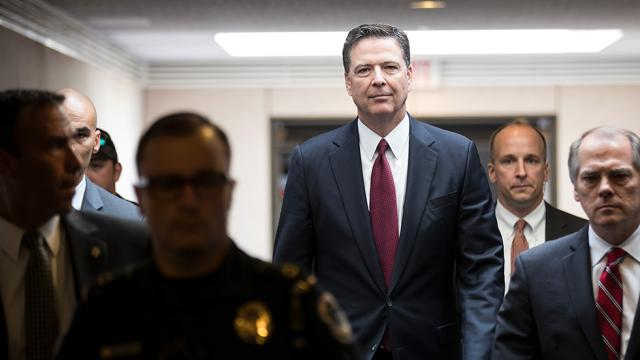
James Comey is man under siege.

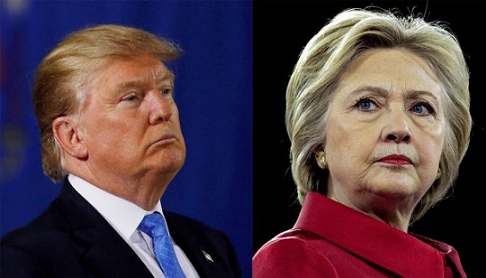
Think of it. The former FBI director is taking incoming rounds from Hillary Rodham Clinton, who blames him for costing her the 2016 presidential election. Her new book “What Happened” seeks to lay out the case that Comey’s 11th-hour decision to take a fresh look at Clinton’s “email controversy” cost her crucial votes down the stretch.

So, does that make Comey a sort of Trump toadie? Is he snuggling with the Trumpkins now that their guy, Donald John Trump, got elected president against Hillary Clinton?

I don’t believe so.

White House staffers now want Comey to be investigated for his leaks to the media in the wake of his sudden firing by Trump as FBI director earlier this year. Let’s not forget that Comey was in the midst of an investigation into the “Russia thing,” which prompted Trump to can him in the first place.

Comey’s allies come to his defense.

Has the former FBI boss committed a crime by leaking information to the press? No chance. He didn’t leak any classified or confidential information. What’s more, the First Amendment to the U.S. Constitution protects the media against efforts to prevent them from doing their job.

Comey has become a principal figure in special counsel Robert Mueller’s expanding investigation into the Russia matter.

His role in the email controversy involving Hillary Clinton really is irrelevant in the context of the here and now, which is the Russia investigation. It’s worth mentioning only to highlight what I believe is James Comey’s curious position in the crosshairs of leaders in both political parties.

For the record, I don’t believe Comey’s decision to take a fresh look at Clinton’s e-mail mess by itself determined the outcome of the election. Clinton lost to Trump because she made too many other mistakes down the stretch; she snatched defeat from the jaws of victory.

Nor do I believe Comey should be investigated by law enforcement over his leaks to the media after his shocking dismissal as FBI director. He didn’t break the law.

Keep standing tall, Mr. Comey.

‘No’ on Hillary in ’20, but not a single regret over voting for her

I feel the need to clarify something I wrote about Hillary Rodham Clinton’s new book and my desire for her to end her public service career.

My strong sense is that the Democratic Party needs someone new, someone not on most of our radar screens, a fresh outlook and approach to public policy problem-solving.

Hillary Clinton needs to step aside.

That said, I want to restate with absolute clarity that I have zero regrets — not one, none — over supporting her candidacy in 2016. I would do so again and again and again — if the opponent were the same person who beat her. Hillary Clinton presented by far the clearest choice I had seen since I cast my first vote for the presidency in 1972.

I wrestled not one instant over whether I should cast my vote for Clinton over Donald John Trump Sr. My pro-Trump friends are entitled to stand my their man and I accept that they believe he’s the best thing to happen to American politics since pockets on shirts. I simply do not agree with them.

Was Hillary Clinton the perfect candidate for president in 2016? No. But compared to the man who stunned her — and many of the rest of us — she looks pretty damn perfect.

Congressional committees tried to pin “Benghazi” on her; they came up empty. The FBI looked for criminality in her handling of the e-mail matter; it, too, came up empty. Gossip mongers kept up the steady drumbeat of malicious rumors that were outright lies.

She worked beside her husband, Bill, while he served as a multi-term Arkansas governor; she served with honor as first lady of the United States; she learned how to legislate as a U.S. senator from New York; she represented U.S. diplomatic interests with competence and skill as secretary of state.

Trump brought zero public service experience to the job as president. I will remain baffled and mortified arguably for the rest of my life over just how this clown ever got elected to this most exalted, highly revered office.

Hillary Clinton’s time, though, has passed. She fired all her weapons in 2016 and missed the target. Trump beat her fairly and squarely where it counted: in the Electoral College. That’s how the U.S. Constitution sets forth how we elect presidents and I accept the 2016 outcome — even through gritted teeth.

Her book “What Happened” lays out her version of what went wrong in her supposedly inevitable march into the Oval Office.

From my way of thinking about it now, eight months after Trump’s inaugural, it all boils down to this basic truth: Hillary Clinton just didn’t wear well with those who wanted a radical change in direction in the White House.

And oh brother … did they get it.

I wish the outcome had been different. It’s time for Democrats to look deeply within themselves for an antidote to the absolute chaos that’s become the hallmark of governance in the world’s greatest nation.

It’s not going to be Hillary.

Impeachment? Not so fast, folks

Social media are chattering and clattering like a newspaper newsroom full of typewriters on deadline. Those of you who are old enough to remember actual typewriters will understand the analogy.

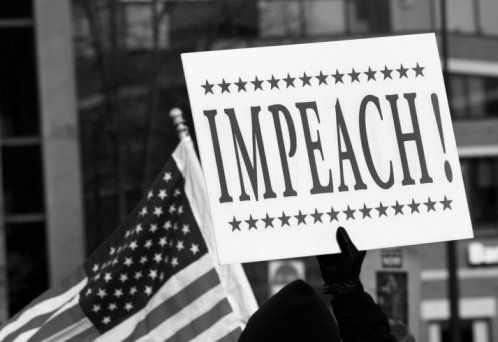
But the social media are abuzz with viral statements, requests and demands that Donald John Trump Sr. gets impeached.

Let’s hold that thought. At least for a while, OK?

The president of the United States is demonstrating plenty of disturbing behavior. He holds those rallies in which he ad-libs his way into nonsensical rants. Then he reads reasonably crafted speeches, looking for all the world as if he’s been asked to eat every bite of the squishy spinach on his plate. The next day he tears into the media, members of Congress and virtually every political foe who’s lined up against him.

Serious-minded folks like former head spook James Clapper say they doubt Trump’s “fitness” for his job. He’s acting like a maniac. Sounding like a blithering, blathering fruitcake.

Does any of this behavior rise to the level of an impeachable offense? No. Not as I understand what’s written into the U.S. Constitution.

Article II, Section 4 spells out the specifics of a presidential impeachment. It calls for such an action in the event of “Treason, Bribery, or other High Crimes and Misdemeanors.” The House of Representatives must bring formal charges against the president. Then the Senate conducts a trial; to convict a president and toss him out of office requires a two-thirds vote by senators.

Has the 45th president committed any sort of “high crime and misdemeanor”? No. Indeed, there is an open debate on just when we’ll know of any potential charges being brought. Many of us have our opinion on whether there should be charges brought. To date, we have none. We don’t even have any compelling evidence to suggest that there will be charges brought.

What about the president’s behavior? My reading of the Constitution suggests that loopy conduct does not, by itself, constitute an impeachable offense. But let’s not kid ourselves here. Donald Trump’s behavior on speech podiums is weird in the extreme.

I’ve never heard a more inarticulate president than the one we’ve got now. Never have I seen someone trash tradition in the manner that he does. Given an opportunity to heal a nation divided by myriad issues of many stripes, Donald Trump does precisely the opposite. He lashes out. He hurls insults at his foes. He cannot even bring himself to offer a word of good wishes to one of his critics — Sen. John McCain — who is in the midst of a life-and-death struggle against cancer.

Trump disgraces his office almost daily. I’d say he disgraces himself, but he seems to lack the capacity to look inward.

Is any of this impeachable? No.

None of it will stop the social media chatter. I just think it’s important to put some of this hysteria into some perspective.

Meantime, let’s wait for the special counsel looking at “The Russia Thing” to do his job.

‘All men are created equal … ‘

I hope the debate over the nation’s founding documents continues for a good while. We need, as Americans, to remind ourselves of what the founders wrote and try to parse what they meant when they wrote these words.

While steering away from specific mention of the current controversy swirling around the nation, I feel a need to examine briefly this particular passage from the Declaration of Independence.

“All men are created equal.” 

I suppose you can look at that phrase and take it one of several ways. Yes, all “men” were “endowed with … certain unalienable rights.” That, of course, excludes women, who were left out of that formula. They couldn’t vote; indeed, it took the United States of America until the early 20th century to get around to granting women that right.

There’s a discrepancy worth noting here. “All men” didn’t really mean “all.” You see, we had this portion of our population at the time the Declaration of Independence was written that wasn’t even considered fully human. They were the slaves. They were kept in bondage by many of the men responsible for founding the nation.

I will try to insert myself into Thomas Jefferson’s skull for a moment. The principal author of the Declaration perhaps intended for it to mean “all.” Whatever his intent or his idea at the time he put that thought down on paper, it doesn’t negate for one instant its fundamental truth.

All men — and eventually all women — are endowed by the rights laid out in the Declaration of Independence.

Fast-forwarding to the 21st century, it is preposterous in the extreme to accept the presence of those who pretend to be members of a “superior race” of human beings.

We’re in the midst of yet another national discussion about hate groups, about so-called “white supremacists” and those who adhere to a political philosophy against which we entered a world war. 

They will insist that they are the patriots among us. That they know the meaning of our nation’s founding.

They … know … nothing.

The founders didn’t get everything quite right when they penned those cherished words. Those who came along later have sought to amend and improve that high-minded language.

We’re not quite at the point of pure perfection. But we’re a lot closer to it now than we were at our nation’s beginning.

The preamble to the U.S. Constitution declares our intention to “form a more perfect Union.” I read that to mean that we’ll never quite reach the finish line. That does not mean we should stop reaching for it.

And then there’s the 25th Amendment

The United States of America functioned for nearly two centuries before it ratified a constitutional amendment dealing with presidential succession and the appointment of a vice president.

The 25th Amendment was ratified in February 1967. It came in reaction to the assassination of President Kennedy in 1963. The new president, Lyndon Johnson, served the remainder of JFK’s term without a vice president. LBJ got elected in 1964 and Hubert Humphrey joined the administration as vice president. President Truman took office in April 1945 after Franklin Roosevelt died just a month into his fourth term; Truman served nearly a full term, therefore, without a vice president.

The amendment has been used exactly once. Vice President Spiro Agnew resigned in 1973 and President Nixon appointed House Minority Leader Gerald Ford to become vice president. The new VP then settled into the Oval Office Big Chair when Nixon resigned in August 1974.

I mention this today because the 25th Amendment is getting some attention these days. It allows for a temporary replacement of the president if a majority of the Cabinet determines he is unable to continue doing his presidential duties.

Donald John Trump is in trouble. A special counsel is examining whether his campaign colluded with Russian hackers seeking to meddle in our 2016 election. There might be some issues relating to Trump’s myriad business holdings, too. Oh, and then the president declares that “both sides” were at fault in the Charlottesville riot, causing a serious rift between the White House and members of Congress of both political parties.

There have been some questions about the president state of mind, his ability to actually govern and, yes, his mental competence.

I’m not qualified to offer a psychological diagnosis, let alone from half a continent away. So I won’t go there.

The 25th Amendment is meant to ensure the executive branch continues to function even in these difficult times. Just how difficult will they become? I guess that depends on how the president responds to the mounting pressure.

I keep hearing about how angry he is getting. He’s been cutting people loose all over the place: national security adviser, gone; press secretary, gone; communications director, gone; chief of staff, gone; FBI director, gone; senior strategist, gone.

Trump popped off about neo-Nazis and Klansmen. The Joint Chiefs of Staff have effectively rebuked the commander in chief, although not by name. Congressional leaders are starting to weigh in. There might be some diehard Trumpkins among them, but the vast majority of public response has been highly critical.

Republican leaders are aghast. Never mind what Democrats think; it’s a given that they detest the president already.

In the meantime, the 25th Amendment looms as a serious talking point among the chattering class in Washington, D.C. Don’t for a single moment believe that the president is ignoring the chatter.

Is it gut-check time for the NFL?

The National Football League needs to re-evaluate a few priorities.

A young man is trying to find a spot with one of the NFL’s professional football teams. He’s a pretty good quarterback. He once led the San Francisco 49ers to the Super Bowl in 2013.

Then he did something foolish, perhaps even stupid. He decided to kneel during the playing of the National Anthem at the start of football games. Colin Kaepernick was protesting the plight of African-Americans. He decided to make a political statement by declining to stand for the Anthem.

He’s been vilified ever since.

Why the NFL re-evaluation? Well consider a thing or two. The league has allowed actual convicted felons to play football. They’ve been convicted of spousal abuse, sexual abuse, illegal dog fighting, drug peddling. Why, one of the game’s all-time greats — retired linebacker Ray Lewis — once pleaded no contest to a charge in connection with the murder of an individual. He retired recently and has been feted as one of the game’s giants. Huh? Yep.

Kaepernick has been convicted of nothing. He has committed no crime. He merely chose to make a political statement. Yes, I wish he hadn’t done it that way. But that is his prerogative. It’s in the First Amendment to the U.S. Constitution, which guarantees him the right to do what he did.

Kaepernick was waived by the 49ers. He wants to keep playing football. General managers, team owners and head coaches are afraid of fan reaction, I suppose.

Check out John Feinstein’s excellent column on Kaepernick right here.

Do you remember when a young boxer declined induction into the U.S. Army, citing his religious objection to the Vietnam War? The late Muhammad Ali was stripped of his heavyweight title in 1967 and then denied the opportunity to fight for a living. He was deprived of more than three prime years of his career. Then in 1970, the U.S. Supreme Court ruled unanimously that Ali had been denied his constitutional right of religious freedom.

Ali returned to the boxing ring and, well, the rest is history.

Colin Kaepernick is facing much of the same recrimination. It is unjust. It’s gut-check time in the NFL.

‘The Constitution works’

The hour is late, but I cannot let this day pass without commenting briefly on a monumental event in our nation’s political history.

This single-sentence document is President Nixon’s resignation letter to Secretary of State Henry Kissinger. As someone noted on social media, it could fit into tweet.

The Watergate scandal came to a conclusion with this note. The president said goodbye to the White House staff, shook hands with the new president, Gerald Ford, then boarded Marine One with his wife, Pat, and flew off into political oblivion.

It’s worth mentioning yet again, I suppose, because of the current president’s troubles. There’s been no shortage of comparison to what doomed the 37th president’s tenure to what we’re witnessing today in real time.

I am not going to predict a similar end to Donald Trump’s tenure.

I merely want to recall what President Ford said shortly after taking the oath of office 43 years ago today.

“The Constitution works,” the president reminded us.

Yes, that governing document gives me great comfort as we watch the current drama play out … no matter how it all ends.

Learn English to get in?

Pass the Pepto. I’m feeling a touch of heartburn as I ponder this latest public policy pronouncement from the president of the United States.

Donald Trump wants to impose stricter standards for legal immigrants seeking entry into the United States. They need to have certain skill sets and they need to be employable. They also need to learn to speak English.

I dislike the policy as a general rule. So do enough members of Congress to derail it on Capitol Hill.

It’s the English-speaking element that I want to discuss.

The United States does not have an “official language.” There’s no law on the books. The U.S. Constitution makes no reference to an official language. Thus, why does the president believe it’s imperative for immigrants who go through the process legally need to speak English?

I know that English is the predominant language spoken by U.S. citizens. I also know that many of those citizens are naturalized, that they weren’t born here and that they learned the language through various forms: formal classes, total immersion into society.

Moreover, I also concede that I get I get annoyed when I encounter service employees at, say, a grocery store who don’t understand me when I ask, “Where can I find some peanut butter?” They look at me as though I am speaking Martian. I throw up my hands and look for someone who speaks my language.

Is that sufficient reason to enact a law? Is it reason to require people to speak English?

I guess you can say I am officially undecided at this point, although I tend to lean against the notion of imposing such requirements on those who come to this country.

Yes, they need to speak at least a little bit of English if they seek to become U.S. citizens.

But those who seek green cards or work visas that enable them to live here? I will accept such a rule fully if and/or when we ever adopt English as the official language of the United States of America.

Remember the term ‘co-equal branch’

White House budget director Mick Mulvaney has laid down a marker to the U.S. Senate.

Lawmakers shouldn’t vote on anything else, he said, until they vote once again on a Republican-authored bill to repeal and replace the Affordable Care Act.

There you have it. One branch of government is seeking to dictate to another branch how it does its job.

Hold on here, Mr. Budget Director.

Mulvaney ought to know better. He served in Congress before Donald John Trump tapped him as budget director. He used to fight on behalf of congressional prerogative, which is spelled out quite explicitly in that document called the United States Constitution.

The Constitution, furthermore, does not give the executive branch a single bit of authority over how the legislative branch conducts its business.

The term of art for more than two centuries has been that all three government branches are “co-equal.” That means they all have equal amounts of power. One branch cannot bully another branch.

“In the White House’s view, they can’t move on in the Senate,” Mulvaney said on CNN’s “State of the Union.” “You can’t promise folks you’re going to do something for seven years, and then not do it.”

Got it, Mick. Do not, though, try to push senators around by laying out their legislative priorities for them. That’s their job. It’s in the Constitution. Really … it is!