Tag Archives: Amarillo City Hall

MPEV might need a new name

amarillo hotel

Dan Quandt isn’t fond of the acronym “MPEV.”

He runs the Amarillo Convention and Visitors Council and, quite naturally, is glad the proposed $32 million multipurpose event venue received the voters’ endorsement earlier this month.

But as he told the Rotary Club of Amarillo this afternoon, he wishes city planners could have come up with a different name for the facility to be built across Seventh Avenue from City Hall.

But, hey, as long as we’re stuck with the acronym, Quandt suggested it stand for “multiple people entering our vicinity.”

Therein lies his belief in the MPEV. It’s going to bring people here. They’re going to spend money, generating sales tax revenue and additional revenue from the city’s hotel occupancy tax — aka the HOT.

He noted that 60 percent of the city’s revenue comes from sales tax collections — and a good portion of that revenue comes from those who don’t live here. They are traveling through the city or are spending a night or perhaps longer here.

Quandt also noted something most Amarillo residents likely don’t know. It is that Amarillo has as many hotel rooms as Arlington, a city of nearly 400,000 residents sitting, as Quandt said, “in the heart of the Metroplex.” He also pointed out that Arlington is home to the Texas Rangers and a “professional football team that plays there”; he must not be a Dallas Cowboys fan. Whatever …

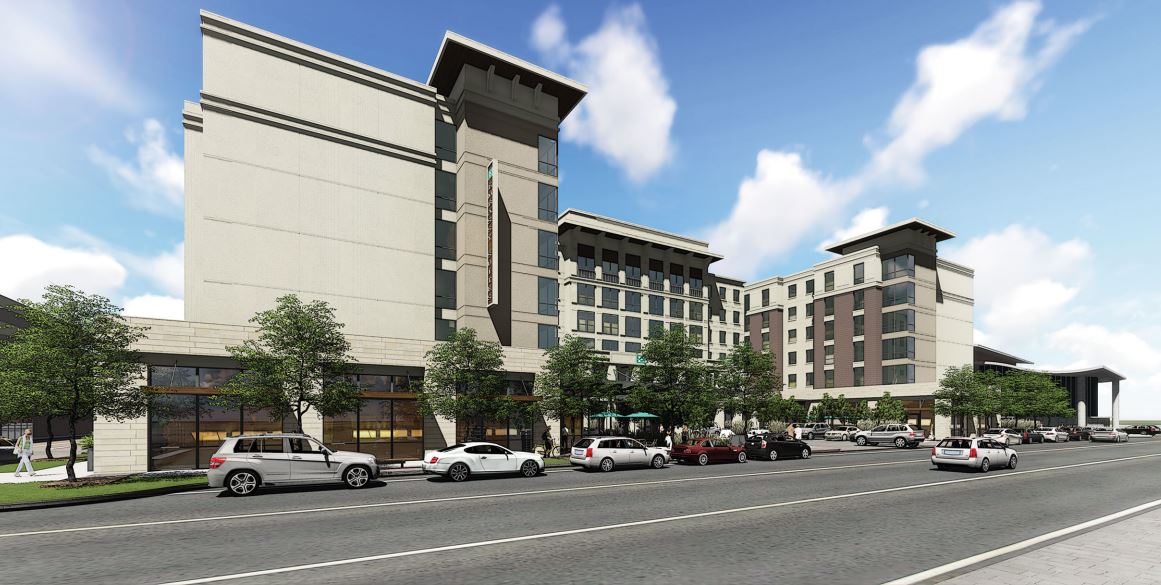
Amarillo’s fortunes are bound to improve with construction of the MPEV and the completion of the new Embassy Suites hotel across the street from the Civic Center, which he said is in line eventually for some “long-awaited” improvements and expansion.

One would expect Quandt to speak well of the MPEV and the city’s downtown future. He’s in the business of promoting the city.

However, from where I stand, Quandt and other city boosters are going to have quite a bit more material with which to lure visitors to our city.


How do we define ‘organic growth’?

amarillo downtown

Amarillo City Councilman Mark Nair is a bright young man who speak at times in somewhat academic terms about public policy.

For example, I have heard the City Council freshman use the term “organic growth” to describe how he’d like to see downtown Amarillo grow.

I’m not sure how one defines “organic growth” as it pertains to commercial development. But here’s what I’ve witnessed in the city’s downtown business district since my wife and I moved here more than 20 years ago.

  • The transition of the historic Fisk building into a business hotel.
  • The development of several bank plazas: Happy State Bank and Wells Fargo come to mind.
  • The revitalization of the Potter County Courthouse Square.
  • Expansion and improvements at several downtown-area churches.
  • A new convenience store.
  • Development of the Eagle Center into downtown residences.
  • Several new nightspots and nice lunchtime eating establishments along Polk Street.
  • Returning the Paramount Building neon sign and the occupancy of the old structure.
  • Complete renovation and restoration of the Santa Fe Building for use by several Potter County offices.
  • Construction of a state-of-the-art entertainment center across the street from the Civic Center.
  • A higher education institution, which is moving soon from the Chase Tower to a new location in the downtown business district.

I no doubt have missed something. My point is that downtown Amarillo is in much better condition today than it was when my wife and I landed here in early 1995.

The vast majority of that improvement has been done with private money. The state kicked in historic preservation grant money to re-do the exterior of the county courthouse and the Santa Fe Building; Potter County issued certificate of obligation to do the rest.

The city has kicked in some public money for infrastructure improvements, such as sidewalks and curb cuts at street corners.

Xcel Energy has begun construction of a new office complex. Ground has been broken on a new convention hotel.

A multipurpose event venue — which Councilman Nair and others on the council apparently oppose — might be built next to City Hall. Then again, it might not … depending on how much foot-dragging and delay tactics occur at the City Council and Local Government Corp. level.

Organic growth?

It seems to this layman’s eyes that downtown has grown pretty organically already.

I also should point out that the city’s municipal tax rate is still dirt cheap at around 35 cents per $100 of assessed property valuation.

Yes, more needs to be done.

But my question today is: What on Earth has caused all these expressions of distrust, anger and suspicion at City Hall?


City vote looms … what lies ahead?

amarillo MPEV

It’s good to look forward, yes?

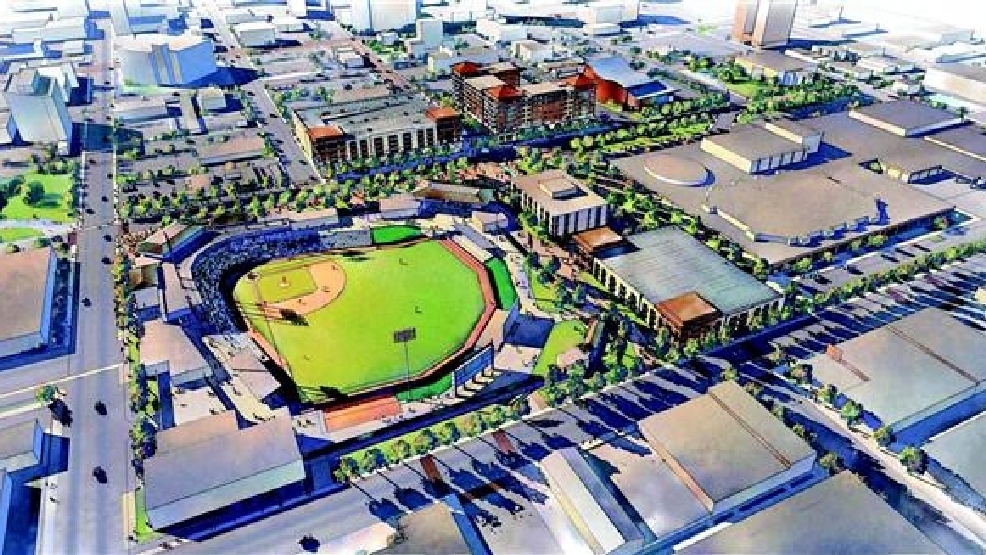
Amarillo voters are going to the polls Tuesday to decide a critical issue for their community: whether to build an multipurpose entertainment venue that includes a ballpark.

I want the ballpark to be approved. I’ve been all in on the project from the beginning. Nothing has changed my mind about its feasibility, its potential or its actual benefit to the city.

I’ve devoted much of this blog of late to making that case. Frankly, the issue has generated a lot of interest in the blog … for which I am quite grateful.

What lies ahead after the votes get counted?

I am certain the MPEV will provide plenty of grist for future commentary.

If the MPEV vote goes the wrong way, that is, if voters say “no” to it, I plan to keep beating the drums for some sort of venue that will be built on that abandoned property across the street from City Hall.

Coca-Cola vacated the site and relocated at a new business park. The old distribution center is vacant. It would make a fantastic location for an MPEV.

If the MPEV vote goes the other way, and is approved by voters, there will be plenty of affirmation coming from High Plains Blogger — depending, of course, on whether the City Council ratifies the vote and proceeds with construction of the $32 million project.

The referendum is a non-binding vote. The council isn’t bound legally to abide by its result. Politically, it’s another matter. The five-member council comprises three members who don’t like the MPEV as it’s been presented.

Yet they were elected this past spring after pledging to listen to their constituents. Do you get my drift here?

No matter the outcome on Tuesday, I remain supremely confident that this issue specifically — and downtown Amarillo’s path toward restoration and revival — will give us all plenty to discuss.


Amarillo: Dysfunction capital of America?

atkinson

I like to think I’m careful when I read critiques about places from folks who don’t live in or near the communities they’re critiquing.

When something comes across my radar, it’s good to check the background of the author. I did that when I saw a pretty scathing critique on a website called Route Fifty. The author is a fellow named Michael Grass.

His background? His “about” page says he’s a former copy editor for Roll Call, a reputable political journal that covers Capitol Hill; he also has experience working with the Washington Post and the New York Observer.

Grass has posted a pretty sizzling analysis of Amarillo. The bottom line? If you’re looking for a local government job and you want to move to Amarillo to fill one of the many openings posted at City Hall … think long and hard before you take the plunge.

Amarillo, he says, might be the “most dysfunctional city” in the country.

The city manager’s exit has caught Grass’s attention.

City Manager Jarrett Atkinson is soon to be out the door. The City Council has to find another person to fill the job. Grass opines that the council is going to have a hard time finding a competent candidate willing to step into what he describes as “a municipal circus.”

He’s done some homework. Three new city council members — Elisha Demerson, Randy Burkett and Mark Nair — took office this spring. Nair then took the unusual step in calling for Atkinson’s resignation right away. Burkett demanded that the entire Amarillo Economic Development Corp. board be fired.

Nair and Burkett backed off their initial demands.

Still, City Attorney Marcus Norris quit; Assistant City Manager Vicki Covey retired.

The new three-member majority then engineered a citywide referendum on a project that’s been in the works for years. The multipurpose event venue will be on the ballot next Tuesday and voters will get to decide whether the $32 million project should include a ballpark.

Grass writes: “While Atkinson’s resignation, which is to take effect later in November, may have surprised some on the City Council—Nair said he ‘didn’t see it coming’—Amarillo Mayor Paul Harpole said that conflict among councilmembers made it very difficult for the city manager to do his job, citing a handful of problems.”

The city is seeking to fill a number of senior administrative positions. The city attorney still needs to be hired. Same with an assistant city manager. The city charter gives the city manager the authority to make those decisions — but hey, we soon won’t have a city manager, either!

The council has been bickering over budget matters, the future of downtown redevelopment, the status of non-profit organizations set up to help the city proceed with its downtown growth.

You name it, the council has been fighting about it.

Grass’s article wonders: Who in their right mind is going to step into that maelstrom?

It’s a question many of us who live here have been asking.


Vote numbers are piling up … good!

EARLY+VOTING_MGN

I’ve blathered, bloviated and brow-beaten folks for years about the value of participating in this form of government of ours.

You know how it goes. If you don’t vote, then you can’t gripe. You can’t take ownership of the decisions that your elected representatives make on your behalf. You cede all of that responsibility to the guy next door … or to the idiot down the street or across town who disagrees with everything you hold dear about public policy.

The early vote on the upcoming Amarillo referendum on the multipurpose event venue continues to roll up some encouraging numbers, no matter how one feels about the $32 million MPEV that’s been proposed for the city’s downtown district.

According to the Amarillo Globe-News, which is doing a pretty good job of tracking the early-vote totals, 6,655 voters had cast ballots as of Friday. The raw number all by itself doesn’t say much … at least not yet.

After all, the city has about 100,000 individuals who are registered to vote. So, as of this week, we’ve seen fewer than 10 percent of the registered voters actually casting ballots.

Early voting continues through this coming Friday.

Then on Nov. 3, the polls open across the city and the rest of us — that would include me — get to vote.

I have no way of knowing what the final early vote total will be.

But based on comparative figures with other key municipal elections, this campaign has generated considerable interest on both sides of the political divide.

The early-vote totals so far are about 2,000 greater than those who voted early in the May municipal election that seated three new members to the Amarillo City Council; the MPEV early-vote number is about 1,000 fewer than the totals to date for the November 2014 general election; this year’s early voting is more than 3,000 votes greater than the early-vote totals year over year for the November 2013 constitutional amendment election.

This is all a very good thing for the future of participatory democracy.

Yes, I wish we could get every registered voter to actually cast a ballot. Better yet, I wish we could get every person who is eligible to vote to actually register and then go out and vote. Wouldn’t that be a hoot!

I’ll keep wishing for such an event, even though I know I’ll likely never see it.

Until then, I plan to keep hoping that Amarillo can turn the tide against the dismal participation we’ve exhibited when it concerns matters at City Hall.

City Council now gets to do some heavy lifting

atkinson

The Amarillo City Council decides on a single personnel choice. The council gets to choose the one person who runs the city’s massive machinery.

That person, the city manager, then makes all the other key hires: police chief, fire chief, city attorney, assistant city manager … all of ’em.

Well, now the City Council gets to make the one selection the city charter empowers it to make.

Jarrett Atkinson has resigned as city manager. For the life of me, I don’t know why he’s drawn the criticism he has received from at least two of the new members of the City Council. But he has and the council is in position to make that criticism.

The council now gets to scour the landscape for a worthy successor and I believe quite strongly that we are likely to witness a serious demonstration of the divisions that exist on the five-member governing council. The municipal chasm is likely to dissuade senior administrator from within City Hall to seek the top job. Thus, the city might look high and low, hither and yon for the next city manager.

The three newest members of the council appear wedded to some skepticism about plans for advancing the future of the city’s downtown district. They managed to engineer a citywide non-binding referendum that will decide the future of the multipurpose event venue; the vote will occur on Nov. 3.

They dislike the MPEV as presented.

The other two council members favor the project.

Back to the issue at hand: What kind of city manager is the council going to hire? Will the new city chief executive officer need to pass a litmus test that requires him or her to adhere step by step with what the bosses on the council want?

The city has been blessed with relatively few city managers over the course of the past 52 years. John Stiff served in that post for two decades before retiring in 1983. John Ward succeeded him and he served another 20 years before moving to the private sector in 2003. Alan Taylor was a relative short-timer in the post before he retired. Now it’s Atkinson who’s leaving, again after a short period of time.

In the aggregate, though, steady administrative leadership has blessed Amarillo for more than a half-century.

That stability now appears to have been torn apart by the fractiousness we’re hearing among City Council members — and by a reckless call for Atkinson’s resignation by a new council member, Mark Nair, immediately after he took office.

Pay attention, gentlemen: You need to think carefully about who you hire to run the city.

We’ve made a lot of progress in Amarillo over the course of many years. We are moving forward today. The next municipal CEO needs to be mindful of where we’ve been, where we are and where we’re going.

The referendum will decide the future of the MPEV before the city finds a new manager. Still, my own preference would be a city manager willing to think big about how to revive the city’s downtown district.

Wish granted: Atkinson quits manager post

ama city council

Amarillo’s three newest City Council members took office this spring with guns blazing.

One of them, Mark Nair, took his hand off the Bible on which he swore to serve the city and called immediately for City Manager Jarrett Atkinson’s resignation.

Cooler heads prevailed. For a brief period.

Atkinson didn’t quit. He stayed on and declared he was happy the city was moving ahead. I guess he wasn’t as happy as he said.

Atkinson tendered his resignation late Monday. The council may decide today when he’ll serve his last day.

This is an unhappy development for our city.

I happen to be an Amarillo taxpayer who believes Atkinson received mistreatment at the hands of the new council majority.

Let’s look briefly at a few things.

  • Amarillo maintains a famously low municipal property tax rate.
  • The city continues to enjoy excellent credit ratings by associations that that make those determinations.
  • Construction is booming all over the city. Homes are being built. Commercial property is being developed. The city, working with state highway planners, is improving our traffic infrastructure.
  • And, yes, downtown’s rebirth is proceeding.

The city’s chief executive officer doesn’t deserve all the credit for these developments. Nor does he deserve the blame for the political unrest that produced a new City Council majority whose aim now appears to be to stall — if not stop — the city’s planned effort to revive its downtown district.

The new fellows — Nair, Randy Burkett and Elisha Demerson — all pledged to “change” the way things got done at City Hall.

Well, gentlemen, you’re about to get your wish.

City Attorney Marcus Norris resigned. Assistant City Manager Vicki Covey retired.

Now the city has lost its chief executive officer as the council argues among its members over whether to keep funding Downtown Amarillo Inc., which to date has been a vital component in the city’s effort to reshape its downtown district.

Let’s see how this plays out as the city now begins its search for a manager to take control of the municipal wheel.

Council members make precisely one hire. It’s the city manager.

Good luck, guys, in your search for someone willing to step into this maelstrom.


MPEV ballot language becomes an issue

ballpark

Amarillo voters are going to decide a non-binding ballot measure that says the following:

“Should the multipurpose event venue (MPEV) to be constructed in downtown Amarillo include a baseball stadium at the approximate cost of $32 million? A ‘for’ vote would be in favor of including a baseball stadium in the project; a ‘no’ vote would be against having a baseball stadium as part of the MPEV.”

The ballot measure language, as I read it, appears to be quite restrictive.

But if you’ll allow me this tiny bit of nitpicking, the ballot measure’s language also is a bit imprecise. The opposite of a “for” vote would be an “against” vote, not a “no” vote.

But I digress …

The ballpark element has become the focal point of the discussion on the MPEV. Indeed, the MPEV proposal exists because of the ballpark.

MPEV ballot measure

So, if we are to believe that a vote against the MPEV doesn’t doom the project, we are being told that the MPEV has a secret component that someone is going to unveil if the measure goes down in the Nov. 3 election.

I happen to support the MPEV and I will vote “for” the project when Election Day rolls around. I believe in the ballpark aspect of the MPEV and I also believe that the venue can be used for a wide variety of events — not just baseball games.

The language used in the ballot measure quite clearly appears to the work of those on the City Council — comprising a majority of the governing body — who oppose the MPEV. They dislike the ballpark; they oppose the manner in which the project was developed; they want the city to go in another direction than the one it has taken in its effort to rebuild, revive and renew its downtown district.

That’s their call.

The ballot measure as it is written, though, must be seen for what it is: an effort to torpedo a project cobbled together over a period of several years by elected and appointed city officials and residents of this community.

If there is a Plan B, then let’s see it … now.


MPEV campaign aims at older voters

ballpark

I’m officially an old man now … not that I’m complaining.

A campaign flier arrived in the mail Wednesday. It comes from “Vote FOR Amarillo,” the organization formed to promote approval of a Nov. 3 ballot measure to decided the fate of the proposed multipurpose event venue slated for construction in downtown Amarillo.

“Dear Seniors” is how it’s addressed. The note is signed by none other than past Amarillo College President Paul Matney, who’s my age. He’s a longtime friend and is a key member of this political organization.

The pitch is pretty straightforward, but in actuality Matney is preaching to the choir, so to speak, when he offers these tidbits, which include:

The MPEV can be a successful venue for a number of activities, such as concerts, church services, charity walks, health fairs, car shows, fireworks displays. He didn’t mention it, but yes, baseball games, too.

Here’s my favorite pitch, though. “Property taxes will not be used to build the MPEV and ballpark. Rather, Hotel Occupancy Taxes and private dollars will be used. Visitors to our city are funding this. Not our residents.”

This last message, though, needs to go to non-seniors, folks who aren’t yet 65 years of age. You see, my property taxes are frozen, as the state grants that privilege to homeowners 65 and older. I would hope Vote FOR Amarillo would be aggressive in informing non-old-folks of the reality that property taxes aren’t going to pay for this venue, estimated to cost around $32 million.

The flier’s aim is to promote voting by mail, which is now available to older residents.

Although I appreciate the effort made to inform me of that procedure, I’m going to pass. I intend to wait until Election Day to cast my ballot.

I’ve been on board with this project from the beginning. Nothing has come up to make me change my mind.

However, I intend to stay with my often-stated preference for waiting until the very last day to cast my vote — in case something should arise.


Downtown hotel gets green light

amarillo hotel

They’re busting up some pavement in downtown Amarillo.

Construction has begun on Xcel Energy’s new office complex. They’ve vacated the Coca-Cola distribution center across the street from City Hall.

And tonight, the Amarillo City Council gave its approval — with a little tinkering with some of the terms — to the construction of a downtown convention hotel.

Is it possible that downtown’s redevelopment inertia is too strong to resist?

I do hope so.

Embassy Suites hopes to open for business in 2017. Building planners are going to break ground in a couple of weeks downtown on a $45 million hotel complex. A local bank is providing financing for about $28 million of it. Hotel developer Chuck Patel has discussed getting other investors to cover the rest of it.

Oh, and that parking garage is going to be built as well.

Are the flowers blooming all over the downtown revival project? Not just yet. We still have this election coming up Nov. 3 that will decide the fate of the multipurpose event venue.

Some folks dislike the idea of a ballpark being included in this package. Others have argued that the ballpark will be more than just a place where a team will play baseball. Opponents say there isn’t enough of a market to make suitable use of a $32 million outdoor venue. Proponents argue that creative marketing and promotion can attract more than enough activity to the site.

I happen to be on board with what has been proposed. I plan to vote for the MPEV on Election Day.

However, I am heartened to see the progress that is continuing to push this downtown effort forward.

The Amarillo City Council tonight made the correct decision.