Tag Archives: Vietnam War

Trump’s disrespect is a bottomless pit

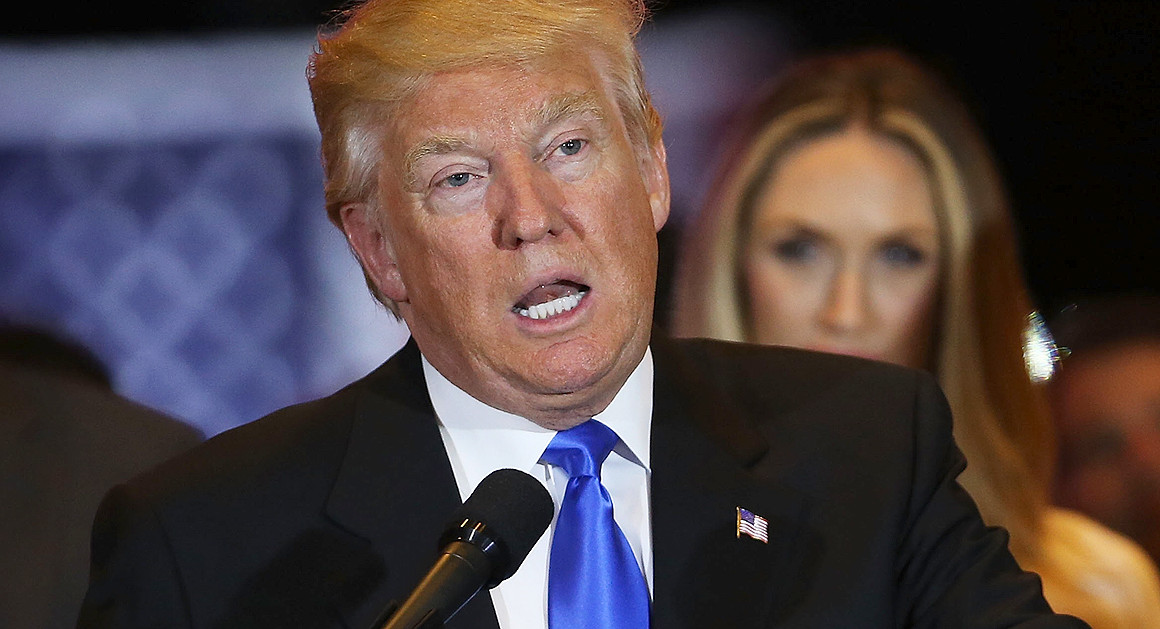
Donald Trump gestures while speaking surrounded by people whose families were victims of illegal immigrants on July 10, 2015 while meeting with the press at the Beverly Wilshire Hotel in Beverly Hills, California, where some shared their stories of the loss of a loved one. The US business magnate Trump, who is running for president in the 2016 presidential elections, angered members of the Latino community with recent comments but says he will win the Latino vote. AFP PHOTO / FREDERIC J. BROWN (Photo credit should read FREDERIC J. BROWN/AFP/Getty Images)

Donald Trump’s list of disrespected opponents has grown by two.

They are the parents of a fallen U.S. Army officer who was killed in combat in Afghanistan. They spoke at the Democratic National Convention this week against the Republican presidential nominee.

Trump’s response was, well, typical Trump.

The father of the soldier told Trump that he’d never “sacrificed.” Trump responded with a ridiculous retort about how he has built all those structures. Then he ridiculed the mother of the soldier. Why? Because she didn’t speak.

Yes, the couple is Muslim, as was their heroic son.

Some comments out there have asked about the “Have you no decency?” quotient. Have we reached that point as it regards this individual.

* He has mocked a reporter with a severe physical disability.

* He has made tasteless comments about a female journalist who asked him tough questions during a televised debate.

* He has referred to a female celebrity as a “fat pig.”

* He has accused the Mexican government of “sending” criminals across the border into this country illegally.

* He has mocked the heroic military service of a U.S. senator who served more than five years as a prisoner of war in North Vietnam.

But in this year with all the “conventional rules” of decorum tossed into the crapper, Trump gets away with it.

Does the Republican nominee have any decency?

My own conclusion is a simple “no.”

This ceremony is worth watching … over and over

President Barack Obama took a few minutes out of his busy day this week to hang a medal around the neck of an 86-year-old hero.

The hero’s name is Charles Kettles. Nearly 50 years ago — yes, 50 years — Kettles found himself in the middle of an intense fire fight in Vietnam.

Kettles, an Army pilot, already had been awarded the Distinguished Service Cross for his effort to rescue his fellow soldiers, flying them out of the landing zone to safety.

But someone in Ypsilanti, Mich., where Kettles lives, heard about the story and worked for five years to ensure that Kettles received the nation’s highest military award, the Medal of Honor.

This video tells the story. It’s moving. It speaks to one man’s humility, which as I’ve long believed speaks to the fundamental character that all true heroes share.

The event also enables us, as the president noted, to honor the “basic goodness” of Americans. “It’s been a tough couple of weeks,” the president said.

Indeed it has … which helps make this presentation so meaningful.

Thank you, Lt. Col. Kettles.

Getting ready for a pile of negativity

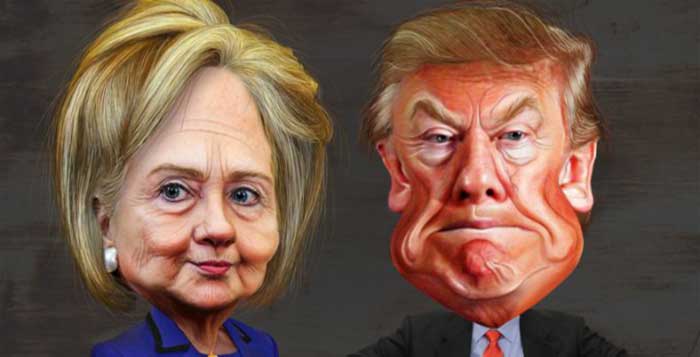
Clinton-and-Trump

I am steeling myself for what I know is coming.

The election of the next president of the United States is going to be an ugly, nasty affair.

It’s a function, I suppose, of anger among the electorate. I am having difficulty processing the reasons why folks are so angry.

My larger sense, though, is that the negativity will be fueled by quality of the two major-party nominees.

Republican Donald J. Trump will be nominated first. This coming week in Cleveland, delegates will gather to send this fellow off to do battle with the Democratic nominee.

Hillary Rodham Clinton will receive the Democrats’ nomination.

Both of these individuals will pack a large load of negative baggage onto the campaign trail. Trump’s unfavorable rating is the 70 percent range; Clinton’s is in the high 50s, low 60s.

So, with little to commend these folks’ positive attributes, they and their campaigns are likely to resort to extreme negativity to tell us all why the other candidate is so repugnant.

I came of age in the late 1960s. I remember a time when the nation was torn to shreds by political unrest. The Vietnam War was going badly. My first political hero, Robert F. Kennedy, was gunned down while he campaigned for the presidency … two months after an assassin killed Martin Luther King Jr. The year was 1968 and it will go down as the most tumultuous year of the final half of the 20th century.

RFK used to consider politics to be a “noble profession” and I bought into it. My belief in its nobility, though, has taken plenty of hits over the years. Money has corrupted the system. We keep seeing the same faces and hearing the same voices every four years.

And that brings us to this campaign.

Are the major-party candidates driven by their grand vision? Will they offer us chapter-and-verse dissertations on why they represent the very best of Americans?

I am not holding my breath.

If my fears prove to be true — that Donald Trump and Hillary Clinton will drive voters to stay home rather than having their voices heard at the ballot box — then we can lay a good chunk of the blame at the negativity we will have heard.

Let’s all get ready for what we know is coming.

Some pictures have this way of becoming iconic

baton rouge

Take a gander at this picture. It is rapidly becoming an iconic image of protest.

Police in Baton Rouge, La., were all suited up for the worst when demonstrators marched to protest the shooting death of a young black man by a police officer.

Why has this photo gone viral? Beats me. Perhaps it speaks to the fragile line between civil disobedience and armed conflict.

Yes, it does remind me of a couple of other historic images:

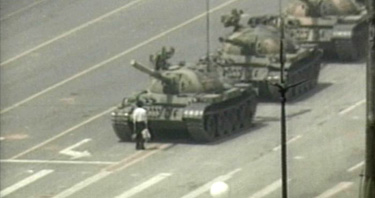
guy and tanks

We have this one, shot in 1989 as demonstrators marched through Tiananmen Square in Beijing to protest the dictatorial rule of the People’s Republic of China.

The man standing in front of the row of tanks would move back and forth, blocking the tanks’ progress.

I’ve heard reports over the years that the protester was arrested and has since died.

Then there’s this one:

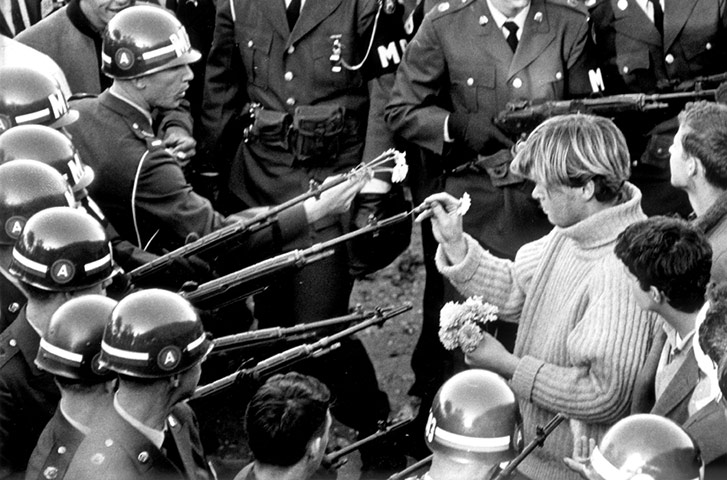
Antiwar-demonstrators-tri-001

Those of us of a certain age and older remember this image and what it represents.

The Vietnam War was raging and it wasn’t going too well for us politically. Marchers took to the streets and at times confronted armed troops. Some of the marchers reacted badly. Others reacted the way this young man did.

Photojournalists were able to capture this — and many other — images. They are saved for posterity.

It does us well to look back at them to remind ourselves of how we arrived at the present day.

Can Donald Trump really ‘change’ his ways?

trump

I’m trying to understand an admonition that’s coming from leading Republican officeholders, strategists and assorted loyalist as it pertains to the party’s presumed presidential nominee, Donald J. Trump.

They want him to “change.” They dislike the name-calling, the insults, the innuendo, the reckless riffs that pour forth whenever he takes the podium as he campaigns for the presidency.

If he changes, they say, they might be able to endorse him. They might actually campaign for him. They’ll support the candidate more than in name only.

I keep wondering: How does a man who’s nearly 70 years of age do that?

What’s more, how do Americans who’ve heard the astonishing things that he’s said ignore them if — and this remains a y-u-u-u-u-g-e stretch — Trump actually becomes a more presentable candidate for president?

It’s like the judge in a trial who tells a jury to “disregard what you’ve just heard” from a criminal defendant or from a prosecuting attorney. Sure thing, Your Honor. We’ll just blot that out of our memory.

House Speaker Paul Ryan has endorsed Trump, but with reservations. He dislikes intensely the candidate’s racist views on U.S. District Judge Gonzalo Curiel and his assertion that Curiel’s heritage disqualifies him from presiding over a lawsuit brought against Trump over his defunct “university.”

Ryan has called Trump’s assertions “racist” in nature, but he’s going to support him.

A lot of Americans — millions of them, in fact — aren’t going to forget those comments. They won’t forget the insults Trump has hurled at women, or his mocking of a reporter’s physical disability, or his assertion that Sen. John McCain is a war hero “because he got captured” by the North Vietnamese.

They won’t forget his plan to ban all Muslims from entering the United States, or his claim that illegal immigrants are coming here to commit crimes.

And then we have the lies, such as when he said he witnessed “thousands upon thousands of Muslims” cheering when the Twin Towers tumbled down on 9/11.

So, he’s supposed to “change” the way he campaigns to make himself more suitable to voters.

How does that happen?

Anti-Islam sentiment: nothing new

Anti-Islamic-Sentiment

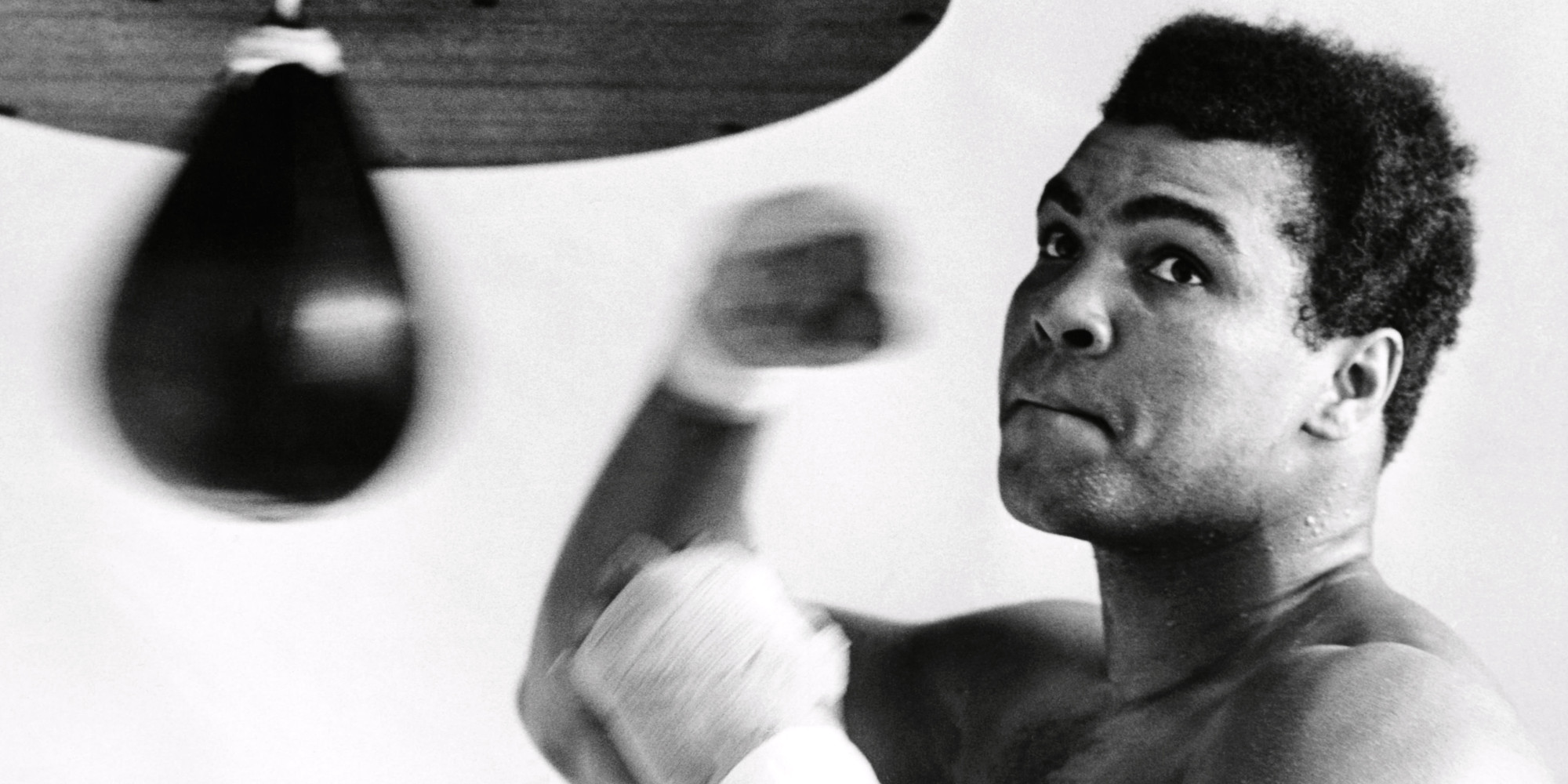
Muhammad Ali’s death this past week brings to mind something that I hadn’t considered until, oh, just a few minutes ago.

The legendary fighter’s religious conversion became the subject of considerable discussion — and scorn — when he made that conversion … in 1964!

Which brings to mind this thought: The anti-Muslim sentiment we’re seeing in the present day is nothing new in this country. It’s been there for decades, maybe centuries.

Cassius Clay won the heavyweight boxing championship by scoring a technical knockout over Sonny Liston. Clay then announced he was becoming a Muslim and would change his name; he became Cassius X and later Muhammad Ali.

Sure, over time Ali’s stature would rise to heights not seen in professional athletes. He became a revered figure not so much because he changed his religious affiliation, but because of the courage he displayed in the face of the hatred that was slung at him.

The mid to late 1960s brought a level of turmoil that we hadn’t seen since, perhaps, the Civil War.

The Vietnam War was going badly. Ali became a spokesman against that war. That he became a Muslim — let alone a member of the Nation of Islam — and changed his name to that foreign-sounding moniker only inflamed many people’s passions against him.

Was there religious and racial bigotry coming to the fore then?

I believe there was.

Which brings us to what many Americans are feeling today about people who worship Islam.

Yes, it’s different now. Terrorists have perverted a great religion and committed unspeakable acts in that religion’s name. A leading presidential candidate — Donald J. Trump — has declared his desire to impose a moratorium on all Muslims entering this country; how in the world he would enact such a thing is beyond me.

As Ali’s death has revealed, though, the anti-Muslim sentiment in this country is far from anything that was ginned up by those 9/11 attacks and by the Islamic State’s hideous actions.

The bigotry and intolerance has been wrong for a long time.

As for Ali’s anti-war protest …

muhammad-ali-refuses-army-induction

So much has been written and spoken for nearly 50 years about the time Muhammad Ali refused induction into the armed forces, I hesitate to mention anything about it here.

Awww, but I will anyway.

The Champ’s death Friday saddens me beyond measure. I’ll be grieving for a long time.

I do want to set the record straight, though, on what I believe has been a mischaracterization of Ali’s refusal to be drafted.

It’s been reported that he did so in 1967 out of conscience. He had converted just three years earlier to Islam. He told the Houston draft board he couldn’t serve in the armed forces because of religious conviction, that he couldn’t carry out orders to kill other human beings.

I get that.

What has not been discussed in all the commentary about Ali’s death, though, is that he could have filed as a conscientious objector and still served in the armed forces — in a non-combat role.

No Pentagon bureaucrat in his or her right mind ever would send the reigning heavyweight boxing champion of the world — especially someone such as Muhammad Ali, for crying out loud! — to any training center to be schooled in the combat arms: infantry, armor or artillery.

I served in a basic training company in Fort Lewis, Wash., with a young man who was a conscientious objector. When we completed our boot camp training in October 1968, he got orders for artillery school in Fort Sill, Okla. He hit the ceiling. The last time I saw him before I departed for aircraft maintenance school in Fort Eustis, Va., he was marching into the orderly room to file a protest over the orders he received. I hope he got them changed.

Muhammad Ali would have been given a special assignment, much as Joe Louis received when that former heavyweight champion saw duty during World War II. The Army was full of clerical jobs or other rear-echelon assignments that would have kept Ali far from harm’s way.

Now, having said that, I do not know what was in Muhammad Ali’s heart when he said “no” to being inducted. It well might have been a broader statement against the Vietnam War, that under no circumstances could he don a military uniform while the nation was engaged in all-out war in Southeast Asia.

If that were the case, well, I respect that, too.

Ali’s era: simple and complex all at once

Mohammed Ali

As I’ve spent the day pondering last night’s sad news about Muhammad Ali’s death, I was struck by a realization of the era in which he was such a dominant force.

It was that he flourished in a simpler and more complex time.

Ali died of Parkinson’s disease at the age of 74. He apparently had become quite frail in the final months of his life. But what a departure from the picture of strength he exhibited back in the day.

The simplicity of his era is marked by this fact: As the heavyweight boxing champion of the world, Muhammad Ali was the baddest man on the planet.

The night he stopped Sonny Liston after the sixth round to win the title the first of three times, he yelled, “I shook up the world! I’m a ba-a-a-a-d man!” Yes he was.

In those days, without the multitude of boxing commissions and sanctioning bodies we have today, you had an undisputed champ. Ali was that man.

Today, well, it’s far different. You’ve got at least three heavyweight champions of the world. There are times when you have something called “interim champion”; I don’t even know what the hell that means.

All these “world champs” are recognized only by certain governing bodies. If you’ve got the patience, you can slog through all of them.

I quit following the sport — certainly the heavyweight division of it — about the time Larry Holmes walked away from the championship.

The complexity of Ali’s prime time is reflected in the political climate of the era.

Ali got his draft notice from the Selective Service Administration. He had converted to Islam. He vowed never to take up arms against people. Ali refused to be inducted into the armed forces to protest the Vietnam War.

And by 1967, the political mood of the nation had turned against the war. We weren’t winning it the way to which we had grown accustomed. Ali’s refusal to serve rubbed many millions of Americans raw. How dare this brash, young fighter refuse to serve his country, many people said. Why, he had amassed tremendous wealth because of all that the country had offered him.

That didn’t matter to Ali. He stood on principle.

The boxing authorities — the few of them that existed at the time — stripped him of his title. They denied him permits to fight. He was denied an opportunity to do the one thing he did better than anyone on Earth: beat people up.

The Vietnam War raged on while Ali was denied permission to fight.

The champ did not recede quietly into the shadows. He spoke out against the war. He spoke against what he perceived to be the systemic racism that was denying him his right of free expression.

Muhammad Ali became “the most recognizable person on Earth.”

Who today can make that claim?

The U.S. Supreme Court finally would undo the injustice brought to Ali. It voted unanimously to throw out Ali’s conviction for draft evasion. He returned to the ring.

The rest became history … and what a story Muhammad Ali was able to tell.

A vet opens fire … and that’s relevant to what?

gunman

A headline appeared in the Houston Chronicle that said a gunman has been identified as a “military vet.”

Is it just me, or is there a bit of generalizing here that resembles what happened to veterans of another era?

Someone tell me that’s not happening.

http://www.houstonchronicle.com/houston/article/Witness-says-Memorial-shooter-made-7953256.php?t=942f77db9c&cmpid=fb-premium

Returning service personnel are coming home from war in Afghanistan and, earlier, from Iraq. Many of them suffer from post traumatic stress disorder, the ailment once known as “shell shock.”

A gunman opened fire in Houston, killing at least one person, injuring others and then was killed by a police SWAT officer.

Here’s my concern.

I hope we don’t see news reports that seem to equate someone’s military service to a crime they might commit.

You might recall how it was often reported during the 1970s and 1980s when people committed violent crimes and the headlines often would say something like: “Vietnam vet goes berserk” or “Vietnam veteran suspected of killing children.”

Do you get where I’m coming from? There seemed to be some correlation made immediately that connected the perpetrator’s terrible deed to his service in Vietnam. That war, some have argued, turned returning soldiers into caricatures, even though they represented a tiny fraction of all the people who served with honor and distinction during that terrible conflict.

The vast majority of them did their duty, came home, readjusted to civilian life quickly, and became normal folks just doing whatever it is normal folks do.

I surely hope we do not paint returning veterans today with the same kind of broad brush that coated an earlier generation of warriors.


Gratified at honor being paid

th

I am gratified at the nation’s coming of age as it relates to our veterans.

We thank them constantly. We offer thanks for their service to the country when we people who know to be vets. We shake the hands of our military personnel when we see them in uniform.

Memorial Day is about to dawn over the nation and once again we’re going to honor those who paid the ultimate price for the freedom we enjoy.

Communities from coast to coast to coast will honor those who paid that price. Amarillo will do just that Monday morning when the city’s mayor, Paul Harpole, a Vietnam War combat veteran, will deliver remarks at the Texas Panhandle War Memorial.

OK, I told you of my gratification at the nation’s coming of age in this regard.

It wasn’t like this just a few decades ago. I had the honor of wearing my country’s uniform for a couple of years from 1968 to 1970. The Army snatched me up and sent me to Vietnam. I came home, resumed my life, got married and have lived a good life with my family.

There was little of the community love being tossed at us when we returned home. No, I didn’t get spit on, or cursed at. But those who died on those distant battlefields weren’t honored the way they are today.

Do not misconstrue these thoughts. I mention them not to express any bitterness. I have none. I mention it to remind us all that sometimes a nation doesn’t always do the right thing by those who serve it.

It’s all changed. For the better. We’ve learned our lesson as a nation. It warms my heart.

The change occurred at the end of the Persian Gulf War in early 1991. You’ll remember it, right? Communities had parades for the returning warriors. We cheered them. We honored those who died.

What’s not always recognized about that resurgence of respect and pride in our military is that those who led those cheers were Vietnam War veterans who had felt a nation’s scorn simply because they did what their country ordered them to do.

I feel only gratitude today when I see the love poured out to those who return and I am moved often to near tears when I see honors given in memory of those who gave their last full measure of devotion in defense of our great nation.

Let’s enjoy the time with our friends and family. While we’re doing so, let’s also honor the memory of those who gave all they had so we could celebrate today.