Tag Archives: downtown Amarillo

Beam signing signals huge step forward

embassy suites

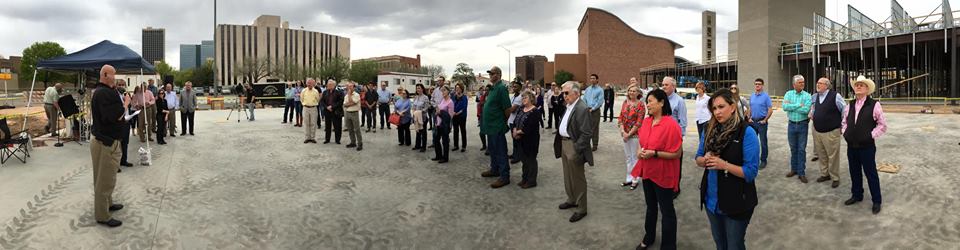
They had a beam signing this weekend in downtown Amarillo.

The beam is set to become part of the superstructure that’s going to hold up a new hotel currently under construction.

The Embassy Suites Hotel eventually will open its doors to business clientele coming to Amarillo for conventions touting this and/or that product, or provide professional development for the attendees.

It’s part of what has been called a “catalyst project” aimed at reconfiguring downtown Amarillo. There’s more to come.

I happen to be one of those Amarillo residents who’s quite excited about the prospects for the city’s downtown district.

It’s been a sometimes-rocky ride. The downtown district hasn’t yet reached a smooth road or calm waters. There well could be more tumult to come.

The beam signing, though, suggests — to me, at least — that the city is moving forward.

The Embassy Suites is being financed by a private developer, Chuck Patel, who seems to see a big future in this city. He rounded up some investors to buy in, made his pitch and has broken ground. The hotel is rising up as I write this brief post.

It’s worthwhile to remember the last time anyone saw three construction cranes moving heavy pieces on sites downtown. The Southwestern Public Service building construction is well under way; a parking garage is going up, too.

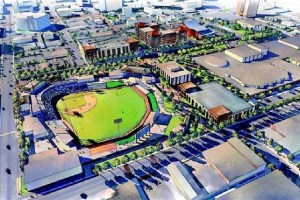
The Big Enchilada, of course, is The Ballpark, or MPEV, or whatever you choose to call it. It, too, is planned for downtown’s district. There could be a major tenant taking up residence there once it’s built: a AA minor-league baseball franchise.

Today, though, we have a beam signing to symbolize some major strides forward for the city’s future.

Not bad at all.


AA baseball may come to Amarillo … and that’s a bad thing?

baseball

I’ll admit to sitting in the peanut gallery these days while events swirl around Amarillo City Hall.

Thus, I am not privy to many of the details to all that is happening in our city in transition.

The news out of San Antonio, though, has piqued my curiosity about the future of Amarillo’s pending downtown project. I refer, of course, to the multipurpose event venue, aka the MPEV and/or The Ballpark.

I understand the San Antonio Missions are departing that city, which is going to welcome a little better grade of minor-league baseball. The Missions play AA ball; San Antonio is recruiting a AAA team to relocate to South Texas.

Now, as I’ve read in the local media, Amarillo is the only place the Missions are considering as a new home. Amarillo Mayor Paul Harpole has said something about the “stars lining up” to lure the Missions here.

The prize being dangled in front of that franchise? The prospect of the team playing in a shiny new ballpark downtown, next to City Hall, across the street from a new convention hotel, and just blocks from Polk Street, which is being reconfigured into an urban entertainment district.

The price tag on the MPEV/ballpark has escalated past the $32 million price tag hung on it when it went to the voters this past May in a non-binding citywide referendum. Voters said “yes” to the MPEV and plans are proceeding to develop a firm design and cost for the project.

Yet I keep reading on social media and hearing some gripes around town about the deal.

I’m trying to understand why the lure of a minor-league baseball franchise affiliated with a Major League Baseball organization is somehow a bad thing for Amarillo.

The Thunderheads — the independent team formerly based exclusively in Amarillo — is going to play half of its home games this season here and in Grand Prairie. The games they’ll play in Amarillo will take place at the rat hole/dump formerly known as the Dilla Villa next to the Tri-State Fairgrounds.

The way I see it, if the city can maneuver itself into building a first-class baseball venue downtown and then link it to an arrangement with a AA franchise that will play some good old-fashioned hardball, then it looks to me as though the city has scored a significant victory.

So, again I ask: Why is that a bad thing?


MPEV remains worth the city’s investment

MPEV

This is a bit of a non-surprise to many Amarillo residents.

The price of the proposed downtown multipurpose event venue/ballpark has come in a bit greater than originally thought.

Is it cause to toss the idea into the crapper? Not even close.

I’ll admit that I didn’t quite buy into the notion that the MPEV would cost more than the $32 million price tag attached to the non-binding referendum that voters approved in November 2015. I had some faith that the cost would hold up. It hasn’t, according to consultants who have delivered a $48.4 million price tag to the City Council to consider.

What’s the city going to do to cover the cost?

That is the $48.4 million question that the council has asked the Local Government Corp. to figure out. The LGC has received the directive and plans to deliver a report in April to the council.

The increased cost presumes that the city will hook up with a Double-A minor-league baseball team affiliated with a major league franchise.

Suppose the city does land an affiliated minor-league team for the city. Suppose as well that the city builds the MPEV for $48.4 million. Then let’s suppose what might occur if the baseball team fills up the MPEV with thousands of baseball fans every day or night.

Mayor Paul Harpole believes — and I think he’s correct — that the boost in sales tax revenue likely could more than offset any potential property tax increase that residents would have to bear.

“That regional money that comes into our city through sales tax has helped us keep property tax down,” said Harpole. “It’s important that we keep that growth as long as we can, but it has to make economic sense. It has to be something where it doesn’t put the city in too much debt. So we’ll look at that and see what it is and get an answer back and see what we’re going to do.”

Let’s not look askance at the job growth and economic impact created by the MPEV. The consultant that made the report to the City Council, Brailsford and Dunleavy, projects an estimated 341 permanent jobs associated with the MPEV and about $25 million pumped annually into the Amarillo economy.

Does the city issue certificates of obligation? Does it submit a bond issue to the voters, asking residents to approve it? Are there economic development grant funds available for the city to seek?

LGC officials and City Council members have committed to proceeding with exploring this issue thoroughly.

Count me as one Amarillo resident who maintains an abiding faith that the MPEV — even with its inflated cost — can bring a much greater economic return to the community than what it is likely to spend.


City manager search provides major test of resolve

Amarillomain

Amarillo’s search for a city manager will offer the community a chance to gauge the City Council’s commitment to the future of the city’s downtown district.

I’ve commented already on the huge transition already under way in the downtown area. It’s been a very long time since we’ve seen three construction cranes towering over gigantic projects that have begun there.

It gives me hope that the city truly is committed to the huge effort that’s been done already to provide for a better, more vibrant downtown district. Trust me on this: The entire city is going to reap giant rewards once this work is done.

But the city is on the hunt now for a permanent city manager to oversee all of it. The interim manager, Terry Childers, will depart in due course and the new person will be asked to become the chief executive of a $200 million annual enterprise.

One question the council — which will make this hiring decision — must ask of applicants is: Are you committed fully to ensuring the city proceeds full speed toward the future course it has charted?

I understand that the ultimate policy decisions rest with the five members of the City Council. Still, we do have a strong manager form of government here. The council hires the city manager to take control of the levers of government. It puts final administrative authority in that person’s hands. The manager, of course, must do what the council directs. There needs to be constructive synergy between the manager and his or her bosses on the governing council.

To be honest, I am heartened by the direction this new council has taken with regard to downtown. It has honored — so far — the wishes of the electorate that in November endorsed the concept of a ballpark to be build across the street from City Hall.  It has marched forward with construction of the convention hotel and parking garage. Momentum is building.

The next city manager must be committed to continuing that march.

What’s more, the City Council must be on board as well.

The City Council’s search for the new manager — and the decision it makes — will reveal a great deal about its commitment to Amarillo’s future.


Councilman puts on his booster hat … and it fits!

9025332_G

Elisha Demerson spoke today about how “great it is to be in Amarillo” these days.

He mentioned a couple of things that deserve attention.

One thing the freshman Amarillo City Council member told the Rotary Club of Amarillo is that downtown Amarillo is progressing nicely. He took particular note of the convention hotel and parking garage that are under construction.

Downtown is being reshaped, reconfigured and revitalized.

The other thing Demerson said is quite instructive. He said the city has the “second-lowest tax rate” of any city in Texas. It’s less than 40 cents per $100 in property valuation.

What does that mean?

It means to me that the city’s intense push toward public-private partnerships is paying off.

I’ve noted before how so much of downtown’s progress in recent years has come with the help of private investment. Banks have spent their own capital to expand operations downtown; the historic Fisk Building was converted into a hotel, again with private money. Storefronts that once were dark now are full of life.

Is there more work to do? Certainly. That’s why the progress we’ve seen shouldn’t be derailed.

It makes me wonder yet again: What was all that anger during the 2015 municipal election campaign all about?

The city retains a ridiculously low municipal tax rate while its downtown business district is showing palpable, tangible, observable signs of progress.

A suggestion for Eades replacement

Councilmen_2015

No … I don’t have anyone particular in mind.

Indeed, the Amarillo City Council has some time to ponder who should succeed Brian Eades, who’s leaving the council in July as he moves to western Colorado.

Eades is a grownup member of the council. He serves as one of two stalwart votes in favor of the momentum that the city is building toward its downtown revival process. The other sure-fire voice on the council is Mayor Paul Harpole.

Yes, the council has done well so far with its new three guys joining the team to move the city forward on its downtown rejuvenation. Crews have broken ground on the planned parking garage and on the Embassy Suites hotel across Buchanan Street from the Civic Center.

Work still needs to commence on the multipurpose event venue.

I don’t have serious concern about whether the MPEV will be built. I hope it is built and I hope the city welcomes an affiliated baseball team to play its home games at the shiny new ballpark.

My hope for the new council member runs along two tracks.

One is that he or she has a keen interest in moving the downtown effort forward. The projects have been discussed, debated and examined every which way from here to Kingdom Come. Amarillo voters made their decision known in a November referendum that they support a ballpark venue.

Second, I hope the next council member commits to running for election in the spring of 2017 when the city conducts its election for the council.

The most recent appointee, Ron Boyd, served as a place holder when he took the seat vacated by the death of Councilman Jim Simms. The next one, I hope, will take the seat with the understanding that he or she will seek a full two-year term.

The next council member will have plenty of time between taking office and the next election to earn either the voters’ approval or rejection next spring.

So, council members, proceed with all deliberate care.

The city is moving forward. It needs a governing council committed to maintaining that momentum.


Modernization continues in Amarillo

Road construction sign.

Amarillo’s modernization process is continuing.

Given that I don’t get downtown as much these days, I tend to notice changes more readily. The latest big change to catch my eye can be seen from the northbound lanes of Interstate 27 as you approach the Interstate 40 interchange.

The state highway department has begun work on the interchange to create a direct connection from eastbound I-40 to southbound I-27.

To say it’s long overdue is to say, well, a whole lot.

For too long motorists traveling east on I-40 have had to exit the freeway and take an access road if they wish to transfer to southbound on the Canyon E-Way.

Once the state finishes the work, that pain in the posterior will be eradicated. Motorists will be able to make the direct connection quickly and easily.

This is occurring, of course, as downtown’s major makeover continues apace and as the highway department continues its painstaking work along the southern segment of Loop 335 to create a limited-access highway that will serve as an actual loop.

Will there be headaches along the way? Sure. Progress also produces them.

I’ll just caution all of us who live and/or work in the Texas Tundra’s “capital city” that the finished product — whether it’s the freeway interchange, the loop that really isn’t a “loop” or the city’s central business district — will be sights to behold.

Patience, man. Patience.


Biking gets a big boost

52966

Let’s get real. Texans love their cars, trucks and just about any vehicle that burns fossil fuels.

We pull a lot of fossil fuel out of the ground here. The Spindletop oil gusher in 1901 brought us the Texas oil boom and it has continued ever since, with all of its ups and downs.

There’s nothing inherently wrong with that. Heck, our 21-plus years in West Texas have given us a keen appreciation of how much distance one must travel . . . to get anywhere. It almost always involves a motor vehicle.

So it is with that I noticed this story — yes, it’s a bit dated, having been reported initially in the fall of 2014 — about a proposal to build a 64-mile bicycle trail between Dallas and Fort Worth.

KERA-TV reported more than a year ago that a study of Dallas residents reveals a significant portion of folks would support greater emphasis on bicycle trails in their city.

It’s being called a “superhighway.” It marks a remarkable departure from the love affair Metroplex residents have had with their motor vehicles.

So now comes the question from me, a resident of another community in the midst of some serious urban living change.

Is such an emphasis possible here, in Amarillo?

It’s a creative notion to connect two cities the size of Dallas and Fort Worth with a bicycle trail network.

It prompted this thought: Is such a network possible that would connect Amarillo with Canyon?

Amarillo’s downtown district revival already has begun. They’ve busted up plenty of pavement and begun erecting some structures in the central business district. More construction is on the way.

I am wondering, though, about the city’s effort to connect neighborhoods with bike trails. That project began about a decade ago. Then it stopped. Indeed, we have bike lanes marked off in my neighborhood, which is great. Except that they don’t go anywhere.

I have been told that the city Parks and Recreation Department plans to finish the bike trail network — eventually.

The reality is that the weather here is conducive to that kind of activity. The unseasonably warm winter we’re having is an aberration. Spring can be a bit dicey; summer isn’t oppressively hot; autumn is the most pleasant season of all.

The Metroplex bicycle “superhighway” is still a couple of years away, according to KERA. I do applaud the innovation that’s gone into planning for it.

Might there be a potential for something like that here, way up yonder?


North Heights getting a fresh look

15064445


Every city in America has them.

Good neighborhoods and, well, not-so-good neighborhoods. Amarillo is just like every other city in that regard.

But there’s a bit of a difference here. Our city is governed by five individuals who represent the entire city; they’re all elected at-large. So, when residents of one part of the city feel as though their neighborhoods are being neglected, they tend to point the finger at the City Council and accuse its members of favoring other parts of the city.

It’s been on-going in Amarillo since, oh, probably The Flood.

Amarillo is now launching — one should hope — a concerted effort to revive, rejuvenate and rediscover the North Heights neighborhood.

It’s one of those areas of the city where residents have felt a bit neglected.

Does this effort require a huge change in local government attitude? The fellows who sit on the City Council say “no.” The city always has been equally concerned about all the neighborhoods, not just those with the more expensive homes or those with the leafy streets.

The Heights is long overdue for a serious makeover. The goal is to make residents proud of where they live.

City officials have planned a series of public meetings with residents. They want to hear from residents what they want. As KFDA NewsChannel 10 reported: “It’s really key to get their input because it’s their input that is going to help us get to where we want to be for this neighborhood,” said City of Amarillo Planning Director Kelley Shaw. “It’s their neighborhood. It’s not the city’s neighborhood, so we really need their input to make it all work.”

It’s good to watch how the city reacts to the concerns it hears. Perhaps the victory can be achieved if the city responds aggressively to what officials hear and start putting some serious effort into lifting up a neighborhood that’s felt neglected.

Think of it as a potential hedge against efforts to overhaul the city’s voting plan to expand the size of the City Council and create a single-member district plan for the city.

Let’s get busy.


Amarillo need not replicate other cities’ success

dfwfc_phototour15

When I get a chance to travel to other cities that can boast of robust downtown districts, I often think of the community I’ve called home for more than 21 years.

Amarillo is in the midst of a serious downtown revival. They’ve broken up some pavement, leveled some land, poured some slabs and begun erecting structures downtown.

More of it is on the way.

I just returned from a few days visiting my hometown, Portland, Ore. It’s gone through a decades-long downtown revival that’s still on-going. Heck, it might never end.

That city turned a moribund downtown district into a rousing, sometimes raucous place where people enjoy a robust night life and spend a little time and money shopping in retail establishments.

I’ve written about what I saw on my latest visit to Portland. However, I do not want anyone to presume that I believe what the Rose City has done can be replicated here on the Texas Tundra.

Portland’s municipal population is approaching 625,000 residents, with about 2.2 million folks living in a sprawling metropolitan area that covers several counties — and even reaches across the Columbia River into Washington state.

Amarillo’s population is just a shade less than 200,000, with a metro population nearly double that amount.

Do we have the resources here to replicate what other larger cities have done? No.

My intent in calling attention to what Portland has done, or what Oklahoma City or Fort Worth have done with their downtown districts, is remind us here in little ol’ Amarillo that we must think creatively.

All three of the cities I’ve mentioned — Portland, Fort Worth and OKC — have done so. Oklahoma City used a public investment tax to rebuild warehouse district into Bricktown; Fort Worth used some public/private investment in creating Sundance Square; Portland scrapped a planned highway project and redirected money into creating a robust downtown district.

Amarillo has developed a Strategic Action Plan that took form after years of public hearings and discussion. It, too, involves public and private money. Indeed, the vast majority of downtown Amarillo’s progress has occurred with private money. The city created a downtown Tax Increment Reinvestment Zone that uses money derived from increases in property value within that zone to help finance needed projects.

We’re thinking creatively here. That, I submit, is the first step in a long march toward revival.

Do the city, civic and business brain trusts think we can emulate dollar for dollar what bigger cities have done? I hope not.

They shouldn’t shy away from doing what they can, however,  with what they have.