Tag Archives: George W. Bush

Liberal offers an instructive scolding to liberals

diversity

When a conservative scolds liberals about being intolerant, one can chalk it up to sour grapes or to the bias of the person doing the scolding.

The same can be said when the roles are reversed.

However, when a liberal scolds liberals — or when a conservative scolds his or her brethren — that gets people’s attention.

New York Times columnist Nicholas Kristof has offered an interesting lecture about liberal intolerance.

Here it is: http://www.nytimes.com/2016/05/08/opinion/sunday/a-confession-of-liberal-intolerance.html?_r=0

He says liberal thinkers are none too tolerant of conservative thinkers on our nation’s higher education campuses. The intolerance undercuts liberals’ time-honored call for greater “diversity” of thought.

Hmmm. He’s suggesting that liberals want diversity as long as it agrees with their world view.

College and university campuses have erupted over many years when administrators invite conservatives to speak at, say, convocations or commencement exercises. Kristof’s essay talks about the reluctance of higher ed institutions to hire conservatives as faculty members.

Even in politically conservative regions, such as the Texas Panhandle, we’ve seen similar reactions to the presence of conservatives on college campuses.

Do you remember the mini-uproar that boiled up years ago when West Texas A&M University invited Karl Rove — the architect of President George W. Bush’s winning campaigns — to speak at an event honoring WT graduates? Some faculty officials disliked having Rove speak to the students.

Universities ought to welcome, embrace, even solicit differing — and diverse — points of view.

According to Kristof, though, they’ve become havens for liberal/progressive thinkers who dislike mingling with those on the other side of the fence.

Message received, Mr. Kristof.


Hey, the day of prayer hasn’t been canceled after all!

prayer-pic-11

Did you notice that we’re having a National Day of Prayer today?

What in the world … ?

Haven’t the right-wing scoundrels and Internet trolls out there been saying something about President Obama “canceling” this annual event? Haven’t they accused the president of being a barely closeted heathen who hates people of faith?

Well, the National Day of Prayer is continuing this year as it has all along.

The president has been just as diligent and faithful in his acknowledgment of this day as all his predecessors have been.

Obama’s immediate predecessor in the White House, George W. Bush, spoke just as clearly as and articulately as the current president about this special day, which was enacted in 1952, during the final full year of President Harry Truman’s term.

Those of us who believe in God’s power and draw strength from it welcome this day. Moreover, those of us who share that belief understand that God takes many forms in the hearts of those who believe in the Almighty.

In this current climate, though, the National Day of Prayer takes on a special significance.

Many of us today fear those who worship God in ways with which we are not familiar. A major-party presidential candidate awaiting his party’s nomination has given voice to those fears by declaring his intention to ban people of a certain faith from entering the United States.

Let’s pray, therefore, for those who share that fear. Let us also pray for those leaders who articulate it aloud.

They need our prayers today. And always.

As for those who keep yammering about the cancelation of the National Day of Prayer … just be quiet, bow your heads — and pray.


Bushes 41 and 43 to remain silent

4143bush-2016_jpg_800x1000_q100

At one level this bit of news isn’t much of a surprise.

At another level, though, it’s still a big deal.

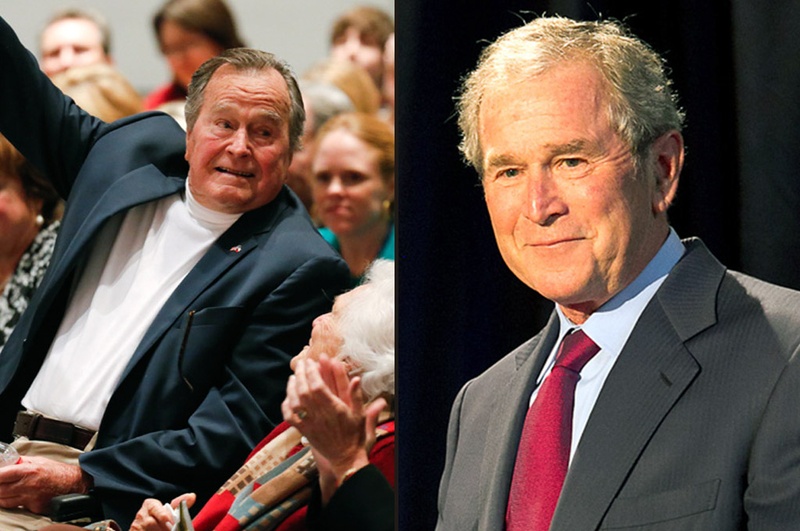
Two former Republican presidents — George H.W. Bush and George W. Bush — are going to keep their thoughts to themselves regarding the upcoming presidential campaign.

They have no plans to endorse the presumptive GOP nominee Donald J. Trump.

This is more or less in line with what these two men have pledged to do since leaving office. Bush 41 left the White House in 1993 and took, in effect, a vow of political silence. Bush 43 made his exit in 2009 and more or less did the same thing. Neither of them has spoken much about public policy issues or engaged fully in discussions about them.

Both men stepped back into the arena briefly this election cycle to campaign for Jeb Bush. It didn’t work for the younger Bush, who dropped out several months ago.

Why is this a big deal? Why does it matter?

To my mind, it matters because the name “Bush” exemplifies traditional Republican politics. For both men now to say they won’t publicly state their support for — or endorse — Trump speaks volumes.

https://www.texastribune.org/2016/05/04/bush-41-43-have-no-plans-endorse-trump/

Their silence deprives Trump of a statement of support from two former presidents who between them served 12 years in the nation’s highest office.

The elder Bush, as I’ve said before, entered the White House as arguably the single most qualified man ever to assume the presidency. The younger Bush took office in 2001 and just nine months later was thrust into the role of wartime president when the terrorists flew those planes into the World Trade Center and the Pentagon.

What these men think about the state of the current campaign matters.

Indeed, the elder Bush in the past has thrown his support publicly behind GOP nominees. That includes one-time rival Bob Dole in 1996. He, of course, backed George W. in 2000 and 2004, John McCain in 2008 and Mitt Romney in 2012.

This year? He’s going to remain mum.

The Bush men’s silence in 2016 perhaps means more than either of them is going to acknowledge.

How about that? POTUS admits to ‘worst’ error

gadhafi11

I’m going to give President Obama some high praise for doing something one doesn’t often hear from people in high office.

He has acknowledged what he says is his “worst mistake.”

What’s more, he did it in a forum that is considered hostile territory.

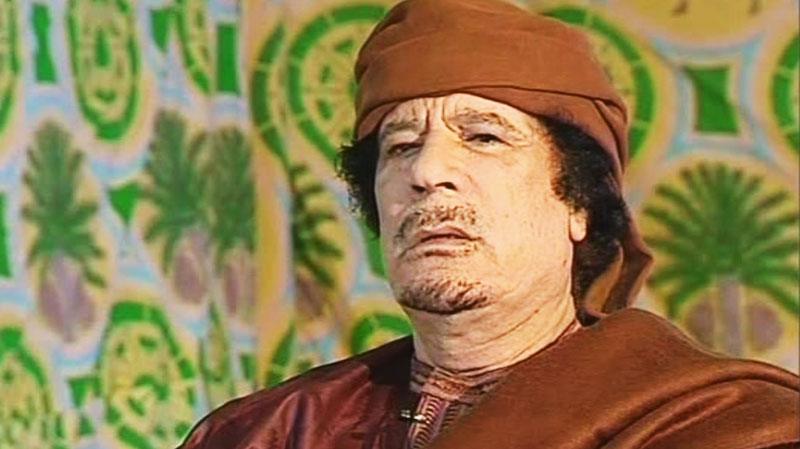
The president appeared on “Fox News Sunday” this weekend and told host Chris Wallace the worst mistake of his presidency was failing to plan adequately for the fall of the late Libyan dictator/tyrant/despot Moammar Gadhafi.

When do presidents do such a thing? Did Richard Nixon ever say he erred by recording those conversations in the White House; has Jimmy Carter ever said his biggest mistake was ordering the mission to rescue the Iran hostages; did George W. Bush ever acknowledge the Iraq War was a mistake?

OK, so the president didn’t take the heat for the Libya mess by himself. He heaped some blame in British Prime Minister David Cameron for being distracted at the time of Gadhafi’s downfall.

I do give Obama credit, though, for admitting to a lack of planning as the world watched the chaos unfold in Libya. The so-called “Arab Spring” went into full bloom in Tripoli as rebels took over the government, captured the dictator — and then killed him.

It got worse, of course, as the U.S. consulate in Benghazi came under attack and four Americans died in the melee. Perhaps some adequate planning could have forestalled that event, yes?

The president’s greatest triumph? Without question, he said, it was his decision to jump-start the economy with stimulus packages upon taking office. I won’t argue with him on that. The economy was in free-fall and something needed to be done quickly.

It might be, too, that the president deserves props for telling all this to a broadcast journalist employed by a media outlet known as being patently unfriendly to politicians of Obama’s particular leaning.

I’ll give some to him for that alone.

Sure, there can be some debate on “worst mistakes” of the Obama presidency. Some might rank his failure to act on Syria crossing the “red line” when it used chemical weapons; others might rank the president’s unfortunate description of the Islamic State as the “JV team.”

The Libya coup aftermath, though, surely ranks as a critical error.

It’s just rare to hear a politician actually admit to making such a mistake.


Who’s ‘qualified’ to be president?

trust-1

I am now going to weigh in on who I believe is qualified to become the 45th president of the United States.

The qualification issue has arisen in the Democratic Party primary. The candidates keep yapping about the other’s qualifications, or lack thereof.

But look, we’ve got four men and one woman running for president. Why not, then, take a quick look at each individual’s “qualifications.”

First, let’s stipulate the obvious: They’re all technically qualified, even Rafael Edward Cruz, the Canadian-born U.S. senator from Texas who earned his constitutional qualification by virtue of his mother’s U.S. citizenship.

No question about any of the others in that regard.

So, here goes, for what it’s worth — which ain’t much. In order:

Hillary Rodham Clinton is the most qualified. She served as first lady during her husband’s two terms as president. She was elected twice to the U.S. Senate from New York. She has served four years as secretary of state. She ran for president in 2008 and won many Democratic state primaries, including the Texas primary, that year.

She knows how government works and has a good knowledge of the limitations of the office of president. She once was a lawyer, after all.

John Kasich is a very close second. The Republican Ohio governor has a record as a member of Congress that should make him proud. He helped balance the federal budget as chairman of the House Budget Committee. He exhibits a good dose of the “compassionate conservatism” touted by former President George W. Bush. He reaches across the aisle and knows to compromise without sacrificing his principles.

He’s developed a solid record as Ohio governor. Kasich, too, understands government and its limitations.

Ted Cruz comes in a distant third. This one really is nearly a tossup with the next person. At one level, he might be the scariest candidate running for the White House. This freshman GOP U.S. senator keeps invoking theology, apparently disregarding that the Founding Fathers worked real hard to create a secular government. Cruz also seems too quick to “carpet bomb” Islamic State targets, which quite naturally is going to produce civilian casualties in direct contradiction to military policies established by two presidents, one Republican and one Democrat.

Bernie Sanders is fourth, but barely so. He’s served in Congress a lot longer than Cruz. However, his campaign for the Democratic nomination has begun to bore me. Why? He says the same thing over and over: Wall Street banks bad; wage inequality preys on women and minorities; we need to make the “top 1 percent” pay more in taxes.

Foreign policy? He remains strangely uninterested in talking about that.

Donald J. Trump is patently, categorically and unequivocally unsuited for the presidency. Sure, he’s a natural-born American. So … he’s “qualified.” But he is clueless about the limits of the office he seeks to occupy. He has vaulted to the top of the GOP heap by appealing to Americans’ darker instincts. His insults go so far beyond the pale that many of us have run out of words to describe them.

Read any transcript of the leading Republican candidate’s answers to direct questions and you are going to be blown away by his absolute incoherence.


Protecting the Texas coast? What a novel concept!

wozniak-whooping-cranes-texas-gulf-coast-c-jeff-wozniak_h10_6206

Well, ruffle my hair and call me Frankie!

Texas Land Commissioner George P. Bush has made a commitment to a portion of the state that has been, well, seemingly kind of put on the back burner for too long.

Bush has pledged to make coastal protection a top priority of his during the 2017 Texas Legislature.

The last land commissioner to make such a pledge — and then follow through with it — was a Democrat. You might remember him. His name is Garry Mauro who, in 1998, had the misfortune of running for Texas governor against an incumbent named George W. Bush. Gov. Bush mauled Mauro by more than 30 percentage points while cruising to re-election.

It was a shame that Mauro didn’t do better against George P.’s Uncle W. He had held statewide office for well more than a decade and had done a creditable job as land commissioner.

I got to know him while working along that coast, in Beaumont. I was editorial page editor of the Beaumont Enterprise and witnessed a lot of Mauro’s commitment to protecting the coast.

He started coastal cleanup operations; he sought to protect wetlands from further erosion. He was a coastal region champion.

That emphasis went by the wayside at the General Land Office during the administrations of David Dewhurst and Jerry Patterson.

Now we have another Republican, a first-time officeholder at that, committing publicly to protecting the coastline.

Bush already has taken steps to make good on his pledge, according to the Texas Tribune. As the Trib reports: “The office has partnered with the U.S. Army Corps of Engineers to develop a long-term plan to address problems in the Houston Ship Channel and the Corpus Christi area in order to ‘ensure that Texans receive fair treatment following tropical storms and hurricanes.”‘

My wife and I moved from the coast to the High Plains of Texas more than two decades ago, but my own interest in coastal matters has remained high … even though I haven’t written much about them on this blog.

I am heartened to hear the land commissioner make a public commitment to strengthening the coast, which faces hazards every year during our hurricane season.

The coast ought to matter to the entire state.

I’ll offer George P. Bush one suggestion: Get on the phone and call Garry Mauro and ask him for some advice on how to proceed with ensuring greater coastal protection.

Hey, you can do it private, P. No one has to know.

Ryan: We’re heading for ‘divisiveness’ as a nation

90

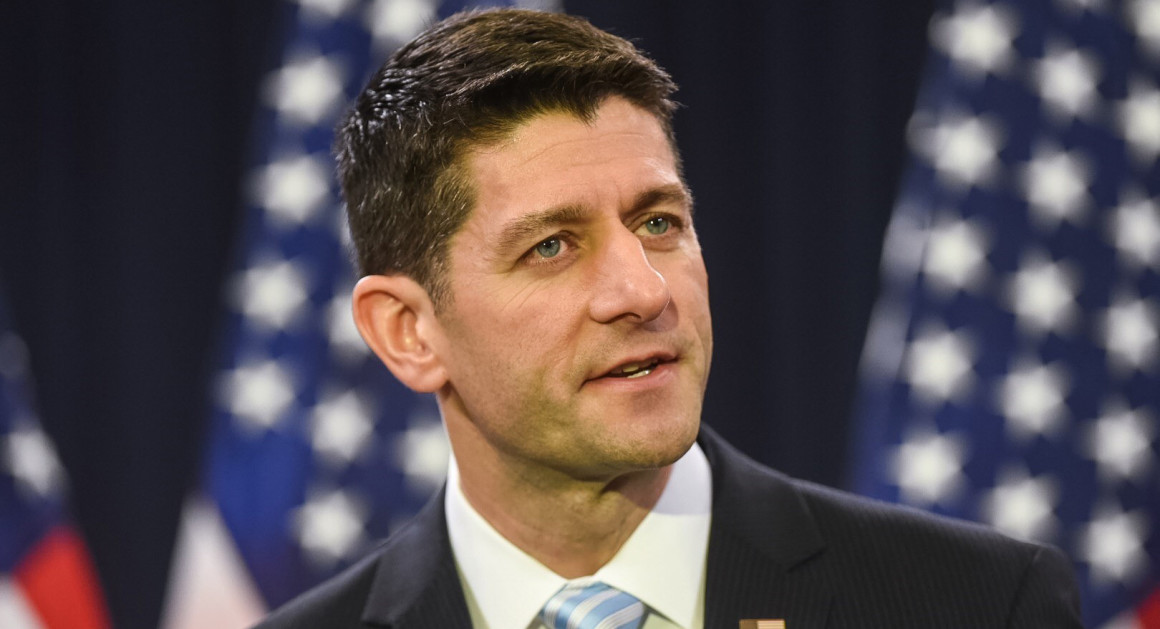
Speaker of the U.S. House of Representatives Paul Ryan is partially correct when he says the nation “is becoming divisive.”

I believe we’re already there, Mr. Speaker.

It’s not a condition that has just developed overnight, or certainly during the current election cycle.

It seems to my reckoning to have its roots in the 2000 election season, when a candidate for president was elected by the narrowest margin imaginable — and under circumstances that to this day hasn’t been accepted by many millions of Americans.

George W. Bush won the presidency after the Supreme Court stopped the recounting of ballots in Florida. The Texas governor had 537 more votes than Al Gore in that state. He won that state’s electoral votes, giving him the election — even though Gore had amassed more popular votes nationally than Bush.

For the record, I’ve never doubted the legitimacy of Bush’s election as president. The constitutional system worked.

But …

The spillover through the next several elections has seen a palpable division among Americans.

The current campaign has delivered an intense ratcheting up of the division that’s been there for some time now.

I’m not a fan of the speaker, but I do applaud him for speaking to our national idealism. He clearly was taking dead aim at the tone being delivered on the campaign trail by Donald J. Trump, who he didn’t mention by name. Everyone in the congressional conference room who heard Ryan knew of whom he was speaking.

As Politico described Ryan’s remarks: “He decried identity politics, criticizing those who pit groups of Americans against each other. He said the nation’s political system doesn’t need to be this bad. He accused both parties of staying comfortably in their corners, only talking to those who agree with them.”

Ain’t that the truth?

There once was a time when members of Congress — from both parties — talked openly with each other about how to legislate for the good of their states or the country. The Texas congressional delegation was known to have bipartisan breakfasts weekly, with House members breaking bread with each other and talking about issues that needed attention.

It doesn’t happen these days.

Instead, we’re seeing and hearing candidates and their rhetoric demonizing “the other side.” The No. 1 instigator of this campaign-trail anger is the GOP’s leading presidential candidate — Trump.

Ryan’s message will not resonate with the segment of the population that has bought into the Us vs. Them mantra that Trump and others are promoting. Ryan is now seen as a member of the hated “establishment.”

Ryan said: “What really bothers me the most about politics these days is this notion of identity politics. That we’re going to win election by dividing people. That we’re going to win by talking to people in ways that divide them and separate them from other people. Rather than inspiring people on our common humanity, on our common ideals, on our common culture, on things that should unify us.”

Is his message too sunny, too optimistic, too idealistic?

For the sake of our political future, I hope not.

Daunting task: explaining U.S. politics to Europeans

GTY_hillary_clinton_donald_trump_split_jt_150912_16x9_992

Later this year — in late summer — my wife and I are going to face a daunting task.

We’re going to fly to Germany, where we’ll spend time visiting friends and touring the beautiful region of Bavaria. We plan as well to visit other friends in The Netherlands while we’re across The Pond.

OK, that’s not the daunting part. The challenge will occur in explaining the American political system to sophisticated western Europeans.

It’s not that I haven’t had similar challenges before.

In November 2000, we traveled to Greece. Voting in the U.S. presidential election had just concluded — but we didn’t yet have a new president. Vice President Al Gore had collected more votes than Texas Gov. George W. Bush, but the outcome had been thrown into a tizzy over those “hanging chads” in Florida.

Our Greek hosts — who also are quite sophisticated — kept peppering me with questions that centered on this idea: How is that one candidate can get more votes than the other guy but still not win?

That’s when I sought to explain the Electoral College system and how electoral votes are allocated based on which candidate wins a particular state. The bigger the state, the more electors they get. I tried to explain that the system has worked generally pretty well.

The Bush-Gore election and its immediate aftermath shot that idea all to hell.

This year, the presidential election is heading into a climactic phase as my wife and I are vacationing in Western Europe. I’m expecting our friends to introduce us to their friends as “visitors from America.”

I can see the eyebrows raising as they ask us about  “you know who.”

I also can anticipate the question: How in the world can a major American political party nominate someone like Donald J. Trump?

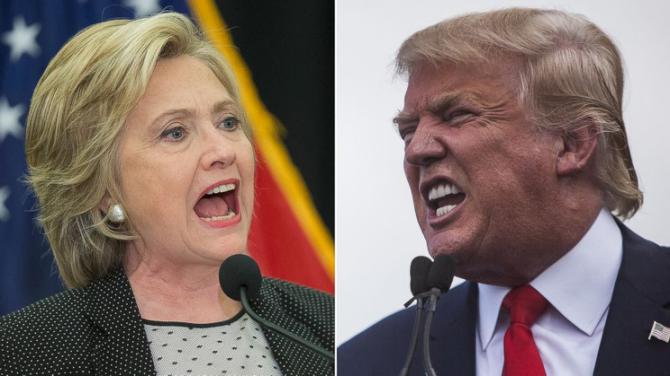
To be honest, I haven’t yet formulated my answer. Neither has my wife. We’re throwing up our hands in dismay at the prospect of this know-nothing narcissist accepting the Republican Party presidential nomination — against the expressed wishes of the GOP’s wise men — and then taking his campaign of innuendo and insults against Hillary Rodham Clinton.

Both of us mounted valiant efforts in 2000 to explain our political system to the inquisitive Greeks.

This year, according to my wife, it’s hopeless.

“I think this time,” she said, “I’m going to say, ‘Yep, you’re right. We’ve messed up.'”

I’m thinking of following her lead.


Clinton takes back … a compliment

HIV-AIDS

Here’s how it usually goes when a politician retracts a statement.

The pol usually says something negative about someone else, only to be shown that the comment was unfounded. The politician then might take at least some of it back, declaring a lack of complete understanding.

Hillary Rodham Clinton, though, did something quite different this week.

She attended the funeral of former first lady Nancy Reagan and then offered high praise for the work Mrs. Reagan and her husband, President Ronald Reagan, did to raise awareness of HIV/AIDS.

Well, to borrow an exclamation: Oops!

Turns out the Reagans didn’t do what Clinton said they did. They were not champions for HIV/AIDS research.

AIDS activists and leaders of the LGBT community were quick to call Clinton out on her misstatement.

President Reagan didn’t even mention AIDS — which was initially diagnosed in 1981, the first year of his presidency — until 1987. As for Mrs. Reagan, she was silent on the issue as well.

Yes, the backlash was intense in the wake of Clinton’s comments.

As the New York Times reported: “While the Reagans were strong advocates for stem cell research and finding a cure for Alzheimer’s disease, I misspoke about their record on HIV and AIDS,” she said in a statement about two hours after her interview had been shown on MSNBC. “For that, I’m sorry.”

I am pretty sure that Clinton’s staff did not serve her well in prepping her for the TV interview in which she “misspoke.”

Indeed, if the leading Democratic presidential candidate would be of a mind to praise any Republican for their work on HIV/AIDS research, it ought to go President George W. Bush, on whose watch the PEPFAR program was initiated.

While touring Southeast Asia with other journalists in 2004 on a mission to learn about the impact of AIDS in that part of the world, we were told that because of PEPFAR — the President’s Emergency Plan for AIDS Relief — the United States was spending more on AIDS research than the rest of the world combined.

The Reagans weren’t in the game. Yes, the late former first lady has earned high praise for her Alzheimer’s awareness efforts. Not so with HIV/AIDS.

Now we’ll get to see how nimble Hillary Clinton can be in the face of some stinging rebukes over what one leading gay activist called her “idiotic, false – and heartbreaking” tribute.

Trump confounds foes on all sides

trump and carson

Just how wacky is this presidential campaign?

I cannot identify any single source, but it seems as though we can find some element of that wackiness in this scenario.

Donald J. Trump is getting pounded by foes on both ends of the spectrum as he continues to lead the way among the Republican Party presidential candidates.

Consider this, for instance.

Intellectual conservatives say Trump isn’t one of them. They point to his statements in favor of a woman’s right to choose an abortion; they take note of his stance in favor of universal health care; they question why he has said President Bush “lied” the nation into fighting the Iraq War.

He’s not a true Republican, let alone a conservative Republican, which is where the party establishment has been leaning for the past decade or two.

The party establishment cannot stomach the idea of Trump being the party nominee. They fear what that would mean for the party’s control of the U.S. Senate and in the many statewide races across the country. Trump cannot possibly lead the Republican slate of candidates, they say.

Then we have those on the other end. I’m one of those folks.

Trump’s public presence is a ghastly reminder of how ignorant he is about government. He doesn’t understand the limits of the presidency. Trump’s stated intention is to do all manner of things by himself, or so one could be led to assume.

Many of us are horrified at the insults he has hurled: at a TV news anchor, at disabled people, at a U.S. senator’s distinguished military service, at voters of Iowa, at all of his political foes, at Hispanics.

He recently actually threatened the speaker of the House of Representatives, fellow Republican Paul Ryan, by saying he could pay a price if he and Trump don’t get along.

And, oh yes, there’s that feigned ignorance of who ex-Klansman David Duke is and what the organization to which he once belonged stands for.

Those on the right and those on the left cannot stand this guy.

But he’s leading the race for the Republican Party presidential nomination. Who’s voting for him?

Evangelical voters are giving him a pass for his acknowledged extramarital affairs. Hard-core Republicans are backing him because he “tells it like it is.”

They’re fed up with “politics as usual.”

Well, what they’re likely to get with Donald Trump is a brand new kind of politics never before seen.

You want wackiness? This guy is delivering it.