Tag Archives: AGN Media

Happy Trails … to us

This blog has allowed me to cover many things over the years I’ve been writing it.

Its primary focus is politics and public policy. I also choose to write about “life experience” and assorted other matters that pop into my noggin. I’ve shared with you how my wife and I have become parents to an adorable puppy named Toby; I post Puppy Tales items on occasion.

I also have been writing what I call an “occasional series of blog posts commenting on upcoming retirement.” I included that message in a sort of “editor’s note” at the start of those entries.

Today I announce the end of that feature on “upcoming retirement.” There’s no more “upcoming” about it.

It’s here. It has arrived. Or, shall I say it’s arrival is right around the corner.

Accordingly, you’re going to get a new series of blog posts. I’m calling it “Happy Trails.”

It will chronicle the adventures upon which we are embarking. They might involve travel in our fifth wheel RV; they might include a vignette about Toby the Puppy; they might involved preparations we’re making to relocate.

Or … they might simply offer some perspective on issues of the day from a retired individual who spent nearly 37 years in daily journalism, most of it commenting on issues, public officials or the community where we were living.

It was my goal at the Amarillo Globe-News to retire from that organization. I arrived there in January 1995 to become editorial page editor of the Daily News and Globe-Times. The papers merged in 2001 to become the Globe-News — which is what most folks in the Panhandle called it anyway; the afternoon paper, the Globe-Times, vanished.

Circumstances beyond my control didn’t allow me to retire from the paper. The publisher reorganized the place in the summer of 2012. He instructed all employees in the newsroom — and yours truly — to apply for any job they wanted. I looked at the rewritten job description, saw the few new wrinkles in it — and then decided to apply for my own job.

It didn’t work out quite the way I anticipated. The publisher decided to hire someone else, a former colleague of mine who worked under my supervision for several years before he had transferred back to another department in the newsroom.

I was — shall we say — stunned to get the news.

I quit the next day. Cleared out my office, went to visit with the publisher for a brief — and awkward — meeting. Then I was on my way.

All I wanted was to be able to retire, to leave of my own volition. I was unable to do so in quite the manner I envisioned, unable to retire from the craft I had loved for so many years. To this day, even though I resigned, I feel almost like a persona non grata at the Globe-News.

But … what the hey!

That was then. The here and now has arrived. I am going to retire — on my own terms — from the part-time job I’ve been working for the past three-plus years.

So, this blog is going to include a feature I hope you’ll enjoy reading as much as I intend to enjoy writing.


Opinion pages heading for oblivion — maybe

I am a dinosaur. I believe in what we know to be “traditional journalism.”

It includes newspapers — although not exclusively, to be sure — with pages that contain straight news; some pages contain entertainment; they all have advertising, which businesses purchase and which gives newspapers their profitability.

They also include pages of opinion. They are editorial pages and related pages with other commentary submitted by, oh, syndicated columnists and local contributors; these pages also include letters from readers who want to express themselves on the issues of the day.

Well, it now appears that traditional newspapers are receding into our memory.

The Poynter Institute is telling us that newspapers — a little at a time — are ceasing to publish daily opinion pages. They are reverting to a “digital first” model. They need to save money, given that advertisers aren’t spending as much money on print publications these days. Newspapers need to keep pace with the change in the industry, so they’re going to this digital model.

It saddens this dinosaur.

I became a reporter in the mid-1970s aiming to chronicle events in my community and report them to people who had an interest in being informed.

My career gravitated over time to the opinion pages.

I would assume the role of editor of a small suburban daily in Oregon City, Ore. Then I would move to Beaumont, Texas, to write editorials for a larger newspaper; I eventually became editor of that page. After a period of time, I would move to Amarillo to become editor of two papers’ editorial pages.

I saw my role in opinion journalism as a complement to what those publications did on their news pages. It was to provide perspective, context and, yes, opinion about the issues on which the papers were reporting.

It was a valuable task. I was proud of my craft.

So, it saddens me terribly to read about newspapers forgoing daily print opinion pages in favor of this digital “product.”

The Poynter article discusses big changes underway at the Milwaukee Journal-Sentinel, which has scrapped a daily print opinion page in favor of a digital presentation, “We have decided that our highest engagement comes from enterprising, in-depth, explanatory reporting,” editor George Stanley said in a phone interview. “So we are keeping that intact.”

The editor of the paper makes no apologies for it. Nor should he, I guess, given that he still works for an employer who made this decision.

I came of age in journalism during its heyday. A couple of young reporters for the Washington Post were digging for information about what a president of the United States was doing to subvert — allegedly — the U.S. Constitution. I wanted to take part in that craft, even if I couldn’t do it at Ground Zero of what was an exciting time to practice it.

I have never lost my love of that work and what it represents. However, I sure understand that it is a new day in journalism, the craft I practiced for nearly 37 years.

Perhaps it’s time to admit that I am glad to be gone from it and that it’s a better fit for youngsters.

Former life offers humbling reminder

This is the latest in an occasional series of blog posts commenting on upcoming retirement.

I am living a life in two parts.

The first was geared toward crafting a career; the second is developing a life beyond that career.

As I move farther into the second part of life, I find myself intersecting with what I used to do, when I “worked for a living.”

I work part-time for an auto dealership in Amarillo. My job is to work with customers as a service department “concierge.” I wear a name badge. Customers walk into our service waiting area and some of them spot my name tag and will say something like, “Hey, aren’t you the guy who worked at the newspaper?” I tell them yes.

We engage in some small talk that involves my former job, which I left more than four years ago.

Why mention all of this? I guess it is to acknowledge publicly how humbling it is to realize that what I used to do — which was write editorials and columns while editing the Opinion page of the local newspaper — had some measure of impact on people’s lives.

I find that gratifying and — as I think about it — a bit unnerving.

The gratification comes as people still recognize my name all these years after I resigned my post at the Amarillo Globe-News. It gives me no small level of satisfaction to believe I had some impact on those who see a name they recognize from the newspaper.

I don’t presume that the impact was always a positive one. I occasionally hear from those I meet who tell me “I didn’t usually agree with your point of view, but I read it.”

They read it. That’s all that matters. I am not kidding about that. I always knew that people’s minds don’t change because of something they read. I also know that most of us have our own world view and I never should expect to change anyone’s mind any more than my own mind would change if I read something with which I disagree.

To be sure I get a bit unnerved about these meetings, too. I don’t freeze. I like to think I can engage most perfect strangers in collegial conversation. The unnerving comes when I try to cope with these perfect strangers recognizing my name in the first place.

I joke with some of them that the ethnic sound to my name is what sticks in their memory. Oh, no, they respond. That’s not it. OK. I’ll accept your answer.

The second part of the life I intend to pursue with my wife awaits. It’s just difficult at times to shake that first part loose. I enjoy reliving that prior life.

The first part is likely to disappear when we move on down the road.

We are getting ready for that moment.

‘Yes’ to statewide cellphone-driving ban

I just got caught up a bit with some news out of the Texas Legislature.

It is considering a bill that would impose a statewide ban on the use of cellphones by drivers operating a motor vehicle.

How about approving this bill and sending it to the governor’s desk? And how about this governor, Greg Abbott, doing what his predecessor failed to do, which is sign it into law?

Former Gov. Rick Perry received a cellphone use while driving bill in 2011. He vetoed the bill, calling it a government intrusion. Let me count the ways that such a supposed “reason” doesn’t make sense, given all the ways that government “intrudes” into people’s lives with certain rules.

Speeding? Drinking while driving? Mandatory seat belts?

Don’t those laws “intrude” on Texans’ private lives? Oh, sure. They protect public safety. Well, so does a ban on cellphone use.

Even the Amarillo Globe-News has endorsed this bill, which is a bit of a surprise given the newspaper’s tendency to lean against so-called “government intrusion.” I’m glad to see the newspaper continuing the fight we used to wage against this kind idiocy by motorists back when I was working there.

I also ought to point out that a statewide ban — with signs posted at every border — would alert every motorists entering Texas that the ban covers even those vast expanses of rural highways that do not pass through incorporated cities and towns.

Amarillo has a cellphone ban for motorists to obey. So do many other cities. Not all of them have such ordinances on the books. A statewide ban gives consistency across the state and puts motorists on notice that they’d better be using a hands-free device while talking on someone as they sit behind a moving motor vehicle.

Pass the bill, legislators. Sign it into law, Gov. Abbott.

No talk of past employment

This is the latest in an occasional series of blog posts commenting on upcoming retirement.

I believe I have crossed another threshold on the way to full-time retirement. It happened earlier today without warning.

This morning I ran into a former colleague — and current friend — while I was running some errands. She and I worked together for quite a number of years at the Amarillo Globe-News.

Then she left the newspaper. My departure would come not too many years later.

Whenever we would see each other, usually at the place where she now works, we would end up talking about so-and-so at our former place of employment; or we would mention something about such-and-such experience we might have shared. And oh yes, we also would exchange a disparaging word — or two … or three — about individuals for whom we share a mutual loathing.

Today? None of that came up. I didn’t even think of mentioning anything about anyone. I don’t know whether any of that was in her head, either.

We talked instead about grandchildren, retirement, Las Vegas (and the prospect of her possibly striking it rich on her next trip to the desert oasis).

Then we said so long. I was on my back home.

So, there you have it. Another hurdle cleared. I wonder at this moment if my friend feels the same way.

Journalists enter increasingly hostile environment

Those of who toiled as journalists — whether print or broadcast — have been forced to cope with the perception that the public hasn’t thought too much of us and the work we do.

There was a longstanding joke in the old days that reporters and used-car sales reps battled it out for the bottom spot on the public opinion totem pole.

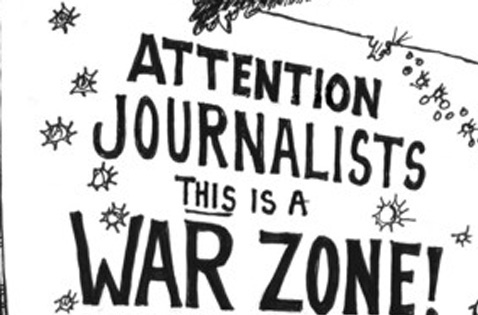
These days, we now have the president of the United States tossing dung on top of reporters, calling them the “enemy of the people,” accusing them of outright dishonesty, suggesting they conspire to make up “fake news” and peddle it as the real thing.

Man, it’s even tougher these days to do the job I did for nearly 37 years.

I recently made the acquaintance of two young reporters for the Amarillo Globe-News, my final stop along my lengthy journalism journey — which ended on Aug. 31, 2012. They are both earnest and eager young reporters. I don’t know this as fact, but my sense is that the AGN is their first job out of college.

It’s a different type of profession now than it was when I got pointed in that direction way back when, before The Flood, or so it seems.

I never considered myself to be anyone’s “enemy.” My desire was to make a difference in the world and to chronicle events in my community and report them to the public. I spent most of my career in opinion journalism, but many of the principles that apply to reporting — such as fairness and accuracy — surely applied.

That was in the early 1970s. I had just finished a two-year hitch in the U.S. Army. I came home in the late summer of 1970, settled in with Mom and Dad and prepared to re-enroll in college the following January.

One evening, at dinner with my parents, Dad asked me if I had considered what my college major should be. I said I hadn’t thought it through. He asked, “Have you considered journalism?” I asked him, “Why that?”

He complimented me on the letters I wrote from Virginia and Vietnam, where I had served during my time in the Army. He called them “descriptive” and said he would share them with family members and friends. He thought journalism would be a good fit, enabling me to put my writing ability to good use.

“Sure thing, Dad,” I said. “I’ll consider that.” I did. I enrolled. I signed up for some mass communications classes. The bug bit me in the rear and, by golly, I was hooked. Of course, I learned right away that journalism isn’t just about whether one can write clearly; one needs to be able to learn how to gather information and determine its importance to the public.

I wonder today how many parents are having that kind of discussion with their college-bound children. I wonder if moms and dads are telling their kids to pursue this craft. Or have they bought into the tripe being peddled by the president that to be a reporter is to declare war on “the people,” to be their “enemy.”

For that matter, did those two young reporters I met recently whether they got that kind of pep talk from Mom or Dad at the dinner table.

The craft is changing rapidly. Newspapers are emphasizing their “digital content.” They are becoming — to borrow a distasteful term — “click whores” that are more interested in how many people click on their websites than in the number of people purchasing a newspaper.

I do wish all young reporters the very best as they seek to make their own way in this changing — and increasingly hostile — climate.

Comfortable in this retirement skin

This is the latest in an occasional series of blog posts commenting on upcoming retirement.

Today is Monday. It’s a “work day” for those who still have to work for a living.

It’s also a day in which I made a realization as I walked down the street to collect my mail, before I ran an errand to purchase a couple of musical tickets for my wife and me. It was the realization that I do not miss going to work each day.

I am now entirely comfortable in my retirement skin.

I still work a part-time job. There might be another one resurfacing down the road. However, the idea hit me like a slap in the face today that I no longer miss the daily grind, the deadline pressure associated with the craft I pursued for 37 years.

I damn sure don’t miss the phone calls from those who dislike something I wrote, some of which ended with someone impugning my integrity, my patriotism … and even my religious faith.

Daily journalism delivered many gifts to my family and me over many years. It enabled me to do something I still love to do, which is to share my opinions with others and to write editorials on behalf of the newspaper for which I worked. It provided me with a comfortable living — even as I was forced to take two cuts in pay during the latter years of my employment as my corporate employer struggled to rid itself of the mountainous debt it had accrued.

My job gave me the opportunity to see and do things most folks don’t often get to do: landing atop an aircraft carrier and then being catapulted off the deck is one of those things; flying over an erupting volcano is another; attending and reporting on two presidential nominating conventions ranks up there, too.

That’s all in the past. I remember the vast bulk of my career with great fondness. The final years? Well, not so much. The end of it and how it occurred? Not at all.

These days I am free to run errands during the middle of the work day, in the middle of the week. My wife and I avoid the crowds that way, you know?

This new life also enables me share these views with you on this blog, which keeps me — more or less — in the game, such as it is.

More travel awaits, too.

Yes, this retirement life is getting more fun all the time.

‘Enemy of the people’ talk is way overblown

All the recent “enemy of the people” discussion prompted by the president of the United States has caused me to think about the career I pursued.

I worked in the mainstream media for 37 years. I got to pursue some great stories. I was able to see and do some fascinating things and meet some remarkable individuals.

I never considered myself an “enemy of the people.” Donald J. Trump has labeled the media as such, while proclaiming he doesn’t think the media are his personal enemies.

When the president of the United States impugns the integrity of the individuals who are doing what I used to do, well, I take it personally.

Did I make everyone happy while pursuing my job? Not in the least. I angered some public officials, made them squirm. For instance:

* I once wrote an investigative piece about a trial judge in Oregon City, Ore., who had developed a reputation as a jurist who lacked the temperament to do the job properly. I interviewed fellow judges, prosecutors, defense counsel and, of course, the judge himself. We published the story.

Then the judge died. My editor then assigned me to write his obituary. Who did I call to collect information about the judge? His wife. We had a nice visit and she told me she didn’t harbor ill feelings — let alone hatred — for me.

* I moved later to Beaumont, Texas, and then got another judge quite riled at me when I noticed something in a news story we had published one day. It spoke of the district judge getting a permit to operate a private business on the ground floor of the county courthouse where he worked as a state employee.

Big deal, you say? Well, yes. You see, he used facsimile state letterhead stationery to communicate with the county auditor, who had to approve the bids; the auditor — who reported to a panel of district judges, including the judge who was bidding for the permit — then granted the judge the permit.

I wrote some editorials calling this activity into question. The judge took great offense at it and, from what I heard, wanted to sue the newspaper and yours truly for libel.

* I moved to Amarillo after that and promptly got sideways with a former city commissioner who was appointed to the board of a public district that oversaw the then-publicly owned hospital. The problem, though, was that he was employed by a competing for-profit hospital, which seemed a tad inappropriate; he shouldn’t have served on a public hospital district board while working for a competitor. I wrote an editorial calling attention to that conflict of interest — and incurred the wrath of the former city commissioner.

I was doing my job as I understood it in all those cases. I never thought of myself as a purveyor of “fake news” or someone who “had an agenda” that differed from the public I sought to serve.

When the president assumes such things about the media and then challenges them in such a direct manner, a lot of us with ties to this particular craft take it all quite personally.

I am one of them.

I might have angered my share of officials along the way. As for “the people,” well, they cannot live without a free and aggressive press … no matter how mad the president says they might be in the moment.

Regretting a stance on Amarillo’s congressional alignment

Every now and then, as I wander through Amarillo, I encounter people I knew in my previous life as a journalist and with whom I maintain friendly relations to this day.

I ran into one of them today. He is former Bushland School Superintendent John Lemons. We chatted about this and that, about people we know and how they’re doing these days. Then the conversation turned to an old friend of his, former U.S. Rep. Larry Combest.

Our discussion pivoted to a position the Amarillo Globe-News had taken while I was working as editorial page editor of the newspaper: It dealt with congressional reapportionment.

I told John that I have grown to regret a position the paper had taken, and which I had expressed through editorials published on the matter. The G-N argued for the “reunification” of Amarillo into a single congressional district.

A brief history is in order.

***

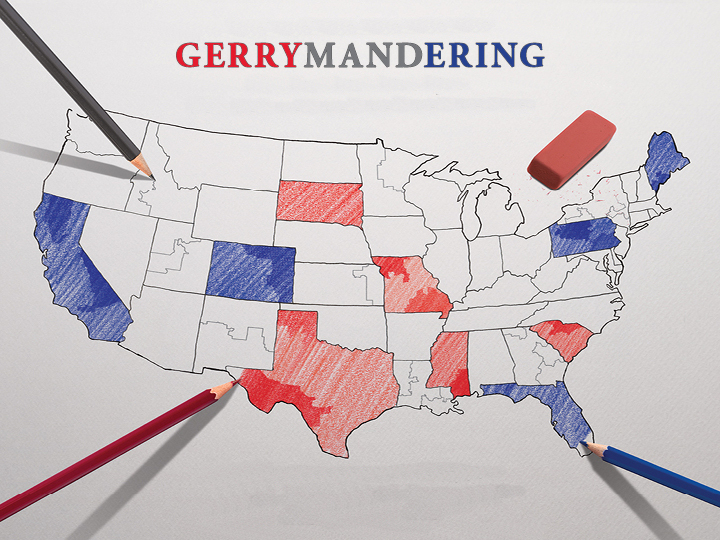
The 1991 Texas Legislature, which was dominated by Democrats, redrew the state’s congressional districts. Seeking to protect Democratic U.S. Rep. Bill Sarpalius, the Legislature split Amarillo in half: Potter County would be represented by Sarpalius in the 13th Congressional District; Randall County’s congressman would be Republican Larry Combest.

The realignment outraged the G-N at the time. They paper began calling for the city to be made whole by being put back solely into the 13th District.

The gerrymandering worked through the 1992 election, as Sarpalius was re-elected to his third term in Congress; so was Combest. The paper kept up its drumbeat for unification. The city’s interests were being split between men of competing political parties, the G-N said.

Then came the 1994 election. Sarpalius ran into the Republican juggernaut. A young congressional staffer named Mac Thornberry defeated him. Thus, the city would be represented by two congressmen from the same party.

I arrived at my post in January 1995 — and the paper kept hammering away at the unification theme. Bring the city together, we said. I scratched my head a bit over that one. I couldn’t quite understand why we were so upset with divided representation, given that both Reps. Combest and Thornberry were of the same party. They were rowing in unison, singing off the same page, reciting the same mantra … blah, blah, blah.

I told Lemons today that the city was able to “double its pleasure, double its fun” with two members of Congress representing its interests. One of them, Combest, held a leadership position on the House Agriculture Committee.

But we kept it up.

I told my pal John Lemons today I regret not pushing my boss at the time to rethink the notion that Amarillo needed to be made whole.

So … now I’m sharing my regret here.

I had a wonderful — and moderately successful — career in daily print journalism. However, it wasn’t regret-free.

Educator has it right: Come visit us, Mme. Education Secretary

I want to give a full-throated cheer to a former colleague of mine who has gone on to do some great work in public education classrooms.

Shanna Peeples, who was named 2015 National Teacher of the Year, these days works in the administration of the Amarillo Independent School District. Until this school year, she taught English at Palo Duro High School. She was named National Teacher of the Year and was feted in a White House ceremony hosted by President Barack Obama. We worked for a time together many years ago for the same newspaper, the Amarillo Globe-News.

What has Peeples done to earn praise from yours truly? She has invited the current education secretary, Betsy DeVos, to visit Amarillo. Come see what’s going on here, Shanna has told DeVos.

Lord knows the education secretary could use some on-site experience visiting public schools, talking to educators who work for public school districts and to public school students.

Peeples made her invitation known on social media. She has said she’ll bring the “coffee and donuts” to a meeting with Secretary DeVos.

I want to join the one-time National Teacher of the Year in inviting DeVos to Amarillo.

Look at it this way, Mme. Secretary: Amarillo sits in the middle of the Texas Panhandle, which voted overwhelmingly for the guy who nominated you, Donald J. Trump. This is ostensibly friendly territory. Amarillo ain’t Berkeley, if you get my drift.

DeVos, though, has zero experience with public education. Not as a student, or the mother of students. She ought to come here and take a look at the work being done by those who work for the very public to which the secretary also answers.

Nice going, Shanna. I hope the secretary accepts your invitation.