Tag Archives: Bill Clinton

Define whose ‘awful legacy,’ Mr. President

Bubba and The Worst President Evah

Former President Bill Clinton is paying the price for speaking without maximum precision.

So is the presidential campaign of his wife, Hillary Rodham Clinton.

The 42nd president, while speaking on his wife’s behalf, asserted it is imperative that voters erase what he called the “awful legacy” of the past eight years.

That’s it. Awful legacy. He didn’t identify whose legacy to which he was referring.

Pundits, politicians and just plain folks were left, therefore, to presume he meant the president’s “awful legacy.”

The borrow a term: Oops!

The Hillary Clinton campaign immediately sought to clarify what he meant, which was the legacy of the Republican-controlled Congress that, according to the campaign, has obstructed President Obama at every turn along the way.

OK, but he didn’t say it. He didn’t say “Congress’s awful legacy.” Then again, neither did he say “Barack Obama’s awful legacy.”

However, since the president is the Main Man in any political discussion, we are left to presume the former president was talking about his successor.

Right?

President Clinton, of course, has gotten into this kind of word-parsing mess before.

Recall his grand jury testimony during the Lewinsky Scandal when he sought to tell the panel, “It depends on what the meaning of the word ‘is’ is.” That verbal miscue has become embedded in U.S. political lexicon.

I doubt this one will endure quite as long.

Still, for a seasoned politician — which Bill Clinton certainly is — to speak so imprecisely in the heat of a critical campaign really does make some of us wonder: What in the world did he really say — or mean?

Perhaps he can blame it on jet lag.
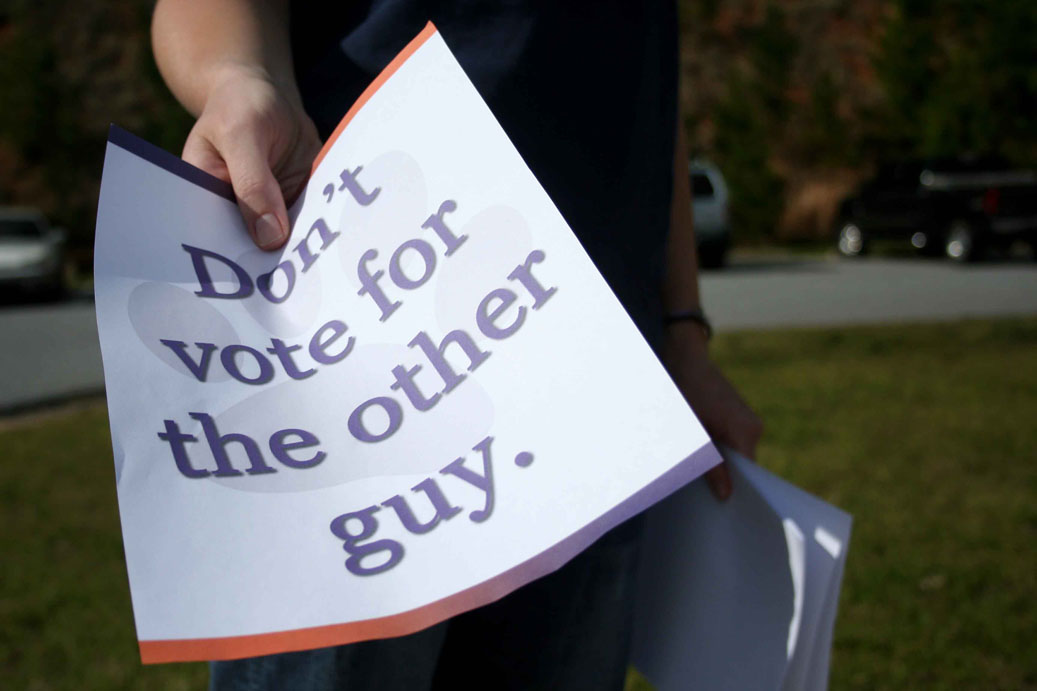
 

Negative campaigning: It still works

dontvotefortheotherguy

Political operatives have a name for it.

Opposition research.

Every major political campaign dating back to, oh, most of the previous century has featured it. The organization hires teams of researchers to do one thing: look up negative aspects of an opponent’s record to use against them.

Why embark on this mission? Because it works. Every single time. Voters eat this stuff up, no matter how much they complain how they dislike negative campaigning. They respond to it.

The potential Hillary Clinton-Donald Trump presidential campaign that looms not too far into the future is going to provide “oppo research” teams a veritable trove of negatives.

If I were willing to wager my recreational vehicle, I’d say that Clinton’s team is facing what one could call a “target rich environment.”

Remember the time her husband ran for president in 1992? His campaign famously developed what came to be called The War Room. It developed a quick-hit strategy to answer every negative attack leveled at Gov. Bill Clinton by President Bush’s re-election team. The Bill Clinton team learned the lessons taught by the 1988 campaign of Democratic nominee Michael Dukakis, which allowed the Bush team to “peel the bark” off of Dukakis, as the late campaign strategist Lee Atwater said famously.

I’m willing to presume that Mrs. Clinton’s team has resurrected that notion for her campaign this fall.

More to the point, though, will be the opportunities that the presumed Republican nominee, Trump, will present to the newest Clinton version of The War Room.

Trump has littered his GOP primary campaign with countless public utterances worthy of outright ridicule, not to mention condemnation.

It makes me recall the era not long after the 9/11 attacks. Those of us in daily opinion journalism were handed so many opportunities and topics on which to comment that we faced the editor’s prized dilemma: What can I set aside for tomorrow or another day even later on which to offer an opinion or perspective. Take it from me: It is far more preferable to have too much from which to choose than not enough.

Team Clinton is going to have that kind of “problem” staring it in the face once the GOP nominee’s identity becomes clear.

Yes, I know that Trump’s team will have its chances as well. Which one of the campaigns, though, will have the resources available to them to do the kind of research they’ll need to skewer their opponent? My hunch: the edge goes to Clinton.

Donald Trump already has demonstrated his ability to “go negative” when the other candidates have fired broadsides at him. He does so in amazingly crude ways. He’s criticized opponents’ physical appearance; he has denigrated a journalist’s physical handicap; he has chided an opponent for the manner in which he perspires. All of this, though, has endeared him to the Trumpsters who have glommed on to his message — whatever the hell it is.

And those examples comprise a tiny fraction of Trump’s much-touted business, personal and political history.

And it’s that crudeness that, by itself, is going to present the Clinton team with much of the opposition research material it figures to use against their expected foe.

You want negative campaigning? We’re about to get it.

It won’t be pretty. We’ll bitch about it.

Bring it on!


Hey, these guys got along, too!

newt

The politics of the moment has this way of inflicting a case of selective amnesia among politicians.

Take last night’s 12th — and possibly final — Republican Party presidential debate with Donald J. Trump, Rafael Edward Cruz, Marco Rubio and John Kasich as providing an example of that peculiar malady.

One of them (I can’t remember who) brought up President Reagan’s famous buddy-buddy relationship with House Speaker Tip O’Neill. The two men — one Republican, one Democrat — worked well together.

Sure they did. I honor them for that cooperation.

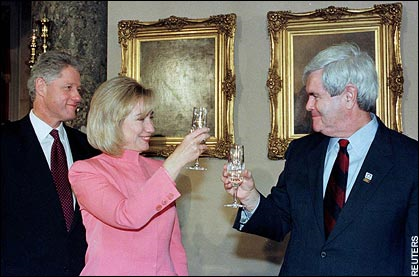
So did a couple of other well-known pols. Democratic President Bill Clinton and Republican House Speaker Newt Gingrich also managed to find common ground when the need arose. And it did, particularly as it regarded the need to balance the federal budget.

None of these current GOP candidates, though, mentions that political partnership.

We all know why that is the case, of course.

It’s because the president’s wife, Hillary Rodham Clinton, wants to ascend to the office her husband once occupied.

Why, we just can’t give Bill Clinton any props for doing what the current president and the current congressional leadership seem unable — or perhaps unwilling — to do.

I’m the first to acknowledge that the Clinton-Gingrich relationship never evolved into the personal public friendship that Reagan and O’Neill developed.

The Gipper and the Tipper would share some spirits once they were off the clock, setting politics aside; it’s been reported widely how they would swap stories between them and laugh at the foolishness of the day.

I don’t believe I’ve ever heard of similar moments of non-political fellowship involving Bill and Newtie.

However, they certainly did form a valuable political partnership during the time Gingrich was speaker. It’s understandable, I suppose, that the Republicans running for president would choose to ignore it.

I’ll just have to rely on Hillary Clinton to remind the rest of us how bipartisan cooperation can work.

She was there, too.


Trump now challenges the speaker of the House

donald-trump-1a64c2eda04ee51d

House Speaker Paul Ryan today laid out an interesting challenge to the Republican Party’s leading presidential candidate.

He said Donald J. Trump needs to condemn the politics and policies of the Ku Klux Klan, which Trump has failed to do with anything resembling clarity. The Republican Party, said the GOP speaker, does not stand for bigotry, hatred and racism.

Trump’s response?

He said he doesn’t know the speaker but expects to get along with him once the two men get acquainted. If they don’t, said Trump, then Ryan could have some trouble.

Whoa!

Let’s hold on.

As MSNBC commentator Lawrence O’Donnell noted this evening, the speaker of the House of Representatives has far more power than the president of the United States. Thus, the GOP frontrunner needs to take care if he’s going to “threaten” the Man of the House.

Why? The House generates all tax legislation. Plus, as O’Donnell noted, speakers of the House have the ability to make life quite uncomfortable for presidents. Think of what the House did to President Nixon during the Watergate scandal; think also of what the House did to President Clinton during the Lewinsky scandal. Nixon nearly got impeached; Clinton actually was impeached.

Donald Trump needs to learn to make nice. Then again, if he had any understanding of how government actually works, he would know better than to threaten the man who runs one half of a co-equal branch of government.


Lawless? Unconstitutional? Why no impeachment?

impeach

The Republican field of candidates — even when it comprised 17 members — has been using some highly charged language to describe the twice-elected administration of President Barack Obama.

They call his actions “lawless.” They say his executive orders are “unconstitutional.”

Thus, they are accusing the president of two things: of breaking the law and of failing to uphold the oath he took twice when he was sworn in by the chief justice of the Supreme Court.

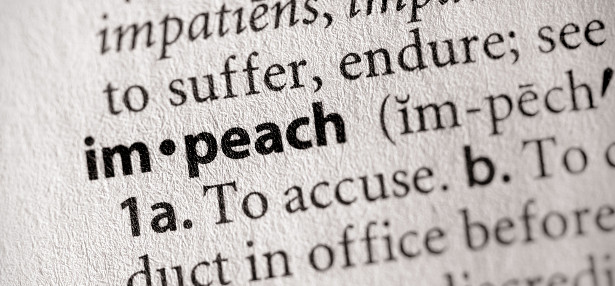
That makes me ask out loud, right here: Why haven’t the Republicans in the House of Representatives impeached the president?

If you really and truly think he’s broken the law or signed unconstitutional executive orders, then you have political recourse. Isn’t that correct?

It’s impeachment.

Two U.S. presidents have been impeached over the course of the nation’s history.

President Andrew Johnson fired his secretary of war without notifying the Senate and got impeached; he came within a single vote of conviction during a Senate trial. President Bill Clinton got impeached for lying to a grand jury about a tawdry relationship he had with a White House intern; the Senate acquitted him on three counts. A third president, Richard Nixon came within a whisker of being impeached because he blocked an investigation into the Watergate scandal; the House Judiciary Committee approved articles of impeachment, but the president quit his office.

These days, candidates for president keep tossing out verbiage that would suggest — if you are to believe it — that the current president has committed a whole array of impeachable offenses. Indeed, when you accuse a president of doing something “unconstitutional,” that by itself implies malfeasance.

Me? I don’t believe it.

I get that it’s campaign rhetoric. Therefore, perhaps they don’t really mean what they’re saying out there — on the stump or on those debate stages.

So, how about saying what you mean, fellas?

Christie’s 180 on Trump fascinates, confounds

chrischristie_0

Let’s see how this tracks.

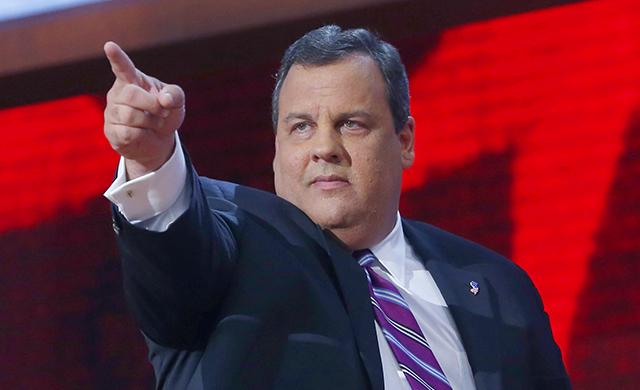
New Jersey Gov. Chris Christie, while campaigning for the Republican presidential nomination, said that Donald J. Trump is “unfit” to become president.

“We aren’t electing an entertainer in chief,” Christie famously said of his rival. We are electing a commander in chief, he added, and Trump didn’t measure up to the standards required to hold that all-important job.

Then he got beat in New Hampshire. Christie suspended his campaign and this week he tossed all those vibes about Trump out and said he is the “one man” who can lead America.

Politics does have this way of changing one’s stated position. Whether it changes one’s heart and soul, though, cannot be determined.

Check out the endorsement.

He said an interesting thing that deserves just a bit of parsing.

Christie — while making his announcement as well as over the course of the next day and a half — said Trump is the one candidate who will guarantee that “Hillary and Bill Clinton will not get within 10 miles of the White House.”

Hmmm. Think about that for a minute.

Would a President Trump — my hands still tremble when I type those two words next to each other — impose some kind of travel restriction on the former secretary of state? Would he restrict her movement through, say, an executive order?

It’s also interesting that he would include the 42nd president of the United States in that restriction. For crying out loud, governor! The man was elected twice to the very office you once sought.

Oh well, back to reality.

I guess Gov. Christie — who used to impress me as a man of principle and his own brand of panache — has performed the Big Daddy of Flip Flops in endorsing the man he once called “unfit” for the presidency.


If Hillary comes close to Sanders, she’ll declare ‘victory’

08CLINTONHISTORY-span-master1050

Politics has this way of giving those who lose tough races a chance to declare victory.

Eugene McCarthy did it in 1968 when he lost the New Hampshire primary to President Lyndon Johnson; George McGovern did the same thing in 1972 when he finished third in a primary that was won by Edmund Muskie; ditto for Bill Clinton in 1992 when he lost to Paul Tsongas.

History well might be about to repeat itself Tuesday — if Hillary Clinton moves to within shouting distance of Bernie Sanders in the Granite State’s Democratic primary.

She’s trailing now. She might be closing the gap, according to some polls. If she loses to Sanders by, say, 8 or fewer percentage points, I can hear it now: Hillary Clinton will proclaim herself to be the “second comeback kid.” The first, of course, was husband Bill.

When Ted Cruz won last week’s Iowa caucus, we heard to other “losers” proclaim victory. One of them was Donald J. Trump, who reminded voters that the polls he loves to trumpet said he didn’t have a prayer in Iowa when he entered the race; he finished second behind the Cruz Missile.

Even more fascinating was how third-placer Marco Rubio declared victory in that astonishing speech to his supporters. Hey, Marco . . . you finished third, young man!

Of course, actually finishes don’t mean much in political terms. Candidates have perfected the art of the spin for as long as the process itself. These days the necessity is made more important given the presence of social media and 24/7 cable news networks.

The trick is to get the “victory” declarations out there before anyone has a chance to catch their breath. Get ahead of the story and make damn sure you stay ahead of it.

Bill Clinton declared victory 24 years ago. He didn’t actually win. He just made sure voters thought he did.

I’m almost willing to bet real American money that his strategy has not been lost on his wife’s campaign team.

Debate produces a memorable sound bite

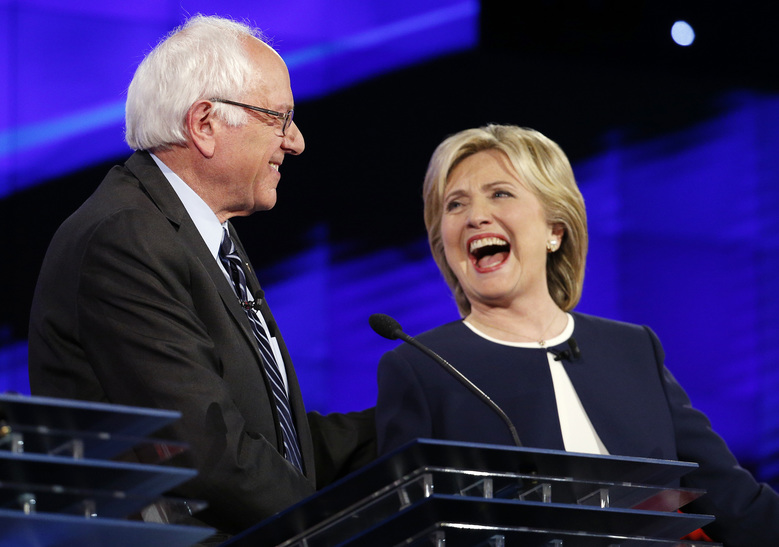
Sen. Bernie Sanders, of Vermont,, left, and Hillary Rodham Clinton laugh during the CNN Democratic presidential debate, Tuesday, Oct. 13, 2015, in Las Vegas. (AP Photo/John Locher)

Hillary Clinton can take ownership now of perhaps the second of three memorable sound bites that have stuck with some us over many years.

Last night the Democratic presidential candidate referred to the attacks leveled against her by primary opponent Sen. Bernie Sanders as an “artful smear.”

Bingo, Madame Secretary.

That will go down in history right along with another one of her gems, when she referred to the “vast right-wing conspiracy” that concocted the sex-related scandals that enveloped her husband during his time as president of the United States.

The third memorable sound bite comes from a federal judge who was nominated by President George H.W. Bush to join the U.S. Supreme Court. Clarence Thomas famously referred during his Senate Judiciary Committee confirmation hearing to allegations of sexual harassment as a “high-tech lynching.”

There you have it. There well could be more, but those jump out at me.

Those, in my mind, are the Big Three of sound bites relating to scandals and/or controversies.

The debate between Clinton and Sanders, though, did prove edifying, educational and at times entertaining.

It also was memorable now for what is certain to become a sound bite that will live forever.


Clinton wins Iowa . . . finally!

clintonvictory_0

There you have it.

The Associated Press has declared Hillary Clinton the winner of the Iowa Democratic caucus.

Now she can declare victory, which she did — albeit a bit prematurely — Monday night.

It’s a victory without much actual meaning, though, if you think much about it.

The former first lady/U.S. senator/secretary of state once held a commanding lead over U.S. Sen. Bernie Sanders in Iowa. Then it vanished. Sanders began gaining traction with his progressive/populist message. He had those big crowds, remember?

So it ended Monday night with Sanders trailing Clinton by two-tenths of a percentage point. She won about four more state delegates than Sanders.

Yes, she won. Will it matter in New Hampshire, or in South Carolina or anywhere else? Probably not.

I am one of those who thought Clinton would be unstoppable. The Democrats would nominate her by acclamation at their Philly convention and she’d breeze to election in November, making history as the nation’s first female president.

She still might be impossible to stop. She’s got a party machine behind her. And, oh yes, she’s got her husband, the 42nd president, also campaigning for her.

Say what you will about former President Clinton, he remains to this very day the nation’s most formidable political figure.

However, this campaign is going to be a lot tougher than Hillary Clinton ever imagined.

Her victory was hard-earned. Then again, she wasn’t supposed to work this hard to get it.

Bloomberg giving Democrats the jitters

NEW YORK, NY - AUGUST 26:  Mayor of New York City Michael Bloomberg speaks on stage during the opening ceremony during Day One of the 2013 US Open at USTA Billie Jean King National Tennis Center on August 26, 2013 in the Flushing neighborhood of the Queens borough of New York City.  (Photo by Matthew Stockman/Getty Images)

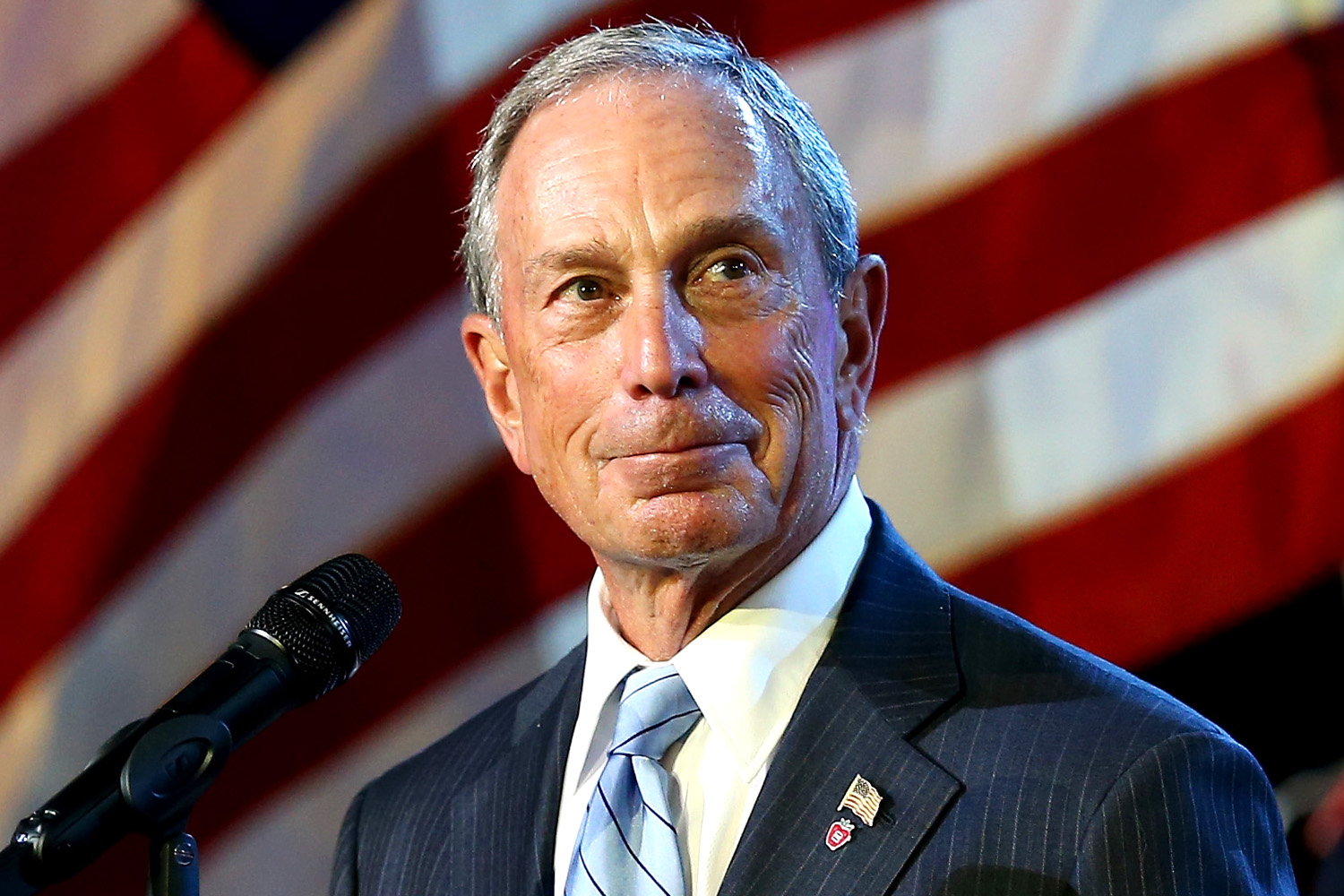
Michael Bloomberg is creating a certain buzz as the presidential campaign starts to gear up.

The former New York mayor is pondering whether to run for president as an independent.

Not surprisingly, Democrats are trying to talk him out of it. Why? They consider him a potential spoiler in the party’s bid to retain control of the White House.

My own hunch is that Bloomberg won’t run if the Democrats appear set to nominate Hillary Rodham Clinton for president.

If it’s Sen. Bernie Sanders? And if the Republicans nominate Donald Trump? Well, then it becomes dicier for everyone involved in the election . . . in both parties.

This brings back memories of Ross Perot. Perot, the Dallas billionaire, ran twice for the presidency, in 1992 and 1996. Republicans keep saying that Perot’s strength decimated GOP President George H.W. Bush’s chances for re-election, handing the election to Arkansas Democratic Gov. Bill Clinton.

The jury, though, really is still out on that. I’ve seen plenty of evidence that suggests that Clinton would have defeated Bush that year without Perot on the ballot, that Perot attracted nominally more Republicans than Democrats, but that his candidacy wasn’t necessarily decisive.

See analysis here.

Bloomberg’s entry into this race as an independent is hard to gauge.

He’s a friend of Hillary Clinton. He once was a friend of Trump . . . before the two men got tangled up in some business deal.

Given the utter madness that has enveloped the 2016 campaign to date, I am not willing to assume a single thing about what Bloomberg might do and what effect it will have.

Let’s just chalk this up to one more nod to the craziness that’s brought us to this point.