Tag Archives: immigration

President seeks to strike at heart of key U.S. policy

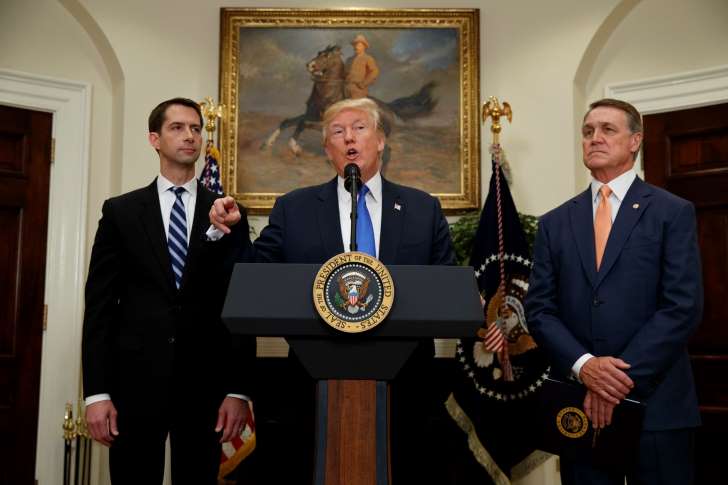
Donald John Trump promised to “put America first.” He also pledged to change U.S. immigration policy, to make it more selective.

I want to share with you a poem that appears on the pedestal at the foot of the Statue of Liberty.

Not like the brazen giant of Greek fame,
With conquering limbs astride from land to land;
Here at our sea-washed, sunset gates shall stand
A mighty woman with a torch, whose flame
Is the imprisoned lightning, and her name
MOTHER OF EXILES. From her beacon-hand
Glows world-wide welcome; her mild eyes command
The air-bridged harbor that twin cities frame.

“Keep, ancient lands, your storied pomp!” cries she
With silent lips. “Give me your tired, your poor,
Your huddled masses yearning to breathe free,
The wretched refuse of your teeming shore.
Send these, the homeless, tempest-tost to me,

I lift my lamp beside the golden door!”

It’s the “New Colossus,” written by Emma Lazarus. It has served as a guidepost for those seeking entrance into the Land of Opportunity.

Donald Trump wants to water it down. He is proposing a policy that limits entrance only to those with skills that can be put to good use.

You know already that I am the grandson of immigrants. They came here near the turn of the 20th century. They hailed from southeastern Europe. They weren’t particularly “skilled,” nor did they possess a lot of formal education. But they came here to forge a new life. They succeeded magnificently.

Slam the door shut?

The president wants to give preference to those who can speak English. Hmmm. Only one of my grandparents had any English skills upon arrival. The rest of them, I guess, were likely to be denied.

I don’t want this proposal to become law. It is an affront to what we have stood for — as a nation of immigrants.

Putting “America first” means, in my mind, honoring all of those who choose to come here in search of a better life. If they find it in the United States of America, then they have enriched not only themselves and their families, but also the nation they call “home.”

These great Americans would be appalled

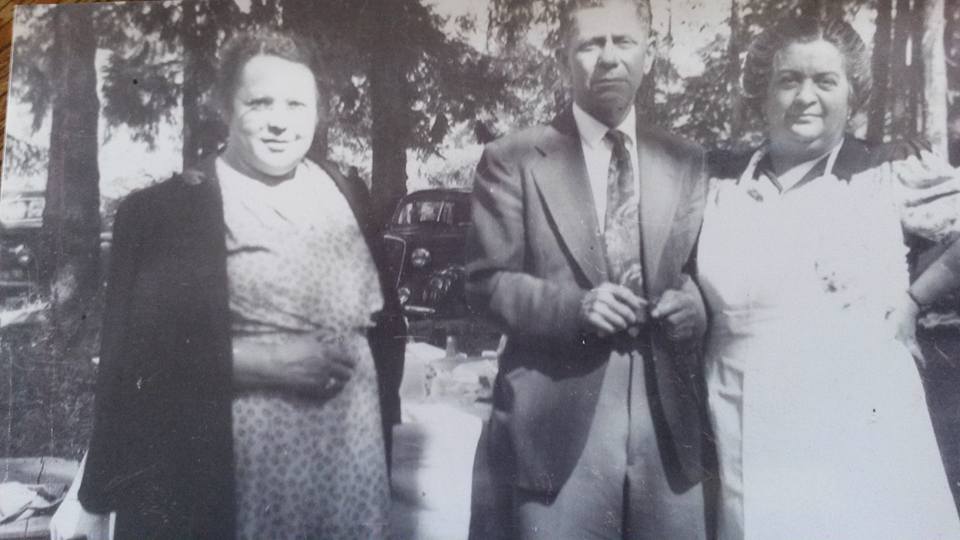
These are three great Americans. I knew two of them well; one of them died when I was an infant.

I want to write about them this weekend for a couple of reasons: to celebrate their love of the United States of America as it approaches its 241st year of existence and to comment on how I believe they would be reacting to the national mood emanating from the halls of power.

They are three of my four grandparents. From left they are: Katina Kampras Kanelis, my father’s mother; George Filipu, my mother’s dad; and Diamontoula Panesoy Filipu, Mom’s mother. John Peter Kanelis, my father’s dad and the man for whom I was named, was somewhere else, I reckon, when someone snapped this picture.

They were immigrants. Mr. and Mrs. Filipu came here near the turn of the 20th century from — get a load of this! — a Muslim-majority country. They were ethnic Greek residents of Turkey, which prompts me to ponder whether they would be welcome today. My grandmother Katina hailed from Kyparissia, a village in southern Greece.

They were great Americans. They loved this country more than life itself. Indeed, my “Yiayia” — Diamontoula Filipu — died on the Fourth of July, 1978. My wife has reminded me that Yiayia left us on that day just to ensure that we’d remember. I do. My Papou George — who died in January 1950 — loved this nation so much that in 1918, he enlisted in the U.S. Army just so he could obtain instant U.S. citizenship. He wanted to fight in World War I, but the war ended before he got the chance to see actual combat.

All of my grandparents were, shall we say, undereducated. They lacked a lot of formal education, but that didn’t prevent them from carving out great lives in the Land of Opportunity. Papou George operated a bakery; Yiayia was a homemaker. Papou John worked a number of jobs in America: steelworker, hotel manager and then he shined shoes in downtown Portland, Ore; my grandmother Katina also was a homemaker.

They were great because they loved their country arguably more than many of their peers who were born here. They came here because they wanted to be here, which to my mind makes them uber-patriots.

My Kanelis grandparents did return to Greece in the late 1950s. After my grandmother died in September 1968, Papou John returned twice more to Greece; he died in 1981 at the age of 95. My Yiayia and Papou George never went back to the “old country.” Yiayia always felt that the United States was “home” and she had no desire to return to the nation of her birth.

***

How might these great Americans react to what’s transpiring these days? I don’t recall any of them having acute political instincts. But my hunch is that they would be aghast at the kind of rhetoric we’re hearing these days.

This mantra calling for us to “make America great again” likely would enrage them. America is great. These great Americans came here because of this nation’s greatness. They forged their lives, reared 10 children among the four of them.

They would be aghast at the angry rhetoric. They wouldn’t endorse the behavior we keep witnessing from the president of the United States. They would want to remind everyone that we are a nation of immigrants. Every single American whose ancestry isn’t linked to those who were here when the settlers arrived comes from an immigrant background.

My grandparents understood it far better than many of our current leaders do today.

They were among the greatest Americans this great nation has ever welcomed. I am proud beyond measure to be their grandson.

These projects don’t pay for themselves

Donald J. Trump’s proposal to cut taxes — notably for the wealthiest Americans — is getting considerable play in conservative media and political circles.

The president thinks he’s on to something. He has pitched what his team has called the most sweeping “tax reform” package in U.S. history.

Now …

Let’s get real for a moment.

* The president also wants to enact a few big projects. He has proposed spending an additional $54 billion next year alone on the Department of Defense. He contends the military is depleted and, of course, blames the previous administration for all but rendering us defenseless against our enemies.

* He also wants to rebuild our nation’s roads, bridges and airports. The price tag for that? A cool $1.2 trillion. This is a project worth doing, given the sorry state of our highways and airports. I’m still baffled as to how this plays among fiscal conservatives who (a) voted for Trump in 2016 and (b) say they dislike spending money the government doesn’t have in the bank.

* The president also wants to build that “big, beautiful wall” along our southern border. The price tag varies on this matter, but I’ll go with the bigger number that’s been floated: $25 billion. I do not believe the wall will be built. Nor should it be built. Still, the president insists that it will and he no longer is saying at every campaign-style rally that “Mexico will pay for it.”

These things do not pay for themselves. Thus, Americans across the land need to ask themselves: Are we willing to step up to shoulder the cost of all these projects or are we going to ignore the reality that the money must come from each of us?

The tax cut mantra has become standard Republican Party policy. President Reagan famously sought to cut taxes while “rebuilding” the military. He railed against President Carter’s budget deficits, only to preside over a skyrocketing deficit during his two terms in office. President George H.W. Bush challenged us to “read my lips” while vowing at the GOP convention in 1988 to never raise taxes; which helped get him elected. He then raised taxes — wisely, in my view — and it cost him votes among his conservative GOP base in 1992. President George W. Bush cut taxes in 2001, then went to war with international terrorists after the 9/11 attacks; the deficits exploded.

A new Republican president is now proposing another massive tax cut while at the same time seeking to do big things. With what, Mr. President? Where’s the money coming from?

I hate the wall idea. If the president wants to stem illegal immigration, then invest more money in better enforcement along both of our lengthy borders — north and south — and at ports of entry along all three coasts.

The defense buildup doesn’t need to cost nearly what Trump is proposing. Our military remains the strongest in the world.

Infrastructure improvement makes sense, but it’s going to cost Americans a lot of money to get it done.

Are we going to fall for the GOP tax-cut dodge because we don’t want to pay for the things we insist that government do for us? Or are we going to understand that our government requires us to spend a bit of our money to make it work?

‘Wall’ taking various forms

Donald J. Trump’s “big, beautiful wall” isn’t going to be built anytime soon. If ever.

The wall is supposed to stretch along the United States’ southern border. The president vowed — loudly, in fact — that the wall would be among his first priorities during his first 100 days in office.

Well, the wall became part of the debate over how to avoid a government shutdown, that was reported to occur on Friday, on Day 99 of Trump’s term in office.

Congressional Republicans have pulled the wall out of the budget negotiation. Trump’s wall has been put on ice once again.

What is making me shake my head is the argument over the cost of the boondoggle. The president insists it won’t cost more than $10 billion. Congressional budget estimates put the cost at $25 billion-plus. Trump wanted a fraction of that amount included in this budget proposal; he won’t get even that.

Here’s where it gets real confusing: The cost disparity appears to center on the nature of the wall. Is it a real wall, concrete, rebar, razor wire and all that? Is it just a fence? Is it some kind of “cyber” wall with computer-operated cameras scanning the landscape?

Trump keeps talking as though it’s the real thing — the concrete/rebar/razor wire kind. It’s going to be sunk deeply into the soil along our border with Mexico. It keeps getting higher every time a critic in Mexico lambastes the president.

And speaking of Mexico, didn’t the president insist on the stump this past year that “Mexico is going to pay for the wall”? Well, they aren’t. We cannot make a sovereign nation do anything against its will — short of invading it and occupying it.

No the money is going to come out of our pockets. Yours and mine. Are you ready to pay for a wall that won’t work? Me neither.

We are witnessing the mother of all cluster f****, dear reader.

The wall is crumbling before it’s being built.

Do I favor an open border that allows bad guys to sneak into this country? Of course not! A wall is not the answer. And I haven’t even addressed in this blog post the logistics of building such a structure along thousands of miles.

I am willing to support strict enforcement at entry points all along both of our borders to ensure we keep criminals out of the country.

Good grief, man. If money is an issue, then spend it on beefing up existing border enforcement policies.

No, not everyone loves the border wall idea

Before I launch into my latest criticism of Donald J. Trump, I want to stipulate something up front.

I recognize that politicians of all stripes play to their “base.” Whether on the left or the right, they know from where they draw their political strength.

There. That said, the president’s belief that the border wall he wants to build between the United States and Mexico is popular with his base and, thus, is worth doing is utter nonsense.

He isn’t just the president of the Republican Party faithful who got him elected — along with a few million formerly loyal Democrats. He represents all 300-plus million Americans. Take it from me, Mr. President, not all of us are the least bit fond of the idea of walling off this country from one of our nation’s most loyal allies.

The wall won’t work. It won’t keep bad guys from coming into the country. It will separate families. It will create untold misery. It also is highly impractical — if not impossible — to build, given all the technical and legal issues involved with property condemnation and how the two countries were to settle the myriad issues relating to its construction.

According to the Washington Post: In a recent interview with the Associated Press, Trump said: “People want the border. My base really wants the border. My base really wants it.”

Really, Mr. President? Do I need to remind this individual that the base comprises a tiny minority of Americans. Indeed, this man finished second in the popular vote count to Hillary Rodham Clinton. Sure, he won where it counted — the Electoral College — but the popular vote disparity wasn’t even close.

He’s not the first pol to proclaim his base’s support for controversial policy initiatives. He won’t be the last.

However, he is the man of the moment. Remember, sir, that you are every American’s president, whether you — or millions of your constituents — care to admit it.

How did The Wall become our responsibility?

Hey, didn’t Donald John Trump vow, declare it a lead-pipe cinch that Mexico would pay for a “big, beautiful wall” along the border between that country and the United States of America?

Didn’t he say he would force Mexico to foot the bill because, after all, those criminals and terrorists were “flooding” the country through our southern neighbor?

He got into an immediate war of words with Mexican President Enrique Pena Nieto after taking office this past January. Why? Pena Nieto said “no way” would his country spend a nickel to pay for the wall.

Here we are, nearly 100 days into the Trump administration’s existence. The wall is now central to a domestic political dispute — in the United States. The federal government might shut down if Congress cannot come up with a plan to stick American taxpayers with the bill to build a wall that (a) won’t work and (b) will blow up the annual budget deficit.

What’s the cost of this boondoggle? $20 billion to $25 billion? For starters?

Congress and the president are squabbling over whether to approve one of those “continuing resolutions” that would fund the government for the short term. Meanwhile, that damn wall is still being negotiated between Republican congressional leaders and the Republican who now sits (once in a while) in the Oval Office.

If there is a more impractical, illogical and ill-conceived idea than building such a barrier between two ostensibly “friendly” nations, then someone will have tell me.

A huge portion of the U.S.-Mexico border happens to be along a mighty river — the Rio Grande — that separates Texas from Mexico. How in the name of civil engineering does the president build the wall along that border? How does the president propose to seize all that private land without adding to the already-enormous cost? The U.S. Constitution’s Fifth Amendment requires “just compensation” for any “private land taken for public use.”

Well, why quibble over the small stuff?

The very notion of this wall becoming central to this political dispute simply illustrates yet another blind and thoughtless campaign promise the president cannot keep.

And if he made that promise knowing that he couldn’t fulfill it, isn’t that just another flat-out, bald-faced lie?

Karma might have struck once again

Oh, the irony is too rich to ignore.

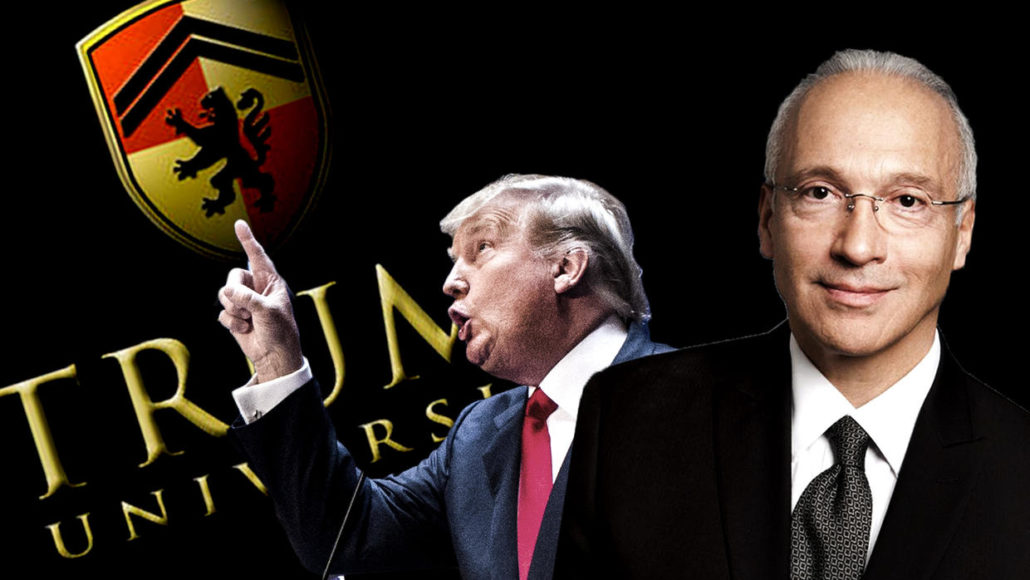
U.S. District Judge Gonzalo Curiel is going to hear a case involving a young man who says he is being deported illegally by the federal government.

Judge Curiel isn’t just any ol’ federal jurist. He happens to someone whom presidential candidate Donald John Trump slammed for being of “Mexican heritage” while he was hearing a case involving the defunct Trump University.

Curiel now gets to hear a case regarding the deportation of Juan Manuel Montes. He got the assignment by luck of the draw, it turns out. Montes, who’s now 23, is one of those “Dreamers” who came here when he was 9 years of age and had obtained DACA status.

Why is this case so tantalizing? It’s because Curiel is an American; born in Indiana and educated in the United States. He is a fine jurist. He’ll now get to hear a case brought by a young man who contends that the federal government didn’t provide sufficient documentation requiring him to be sent back to Mexico.

Judge Curiel’s citizenship didn’t stop Trump from defaming him during the 2016 presidential campaign by alleging that his Mexican heritage disqualified him from judging the Trump U case fairly. Trump, you’ll recall, opened his presidential campaign by declaring his intention to build a wall across our southern border to keep all those immigrants who were coming here to commit heinous crimes.

Stand tall, Judge Curiel

The wall? Blocking immigrants from Mexico? The judge’s parents are of Mexican descent? Why, of course he cannot judge the Trump U case fairly and without bias, according to Donald Trump.

As it turned out, Trump settled that matter with a $25 million payout to those who complained about the “education” they received. The president didn’t admit to any wrongdoing … quite naturally.

How will Judge Curiel do with the Montes deportation case? I am confident he’ll judge the case the way judges are supposed to judge such matters.

If the case goes against the federal government, though, expect the president to launch yet another tweet tirade.

Don’t you just love it when karma bites back?

Immigrant schools Trump on anthem protocol

https://www.youtube.com/watch?v=5_GaDLPUFRU

Ohhh, the irony is so very rich.

There they are: the first family of the United States of America. They’re standing on the Truman Balcony of the White House at the start of the annual White House Easter Egg Roll.

The band strikes up the National Anthem. Barron Trump and his mother, first lady Melania Trump, place their hands over their hearts. Then the first lady nudges the right arm of the man to her left, the president, who then places his right hand over his heart.

Why the irony? Well, Donald J. Trump has spoken badly for, oh, the past year or so about immigrants. The illegal immigrants are pouring into the country to commit all manner of crimes, he has said; the legal immigrants are taking jobs from Americans, he adds.

So, what about the immigrant standing next to him on the balcony? His third wife is a native of Slovenia; indeed, two of the president’s three wives have come here from foreign lands.

There’s just a fascinating bit of poetry associated with this brief video and I am pleased to see that the first lady is so attuned to the “optics” of these events.

Take note, Mr. President. I hope he thanked his wife.

Building ‘The Wall’ faces mountain of obstacles

Donald J. Trump’s mouth provides an endless supply of nonsense.

The wall he intends to build to keep an imagined horde of criminals and terrorists from entering the United States of America provides a stark example of his “ready, fire, aim” approach to public policy.

The New York Times, in an editorial published Sunday, took note of the enormously complicated task associated with building a wall across our nation’s southern border.

Did the Republican candidate for president consider any of them before riding down the escalator to announce his candidacy in the summer of 2015? Umm. Nope. No way, man.

The Times asks:

“How do you build a wall along the 1,200 miles of the Rio Grande, the Texas stretch of border? Do you put it on our side and abandon the river to Mexico, or seize Mexican territory for it, or put it in the middle of the river, or do some zigzag compromise? What do you do then about a treaty requiring that both countries have open access to the river?

“How do you make a concrete wall see-through, so smugglers aren’t invisible to the Border Patrol?

“How do you get private landowners to go along? What about the Tohono O’odham Indians, whose reservation straddles the border in Arizona and who want no part of any wall on their sacred land?

How do you wall out deep tunnels, drones and catapults? What about the tons of drugs that pass through existing ports? Did you know that drug cartels have ships and submarines? What happens when drug bales start coming ashore in San Diego, or over from Saskatchewan?

These things do not seem to matter to the president who keeps referencing these matters in the first-person singular, suggesting that he’s going to make it happen just because, well, he can.
Actually, he cannot. That’s not how it works.
The president cannot just say things, as the NY Times notes, without understanding the consequences of his utterances. It worked for him as a candidate for the office. Now that he’s occupying it, the time has come for the president to start thinking rationally — and strategically.

There goes the ‘revised’ Muslim ban

It’s back to the drawing board, or perhaps to another piece of scratch paper, for Donald J. Trump’s effort to ban Muslims from entering the United States of America.

U.S. District Judge Derrick K. Watson today has issued a restraining order that prohibits the president’s revised travel ban from taking effect.

The judge, based in Hawaii, ruled that Trump’s revised ban is just as discriminatory against people of a certain faith as his first ban. Thus, said the judge, the president is violating the U.S. Constitution.

What’s next? The case is likely to return to the 9th Circuit Court of Appeals, which upheld an earlier ruling by another federal judge that struck down Trump’s initial refugee.

The president had a response, according to National Public Radio: Trump, speaking at a rally in Nashville, Tenn., called the restraining order “unprecedented judicial overreach.” He said, “The law and the Constitution give the president the power to suspend immigration — when he deems — or she, fortunately it will not be Hillary, ‘she’ — when he or she deems it to be in the national interests of our country.”

At least Trump didn’t call Watson a “so-called judge,” which he labeled U.S. District Judge James Robart, who struck down the first refugee ban.

Trump sought to soften the ban by removing Iraq from his list of banned countries. He also removed the word “Muslim” from the new order. That wasn’t good enough, according to Judge Watson, who said the order still singles out Muslims, which he said is discriminatory on its face.

Watson then ticked off a long list of anti-Muslim statements Trump made while campaigning for president and while he has served as president.

Those of us who thought the new order was better than the first one, but who remain opposed to the policy itself, are heartened by the judge’s decision.

I have an idea for the president to consider. Yes, he’s concerned about protecting Americans from international terrorists. I get it and I endorse his concern. But Mr. President, why not just instruct our federal security authorities to be hyper-vigilant at every entry point?

That’ll protect us, too.