Tag Archives: George W. Bush

‘W’ trying, perhaps, to be too cute with his critiques

George W. Bush is saying he doesn’t want to “criticize” his successors as president of the United States.

Then he says things that sound oh, so critical of them.

Which is it, Mr. President? Are you going to weigh in fully or are you going to keep one foot off the scales?

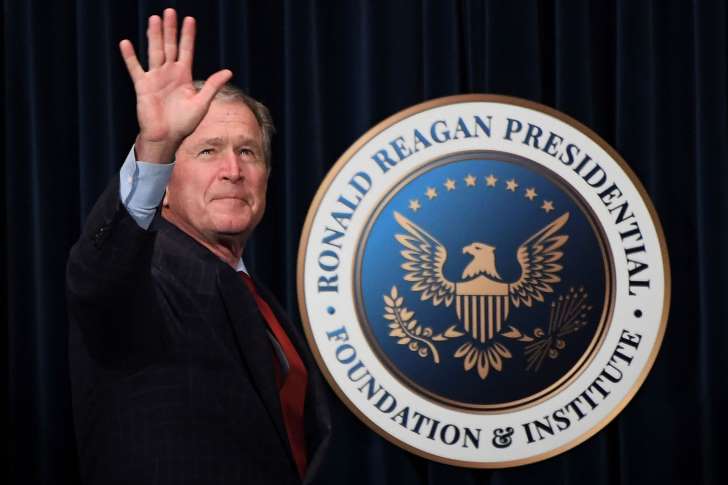
Speaking at the Ronald Reagan Presidential Library, the ex-president warned against “isolationist tendencies,” an apparent reference to some of the statements made by Donald J. Trump and his administration.

It would behoove Bush to steer clear of references to the Iraq War, which in my view, didn’t turn out quite the way he and his team envisioned it and sold it to the United Nations and to the American public. We weren’t greeted as “liberators”; the fight to secure Baghdad was far tougher than advertised; and, oh yes, we never did find those weapons of mass destruction that the Bush team said were in the late Saddam Hussein’s possession.

As USA Today reported, “Bush said that there is a lesson ‘when the United States decides not to take the lead and withdraw,’ an apparent critique of former President Barack Obama.

“’Vacuums can be created when U.S. presence recedes and that vacuum is generally filed with people who don’t share the ideology, the same sense of human rights and human dignity and freedom that we do,’ he added.”

The former president should lose the pretense of “not wanting to be critical” of his successors. That would be too bad if he did decide to weigh in fully. I kind of admired his declaration that he didn’t want to undermine his immediate successor, President Obama, as he sought to craft his own foreign and domestic agenda. Neither did his father, George H.W. Bush, when he turned the presidency over to the man who defeated his re-election effort, Bill Clinton.

If Bush 43 is going to speak critically of current policy, then he just ought to say so and cease trying to sugarcoat it with “I don’t intend to criticize anyone” statements.

Actually, Mr. President, I get what you are trying to say.

‘I don’t like the racism and name-calling’

Mr. President, many millions of other Americans don’t like any of it either.

George W. Bush is speaking out more forcefully about one of the men who has succeeded him as president of the United States.

Will the object of President Bush’s critique, Donald John Trump, listen to what No. 43 has to say? I rather doubt it.

Still, the message needs to be delivered. And the former president is doing so in a measured, but unambiguous manner.

Bush spoke with People magazine about his post-presidential hobby, painting, and also about Trump and the new president’s rocky first month in office.

Despite his critique of Trump, Bush remains an optimist. According to People: Bush called the political climate in Trump’s Washington “pretty ugly” (“I’m not going back nowhere!” he added for emphasis), but said he isn’t feeling anxious about the direction of the country. “Not really. I’m optimistic about where we’ll end up. 
 We’ve been through these periods before and we’ve always had a way to come out of it. I’m more optimistic than some.”

The ex-president was adamant about refraining from criticizing his immediate successor, Barack Obama. Not so, apparently, with Obama’s immediate successor.

I want to share in President Bush’s optimism. Sadly, I cannot.

However, I do share Bush’s view of what he’s heard coming from the nation’s capital in this still-new Trump era: “I don’t like the racism and I don’t like the name-calling and I don’t like the people feeling alienated,”

If only Donald Trump would listen. If only …

George W. Bush gets back into the game

Welcome back to the political arena, Mr. President … even if you remain on the edges of it.

George W. Bush, who maintained stone-cold silence during Barack Obama’s presidency, has now decided to weigh in on some of the issues dogging the current occupant of the White House.

He is being a gentleman about it, but one cannot help but believe that his genteel approach to criticism masks an attitude with a bit more bite.

NBC’s “Today” host Matt Lauer interviewed the 43rd president this morning. Bush made quite clear that he disagrees with Donald J. Trump’s view that the media are “the enemy of the people” and that the war against terrorists isn’t a war against Islam.

The former president had made a pact that he wouldn’t criticize President Obama. He said the job of being president is difficult enough without former presidents weighing in with their own view of how to run the country. If Obama wanted his help, Bush said he could pick up the phone, call and ask for it.

As National Public Radio reported: “Lauer noted that President Bush — who took the country to war in Iraq and who presided over an economic crisis — faced plenty of criticism from the media while in office. Lauer asked Bush, ‘Did you ever consider the media to be the enemy of the American people?’

“Bush chuckled and then answered: ‘I consider the media to be indispensable to democracy. We need an independent media to hold people like me to account. Power can be very addictive. And it can be corrosive. And it’s important for the media to call to account people who abuse their power, whether it be here or elsewhere.'”

As for Trump’s assertion that the enemy are “radical Islamic terrorists,” Bush said: “You see, I understood right off the bat, Matt, that this is an ideological conflict, and people who murder the innocent are not religious people. They want to advance an ideology, and we have faced those kinds of ideologues in the past.”

I cannot get past the personal aspect of what the former president might think of the current president. It was Trump, you’ll recall, who called the Iraq War a “disaster.” He also launched intensely personal insults at the ex-president’s brother, Jeb, who was one of 15 Republican Party primary opponents that Trump vanquished on his way to the GOP nomination.

Bush didn’t attend the GOP convention; neither did Jeb, nor did the men’s father, former President George H.W. Bush.

Blood, as they say, is thicker than, well, almost any other substance.

No one should expect George W. Bush to throttle up his return to politics into a full-time endeavor. Still, I happen to one who welcomes his world view while the current president struggles to get past serious questions about national security and whether the Russians helped him get elected.

‘W’: Free press is ‘indispensable to democracy’

Maybe you remember the bumper stickers with President George W. Bush’s face on them, with the caption: Do you miss him?

The message was meant as a dig at President Barack H. Obama.

Well, I didn’t miss him then. I do miss him now that a new president is in charge … and who’s decided to wage open war against the media.

President Bush said on “Today” that a free and strong media are “indispensable to democracy.”

Trump doesn’t grasp the notion that the media play a critical role in assuring that public officials — even the president of the United States — always stay on the straight and narrow.

“I consider the media to be indispensable to democracy. 
 Power can be very addictive,” he told NBC’s “Today.” Do you think?

George W. Bush is among a handful of men who have held those reins of power. He did so for two terms. While his record is a mixed one, he always seemed to comprehend the limits inherent in the power of the presidency.

Two presidents later, we have a guy in the White House who is trying to manipulate the media in ways most of never have seen. He seeks to shut out major media organizations from press briefings; he seeks to curry favor with “friendly reporters”; he blasts reporters and organizations openly for being “dishonest” and purveyors of what he calls “fake news.”

The First Amendment guarantees a “free press.” It prohibits the government from interfering in the media’s effort to do their duty.

Trump doesn’t get it. President Bush does get it. “We need an independent media to hold people like me to account,” “W” said.

Do I miss the 43rd president?

Yes. I do.

POTUS takes credit he doesn’t deserve

Flash! National debt drops a tad, while the president of the United States takes credit for it!

Hold on for just a New York minute, shall we?

Donald J. Trump shouldn’t be taking credit for a slight dip in the national debt, any more than Barack Obama should have taken the hickey for it when it blipped up in the first month of his administration.

However, do not expect that to inhibit the new president from taking credit on such matters.

The president has shown this habit of taking credit for positive things but then passing off negative elements as if he’s some sort of innocent bystander.

The New York Times reported: “The federal debt is determined by the government’s decisions about taxing and spending, and by the strength of the American economy. The debt was increasing rapidly in early 2009 because the economy was in free fall, and because of policy decisions made during the administration of President George W. Bush.

“The debt is rising more slowly now because economic growth has strengthened and because of policy decisions made during Mr. Obama’s administration. But the debt is on a clear upward trend. The nonpartisan Congressional Budget Office estimated in January that the debt would increase by $559 billion in the current fiscal year, ending in September.”

Trump has been in office for a whole month. He’s got 47 more of them to go. The president, though, is so darn quick with his Twitter trigger finger that he cannot help but assume this minor downtick in the debt is all his doing.

We’d better get used to this kind of thing.

Oh, the fact-checkers will be busy.

Planned Parenthood … crossing many lines

You’ve got to connect a lot of dots with this item, but once you do you might find the symmetry fascinating in the extreme.

It involves Planned Parenthood, the bogeyman of those on the political right and, yes, the far right.

A U.S. District judge has just ruled that Texas cannot ban Planned Parenthood health services from being covered by Medicaid assistance.

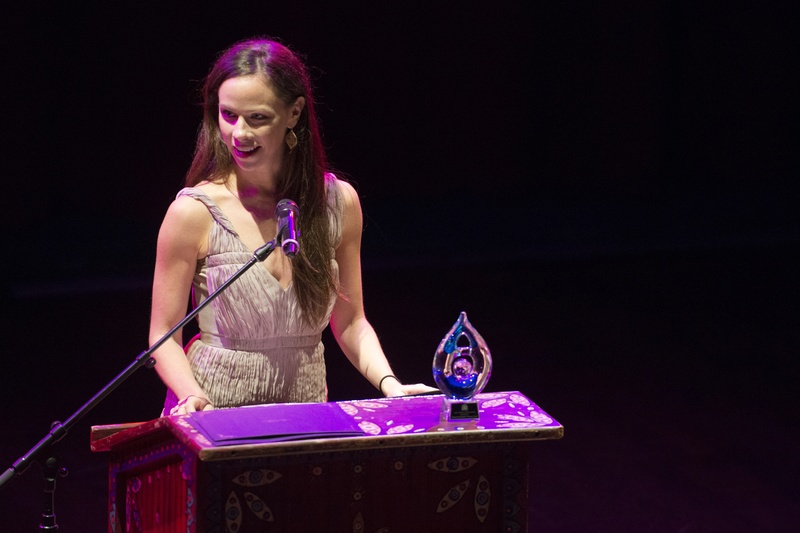
Now we hear that Barbara Pierce Bush, one of former President George W. Bush’s two daughters, is going to be the keynote speaker next week at Planned Parenthood’s annual luncheon in Fort Worth. President Bush was an avid foe of abortion while serving as Texas governor and then as president.

His daughter, though, is a supporter of Planned Parenthood, which has been targeted by right-wingers because of the referrals it gives to women seeking to terminate their pregnancy.

But as the Texas Tribune reports, Barbara’s mother, Laura, doesn’t share the former president’s disdain for Planned Parenthood. Neither does Barbara’s grandmother, another former first lady.

The Tribune reported: “The younger Bush, the CEO and co-founder of Global Health Corps, called Planned Parenthood an ‘exceptional organization’ in a June New York Times interview, and attended a fundraiser for Democratic presidential candidate Hillary Clinton in Paris in October.”

Then there’s Cecile Richards, daughter of the late former Gov. Ann Richards, who now runs the national Planned Parenthood operation. George W. Bush defeated Ann Richards in 1994, although abortion wasn’t an issue in that contentious campaign.

This story is circuitous, indeed. But there’s another interesting catch to it.

Young Barbara’s grandfather, former President George H.W. Bush, was a noted supporter of organizations just like Planned Parenthood when he served in Congress in the 1960s. Then he agreed to toss aside his pro-choice views when he agreed to join the Republican presidential ticket led in 1980 by Ronald W. Reagan.

I guess you could say that this entire issue of reproductive rights, the pro-life movement, the pro-choice movement and all that they entail crosses many lines … even in the midst of the most high profile of political families.

As one who opposes laws that would criminalize abortion, I am glad to see that a well-known former first daughter is standing tall, speaking her own mind.

Wedding plans prove to be, um, breathtaking

I am trying to catch my breath as I write these next few words.

Richard Ware, the high-powered Amarillo banker, is getting married this weekend. That isn’t news all by itself, except perhaps for Ware’s family and closest friends.

His fiancée, though, deserves special attention. Her name is Katherine Harris, whose name is quite familiar to the most avid political junkies.

Harris served as Florida secretary of state in 2000, when that year’s presidential election hung in the balance over the counting of ballots in the Sunshine State. Harris was the chief elections officer in Florida and she finally certified — after the U.S. Supreme Court ruled in Texas Gov. George W. Bush’s favor — that Bush would win Florida’s electoral votes.

The wedding will occur in Texas. I hear that Mr. and Mrs. Ware will live some of the time in the Lone Star State.

I’m not quite sure what to say about this. I am left to offer only that during her 15 minutes at the center of the political stage, Katherine Harris became one of the more polarizing figures in recent U.S. political history. Suffice to say she made plenty of foes as well as friends as she operated in the middle of a tremendous national political swirl.

I’m still breathless.

Now, Mr. President, what did you know … and when?

This just in: Michael Flynn has quit as national security adviser for Donald J. Trump.

Flynn resigned over questions relating to alleged conversations he had with Russian government officials prior to Trump becoming president of the United States. Reports have swirled that Flynn had talked about possible loosening of sanctions that the Obama administration had imposed to punish the Russians for their alleged role in interfering with the U.S. presidential election.

The Logan Act, anyone? It bars unauthorized personnel from negotiating with a foreign government. Flynn well might have broken federal law.

Now comes the question, to borrow an inquiry made famous in another serious matter: What did the president know and when did he know it?

Did the president know about Flynn’s conversations as they were occurring? Did he sanction them? Did the president hush it up?

The former acting U.S. attorney general, Sally Yates, wrote a report that suggested Flynn might have been “compromised” by his meetings with Russian officials. Yates then was fired over her refusal to enforce Trump’s ban on refugees from certain countries. Did the president know about these meetings in real time?

Trump now must find a new national security adviser. He has a long list of qualified, competent, knowledgeable individuals who can give him proper counsel regarding national security concerns.

Flynn, a retired Army lieutenant general, is known to be a brilliant military tactician and strategist. He also possesses intense feelings about Islam and has called that great religion a “cancer” on the world. I’ve heard two previous presidents — Barack Obama and George W. Bush — say we aren’t “at war with Islam.”

Gen. Flynn, though, got into trouble because of his relationships with Russian government higher-ups. There’s likely to be more to come in this regard.

I’m among those who want to know about what the big man in the Oval Office knew about these discussions — and when he knew it.

Mullen is right about Bannon: He doesn’t belong on NSC

Michael Mullen knows a thing or three about national security.

He’s a retired Navy admiral who served as Joint Chiefs chairman under Presidents George W. Bush and Barack Obama.

Mullen also believes that Donald Trump’s chief political adviser — Steve Bannon — should not be on the principals committee of the National Security Council.

My reaction? No-o-o-o-o!

Mullen has written his feelings in an op-ed published by the New York Times.

Mullen made his point clear. Bannon is a political hand. He is not a national security expert. Indeed, Trump demoted the current Joint Chiefs chair and the director of national intelligence to make room for the former Brietbart.com editor, and a guy believed to harbor dangerous views about white supremacy.

“Every president has the right and the responsibility to shape the security council as he sees fit,” Mullen added. “But partisan politics has no place at that table. And neither does Mr. Bannon.”

The NSC is a place where experts share their knowledge about imminent national security threats and make recommendations to the president on how to deal with them.

What in the world does Bannon bring to that discussion? Nothing, as far as I can tell.

Who’s POTUS calling a ‘so-called judge’?

Donald J. Trump, meet your newest nemesis, U.S. District Judge James L. Robart.

The president has called Robart a “so-called judge” because he had the nerve to halt the president’s ban on refugees entering the United States from Muslim-majority countries.

If I might be so brazen, my inclination is to wonder aloud — given Trump’s love of Twitter as his primary attack medium — whether he could be labeled a “so-called president.”

Nah … I won’t go there.

There’s not a damn thing “so-called” about Robart, who was appointed to the federal bench in western Washington state by President George W. Bush.

According to NBC News: “He (Robart) suggested in court that Trump’s 90-day entry ban on people from the countries of Iraq, Syria, Iran, Libya, Somalia, Sudan and Yemen was not ‘rationally based,’ since no one from any those countries had been arrested in the U.S. on terrorism-related charges since 9/11.”

There’s more: “‘I’m sorry, there’s no other way to put it,’ Robarts said from the bench. ‘It’s Keystone Cops. It really is. And that’s not just me speaking, that’s Republican members of Congress.'”

The president doesn’t like being criticized by anyone. Not by the media, or political foes or by judges who disagree with his decisions. His mode of response? Twitter! He tweeted: “The opinion of this so-called judge, which essentially takes law-enforcement away from our country, is ridiculous and will be overturned!”

http://www.msn.com/en-us/news/politics/who-is-the-so-called-judge-trump-rips-over-ruling/ar-AAmCbUO?li=BBmkt5R&ocid=spartandhp

Judge Robart is doing what he believes his oath requires him to do, which is to interpret federal law to see if it squares against the U.S. Constitution.

Robart is a Seattle native, he received his undergraduate degree in Walla Walla, Wash., got his law degree at Georgetown and practice law in Seattle from 1973 until 2004, when President Bush tapped for him for the federal bench; the Senate approved his nomination.

There’s nothing “so-called” about this fellow, Mr. President.

Pipe down and let the system play out.