Tag Archives: World War II

USS Gerald Ford: no sign of disarmament there

gerald ford

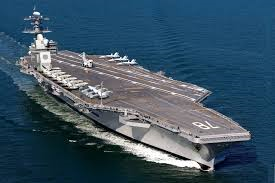
The U.S. Navy is about to commission its latest super warship.

Its price tag is a doozy: $13 billion. Yep, that’s billion, man. For a single ship.

It’s named after the 38th president of the United States, Gerald R. Ford, who served with distinction as a naval officer during World War II.

Why bring it up here?

We keep hearing along the Republican Party presidential primary campaign tour that the current president, Barack Obama, is “gutting” the military. The candidates all talk about having fewer ships, fewer warplanes, fewer ground troops, fewer this and that. We’re defenseless, they suggest, in the face of growing threats around the world.

Well, as President Obama told 2012 GOP nominee Mitt Romney four years ago during a debate, “We have fewer horses and bayonets today” than before, but that doesn’t make us weaker.

To call the USS Gerald Ford a formidable weapon is to commit gross understatement.

More than two decades ago I had the honor of touring another nuclear-powered attack aircraft carrier, the USS Carl Vinson. I was assigned by the paper where I worked to cover a tour of the ship by the late U.S. Rep. Charles Wilson, who invited me to join his delegation. My boss agreed, the paper flew me to San Diego to join Wilson and his delegation for a four-day tour of the Carl Vinson, which was cruising off the California coast.

We saw some amazing displays of skill and professionalism by the deck crews, the combat information center team and, of course, the Navy and Marine pilots.

The skipper, Capt. John Payne, took us on a tour of the flight deck and informed us of this interesting tidbit: A single carrier battle group comprising the aircraft carrier and its normal complement of cruisers, destroyers, frigates and smaller craft, packed as much firepower as all the ordnance dropped in all the combat theaters of World War II.

OK, so we don’t have as many ships as we’ve had, or as many airplanes or ground troops. Does that mean we haven’t invested a lot of money in the defense of this nation? Hardly.

I believe it was President Obama who recently noted that the annual U.S. defense budget is greater than the combined budgets of the next seven nations.

No, folks, we aren’t disarming ourselves.

Thirteen billion dollars for a single aircraft carrier makes me feel pretty damn safe.


Clinton ‘inevitability’ has vanished

Former Secretary of State Hillary Rodham Clinton reacts as she is introduced to speak at the Massachusetts Conference for Women in Boston, Thursday, Dec. 4, 2014. (AP Photo/Elise Amendola)

There once was a time when Hillary Rodham Clinton was considered a shoo-in to become the second consecutive history-making president in U.S. history.

You’ll recall the narrative.

She would succeed the first African-American president, Barack Obama, by becoming the first female president. She would win in a historic landslide. No one since, say, 1952, when Republican Dwight Eisenhower — who commanded our troops to victory over Hitler during World War II — was considered as destined to become president.

Then a funny thing happened.

Her critics began making points that stuck. They drew blood. The email tempest. Benghazi. Her occasional waffling. Is she trustworthy?

Then along came Bernie Sanders, the independent U.S. senator from Vermont running as a Democrat. He started drawing those huge crowds. He’s blasting the daylights out of big banks, Wall Street and demanding wage equality. He’s a socialist — and let’s cut the crap about “democratic socialist,” which is meant to soften the “s-word.”

Now the once-inevitable president is less so.

Fellow Democrats are now flocking to New Hampshire to say things like “a loss here won’t doom” the candidate. Former Texas Democratic gubernatorial nominee Wendy Davis is among the latest to recite that mantra.

Maybe it won’t. Then gain, maybe it’ll signal a dramatic replay of 2008, when the then-U.S. senator from New York, Clinton, was supposed to be the nominee — only she ran into that young upstart from Illinois, U.S. Sen. Barack Obama, the self-proclaimed “skinny guy with the funny name.”

Does history repeat itself? Are we witnessing a sort of 2.0 version of what occurred eight years ago?

A lot of political analysts still believe Hillary Clinton is the candidate to beat. She has the so-called “ground game” in Iowa, New Hampshire and South Carolina. She’s got the party machine lubed and ready to roll for her in other key primary states.

Let’s remember, though, this truth about the 2016 campaign. All the “conventional wisdom” has been tossed into the Dumpster. I’m one of those who believed Clinton was marching straight to the Oval Office. I didn’t foresee what would transpire . . . any more than I foresaw would be happening on the Republican Party side of this contest.

You want unpredictability in a presidential campaign?

I believe we’ve gotten it.


UK leaders want to ban Trump?

Republican presidential candidate, businessman Donald Trump, speaks during a rally coinciding with Pearl Harbor Day at Patriots Point aboard the aircraft carrier USS Yorktown in Mt. Pleasant, S.C., Monday, Dec. 7, 2015. (AP Photo/Mic Smith)

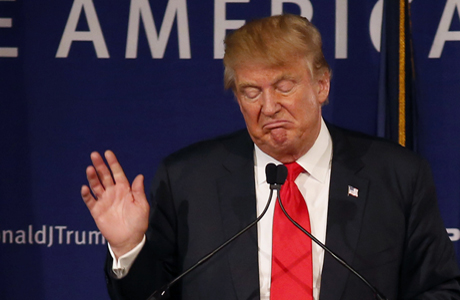
Donald Trump has insulted his way to the top of the Republican Party presidential heap.

Suffice to say that if British Parliament members had a vote in this country, why, they would do all they could to keep anyone from endorsing Trump.

The House of Commons today debated whether to ban Trump from entering the United Kingdom. It’s all in the wake of Trump’s call to ban Muslims from entering the United States, as well as plenty of other things Trump has said along the presidential campaign trail.

To be honest, I don’t think that Parliament needs to debate this issue. Indeed, the decision rests ultimately with the British home secretary.

Still, we’ve heard a snootful from the Brits about Trump.

It ain’t pretty.

Trump doesn’t care who he insults. He should, at least in this case.

Great Britain is arguably our most loyal ally on the planet. Sure, we shook off the bonds of the British Empire in the 18th century and then fought them again in the early 19th century. Since then? We have been side by side through two world wars, the Cold War and now in the war against international terrorism.

What on Earth could be transpiring here if the Brits were to actually ban someone from entering their country if that certain someone happened to be elected president of the United States of America?

I’m not predicting either event will occur: Trump’s election and the home secretary’s decision to ban him from entering his country.

But members of the British Parliament have delivered a stunning rebuke of a guy who wants to become the next “leader of the Free World.”

Does he care? Again . . . he’d better.


Army, Navy players all on the same team

army navy

Do you ever hear something and then wish you could remember later precisely who said it?

Such a thing happened today to me while watching the pre-games show prior to the annual Army-Navy college football game.

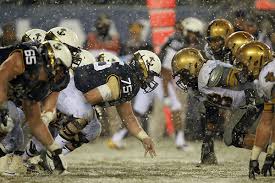
Navy won for the 14th straight year against Army by a score of 21-17 — to my chagrin. When I was a boy, I rooted for Navy. Why? Dad saw plenty of combat while serving in the Navy during World War II. He cheered for Navy; therefore, so did I. That all changed in the summer of 1968 when I was inducted into the Army. Then I became an Army football fan.

During today’s pre-game show, one of the players — I think it was an Army guy — who said the game is special in this regard: All the young men, the Army cadets and the midshipmen, shared a common mission, which is to defend the nation. They’ll do that when they graduate from their respective service academies, receive their commissions and then serve their nation during this perilous time.

Another young man noted that it is the “only game where all the players are willing to lay down their lives for everyone watching it.”

How true. How profound. How difficult it becomes, therefore, to worry too much about who wins or loses a football game.

Each of these young men — and all the young men and women at all the service academies — are special.

Winning a football game? No big deal. Quite soon, many of them will be fighting for something much bigger and more important to all of us.


Jeannette Rankin: ideological purist to the core

Rankin-2673195x

I started thinking about how I might describe ideological purity and then I came up with the name of someone who embodied it in spades.

Jeannette Rankin was a Republican member of the U.S. House of Representatives from Montana. She served during two eras in the House and they coincided with our nation’s entry into the two world wars that dominated the 20th century.

What sets Rankin apart is that she voted against declarations of war in both instances.

While we lament politicians’ lack of ideological core and their willingness to bend in whichever direction the winds are blowing, we have this individual who stands tall as the purest of the pure.

Rankin was elected to the House in 1916, four years before women even had the right to vote! President Wilson came to Congress seek a war declaration in 1917 for entry into the Great War. He got it, but Rankin was among 56 House members to vote “no” on the request.

She left the House, but then was elected again in 1940.

Then came the “date which will live infamy,” Dec. 7, 1941. President Roosevelt came to Congress to ask once again for a declaration of war against the Empire of Japan. Every House member — except one — voted to declare war.

The lone holdout? Rep. Rankin.

She was a lifelong pacifist. When given a chance to vote for war, she opted twice to stick to her principles.

It wasn’t popular, particularly in the hours and days immediately after the Pearl Harbor attack, to stand on a belief against war. Rep. Rankin did.

When I hear of individuals such as that, I become torn between conflicting emotions.

My dark side tells me to condemn these people for failing to heed their constituents’ wishes. My strong sense was that her Montana constituency favored going to war in both instance.

My kinder side wants to give her credit for standing foursquare on a principle she held dear to her heart.

I believe that today, as we remember Pearl Harbor and the war we declared against Japan and later, against Germany and Italy, I’ll give more credence to the part of me that salutes Jeannette Rankin.


Cruz splits with Trump over Muslim registry

liberty religion

Are you sitting down?

Of course you are. So … I’m about to say something positive about Sen. Ted Cruz, who has actually expressed a difference of opinion with Donald Trump, a fellow Republican candidate for president of the United States.

Trump’s offensive notion of establishing a registry for Muslims has come between the men.

The only thing about Cruz’s criticism — such as it is — that bothers me is that he qualified it by calling himself a “big fan” of Trump. He differs with him on the idea of keeping such an eagle eye on Muslims because of their faith.

Cruz said the “First Amendment protects religious liberty.”

That, folks, is the central reason why Trump’s idea is a non-starter.

Some critics have compared the idea of a religious registry — even for U.S. citizens — smacks of what Nazi Germany did to Jews living in that country prior to the outbreak of World War II. We all know where that effort led.

Trump has been trying to take back what he apparently told a reporter about whether he’d like to establish a data base to monitor Muslims. He said he didn’t say that precisely. The record, though, suggests he did when pressed by a reporter.

As the Texas Tribune reported: “I don’t know what Mr. Trump did or didn’t say,” Cruz told reporters after a town hall Friday afternoon in Harlan. “On the question of should the federal government keep a registry of any religious group? The answer’s of course not.”

So, there you have it. Cruz and Trump actually disagree on something.

From where I sit as I watch Cruz’s campaign for the presidency, that’s progress.


WW II internment camps serve as justification?

bowers

This takes the cake.

Of all the things that have been said in recent days about Syrian refugees and whether the United States should ban any more of them from coming to this country, the mayor of a significant U.S. city invokes the memory of … Japanese-American internment camps.

Roanoke (Va.) Mayor David Bowers, a Democrat, said this: “I’m reminded that President Franklin D. Roosevelt felt compelled to sequester Japanese foreign nationals after the bombing of Pearl Harbor, and it appears that the threat of harm to America from Isis now is just as real and serious as that from our enemies then.”

Oh, my.

The internment of Japanese-Americans after the Pearl Harbor attack in 1941 — over the course of history — been declared a national tragedy. Yes, FDR felt compelled to order the internment of those loyal Americans out of fear of what he thought might happen. It was in fact a xenophobic response aimed at imprisoning people of a certain racial minority. The U.S. government did not respond in nearly that fashion to German-Americans or Italian-Americans, whose own ethnic ancestors also had declared war on the United States.

Now we have the mayor of Roanoke suggesting that the internment camps justify the near-panic being expressed in many political corners of this country in response to what occurred this past week in Paris with the massacre of 129 innocent victims by European jihadists.

I should add that many decades after the internment of tens of thousands of Japanese-Americans the U.S. government issued a formal apology to the descendants of those who were held captive by their own government. The actions taken then are now considered a shameful breach of our Constitution’s guarantee of civil liberties for all its citizens.

The ACLU of Virginia issued this statement: “The government’s denial of liberty and freedom to over 100,000 individuals of Japanese descent — many of whom were citizens or legal residents and half of whom were children — is a dark stain on America’s history that Mayor Bowers should learn from rather than seek to emulate.”

Mayor Bowers has said he never intended to offend anyone with his remarks.

Well, Mr. Mayor, you damn sure did.

See story here.


Standing tall with France

santa fe bldg

It’s only a symbol of solidarity, but given its location and the occasional animosity that flares up around these parts toward the people of a certain country, it’s worth a notation here.

The picture is a bit blurry, but it showed up on social media overnight. The 85-year-old Santa Fe Building — which houses several Potter County offices — arguably is one of the more iconic structures in downtown Amarillo. Its top floors have been lit up in the colors of the French flag.

The statement of solidarity with our French allies in the wake of the Paris terrorist massacre is not unlike what’s been done in communities across the United States. The Islamic State has taken responsibility for the attacks that killed 129 people and injured hundreds more. It was the worst attack of terror in France since World War II.

We feel their pain, as they have felt ours.

President Obama noted in the immediate aftermath of the terror attacks that France is America’s “oldest ally.” The French stood with us as we fought to gain liberation from Great Britain during our American Revolution.

And yet …

Some of us here have ridiculed France, particularly since 9/11, when certain political elements in that country opposed our going to war in Afghanistan in response to al-Qaeda’s brutal attack on this country.

Do you remember “freedom fries”? How about the continual references to France needing the Allies’ military muscle to defeat the Nazi occupiers during World War II? The French became the butt of jokes.

Today, though, we stand with France. Even here, in this part of the United States, where those anti-French feeling ran deeply.

I’ll assume for a moment that Potter County Judge Nancy Tanner made the decision to color the top of the Santa Fe Building to honor France’s struggle to recover from the monstrous act of terror.

Thank you, judge, for showing your true colors.

Here’s a novel idea: Ask Congress to declare war

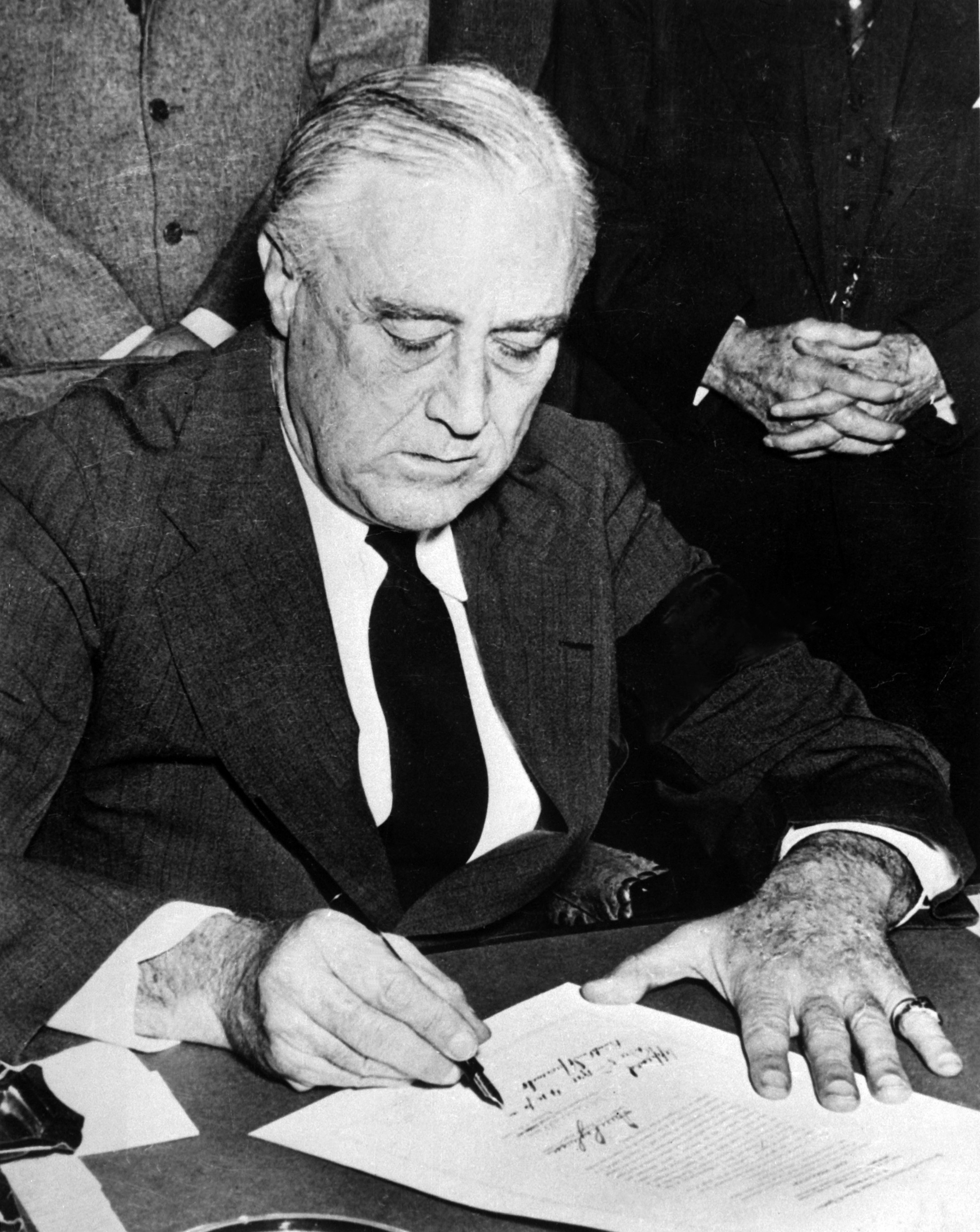
President Franklin D. Rossevelt signing the declaration of war against Japan, December 8, 1941.  (National Park Service) NARA FILE #:  079-AR-82 WAR & CONFLICT BOOK #:  743

Former Florida governor — and Republican presidential candidate — Jeb Bush wants the United States to declare war on the Islamic State.

I am going to make a leap here and presume for a moment that he means the real thing. You know, actually make a formal declaration of war. It’s kind of an old-fashioned idea that hasn’t been carried out since, oh, Dec. 8, 1941. President Roosevelt stood before a joint session of Congress and asked lawmakers to make that declaration … which is how the U.S. Constitution prescribes it.

Well, why not do it the old-fashioned way?

I am increasingly of the opinion that war is what we’ve got on our hands. The Islamic State seems to want it. They committed an act of war Friday in France, bombing and shooting its way further into infamy, killing more than 100 innocent victims.

France has called it a wartime act. French President Francois Hollande has vowed zero mercy in seeking revenge for the killings. The Islamic State already has demonstrated unfathomable barbarism with its video-recorded beheadings of foreign captives, including Americans.

ISIL has killed tens of thousands of Muslims on its reign of terror — supposedly in the name of Islam. It is a murderous cult that must be wiped out.

This war, though, is being fought on terms with which the world is not yet familiar. There used to be a time when we defined war simply as nations taking up arms against each other. This war is vastly different.

It is an ideological war being fought with guns, knives and bombs.

Is it possible then to declare war the way this country used to declare war? I think it can be done.

The question now is this: Does the president have the will to ask for a declaration and does Congress have the courage to make that declaration?

Your thoughts? Is a war declaration possible?


Dear Dad: You made me proud

Veterans-Day2

I’ve written before about my favorite veteran.

He was my late father, Peter John Kanelis, a proud veteran of the U.S. Navy who survived the horrifying crucible of World War II.

I wrote the first time about his service two years ago.

Dad saw the bulk of his combat in the Mediterranean Sea, engaging in the invasions of North Africa, Sicily and Italy. He endured relentless bombing and strafing by the Luftwaffe, had the ship on which he served sunk by an Italian dive bomber, and was credited with shooting down a Juncker JU-88 German bomber while manning a .50-caliber deck gun during the Sicilian campaign.

He told me of a time he was standing guard while on shore patrol in Tunisia and he shot to death someone who had breached his unit’s perimeter. Was it an enemy soldier? No, Dad said. It was a local guy who was in the wrong place at the wrong time.

Dad was like almost all World War II vets in this regard: He didn’t volunteer much about his experiences during that war. Oh, he’d talk about it if someone asked. And yes, I asked him about those days. We talked often while I was growing up.

I learned about how he joined the Navy just a few weeks after the attack on Pearl Harbor, how he went through an abbreviated boot camp in San Diego as the U.S. War Department sought to get mobilized in a hurry and how he learned his seamanship skills aboard ship while steaming to Great Britain.

Mom would tell me that Dad suffered for a time upon his return from the war from a form of shell shock — which they now call “post-traumatic stress disorder.”

It would manifest itself, Mom said, when Dad would hear the sound of an airplane. He’d flinch and look up, she said. All that constant bombardment made Dad quite jumpy when he heard the sound of aircraft overhead.

He got past that period of his life.

He intended to be join the Marine Corps the day he enlisted. As luck would have it, the USMC office was closed that day; he walked across the hall and joined the Navy. I believe he would have made as good a Marine as he was a sailor.

But to be honest, I’m grateful Dad was spared the task of potentially having to storm ashore amid a hail of enemy bullets.

His Navy duty was rough enough.

Dad’s been gone for 35 years. This much hasn’t dimmed one single bit as the nation prepares to commemorate Veterans Day: I’m as proud of my father’s service to his country now as I was when I first learned about it.