Tag Archives: Texas Tribune

Democrats might ignite firestorm if they oust Pelosi

Newly empowered U.S. House Democrats are playing with fire if they find a way to push their longtime congressional caucus leader out of the speakership.

Nancy Pelosi once served as the nation’s (so far) only female speaker of the U.S. House of Representatives. She wants her old job back now that Democrats have retaken control of the People’s House.

But … not so fast, Mme. Presumptive Speaker.

Some of her colleagues want her kicked to the curb. They want “new leadership.”

Let’s ponder this for a moment. The 2018 midterm election resulted in more than 100 women will join the House in January 2019. That makes this the Year of the Woman. Or does it?

I happen to believe Pelosi deserves to become speaker when the new Congress convenes next year. Thus, I want to caution the Democratic insurgents that they are dousing their own message if they manage to boot the veteran lawmaker out of the office she presumes is hers for the taking.

I just learned that one of the Democratic insurgents is U.S. Rep. Filemon Vela of Brownsville, who is casting doubt on Pelosi’s intended speakership. He says he believes “new leadership” is in order.

Yes, that’s a man saying it.

Pelosi’s first tenure as speaker (2007-2011) proved to be successful in terms of her organizational skills and her ability to hold her party caucus together. Indeed, she enjoyed far more success at that aspect of her job than her two Republican successors as speaker — John Boehner of Ohio and Paul Ryan of Wisconsin — who had to battle with TEA Party and Freedom Caucus members of their own caucus.

It was on Pelosi’s watch that Democrats were able to enact the Affordable Care Act, legislation I consider to be a success.

So now Democrats think they need “new leadership”? They don’t, even though Pelosi has become a favorite punching bag for Republicans to pummel whenever they can find the opportunity. Indeed, one could hear Pelosi’s name in TV ads criticizing Democratic candidates for Congress. Here’s the catch: One of those Democrats, Colin Allred, had been joined at the hip to Pelosi by North Texas U.S. Rep. Pete Sessions; however, Allred defeated the Republican Sessions in the midterm election.

So, is it really a negative to be led by a speaker who knows how to legislate, how to organize an unruly body of lawmakers? I don’t believe so.

My advice to House Democrats? Be very careful if you seek to topple Nancy Pelosi in this Year of the Woman.
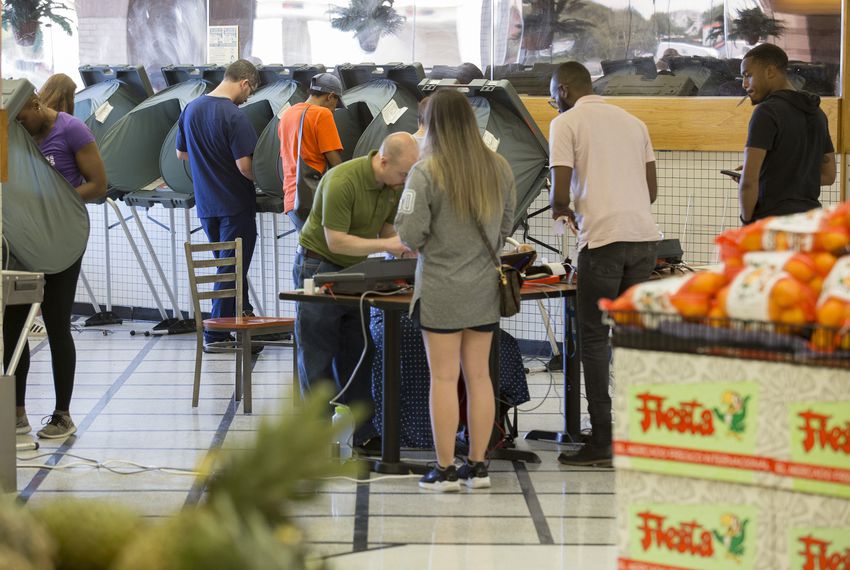
Good riddance, straight-ticket voting

My hatred of straight-ticket voting has been chronicled numerous times on this blog and even during the time I worked for a living.

It is one of the curses that have infected Texas government. It’ll be gone before the 2020 presidential election, thanks to a repeal enacted by the Texas Legislature.

According to the Texas Tribune, the demise of straight-ticket voting didn’t happen soon enough to save the careers of dedicated public servants.

The Tribune singled out what happened to Harris County Judge Ed Emmitt, whose leadership helped Harris County recover from the ravages of Hurricane Harvey in 2017. Emmitt, a moderate Republican, drew bipartisan praise for his post-Harvey work. He lost re-election this past week, though, to a political novice, 27-year-old Democratic challenger Lina Hidalgo, who the Tribune reports had never attended a Commissioners Court meeting before defeating the incumbent judge.

She benefited from straight-ticket voting, along with other Democrats appearing on down-ballot races in the midterm election.

This is precisely why I detest the practice of allowing voters to punch the straight-party slot on the ballot. Too many politicians who should be elected or re-elected are bounced out simply because of party loyalty.

The major beneficiary of this travesty in Texas in recent years have been GOP politicians, with worthy Democrats falling victim to voters’ polling place laziness.

That’s going to change in 2020. The demise of straight-ticket voting at the very least will force voters to look at each race on the ballot and make their choices individually. My hope, but not necessarily my expectation, would be that voters would consider their choice before making it.

Most states disallow straight-ticket voting. Texas, therefore, is joining a long list of states that have thought better about allowing voters to go just with the party without considering the merits of an individual candidate — whose performance or philosophy might not adhere strictly to a political party’s platform.

The end of straight-ticket voting, in my view, is a win for the cause of good government.

Finally!

SBOE inches toward a coming to its senses

It’s difficult for me to refer to the Texas State Board of Education as a 15-member gang of nincompoops. The SBOE, though, is showing troubling signs of seriously dunce-like behavior.

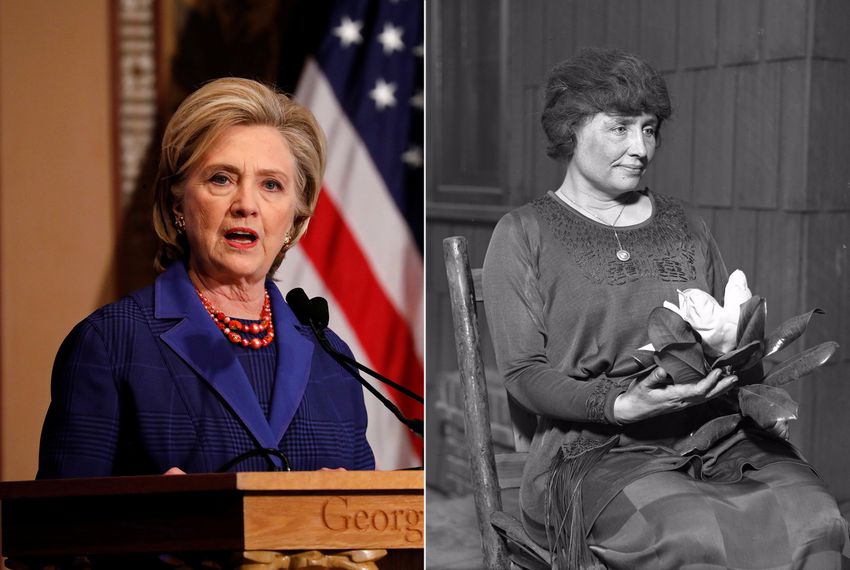
It had decided to remove two pioneer women from public school curricula: Helen Keller, a disability rights advocate and (get a load of this!) Hillary Rodham Clinton, the nation’s first female ever nominated for president by a major political party.

Then the board thought better of it. It restored Keller to the state’s third-grade history curriculum.

Clinton’s restoration isn’t yet final; the SBOE will decide the issue on Friday. I do hope the SBOE makes the right call.

For the ever-lovin’ life of me I don’t understand what the SBOE — an elected board of partisan politicians who set academic curriculum standards for the state’s public schools — is thinking.

It’s the decision to remove Clinton from study in our public classrooms that baffles me in the extreme. She is a contemporary figure who’s still active in the nation’s political discourse.

It looks as though the SBOE is going to restore the former first lady, former U.S. senator, former secretary of state and former 2016 Democratic Party presidential nominee to our public school textbooks.

As the Texas Tribune reports: In response to a motion by board member Erika Beltran, D-Fort Worth, to reinsert Clinton into the standards, fellow board member Marty Rowley, R-Amarillo, referenced “tons of public comment” that he’d received before Tuesday’s meeting. “I don’t agree, obviously, with her politics,” Rowley said. “I just think she qualifies as significant.”

Do ya think?

Someone’s politics shouldn’t matter one damn bit when determining one’s significance to state or national history. I’m sure Rowley knows that. And, yeah, she “qualifies as significant.”

Indeed, Clinton and Keller both are hugely significant historical figures. So help me, I don’t understand why the SBOE considered dropping them in the first place.

It now appears the SBOE has come to its senses. I also want to offer a good word to Marty Rowley for responding to the “tons of public comment” that stood up for Hillary Clinton’s role as a historic American public figure.

Thank you for your service, Justice Johnson

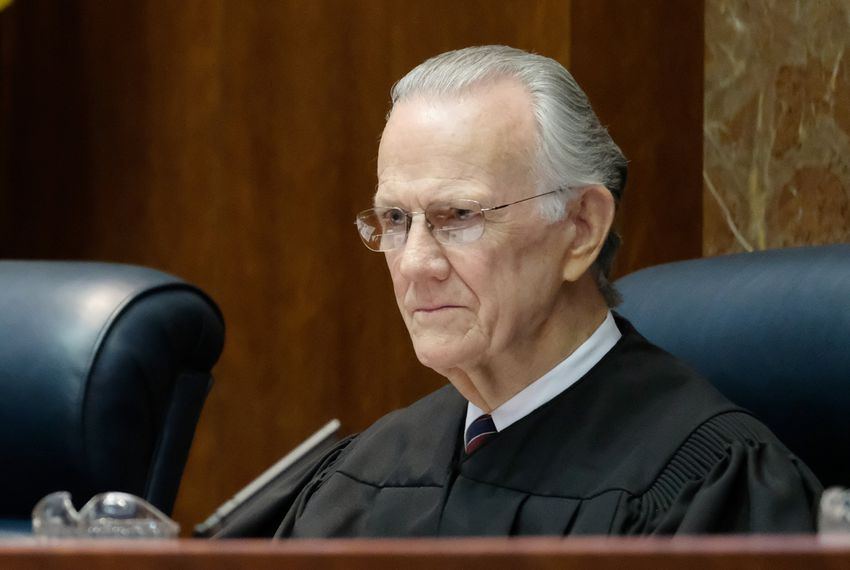
It is with a touch of sadness and a bit of pride as well that I have just learned that a member of the Texas Supreme Court is retiring at the end of the year.

Justice Phil Johnson is calling it a career.

I’ve known Johnson for several years. I worked as editorial page editor of the Amarillo Globe-News and Johnson was chief justice of the 7th Court of Appeals based in Amarillo. Thus, he became a source for me. We developed a nice relationship over the years.

Why the sense of pride?

Well, it goes like this. When the vacancy occurred on the state’s highest civil appeals court 13 years ago, I authored editorials for the newspaper urging Gov. Rick Perry to look past the I-45/I-35 corridor from where all Supreme Court justices hailed. I checked out the histories all the remaining eight justices and learned they all came from communities within that swath that runs through Central Texas.

The newspaper urged Gov. Perry to look westward. Johnson expressed an interest in getting appointed.

To his credit, Perry did appoint Johnson to the court.

Now, I am not going to take credit for the appointment. It’s likely no more than a coincidence. After all, Johnson did have one powerful friend in the Texas Senate, fellow Republican Bob Duncan — a former law partner of Johnson in Lubbock — who very likely made it known to the “right people” that Gov. Perry needed to appoint Johnson to the Supreme Court.

So, I’ll take all the credit I deserve for Justice Johnson’s appointment.

I also want to wish this good man well as he rides off into retirement.

Texas Democrats find the spring in their step

The just-concluded 2018 midterm election has produced a fascinating result in Texas.

The long-downtrodden Texas Democratic Party has rediscovered its mojo. Its members have a renewed spring in their step. They fell short in their goal of electing one of their own to a statewide office, but the fellow at the top of the ballot — Beto O’Rourke — came within 3 percentage points of defeating GOP Sen. Ted Cruz.

That’s not supposed to happen in blood-red Texas, which hasn’t elected a Democrat to a statewide office since 1994; the last Democrat elected to the U.S. Senate was Lloyd Bentsen, in 1988.

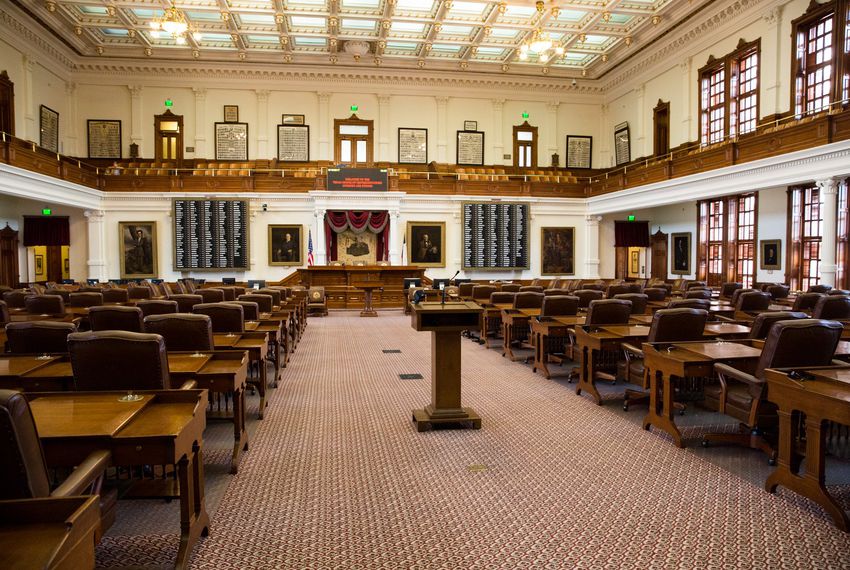
Now comes word out of Austin that the selection of the next Texas speaker of the House of Representatives will involve more Democratic votes among the 150 legislators.

Democrats carved into the GOP legislative majority. They’ll fill 67 seats in the 2019 Legislature; Republicans will occupy 83 of them.

That means Democrats will get to speak with a louder voice in determining who takes the gavel from Joe Straus, who didn’t seek re-election this year.

Democrats to join speaker fight

A Republican is a shoo-in to become the next speaker. That’s a given. My favorite for the speakership is my good friend Four Price, the Amarillo Republican who, in my view, would do a smashing job as the Man of the House. He is an ally of Speaker Straus, for whom I have high regard, given his torpedoing of the Bathroom Bill in 2017.

However, it’s good to see a semblance of two-party rule returning somewhat to the Texas House. The GOP remains the pre-eminent political party in a state that once was dominated by Democrats.

As for O’Rourke, I’m quite sure that Democratic Party loyalists and activists are getting way ahead of themselves by suggesting Beto should consider running for president in 2020. A better option might be to challenge John Cornyn for the U.S. Senate two years from now.

However, O’Rourke’s legacy for the state well might be that his presence on the ballot and his near-victory over the Cruz Missile has energized a political party that’s been in a hang-dog mood for as long as anyone can remember.

Preferring AGs who aren’t under indictment

If I might paraphrase Donald John Trump … I prefer attorneys general who aren’t under indictment.

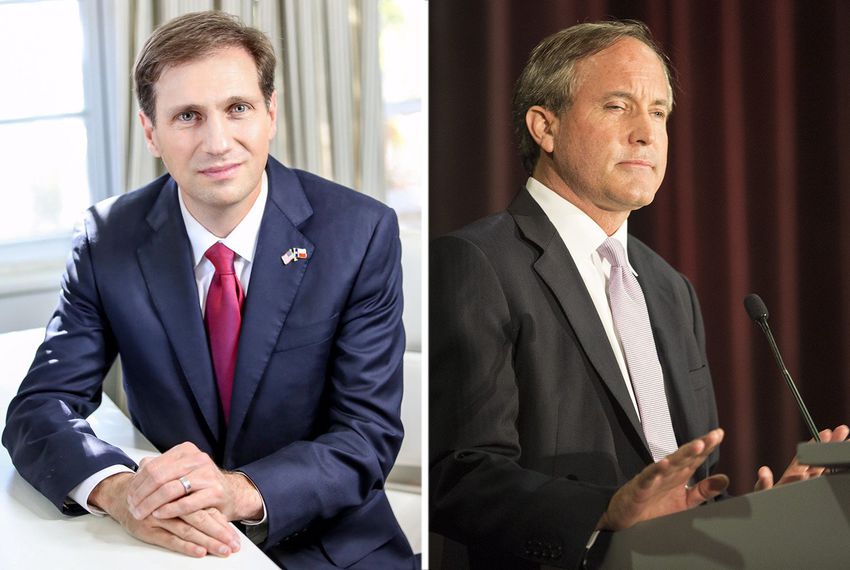
Texas AG Ken Paxton is running for re-election against Justin Nelson. Paxton, the Republican, is favored to win a second term; he is, after all, a Republican running in Texas.

But here’s the thing about Paxton. He has been indicted by a Collin County grand jury on charges of securities fraud.

Paxton goes negative

Perhaps the most interesting aspect of this case is that he was indicted by a grand jury in his home county. He represented Collin County as a state representative before he was elected attorney general in 2014. Paxton had a mediocre legislative career before he ascended to higher office.

Indeed, he carried Collin County with 66 percent of the vote on his way to winning the election four years ago. Still, the home folks thought enough of the complaint brought against their former lawmaker to agree to an indictment.

The case is tied up over procedural matters. Paxton hasn’t yet stood trial for the felony charges; if convicted, he faces a potential 99-year prison term.

I just find it weird — even with the presumption of innocence to which Paxton is entitled — that an indicted attorney general would be poised to win re-election. I doubt Nelson will be able to upset Paxton. But still …

I don’t know about you, but I prefer my state’s chief law enforcement officer to operate without the dark cloud of suspicion that hangs over the current attorney general.

Both sides take heart in early vote surge

I knew it! I said so, too.

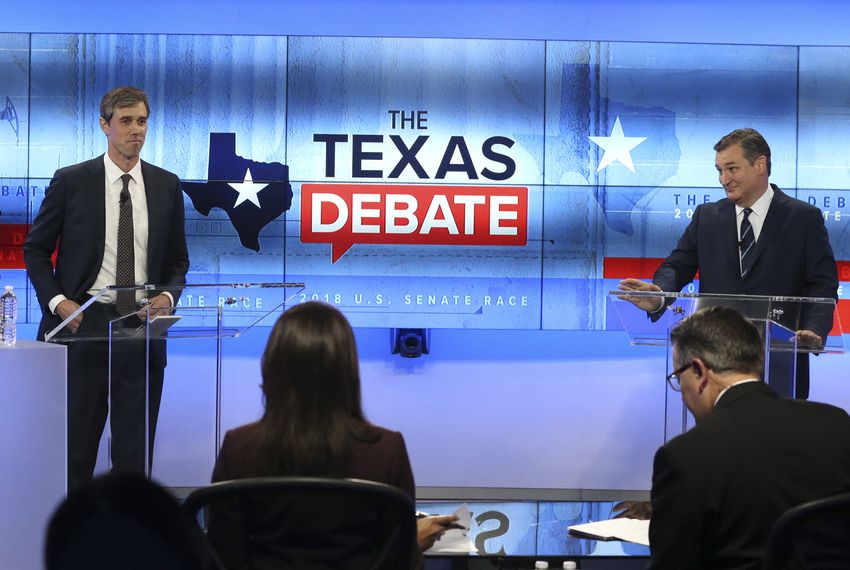
It turns out that Beto O’Rourke, the Democratic challenger, and Ted Cruz, the Republican incumbent, are staking out positive results from the spike in early voting turnout in Texas for this year’s midterm election.

O’Rourke and Cruz are battling each other. O’Rourke is courting young voters, telling them their votes will make all the difference in his underdog effort to unseat Cruz.

Meanwhile, Cruz is banking on traditional Republican strength in the midterm cycle to carry him to another six-year term.

Both campaigns are calling the news of big early vote turnout a victory for their side.

I don’t know who’s right.

However, I do know this: We vote in secret for a reason. That reason is to protect voters from coercion or pressure. We get to cast our ballots, walk away from the polling booth and keep our little secret to ourselves.

I like it that way, even though I’ve spilled the beans on this blog who is getting my vote in the Senate contest.

And it isn’t the incumbent. Hey, I’m just one vote. The rest of you get to keep your preferences to yourselves.

Just be sure to get out … and vote!

Our votes matter a lot … always!

It looks as though there well might be a record voter turnout for a midterm election in Texas, based on the early vote totals being recorded across the state.

Does that diminish the individual value of Texans’ vote? Not in the least.

We all know about tiny jurisdictions where races for public office — say, school board or city council — are decided by a vote or two. A rural Texas community can elect governing councils from a total of perhaps 20 or 30 votes. You know your vote counts in that context.

Let’s broaden our horizon, shall we? Texas is going to take part on Nov. 6 in electing all 36 members of the House of Representatives and one of two members of the U.S. Senate. A number of those races are bound to be close, too close to call, within the margin of polling error. We’ll also have a number of state offices to decide.

The number of total votes cast in those races figures to be huge. That doesn’t diminish the value of our votes, yours and mine.

Then we have the county races and state legislative contests that voters will decide. Our votes count there, too.

Will there be runaways? Sure. The way I look at it, even if you cast your ballot for the candidate who loses an election by a huge margin, you still get to have your voice heard. To my way of thinking, that vote gives you an extra measure of credibility if you choose to gripe publicly about how the winner of that race is doing his or her job on your behalf.

The Texas Tribune reports that after five days of early voting, 2.14 million Texans have cast ballots. We have until the end of this week to vote early. Don’t expect the numbers to double the total of early votes, but we’re going to finish the early-vote period with a tremendous spike from the 2014 midterm election.

Do not think for an instant that the huge number diminishes the value of your individual ballot. Even statewide contests in a state as large as Texas can be decided by a single vote.

Early votes keeping piling up

Texas well might be on the verge of shucking a title I am quite certain Texans don’t want their state to hold.

The Texas Tribune reports that in several of the state’s most-populated counties, the 2018 early vote totals have surpassed the entire number of ballots cast during the entire early voting period during the 2014 midterm election.

Texas, sadly, is known to be one of the country’s most underperforming states in terms of voter turnout, particularly during these off-year elections. Is that going to change?

There appears to be no letup in store during this year’s early voting season leading up to Election Day on Nov. 6.

Democratic partisans suggest the huge spike in this balloting bodes well for their candidates. Republican partisans counter that their folks are energized, too, which will benefit the GOP slate of candidates.

I’m out of the loop. I haven’t spoken to party officials on either side in Collin County, one of the state’s larger counties. Collin County is known to be a heavily Republican bastion, although it’s not nearly as dependably Republican as Randall County, where my wife and I lived for 23 years before moving to the Metroplex earlier this year.

The question facing congressional candidates in places like Collin County rests with how “suburban women” are going to vote. We live in a suburban county populated by many thousands of such women who well might be turned off by the rhetoric that comes from those on the right and far right. The Senate hearings to confirm Supreme Court Justice Brett Kavanaugh brought many of their concerns to the fore, given the accusation leveled against Kavanaugh by a woman who alleges he assaulted her sexually in the early 1980s.

Does this represent a groundswell against Republican candidates for Congress — for the House and Senate? Democratic senatorial candidate Beto O’Rourke’s supporters certainly hope so.

Oh, one more thing: I hope so, too.

Living near the center of the early-vote explosion

I reside in the sixth most populous county in Texas, which has 254 of them spread over 268,000 square miles.

I am pleased to report that Collin County has taken its place at the head of the parade of counties where early voting totals for this year’s midterm election has smashed prior records.

The Texas Tribune has published voter turnouts for the state’s 30 largest counties. The early vote response is astonishing.

In 2014, the previous midterm election year, 18.336 Collin County residents voted early after the first couple of days. This year, the total of early votes so far is 74,273. What’s more, the 2016 early-vote totals — in a presidential election year — totaled 68,241 ballots. So this year’s midterm, non-presidential election year, so far is exceeding the turnout for a presidential year. Astounding!

Early vote totals exploding

The early returns on the number of early votes is encouraging … if it means a commensurate spike in the overall turnout. I hope that’s the case. I’ve long lamented the state’s historically miserable voter turnout performance. Texas ranks near the bottom of the nation’s 50 states in that regard. We ain’t No. 1 there, folks.

Maybe when all the ballots are counted in less than two weeks, Texas can finish somewhere up the list of states. The early numbers ae encouraging.

As I’ve noted longer than I can remember, representative democracy works better when more of us take part in this fundamental right of citizenship in a free and liberated nation.