Tag Archives: Vietnam War

Time of My Life, Part 9: Shedding emotional baggage

I’ve blogged already about my membership in the National Conference of Editorial Writers, a professional group whose title is self-explanatory. NCEW sponsored overseas journeys for those of us who wrote or edited opinion commentary for a living.

A landmark journey occurred for me in the fall of 1989. It was my first extended overseas adventure that didn’t involve service in the U.S. military. That’s part of this brief chronicle of a chapter in a career that brought me great joy and excitement.

In 1989, NCEW put together a trip to Southeast Asia. I got permission from my bosses at the Beaumont (Texas) Enterprise to go along. The trip would begin in Bangkok, Thailand; it would proceed to Hanoi, Vietnam; then to Phnom Penh, Cambodia; then back to Ho Chi Minh City (which the locals still refer to as “Saigon”). It was a fabulous sojourn to a part of the world some of us had seen up close two decades or so earlier while we served in the military.

We toured the Hanoi Hilton prison where U.S. prisoners of war were kept; we toured the killing fields of Cambodia where the Khmer Rouge committed horrific acts of genocide against their own people; we saw the lake in Hanoi where the late John McCain was captured in 1967; we met with dignitaries in all three countries; we saw the capital of Cambodia, Phnom Penh, that was just beginning to recover from decades of war, misery and torture.

The official portion of the trip ended in Saigon. Some members of our party went on to Indonesia; others of us ended the official tour at that point. I sought to return to Da Nang, where I served for a time as a U.S. Army aircraft mechanic. I was stationed at a place called Marble Mountain, assigned to the 245th Surveillance Aircraft Company; we maintained a fleet of OV-1 Mohawks.

I wanted to return there. The travel agent who managed all this arranged it for me and two of my colleagues to fly from Saigon to Da Nang.

We arrived in Da Nang, checked into our hotel, caught our breath and then began touring the region.

We drove out to Marble Mountain, about 8 or so miles south of the city. We got out of our vehicle and began walking along the sandy stretch just north of Marble Mountain. I noticed a few remnants of aircraft hangars. I saw pierced-steel planking we used to taxi our aircraft that had been repurposed as fences for residents; they hung flower pots from the PSP.

Our guide, a young woman named Mai — a dedicated communist who also was delightfully efficient at her job — began explaining to me how the Vietnamese had swallowed our entire military presence there after we left the fight in 1973.

That’s when it hit me! Right in the gut! The war was over!

The shooting was occurring when I arrived 20 years earlier; it was still occurring when I left. The war had ended. At that point, I broke down. I sobbed like a baby. My friends who came to Da Nang with me backed away, as did Mai. They left me alone.

Then just as suddenly as it came, it stopped. I wiped the tears off my face. Took a huge breath — and realized I had just shed emotional baggage I had no idea I was carrying around.

So it went. A career in print journalism enabled me to experience a kind of catharsis I never saw coming.

How cool is that?

We’re acting as ‘suckers,’ Mr. President?

Let me see if I can connect these dots.

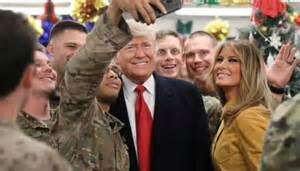
Donald and Melania Trump jetted off early Wednesday to Iraq to visit with some of our troops there. It was the first visit by the president to a war zone since he took office in January 2017. Good show, Mr. President; I’m glad you went.

But then . . .

He declared that the United States was done being played as “suckers.” The president said this country wouldn’t be “suckered” any longer into defending other nations’ self-interest.

That was a bit of a head-scratcher for me. I cannot help but wonder what the troops in Iraq thought when they heard the commander in chief describe their hazardous duty as acting on behalf of a nation that had been “suckered” into sending men and women into harm’s way. Doesn’t that sound as though he is cheapening their work, that he is demeaning the danger they face?

I couldn’t help but think of how I might have felt in 1969 if President Nixon had come to Da Nang, South Vietnam, and told us that we had been duped into fighting a useless war. I cannot transport myself back to that time, but my gut tells me I well might have taken serious offense at such comments.

As for the current president, my belief is that the real “suckers” are those who believed they were getting a serious commander in chief when they voted for this guy in the first place.

What if Obama had done all this?

Someone put this out on Twitter — I don’t remember who it was — but I’ll offer it here just to get the discussion going.

What do you suppose would be the reaction from the evangelical Christian movement had Barack Hussein Obama had done the following:

Produced five children with three wives; cheated on all three of his wives; talked openly to a TV interviewer about being able to grab women by their private area; mocked a journalist with a physical disability; said a U.S. senator and former Vietnam War prisoner was a “war hero only because he got captured”?

They would be understandably enraged, yes? Of course they would.

Donald John Trump says and does all of that — and more, I reckon — and they’re silent. They stand with him. They pray for him and wish him success as he seeks to make America great again.

Go figure.

Who’s next, those who fled the Holocaust?

Donald J. Trump is expanding his campaign to rid the nation of political refugees, or so it appears.

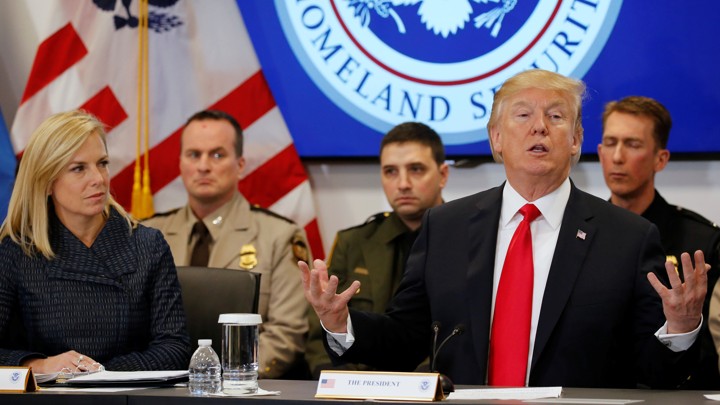
The president now reportedly is taking aim at those who fled Vietnam during the war that tore that country apart. The Vietnam War! The one that ended in 1975 when the communists rolled into Saigon and took control of the country. They renamed the South Vietnamese capital city after Ho Chi Minh and set up a repressive government that rounded up those who cooperated with the United States and sent them to what they called “re-education camps,” which was a euphemism for “concentration camps.”

Now, more than four decades later, the president wants to round up many of those who came to this country and send them back to Vietnam. What in name of human decency has possessed this guy, the president?

According to The Atlantic: This is the latest move in the president’s long record of prioritizing harsh immigration and asylum restrictions, and one that’s sure to raise eyebrows—the White House had hesitantly backed off the plan in August before reversing course. In essence, the administration has now decided that Vietnamese immigrants who arrived in the country before the establishment of diplomatic ties between the United States and Vietnam are subject to standard immigration law—meaning they are all eligible for deportation.

Trump believes many of those immigrants have taken up lives of crime, corruption and assorted mayhem, that they pose a hazard to Americans.

Here’s what the White House needs to consider: Vietnam is still a hardline communist country. Many of those refugees who fled their homeland did so to avoid persecution by the government, which looked harshly on those who aided U.S. forces and diplomats during “the American war.” Returning them to Vietnam well might subject them to imprisonment — or worse.

Yes, we now have full diplomatic relations with our former battlefield enemy. Do we really want to imperil that relationship over a demagogic campaign promise to crack down on immigration, to “put America first”?

Don’t go there, Mr. President.

USS Arizona artifact honors the fallen

Randall County Judge Ernie Houdashell’s mission is accomplished.

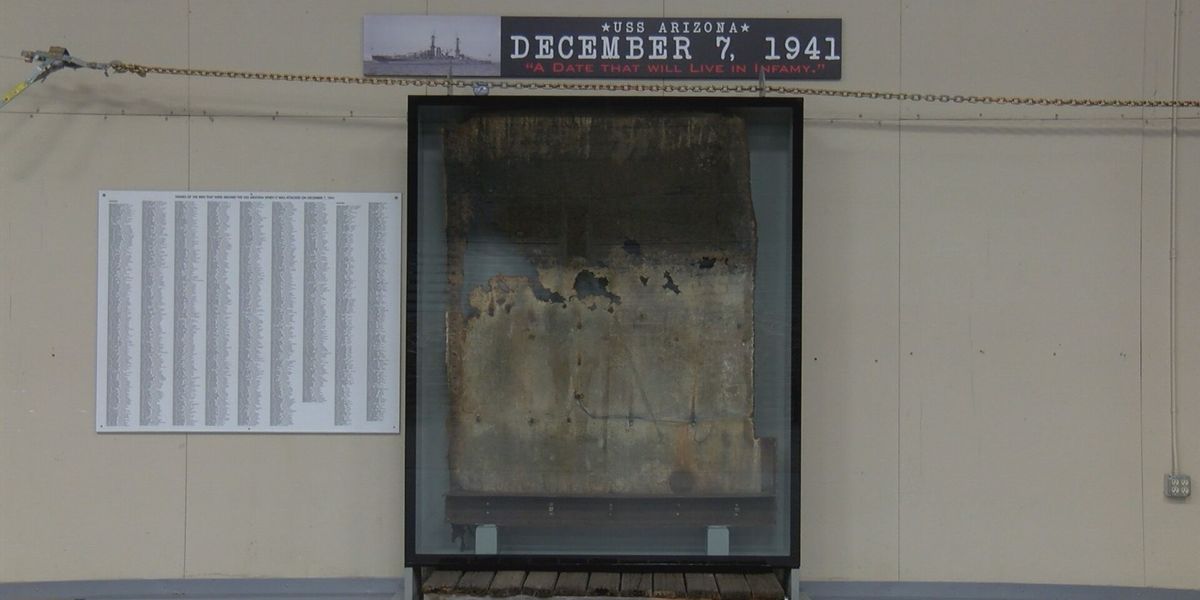
A piece of an iconic historical treasure is now in display at the Texas Panhandle War Memorial. It is a small section of the USS Arizona, the World War I-era battleship that was sunk 77 years ago today at the attack on Pearl Harbor, Hawaii, by Japanese fighter pilots.

The event thrust the United States into World War II.

More than 1,000 men died on the Arizona.

Houdashell made it his mission to bring a piece of the sunken ship to Amarillo, to display it at the War Memorial, which honors the men from the Texas Panhandle who fell in battle in conflicts dating back to the Spanish-American War.

The judge told KFDA NewsChannel 10: “Pearl Harbor, the Arizona, is a cemetery,” said Judge Houdashell. “There’s hundreds of men still buried on that. We have a piece of a national relic and it’s a sacred relic. Very few people have a piece that big. There’s a little bitty piece at the WWII Museum but we have a huge piece.

He meant to welcome the display on Pearl Harbor Day, when the nation remembers the event that mobilized the nation into a new era of industrial and military might in the fight to quell the tyrants in Europe and Asia who sought to conquer the world.

I am delighted that Ernie Houdashell accomplished his mission, just as he worked to bring the F-100 Super Sabre jet fighter and the UH-1 Huey helicopter — both Vietnam War relics — to the War Memorial grounds at the site of the former Randall County Courthouse Annex in south Amarillo.

These displays are important to Houdashell, who served two tours in the Vietnam War himself and who wears his love of country on his sleeve. Indeed, they are important to all Americans, all of us who understand the sacrifice made by those who fell in battle. The names of the Panhandle sons who fell are inscribed on the stone tablets that stand on the memorial grounds.

They now are accompanied by yet another historical artifact, a reminder of the horror of the bloodiest war the world has ever seen. May it stand as the worst the world will ever see.

Did they make it back home?

This picture appeared on an earlier item I published on this blog. It’s from World War II.

The men you see in this picture are part of the Greatest Generation, the fellows who answered the call to save the world from despotic tyrants in Europe and in Asia.

I see photos such as this and wonder on occasion: Did these men survive their mission and were they able to serve for “the duration” of the war and return home?

Normally I don’t spend a lot of time wondering these things, but they do cross my mind on occasion.

I am thinking at this moment of an exhibit I’ve seen a couple of times in Fredericksburg, Texas. It is the Nimitz Museum on the War in the Pacific. Fleet Admiral Carl Nimitz was a native of Fredericksburg in the Texas Hill Country and the city is rightly proud of its most famous son. He commanded naval forces in the Pacific Theater of Operations during World War II.

It is full of picture of men sitting aboard landing craft as they prepared to storm ashore at any one of the many island battlegrounds where the fought. I look into the eyes of those men and wonder if they survived.

Granted, those young men — if they did make it home and are alive to this day — would be very old men now. Indeed, I am the product of a member of the Greatest Generation. My own late father would be 97 years old. He saw his combat on the other side of the world, in Africa and in the Mediterranean Sea.

Another exhibit that evokes such a feeling is the National Vietnam Veterans Memorial in Angel Fire, N.M. It sits on a bluff overlooking a gorgeous valley amid the New Mexico mountains. It is the product of a man who lost his son in battle during the Vietnam War. It, too, contains pictures of men facing extreme danger, along with letters they had written home to their loved ones. The letters express the anxiety and, yes, the fear in the men’s hearts as they prepared to fight a determined enemy.

You look at those pictures as well and ask: Did they return home and were they able to start or re-start their lives with loved ones, to rear their children and welcome their grandchildren into this world?

The pictures are the faces of men who have ventured straight into hell on Earth and you hope that by God’s grace they were able to return to their earthly home.

Last of The Greatest Generation

Of all the tributes that have poured in after the death of former President George H.W. Bush, the one that gives me significant pause is this one: He is the final member of the Greatest Generation who will serve as president of the United States.

Wow, man! Think about that one for a moment.

The past four presidents have come from the Baby Boom generation: Bill Clinton, George W. Bush, Barack Obama and Donald Trump; Clinton, Bush and Trump all were born in 1946, the year after World War II ended; Obama was born in 1961.

But prior to those men’s election, the nation was led by a number of men who had served during World War II. Jimmy Carter was born in 1924, but didn’t graduate from the U.S. Naval Academy until 1946. The others all served during World War II; many of them saw action during the great conflict.

Gerald Ford, Richard Nixon, Ronald Reagan, Lyndon Johnson, John Kennedy and, of course, Dwight Eisenhower all wore the uniform during World War II. It could be argued that Ike was the greatest among the Greatest Generation, given that he served as Supreme Allied Commander of forces in Europe.

George H.W. Bush also distinguished himself during World War II. He was the youngest naval aviator on active duty. He got shot down over the Pacific Ocean and was plucked from the water by a U.S. submarine.

Why is it a big deal to remember this as we honor President Bush? Because his passing represents the end of an era. I mean there will be no one else ever elected to the nation’s highest office who shares the history of the men I noted already.

The same can be said of Korean War veterans. They, too, have grown old. The Vietnam War generation comprises Americans who are getting long in the tooth as well . . . and yet, I hear that former Secretary of State/U.S. Sen. John Kerry — a Vietnam War combat vet — is pondering whether to run for president in 2020.

President Bush’s death serves as a metaphor of sorts for what the nation is experiencing with regard to the 16 million Americans who helped save the world from tyranny. We’re losing these men and women every hour of every day. I don’t know how many of them are left, but I do know they are in their late 80s and 90s. Time will take their toll.

President Bush’s passing should remind us of the need to appreciate the service others of his generation — the Greatest Generation — gave to the nation they love.

How low can POTUS go?

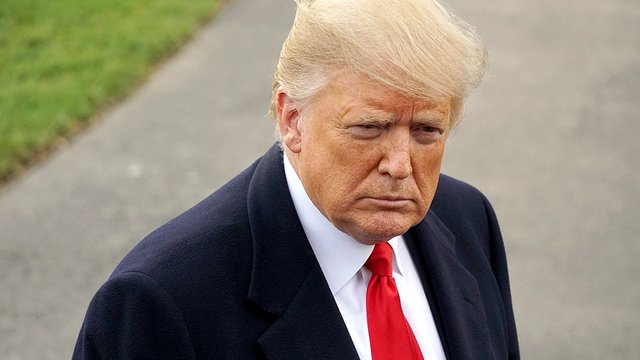
It is fair to wonder about the depths of Donald J. Trump’s progression as a politician. To the point: Just how low is too low and how do we know if he has hit rock bottom?

I do not believe, based on the record of low points he has acquired to date, that we have found the bottom of the abyss.

My goodness, this individual has scored so many low points it’s hard to keep score. Some highlights/lowlights:

  • He said the late U.S. Sen. John McCain was a “war hero only because he was captured” during the Vietnam War.
  • Trump denigrated a Gold Star family because of their Arab ethnicity; their son, an Army officer, died in battle in Iraq. The parents had the temerity to criticize Trump during the Democratic National Convention in 2016.
  • Trump mocked a New York Times reporter, mimicking his actions caused by a severe neuromuscular disease.
  • The candidate admitted to a TV host that he grabbed women by their genitals because of his “celebrity” status.
  • Trump has lied repeatedly, gratuitously and without any sense of shame.
  • The president just recently criticized the Special Operations Command chief — retired Admiral William McRaven, a battle-tested SEAL — for failing to kill Osama bin Laden “much sooner” than commandos did.

I know I have missed some examples, but you get the idea.

One might surmise, probably correctly, that any one or two of those incidents would doom someone’s political aspirations. Donald Trump, though, not only has survived, he has managed to fire up his political base. The roughly 38 percent of Americans who stand by their man do so because he “tells it like it is,” or he sticks it in the establishment’s eye, or speaks their language.

What’s more, this guy doesn’t care that the rest of the country finds his statements, behavior and demeanor repugnant to the high office he occupies.

How low can this guy go? I think he’s got some more space to fall before he finds the bottom of the pit.

He once said he could “shoot someone on Fifth Avenue and not lose any votes.” I believe he is correct. Surely he knows better than to test that theory. Doesn’t he?

Commander in chief shows disregard for military

I have to ask: How in the name of pride in our military does the president of the United States get away with the utter denigration he heaps on distinguished military personnel?

Donald Trump did it (in)famously in 2016 when he said the late U.S. Sen. John McCain was a “war hero only because he was captured. I like people who aren’t captured.”

Trump went on to win the presidential election after declaring he knows “more about ISIS than the generals.” Then he surrounded himself with current and former four-star officers, proclaiming some sort of phony affinity for the expertise they bring.

And now the latest tumult has erupted. The president has disparaged the May 2011 raid that killed 9/11 mastermind Osama bin Laden and, particularly, the man who coordinated that effort, retired Admiral William McRaven.

McRaven, a decorated Navy SEAL, headed the Special Operations Command when President Obama issued the order to kill bin Laden.

Trump now says we should have taken bin Laden down “a lot sooner.” Again, the commander in chief has denigrated a war hero and has mocked the effort that was carried out with precision and professionalism by a dedicated team of SEALs, Army Green Beret pilots and CIA deep-cover operatives.

Moreover, he gets away with it! The “base” that adores him gives him a pass. They don’t care that the commander in chief thinks so little of the brave men and women who volunteer to do something that the president waffled on when he had the chance when he was of draft age during the Vietnam War.

I do not get it. I never will get it.

Vets could bring a return to congressional collegiality

I long have lamented and bemoaned the lack of collegiality in the halls of Congress. Political adversaries become “enemies.” They drift farther and father apart, separated by a deepening chasm between them.

There might be a return to what we think of as “collegiality” and “comity” in the halls of power on Capitol Hill.

It might rest with a large and hopefully growing class of military veterans seeking to serve the public in a political capacity.

They have shared experiences. They know the pain of loss of comrades in battle. They endure similar stresses associated with their time in battle.

I posted earlier today a blog item about U.S. Rep.-elect Dan Crenshaw, a wounded Navy SEAL who is among 15 veterans elected to Congress in this past week’s midterm election. Crenshaw is a Republican from Houston. I don’t know the partisan composition of the congressional freshman class of veterans. It doesn’t matter. My hunch is that they are going to find plenty of commonality once they settle into their new jobs and get acquainted with each other’s history.

The Greatest Generation returned home from World War II and the men who served in the fight against tyranny developed amazing friendships when they found themselves serving under the same Capitol Dome.

Democratic Sen. Daniel Inouye of Hawaii became lifelong friends with Republican Sen. Bob Dole of Kansas; they both suffered grievous injuries in Italy near the end of the war, went to rehab together and developed a friendship that lasted until Inouye’s death. There were so many others. Fellow aviators, Democratic Sen. George McGovern and Republican Sen. Barry Goldwater became friends for life, as did Sens. McGovern and Dole.

The Korean War produced its own crop of veterans who entered political life together.

Then there is the Vietnam War generation, which also featured lasting friendships that transcended partisan politics. GOP Sen. John McCain and Democratic Sen. John Kerry worked together to help restore diplomatic relations with Vietnam. Democratic Sen. Bob Kerrey and Republican Sen. Chuck Hagel both represented their native Nebraska in the Senate, serving briefly together on Capitol Hill. Former Vietnam prisoners of war found commonality: Sen. Jeremiah Denton, Rep. Sam Johnson, Sen. McCain — all Republicans — were among that particular clique of lawmakers with a special bond.

The latest class of vets joins a cadre of veterans already serving in Congress. Democratic Sen. (and double amputee) Tammie Duckworth is among the most notable.

There always is much more to life than politics. My hope now is that the new crop of vets find a way to lead the way back toward a more civil era in Congress. I pray they can find a way to bridge the chasm that divides men and women of good will.

I am filled with a new sense of hope that these individuals with common life experience can cleanse the air of the toxicity that has poisoned it in Washington.