Tag Archives: George W. Bush

‘Mission accomplished’? Not just yet, Mr. President

Donald Trump did what he needed to do when he ordered “precision strikes” against Syrian chemical weapons facilities.

The White House has declared “mission accomplished” with regard to the strikes launched by U.S., French and British air power. It was an impressive allied effort to retaliate against Syrian dictator Bashar al Assad’s use of chemical weapons against civilians, including children.

The sight of those victims convulsing and heaving in the wake of the gas attack sickens the heart. It also points out that we are dealing in Syria with an animal disguised as a strongman.

To hear the Russians, Syrians and the Iranians deny that Assad gassed civilians is to defy credulity. Of course he did it. Assad has shown such propensity in the past.

The air strikes, though, have accomplished their mission, which was to destroy Syria’s ability to deliver chemical attacks. Reports from the field indicate that the air strikes — as deadly as they were — did not prevent a future gas attack.

Which brings me to a critical point. To claim “mission accomplished” requires proof that Assad has been rendered impotent militarily. That hasn’t happened.

We once heard a president of the United States, George W. Bush, issue a similar “mission accomplished” statement after our forces invaded Iraq in 2003. We captured the late Saddam Hussein, resulting in President Bush making that landing aboard a U.S. aircraft carrier, where he stood under the banner proclaiming that we had accomplished our mission. The war dragged on for years after Saddam’s capture and execution.

Trump cannot make such a declaration yet. The Joint Chiefs of Staff — at the president’s direction — have executed, in conjunction with our French and British allies, a strong response to Syria’s dictator.

Let us hope it doesn’t lead to a broader conflict or — and this is the worst case — open conflict with Russia and Iran.

A mission that is accomplished fully will render Bashar al Assad incapable of inflicting such misery ever again on helpless victims.

‘Welcome back,’ ballooning budget deficits

Ronald Reagan and his fellow Republicans made lots of hay in 1980 about the “spiraling” budget deficit during that presidential election year. It totaled a whopping $40 billion.

The GOP presidential nominee’s campaign ridiculed those big-spending Democrats en route to a smashing landslide election victory over President Jimmy Carter.

Ah, yes. Republicans were the party of “fiscal responsibility.”

Hah! Not any longer. The Congressional Budget Office projects that the current fiscal year will end with an $800 billion budget deficit and will surpass $1 trillion by the next fiscal year.

Hey, what happened? Oh, it’s that tax cut that the Republicans wrote into law — at the insistence of Donald J. Trump, and the $1.3 trillion spending bill approved by Congress.

What happened to fiscal restraint? Where are the controls on runaway government spending? Aren’t congressional Republicans — who control the House and the Senate — supposed to rein in free-spending tendencies usually associated with liberal Democrats?

A Democratic president, Bill Clinton, managed to craft a balanced budget in the late 1990s with help from congressional Republicans. Then came Republican George W. Bush, who succeeded Clinton in 2001. We went to war at the end of that year, but didn’t increase taxes to pay for it. The deficit soared out of control.

Democrat Barack Obama came aboard in 2009 with the economy in free fall. He pushed a tax hike and a spending boost through Congress. The economy recovered. The deficit was pared by roughly two-thirds annually by the time he left office in 2017.

Now we’re hurtling back to Square One. The deficit is exploding.

And no one in power seems to care about things that used to matter a lot.

Bob Bullock would be proud of this one

AUSTIN — Wherever he is, I am quite certain Bob Bullock — the late and legendary Texas lieutenant governor — is a happy man.

Why? Because a museum built and dedicated in his memory is a sight to behold. Its artifacts are educational in the extreme. Its ambience is welcoming, as are the docents scattered on all three of its floors willing to explain the whys and wherefores of Texas history.

I pledged to go to the Bullock Museum of Texas History upon visiting the Texas capital city. Today I did so.

https://highplainsblogger.com/2018/03/planning-for-an-education-on-texas-history/

It is so very interesting.

The museum opened in 2001, two years after Bullock’s death. He had lobbied hard to get a history museum built. He managed to persuade the powers that be to erect the museum not far from the University of Texas and the State Capitol where Bullock toiled for the last part of his lengthy public service career.

It is a marvelous tribute to someone I didn’t know well, but someone about whom I had learned a great deal upon arriving in Texas in the spring of 1984.

I learned that he was one tough son of a bi***. He was irascible, a bit of a grouch. He didn’t suffer fools at all — let alone lightly. He was a classic conservative Texas Democrat, which meant that he favored the working man and woman but didn’t take up the cudgel often for progressive social causes.

He also worked well with Republicans. Bullock and a fellow Democrat, former House Speaker Pete Laney, developed a constructive — and productive — working relationship with Republican Gov. George W. Bush. They worked as an effective team until 1999, when Bullock left office; he would die later that year of cancer.

The Bullock Museum tells the story of Texas in multiple parts. It tells visitors about the wreck of the LaBelle (the remains of which are pictured above), a French ship that sank in Matagorda Bay in 1684 after sailing to the New World from Europe, a mission it wasn’t even designed to complete.

It walks visitors through the fight to gain independence from Mexico, Texas’s nine-year existence as an independent nation and then its annexation into the United States in February 1845.

I won’t go through all that the museum contains.

I’ll just add this takeaway: As much as the state celebrated the sesquicentennial of its independence from Mexico, while giving relatively short shrift to the 150 years since its annexation into the United States, so does the Bullock Museum.

I say this not as a criticism, per sue, but merely as an observation.

I am thrilled to have finally seen this sampling of Texas’s rich history.

Obama is relaxed; many of us wish he could return

Barack H. Obama seems to have found his second wind as a private citizen. Same with Michelle Obama.

The two of them hardly ever are photographed without big smiles on their faces. The former president is enjoying his time away from the spotlight, as is the former first lady.

Oh, this fills many of us with wistful thoughts. If only we could get him back. That can’t happen. The U.S. Constitution limits presidents to two elected terms. Barack Obama did his time. Now he’s out among some of us.

Sure, he’s making a ton of scratch making speeches. He is kicking a lot of his post-presidential income back to community projects near and dear to his heart. He is following the course set by many of his predecessors.

George W. Bush has taken up painting, has biked with wounded veterans (including in Palo Duro Canyon) and has opened his presidential library in Dallas; Bill Clinton is hard at work on his Clinton Global Initiative Foundation, also making speeches and getting mixed up in politics from time to time; Jimmy Carter builds houses for Habitat for Humanity and teaches Sunday school in Plains, Ga.; George H.W. Bush is in poor health, but he, too, enjoys retired life.

I suppose it would tempting for Obama to fire back at his successor, Donald Trump, who seems to need a foil; he relishes the notion of dismantling many of his immediate predecessor’s successes and he does so while firing off broadsides via stump speeches and tweets.

Therein lies one of the many differences between Obama and Trump. The current president simply cannot stand being criticized; the former president might not like it, but he maintains his silence … mostly.

As much as I would like to have Barack Obama back in command of the situation, I know — and appreciate — his sense of freedom from the rigors of serving in the nation’s highest public office.

I wish him well. I also hope he doesn’t disappear. Many of his countrymen and women still enjoy listening to his soaring rhetoric far more than the trash talk that pours forth from the guy who succeeded him.

Look out, ‘radical Islam’

President George W. Bush told us in clear and unequivocal terms while the nation grieved over the 9/11 attack: We are not at war with Islam.

President Barack H. Obama followed that message to the letter. On the night he announced the death of al-Qaida leader Osama bin Laden, the president told us that bin Laden was not a “Muslim leader,” but that he was a “mass murderer of Muslims.”

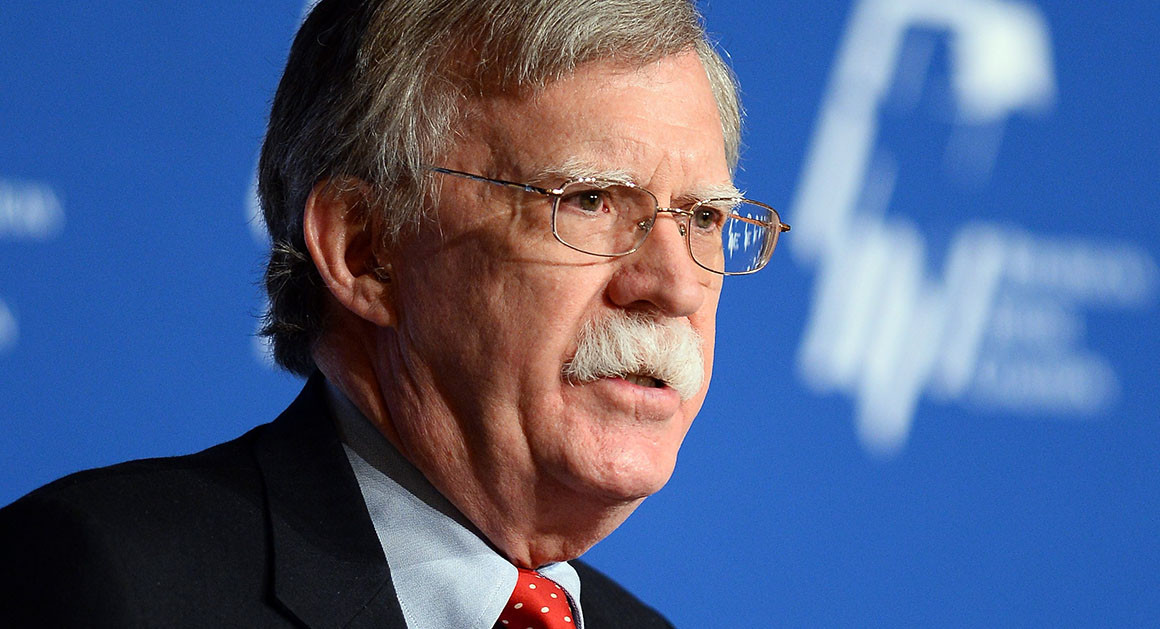
A new president has taken over. Donald J. Trump has just nominated Mike Pompeo to be secretary of state and has appointed John Bolton to be the new national security adviser.

These two men — not to mention the president — seem intent on changing the narrative. They want to take direct aim at “radical Islam,” as if the terrorists with whom we are at war represent a great world religion. They do not. They have perverted Islam to fit some ruthless ideology.

As Politico has reported: Both Bolton and Pompeo will now be working for a president who has alleged, with no evidence, that American Muslims celebrated the 9/11 attacks, and who has proposed banning all foreign Muslims from U.S. shores. Critics say the personnel moves suggest Trump’s worst instincts on how to approach the world’s 1.5 billion Muslims will find receptive ears among his foreign policy aides.

Rex Tillerson and H.R. McMaster, who will be leaving the State Department and the National Security Council, respectively, were thought to have some sort of moderating influence on Trump. But the president has shoved them aside, elevating two more fiery confidants to help formulate U.S. foreign policy. They are likely to seek to steer the president toward a position that mainstream Muslims might interpret to be more hostile to their religious faith.

That, I suggest, is a dangerous trend.

The killers with whom we have been at war since 9/11 need damn little pretext to recruit new militants to follow their perverted cause.

Trump reverses growth quotient

Paul Begala is an acknowledged Democratic partisan. He once worked for President Bill Clinton. He is no fan of Donald Trump.

Now that we’ve established that, I have to concur with something he has said about the president.

Whereas presidents — particularly those who come to the White House with a primarily outside-the-Beltway experience — usually grow in the office, Donald Trump is shrinking the office to fit his own shortcomings.

Begala mentioned how Presidents Reagan, Clinton, George W. Bush and Obama all learned about the office, how they filled the White House with their presence. Trump has reversed that momentum.

I will add that of the examples Begala cited, all of them had prior government experience. Reagan served two terms as governor of California, Bush served a term and a half as governor of Texas, Clinton served multiple terms as Arkansas governor and Obama served in the Illinois state senate before being elected to the U.S. Senate in 2006.

Trump’s experience is totally unique. He never sought a public before running for president. He ran a large business. Trump answered to no one. He has demonstrated zero curiosity, zero humility, not a lick of introspection. He has said he’s never sought forgiveness. He won’t admit to making a mistake.

As some observers have noted, Trump’s political skill — which he exhibited while campaigning successfully for the presidency — hasn’t transferred to governing. He doesn’t know how to govern.

Donald Trump isn’t growing into the office he won. He is shrinking it to fit his own diminished profile.

Trump is shaking up the Cabinet. His closest advisers are bailing, or are being pushed out. His Health and Human Services secretary had to quit; his first national security adviser was canned; Trump has just fired the secretary of state; the veterans secretary is about to go; the current national security adviser may be canned; Trump has burned through four communications directors.

This all happened in the first 15 months of his presidency.

And the president would have us believe he is doing the best job in the history of the exalted office of the presidency?

Nope. Paul Begala is right. Donald Trump is shrinking the office.

Still favor in-state tuition for all Texas residents

You are welcome to call me a bleeding-heart liberal if you wish, but I am going to make this point once again.

Texas is blessed with a large body of young people who want to improve themselves and who want to attend our public colleges and universities. Even those who are living here illegally because Mom and Dad sneaked them into Texas from somewhere else.

Accordingly, those de facto Texans, people who have grown up here as full-blown Texas residents, deserve to pay in-state tuition to attend those higher education institutions.

I wrote about this most recently three years ago:

https://highplainsblogger.com/2015/02/texans-split-on-in-state-college-tuition-issue/

I still believe to this day in that policy. The state’s two previous Republican governors — George W. Bush and Rick Perry — both supported the idea of offering in-state tuition privileges to these students.

I’m unclear where Gov. Greg Abbott stands on this. My guess is that the GOP base is pressuring him to kick those students out of Texas. Were he to do that, he would perform a profound disservice to the state.

I wrote in 2015, “Allowing the in-state tuition rates for these students does not harm the public university system in Texas, as some have contended. It enriches the system by granting young students a chance to attain the goals they have set for themselves — while living as Texans.”

They are making their dreams come true.

Who will hug the aisle at the SOTU?

State of the Union speeches always are accompanied by back stories, vignettes that give commentators something on which to, um, comment.

How many ovations will bring both parties to their feet? How long will the president speak? How many programs will he lay at the feet of Congress?

Here’s what I’ll look for tonight: Who will be hugging the aisle when the sergeant at arms announces: Mr. Speaker, the president of the United States?

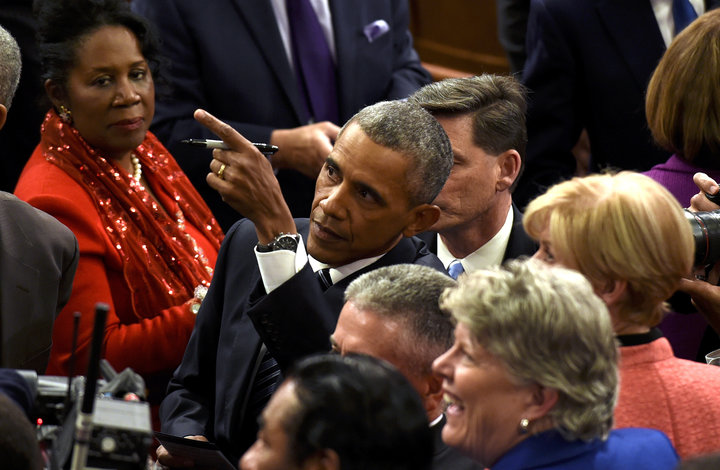
When the president walks down the aisle toward the podium, he usually shakes hands, gets high-fives, slaps a few members of Congress on the back, gets good wishes and does that silly “finger-point” to someone he recognizes.

During the two most recent presidencies — of George W. Bush and Barack H. Obama — one could always depend on seeing certain lawmakers getting TV face time hugging or shaking hands with the incoming president. I think, for instance, of Rep. Sheila Jackson Lee, a Houston Democrat.

Members of Congress usually wait for hours prior to the speech to get their preferred place along the aisle. You could depend on seeing Rep. Lee greeting Presidents Bush or Obama as they walked toward the speaker’s podium.

There’s a new man in the Oval Office these days. Donald J. Trump’s the guy who’ll deliver the State of the Union speech.

So … the question: Who will we see leaning over the aisle looking to greet the president, and will one of them be Sheila Jackson Lee, the fierce Democratic partisan?

Let’s get real for just a moment. Democratic members of Congress — along with a few Republicans — have been pretty damn vocal in their criticism of the president; they’ve blasted him for his behavior, his rhetoric and, indeed, his policies.

What’s more, this president has been pretty fierce in his response to his congressional critics.

I believe I’ll look tonight to see evidence of grudges.

Memo to CNN: check your anger at the door

Oh, how I hate admitting this, but I feel compelled to do so.

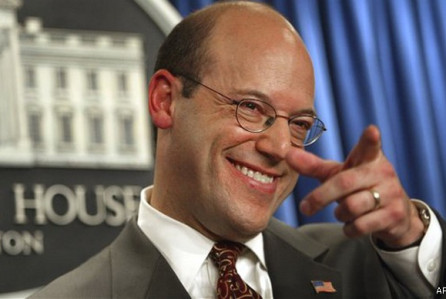
Ari Fleischer — President George W. Bush’s first press secretary — posted a tweet overnight that makes an interesting and quite valid point about CNN’s coverage of all things political.

He said that if you’re an anti-Donald J. Trump (a Democrat) guest, you get all the time in the world to make your case; if you happen to be pro-Trump (a Republican), the CNN anchors will interrupt you constantly. Here’s what he wrote: I’ve been watching CNN’s morning show recently. It seems to have two main topics. 1) What did Trump/GOP do wrong? 2) How bad is the collusion story for Donald Trump. If you’re a Democrat guest , you’re free to speak. If you’re a Republican, you’ll always be interrupted.

I admit to watching it occur in the moment myself. And, oh yes, it annoys me, too.

Let me be clear about something else as well. Fleischer made no mention of the way Fox News on-air personalities treat their pro- and anti-Trump guests. Given that I rarely watch Fox, I am only able to presume that they flip the CNN example on its head, treating the Republicans with fairness and the Democrats with the same level of disdain that CNN shows toward the pro-Trumpers.

I want to hold up an example of how a broadcast or cable news network ought to handle these on-air confrontations: I present ABC News’ “This Week.”

That program, which airs Sunday morning, had former special prosecutor Kenneth Starr on board this past weekend explaining what might drive the investigation into Donald Trump’s alleged involvement with Russian 2016 election hackers. He appeared with ABC News legal analyst Dan Abrams. Starr — who ran the investigation that led to President Clinton’s impeachment — could be construed as someone favorable to the current president. Abrams has revealed a more critical bias toward the president.

The two men made their points without interruption. The moderator, Martha Raddatz, didn’t barge in on either man’s time. She let them argue their points to the viewers — and occasionally with each other.

This is the kind of give-and-take we rarely see on CNN — the cable network that calls itself the “leader” in cable news presentation.

I am a fairly regular CNN viewer. As one who takes the presentation of news seriously, I want to echo Ari Fleischer’s assessment of the perception that CNN creates, which is that it does not present the news fairly and without bias.

And just think: This critique comes from someone who is inclined to agree with the point of view expressed by CNN’s talking heads.

My plea is simple. Check your bias at the door, CNN “news” staff, and don’t let your anxiety over the state of play in politics and public policy get the better of you.

Why get rid of Electoral College?

The 2016 presidential election produced a doozy of an outcome.

The candidate who won the Electoral College finished nearly 3 million votes short of the candidate who lost the election.

Thus, the result has produced an ongoing debate over whether we should eliminate the Electoral College and elect presidents based solely on the popular vote.

Here’s what I wrote just a few days after the 2016 surprise:

https://highplainsblogger.com/2016/11/now-about-the-electoral-college/

I have wrestled with this notion for some time. I have decided that I am unwilling to get rid of the Electoral College.

It’s a difficult system to explain to those abroad who don’t understand how someone who gets fewer votes than the other candidate can “win” a national election. I had the pleasure of trying to explain the 2000 presidential election outcome in Greece while the courts were trying to determine whether George W. Bush or Al Gore would become the next president.

I guess I come down finally on the notion that the Electoral College was created to give rural states with smaller populations a greater voice in determining the election outcome.

As the system is currently constructed, presidential elections usually are fought in those “battleground states” that could tip either way. That has been the case over the past several presidential election cycles. As it has turned out, states such as Iowa, New Hampshire, Nevada and occasionally Montana have gotten a greater amount of attention than other larger states.

Absent an Electoral College, my hunch is that candidates wouldn’t venture past the huge population centers: New York, Los Angeles and the Bay Area of California, Chicago, the Metroplex.

Indeed, I’ve seen the county-by-county breakdown of several recent elections and I’ve noticed how, for instance, Barack Obama won despite losing the vast bulk of U.S. real estate to John McCain (2008) and Mitt Romney (2012). How did he win? By targeting those “battleground states” and campaigning effectively for those voters’ support. He ended up winning decisive Electoral College and popular vote victories.

I get that progressives are chapped at losing the 2016 election. They want to change the system that generally has worked well.

Is it time to scrap the Electoral College? Sure, but only if smaller states want to surrender their time in the national political spotlight. As that logic applies as well to Texas, which isn’t a battleground now, but it could once again become the political prize that lured presidential candidates from both major parties in search of votes.