Tag Archives: Electoral College

Death threats against electors? What the … ?

Members of New York's Electoral College cast their ballots in the New York state Senate Chamber in Albany, N.Y., to elect President Barack Obama and Vice President Joseph Biden on Monday, Dec. 17, 2012. Members of the Electoral College cast the official, final votes in the 2012 presidential election, a constitutional formality on President Barack Obama's march to a second term.  (AP Photo/Tim Roske)

Donald J. Trump’s fans and followers behaved badly when protestors showed up at the president-elect’s rallies.

They were called down by the media, as they should have been.

Now, though, we’re hearing about death threats — for crying out loud! — against Republican electors who are going to cast their electoral votes for the man who won enough of them to be elected president.

Death threats! Are you kidding me?

Is this what we’ve become, a nation of bullies and boors?

The notion that someone would threaten bodily harm — or death — to another fellow citizen who is doing his or her duty is repugnant on its face.

I get that emotions still are smoldering after a contentious and often insult-driven presidential election campaign.

These reports, though, of death threats against electors suggest a level of insanity that needs to be curbed.

https://patriotpost.us/opinion/46517

The media need to come down hard on those making such threats. While we’re at it, the U.S. Justice Department needs to unleash its investigative hounds to track down those who are making them — in violation of federal law.

Still waiting to turn the corner on the new president

I believe I need counseling.

Here’s my dilemma. I have declared my willingness to “accept” that Donald J. Trump has been elected president of the United States. I can count electoral votes as well as the next guy; Trump got more than enough of them to win. He’s likely to sew up the victory today as the Electoral College votes for president.

However — and this is where the dilemma gets really serious, in my view — I cannot yet write the words “President” and “Trump” consecutively. (Take note that I have just avoided doing so.)

I intend to comment frequently on the new president. I’ll be watching him closely. I won’t be alone, quite obviously. I cannot speak for others bloggers/writers/commentators out there. I only can speak for myself.

It has become something of an obstacle for me to refer to the 45th president the way I have been used to referring to every single one of his predecessors. I routinely type the words “President Obama,” or “President (George W. or George H.W.) Bush,” or “President Clinton,” or “President Reagan” and so forth. I didn’t vote for all of those men to whom I refer in that fashion.

This new guy who will take office on Jan. 20? That’s somehow different. I cannot quite get to the root of it.

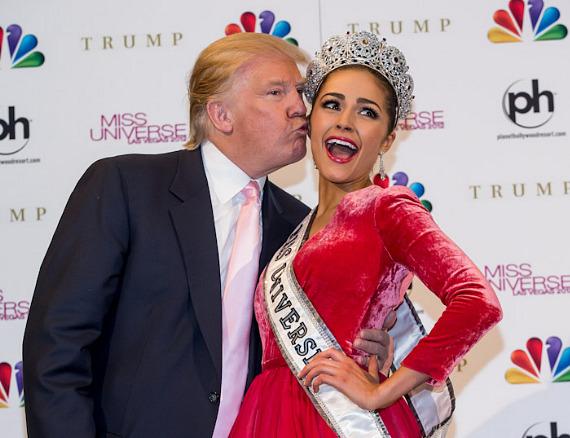
trumpscandal_pageant

Perhaps it is Trump’s singularly repulsive temperament. It might well be the endless litany of insults he hurled along the way to winning the highest office in the land. Maybe it’s the way he denigrated so many individuals and groups of people. It well could be the notion that he has presented himself — brazenly — as the smartest man ever to inhabit Planet Earth.

I’ll be careful in the future always to refer to Trump as the president. I accept the outcome of the election. However, my instinct — or perhaps it’s the latent childishness that I cannot let go — instructs me to avoid attaching the man’s title directly to his last name.

I cannot go there. I might not ever get there.

Help!

‘Unpresidented’ event about to occur

suprun

OK, “unpresidented” isn’t a real word, even though the president-elect used it in a recent tweet.

Still, we are about to witness an unprecedented event on Monday: the once-routine vote of men and women in all 50 states to select the next president of the United States.

This one ain’t routine. Not by a long shot.

The 538 presidential electors are getting lots of pressure. Tons of it. Mountains of it. The integrity of this election has been called into question by allegations of Russian computer hackers tampering with its outcome.

http://www.politico.com/story/2016/12/electors-under-siege-232774

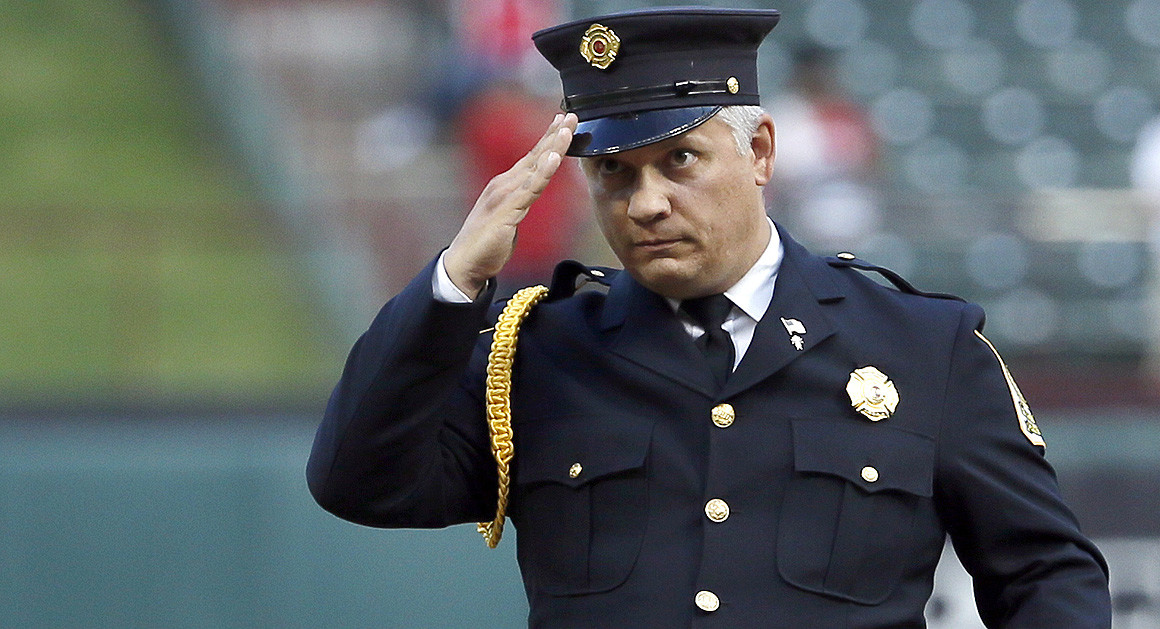
Now we also have electors wondering if the right candidate won the electoral votes needed to become president. One Republican elector, Christopher Suprun of Texas (pictured with this post), believes Donald J. Trump is unqualified. He won’t vote for the guy who carried the Lone Star State. Suprun is now a “faithless elector,” which is legal in Texas.

There might be others.

Oh, man. This could be fascinating in the extreme.

I’ve been alive for 67 years. I have been politically dialed in to presidential elections since, oh, about 1968 … a most tumultuous year, to be sure. I cast my first vote for president in 1972 and I’ve voted every four years since.

My career in journalism enabled me to be an up-close observer of politics and government for 37 years.

Never have any of us seen anything quite like what we’re about to witness Monday. The nation will be watching with a fair amount of interest in what will happen in all the states.

The electors will vote at noon in each state. They’ll start voting along the East Coast and work their way west. The last electoral votes will be case by the electors in Hawaii.

Suffice to say that it’s far from a routine event.

Do you recall how often it’s been said how “unconventional” this presidential campaign has been? It’s been such at every step of the way.

From the candidacy of Donald Trump, to the GOP convention that nominated the first-time candidate for any political office, to the campaign that featured far more insults and innuendo than serious policy discussion, to Election Night when Trump won enough electoral votes to win, but who trails Hillary Rodham Clinton by 2.8 million popular votes.

Hey, the Electoral College vote we’re about to witness is just another step toward weirdness. Indeed, the public’s intense interest in the outcome is bizarre all by itself.

Let the election results stand — for better or worse

larger

You’ve heard it said that “elections have consequences.”

Americans, I believe in my bleeding-liberal heart, are about to endure the consequences of the 2016 president election.

With that said, I have concluded that the presidential electors who’ll meet Monday to make their choices for president should proceed with electing Donald J. Trump as the 45th president of the United States.

Man, I don’t say that with an ounce of joy. I say it through tightly gritted teeth. My jaw hurts. I can barely type the words without getting the heebie-jeebies.

The Albany (N.Y.) Times-Union’s editorial is a compelling read. It makes a strong case for the electors to toss aside Trump because, the paper posits, the president-elect is unfit for the job. Here’s the editorial; take a look:

http://www.timesunion.com/opinion/article/Electors-reject-Mr-Trump-10796574.php

That is the editors’ opinion. I respect them for stating it.

However, to toss aside the results of the election is to throw our democratic process under the bus. I understand Alexander Hamilton’s assertion that the Electoral College’s mission is to provide “a moral certainty, that the office of President will never fall to the lot of any man who is not in an eminent degree endowed with the requisite qualifications.”

Trump, though, won the requisite number of electoral votes to become president. He needed 270 of them; he received 306. It’s not the “landslide” that Trump has said of it, but it’s enough.

Do the electors, even those who cannot buck their own conscience, rescind the will of the voters? I don’t know see how they can go against the will of their states’ voters. A Texas elector — who took a pledge to support the winner of the state’s electoral votes — has decided that he cannot cast his vote for Trump, who carried Texas by 9 percentage points. A better option for him would have been to do what another elector did: quit his assignment as an elector and hand it over to someone who could cast a vote for the state’s winner.

The so-called “faithless electors” who want to throw aside the result of the election — in effect ignoring its consequences —  ought to reconsider the consequences of their potential decision.

I have virtually zero faith in Donald Trump’s ability to lead the nation. My vote went to someone else. Sure, nearly 3 million more of us voted for the other major candidate than for Trump. The U.S. electoral system, though, doesn’t always work that way. Trump won the votes he needed to win.

If he messes up while serving as president — which I truly believe is a distinct probability — then there are measures that can be pursued to correct the nation’s course.

Yes, elections have consequences. It pains me to say it, but the United States is obligated to face them.

Let’s hear some national unity talk, Mr. President-elect

Dear Mr. President-elect:

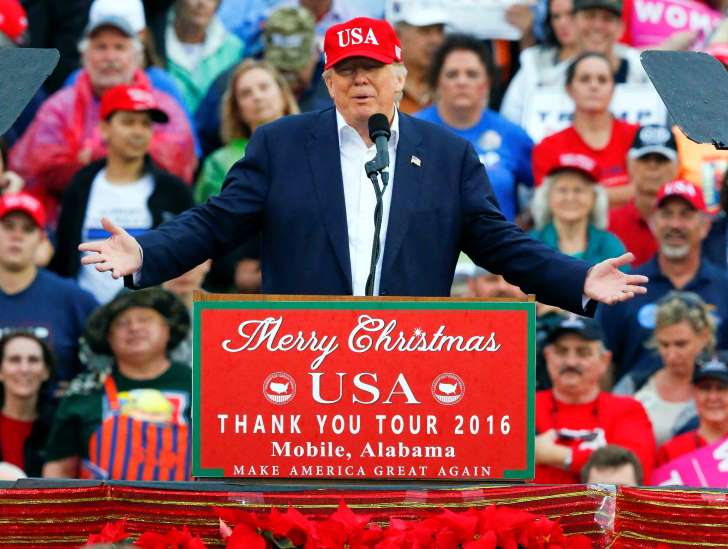
You’ve concluded your “thank you” tour in those states you won while scoring a stunning victory in the presidential election.

In just 34 days, you’re going to raise your right hand and take an oath to the very first public office you ever sought. Congratulations on your victory.

aalgtwt

But something was missing from your victory tour: that unity talk you said you’d deliver after you won the presidency. We could hear the chants way out here in places you didn’t visit about “Lock her up!” Didn’t you say you weren’t going to pursue criminal charges against Hillary Rodham Clinton, that the FBI had ruled correctly in declining to seek indictments over the e-mail matter?

What about your pledge to become “president of all the people”? None of us heard any high-minded rhetoric that sought to heal the wounds that tore the nation apart during this contentious election campaign. Where has the outreach been? Why didn’t you take your victory tour to places that Clinton actually won?

http://www.msn.com/en-us/news/politics/on-victory-lap-few-signs-trump-focusing-on-unified-nation/ar-AAlGS52?li=BBmkt5R&ocid=spartanntp

Why didn’t you reach out directly to those folks who voted against you? Surely I don’t need to remind you, Mr. President-elect, that more of us voted against you than voted for you.

This phase of your victory lap has concluded. I presume you’ll take a break with your loved ones to celebrate Christmas.

After that, though, you’ve still got more time to bind the wounds. Oh, and you also have to start boning up on actual governing. You have inherited the complicated and very detail-oriented job. You’ll need to spend some time hearing from presidential briefers on all manner of things — even those silly old national security intelligence matters you seem so willing to blow off.

While you’re still prepping for this big new job of yours, some noble oratory would be good to hear from you. You ought to tell us how you intend to unify the country that — in case you haven’t noticed — is more divided than at any time since, oh, the Civil War.

We’re all ears, Mr. President-elect. Talk to us. All of us. Not just your loyal partisan base.

As president, you’ll be making decisions that affect every single American. It’s time to use that bully pulpit of yours to bring us together.

The case for un-electing Donald Trump

trump

I’m such a fence-straddler on this one.

Our nation’s presidential electors are meeting Monday to choose the next president of the United States. Do they proceed with electing Donald J. Trump, who 306 electoral votes — 36 more than he needs — or do they deny him the votes and throw the election either to candidate he defeated or to the House of Representatives?

The Albany (N.Y.) Times-Union has declared in an editorial that the electors should deny Trump the presidency.

http://www.timesunion.com/opinion/article/Electors-reject-Mr-Trump-10796574.php

Oh, man. I’ve read the editorial twice; I’ll read it some more. The paper makes a strong argument for the electors to yank the presidency away from someone who is wholly unprepared, unqualified and unfit for the job.

Electors from most of the states, though, are bound by state rules that require them to remain faithful to the will of their states’ majority. Other state electors — such as those from Texas — aren’t bound by those rules.

The U.S. Constitution allows such a rebellion to occur. It doesn’t quite address the chaos that would ensue if electors were to deny the Electoral College winner the presidency.

It’s never happened in the history of the Republic, although the House has chosen a president: John Quincy Adams in 1824.

So help me, I cannot yet take that leap.

I agree with the Times-Union’s assessment of Trump’s ability to do the job. His campaign-style “thank you” rallies are troubling in the extreme; he should be spending his time learning about the details of governing a nation comprising more than 300 million citizens. He’s selecting a collection of individuals for his Cabinet who have limited experience dealing with the agencies they would lead and in some cases are openly hostile to the policies they are being asked to implement.

And we have this issue of alleged Russian tampering with our electoral process. Did the president-elect benefit directly from foreign interference?

It is true, as the editorial points out, that the founders set up the Electoral College to shield the nation against “foreign influence.”

The founders also set up a mechanism for Congress to act as a check against presidential overreach. It’s called impeachment. If a president crosses any one of the many boundaries set up to limit the power of the office, the House can intercede with articles of impeachment, followed by a trial in the Senate.

I’m going to give this some more thought. I might get to you later, before the Electoral College meets.

I’ve been watching the presidential electoral process closely for four decades and I’ve never seen questions like these raised prior to the transition of one presidency to another.

It’s beginning to stress me out.

Here’s a possible constitutional crisis of major proportion

electoral-college-banner

Those 538 men and women who are set to meet Monday to elect the next president of the United States are poised to make some serious history, one way or the other.

Most of them come from states that voted for Donald J. Trump, the Republican, over Hillary Rodham Clinton, the Democrat. They comprise the Electoral College, which the nation’s founders established in the 18th century to choose the person who would govern the country.

Here’s the big-time catch: some of them are “faithless,” which means they aren’t necessarily bound by the dictates of their states’ majorities. Add to that some major-league questions about whether Russian intelligence agents and computer hackers influenced the outcome the election and you have a situation of monumental proportions brewing … possibly.

Enough of those electors might decide they can’t vote for Trump and, thus, deny the president-elect the 270 electoral votes he needs to take office in January.

What happens then if, say, not enough of them switch their votes to Clinton, making her the next president? The U.S. House of Representatives, controlled by the GOP, then gets to pick the next president.

I don’t believe this will happen. I believe Trump will collect enough votes from the Electoral College to take the oath on Jan. 20. He will become the 45th president of the United States; Mike Pence will become the vice president.

Trump likely will have the Cabinet chosen by then. The U.S. Senate committees charged with recommending whether these nominees should be confirmed will get to work and make those critical decisions.

But some of the electors have asked to be briefed fully by the U.S. intelligence apparatus on what the Russians did and whether they actually influenced the outcome of the election. Just suppose the spooks tell the electors that, yep, the Russkies succeeded in getting their man elected. What happens then if you’re an elector from a state that voted for Trump and you can’t in good conscience cast your vote for the winner?

Lots of answers yet to come forward before the big day next week.

This could be the most fascinating supposedly pro forma electoral procedure in the history of the Republic.

It could be …

‘Trump landslide’ becoming something quite different

voting

I keep looking at a website that tabulates election results.

A new number jumps out at me as I look at the unofficial vote count from the 2016 presidential election.

3 million.

Hillary Rodham Clinton’s margin over Donald J. Trump is getting close to the 3 million mark. She has rolled up a vote total of 65.7 ballots, which is about what President Obama collected when he won re-election in 2012.

http://uselectionatlas.org/RESULTS/

Don’t remind me of what I know already: Hillary lost the election. Trump is the next president. He’ll take the oath of office on Jan. 20. Hillary will go back to working on the Clinton Foundation and the Clinton Global Initiative. She’s likely done as a national political candidate.

But it’s Trump’s careless use of language that continues to bug me.

He says he won in a “landslide.” No. He didn’t. He captured 306 electoral votes, which is a comfortable margin. A landslide victory? Far from it.

I just need to remind the president-elect that a popular vote deficit approaching 3 million ballots should give him pause as he continues to build his government leadership team.

Texas might bind electors to vote for winner

7c2a3338_jpg_800x1000_q100

Is it a good idea for the Texas Legislature to enact a law that forces presidential electors to remain faithful to the oath they take?

Yes.

Another Texas Republican elector, Christopher Suprun of Dallas, has declared he won’t cast his vote next week for Donald J. Trump, who won the state’s 38 electoral votes. He hasn’t said for whom he’ll vote, but it has drawn a response from Lt. Gov. Dan Patrick, who said he’s going to look into whether the Legislature will write a law that binds future electors to their pledge.

I think that’s a reasonable requirement. Texas would join 29 other states that have similar laws on the books.

Suprun joins another GOP elector, Art Sisneros, in denying Trump their electoral votes. There’s a big difference, though, in the two men’s decision. Suprun will cast his vote; Sisneros, on the other hand, took the more noble approach and quit his post as an elector. Sisneros said he couldn’t in good conscience vote for Trump — but neither could he violate the oath he took when he signed on as an elector.

https://www.texastribune.org/2016/12/07/patrick-rogue-texas-elector-could-lead-binding-law/

I don’t suppose Patrick would seek a law that prevents electors from quitting, as Sisneros did. However, Suprun’s decision is a bit troublesome. The difficulty, in my mind, has nothing to do with Trump. I wouldn’t vote for Trump, either.

Instead, it’s related directly to the oath this elector took to keep faith with the state’s voters, who gave the president-elect a 9 percentage point victory over Democratic nominee Hillary Rodham Clinton.

These public oaths don’t by themselves bind those who take them to remain faithful. But they should. These electors sign on as loyal Republicans or Democrats. Trump won the GOP nomination fair and square and won the presidential election under the rules laid out by the U.S. Constitution.

Patrick and the Legislature cannot enact a law quickly enough to make Suprun toe the line. They ought to do so for future presidential elections. Fair is fair.

Trump redefines electoral ‘landslide’

trump-won-election-landslide

Donald J. Trump is measuring electoral landslides with a different set of parameters than most of us.

The president-elect keeps saying he won the election this past month “in a landslide” over Hillary Rodham Clinton.

Hmm. I wonder about that.

When I was studying political science in college, I always believed an electoral landslide — when talking about presidential elections — usually meant something akin to a 10-percentage-point popular vote margin, give or take.

The landslide elections in my lifetime occurred in 1952 and 1956, with Dwight Eisenhower’s two election victories over Adlai Stevenson; 1964, with Lyndon Johnson’s landslide win over Barry Goldwater; 1980 and 1984, with Ronald Reagan’s wins over Jimmy Carter and Walter Mondale.

The 1988 election with George H.W. Bush defeating Michael Dukakis came close to a landslide.

Then you can measure Electoral College landslides, which often don’t coincide with popular vote landslides. George H.W. Bush scored an Electoral College landslide over Dukakis; Bill Clinton rolled up big Electoral College margins over Bush in 1992 and Bob Dole in 1996; Barack Obama’s electoral-vote victory in 2008 over John McCain could be called a landslide.

Now, back to the president-elect’s preposterous assertion of a “landslide” victory over Hillary Clinton.

He’s now trailing the loser by 2.6 million votes nationally. Yes, Trump won the Electoral College vote by a comfortable margin, at 306-232 — but it ain’t a landslide by what I consider to be most people’s measuring stick.

By all means, Trump won the election. He’s going to be the next president. However, the president-elect needs to stop with the delusion that he won by a landslide.

It was a squeaker, dude, in a deeply divided nation. Furthermore, he would do well to listen to the views expressed by the majority of those who voted against him.