Tag Archives: Amarillo City Hall

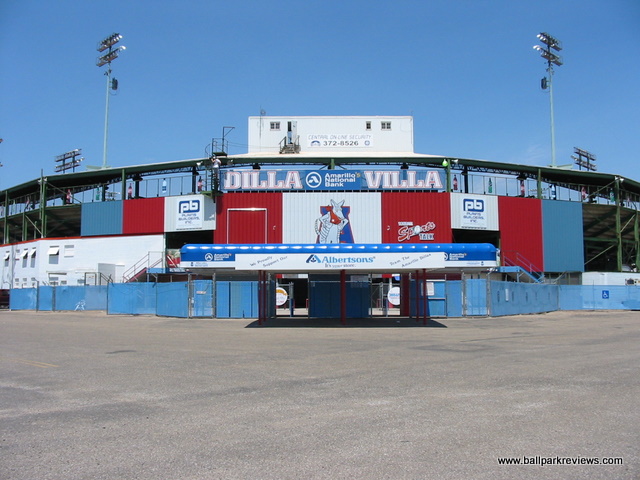
Tear down the former Dilla Villa!

We drove by the Tri-State Fairgrounds this morning along Third Avenue when I noticed a well-known Amarillo eyesore.

I refer to Potter County Memorial “Stadium.” I put the word “Stadium” in quotes because it is nothing of the sort. It is a rat hole, a dump, a run down, has-been venue that to my way of thinking no longer has any value to Amarillo.

My advice to the Potter County Commissioners Court? Tear the thing down! Scoop up the rubble and take it to the landfill. Clear the land, landscape it and turn it into something a damn sight more attractive than what sits on it at this moment.

Potter County owns the rat trap once known as the Dilla Villa. The Amarillo Dillas were playing some form of minor-league baseball at that venue when my wife and I arrived on the High Plains in early 1995. It was a dump back then, too. Its condition has worsened over the years. The men’s restroom stinks; the plumbing is poor; the outfield grass looks like a combination of at least three types of grass seed.

The condition of the venue was so bad that the sandlot organization that played ball there until this past year decided it wasn’t good enough for them. So they abandoned Amarillo.

Yes, I am aware that it has some history here. Longtime residents have a certain historical affection for the building. I don’t know what constitutes “longtime.” I have lived here for nearly 23 years; I figure that’s long enough to qualify me as someone with some history in Amarillo.

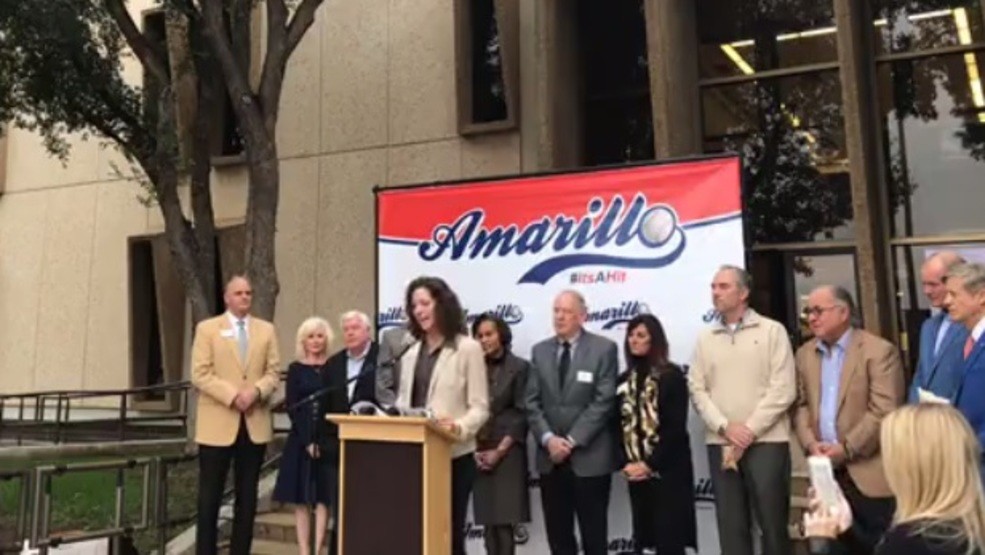
I’ve been cheering the construction of the upcoming venue that’s going to be built downtown. They’ll break ground soon, or so I understand, on a 4,500-seat ballpark near City Hall. It will be the home field for a new AA minor-league team that is relocating from San Antonio for the start of the 2019 season.

It will be a “multipurpose event venue” that can play host to a whole array of outdoor activities. It won’t be just a baseball park.

This means to me that the Potter County Rat Hole no longer is viable. It means the county needs to rid itself of a venue with zero potential. Have you seen the exterior of the outfield wall facing Third and Grand? It ain’t pretty, man.

I am aware that at least three members of the Commissioners Court read this blog. That’s a majority. If they’re going to be convinced by anything I say here in this forum, then I encourage them to take action.

Get rid of that rotten structure!

This trash pickup plan works!

I stand before you — actually, I’m sitting — to testify in favor of Amarillo’s new municipal trash pickup regimen.

It works, I’m tellin’ ya!

My wife and I had a couple of large items we wanted to discard from our southwest Amarillo home. I called the city solid waste collection office, told them what we had and was told to put it on the front yard, near the curb.

A truck would come by in about 24 hours to pick it up.

Well, by golly. It did. The truck’s two-man crew picked up the items. They are gone, heading off to Solid Waste Heaven.

This is a beautification project announced the other day by Mayor Ginger Nelson. She said that residential alleys have become collection points for unsightly debris. Come to think of it, is there any other kind? Well, I reckon you know what I mean.

Amarillo is not what I would call a grimy, trash-laden community. In my travels around the country, even in our recent sojourns in all directions from the High Plains, I have seen many communities that present giant eyesores to the casual visitor/passerby.

However, any effort to doll the city up is OK in my book.

To that end, I applaud the mayor and her vision. Nelson campaigned on a lengthy platform of issues she said needed to be addressed. Beautification happens to be one of them.

Now … let’s get busy dressing up those highway rights-of-way.

Just wondering: Amarillo Matters … where is it?

A political action group emerged from nowhere earlier this year. It called itself Amarillo Matters. Its mission, as I understand it, was to elect a slate of candidates to the City Council.

It succeeded. This past spring, voters flipped the entire five-member council, electing five newbies. Amarillo Matters then seemingly packed its bags, and its members went back to whatever they were doing before they formed this political action committee.

They were mostly successful businessmen and women. Their agenda included electing individuals who shared their pro-business tilt. Hey, I have no problem with that.

There’s been some success in the months since the new council members took office. Chief among them is the landing of that AA minor-league baseball franchise that is relocating to Amarillo from San Antonio and will play baseball at the new ballpark that will be built in downtown Amarillo; they’ll toss the first pitch in April 2019.

That’s a big deal, man.

But what has become of Amarillo Matters? It’s no longer garnering headlines, or any discussion on local broadcast media. I looked at its website this evening. It’s still up. AM has a link where one can contribute money; I am not giving them any dough.

I’ve written plenty about them already:

https://highplainsblogger.com/?s=Amarillo+Matters

Given that I am unplugged from most of what’s going on at City Hall these days, I am left to use this blog to pose questions about some of the community’s key players.

I consider Amarillo Matters to be an important cog in the city’s civic machinery. I know many of the folks who formed the PAC’s leadership team earlier this year. I respect them, too.

I hope it hasn’t become what the Amarillo Millennial Movement turned out to be: a flash in the pan. AMM formed to promote the approval of the ballpark in the November 2015 municipal referendum. The measure passed — and AMM then vanished, vaporized, disappeared. Yes, I am aware that the AMM comprised essentially one individual, a young woman who moved to Fort Worth. But you get my point, yes?

Amarillo Matters, where are you and what are you doing to make sure that that Amarillo still, um, matters?

Renaming buildings and streets? Follow a simple formula

Amarillo city officials are considering some ordinances related to building and street renaming.

There’s been a bit of controversy about that in recent times, with Amarillo public school officials considering whether to rename an elementary school that currently is named after Confederate Gen. Robert E. Lee, whose participation in the Civil War has come under scrutiny of late.

Hey, I have one recommendation for Amarillo City Hall: Whatever you decide, be sure to avoid naming a building or street after a living individual.

No living honorees

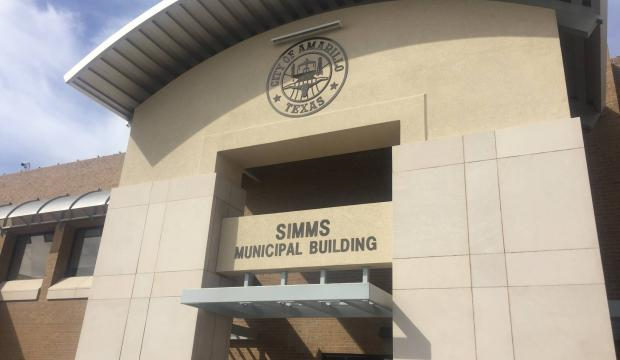
The city named its administration building in 2014 after the late City Commissioner Jim Simms; it named its international airport after Rick Husband, the astronaut who died aboard the shuttle Columbia in 2003; Amarillo has named part of a street after Justin Scherlen, a police officer who died in the line of duty.

Cities that name structures or streets after living individuals run the risk of being embarrassed by the “honored” individual. The most prominent example that comes to my mind involves Pete Rose, the former Cincinnati Reds baseball great who got a street named in his honor in Cincy; then Rose got ensnared in a gambling scandal that resulted in his being banned for life from induction in the Major League Baseball Hall of Fame. The city took Rose’s name off the street.

So, go ahead, City Hall, with considering this ordinance. I have no problem with the city having a policy for this process — as long as it involves individuals who have left this world.

Good luck, City Council.

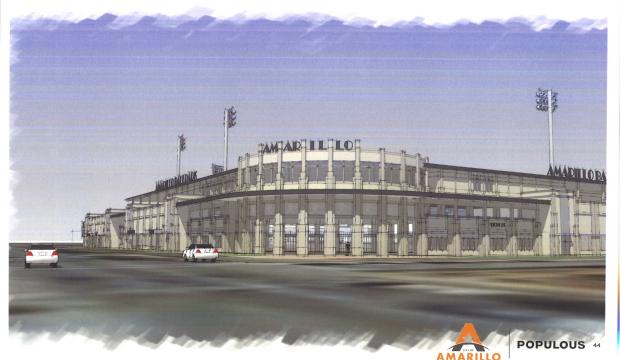
Now we have a design for The Ballpark

Yep. It looks like a ballpark.

Amarillo’s Local Government Corp. has approved a design concept for arguably the most significant downtown project of the past half-century.

It doesn’t have a name just yet. It’s going to be a multipurpose event venue, or MPEV. It’s also going to be a minor-league baseball venue, a ballpark. It’ll cost about $45.5 million to build.

It’s going to be home to a AA minor-league baseball franchise that is moving from San Antonio to Amarillo. Plans call for the ballpark to be finished by February 2019. They’ll toss the first pitch for the new baseball season in April 2019.

City Councilman Eddie Sauer — a member of the LGC — said he saw something “iconic” in the design that the LGC approved unanimously. “When I looked at it, I immediately saw something iconic,” Sauer told the Amarillo Globe-News. “I felt like I could see the Potter County Courthouse, the Santa Fe Building. It was special, I felt, with an eye for what we already had downtown.”

They’ve knocked down and scraped away the remnants of the old Coca-Cola distribution center that used to occupy the site along South Buchanan Street. I noticed some piles of dirt on the site the other day while driving downtown.

Plans call for work to begin shortly after the first of the year. Elmore hasn’t yet signed the lease agreement but that event reportedly is imminent.

I keep hearing the naysayers give raspberries to this project. They keep wondering aloud why the city is spending so much of its effort in reviving downtown.

I also keep wondering: How in the world is all this a negative development for Amarillo? Yes, there have been some hiccups and missteps along the way. The city got through them. The LGC negotiated a 30-year lease agreement with the owner of the baseball team that’s coming here. The team owner, Elmore Sports Group, is going to pay the city $400,000 annually to rent the ballpark. The city plans to pay for the ballpark with hotel occupancy tax revenue.

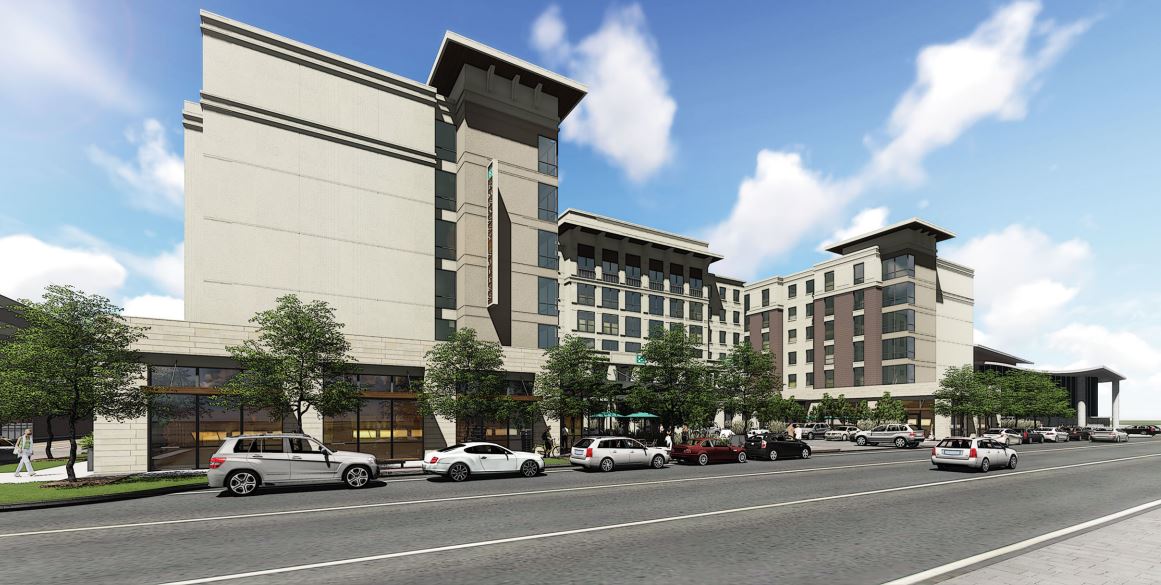
And in the bargain, the city’s downtown district will breathe deeply and is expected to throb with activity. We’re already seeing new urban residences being built; there will be new retail establishments; retail space along the ground floor of a shiny new parking garage is beginning to fill up; the just-opened Embassy Suites hotel figures to attract conventions to the Civic Center.

This is a bad thing for Amarillo? To my way of thinking, it’s pretty damn good.

Amarillo’s downtown no longer recognizable

I made what I consider to be a startling discovery in downtown Amarillo, Texas.

After parking my car on a lot behind the brand new Embassy Suites hotel, I walked along Fillmore Street and turned the corner onto Sixth Avenue. I glanced across the street at a row of mostly empty storefronts along a shiny new wall — which I realized after a second or two was the north face of a new parking garage.

I glanced eastward toward the Civic Center just to be sure I hadn’t become disoriented. There it was. The Civic Center restored my bearings.

The discovery? It is that downtown Amarillo bears next to zero resemblance to the district I’ve come to know during my 22 years living in this Texas Panhandle community.

The Embassy Suites is now open for business. The parking garage is finished; indeed, I saw vehicles parked inside the structure.

My reason for venturing downtown this evening — in the rain — was to attend a retirement reception for a longtime friend and source I relied on when I worked for the Amarillo Globe-News. Gary Pitner is retiring as head of the Panhandle Regional Planning Commission; I’ll have more to say about Gary in a later blog post.

My point with this post is to take note of the immense change that has occurred in downtown Amarillo — and the change that is still occurring.

Downtown Amarillo’s evolution is a highly positive event. I sort of think of it as a butterfly that emerges from some sort of cocoon. I don’t want to sound mawkish here, but that moment as I made the turn toward the Embassy Suites door also was a realization that the evolution is real.

There’s much more to come, of course. That ballpark is going to be built across the street from City Hall. They’ll take about a year to build a 4,500-seat multipurpose event venue. By April 2019, the MPEV will be done and they’ll toss out the first pitch for a AA minor-league baseball season.

I’m beginning to think when that time arrives that downtown Amarillo will be even less recognizable then that it is today.

That will be a very good thing.

MPEV contract signed? Done!

Someone will have to explain to me why the news out of Amarillo City Hall is somehow bad for the city.

It’s going to take a mighty stout argument to persuade me.

The City Council today announced that Elmore Sports Group, the outfit that owns the San Antonio Missions AA baseball team, has signed a 30-year lease agreement to play minor-league baseball at the new ballpark set to be built across the street from City Hall.

The city plans to pay for the $45.5 million multipurpose event venue with hotel occupancy tax revenue. Elmore will pay the city $400,000 annually to rent the ballpark.

They’re going to break ground on the MPEV in early 2018; they plan to finish the venue in time for the start of the 2019 baseball season.

Get your hot dogs and cold beer right here!

What a journey it has been — and what a journey that lies ahead.

And yet, there is a continual chorus from a cadre of soreheads that keeps casting the city’s downtown revival in negative terms.

It seems like a hundred years ago that Amarillo voters approved a citywide “non-binding referendum” on whether to support construction of the MPEV. The cost of the building in November 2015 — when the election occurred — had been pegged at $32 million. The cost inflated a bit after the ballots were counted, which brought out some howls around the city.

It hasn’t been a smooth ride, to be sure.

Voters elected a new council majority in the spring of 2015 and there was some discussion about the council slamming the brakes on the MPEV. To its credit, the new council majority heeded its better angels and allowed the vote to proceed.

Prior to all of that we got to witness the general managing contractor — an outfit named Wallace Bajjali — disintegrate in a spat between its principal owners. It was damn ugly! They left the city without an organization that was supposed to coordinate all the moving parts. Fortunately for Amarillo, the organization’s demise didn’t damage the city’s commitment to proceeding with the ballpark/MPEV.

But there was some turnover in some key municipal management positions. Melissa Dailey essentially was forced out of her job as head of Downtown Amarillo Inc., City Manager Jarret Atkinson quit over his inability to work with the new council majority and Amarillo Economic Development Corporation President Buzz David retired and moved out of town.

But the MPEV kept moving forward.

The Local Government Corporation was able to get a tentative agreement with the Missions, who wanted out of the Alamo City, which courted a AAA franchise.

And today, everyone signed on the dotted line.

Downtown Amarillo has made tremendous strides in the past half-dozen years. We now have a first-class convention hotel and parking garage across the street from the Civic Center. The city is able to lure conventions to the Civic Center. Business is booming along with construction of downtown residence construction.

Why in the world is all of this is a bad thing for Amarillo?

I want to restate what I believe is quite obvious: Every thriving city in America has virtually one thing in common. They all boast thriving downtown districts.

Amarillo has taken a big step toward a bright future.

Why run on partisan labels at City Hall?

A headline in today’s New York Times caught my attention and gave me a moment’s pause.

It reads: “Bill de Blasio — the best Democratic choice for mayor.”

It has occurred to me on more than one occasion during the many years I reported and commented on politics wherever I have lived and worked that it makes no sense for municipal candidates to run on partisan tickets.

Why in the world does it matter if a mayor or city council member is a Democrat or a Republican? Someone has to explain to me the validity of forcing these folks to run under the banner of any political party. Do elected municipal officials tend to the needs of constituents based on their party affiliation? They had better not.

I get that NYC is a heavily Democratic city. But if someone calls City Hall with a complaint about, oh, a barking dog or a troublesome pothole or a street light that needs repair, does the city staffer ask the caller whether he or she is a Democrat or Republican?

I realize these are issues to be settled within each community. Sitting out here in Amarillo, Texas, I shouldn’t really care about the politics of New York City. And, in fact, I don’t … not really.

It just sticks in my craw a little bit that some cities in America actually elect municipal officials on partisan ballots.

I prefer the way we do it in Amarillo, or in Beaumont, where we lived for a time before moving to the Panhandle, or in Portland, Ore., the city of my birth. They all elect their governing officials on non-partisan ballots.

I remember one year in Amarillo when a challenger to the incumbent mayor sought to urge “good Republicans” to vote for her. We slapped her down hard at the Amarillo Globe-News, where I worked as editorial page editor. She lost to the incumbent.

I’ve actually argued that county-wide offices need not be partisan, either. Someone needs to explain to me how a tax assessor-collector, or county clerk, or country treasurer, or district clerk, or a sheriff, or district attorney does his or her job on the basis of what’s “good for the party.”

We seem to elect everyone in Texas. We even elect constables — which in my view is the most useless public office any county can employ. I’ll save that argument for another blog post, though. Even constables, for crying out loud, are elected on partisan ballots.

And don’t even get me started on why we elect judges as Democrats and Republicans. I detest partisan election of judges perhaps most of all, given that so many good men and women are tossed off the bench simply because they belong to the “wrong political party.” It’s happened to stellar Democrats in Texas during the past two or three decades; and it happened to equally stellar Republicans back when Democrats were the party in power.

There. My morning rant against partisan politics is over. Nothing will change. I do feel better, though.

Do we call it ‘MPEV,’ or something else?

They’re going to start construction soon on Amarillo’s newest attraction soon.

It’ll be built downtown, across the street from City Hall. It’s going to be home to a AA baseball team that’s moving here from San Antonio. The team intends to open its 2019 season at the place that’s come to be known colloquially as the “MPEV.”

MPEV stands for multipurpose event venue. It’s a descriptive term, given that it also will play host to many other community events other than baseball.

Some residents refer to it as The Ballpark. Critics have attached unflattering names to the structure. “Boondoggle” comes to mind. I don’t consider the construction and opening of the MPEV as a negative occurrence.

It’s going to cost about $40 million. Amarillo’s voters approved a non-binding referendum in November 2015 on the MPEV back when the price was a “mere” $32 million.

Here’s a thought, however, on what kind of name ought to go on this new venue. Why not honor someone by putting his or her name on the building?

I’ll begin the discussion with this name: Tony Gwynn.

Who is this man? He once played baseball in Amarillo, back when the city was home to the Gold Sox. The Gold Sox were a farm team for the San Diego Padres, which interestingly enough, happens to be the Major League Baseball team affiliated with the new outfit that’s coming here. He only played 23 games in Amarillo in 1982.

Gwynn eventually got called up to the Big Leagues. He did quite well. He compiled a .338 lifetime batting average, got more than 3,000 base hits, played in a World Series with the Padres — and comported himself with class, grace, good humor and dedication during his storied MLB career. He was elected to the Baseball Hall of Fame on the first ballot.

Gwynn died in 2014 at the age of 54, which means there is no way he can sully his stellar reputation.

Tony Gwynn Park. It has a nice ring. Don’t you think?

‘Free’ speech gets drowned out … good!

They called themselves the “Free Speech Movement.” They planned to stage a big rally in Boston, but got drowned out by others who were having none of what this movement had to say.

The “Free Speech” folks said they disavowed the hate speech that’s become the talk of the nation. But thousands of counter protesters showed up to swallow up the “Free Speech” crowd.

It appears that advance knowledge of some of the speakers slated to talk alarmed community residents, which triggered the big counter protest. They were concerned about what they considered to be “veiled bigotry.” One big difference between this gathering and the one that erupted in Charlottesville this past weekend is that no one got hurt; there was no riot.

This all sounds familiar to yours truly.

In 2006, the Ku Klux Klan came to Amarillo to have a rally in front of City Hall. The city granted the KKK the permit they needed. The police came out in force. Amarillo PD deployed many officers, as did the Potter County Sheriff’s Office and the Texas Department of Public Safety. The police set up an effective barrier that kept the crowd of onlookers away from the Klansmen.

At the moment the Klan leaders were set to start addressing the gathering in front of City Hall, a parade of counter protesters came marching onto the parking lot. They were loud, man! They were banging cymbals, blowing horns, beating drums, yelling at the top of their lungs.

I don’t recall, 11 years later, what the Klan’s message was on that warm summer day. The haters couldn’t get a word in edgewise.

I couldn’t have been prouder of the way our community reacted to the Klan’s presence in our midst.

The most fascinating encounter I witnessed occurred right next to me. It involved then-Amarillo Police Chief Jerry Neal and a Klan member. Neal was there in full cop regalia: dress blues and all the hardware that beat cops wear when they’re on patrol … if you get my drift. The Klansman asked the chief, “Can I ask you something?”

Neal’s response was brusque and right to the point: “No. You can’t. Now, get away from me.”

What happened today in Boston had plenty of precedent. It should continue for as long as hate groups — or those aligned with them — believe they have license to spread their bigoted message.