Tag Archives: Richard Nixon

Yes, Trump’s presidency will be legit, unless …

I want to get something off my chest about Donald J. Trump’s pending presidency.

He will be the duly elected, legitimate president of the United States of America. The popular vote totals don’t matter. It won’t matter one damn bit to me — really and truly — that he got 46.1 percent of the vote compared to Hillary Rodham Clinton’s  total of 48 percent.

He will be as legit as Bill Clinton’s presidency was in 1992, when he won with 43 percent of the popular vote in that three-way race against George H.W. Bush and H. Ross Perot. His presidency will be as legit as Richard Nixon’s was in 1968, when he won also with 43 percent in another three-way contest with Hubert Humphrey and George Wallace.

I get that many on the left will say otherwise, just as many on the right tried to dismiss President Clinton’s 1992 victory as a fluke, given the presence of Perot on the ballot. It wasn’t. Nor was Trump’s victory.

The popular vote is not the issue that threatens Trump’s presidential legitimacy. It’s the other stuff involving the Russian hackers and whether they actually had a tangible impact on the election result.

Congress needs to get to the root of what happened there. The CIA needs to reveal — to the extent that it can without compromising its own intelligence-gathering capability — what it knows about Russian involvement.

I hope for the sake of the country that we learn the Russians did not actually affect the outcome. I have a serious fear, though, that we might learn something sinister.

But let’s steer away from this vote-total argument.

Trump won where it counted, in accordance with how the U.S. Constitution sets forth the election of presidents.

Yes, we need a ‘One China Policy,’ Mr. President-elect

ttd_chinataiwan_hate_thumb_oo

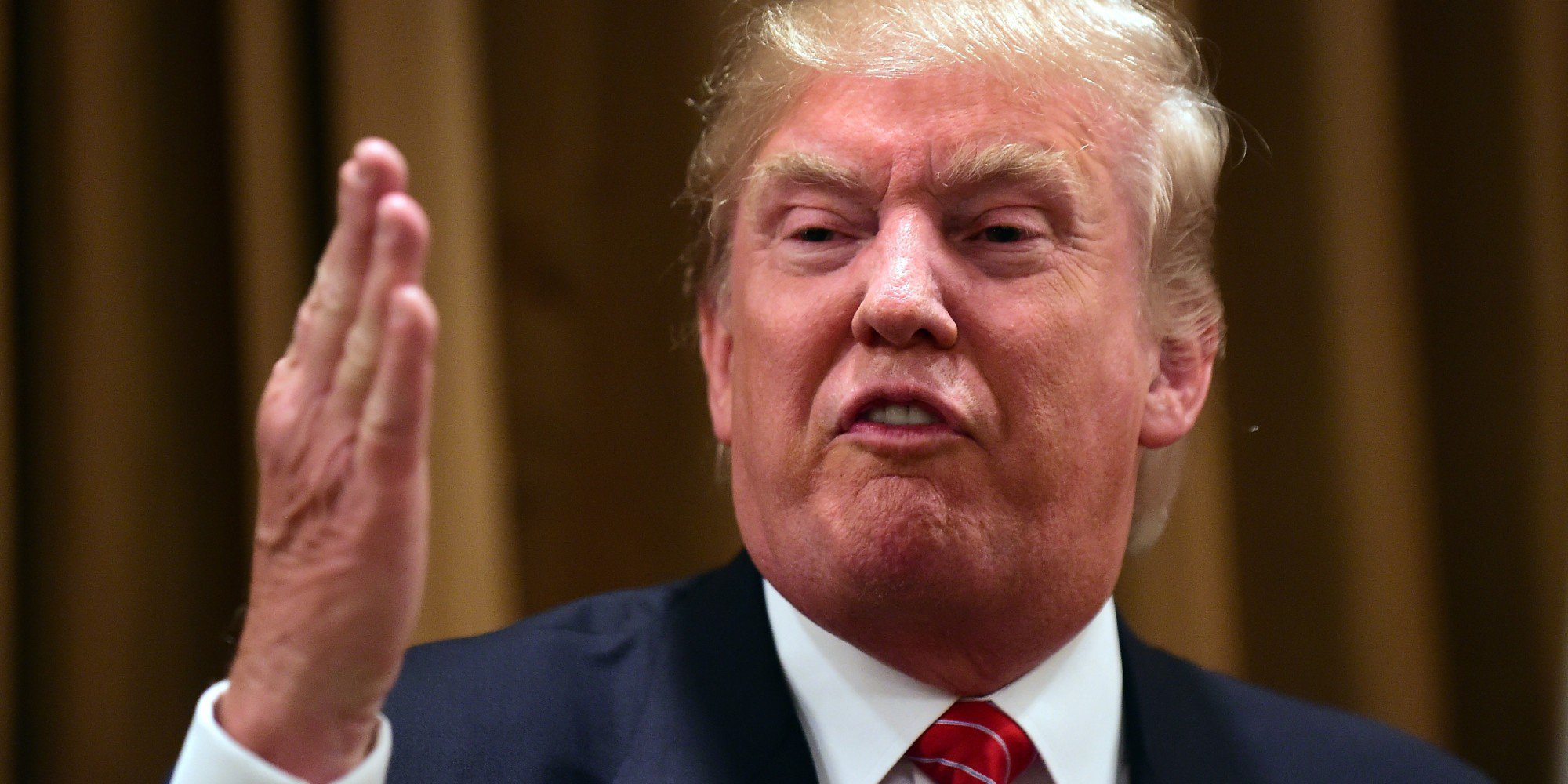
Donald J. “Smart Person” Trump keeps stepping in it.

The president-elect told Fox News Sunday that he doesn’t feel obligated to follow what’s known around the world as a “One China Policy.”

It’s a simple concept.

The People’s Republic of China says there is only “one China.” Taiwan, which calls itself the Republic of China on Taiwan, also says there is just a single China.

Neither country recognizes the other diplomatically. Taipei has no PRC embassy, Beijing has no Taiwanese embassy. Almost the entire rest of the world recognizes the PRC as the sole China. The United States of America has recognized the PRC since 1979, at which time it ended relations with Taiwan.

Now we have the president-elect of the  United States saying he isn’t bound to follow a One China Policy. Trump told Chris Wallace on Fox News Sunday: “I don’t know why we have to be bound by a One China policy unless we make a deal with China having to do with other things,” he said. This is ridiculous on its face.

The communists who now govern the PRC took the country by brute force in a civil war that erupted after World War II. The nationalist Kuomintang party, which governed China under the rule of Chiang Kai-shek, fled to Taiwan in 1949 and set up a government in exile.

China declared Taiwan to be a “renegade province” and vowed to take it back, by force if necessary. The world for decades didn’t recognize the PRC as the legitimate Chinese government; it gave that recognition to Taiwan.

President Nixon changed all of that by going to China in 1972, shaking hands with Mao Tse-Tung and giving birth to a new bilateral relationship. President Carter sealed the deal in 1979 by offering diplomatic status to the PRC.

“Smart Person” Trump, though, decided to roil the waters by speaking over the phone with Taiwanese President Tsai Ing-wen, who had called to congratulate him for being elected president. The PRC is damn angry! They have expressed “serious concern” over that breach of protocol.

Meanwhile, some Republican hardliners at home are cheering the president-elect for this outreach.

There is a crystal-clear reason why Taiwan doesn’t just declare its independence from the PRC and, thus, set up a de facto second China. Some officials expressed it to me during my first visit in 1989 to the island nation. “We take these threats” of military retaliation by the PRC if Taiwan declares its independence “very seriously,” they said.

And they should. The PRC possesses a gigantic military apparatus — in addition to its enormous economic impact around the world.

Taiwan functions as an independent nation. It has trade relations with many countries around the world. The United States is sworn to defend Taiwan in the event of an attack by the PRC. It does not belong, though, to the United Nations or to the World Health Organization. It has been shut out of virtually all worldwide cooperative agreements.

If there ever is to be anything other than a One China Policy enacted, that has to come from Beijing and Taipei. Those two nations have to reach an agreement of some sort that recognizes that Taiwan never will be assimilated back into the mainland.

Will that happen? Taiwanese officials believe to this day that their future remains on the mainland. They are intent on waiting for the communist system to fail in Beijing, just as it failed in Moscow. That might be a pipe dream, but it is their dream.

The president of the United States needs to butt out.

A smart person knows at least that much.
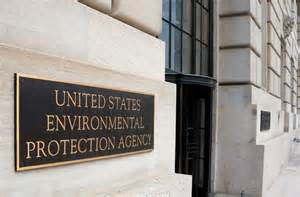
What about the ‘protection’ in EPA title?

thqegv0v4c

I’m still trying to fathom the unfathomable about one of Donald J. Trump’s key administration appointments.

That would be Scott Pruitt being named to head the Environmental Protection Agency. I added the emphasis for a reason. Now I shall explain.

The EPA is designed, as its title suggests, to protect the environment, to ensure that we have clean air, water, that our land doesn’t blow away in the wind. Its mission is to enact regulations to ensure that we preserve our land, water and air.

President Nixon, of all people, thought creating the EPA was a worthwhile endeavor, so he did it in 1970.

The president-elect, though, has selected a sworn enemy of the EPA. Pruitt is the Oklahoma attorney general who has sued the EPA because he — and presumably the rest of his state government — doesn’t like the regulations that the EPA places on industries, such as oil and gas exploration, which is a big deal in Oklahoma (and in Texas, for that matter).

Pruitt’s mission in his public life hasn’t been to protect the environment, or to shore up the agency assigned to do that important task. Oh, no. He has declared war on the EPA.

I am failing big time to grasp how this appointment is supposed to work. Is the president-elect in league with this guy, Pruitt? Does he want to disband, dismantle and disassemble the EPA?

The very term “EPA” has become, in effect, a four-letter word in what has become of Republican orthodoxy. What a shame it is that a tried-and-true Republican, Richard Nixon, would create a valuable federal agency only to have it placed in the hands of someone who seemingly wants to destroy it.

When in God’s world did clean air and water become bad things?

Needing help accepting this outcome … fully

o-donald-trump-facebook

A friend of mine has acknowledged a greater-than-normal disappointment in the presidential election result.

He said he’s having trouble accepting that Donald J. Trump is now the president-elect of the United States of America.

I am now going to admit the same thing.

Just as my friend said, I’ve voted for losing presidential candidates many times over the years. I’ve voted in 12 presidential elections, dating back to 1972. My record as of Nov. 8 is now 5-7 … that’s five winners and seven losers.

I know how it feels to be on the losing side.

This one is different than all the rest of them. It’s even different from my first vote, when Sen. George McGovern got smashed to smithereens in a 49-state blowout to President Nixon. I was young, full of piddle and vinegar, just home from service in the Army, newly married and I worked my butt off in my hometown to elect a good and decent man to the presidency.

It’s not that I believe Trump was inferior to his chief opponent, Hillary Rodham Clinton. It’s deeper than that. He’s patently unfit for the office. I will maintain that belief more than likely for the entire time he serves as president.

That could change. Trump could prove me wrong. He could turn out to be a quick study. He could muster some semblance of the decorum needed to serve as head of state and the leader of our government. Trump could actually grasp the concept of limited presidential power and he could accede to the will of another co-equal branch of government, the one on Capitol Hill, aka Congress.

I cannot get past the notion, though, that he’s going to try to run roughshod over the system. That he’s going to do some incredibly stupid things, issue some incompetent — or unlawful — orders.

I want none of that to happen. I want the new president to succeed. In some perverse way, I’m actually pulling for him. I know that sounds like a huge contradiction, given what I’ve written already in this post, along with what I’ve stated in countless previous posts on this blog.

It’s not. I have declared already that I do not subscribe to the hope that he will fail. Presidential failure means failure for the entire country. I will not forsake my citizenship; I won’t move to another nation. I will stay put and speak out whenever I feel like it. I’ll praise the good things Trump does and will criticize the bad.

So help me, I cannot yet come to grips with the notion that this guy — the former reality TV celebrity, the hotel mogul, the guy who admits to cheating on his wives, who acknowledges seeking to impose his sexual will on women, who mocked a physically disabled reporter, denigrated Gold Star parents and flung insults at opponents — is about to become the 45th president of the United States.

It’s not like the previous times I’ve voted for the losing candidate. Yes, I know Trump won the election fair and square. I accept the fact that he won the required number of electoral votes. And yes … he will be my president.

I’m just having trouble moving forward and putting the result behind me.

Do I need an intervention?

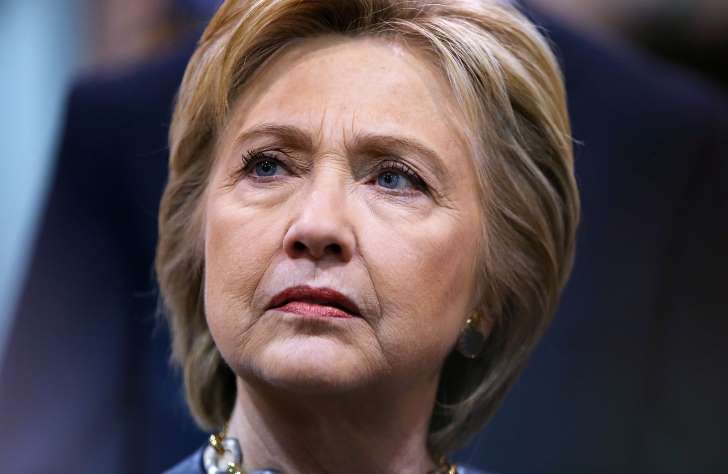
Hillary need not heed activists’ plea to challenge election

aakd1s4

Activists, by definition, I suppose are those who cannot let certain things go.

Their belief in their correctness makes them a bit frenzied in their desire to achieve a desired result.

Thus, we hear that some political activists are encouraging defeated presidential candidate Hillary Rodham Clinton to challenge the election results in three key battleground states in an effort to overturn Donald J. Trump’s Electoral College victory.

Don’t do it, Mme. Secretary.

http://www.msn.com/en-us/news/politics/activists-urge-clinton-campaign-to-challenge-election-results-in-3-swing-states/ar-AAkD4w7?li=BBmkt5R&ocid=spartandhp

The three states in question are Wisconsin, Pennsylvania and Michigan. Clinton lost all three of them to Trump — although Michigan hasn’t yet been called officially for the president-elect, as it’s still determined to be too close to call.

According to the Daily Intelligencer: “Hillary Clinton is being urged by a group of prominent computer scientists and election lawyers to call for a recount in three swing states won by Donald Trump, New York has learned. The group, which includes voting-rights attorney John Bonifaz and J. Alex Halderman, the director of the University of Michigan Center for Computer Security and Society, believes they’ve found persuasive evidence that results in Wisconsin, Michigan, and Pennsylvania may have been manipulated or hacked. The group is so far not speaking on the record about their findings and is focused on lobbying the Clinton team in private.”

This would be a futile exercise. It also would be virtually unprecedented. Moreover, how long would it take to prove such an event occurred and how much damage could such a probe do our political system if the plaintiffs fail to make the case?

I feel the need to remind these activists of other close elections in which the loser chose to let the results stand. The most fascinating example occurred in 1960. Vice President Richard Nixon lost the presidential election to Sen. John F. Kennedy by fewer than 150,000 votes nationally, out of more than 60 million ballots cast. Questions arose about the vote totals in Cook County, Ill., which Kennedy won handily and which helped tip Illinois into the Democrat’s column.

Nixon didn’t challenge the result. He chose instead to let it stand. Kennedy went on to take the oath of office, over the expressed anger of the GOP activists who wanted Nixon to make an issue of an outcome that didn’t square with their desire.

Hillary lost the election under the rules set forth by the Founding Fathers. Even those of us who dislike the outcome ought to be able to accept it.

Just as many of us said in dismissing Trump’s assertion of a “rigged” election, I don’t believe that is what produced the stunning result.

Sooners are the deepest red among us

Vote Voting Election Politic Decision Democracy Concept

I have confirmed a bit of fairly useless political trivia that I’ve suspected all along.

The most Republican state in the United States of America is just a bit down the road from where my wife and I live.

It’s Oklahoma, man.

Forget them Deep South Dixie bastions that have gone from decidedly Democratic to reliably Republican since the days of, oh, the signing of civil rights and voting rights legislation in the 1960s.

My Okie neighbors now hold the title of living in the Most Republican State in America.

I checked a website I like looking at and discovered that for the past four presidential elections, the Republican candidate has carried every one of Oklahoma’s 77 counties. The 2004, 2008, 2012 and 2016 elections all went the GOP’s way in Okie Land. Democrats fared pretty well, even picking off three counties in the 1984 Ronald Reagan landslide. Richard Nixon won all counties in 1972 … no surprise there.

It’s interesting in this sense. Oklahoma has two sizable public universities — the University of Oklahoma in Norman and Oklahoma State University in Stillwater. One might be led to believe, if you adhere to the dogma put out by conservative thinkers, that these “liberal bastions” would have some kind of nefarious influence on young minds and even on the community at-large.

Well, not so. The GOP has locked down its own vise-grip on the Sooner State.

Stand tall, Sooners. Your guy won again! I’m sure y’all are hoping you chose wisely.

http://uselectionatlas.org/RESULTS/

Comey deserves some blame, however …

hillary-and-comey-500x300

Hillary Rodham Clinton’s shocking loss to Donald J. Trump in the 2016 presidential election can be laid at the feet of many culprits.

Clinton has chosen to single out, though, the director of the FBI. James Comey’s letter to Congress just 11 days before Election Day informing lawmakers that he had more information to examine regarding those “damn e-mails” stole the Clinton campaign’s “momentum,” she said. By the time Comey said nine days later that the information wouldn’t result in any further action, the damage had been done, Clinton told campaign donors.

Let’s hold on a second.

I don’t doubt that Comey’s 11th-hour intervention had some effect on the campaign outcome. However, I believe a bit more introspection is required of the defeated candidate before we start writing the final history of what no doubt will be logged in as the strangest presidential campaign in U.S. history.

Hillary Clinton should have iced this campaign long before the Comey letter became known.

Think about a few factors here … and bear with me.

Clinton is eminently qualified to become president of the United States: former first lady, U.S. senator and secretary of state. Boom! Right there, she has a dossier that commends her for the top job. Trump is not qualified: reality TV celebrity, commercial real estate developer, thrice-married rich guy with zero public service commitment on his lengthy record in private business. The endless litany of insults and hideous proclamations that poured out of Trump’s mouth throughout the campaign are too numerous to mention. You know what he said. It didn’t matter to the Trumpkins who backed him to the hilt.

It is true that Clinton’s enemies made a huge story out of something that had been declared dead and buried — the e-mail controversy — which gave life to the corpse near the end of an insult-driven campaign.

Clinton’s qualifications, her knowledge of world affairs and her contacts around the globe made her an excellent — if not perfect — choice to lead the greatest nation on Earth. Many observers — me included — considered it possible that Clinton would roll up a historic election victory that could have eclipsed, say, the Lyndon Johnson, Richard Nixon or Ronald Reagan landslides of 1964, 1972 and 1984, respectively.

If only, though, she could have demonstrated some innate quality of authenticity that could have fired up her base. She didn’t. Clinton was unable to light the fire that burned brightly when Barack Obama ran twice successfully for the presidency.

She was a flawed candidate who brought much more to the table than she was able — or perhaps willing — to reveal.

Comey did his part, for sure, to run the Clinton campaign over the cliff. The FBI boss wasn’t the sole reason. The candidate herself deserves much –indeed most — of the blame for what transpired on Election Day.

Is a presidential pardon out of the question?

presidential-pardon

Donald J. Trump said many crazy things while campaigning successfully for the presidency of the United States.

Take, for instance, his statement to Hillary Rodham Clinton that “You’d be in jail” if he were president.

His crowds chanted the “Lock her up!” mantra continually at his rallies. Trump didn’t silence the madness from his followers.

The FBI director, James Comey, concluded in July that “no reasonable prosecutor” would bring criminal charges against Clinton over her use of a private e-mail server while she was secretary of state. Then he told Congress 11 days before the election that he found more e-mails that deserved his agency’s attention; eight days after that he said, “Nope. Nothing has changed.”

Trump continued to hammer “crooked Hillary” with accusations that she broke the law.

So, here’s a nutty idea. Would the new president issue a blanket pardon, clearing his opponent of any potential future prosecution?

Trump isn’t saying. Neither is his transition staff.

Hey, this notion has precedent. President Ford granted a pardon for his immediate predecessor,  former President Nixon, a month after Nixon quit the presidency on Aug. 9, 1974, over the Watergate scandal. No criminal charges had been brought against Nixon, yet Ford sought to prevent a further political fracturing that would occur had any prosecution had been allowed to proceed.

It turned out that the pardon opened up a whole new set of fissures.

But, the nation moved on.

Might there be such an action in our nation’s immediate future?

I wouldn’t oppose such an action. How about you?

E-mail controversy rivals Watergate? Hardly

widemodern_watergatecomplex_051513

Donald J. Trump is likely going to lose his bid to become the next president of the United States, so he is bound to say damn near anything.

Thus, the Republican nominee has declared that the Hillary Rodham Clinton e-mail controversy rivals Watergate as among the nation’s worst “political scandals.”

Umm. Let me think. No, it doesn’t even come close.

Let’s review.

Hillary Clinton used her personal e-mail server to communicate with staffers while she was secretary of state. The FBI director determined there was no credible evidence to prosecute her over suspicions that she might have let classified information fall into the wrong hands. Now comes an announcement — 11 days before an election — that he’s reopening the investigation.

What do we know about the new e-mails? Very little, other than they came from a top aide of Clinton and might include communications with her estranged husband, a former congressman who’s been disgraced because of a “sexting” escapade with underage girls. It’s disgusting in the extreme. Scandalous? Give me a break.

Now, about Watergate.

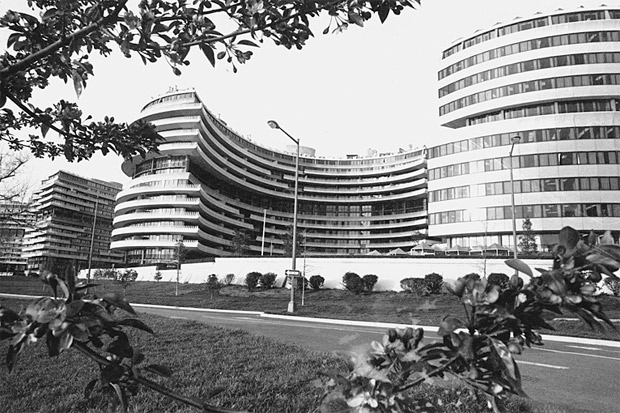
Some goons broke into the Democratic National Committee headquarters in June 1972. Investigators looked into it. Two newspaper sleuths at the Washington Post began snooping around. They discovered a White House connection.

Then they learned that President Nixon was involved. They found out he ordered the FBI to squash the investigation. Then came news about those infamous Oval Office tape recordings, which then revealed that the president used the power of his office to obstruct justice.

That, folks, is a serious constitutional crisis … not just a political scandal.

Nixon quit the presidency. Others went to prison. President Ford pardoned his predecessor.

I see no symmetry here. One does not match the other.

This ‘debate’ didn’t elevate the discussion

jfk-nixon

Of all the analyses I’ve heard and read about the second presidential debate between Democratic nominee Hillary Clinton and Republican nominee Donald J. Trump, one of them stands out.

It came from a talking head who referred to the initial 1960 debate between then-Vice President Richard Nixon and then-U.S. Sen. John F. Kennedy.

It was a serious affair. No audience in the room. Just the candidates and the questioners.

The analyst suggested that there was great hope in 1960 that these events might elevate the quality of the discourse. That it would force the candidates to be civil, collegial and serious. After all, the theory went, they were being beamed into voters’ living rooms. Who wants to hear such trash talk from candidates seeking to become the head of state?

Well, so much for high expectations.

Clinton-Trump II didn’t sink to the level that many prognosticators thought it might. But it damn sure didn’t rise to anything approaching a high-minded discussion about issues.

The overarching issue, of course, was that infamous video recording of Trump talking in 2005 about how he sought to do certain disgraceful things with and to women.

All of that context managed to lower the bar to a horrible level. It made the debate seem small.

As Chuck Todd, the NBC newsman and “Meet the Press” moderator, noted: The debate didn’t do much to enhance the principle of democracy.