Is POTUS out of his mind?

Donald Trump’s appointment of a partisan hack as acting U.S. attorney general makes me wonder: Has the president lost his mind or does he know precisely what he’s doing?

Matthew Whitaker has no more business than I do as being the acting chief law enforcement officer of the United States. The AG — acting or permanent — must be above reproach. He or she must be squeaky clean.

Whitaker is known on the basis of his own rhetoric to oppose the investigation that is underway into the Trump campaign’s involvement with Russian operatives who attacked our electoral system in 2016. He has no business, therefore, managing the department that appointed Robert Mueller to lead that investigation. Mueller got the call because the former attorney general, Jeff Sessions, recused himself from anything to do with Russia.

Trump’s appointment of Whitaker as acting AG has sent a clear signal to Mueller that he intends to do something to impede the investigation. I suppose one can hope that the signal hasn’t been lost on Mueller; I’m quite sure the former FBI director has received the signal loudly and clearly. Therefore, I expect him to expedite the conclusion of his investigation.

That take me back to my initial question. It think the answer is twofold. Yes, the president’s butter has slipped off his noodle. Yes, he also knows what he’s doing.

He is doubly dangerous.

Globalism isn’t a dirty word

Donald Trump decided this week to rough up a PBS reporter, Yamiche Alcindor, who sought to ask him whether his declaration that he is a “nationalist” was a “dog whistle” to those who are closet “white nationalists.”

He called the question “racist,” an odd accusation given that Alcindor is African-American.

Setting that stuff aside, it’s fair to wonder whether the president’s nationalistic view is code as well for “isolationist.” Yes, I share the view that the nationalism espoused by Trump can be construed as an endorsement of white nationalism, but the isolationist tag is equally dangerous on another level.

Trump wants to “put America first.” His nationalist tendencies, though, ignore the reality of the present day. The world has figurately shrunk, thanks to technology and a 24/7 awareness of everything that happens on the other side of Planet Earth. Thus, we cannot recuse ourselves from the affairs in faraway lands. Nor can they from our affairs.

We build alliances because we seek to stay engaged in world affairs. The president seems intent on pulling us out of the cooperative efforts that his predecessors have forged with trading partners, military allies and geopolitical friends.

Trump imposes trade tariffs because he accuses our partners — namely Canada and Mexico — of being “unfair” in their trading practices. He goes to Europe and scolds NATO allies for failing to pay their fair share of their defense; in the most ironic tongue-lashing of all, he tears into Germany for its deal to import natural gas from Russia, suggesting that the Germans were beholden to the Russians. Shortly after taking office, Trump managed to hang up on Australian Prime Minister Malcolm Turnbull because of a spat he didn’t understand over refugee migration.

This is how putting “America first” makes us stronger? This is how to build American prestige around the world?

No. It isn’t. Our retreat from a global strategy weakens this country as its standing among the world community of nations diminishes.

I don’t want the president to continue on this course. I know he won’t give a damn what I think, or what other critics think about him and his policies. If only he could enlist the wisdom of those closer to him to speak the truth to him about the folly of his nationalism.

‘I want gun control!’

I am going to stand with the mother of a young man who died this week at the hands of a gunman who opened fire at a Thousand Oaks, Calif., nightclub.

Susan Schmidt-Orafanos says she doesn’t want “thoughts and prayers. I want gun control!”

Then she said “no more guns!”

Her son, Telemachus, had survived the Las Vegas massacre a year ago. He didn’t survive the Thousand Oaks tragedy.

As the victim’s father noted, according to BBC: “It’s particularly ironic that after surviving the worst mass shooting in modern history, he went on to be killed in his hometown,” his father told the Ventura County Star.

Mrs. Orafanos’ plea for “no more guns” isn’t likely to gain much traction in the halls of Congress or perhaps in the state capital in Sacramento.

However, she spoke for many Americans who also have grown tired of expressions of “thoughts and prayers” from public officials, whose declarations are sounding more like platitudes in the wake of every such tragic event.

Does reasonable “gun control” mean dismembering or repealing the U.S. Constitution’s Second Amendment? Of course not! It means, for instance, that universal background checks of anyone seeking to purchase a gun can weed out those who might be predisposed to commit the kinds of acts that erupted in Thousand Oaks.

“Law-abiding” citizens need not worry about their “right to keep and bear Arms” being abridged in any form.

‘I do not know Matt Whitaker’

Sure thing, Mr. President. We all believe that one.

Actually, I don’t. Matthew Whitaker is the nation’s new acting attorney general. He has a widely known view of special counsel Robert Mueller’s investigation into “the Russia thing” involving possible collusion between the Donald Trump presidential campaign and Russian operatives.

Whitaker has called the Mueller probe a “witch hunt.” He calls it a “hoax.” He has denigrated the probe as nothing more than a pretext fabricated by the “liberal left.”

Can you say, um, “prejudicial”?

And so the president of the United States appoints this guy to succeed AG Jeff Sessions, whom Trump fired on Wednesday because Sessions had the good sense — and ethical awareness — to recuse himself from an investigation involving an issue with which he was connected during the 2016 campaign.

The president now expects us to believe that he doesn’t “know Matt Whitaker”?

Yet another lie.

Former first lady takes ‘birther’ lie quite personally

To be honest, I never gave a thought to the view expressed by former first lady Michelle Obama regarding the hideous lie fomented by her husband’s successor as president of the United States.

Donald J. Trump for years kept repeating the lie that Barack Obama was born outside the United States and, thus, was not qualified to seek the presidency let alone serve as president. I viewed the lie from the outside, considering it to be a racist rant intended to demonize the first African-American ever elected to the presidency.

Trump eventually tossed out a throwaway line at the end of another set of remarks that the president “was born in the United States.” Then he returned later to the casting of doubt over the truth of Obama’s place of birth.

Now the former first lady has written in her memoir “Becoming” that she cannot “forgive” Trump because, in her view, he put her family in potential danger from “wingnuts and kooks” who might pick up a loaded gun and head to Washington to harm the Obamas’ two daughters.

Michelle Obama’s criticism of Donald Trump will resonate with millions of Americans. It, of course, will sound hollow to millions of others, those who subscribe to Trump’s idiotic lie.

As for Donald Trump himself, I have no doubt at all — none whatsoever — that Michelle Obama’s criticism has zoomed straight through is vacuous skull.

He doesn’t give a damn!

Turnout spikes dramatically; democracy wins!

The official totals have yet to be tabulated, but the turnout in this week’s midterm election suggests that democracy has emerged as the big winner.

I won’t discuss the Democrats’ net gain to grab control of the U.S. House of Representatives, or the Republicans’ maintaining their control of the U.S. Senate, or the results of the various governors’ races around the country.

More than 100 million Americans cast ballots for all 435 House races and for one-third of the 100-member Senate. The number is increasing as ballots continue to be counted in places like Arizona, Florida and Georgia.

This is a good deal, man! It’s so good that my faith in our representative democratic form of government is being restored a little at a time.

Texas, where I live, long has been considered an abysmal example of voter apathy. Our turnouts for presidential and off-year elections generally has been among the worst in the nation. This year we had more than 8 million votes cast for races up and down the political food chain. The number of ballots counted for the midterm rivaled the number cast in the 2016 presidential election.

I long have argued that our system of government works better when more of us — not fewer of us — get involved. The most basic, the simplest form of political involvement starts at the polling place.

Arguably the height of political frustration occurs when we let our neighbors make critical decisions for us. Our neighbors might agree with us, or they might disagree with us. That’s a gamble I am unwilling to take.

I am glad to presume that in this election cycle, more Americans have reached the same conclusion, that they aren’t willing to leave these decisions to someone else.

Might the battleground be expanded for 2020?

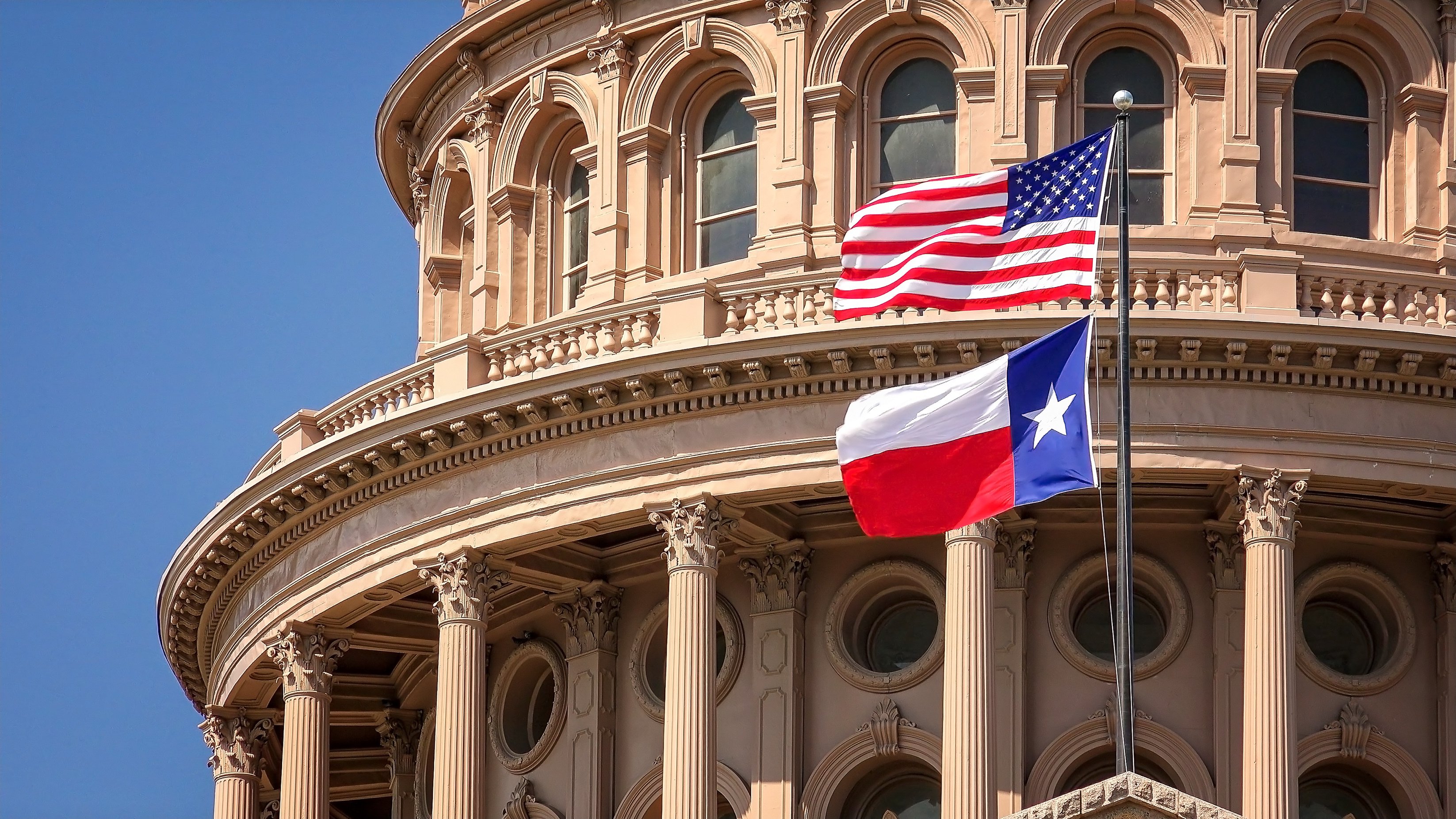
Texas remains a “red” state. Just as California remains a “blue” state.

“Red” means Republican; “blue” means Democratic.

That is how political media and political operatives refer to the country. Red or blue. There’s also “purple,” which is what you get when you combine red with blue. “Purple” states are those that aren’t strongly either red or blue. It’s a blended color connoting the conflict between the parties for control of the political palette.

The midterm election drew a lot of eyes toward Texas. We had a competitive race for the U.S. Senate seat occupied by Republican Ted Cruz. The Democratic challenger, Beto O’Rourke, came within 3 percentage points of knocking Cruz off. That’s not supposed to happen in a strongly “red” state such as Texas. It did and now Democratic activists, strategists and assorted other partisans believe Texas stands on the cusp of turning purple.

Maybe. I would have thought so had Democrats been able to capture a single statewide office at the end of the midterm election balloting.

Here, though, is what might happen when the 2020 presidential campaign kicks into high gear: Texas might become much more of a “battleground state” that attracts presidential candidates for events other than closed-door, high-dollar fundraisers.

I’m beginning now to fantasize about big crowds gathering at rallies in Dallas or Fort Worth when the 2020 candidates start mapping out where the votes are.

Residents of places like Ohio, Virginia, Florida, North Carolina, Colorado, Wisconsin and Pennsylvania long have been courted by presidential hopefuls. Texas? Pffftt! The pols haven’t given so much as a first look, let alone a second look.

Democratic candidates for president have given up on Texas. Republican candidates have taken us for granted. Beto’s showing against Cruz might serve as a wakeup call for presidential candidates on both sides of the chasm.

Come the next election year, there could be a realization at campaign HQs in both parties that Texas’s 38 electoral votes are worth fighting for. We could see presidential nominees traipsing through State Fair crowds in Dallas in September of 2020. Our airwaves might be flooded with campaign ads. So might our mailboxes.

I’m not yet ready to declare that such an activity officially makes Texas a “purple” state. We’re still red, although after the midterm election it looks as though Texas isn’t quite as red as it has been since, oh, forever.

Thank you for your service, Justice Johnson

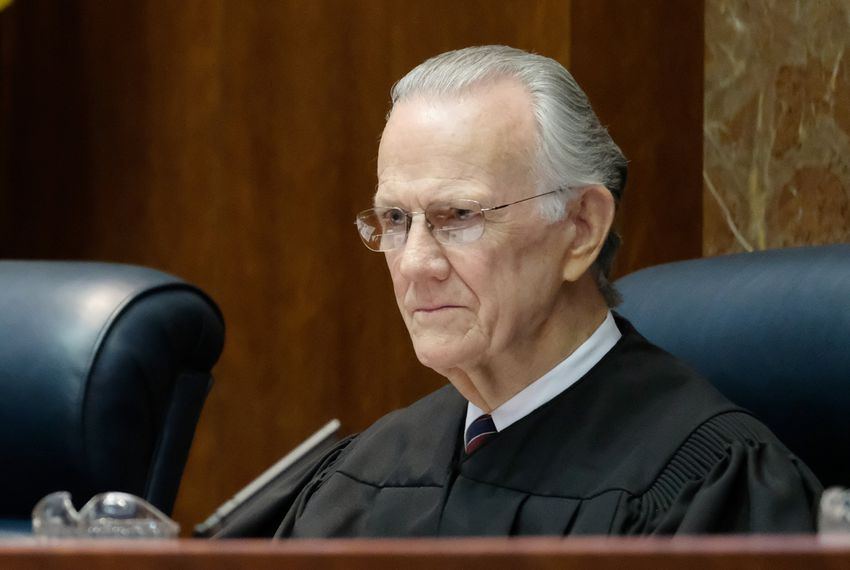
It is with a touch of sadness and a bit of pride as well that I have just learned that a member of the Texas Supreme Court is retiring at the end of the year.

Justice Phil Johnson is calling it a career.

I’ve known Johnson for several years. I worked as editorial page editor of the Amarillo Globe-News and Johnson was chief justice of the 7th Court of Appeals based in Amarillo. Thus, he became a source for me. We developed a nice relationship over the years.

Why the sense of pride?

Well, it goes like this. When the vacancy occurred on the state’s highest civil appeals court 13 years ago, I authored editorials for the newspaper urging Gov. Rick Perry to look past the I-45/I-35 corridor from where all Supreme Court justices hailed. I checked out the histories all the remaining eight justices and learned they all came from communities within that swath that runs through Central Texas.

The newspaper urged Gov. Perry to look westward. Johnson expressed an interest in getting appointed.

To his credit, Perry did appoint Johnson to the court.

Now, I am not going to take credit for the appointment. It’s likely no more than a coincidence. After all, Johnson did have one powerful friend in the Texas Senate, fellow Republican Bob Duncan — a former law partner of Johnson in Lubbock — who very likely made it known to the “right people” that Gov. Perry needed to appoint Johnson to the Supreme Court.

So, I’ll take all the credit I deserve for Justice Johnson’s appointment.

I also want to wish this good man well as he rides off into retirement.

Texas Democrats find the spring in their step

The just-concluded 2018 midterm election has produced a fascinating result in Texas.

The long-downtrodden Texas Democratic Party has rediscovered its mojo. Its members have a renewed spring in their step. They fell short in their goal of electing one of their own to a statewide office, but the fellow at the top of the ballot — Beto O’Rourke — came within 3 percentage points of defeating GOP Sen. Ted Cruz.

That’s not supposed to happen in blood-red Texas, which hasn’t elected a Democrat to a statewide office since 1994; the last Democrat elected to the U.S. Senate was Lloyd Bentsen, in 1988.

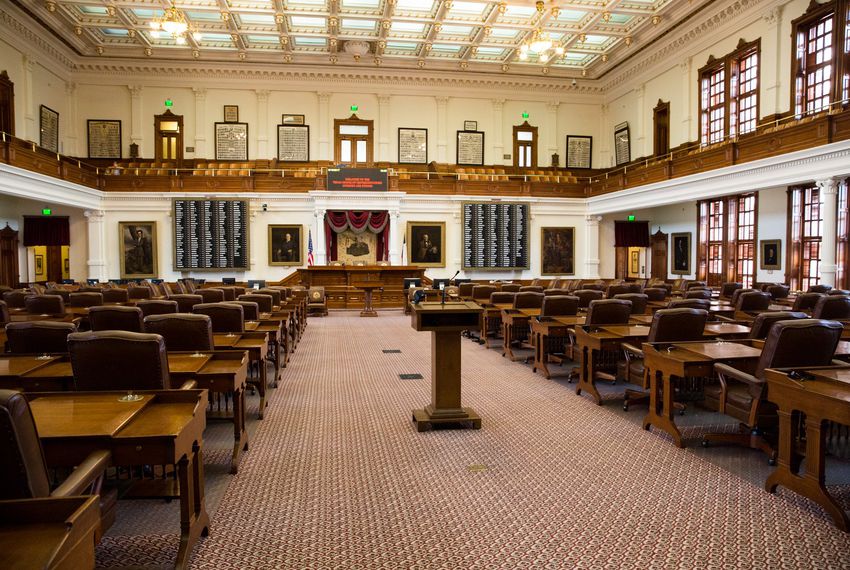
Now comes word out of Austin that the selection of the next Texas speaker of the House of Representatives will involve more Democratic votes among the 150 legislators.

Democrats carved into the GOP legislative majority. They’ll fill 67 seats in the 2019 Legislature; Republicans will occupy 83 of them.

That means Democrats will get to speak with a louder voice in determining who takes the gavel from Joe Straus, who didn’t seek re-election this year.

Democrats to join speaker fight

A Republican is a shoo-in to become the next speaker. That’s a given. My favorite for the speakership is my good friend Four Price, the Amarillo Republican who, in my view, would do a smashing job as the Man of the House. He is an ally of Speaker Straus, for whom I have high regard, given his torpedoing of the Bathroom Bill in 2017.

However, it’s good to see a semblance of two-party rule returning somewhat to the Texas House. The GOP remains the pre-eminent political party in a state that once was dominated by Democrats.

As for O’Rourke, I’m quite sure that Democratic Party loyalists and activists are getting way ahead of themselves by suggesting Beto should consider running for president in 2020. A better option might be to challenge John Cornyn for the U.S. Senate two years from now.

However, O’Rourke’s legacy for the state well might be that his presence on the ballot and his near-victory over the Cruz Missile has energized a political party that’s been in a hang-dog mood for as long as anyone can remember.

Crisis might be approaching more quickly

The more I think about it, the more I am inclined to believe that we might be closer to a constitutional crisis than I thought originally.

Matthew Whitaker has been named acting U.S. attorney general in the wake of Donald Trump’s firing of former AG Jeff Sessions. Whittaker leap-frogged over the Justice Department’s No. 2 guy, Rod Rosenstein, who is managing the special counsel’s investigation of alleged collusion between the Donald Trump presidential campaign and Russian agents who attacked our electoral system in 2016.

Whitaker is a known critic of the Robert Mueller probe into alleged collusion and other matters relating to the 2016 campaign. He has spoken out against it. Rosenstein, meanwhile, has said that Mueller must be allowed to proceed unimpeded. Whitaker isn’t so, um, open-minded about that. He seems to want Mueller to call a halt to it.

So does the president.

Whitaker is under pressure now to recuse himself from the Russia probe, given his prejudicial statements against it. Whitaker says he has no intention of recusing himself, which of course is just fine with the president.

So, what will happen if Whitaker turns off the fiscal spigot that pays for Mueller’s investigation? He has stated already that the next AG could do such a thing, rather than fire Mueller outright. He is now the “next AG,” meaning that he is in a position to do what he speculated could happen if Sessions were given the boot.

Meanwhile, the president no doubt is bristling at the notion of Mueller getting closer to a conclusion that well might implicate him or members of his family in possible wrongdoing.

Matthew Whitaker should not be running the Justice Department. The president has put someone in that post who will do his bidding, which is precisely why he fired Jeff Sessions.

As distasteful as Sessions’s appointment was in the first place, he acted correctly in recusing himself. Has it dawned on anyone else that the absolute crux of Trump’s criticism of Sessions had everything to do with his recusal and nothing to do with the way DOJ was functioning?

So now the president installs a lap dog at the top of the DOJ chain of command.

Yep, I believe a constitutional crisis might be just around the corner.