Business and politics … do they mix?

trumpivanka_041616getty_lead_0

Let’s see how this works.

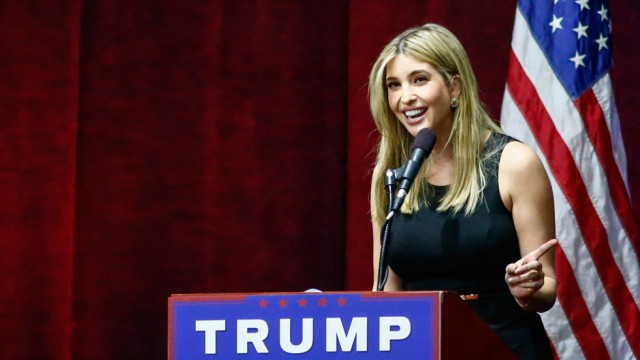
Donald J. Trump has announced that his eldest children — Ivanka, Donald Jr. and Eric — are going to run his business empire. They also are going to become major advisers in the president-elect’s transition from private citizen to holder of the world’s most powerful public office.

Is there a serious conflict of interest building that’s been lost on the president-elect?

Others who have been elected to this particular office have placed their business interests into what’s called “blind trusts.” I think of former President Jimmy Carter, who ran his family’s peanut business in Georgia before he was elected president in 1976. President Carter let go of all interest in the business while he served for four years as the leader of the Free World.

Trump has said he would put his business interests into a blind trust if he were elected. That’s fine. Then how does he divorce himself completely from those interests when his children play this precarious dual role: business administrators while taking part in the formation of a new government apparatus?

http://thehill.com/blogs/ballot-box/presidential-races/305647-trump-business-to-be-turned-over-to-eldest-kids

Trump isn’t putting that kind of distance, it appears, between himself and his myriad business interests.

The notion that his kids will have a say in selecting Dad’s administrative team as well also seems to cross the line that’s supposed to separate the head of government from his massive business.

What am I not getting here?
Now … about the Electoral College

electoralcollege

Election Night 2016 proved to be one for the books.

Donald J. Trump got elected president of the United States despite being outvoted by Hillary Rodham Clinton.

But wait! He won more electoral votes.

They’re still counting ballots and it appears that Clinton’s vote lead will expand before they’re all done.

Then came the question from one of the folks attending an election watch party at some friends’ house: Is the Electoral College in the U.S. Constitution?

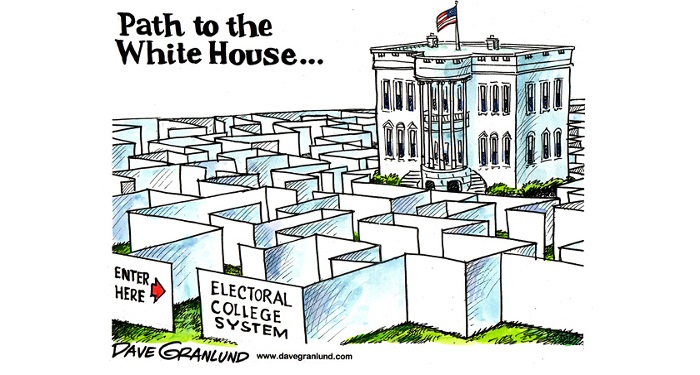
Yes it is. Article II lays out the rules for the Electoral College. You know how it goes: We aren’t voting directly for president; we’re voting for electors who then meet in December to cast their votes for president in accordance — supposedly — with the majority of voters from their respective states.

I’ve found myself defending the Electoral College to people abroad who cannot understand how it works, or why the founders created the system. In November 2000, for example, my wife and I were in Greece, the cradle of western civilization and the birthplace of democracy. The Greeks are quite sophisticated about these things. However, they couldn’t quite grasp the idea of one candidate — Al Gore — getting more votes than George W. Bush, but losing the election. The 2000 presidential election was still in doubt while my wife and I were touring Greece. I defended the Electoral College as best I could.

Sixteen years later, we’ve had another circumstance with the “winner” getting fewer votes than the “loser.”

It’s the fifth time in our nation’s history where this has occurred. Three of them occurred in the 19th century; two of them have occurred within just the first two decades of the 21st century.

I’m not yet ready to jump on climb aboard the dump-the-Electoral College bandwagon. I have to say, though, that that I am beginning to grow less enamored of the archaic system that was devised by men who — in their time — didn’t grant rights of full citizenship to women or to blacks. Women didn’t get the right to vote until 1920, for crying out loud and it took landmark civil rights legislation in the 1960s to guarantee full citizenship rights to African-Americans.

The gap in time — just 16 years — between the last two elections in which one candidate wins the “popular vote” but loses a presidential election is giving me serious pause about the wisdom of a system that hasn’t changed with the nation.

Trump is no Gipper

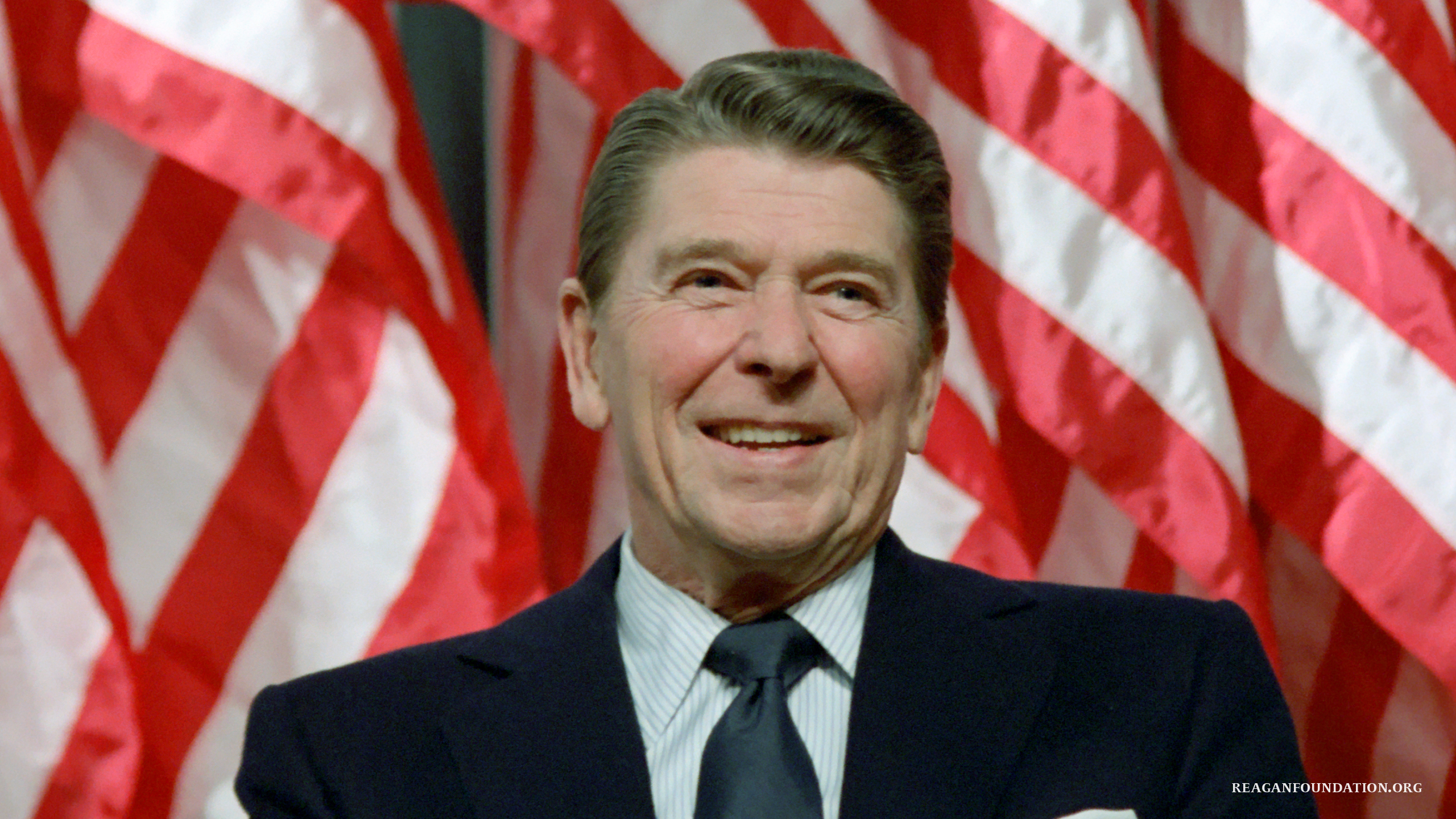
rrflagwallpaper

I’ve heard some so-called “political experts” make a dubious comparison between Donald Trump and one of the men who preceded him as president of the United States.

I refer, of course, to Ronald Wilson Reagan.

Some pundits have compared Trump’s stunning election to the 1980 election that gave us President Reagan.

Let’s flash back for a moment.

Reagan was caricatured in 1980 as a B-movie actor — Bonzo the Chimp’s co-star, if you will. He was a showman, a reckless movie “cowboy” who couldn’t be trusted with the nuclear codes.

Those who portrayed him in that light left out something else. He also served two terms as California governor. He brought considerable government executive experience to the Oval Office. He knew how to legislate. He also knew about the limits of governmental executive power.

Trump brings none of that. Zeeee-ro.

Until this year, he’d never sought public office. He has many claims to fame. Not a single one of them involves public service. They all involve personal enrichment.

He parlayed a big stake from his father into a real estate business. Trump became involved in commercial development. He tried to start up a few business spin-offs; most of them cratered. Trump was a reality-TV host and he operated a beauty pageant or two.

Did any of that translate to anything resembling public service? Did any of that commend him for the presidency of the United States? No on both counts.

Do not misconstrue anything here. I accept Trump’s election as president, even though I did not vote for him. Therefore, I don’t endorse it. I accepted Ronald Reagan’s election, too, even though I didn’t vote for him either time he ran for the presidency.

We hear a lot these days about “false equivalency.” Those who suggest Donald Trump’s election mirrors Ronald Reagan’s are applying that very concept to two quite different circumstances.

Still waiting for the mea culpa on ‘rigged election’

vote1

Donald J. Trump leveled some pretty hideous accusations at local election officials throughout the country.

The president-elect said while campaigning for the highest office in the land that the election would be “rigged” against him … if he lost.

He, quite naturally, never uttered a peep about such corruption in the event he would win.

Well, he did. He won it fair and square.

Have we heard a sound from the winner about the “rigged” election process? Have we heard him say a word about how at times campaign rhetoric gets a bit overheated and that, well, he was trying to make some kind of political point?

Remember how Trump sought to excuse his anti-woman comments as mere “entertainment,” that he really had “great respect” for women and that he didn’t really mean what he said about how he judged women on their appearance?

He’s capable of taking back these statements, yes?

Trump ought to do so in this case.

http://www.beaumontenterprise.com/opinions/editorials/article/EDITORIAL-Trump-s-triumph-proves-system-is-not-10605289.php

He’s likely to finish with more than 300 electoral votes. Hillary Rodham Clinton is likely to finish with more actual votes than Trump.

The system isn’t “rigged.” It never has been. The system has been run at the local level by dedicated public servants committed to ensuring the integrity of this cherished right of citizenship.

The man who benefited most from that system, the president-elect, owes them all an apology.

Transitions should be peaceful … always

obama-trump-meeting-at-wh-jpg

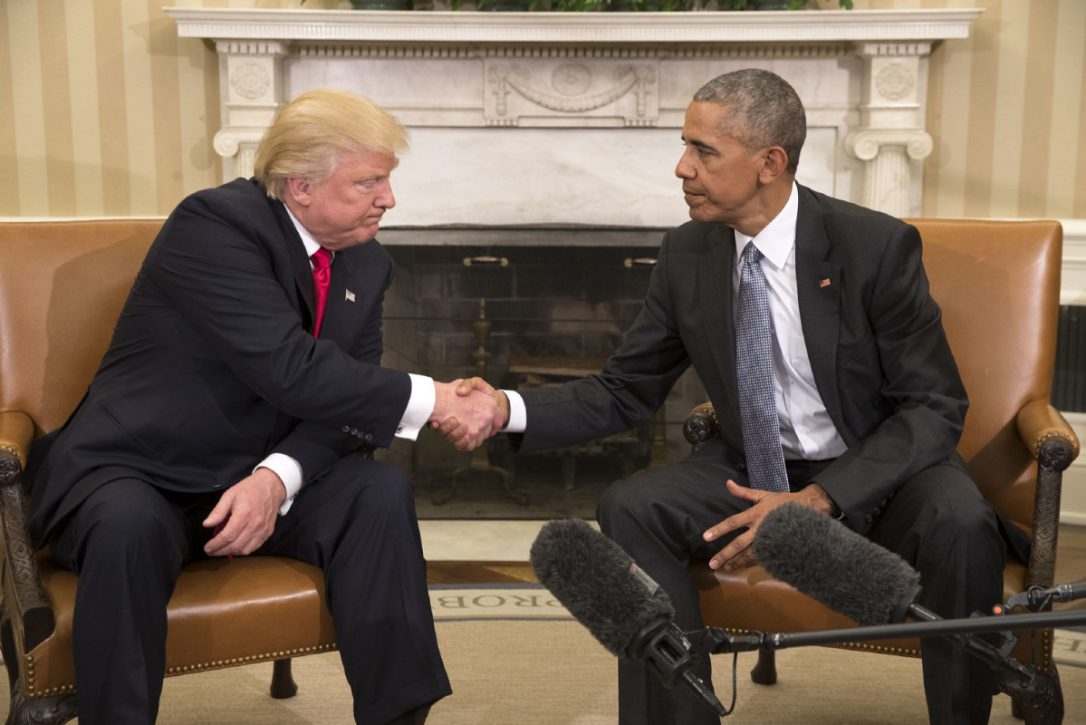
Barack Obama and Donald J. Trump are giving Americans a fascinating civics lesson.

A bitter, divisive, ruthless and occasionally slanderous presidential has come to an end. The president is about two months out from the end of his two terms in office. The president-elect — one of the principals in the aforementioned campaign — is about to take the reins of the only public office he’s ever sought.

The two men met for 90 minutes in the Oval Office on Thursday.

They sat before the media and spoke of the transition that has begun. No outward sign of the acrimony that punctuated this campaign. No apparent hard feelings over the amazingly nasty things these men said about each other.

As Trump noted, they had never met face to face — until Thursday.

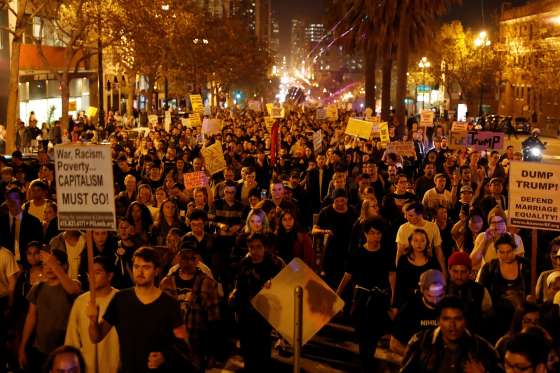
Now, to be sure, the backdrop isn’t entirely peaceful. Demonstrators have been marching in major-city streets for the past few days protesting Trump’s election. They vow to keep it up. Nor will the outward peacefulness at the White House dissuade others from making angry statements about the winner of this campaign, or about the candidate who lost, Hillary Rodham Clinton.

That shouldn’t cast too large or too dark a pall over the formalities that are occurring at and/or near the center of power.

The president is vowing a smooth transition; indeed, he wants to model the hand-off he got from President Bush and his team in 2009.

The peaceful transition of power is a marvelous aspect of our system of government. It becomes especially noteworthy when the presidents are of differing political parties.

In this particular instance, the transition should become a virtual miracle given the fiery rhetoric that was exchanged over the course of the past 18 months. Indeed, in the case of Trump, he’s been at the forefront of one of the biggest political lies of the past century: the one that suggested that President Obama wasn’t a legitimate American citizen.

None of us knows what the men said to each other in private. I would love to know how that conversation went.

However, we’re entitled to hear what they say in public. I am going to retain my faith that the tradition of peaceful political transition at the highest level of power in the United States will continue.

It’s all part of what enables the United States of America to remain the greatest nation on Earth.

Mounting a different kind of ‘protest’

0602-2016-trumpprotestsj

I’m not going to head to any big city and march in the streets to protest Donald J. Trump’s election as president.

No, that’s not for me.

I’m going to mount my own form of protest another way. Bear with me on this one.

I cannot quite get myself to identify the president-elect by name. Understand? I cannot yet position the word “president-elect” in front of Donald Trump’s name.

I’ll refer to the president-elect properly as the need arises. I just cannot — at least not yet — go all the way.

On the 20th day of January, Donald Trump will take the oath of office. He’ll become the 45th president of the United States. He will assume the enormous responsibility the office bestows on the individual who occupies it.

I’m not yet ready to use the term “President” and “Trump” as a singular reference. Perhaps I’ll get there. Then again, perhaps not.

This is how I intend to protest Donald Trump’s election for the immediate future. I cannot promise how long I’ll continue this protest.

At least for now. I’ll need some additional time to work through my disappointment in the election result. Others of you will understand what I’m feeling.

Indeed, so will those who seethed at the election of Barack H. Obama. I’m still hearing a lot of those folks using some mighty disrespectful language when referring to the current president.

Trump faces steep learning curve

obama-trump2-jpg-size-custom-crop-1086x725

Donald J. Trump’s election as president has put me in a bit of a bind.

I live in a part of the country — the Texas Panhandle — that is steeped in Republican Party political tradition. Thus, this region voted overwhelmingly for Trump.

I’ve been fielding questions for most of the past two days from people with whom I have a good personal relationship about the election. “What do you think about the result?” they ask, knowing full well what my answer would be.

“Well,” I reply, “it didn’t turn out the way I wanted,” Then we talk about the challenges the president-elect faces.

The conversation turns inevitably to the h-u–u-u-u-g-e learning curve that Trump must confront. I don’t want to damage my relationships with my many friendly acquaintances, so I am careful to avoid getting too crass in my assessments of their candidate.

Thus, the bind.

You see, the man has no government experience … at any level! He didn’t serve in the military — which is no disqualifier; after all,  neither did Barack Obama, Bill Clinton or FDR, correct?

What’s more, he’s never served in any public service capacity. No school board, city council, county commission. Nothing, man! The first office he ever sought was the presidency of the United States of America.

So, here he is. He’s getting a lesson on governance at the highest level imaginable.

Trump met today with President Barack Obama in the Oval Office. The men supposedly were to meet for about 15 or 20 minutes, but I understand they huddled for more than an hour. I don’t know what the president told his successor, but it’s a good bet he began schooling him on the nuance that will be required to do a fraction of the things he said he would do while he was campaigning for the office.

One man I spoke with today, someone I respect greatly, noted that Trump “is going to surround himself with individuals who know the system.” Uh, yeah! Do you think?

“He’d better find the best and the brightest,” I said, “and he’d better listen to every word of advice they have to offer.” If he doesn’t, then Trump is going to be in a serious world of hurt.

Among the many ridiculous statements Trump made on the campaign trail, one of them stands out at this moment.

“I have a good brain,” he said.

He’s going to have to absorb a lot of information that until this very week was foreign to him. We are about to find out just how good Donald Trump’s brain really is.

Sore losers take to the streets

aak767l

Protests have erupted in several American cities, with thousands of citizens griping about the results of the presidential election.

OK, I shall stipulate two major points.

First, I share the angst of those who are upset that Donald J. Trump has been elected the 45th president of the United States. I didn’t vote for him, either. I abhor just about everything about him: his personal history, his demeanor, his boorishness, his bigotry, his ignorance about government and public policy … you name it.

Second, I prefer to restrict my “protests” to activities that keep me at home. I have my computer keyboard, my blog and … well, there you have it.

I intend to comment often about the president-elect as he prepares to take the highest office in the land. I also intend to comment on his policy initiatives once he takes the oath of office on Jan. 20.

To parade through our streets, damaging property, injuring other individuals and making an ass of oneself is as counterproductive as it gets.

The protests disappoint me. They give other Americans grist to use against the protesters, to call them “sore losers” who cannot accept a political outcome that was arrived at legitimately, legally and in accordance with our cherished political system.

Let’s chill out, shall we? Sure, many of us dislike the outcome of an important political contest, but the American way is to accept it, move on and look for civil ways to gripe.

No president can act ‘alone’

capitol-hill11

“I alone can fix it,” Donald J. Trump told us while he accepted the Republican Party’s presidential nomination this past summer.

Surely you remember that pearl of wisdom.

The comment revealed a tremendous ignorance of how the presidency works and how the individual who holds the office is supposed to conduct the nation’s business.

Did it matter to American voters who this week elected a new president? Not in the least.

The very same ignorant GOP nominee won the election and today is going to meet with the man he will succeed as president. Perhaps the incumbent, Barack H. Obama, can remind the new guy of a concept that appears foreign to him: teamwork.

The president-elect is going to get a serious crash course in civics as he prepares to assume the first political office he’s ever sought.

The founders devised a system of government that requires compromise among those who run it. Over time since the founding of the republic, we developed political parties. The system is now run by people representing two major political organizations: the Democratic and Republican parties. They differ on policy and principle.

The trick, then, becomes at times dicey. Politicians on both sides of the divide need to find some common ground to fix the problems that confront them. Sometimes they succeed; sometimes they fail. As President Obama learned early in his administration, cooperation wasn’t always a given as he reached out to Republicans to find solutions to the serious problems afflicting the nation when he took office.

The Senate GOP leader, Mitch McConnell, laid down the marker early in Obama’s administration by saying his No. 1 priority would be to make Barack Obama a “one-term president.” It didn’t work out for McConnell.

Still, the new president enters this strange new world (for him, at least) with some kind of notion that “I alone” can repair what he believes is wrong with the nation.

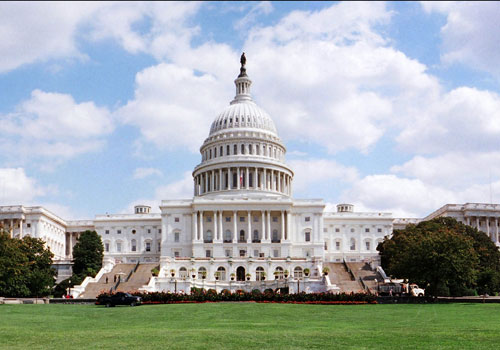
He’s got 535 individuals on Capitol Hill — many of whom have egos that match the new president’s — who will have different views of what needs to be done.  Moreover, they wield collectively just as much power as the individual who sits in the Oval Office.

Lesson No. 1 is as clear as it gets. Effective governance requires teamwork, Mr. President-elect.

Public safety, streets get city voters’ endorsement

13861145

Parks, ball fields, the Civic Center and administrative needs are “frills,” apparently, according to Amarillo voters.

Public safety and street repair? Bring it on!

This is a bit of a disappointment to me that only two of the seven measures on the city’s ballot passed on Tuesday. I considered all of them to be “quality of life” issues that needed voters’ endorsement.

City residents, though, apparently are continuing their crankiness about spending issues.

They did approve the largest single measure among the propositions presented by City Hall: the $90 million street repair, rehabilitation and maintenance project. Also getting voters’ approval is a $20 million project that seeks improvements in fire and police protection.

http://www.newschannel10.com/story/33662878/only-2-of-7-local-propositions-gained-support

Voters made some significant strides in seeking improvements in city services. I’m sorry to say they weren’t quite enough.

It might be that City Hall has more public-relations work to do to assuage voters’ apparent angst over the way its management is doing its job.