Marco about to exit … too bad

Senator Marco Rubio of Florida speaks at the Conservative Political Action Conference (CPAC) at National Harbor, Maryland March 14, 2013. Two senators seen as possible candidates for the 2016 presidential election will address a conservative conference where Republicans will try to regroup on Thursday after their bruising election loss last year.  REUTERS/Kevin Lamarque  (UNITED STATES - Tags: POLITICS) - RTR3EZQO

It’s not looking good for my second-favorite Republican still running for president of the United States.

U.S. Sen. Marco Rubio of Florida appears to be trailing badly in his home state, which on Tuesday votes along with four other states in this on-going GOP primary campaign.

Dammit anyway!

I thought Rubio acquitted himself quite well on one key issue at the recent GOP primary debate in Miami: Islam’s alleged “hatred for America.”

He challenge Republican frontrunner Donald J. Trump’s ridiculous assertion that Islam’s religious doctrine hates this country. That is patently ridiculous on its face, not that it matters to the Trumpsters who keep scarfing up his nonsense like some sort of political energy food.

Rubio took exception to Trump’s pronouncement by reminding him of the presence of gravestones at our national cemeteries where our fallen soldiers are buried. He told of how many of those stones have Islamic crescents carved into them to signify the religious affiliation of the warrior buried there.

These men and women love our country as much as anyone, Rubio said. They do not hate America simply because they practice a certain religious faith, he scolded Trump.

Rubio also made sure to point out that none of the men on that debate stage ever had worn a military uniform; not even Trump, who has sought to equate his enrollment at a military high school with actual service in the military.

Rubio scored points with me that evening when he correctly sought to discredit that ridiculous and patently false Trump statement.

It likely won’t help him in his home state. I saw a poll this morning that suggests that Trump has virtually doubled Rubio’s standing in Florida. If the young senator can’t win there, well, he cannot hope to win anywhere else.

Hey, there’s still Ohio to be decided Tuesday, where my favorite Republican — Gov. John Kasich — is hoping for a home-state victory to slam the brakes on Trump’s momentum.
 

Obama: Trump is GOP creation

POTUS-Austin2016-003A_jpg_800x1000_q100

Count me as one American who was impressed with former Republican presidential nominee Mitt Romney’s brutal critique of Donald J. Trump’s rise to political power.

I listened the other morning to every word of Mitt’s 17-minute speech in Utah. (Yes, I’ll call him Mitt because I like the sound of the name.)

Mitt sought to stand for the GOP “establishment” in its effort to stop Trump’s nomination as the party’s next nominee for presidential of the United States.

It didn’t go over universally well, though.

Some folks wondered whether Mitt was the right guy to carry the message forward. After all, he lost fairly handily to President Obama in 2012 and, by the way, he did so even with the coveted endorsement of one Donald J. Trump.

One of the doubters happens to be the president his own self.

Obama said the GOP is just “shocked that there’s gambling” going on here.

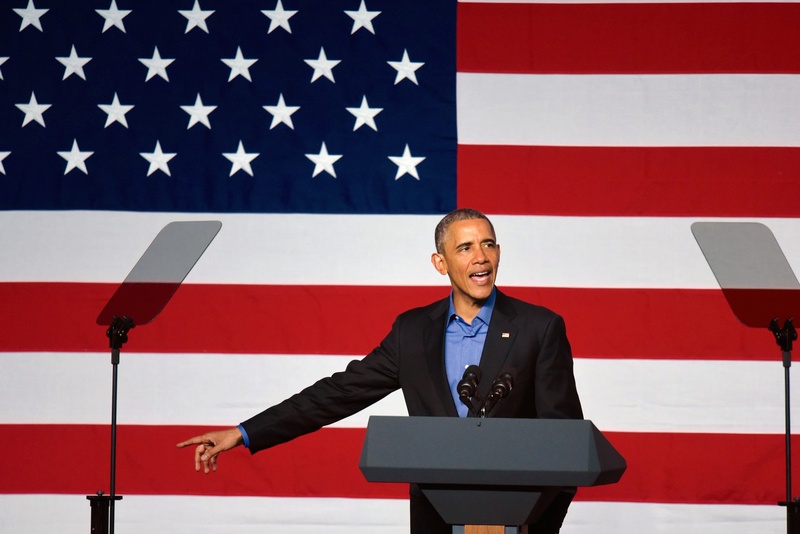
Speaking at a Texas Democratic fundraiser, Obama took particular pleasure in reminding donors that the GOP establishment stood by silently while Trump and others promoted the wacky notion that the president was born in a faraway land, that he was an illegitimate candidate for president.

“As long as it was directed at me, they were fine with it. It was a hoot,” Obama told the Austin crowd.

I understand where the president is coming from on this matter. Indeed, it continues to boggle my admittedly feeble mind that Obama’s place of birth was even an issue in the first place, given that his mother was an American citizen, which by my reading of the U.S. Constitution granted U.S. citizenship to Baby Barack the moment he took his first breath.

But the GOP brass didn’t care to silence the idiocy being spewed by Donald Trump and others.

So now they’re shocked and dismayed at what they’ve helped create?

I still stand behind Mitt’s criticism of Trump. If only, though, he would acknowledge the mistake he made in seeking Trump’s endorsement.


Let’s just see one Trump, the real Trump

carson and trump

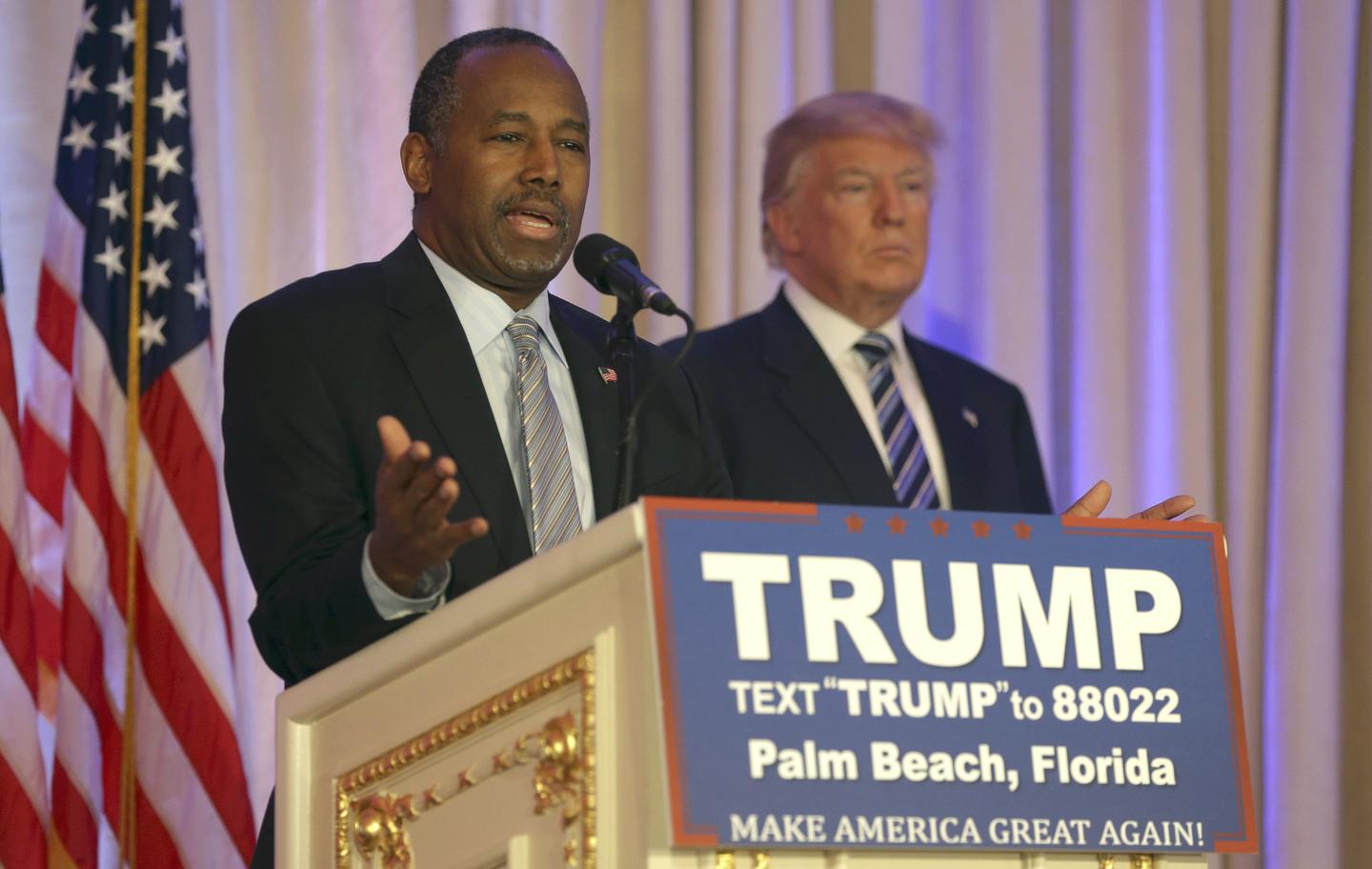
Dr. Ben Carson, barely two weeks gone from the Republican Party presidential primary trail, has endorsed Donald J. Trump to be his party’s nominee.

The man who Trump called a “pathological liar” now says Trump has another side. The public sees the bombastic Trump, the one who declares Mexican immigrants are rapists, who says John McCain isn’t a “real” war hero, who says Islam “hates America.”

There’s another Trump lurking under the public man’s skin, Dr. Carson said. It’s more nuanced, more thoughtful, that he’s “malleable.”

Can you believe that?

Well, I can’t.

Carson’s endorsement of Trump sounds about as authentic as New Jersey Gov. Chris Christie’s endorsement. Recall that Christie said Trump is “unfit” to be commander in chief; he said Trump is campaigning as “entertainer in chief.”

Now he’s on board. He’s all in.

Christie must be angling for a spot somewhere — I shudder to say this out loud — in a Trump Cabinet.

And Carson? There might be a vice-presidential spot in the good doctor’s immediate political future.

As for his assertion that the “other” Donald Trump is much more likable and implicitly electable, I’ll just add this: If he’s out there, my hunch is that the bombastic and boorish Trump would have given way long ago.


Take a bow, Cool Hand Chuck Todd

todd and trump

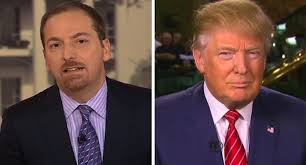
Chuck Todd deserves a pat on the back for keeping his cool this morning in the face of an astonishingly boorish comment from — yep, that’s right — Donald J. Trump.

The “Meet the Press” moderator was interviewing Trump early today. The exchange took my breath away.

Todd asked Trump about the guy in Ohio who rushed the stage where Trump was speaking; Secret Service agents intervened to keep the guy away from Trump.

Trump then said something about “hearing on the Internet” that the fellow as a follower of the Islamic State. Todd said the reports were false. Not so, said Trump, repeating that he “heard it on the Internet.” That — right there — told me plenty of Trump’s (lack of) judgment, that he would take anything he “heard on the Internet” as gospel.

But I digress …

Trump then said the guy was dragging an American flag on the ground, which he said proved he was an ISIS follower. Todd said once again the report was proven to be false.

Then Trump said he “loves the flag more than you apparently do,” implying that Todd, well, doesn’t love the flag and what it stands for.

So. There you have it.

A major presidential candidate buying into Internet gossip as truth and then implying that a veteran broadcast journalist doesn’t love Old Glory simply because he sought to dispel the bogus report about an ISIS connection.

I salute Chuck Todd for maintaining his professionalism in the face of what I considered to be a serious affront.

Here’s the interview in its entirety.


Not exactly a repeat of ’68 in this campaign

RFK

Those talking heads are comparing the anger we’re hearing at Donald J. Trump’s campaign rallies to what we heard 48 years ago when that year’s presidential campaign turned really ugly at the Democratic National Convention in Chicago.

I beg to differ.

Yes, the convention turned into a bloodbath. Anti-Vietnam War protesters stormed the streets outside the convention hall and battled with police. Reporters and delegates were beaten up on the convention floor.

But prior that tragic event, we heard at least one candidate seek to speak to our better angels, to try to quell the anger.

Robert Francis Kennedy was that man. He had entered the Democratic campaign relatively late. He launched a frenetic, mad dash for his party’s nomination. President Johnson bowed out. Sen. Eugene McCarthy’s young legions were rising up against the “establishment.” Vice President Hubert Humphrey was in the race, too.

Then, as columnist Mike Barnicle notes, tragedy struck in Memphis, Tenn. The Rev. Martin Luther King Jr. was shot to death.

Sen. Kennedy got word of it. He climbed aboard a truck bed in Indianapolis and told the largely African-American crowd what had just happened. They gasped.

He went on.

“What we need in the United States is not division; what we need in the United States is not hatred; what we need in the United States is not violence or lawlessness, but love and wisdom and compassion toward one another and a feeling of justice toward those who still suffer within our country, whether they be white or they be black.

“So I shall ask you tonight to return home, to say a prayer for the family of Martin Luther King, that’s true, but more importantly to say a prayer for our own country, which all of us love—a prayer for understanding and that compassion of which I spoke.”

Many cities erupted in violence that night. Indianapolis did not.

I watched that campaign unfold in the spring and early summer of 1968 before I was inducted into the Army, at which time my own life changed forever.

Not one time did I hear a candidate in either party exhort his supporters to punch protesters in the face. Nor did I hear any candidate offer to pay an assailant’s legal fees after being arrested for sucker-punching a demonstrator.

Sure, we were an angry nation back in 1968. We had reason to be worried. A bloody war in Asia was going badly and many Americans wanted an end to that conflict.

It came to a head at the Chicago convention that year.

One reason for the violence was that the man who sought to tell us the truth about our anger and sought to offer solutions to ending it himself was gunned down in that Los Angeles hotel kitchen.

Robert Kennedy’s death came nearly two months to the day after the night he stood on that truck bed and offered words of consolation and healing.


Protests drowning out others’ speech

kkk

The national discussion we’re having about the tenor of Donald J. Trump’s political rallies and the protests that have erupted into violence have turned an interesting corner.

We hear from the Trumpsters that the protesters are drowning out their Republican presidential candidate’s right to be heard. It’s guaranteed in the First Amendment, they say.

The pro-protest crowd responds by saying they, too, are granted First Amendment protection and their protests are every bit as valid as the candidate’s right to speak.

Ahhh, this takes me back a few years to a fantastic moment in modern Amarillo history.

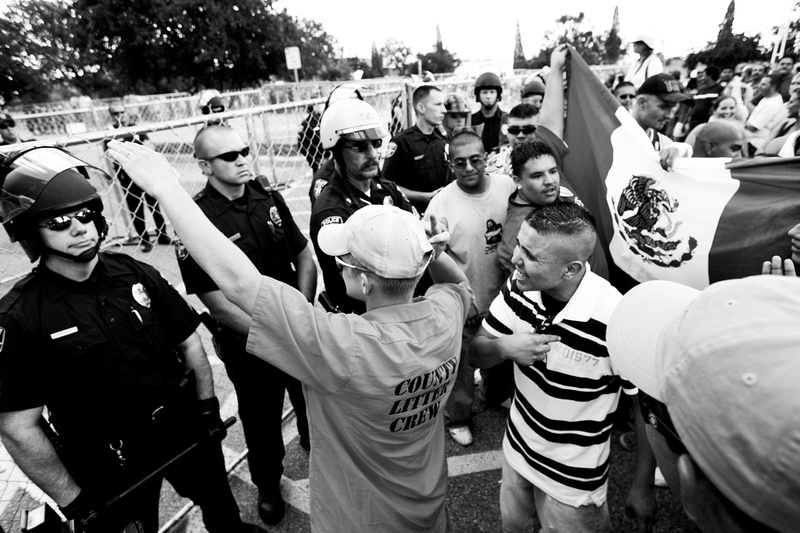
The year was 2006. The Ku Klux Klan wanted to stage a rally in front of City Hall. The city administration decided — on the advice of counsel — that the KKK was entitled to stage its rally. (My memory is a bit foggy at the moment, as I can’t remember the reason for the rally.)

So the Klan got its permit. The Amarillo Police Department deployed in force to ensure that violence didn’t break out. Even the t hen-chief of police, Jerry Neal, was decked out in his blues and all the hardware that beat cops wear when they’re on patrol. I’d never seen the chief “in uniform.”

I went to the rally to see it for myself.

But just as the rally was about to begin and when the leader of the Klan outfit took his place at the microphone, a counter protest comprising a crowd of a couple hundred showed up on the parking lot.

And man they were loud.

They were clanging cymbals, banging drums, shouting at the top of their lungs. Heck, there might even have been a horn or two in the procession.

Who was leading the counter protest? None other than the late millionaire eccentric Stanley Marsh 3. He was decked out in his customary white suit reminiscent of something out of Col. Sanders’ closet.

Fortunately, and I guess the police presence had much to do with it, there was no violence. The Klan guy tried to talk above the din. He gave up shortly afterward. The Klansmen departed the podium area and soon left the area.

Meanwhile, the Marsh-led counter protesters declared some form of victory that they were able to shout down the Ku Klux Klan.

I don’t recall then much argument in the community about whether the counter protest violated the other side’s right to be heard.

I do, though, recall having this visceral feeling of relief that the counter protest occurred, that the Klan was unable to spew its message — whatever it was — and that no one got hurt.

None of it bothered me in the least, as I had no particular interest in hearing what the Klan had to say in the first place.


Is it better to deal with the ‘devil you know’?

Supreme_Court_US_2010

The word this morning is that President Obama might reveal his selection for the U.S. Supreme Court as early as, oh, Monday!

Excellent. Let’s get this going-away party for the president started.

He reportedly has narrowed the field to three men. One is an African-American, one is an Indian-American, one is a Caucasian. They’re all reportedly able individuals who’ve been confirmed to spots on lower federal appellate courts. The president said he’s going to consider someone whose credentials are impeccable. Moreover, he appears to be zeroing in on someone who’s already passed GOP muster in the Senate.

But, hey. Hold on. Republicans who control the Senate — which must approve the nominee — say they ain’t budging in their refusal to even consider an Obama selection. They want to wait until after the November election.

Here’s where it might get dicey for the Republican leadership in the Senate that is digging in its heels and refusing to do its job — which is to consider and decide whether to confirm a Supreme Court nomination.

Suppose the Republican nominee is Donald J. Trump, who the GOP “establishment” despises. Suppose the Democrats nominate Hillary Rodham Clinton, who the GOP despises perhaps even more.

Suppose, too, that Clinton wins the election in November. Suppose she wins big, as in really, really big.

Do the Republicans believe they’re going to get a more suitable nominee from a President Clinton than they would from the current president? After all, the next justice is going to replace the iconic conservative jurist Antonin Scalia, who died a month ago while on a hunting trip in West Texas.

The balance of the court is likely to change, meaning that the appointment is, shall we say, h-u-u-u-u-u-u-ge!

We might know a thing or two about how this shakes out on Tuesday, when voters in five states decide in primary elections in both parties. Clinton might be able to tighten her vise grip on the Democratic nomination. And Trump could establish himself even more firmly as the GOP frontrunner.

So, with a Clinton-Trump contest shaping up in the fall — and with Republican power brokers scared spitless at the prospect of their party being led by a demagogic know-nothing blowhard — the GOP might want to rethink its resistance to whomever Barack Obama selects for the nation’s highest court.

As someone said this morning on one of those Sunday news talk shows, it might be better to “deal with the devil you know than the one you don’t.”

Let’s all stay tuned. This week well could shake the political ground under our feet.


Clinton takes back … a compliment

HIV-AIDS

Here’s how it usually goes when a politician retracts a statement.

The pol usually says something negative about someone else, only to be shown that the comment was unfounded. The politician then might take at least some of it back, declaring a lack of complete understanding.

Hillary Rodham Clinton, though, did something quite different this week.

She attended the funeral of former first lady Nancy Reagan and then offered high praise for the work Mrs. Reagan and her husband, President Ronald Reagan, did to raise awareness of HIV/AIDS.

Well, to borrow an exclamation: Oops!

Turns out the Reagans didn’t do what Clinton said they did. They were not champions for HIV/AIDS research.

AIDS activists and leaders of the LGBT community were quick to call Clinton out on her misstatement.

President Reagan didn’t even mention AIDS — which was initially diagnosed in 1981, the first year of his presidency — until 1987. As for Mrs. Reagan, she was silent on the issue as well.

Yes, the backlash was intense in the wake of Clinton’s comments.

As the New York Times reported: “While the Reagans were strong advocates for stem cell research and finding a cure for Alzheimer’s disease, I misspoke about their record on HIV and AIDS,” she said in a statement about two hours after her interview had been shown on MSNBC. “For that, I’m sorry.”

I am pretty sure that Clinton’s staff did not serve her well in prepping her for the TV interview in which she “misspoke.”

Indeed, if the leading Democratic presidential candidate would be of a mind to praise any Republican for their work on HIV/AIDS research, it ought to go President George W. Bush, on whose watch the PEPFAR program was initiated.

While touring Southeast Asia with other journalists in 2004 on a mission to learn about the impact of AIDS in that part of the world, we were told that because of PEPFAR — the President’s Emergency Plan for AIDS Relief — the United States was spending more on AIDS research than the rest of the world combined.

The Reagans weren’t in the game. Yes, the late former first lady has earned high praise for her Alzheimer’s awareness efforts. Not so with HIV/AIDS.

Now we’ll get to see how nimble Hillary Clinton can be in the face of some stinging rebukes over what one leading gay activist called her “idiotic, false – and heartbreaking” tribute.

Legislating from the bench? Maybe so

young-voters-hit-the-polls-in-2012

I’m usually not one to comment on judges being accused of becoming black-robed “legislators.” Must be my liberal bias.

An Ohio judge, though, just might fit the bill of a jurist who has taken a step or two too far.

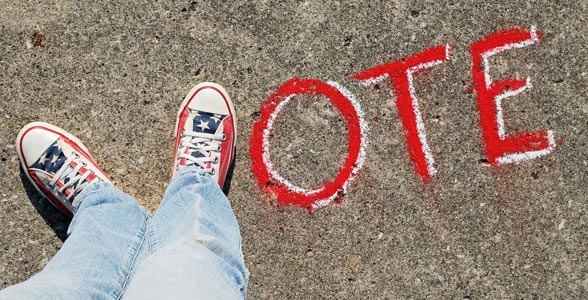
Franklin County Common Pleas Court Judge Richard Frye has ruled that Ohio voters who are 17 years of age today can vote in the Tuesday primary if they’ll be of legal voting age — that’s 18 years of age — by November.

My first reaction is: huh?

It makes no sense.

Let me see if this adds up. Someone who’s not yet old enough to vote will be able to vote in the primary anyway. On what grounds does this make sense?

Frye’s ruling is seen as a potentially big win for U.S. Sen. Bernie Sanders, one of two Democrats running for president. Sanders has been getting a lot of young voters’ support and this could open up a large trove of votes; I guess pledges of free college tuition are resonating with the young voters.

“This is a huge victory for 17-year-olds across Ohio. Their votes for presidential nominees will now count when they vote on either Tuesday or over the weekend in early voting,” Sanders campaign counsel Brad Deutch said in a statement.

But, but … how does that compute? How does someone get to vote prior to being of legal voting age?

Ohio’s Republican secretary of state, Jon Husted, is incensed over the ruling. He vows to appeal it. I think he’s got a case for judicial overreach.

I’m a simple fellow. It just seems to me that pre-dating someone’s voting eligibility smacks of manipulation that the law shouldn’t allow.

To be honest, this kind of reminds me of something I witnessed in Jefferson County, Texas, many years when two judges whose courts had criminal jurisdiction were slapped hard by the Texas Commission on Judicial Conduct for back-dating prison sentences. The judges would sentence defendants to prison terms that began before the crimes actually took place. The state’s court watchdog organization took a dim view of it.

Judge Frye, by my way of thinking, is playing a similar game by giving Ohio teens the right to vote before they are actually legally entitled to do so.


Which religious liberties have we lost?

liberty religion

My wife and I are going to start our day tomorrow the way we usually start every Sunday.

We’ll get up. Have our morning coffee. We’ll eat a light breakfast. Read the newspaper. We’ll get cleaned up. Get dressed. Then we’ll go to church … more than likely.

We’ll pray. Sing a few hymns. Listen to the preacher deliver his message from Scripture. Pray some more. Then we’ll leave the church and go through the rest of our day.

I keep wondering in the context of this hyper-heated presidential campaign: Which religious liberties have my wife and I — as red-blooded, taxpaying, patriotic Americans — lost?

One of the remaining Republican candidates for president keeps insisting that our “religious liberties” are being peeled away.

Texas U.S. Sen. Ted Cruz keeps harping on the notion that “we are one liberal justice away from having our religious liberties” stripped away. That’s what he says. The crowds to whom he speaks eat it up. He says he won’t “compromise away our religious liberties.”

Thanks, Ted. From where I sit, young man, we’re still quite free in this country to worship as we see fit. Or not worship. The Constitution that Cruz and others say they revere spells it out quite clearly: Government shall make no law that establishes a state religion. That means, as most of us understand it, that we are free to adhere to any deity of our choice.

You want a real threat to religious liberty? How about banning individuals from entering this country solely because they happen to be Muslims? Yes, I know that Cruz opposes the idea put forward by his fellow Republican candidate for president, Donald J. Trump. But if he’s going to raise hell from the campaign stump, he ought to take his best shot at that patently idiotic and unconstitutional idea.

My family has made our religious choice. We did so all on our own. Our religious liberties are quite intact and I am quite certain they are as strong as they’ve ever been.

I thank God every day for those liberties.

So let’s quit dangling those dubious threats, Sen. Cruz, to the liberties that our Constitution’s very First Amendment guarantees for all of us.

Cruz and others suffering from some form of political paranoia might perceive those threats to be real.

I don’t.