Oh, for the old days of presidential debates

Nixon-Kennedy-debate_1960

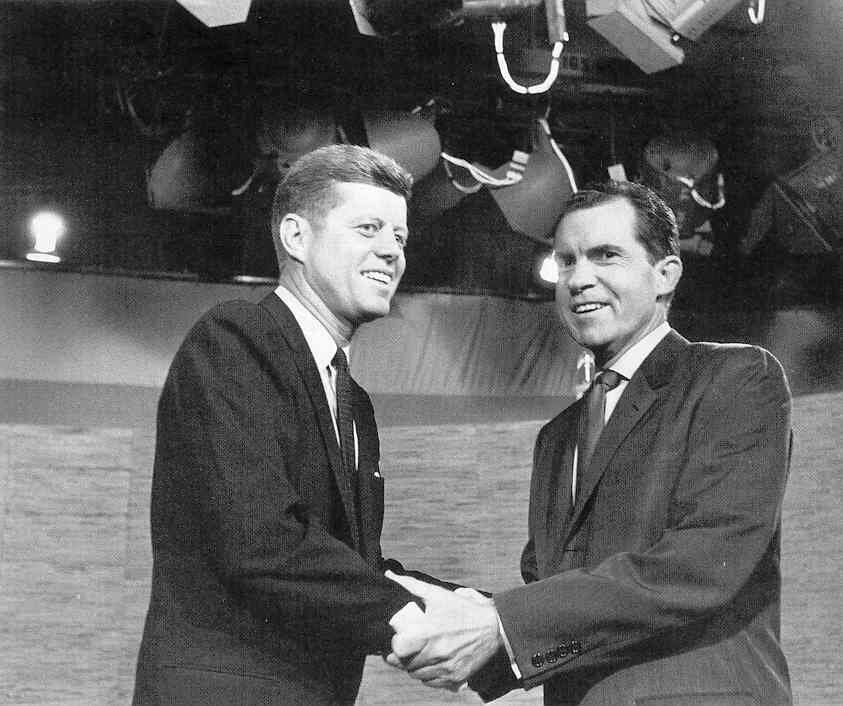
CNN broadcast a special the other night on the landmark debate series between two men vying for the presidency of the United States of America.

Democratic U.S. Sen. John Kennedy faced Republican Vice President Richard Nixon.

The special talked at length about the men’s preparation for the encounters and the consequences that they delivered to the U.S. electoral system.

If only we could return to those days when the most trivial thing we talked about was whether one candidate looked more robust than the other one.

These days, we’re talking about a lot of things that have pulled these joint appearances into the gutter.

The leading Republican candidate, Donald J. Trump, is fond of tossing insults out at his opponents. Lately, some of those foes have responded. One of them, young Marco Rubio, has introduced — in a round-about way — the subject of Trump’s sexual endowments.

We’ve heard comments about perspiration, watched Trump make fun of Rubio’s physical appearance, listened at Trump has called Ted Cruz a lying son-of-a-gun.

And then — from the peanut gallery — former GOP nominee Mitt Romney has weighed in with comments and questions about why Trump doesn’t release his tax returns; he’s also called Trump a “phony” and a “fraud.” Trump’s response? Romney is a loser, a has-been.

We are witnessing an absurd demonstration of petulance on a level many of us have never before witnessed at this level of what is supposed to pass for political discourse.

Fifty-six years ago, two men faced off in a series of three joint appearances. We were enthralled then just at the notion of watching them on live television. Those grainy black-and-white pictures now seem quaint.

The high-minded debate they engaged in, though, now looks statesmanlike, dignified, the kind of encounter one should expect to see between two individuals seeking to become the next head of state of the world’s greatest nation.

These days? It’s a clown show.
 

Nancy Reagan’s lasting legacy: Alzheimer’s awareness

gty_ladies_nancy_kb_120626_wmain

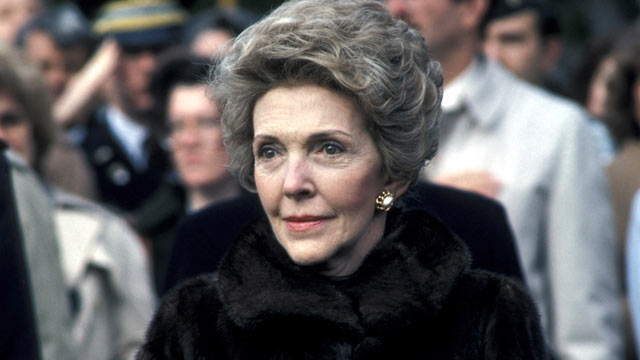
Nancy Reagan will be remembered for many noble and good things.

The former first lady — who died this past weekend at age 94 — was a champion for her husband, the 40th president of the United States. She became arguably his closest advisor and by many accounts was his best friend. She sought to protect his image and his legacy and most historians today she succeeded famously at protecting both of those things.

She also was an advocate for Alzheimer’s research and that’s what I want to focus on here.

You see, many of us have intimate knowledge of that disease.

On Nov. 5, 1994, President Reagan penned that astonishingly poignant farewell letter to the nation as he disclosed his diagnosis. He and his bride then said their “long goodbye” to each other. Nearly a decade later, President Reagan would succumb to the complications of that disease.

Read the president’s letter here.

I’ve told you at times of my own experience with the disease, having watched my mother wither away and die 32 years ago from its effects at the too-tender age of 61. Take my word for it: It ain’t pretty.

Other family members of well-known Americans have taken up the cause for Alzheimer’s research. I think most often of Maria Shriver, whose father — Sargent Shriver — was rendered helpless by the affliction before he died. Shriver has vowed to carry the fight forward.

Nancy Reagan sought to raise research funds. She lobbied Congress to do more for the families who are the actual sufferers of this malady. They are the victims, who watch their loved ones lose their cognitive skill, their memory, their ability to do simple things, such as bathe and eat.

All those things happened to her beloved husband and she fought as hard as she could until the day he died and later — until her own health deteriorated.

The world she leaves behind needs more powerful advocates who will take up the cudgel for other family members who must endure the heartbreak of Alzheimer’s disease.

Thank you, Mrs. Reagan, for the waging this noble effort.

We haven’t finished the fight just yet, but we’re a lot closer to declaring victory.


Why the qualified tribute to Mrs. Reagan?

bal-nancyphoto0611

The nation has heard from many leading political figures commenting on the death of former first lady Nancy Reagan.

They’ve all been lovely and heartfelt.

Still, consider this statement from U.S. Sen. Bernie Sanders, a Democratic candidate for president:

“No matter your party or political ideology, this is a sad day for America. Nancy Reagan was an exemplary first lady. A devoted partner, she was her husband’s most trusted advisor and, as such, served our country well. Even after her time in the White House, she was an outspoken advocate for stem-cell research to find a cure for Alzheimer’s. Nancy Reagan had a good heart, and she will be dearly missed.”

Is it just me or did Sen. Sanders offer something of a qualifier with that first clause: “No matter your party or political affiliation …”?

I venture to guess that most adult Americans who are even remotely aware of the current presidential campaign know that Sanders leans sharply to the left and that the late President and Mrs. Reagan leaned sharply in the other direction.

I don’t mean to parse and nitpick Sen. Sanders’ statement to death, but it seems to me he could have just started with, “This is a sad day for America” and gone on from there. The rest of the statement came straight from his heart.

One sees this kind of qualification added to tributes to those who have passed on. Lefties do it when righties depart this world and righties do it as well to the lefties who leave us.

Hey, maybe I’ve got too much time on my hands to worry about such things.

Any thoughts here? Am I off base?


Little to fear from Trump? Here’s why

checks balance

I’ll admit to being one of those millions of Americans who is horrified at the notion of a President Donald J. Trump.

The horror comes not so much from whether he can achieve all the idiotic policy goals he’s set out. It comes from the idea of this guy speaking his mind in public, of having his words heard around the world by people who expect high-minded rhetoric from the head of state of the world’s greatest nation.

Yep, by golly, we’re still the top dog on Planet Earth — and whatever Trump says to the contrary is just so much horse manure.

I’m going to offer, though, a view that might put your mind to rest at least a little bit over what makes some of us afraid … very afraid.

That stuff about building the wall and making Mexico pay for it? How about the notion of banning Muslims from entering the country because of their religious faith? How about the idiotic tax plan that economists say simply will not work? Or the idea that he’ll single-handedly bring jobs back that have been lost to Japan, China and Mexico?

Trump’s not going to get any of that done without help from Congress. Who controls the legislative branch of government? Republicans, that’s who.

Yes, the very Republicans who at this very moment are working overtime, behind closed doors, sweating bullets … trying like holy hell to deny Trump the presidential nomination of their party.

Imagine what might happen, thus, if they fail in their bid to deny him the nomination. Now imagine — and this is the real stretch — Trump actually defeating the Democratic nominee to become the 45th president of the United States.

The Democrats are almost certain to nominate Hillary Rodham Clinton. Sure, she’s got baggage of her own. However, she possesses a formidable political machine.

If hell freezes over and lightning strikes multiple times in the same spot — and the sun starts rising in the west — Trump could be elected.

If that happens, do you really think he’s going to have any easier of a time getting anything done in a Congress dominated by Republicans — presuming the GOP even manages to maintain control of the Senate? And that seems like a potentially tall order in any event, given the electoral matchups involving many potentially vulnerable GOP senators.

And if Democrats take back control of the Senate competing fiercely against a Republican ballot led by Donald J. Trump, well, then Trump’s myriad cockamamie ideas become even more remotely doable.

There. Do you feel better now?


Litmus tests: virtually unprovable

litmus-test-300x199

President Obama has a big decision to make.

Who’s going to become the next nominee to the U.S. Supreme Court?

Now comes the inevitable question: Uh, Mr. President, do you have a litmus test that a nominee must pass?

Gee, how does the president answer that one? “Of course not! I don’t believe in litmus tests. My nominee will be the most qualified person I can find. He or she must be able to interpret law, not make it, and they must be studious as they ponder the constitutional decisions he or she must face.”

Actually, it is my considered opinion that answers like that are full of so much mule dung.

Of course there are litmus tests! The issue facing the politicians doing the appointing is that they dare not call them such.

Does anyone in their right mind believe that when, say, a president of the United States looks across a conference-room table at a prospective nominee that he or she doesn’t ask them The Question?

In a case such as this it might be: “Would you vote to uphold the Roe v. Wade abortion decision?” Or, “would you stand behind the Affordable Care Act?” How about, “would you continue to uphold the ruling that gay couples are guaranteed under the 14th Amendment to the Constitution to be married?”

Do presidents ask those questions? Sure they do. You know it. I know. The presidents know it. The people they interview know it.

Let’s not be coy, either. Presidents of both parties ask them in search of the correct answer. Does anyone really believe, for instance, that President Reagan didn’t at least know in advance how Antonin Scalia would lean on, say, the Roe v. Wade decision when he considered him for a spot on the court? Do you think he might have asked him directly? I believe it would have been a distinct possibility.

Are all these meetings open to public review? Are they recorded for posterity? No and no.

That’s why the “litmus question” is a monumental waste of time. The answers mean nothing to me.

If only presidents would be candid. “Sure, I have tests that candidates must meet. Hey, I was elected to this office and most voters who cast their ballots for me knew what they were getting. Elections have consequences.”


A suggestion for Eades replacement

Councilmen_2015

No … I don’t have anyone particular in mind.

Indeed, the Amarillo City Council has some time to ponder who should succeed Brian Eades, who’s leaving the council in July as he moves to western Colorado.

Eades is a grownup member of the council. He serves as one of two stalwart votes in favor of the momentum that the city is building toward its downtown revival process. The other sure-fire voice on the council is Mayor Paul Harpole.

Yes, the council has done well so far with its new three guys joining the team to move the city forward on its downtown rejuvenation. Crews have broken ground on the planned parking garage and on the Embassy Suites hotel across Buchanan Street from the Civic Center.

Work still needs to commence on the multipurpose event venue.

I don’t have serious concern about whether the MPEV will be built. I hope it is built and I hope the city welcomes an affiliated baseball team to play its home games at the shiny new ballpark.

My hope for the new council member runs along two tracks.

One is that he or she has a keen interest in moving the downtown effort forward. The projects have been discussed, debated and examined every which way from here to Kingdom Come. Amarillo voters made their decision known in a November referendum that they support a ballpark venue.

Second, I hope the next council member commits to running for election in the spring of 2017 when the city conducts its election for the council.

The most recent appointee, Ron Boyd, served as a place holder when he took the seat vacated by the death of Councilman Jim Simms. The next one, I hope, will take the seat with the understanding that he or she will seek a full two-year term.

The next council member will have plenty of time between taking office and the next election to earn either the voters’ approval or rejection next spring.

So, council members, proceed with all deliberate care.

The city is moving forward. It needs a governing council committed to maintaining that momentum.


What happened to the calamity?

jobs

Just a shade less than a quarter-million jobs were added to the U.S. non-farm, non-government payrolls in February, according to the Labor Department’s latest monthly report.

The unemployment rate remained at 4.9 percent.

The federal budget deficit continues to decline.

But by golly, we keep hearing along the presidential primary campaign trail that Barack Obama is presiding over an economic calamity. We’re heading for the crapper. Bernie Sanders keeps harping on the “1 percent” who are making all that money at the expense of the rest of us.

It’s time to give Barack Obama some credit.

Tim Egan writes in the New York Times:

“By any objective measurement, (Obama’s) presidency has been perhaps the most consequential since Franklin Roosevelt’s time. Ronald Reagan certainly competes with Obama for that claim. But on the night of Reagan’s final State of the Union speech in 1988, when he boasted that ‘one of the best recoveries in decades’ should ‘send away the hand-wringers and doubting Thomases,’ the economic numbers were not as good as those on Obama’s watch.

“At no time in Reagan’s eight years was the unemployment rate lower than it is today, at 5 percent — and this after Obama was handed the worst economic calamity since the Great Depression. Reagan lauded a federal deficit at 3.4 percent of gross national product. By last fall, Obama had done better than that, posting a deficit of 2.5 percent of G.D.P.”

I’m not going to give the president all the credit for the economic recovery. However, I’m damn sure not going to condemn with the ferocity that we’ve been hearing — primarily from the Republican candidates for president — about all the gloom and doom.

On other side of the great divide, we hear Democratic challenger Bernie Sanders yammering about the richest Americans not paying enough taxes. He wants to enact fundamental economic change.

I can’t help but wonder: Why?

Yes, we’re in the midst of a contentious political campaign. Candidates are bound to say anything to get attention.

Which is precisely, as I see it, what they’re doing when they keep harping on the economic disaster that hasn’t arrived.

Eades to quit … and toss the city into a tizzy

eades

Brian Eades has dropped a bombshell.

The good doctor and senior member of the Amarillo City Council is quitting his post this summer and will continue his medical practice in rural western Colorado.

What are the potential consequences of this event? Well, to borrow a phrase: They’re yuuuuuuge, man.

Think of it as a microcosm of the current battle within the national Republican Party: insurgents vs. the establishment.

Eades is one of two City Council members who come from the city’s so-called “establishment.” The other is Mayor Paul Harpole. The three remaining council members — Elisha Demerson, Randy Burkett and Mark Nair — could be called “insurgents.” They vowed to bring radical change to city government when they campaigned for the council in 2015.

What happens now?

The rest of the council gets to appoint Eades’ successor.

Who gets the job? Will the new person come from the establishment sector or will he or she come from the ranks of the rebels who want to continue the change?

The city charter grants limits the mayor’s actual power, so that means Harpole cannot really orchestrate the selection process. He no doubt wants someone who agrees with Eades’ municipal view.

He has only one vote, though. The other three are in the catbird seat.

Or so one might think.

The mayor does have what Teddy Roosevelt called “the bully pulpit.” Does he use his office as a place from which he can preach the municipal gospel to those with whom he works? Does he reach out to the community to persuade rank-and-file residents — folks like you and me — of the need to find someone who can join him in resisting the occasional impulses of his colleagues who might want to move quickly toward some unknown policy destination.

Is there even a need to make such an effort?

Dr. Eades has served the city well during his time on the council. I wish him well as he prepares to leave the region where he grew up and where he has earned a nice living.

I’m betting that Paul Harpole isn’t too happy to learn of this departure. The other three guys are rubbing their hands together.


Childers finally says he’s sorry for 911 misstep

7cc82baf-9b40-478f-ad1b-4bb3c4fdb38e-9112

Amarillo interim City Manager Terry Childers has re-thought what he said earlier this week.

He said initially in public that he regrets the manner in which a 911 call turned out.

Now he says he’s “sorry.” He’s issued an apology. In public. Out loud. To the city he administers.

There. Now, can we put this matter to rest?

This story needs to quiet down.

Amarillo has been through too much turmoil in the past year.

A new City Council majority promised “change.” It brought it. City Manager Jarrett Atkinson quit, as did other senior city staff.

The council brought in Childers, the former Oklahoma City manager, to steady the city’s administrative ship.

Then came the 911 call to the Amarillo Emergency Communication Center. He got agitated over the way the dispatcher responded to his report of a missing briefcase.

There’s been plenty of criticism being tossed around the city at the interim manager. I’ve heard rumblings that some of it has been quite ugly, although I have not seen or read any of it with my own eyes.

OK. He’s now said he’s sorry, which I guess lies near the heart of what concerned some residents.

Let’s hope this matter can be put to rest, that the interim manager can continue his work running the city and that the council can proceed with its search for a permanent chief administrator.


Romney speech put in perspective

mitt

I watched Mitt Romney blister the daylights out of Donald J. Trump on Thursday morning and all but cheered at my TV set as I watched the speech.

Then I thought a bit more about it and realized: Didn’t the 2012 Republican nominee support many of the positions for which he’s now blasting the 2016 GOP frontrunner? And isn’t the party to which he belongs culpable of the things associated with Trump?

One example stands out. You’ll recall Romney saying four years ago that he would make life so miserable for illegal immigrants that they would “self-deport” themselves back to their home country. Now he says Trump’s anti-immigrant position is inhumane.

The New York Times noted: “He also listed Mr. Trump’s offenses — ‘the bullying, the greed, the showing off, the misogyny, the absurd third-grade theatrics.’ Did Mr. Romney have any sense of irony when he said those words? For far too long, they could have been used to describe many in his party: legislators, congressional leadership, its policy makers.”

There was much to commend Romney’s remarks Thursday morning. Perhaps the most skillful put-down related to Trump’s denigrating the heroism exhibited by U.S. Sen. John McCain during the Vietnam War. Romney noted the “dark irony” of Trump saying McCain was a “war hero because he got captured.” Romney said that while McCain was being tortured by his North Vietnamese captors, Trump was gallivanting with married women.

I want Romney’s remarks to stick. I want them to make Republicans think long and hard about the man who says he wants to be their party’s nominee.

The reverse of what I want might occur. Instead of forcing GOP voters to turn away from Trump, Romney’s scathing rebuke might solidify Trump’s support among those primary voters who want to send some kind of message to the party high command.

Think about this, too. Mitt Romney embodies the very public policies embraced by the Republican establishment that’s become Donald Trump’s punching bag.