Category Archives: local news

Welcome back, Mme. Tax Collector

randall-county

This doesn’t happen every day in county government.

In fact, this is the first time I’ve seen it occur in more than 30 years observing politics and government in Texas.

Randall County’s tax assessor-collector, Sharon Hollingsworth, only thought she was retiring this past week. She’s getting her old job back after the woman appointed to succeed her, Christina McMurray, decided she wanted to return to her old job in the county tax office.

So, McMurray quit the tax assessor-collector job and Hollingsworth is returning to her post — albeit temporarily.

She still plans to retire and go fishing with her husband. I spoke with Hollingsworth a few days ago when I learned of her plans to retire and she expressed joy at the prospect of getting on with the rest of her life.

Well, it’s going to wait a little while longer.

According to the Canyon News: “Randall County Judge Ernie Houdashell said that the court will go back on the search for a replacement for Hollingsworth, thanking her for continuing her service until a replacement can be qualified and sworn in.”

At least there’ll be no on-the-job training required for county’s newest tax assessor-collector.


Texas stood tall in time of tragedy

katrina_aftermath_-_11

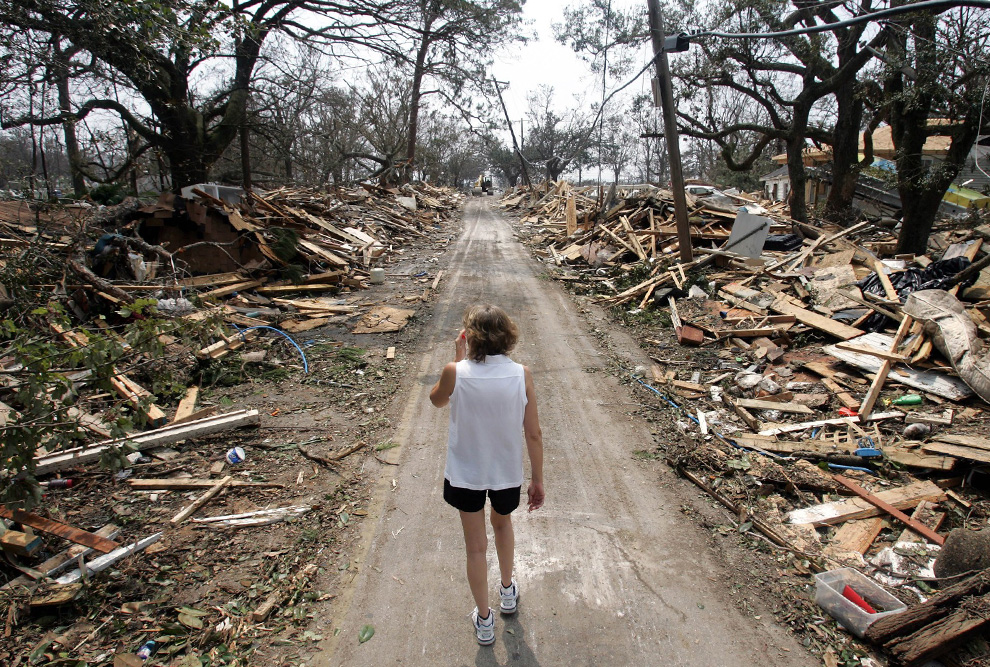
Ten years after the fact, Texans perhaps should take stock of a time when our state stood tall as our neighbors fled a savage onslaught.

Hurricane Katrina killed nearly 2,000 Louisiana residents and drove many thousands more than that from their homes. And of those thousands who were displaced, many of them came to Texas.

Most found refuge downstate. Some came to the High Plains.

As Erica Greider writes in her Texas Monthly blog, the manner in which Texas responded to the crisis provided the state with one of its shining moments.

Greider writes: “… Texas’s response to Katrina has to count as one of our state’s finest moments. We saw real leadership from people like Rick Perry, then the governor, and Bill White, then the mayor of Houston, among many others, and real graciousness on the part of millions of Texans, who welcomed so many neighbors at their time of need. I’d like to think that’s who we are. And I’d like to think it’s a good reminder for us today, since 10 years later we have the flaring tempers and frayed nerves without the proximate cause of a historic natural disaster: when people work together, progress is possible.”

Here’s the blog post

Amarillo responded well during that time. We set up emergency quarters for the residents who came here. We gave them shelter, food, medical care, counseling services and placement advice as they sought to collect themselves after having their lives shattered by the storm’s wrath.

It’s good that we don’t have to respond in such a fashion all that often. But when we do, it’s also good to know we are able and willing to answer the call for help.


Why not debate … in Amarillo?

APTOPIX_Presidential_Debate-0bf0c-7089

I’ve noted before in previous election cycles that the major political parties need to think beyond the norm when planning for debates between their presidential nominees.

The norm in the past has been to select cities with large media markets. Sometimes the parties put these debates in cities and states where the race is competitive.

Here’s a revolutionary thought: Why not stage one of these events right here, in little ol’ Amarillo, Texas?

Hey, I know it’s a long shot. A pipe dream. I know it won’t happen. Then again, in this strange, goofy, unpredictable, topsy-turvy primary campaign — which on the Republican side is being driven by Donald J. Trump — well, anything seems possible.

Look at it this way, Amarillo is a significant city in a significant state. One of Amarillo’s state lawmakers, Republican Four Price, said the other day that Texas’s economy all by itself is the 12th largest in the world. That by itself makes us a player.

What might be the theme of a debate held in Amarillo? Energy policy ought to be front and center. I doubt, of course, that debate planners would build a two-hour televised event around energy policy by itself.

But it does tie into the nation’s economy. How about foreign policy, given that we’re weaning ourselves of foreign oil? We’re becoming something of a trend-setter in the development of wind energy, one of those alternatives that gets some of the credit for the plunging oil prices around the world.

We’ve got venues for such an event. The Civic Center is one. The performing arts center across the street is another. Why not look at the West Texas A&M University event center in Canyon?

Is such a thing possible?

Consider this: No one ever thought that Donald Trump would be setting the pace in the race for the Republican Party presidential nomination.

I’m just saying that this election is wild and crazy enough for Amarillo to get a serious look if the political parties here want to put together a formal request.


Read your oath of office, Mme. Clerk

same-sex-marriage

Kim Davis took an oath when she became a county clerk in Kentucky to uphold the constitutions of her state and her nation.

The oath, I’m quite willing to suggest, didn’t include any exemptions for her religious faith.

Thus, it becomes imperative that she fulfill all the terms of the oath she took.

But she’s refusing to do that.

Instead, she’s refusing to grant marriage certificates to gay couples. She cites her religious belief opposing gay marriage and the U.S. Constitution’s protection of religious liberty.

I get that Kim Davis’s Christian faith is important to her. Mine is important to me as well.

But she took an oath to uphold the law. What’s more, the U.S. Supreme Court this year has ruled that gay marriage is legal in all 50 states. That includes Kentucky.

To their credit, Potter County Clerk Julie Smith and Randall County Clerk Renee Calhoun declared they would issue marriage certificates to same-sex couples who request them. I also would have applauded either or both of them had they resigned if their religious faith interfered with their public oath.

Davis should resign from her office, as some county clerks have done around the country. She cannot serve in an elected public office without carrying out all the duties that the office requires.

http://talkingpointsmemo.com/news/kim-davis-kentucky-clerk-again-denies-license?utm_content=buffercaf60&utm_medium=social&utm_source=twitter.com&utm_campaign=buffer


Build it and they will come … yes?

Amarillo MPEV

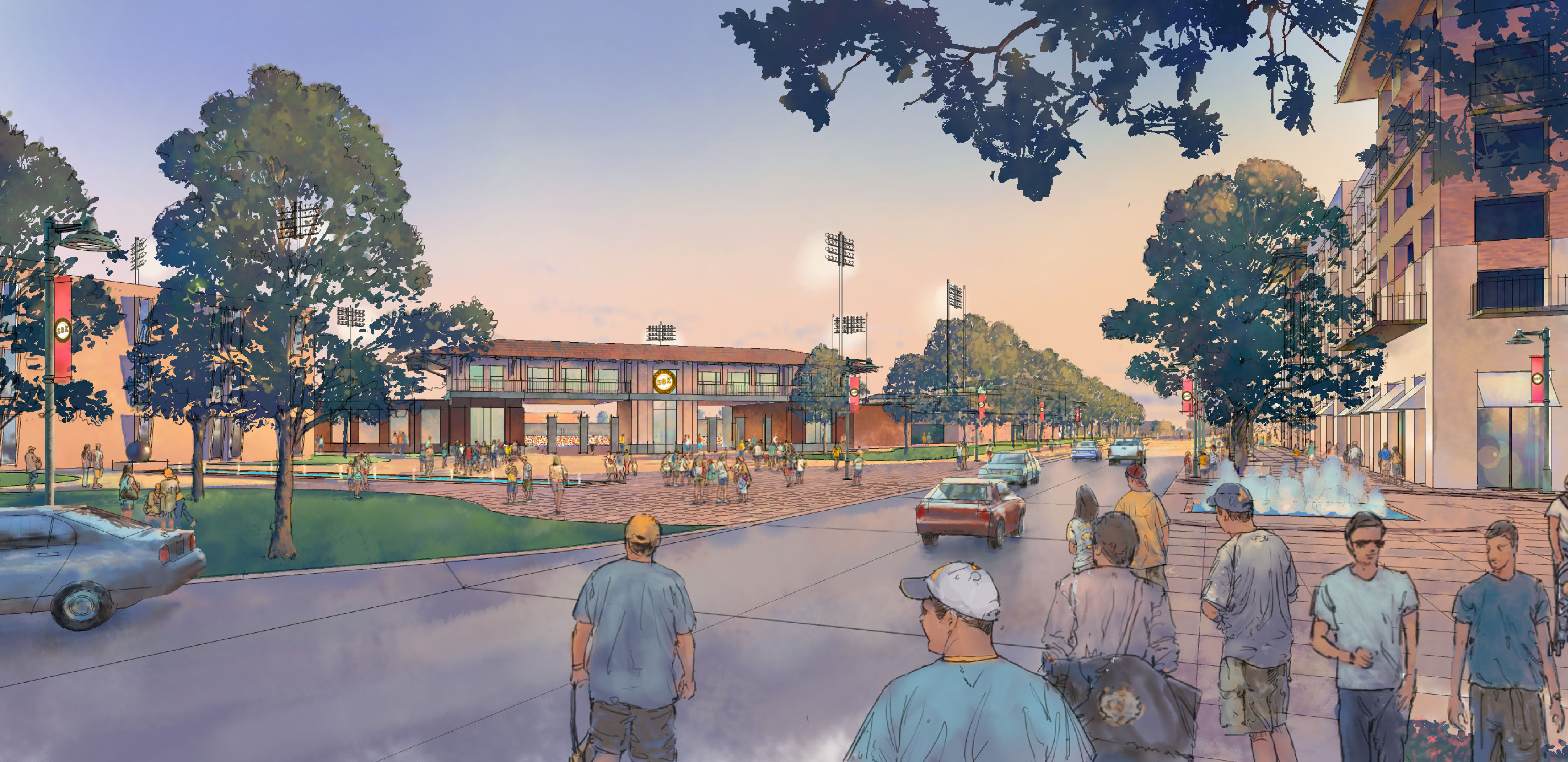
I keep hearing critics of Amarillo’s proposed multipurpose event venue — which includes a ballpark design — argue that the city isn’t a baseball town.

They point to the sparse “crowds” that often populate that certifiable trash heap called Potter County Memorial Stadium for the Amarillo Thunderheads games.

There’s your baseball interest, some of them have proclaimed.

I prefer to look at it differently.

The MPEV is up for a vote Nov. 3. City voters will get to decide whether they want to proceed with the MPEV as it’s currently designed. A “yes” vote means it moves forward; a “no” vote means the city should look for another design.

The dump where the Thunderheads play their home games isn’t a suitable venue for anyone.

The MPEV, estimated to cost around $32 million, will present a golden opportunity for the city to attract a major league franchise to hook up with a farm team based in Amarillo.

It’s always been my experience that sports fans prefer to sit in a modern venue with nice amenities to watch athletes perform on the field. The place formerly known as the Dilla Villa is not that place.

I continue to believe the downtown project as presented is worth supporting. The MPEV — whether it contains a ball field or becomes something else eventually — should be a part of the city’s effort to spruce up its downtown district.

They’ve started work on the new Xcel Energy office complex. They’ve cleared the old Coca-Cola distribution center site, relocating it at a new business park. The old jail site has been cleared.

A developer is set to begin work on a downtown convention hotel. And a parking garage is planned for the property next to it.

Will the MPEV be a part of this work? I happen to hope it is.

As for whether Panhandle residents — whether they live in Amarillo or in surrounding communities — will support minor-league baseball if it’s able to move into the new venue, well, time will tell.

It must depend on whether some marketing geniuses can develop a strategy to attract a major league franchise’s attention.

A gleaming new site — if it’s promoted properly — can be enough of a lure.


Hunt for Katrina survivor comes up empty

hurricane katrina

Emma appears to have moved on.

I hope she’s happy and healthy.

Word came from City Hall earlier this week that my search for a woman I met 10 years ago here in Amarillo after Hurricane Katrina devastated her home town of New Orleans has come up empty.

She and more than 100 other refugees from the devastation of the storm fled to the High Plains. Several communities welcomed them. They lived for a time in makeshift quarters assembled at the Amarillo Civic Center, which had been turned into a refugee center.

The Amarillo Public Health Department and the city’s Emergency Services Department had mobilized quite efficiently to accept the individuals — and the families — that sought to escape the devastation brought to the Gulf Coast in August 2005.

They set up health clinics, providing medicine and immunization. Counselors were available to talk to the refugees who were coping with the enormous emotional shock of what they were enduring.

From my recollection of the events as they were unfolding, the city response represented one of its finer moments.

None of those storm refugees remained.

The city reportedly had 48 clients registered through it Community Development office, but all of them, according to the city, appear to be “inactive.”

Perhaps it was her heart that was talking when Emma agreed to meet with me shortly upon arriving in Amarillo. She said she had intended to stay here. She was going to give up her life in the Big Easy and settle, perhaps, for a quieter existence way up yonder here on the Caprock.

She had plenty to say a decade ago about the incompetence of the emergency response in New Orleans. She blamed everyone — local, state and federal authorities — for the confusion and mayhem that ensued as residents struggled to cope with the loss of homes, not to mention the loss of loved ones.

Emma was fortunate in one important aspect: No one in her family died from the storm.

My hope was to find her and to visit with her yet again, to assess how she’s coped.

I’ll put my faith in the belief that she’s doing fine and that the city she called home, if only for a brief time — Amarillo — helped Emma find her way to a new life.

‘Bought and paid for’? Why … I never

Amarillo_Downtown_Development28July_36_copy

Social media can be a lot of fun to use. I’ll admit to getting somewhat hooked on a couple of those media outlets.

However, it can be a bit distressing when someone you don’t know, have never met, wouldn’t know if he sat in your lap, makes assumptions about total strangers.

It’s happened to me on the issue of downtown revival and the fate of the proposed multipurpose event venue.

Someone named Cory Traves wrote this on a Facebook post: “Obviously this blogger has been bought and paid for by Advance Amarillo.”

“This blogger” is me. The source of this guy’s angst is a series of blog essays I’ve posted that favors the MPEV as it’s currently configured, including the ballpark aspect of it. He posted that comment on a recent blog item I posted regarding the MPEV.

Amarillo voters are going to decide the fate of the MPEV’s current design on Nov. 3. I guess Cory Traves will vote “no” on the referendum, meaning he doesn’t like the ballpark element. I plan to vote “yes.” Our votes will cancel each other out.

Advance Amarillo is a political organization formed to support the downtown Amarillo revitalization plan as it’s been presented. I happen to agree with Advance Amarillo’s view of this downtown effort.

Have I been “bought and paid for” by this group? Umm. No. That’s all I’m going to say about that.

I haven’t a clue as to what drives those who oppose the MPEV, or the downtown effort in general. I will not pretend to assume anything about them.

My wish would be that those with whom I disagree on this issue would keep their assumptions about me — or anyone else on the “other side” — to themselves.

You’re entitled to think whatever you wish. You aren’t entitled to make assumptions — out loud and in public — about others.

Especially when you’re flat wrong.


New ballpark: not a new concept for city

ballpark

Amarillo is considering a downtown ballpark that could be home to a minor-league baseball team.

Some individuals — maybe many of them — think the city and Potter County have an adequate venue for baseball on the edge of the Tri-State Fairgrounds.

I believe they are mistaken.

City officials once considered a study on the feasibility of building a new ballpark to replace that trash heap once known as the Dilla Villa. Then-Mayor Debra McCartt wasn’t too keen on the idea of spending public money on such a study. The city manager at the time, Alan Taylor, had the idea that if you “build it they will come.”

That was a decade ago, in 2005.

The city’s governing board has changed from a commission to a council. Mayor McCartt is no longer in office, being succeeded by Paul Harpole, who happens to have bought into the idea of a public investment in a project that will do the public much good.

At issue now is whether voters will endorse a proposed multipurpose event venue. They’ll decide the matter in a citywide referendum on Nov. 3. The issue at hand is this: Do we develop an MPEV that includes a baseball park or not?

I say “yes!”

I offered an opinion on the concept of a downtown baseball park in a column published Aug. 14, 2005. I wrote that the nation is full of examples of how projects such as the MPEV — as it’s currently configured — have delivered “enormous payback” to cities that build them.

My favorite example is in Oklahoma City, where a downtown ballpark has helped revive Bricktown. Now, I understand fully that Amarillo is less than half the size of OKC. I keep returning to the notion of that “economies of scale” can work for Amarillo, just as it has done in Okie City.

Let’s not operate in a climate of fear over a concept that might be new to this city, but is far from new in other communities that had the will to march forward.

On the hunt for a Katrina survivor

katrina_five_30

A decade ago, Amarillo opened its doors — and its arms and heart — to about 100 or so refugees from down yonder, on the Gulf Coast.

They fled New Orleans after their homes were destroyed by Hurricane Katrina. Many thousands of residents were left homeless, hopeless and penniless.

Some came here, far away from the danger of storm surge, horrifying wind and torrential rain.

Amarillo showed what it was made of at that time, just as communities all across Texas and the nation did in lending a hand to those who were in desperate straits.

I had the pleasure of meeting one of them, thanks to some help I got from the city’s public health department, which then was led by Matt Richardson, who’s since moved on.

Her name is Emma.

Ten years ago, this courageous mother and grandmother told me she had every intention of staying in Amarillo. She wanted to find the kind of work she was doing in The Big Easy. Emma said her then-boyfriend was qualified to do a lot of odd jobs and he, too, hoped to make Amarillo his home for life.

My curiosity over her whereabouts and her well-being has been rekindled as the nation looks back at that dark time.

A great American city was inundated and nearly destroyed. It has come back — more or less. New Orleans isn’t quite as heavily populated as it was pre-Katrina. But much of it has been rebuilt. Many folks have returned to pick up the pieces of their shattered lives.

I’m wondering, though, about Emma.

I hope to find her soon and get caught up on how she’s fared in the past decade on the High Plains.

Let’s think big about the MPEV

Amarillo MPEV

Let us take a moment — or maybe two — to consider some possibilities for a venue that Amarillo officials want built in the city’s downtown district.

It’s called a multipurpose event venue, but “MPEV” has become its signature.

The MPEV is on the Nov. 3 ballot. The ballot language gives voters a narrow choice: whether to allow it to proceed with a “ballpark” included in it design. We will be asked to vote “yes” or “no.”

Critics of the MPEV, estimated to cost about $32 million, say the ballpark element restricts its use. I believe that’s nonsense.

So, we could move the baseball activity that’s been occurring at the Potter County Memorial rat hole, er. stadium for the past few years into a gleaming new downtown stadium.

That’s it? That’s all we can see for this venue? Hardly.

The weather, contrary to many other naysayers, shouldn’t detract from other activities. Why, for example, can’t we have outdoor concerts? Don’t other communities welcome acts to perform outdoors? Aren’t there sufficient numbers of entertainers who would like to play outdoors in downtown Amarillo on a cool autumn evening?

And let’s get real here. We all have appreciated the pleasant temperatures we see even during the summer when the sun goes down along the High Plains. Our altitude — nearly 3,700 feet above sea level — helps make those evenings a reality.

OK, so the winters get chilly around here. And yes, spring can be a bit unpredictable — weather-wise.

The planners who’ve proposed this project haven’t re-invented the wheel. Other communities have enjoyed success with downtown ballparks that have been used for various other activities when they aren’t hawking hot dogs, peanuts and cold beer at ballgames.

What they’re pitching, though, is a new concept for this city. The MPEV will work if it’s given the chance — and if we start thinking expansively about the many uses available to it.