Category Archives: legal news

Texas voters need to share in Paxton saga

AP_16102639500954-729x450

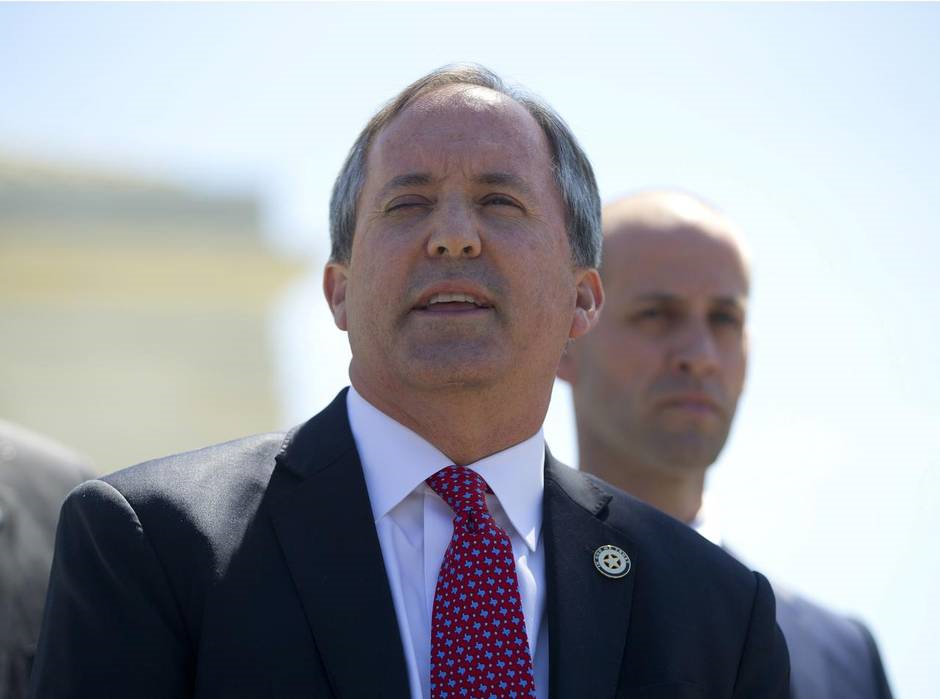
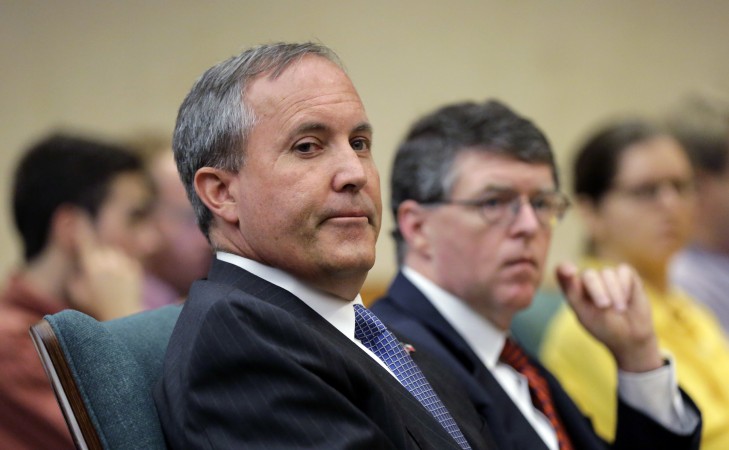
Erica Greider, writing a blog for Texas Monthly, takes note of Texas Attorney General Ken Paxton’s growing legal problems.

He shouldn’t stand alone in the alleged culpability, she writes.

Part of the responsibility — perhaps most of it — belongs to the Texans who elected him in 2014 as the state’s top law enforcement officer.

http://www.texasmonthly.com/burka-blog/indictments-texass-attorney-general/

A Collin County grand jury indicted Paxton this past year on several counts of securities fraud. Now, though, the Securities and Exchange Commission — the federal agency that oversees investment transactions — has leveled complaints against the attorney general.

Greider notes correctly that Paxton deserves the presumption of innocence, but she adds: “Even so, for an attorney general to rack up so many indictments with such ease and rapidity is in poor taste and raises troubling questions about his efficacy as manager.”

But none of this was a surprise sprung on Texans after he took office. It had been reported well before the November 2014 election that Paxton was in trouble for allegedly receiving income for investment advice he was giving to friends without reporting it properly to state election officials.

With that, Texans knew they were possibly electing a top legal eagle who himself might be facing some serious legal difficulty.

They elected him. He took office and then — wouldn’t you know it? — the grand jury indicted him and then the SEC weighed in with complaints of its own.

It just seems — to me, at least — that voters ought to be a good bit more discerning when selecting people to high public office.

It’s especially true — again, in my view only — that such discernment ought to be tuned even more finely when those selections involve people we entrust to enforce the state’s laws.

We can do a whole letter better than electing folks who are lugging around this kind of baggage.


GOP erects fortress of obstruction

garland

Merrick Garland should be confirmed by the U.S. Senate to take a seat on the Supreme Court.

Why? He’s qualified in the extreme. He is a model of judicial restraint. Garland is held in high regard by his peers and even by politicians of both parties.

So, what’s the trouble?

He happens to have been nominated by a Democratic president in his final full year in office. Senate Republicans, the folks in charge of the body who must confirm these nominees, say that Barack Obama doesn’t deserve to name the next justice.

And why is that? Well, it’s because the next nominee is going to succeed a conservative judicial titan on the court. Antonin Scalia went hunting in West Texas and then died suddenly earlier this year.

The Supreme Court’s balance has been narrowly conservative. Scalia’s death occurring during the presidency of a progressive politician means that the politician — Barack Obama — should get to select the next person to serve on the nation’s highest court.

But, no-o-o-o-o, say Republicans. He can’t do that.

The nomination must wait for the election to occur and for the next president to take office, say Republicans. Their hope, as if it’s not clear, is that one of the Republicans running for the White House will win the election.

Garland has launched what some are calling a “charm offensive” against some targeted Republican senators.

It hasn’t worked. The GOP lawmakers thought to be vulnerable to Garland’s judicial brilliance aren’t budging. They’re standing by their own man, Majority Leader Mitch McConnell, who has said — laughingly, in my view — that “the people deserve to have a voice” in choosing the next Supreme Court justice.

It’s a crock of horse manure. The people’s voice was heard in November 2012 when voters re-elected Barack Obama as president.

Oh, but wait! Didn’t the people speak in 2014 when they voted to hand control of the Senate over to the GOP? Sure they did.

However, as one who believes in presidential prerogative, I also am of a mind to place greater value on the votes collected by the one individual who is elected head of government and head of state than on the votes earned collectively by the legislative branch of government.

Garland’s charm offensive likely won’t — by itself — change enough minds to earn him a confirmation hearing before Barack Obama leaves office.

However, it very well could awaken the people once again this election, who in turn might seek to have their “voices heard” when they toss aside the Senate Republican majority while electing a Democrat to assume the presidency.

Obstruction can be difficult to disguise.


‘Affluenza teen’ gets jail time … finally!

Ethan-Couch-Affluenza-Kid-jpg

Ethan Couch is headed to jail.

He should have been there all along. He got a light sentence: probation. For what? Oh, for killing four people in a motor vehicle accident in Fort Worth while driving a pickup truck. He was roaring drunk, at least three times over the minimum legal limit.

But then came the astonishing defense that the judge apparently swallowed. Couch’s lawyer said the young man suffered from “affluenza,” having been raised in a wealthy family, by parents who failed to teach him right from wrong.

Then the kid went on probation, only to violate the terms of his sentence. He was caught drinking. He fled the country, ending up in Mexico — with the assistance of his mother.

It’s good that he was caught. Couch, who was 16 at the time of his crime, has just turned 19. Texas law doesn’t allow much of a jail sentence because the young man was a juvenile when he committed the original crime.

But at least he’s going to serve nearly two years in the slammer.

I’m glad to see that the young man will get what was due at the beginning.

Now, how about throwing the book at his mother — Tonya Couch — for aiding and abetting his escape from justice?

Texas AG now faces SEC accusation

6F6A9136_jpg_800x1000_q100

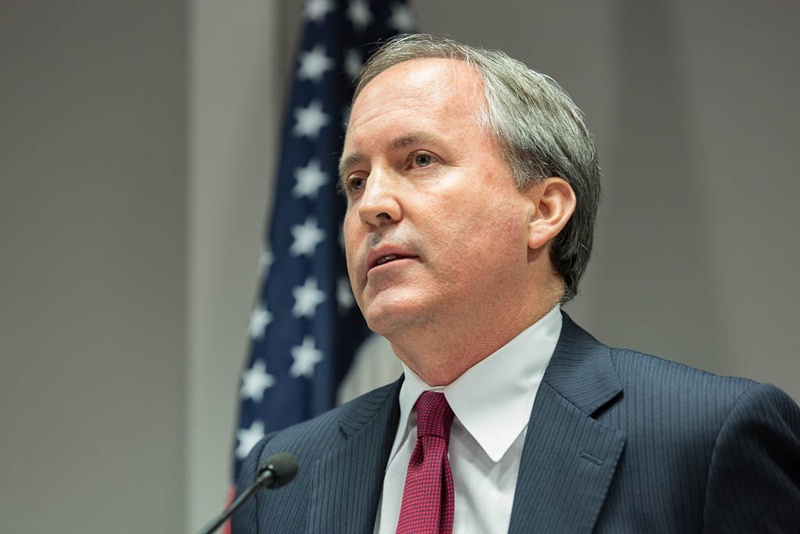
Texas Attorney General Ken Paxton is under indictment for securities fraud.

Now, though, the Securities and Exchange Commission has weighed in on the attorney general, charging him with a similar misdeed.

Let’s see. A Collin County grand jury — in Paxton’s home county — has issued a criminal indictment. The SEC now has accused the AG of failure to disclose he was being paid a commission for investment advice he was giving.

Is there a pattern here? Does the state of Texas really deserve to be represented by a top legal eagle who’s now under a dual-edged complaint?

As one who believes in the presumption of innocence, I have been reluctant to call for Paxton to step down from this high office.

Until now.

Paxton has proclaimed his innocence. Of course he would, yes?

I recall during the 2014 campaign for attorney general, though, that Paxton — who served in the Texas Legislature — actually admitted to doing what the grand jury accused him of doing when it indicted him. The grand jury indicted him for failing to disclose that he had been paid for the investment advice he gave.

Still, Texas voters elected him.

According to the Texas Tribune: “People recruiting investors have a legal obligation to disclose any compensation they are receiving to promote a stock, and we allege that Paxton and White concealed the compensation they were receiving for touting Servergy’s product,” Shamoil T. Shipchandler, director of the SEC’s Fort Worth regional office, said in a news release on the complaint.

SEC joins in

This doesn’t look to me like a political witch hunt. The SEC is a regulatory agency run by professionals who are charged with ensuring that investment policies are followed to the letter.

The grand jury? It’s in the very county Paxton — a Republican — represented in the Legislature. Many of the grand jurors likely voted for the guy.

This doesn’t bode well for the attorney general.

For that matter, it doesn’t bode well for the state’s pursuit of top-notch and credible legal advice from its top lawyer.

I wouldn’t shed a tear if Ken Paxton decided to quit so he could devote his full attention to defending himself against these serious charges.


Cruz is ‘eligible’ to run for POTUS

NEW YORK, NEW YORK - APRIL 06: Republican presidential candidate Ted Cruz listens at the restaurant Sabrosura 2 on April 6, 2016 in the Bronx borough of New York City. Cruz, who won last night's Wisconsin primary, was visiting New York in advance of New York's Republican primary on April 19, 2016. (Photo by Bryan Thomas/Getty Images)

This is fantastic!

The Ted Cruz Birther Movement is slow to die. Heck, it might never wither away!

Constitutional crybabies keep insisting that because the Republican U.S. senator from Texas — and GOP candidate for president — was born in Canada that he isn’t eligible to seek the presidency, let alone hold the office if elected.

Plaintiffs in several states have sought to block Cruz’s candidacy on specious grounds that the senator is a foreigner.

These challenges are doomed. They won’t get to first base, I believe, with the U.S. Supreme Court.

A lower court judge put it well. A natural-born citizen “includes any person who is a United States citizen from birth,” wrote Pennsylvania Commonwealth Judge Dan Pellegrini.

Young Rafael Edward Cruz came into this world as a U.S. citizens because his mother is an American. Therefore, no matter where on Earth baby Ted was born he became eligible to run for the presidency.

The U.S. Constitution doesn’t define “natural-born citizen.” It doesn’t specify that a president must have been born on sovereign U.S. territory. All it specifies is citizenship — and federal law, by golly, is pretty damn clear on that point.

Still, this birtherism regarding Cruz’s eligibility is nearly as funny as the cockamamie notion that dogged President Barack Obama right up until the moment he won re-election to a second — and final — term in November 2012.


Imagine this breakfast chit-chat

grassley

U.S. Senate Judiciary Committee Chairman Chuck Grassley is going to have breakfast next Tuesday with Merrick Garland.

Yep, he’s going to break bread with the Supreme Court nominee whose nomination he intends to block.

I’m trying to imagine how this conversation will proceed. Here’s what I have come up with:

Grassley: Welcome, Judge. I’m glad you could find time to meet me for breakfast.

Garland: Thank you, Mr. Chair …

Grassley: Oh, call me Chuck.

Garland: Sure thing … Chuck. (laughter)

Grassley: Let’s get down to brass tacks. I don’t think the committee I chair should consider your nomination. In fact, I’m on board as saying that the next president should make the nomination. The current president is a lame duck, you know. This election could change everything.

Garland: I get that. But why are we meeting? I’ve read the papers. I know what you’ve said.

Grassley: I just wanted to get together so I could explain in detail …

Garland: Detail? What detail? You don’t support President Obama. You’ve never supported him. Look, he sought to pick someone who wouldn’t rock the court. He looked for a moderate judge. He found one. Me. My time on the D.C. Circuit Court has been the model of moderation.

Grassley: But the Supreme Court balance is, well, in the balance. Antonin Scalia was a stalwart conservative justice. We need to maintain that balance on the court.

Garland: Why the need? Didn’t a majority of voters re-elect Obama three years ago? Didn’t they do so knowing full well what kind of judge he’d appoint if given the chance. I mourn Scalia’s death, too. He was a brilliant jurist. He had a seriously rigid point of view. But I’m no slouch, either. I just don’t lean nearly as far to the left as Scalia did to the right. He could have picked a flaming lefty activist. I’m neither a lefty or an activist.

Grassley: I get that, Judge. You do understand that we on the committee are politicians, correct? We’ve got political interests. I happen to like my job as a senator from Iowa. I’ve been doing it for some time. I’d like to keep doing it. We’ve got this faction within our party that won’t tolerate compromise. It won’t tolerate me or any other of my Republican ilk from compromising with those Democrats.

Garland: So, you’re not going to allow the president, who has another nine months in office, to fulfill his duty because you’re getting pressure from constituent groups and political action organizations?

Grassley: I wouldn’t put it quite that way.

Garland: But that’s what it sounds like to me. You know what? I just lost my appetite. Thanks for the invitation, Chuck.

Grassley: Uh, judge? On second thought, you now may call me “Mr. Chairman.”


Sen. Moran reneges on call for Garland hearing

jerrymoran

I hereby take back all the nice things I said about U.S. Sen. Jerry Moran, R-Kan.

Moran had earned my praise after he said that Supreme Court justice nominee Merrick Garland deserves a hearing and a confirmation vote by the U.S. Senate.

Then what does the senator do? He reneges on his earlier call, which I thought when he said it illustrated great courage from the conservative Republican lawmaker.

I hate that I have to retract those things I wrote. I always enjoy watching politicians go against the tide, buck the trend, go with their gut.

Now it turns out that Moran — who’s in zero danger of losing his Senate seat this fall — has joined with other Senate Republicans in resisting Garland’s nomination. Moran said Garland is too weak on Second Amendment issues.

My question is this: Didn’t he know that when he expressed his desire for the Senate to proceed with confirmation hearings and then an up-down vote?

Here is what I wrote the first time about Sen. Moran:

https://highplainsblogger.com/2016/03/sen-moran-stands-up-for-integrity/

I’m taking it all back.


The founders got it right with the judiciary

images-4

Just how brilliant were the nation’s founders in establishing an “independent judiciary”?

I’ll offer you an example: Take a look at what’s happening in Kansas, where the legislature and the governor are seeking the power to impeach judges who rule incorrectly … in their view.

I want to follow up on an earlier blog post to make this observation about the relationship between the courts and the other arms of government.

The Kansas Supreme Court has become the target of efforts to impeach and remove judges. It seems the jurists have ruled against the wishes of legislators and Gov. Sam Brownback. The high court justices are appointed and then they stand for retention; if voters like the job they’re doing, they retain them; if they don’t, they remove them.

That’s not as bad a system as we have in Texas, where judges are elected on partisan ballots. Judges become politicians. They have to raise money and actually campaign for office. These days in Texas, if you’re a Democrat, you have virtually no chance of winning a statewide judgeship. It used to be the reverse, when Democrats were the kings and queens of the heap.

Back to the founders.

They set up a system that provided essentially for lifetime appointments to the federal judiciary. The Supreme Court is the prize job for any jurist in the land. You become independent and free of political pressure … at least that’s how the founders envisioned it.

Justices then are able to interpret the constitutionality of federal law according to how they view it. The good ones are able to dissect laws impartially and make judgments based on their knowledge of what the Constitution allows.

Too often, though, Supreme Court justices apply rigid standards. Conservatives such as the late Antonin Scalia and Clarence Thomas view themselves as “strict constructionists” who rely on what they believe were the founders’ original intent. Liberals such as the late Thurgood Marshall took another view. Justice Marshall prejudged every capital punishment appeal before ever hearing the case and he would always vote to grant the appeal. Why? He didn’t believe in capital punishment.

There have been many instances over the course of our history when justices become something other than what the presidents who appointed them thought they would be. President Eisenhower appointed Chief Justice Earl Warren and Associate Justice William Brennan, both of whom went on to become liberal giants of the court. President Nixon selected Justice Harry Blackmun, who later wrote the landmark Roe v. Wade ruling that legalized abortion. President Kennedy appointed Justice Byron White, who then became a swing vote on the court who often sided with conservatives. President Ford’s pick, Justice John Paul Stevens, often sided with the court’s liberals.

I’ve just offered a few of many examples. You get the idea.

The independence of the federal judiciary, though, is a standard that states ought to follow. Otherwise, we are left with creating a highly political court system that becomes victimized — as the Kansas courts are becoming — to the whims of politicians who have agendas that have little to do with following the law.

The founding fathers didn’t create the “perfect Union” when they crafted the Constitution. They left out a lot of rights for many Americans, chief among them being women and African-Americans.

When it came to creating a federal judicial system that is intended to be unencumbered by politics, well, they got that one right.

U.S. senators who have to ratify these appointments often don’t understand that intent. In a broad sense, though, the federal judicial system works pretty much as it was designed.

Take heed, state politicians.


Judiciary is non-political, right? Uh, no

judges

It can be declared categorically — perhaps it should have been long ago — that the judicial branch of government is as political as the executive and the legislative branches.

The U.S. Senate is playing politics with President Obama’s selection of Merrick Garland to the Supreme Court.

Now there’s this, in Kansas.

The state legislature is considering a bill that would call for the impeachment of state supreme court justices if they seek to “usurp” the power of the legislature or the governor.

In other words, if the state’s highest court rules differently from what the legislature or the governor believes, the justices are subject to being kicked off the bench.

What an extraordinary — and ham-handed — approach to governing.

Kansas judges are appointed and then are subject to retention elections during their tenure on the bench. Conservative activists and politicians want voters to reshape the court by kicking four justices out who they believe have ruled the wrong way on key issues. Therefore, voters have the power already to decide which justices should stay and which ones should go.

The Republican-controlled Kansas legislature is hoping voters this fall will tilt the court more toward the majority of lawmakers’ liking. So, why seek to enact this measure that liberalizes impeachment proceedings against the state’s judicial branch?

As the New York Times reported: “Gov. Sam Brownback and other conservative Republicans have expressed outrage over State Supreme Court decisions that overturned death penalty verdicts, blocked anti-abortion laws and hampered Mr. Brownback’s efforts to slash taxes and spending, and they are seeking to reshape a body they call unaccountable to the right-tilting public.”

It’s no longer left to the state’s highest judicial authority to interpret the state’s constitution as it sees fit. It now has an extra layer of oversight coming from the legislative and executive branches to ensure that the court rules “correctly.”

This is political conservatism? It sounds and looks much more like activism in the extreme.


GOP wall beginning to crack

Caplan-Merrick-Garland2-1200

Republican resistance to President Obama’s nomination of Merrick Garland is beginning to show signs of weakening.

Two GOP U.S. senators, Susan Collins of Maine and John Boozman of Arkansas, say they’re going to meet with Judge Garland. Jerry Moran of Kansas, a reliably conservative lawmaker, has said the same thing. Kelly Ayotte of New Hampshire, too. Same with Mark Kirk of Illinois.

Is a mere meeting with two Senate Republicans enough to bring this nomination to the confirmation process? Hardly. The meetings, though, do seem to suggest that Majority Leader Mitch McConnell’s effort to block the nomination is being seen for what it is: a political game of obstruction.

Is it beginning to sink in to some GOP senators that Garland is the best nominee they’re going to get? He’s supremely qualified. He’s a judicial moderate, a studious and thoughtful jurist.

Consider what’s happening out there on the political campaign trail.

GOP frontrunner Donald J. Trump is beginning to implode. He said women should be “punished” for obtaining an abortion, then took it back; he said he wouldn’t “rule out” the use of nuclear weapons against the Islamic State, even saying the same thing about deploying nukes in Europe; his campaign manager is accused of battery against a female reporter.

However, Trump remains the frontrunner for the Republican Party presidential nomination.

Do members of the Senate GOP caucus understand that Trump’s chances of being elected president are vaporizing?

McConnell said Obama shouldn’t get to fill the vacancy created by the death of conservative judicial icon Antonin Scalia. That task should belong to the next president, McConnell said.

And who is that likely to be? I believe it’s going to be Hillary Rodham Clinton.

The GOP-led Senate is now facing the prospect of simultaneous earthquakes. The Democratic presidential nominee could win the White House in a landslide and the Senate could flip back to Democratic control once the votes are counted in November.

Against that backdrop, we’re beginning to hear from an increasing number of Republican senators that, yep, Merrick Garland is as good as we’re going to get.