Category Archives: legal news

Too bad, disgraced doc; victims need to be heard

Larry Nassar said what? It’s too hard for him to listen to the testimony of young women he abused sexually while he was a practicing physician?

Oh, cry me a river!

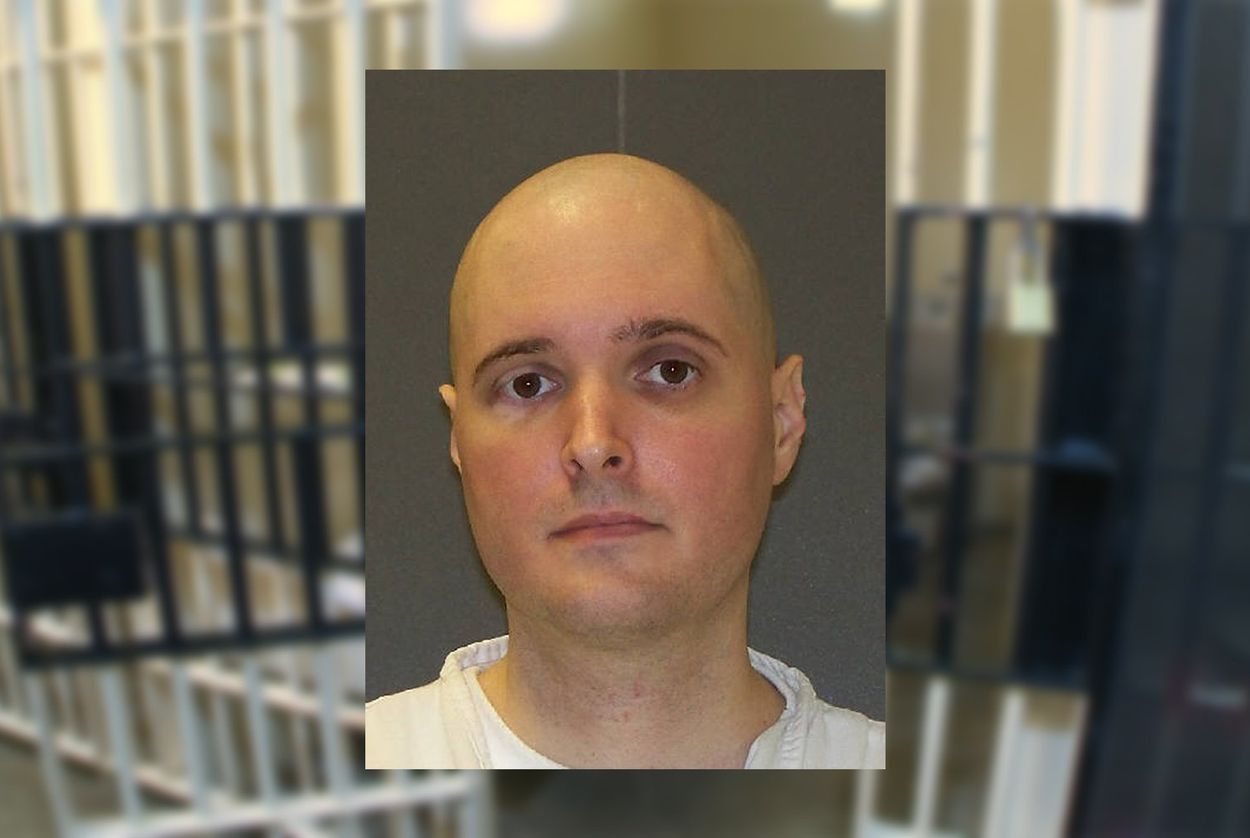
Nassar has pleaded guilty to sexual abuse involving young gymnasts he was treating. Several of the victims happen to be members of the U.S. Olympic gymnastics team.

Dozens of young women have been testifying at Nassar’s sentencing hearing. It apparently is too much for the disgraced doctor.

The judge who is presiding over this case, Rosemarie Aquilina, isn’t cutting him any slack.

The pedophile, who’s facing a potential life sentence in prison for what he did to those girls, needs to hear all the victims who want to speak.

If it’s too hard on him, well, the former doctor should not for a split second expect a scintilla of sympathy from the court — or anyone else.

As RealClearPolitics has reported:

“Now this is entertaining to me,” County Court Judge Rosemarie Aquilina reportedly said as she read the letter. The news outlet said the judge scoffed in particular at this line: “Aquilina said if I pass out she’ll have the EMTs revive me and prop me up in the witness box.”

“I suspect you have watched too much television,” Aquilina said. “It’s delusional. You need to talk about these issues with a therapist and that’s not me.”

High court to settle redistricting dilemma?

I don’t expect the current U.S. Supreme Court to decide that Texas’s legislative and congressional boundaries were drawn in a manner that discriminates against people of color.

Why not? Because its ideological composition would tilt toward those who dismiss such concerns.

The court will decide Abbott v. Perez sometime this year. It involves the manner in which several districts were drawn. Critics say that Hispanics were denied the right to choose a candidate of their own because of the way a San Antonio-area district was gerrymandered.

I’ll set aside the merits of the case that justices will hear. I want to concentrate briefly on the method the states use to draw these districts.

They are done by legislatures. The Texas Legislature is dominated by Republican super-majorities. The custom has been that the Legislature draws these boundaries to benefit the party in power.

Legislators don’t like being handed this task at the end of every census, which is taken at the beginning of each decade. The late state Sen. Teel Bivins of Amarillo once told me that redistricting provides “Republicans a chance to eat their young.” I’ve never quite understood Bivins’s logic. To my mind, the process allows the party in power to “eat the young” of the other party.

The 1991 Texas Legislature redrew the state’s congressional boundaries in a way that sought to shield Democrats, who controlled the Legislature at the time. The Legislature divided Amarillo into two congressional districts, peeling Republicans from the 13th Congressional District to protect then-U.S. Rep. Bill Sarpalius, a Democrat. Sarpalius was re-elected in 1992, but then lost in 1994 to Republican upstart Mac Thornberry.

https://highplainsblogger.com/2014/04/gerrymandering-not-always-a-bad-thing/

My own preference would be to hand this process over to a bipartisan commission appointed by the governor and both legislative chambers. I favor taking this process out of politicians’ hands. Their aim is to protect their own and stick it to the politicians — and to voters — from their other party.

Perhaps the Supreme Court’s decision might include a dissent that spells out potential remedies to what I consider to be a political travesty.

One can hope.

Here’s yet another flip-flop from POTUS

Donald J. Trump Sr. is the king of flip-flops.

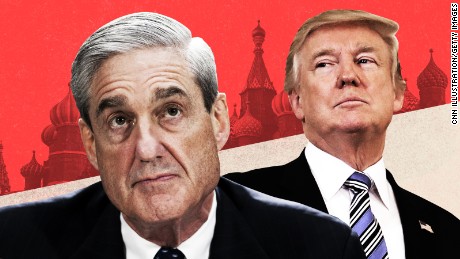
He once supported Hillary Clinton; now he’s her arch-enemy. He once said states should determine pot use legality; now he’s all for the feds’ ruling the matter. Trump once said he’d cooperate “100 percent” with special counsel Robert Mueller …

Now he’s saying some quite different.

The president who in June 2017 said he would submit to interviews over the “Russia thing” now believes there’s no need for such an interview and implies he won’t agree to a request from Mueller for a sit-down visit.

Mueller, though, does have subpoena power. He can order the president to talk to him. The president then can determine whether he wants to disobey a lawful order. If he does, then he becomes a lawbreaker — kind of like the time President Clinton lied to a federal grand jury about his relationship with Monica Lewinsky; that lie handed congressional Republicans the pretext they were looking for, so they impeached the president.

Trump kept repeating himself this week about there being “no collusion” with Russians seeking to influence the 2016 presidential election outcome. He said it’s been “proven” there’s no collusion.

Actually, Mr. President, nothing has been proven. There’s no proof that the Trump campaign did work in cahoots with the Russians, or it didn’t. That is what Mueller and his legal team are trying to ascertain.

So … talk to the special counsel, Mr. President. You’ve got nothing to hide? Say it directly to Robert Mueller.

Look inward, Mr. President, when talking about libel

Donald John “Stable Genius” Trump Sr. wants to change libel laws.

This president is angry about a book that paints his administration in a negative light. He calls libel laws a “sham” and a “disgrace.”

OK. How does one put this presidential nonsense into some perspective? I’ll try.

This president spent years defaming Barack H. Obama by insisting that the former president wasn’t constitutionally qualified to serve in the office to which he was elected twice. Did the former president sue him? No, although he had grounds.

Then, during the 2016 presidential campaign, the Republican candidate defamed Republican U.S. Sen. Ted Cruz’s father by implying that he might have had a hand in the assassination of President John F. Kennedy. Trump said Rafael Cruz had met with Lee Harvey Oswald prior to the assassination, suggesting some — dare I say it? — “collusion” between the elder Cruz and the man who actually killed the president. I believe there might be grounds for a lawsuit there, too.

For this president now to get his skivvies in a knot over some negative coverage — and to insist on changes in libel law — is on its face laughable.

It’s also disgusting and disgraceful.

Look inward, Mr. President … if you dare.

States’ rights … or not?

While he was running for president of the United States, Donald J. Trump said that states should be left to determine the legality of smoking pot.

Now that he is the president of the United States, Trump seems to be saying something else. Or, at least he’s allowing the attorney general to say it for him. AG Jeff Sessions has repealed relaxation of federal prosecution of marijuana laws. He has sicced federal prosecutors loose on those who are accused of smoking pot illegally.

Now comes a question: Which is it, do states’ right prevail on this matter or is this a matter where federal policy overrides them?

California has just legalized the sale of “recreational marijuana,” joining several other states and the District of Columbia in this initiative.

The AG is having none of it.

But to whom does the attorney general answer? Let’s see. It’s the president. And this president is on record saying that states should be left to set marijuana-use rules and laws.

Didn’t he say that? Didn’t he mean it? Wasn’t he speaking from his gut, or his heart, or did he make it up as a throwaway line?

The order Sessions rescinded, of course, came from President Barack H. Obama’s Department of Justice. DOJ said in 2013 it wouldn’t concern itself with marijuana court fights in states where its use is legal. Sessions is taking another attitude altogether.

However, is he speaking for the department he runs or for the president of the United States — or both! If so, has the president changed his mind?

No, Mr. POTUS, probe makes U.S. look ‘very good’

Donald Trump believes the ongoing investigation into the “Russia thing” makes the United States look “very bad.”

I believe I will take issue with the president of the United States on that one.

Trump told The “failing” New York Times that he didn’t “collude” with Russian agents seeking to influence the 2016 presidential election. He made the point at least 16 times during the conversation, the Times reports.

OK, then. Why is it bad? I am absolutely certain it’s “bad” for the president if special counsel Robert Mueller and his legal team deliver the goods on the Trump campaign.

As for the image this probe casts around the world, I believe the investigation makes the United States look “good” in the eyes of our allies and perhaps even our foes. Why? Because it demonstrates a level of political accountability, which is one of the hallmarks of our representative democracy.

We elect men and women to public office to represent our interests. We expect them to do right by us and for us. If there was collusion, we need to know all about it. How is that a bad thing? How does a Justice Department-appointed special counsel — who happens to be a former FBI director — perform a disservice to the nation if he does his job with skill and precision?

One more time, Mr. President: Let the probe continue. If it comes up empty, then let Robert Mueller draw that conclusion all by himself.

But … if the special counsel reels in The Big One, that’s a different matter altogether.

Potter, Randall courts may produce political drama

Who would have thought that judicial races would fire up so much interest? Not me, that’s for sure.

Potter and Randall counties are set to produce a lively set of election contests in 2018 for seats that usually go virtually unnoticed by the public at large.

Randall County’s Court at Law No. 2 seat is being vacated by Ronnie Walker. Three challengers are running to replace him in the Republican Party primary. These challengers emerged before Walker decided to retire at the end of his current term. Hmm. Interesting, yes?

Potter County’s Courts at Law No. 1 and 2 both are being vacated by incumbents. Corky Roberts is retiring from No. 1; Pam Sirmon is leaving No. 2 … more on that in a moment.

Now we also have 320th District Judge Don Emerson calling it a career. One of the people seeking to replace him in that Potter County court is the aforementioned Judge Sirmon.

I’ve long detested the idea of electing judges on partisan ballots. The state still allows it for the Supreme Court and the Court of Criminal Appeals — the top appellate courts in Texas. My dislike of partisan judicial elections extends to counties as well.

But that’s what we have. We elect these men and women based on their party affiliation, not necessarily entirely on their judicial competence, their temperament, their knowledge of the law or their judicial philosophy.

This coming year promises to produce a host of new faces replacing familiar faces that have administered justice — for better or worse — in Potter and Randall counties.

It should be a fascinating drama that unfolds.

Judicial nominee hits the road after embarrassing moment

Matthew Peterson got himself nominated for a lifetime job as a federal judge.

Then he had to go before the Senate Judiciary Committee. Sen. John Kennedy, R-La., had the temerity to ask Peterson a series of questions.

Had he ever tried a criminal case? A civil case? Had he ever argued before an appellate court? Umm. No on all three questions.

The exchange went viral, thanks to Sen. Sheldon Whitehouse, D-R.I., sending out via Twitter. See the video here.

Peterson withdrew his nomination today. He told Donald Trump he didn’t want to be a “distraction.”

I baffled on where to begin with this one.

I’m glad Peterson pulled out. He doesn’t belong on the U.S. Court of Appeals in the District of Columbia. The young man needs some experience, um, trying cases in an actual courtroom. 

The most stunning aspect of this nomination is how in the world the president of the United States could put someone so wholly unqualified up for examination by the Senate judiciary panel. Did the president’s “fine-tuned machine” get all gummed up? It clearly failed to vet this fellow.

Good grief, man! I would think one of the questions one could ask a judicial nominee would be: Have you ever tried a case — in a courtroom? In front of a judge and a jury?

If the answer is “no,” then you move on to the next name on your list. Wouldn’t that work?

FBI doesn’t deserve bashing from POTUS

Maybe my memory is failing me. Or maybe it isn’t.

I’m having trouble remembering the last president of the United States to disparage the nation’s foremost law enforcement agency, the FBI.

Therein is where Donald J. Trump is doing things so very differently from his predecessors. He’s calling the FBI a lot of names. He alleges that morale is in the crapper; he says its leadership is in shambles; he is saying the FBI needs to be rebuilt.

Oh, and he’s calling the FBI’s role in the examination of Russian interference in our 2016 presidential election a “sham” and a “Democratic hoax.”

I’m trying to put myself in the shoes of an FBI agent. How would I like working for a government being run by a head of state and government who is so distrustful of my agency?

Trump keeps savaging FBI

If the president is going to contend that morale is so lousy, perhaps he is playing a major role in flushing it down a sewer hole.

He’s also been disparaging the attorney general, whose agency — the Justice Department — controls the FBI. Trump dislikes that AG Jeff Sessions recused himself from the Russia-election meddling probe, as he should have done. The president’s reaction has been to send signals that Sessions’s time as AG might be dwindling.

Of course, there’s also the issue of Trump questioning the intelligence community’s assessment that Russia did meddle in the election and that Vladimir Putin issued the order to do it. Putin told the president he didn’t meddle — and that denial from the former head of the Soviet spy agency is good enough for Donald Trump.

Strange. Very strange.

How about ‘extreme vetting’ of judicial nominees?

Donald John Trump wants to employ “extreme vetting” of immigrants seeking entry into the United States of America.

Fine, but how about vetting nominees to the federal bench, Mr. President? I mean, at least a cursory vetting might enable the president to nominate men and women who know certain basics about the law.

Matthew Peterson sat before the U.S. Senate Judiciary Committee this week and managed to utterly fluff simple questions about how he would apply certain legal tenets. He has been nominated to a spot on the U.S. Circuit Court in the District of Columbia.

He, um, didn’t do well at his hearing.

Check it out here.

Peterson has never tried a case. Senators asked him about his criminal law trial experience. None. His civil trial experience. None.

The video of Peterson stumbling and bumbling his way through the excruciating committee interview has gone viral, which is a rarity in itself, given that judicial nominee hearings usually aren’t the stuff of social media tittering.

The president has boasted of his administration running like a “fine-tuned machine.” Mr. President, a fine-tuned machine wouldn’t present judicial candidates who cannot answer basic questions from the men and women who must approve these nominations.