Category Archives: legal news

Release the findings sooner, not later

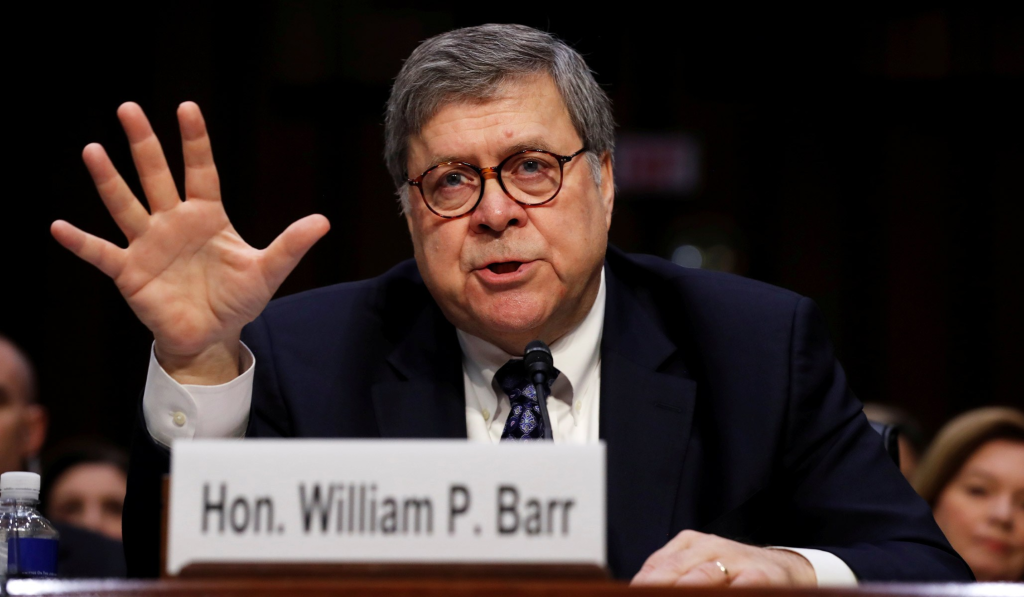
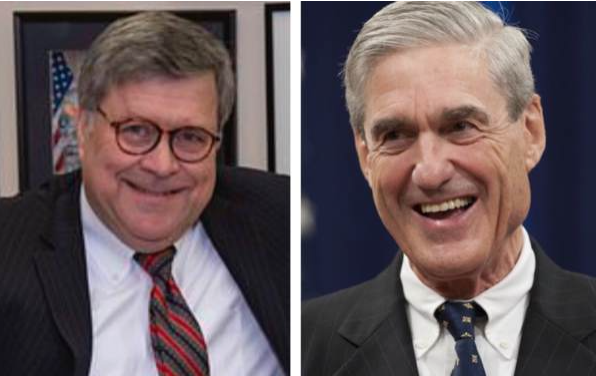
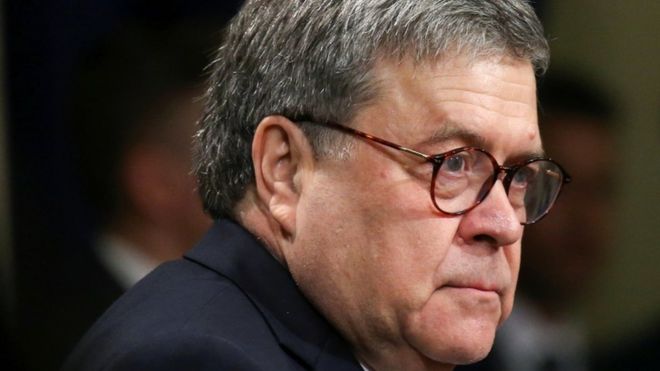
The reports out of Washington now tell us that Attorney General William Barr is going to release special counsel Robert Mueller’s findings on collusion in “weeks, not months.”

That is a good thing. Although I would prefer the reports would have said “days, not weeks or months.”

I won’t join the chorus that sings the tune that Barr might be running interference for the guy who appointed him, Donald Trump. I still believe the attorney general is enough of a stand-up guy to do the right thing.

Mueller’s 22-month investigation into whether the Trump campaign colluded with Russians ended with a determination that the campaign did not collude. It has sparked shouts of joy among Republicans and groans of dismay among Democrats.

We don’t yet know for ourselves what Mueller has determined. All we’ve seen and heard so far is Barr’s interpretation of what Mueller found. I want to see the real thing, as much of it as possible, with own eyes. I want to digest those findings for myself.

I want AG Barr to disprove fears of many critics that he’s a Trump toadie who is doing the president’s bidding. He did take an oath to defend the Constitution and did not swear any particular loyalty to the president of the United States.

As for any possible GOP resistance to releasing the findings to the public, I only can ask: If those findings shore up what we’ve been told already, that Donald Trump is in the clear, isn’t it in everyone’s best interest to see those findings as quickly as possible?

No collusion? OK, but let’s look a bit closer at obstruction

I get that Donald Trump’s presidential campaign did not collude — in the eyes of the special counsel — with Russians who attacked our electoral system in 2016.

The president is right to proclaim “complete exoneration” — on that point! I accept special counsel Robert Mueller’s findings.

Is it too much to ask, nonetheless, for a more thorough look at the issue of whether Trump or his team obstructed justice? I think it’s a fair request.

Congressional Democrats are clamoring for more information on the obstruction matter. Attorney General William Barr’s summary of Mueller’s findings takes note that Mueller did not “exonerate” the president on the obstruction of justice issue, even though Trump said he did. Well, Trump is known to, um, bend the truth a bit . . . you know?

Mueller reportedly found evidence on both sides of the fence. He learned there was evidence that the president did obstruct justice, but that it didn’t rise to the level of criminality. OK, let’s see what he found.

The attorney general hasn’t yet made that call. It is believed he’ll take his time deciding whether to release that portion of Mueller’s findings to Congress and to the public.

I am one of millions of Americans who wants to know what Mueller learned and on what basis he determined that he could not prosecute Donald Trump for obstructing the search for the truth regarding the Russian attack on our electoral system.

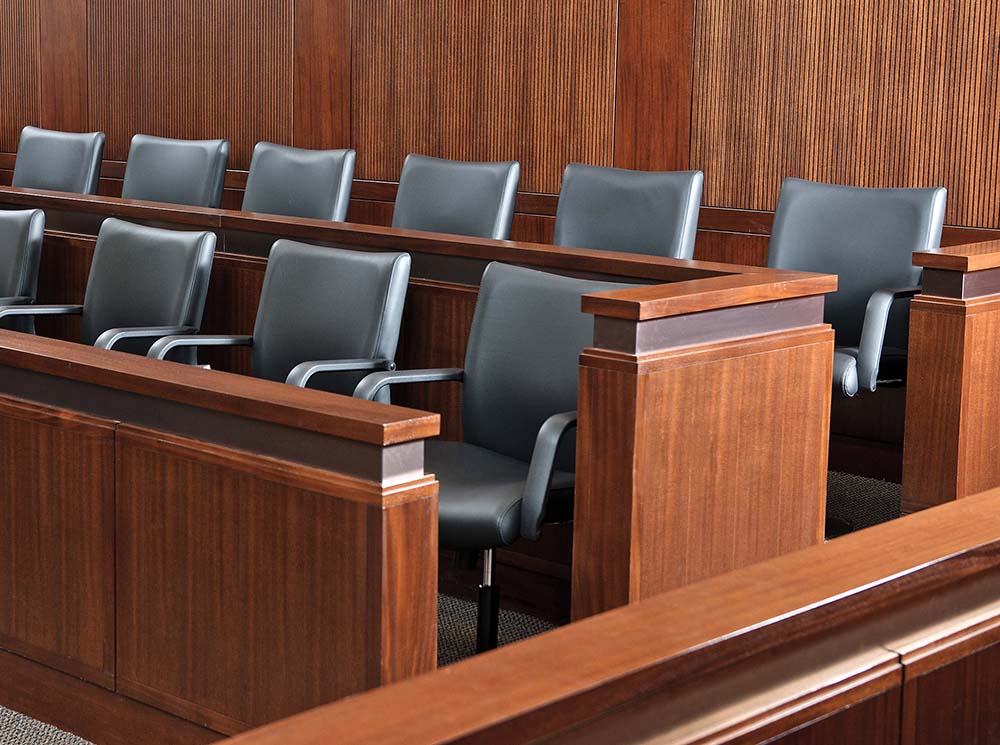
Yes, I also want to be called for jury duty

A member of my family is a happy young woman. Why? She’s been called for jury duty in Oregon.

She has been summoned to appear for jury duty in a Circuit Court, which is the highest level of trial court in Oregon. She is thrilled. I want to join her in her excitement at being called to perform a vital act of citizenship.

I long have bemoaned my own lack of jury-duty experience. Of course, I am much older than my great-niece.

I was called a time or two when we lived in Oregon. I never served.

Then we moved to Texas in 1984.

I have received summons while living first in Jefferson County and then in Randall County in Texas. But only one time have I been ordered to report. I did so around 1995. I went to the Randall County Courthouse, sat around for most of one morning and then we were informed that the litigants settled; we were excused.

Every other time has resulted in potential jurors being excused without even having to report to the courthouse.

My great-niece asked whether she is “crazy” to want to serve on a jury. No, honey, you are not crazy. You are a conscientious citizen of a great country.

I have been told that my job as a journalist likely disqualified me from jury duty had I been selected as part of a pool of potential jurors. Indeed, my wife once was chosen for a Jefferson County jury pool, but then was disqualified when one of the lawyers recognized her last name. He came back to her and said an editorial that I had written for the local newspaper suggested a bias on her part. Her response? “He wrote it. Not me.”

I’m retired these days. I am living in a county with a significantly larger population than any of our previous counties of residence. I figure my chances of getting a summons are reduced.

Rats! I would love to serve on a jury. Just as my great-niece asked: Am I crazy?

Glad that deputy AG is staying put for now

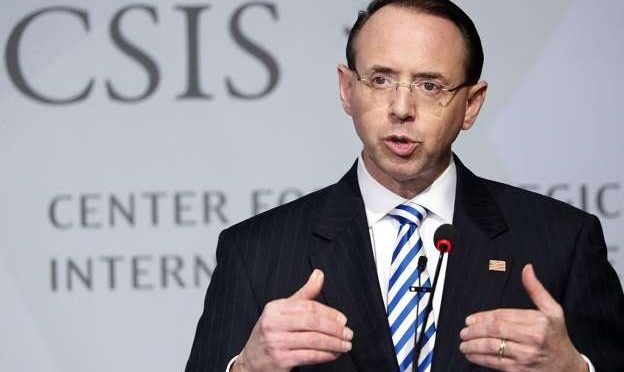
I am glad to hear the news that Deputy U.S. Attorney General Rod Rosenstein is staying at his post for a while longer.

I’ve heard the term “heat shield” applied to Rosenstein’s presence near the top of the Justice Department chain of command. It’s an apt term.

Rosenstein appointed Robert Mueller to the post of special counsel to look into allegations of collusion between the Donald Trump presidential campaign and Russian operatives who interfered with our election in 2016.

Then-AG Jeff Sessions recused himself from the Russia matter. Why? Because he worked on the Trump campaign and he knew he could not investigate himself. He followed DOJ rules and regs and infuriated Trump in the process. Trump then fired Sessions.

William Barr is the new attorney general. Mueller is finishing his investigation.

Rosenstein needs to stay on his watch to help ensure that Mueller is allowed to finish his task under his own power.

I trust AG Barr to allow Mueller to do his work. However, the special counsel — who has impeccable credentials — cannot have too many eyes keeping tabs to ensure it’s all done correctly, ethically and transparently.

Time of My Life, Part 28: Probing a judge’s temperament

I had been on the job for about a year in 1978 when I got an assignment that got my juices flowing. I worked as a general assignment reporter for the Oregon City (Ore.) Enterprise-Courier.

Then my editor handed me a task. He had heard reports about a Clackamas County district judge that he thought needed attention.

The judge, Robert Mulvey, had been accused by lawyers who appeared in his court of lacking proper “judicial temperament,” which means that he was overly harsh on lawyers, witnesses, jurors and anyone he happened to encounter in the courthouse.

This would be my first investigative assignment for the newspaper. I began talking to defense counsel, prosecutors, courthouse staffers, sheriff’s deputies, fellow elected officials. They all said essentially the same thing: Judge Mulvey was a tough customer.

Indeed, I later found out that lawyers had filed complaints with the Oregon judicial conduct commission, which was empowered to hand down assorted forms of discipline or punishment to judges or lawyers about whom it received complaints.

I was able to talk to some of the legal eagles who had filed complaints against Mulvey.

I compiled a lot of evidence that the concerns that came across my editor’s desk had merit.

Then came the tough part: I had to speak to Judge Mulvey himself to get his side of the story. Fairness required me to do so. I did.

It was fascinating to me then — and it is now as I look back more than 40 years later — that Mulvey was so willing to talk about the accusations that his legal peers had leveled against him. He was a complete gentleman. He answered my questions directly. I don’t recall him denying any of the allegations that others had provided. He did explain himself fully.

I put the story together. It was a highly critical account of the way the judge adjudicated legal matters in the courtroom. It provided a stern look at his conduct and how poorly he treated those who stood and sat before him.

Judge Mulvey took it like a man.

Then came the clincher. Not long after the story saw print, Robert Mulvey died. Then the editor who assigned me to write the temperament story said I needed to call the judge’s wife to get a comment or two about her newly departed husband for a “news obituary” we published about the judge’s death.

My gut churned. I was nervous beyond belief. I called her. Told her my name and why I wanted to talk to her.

Mrs. Mulvey could not possibly have been nicer or more generous with her time.

It was, all in all, an amazing conclusion to an equally amazing task I had performed.

No need to mess with SCOTUS numbers

I’ll be clear right up front.

Leave the U.S. Supreme Court numerical composition alone!

Some of the Democratic candidates for president of the United States are declaring their discomfort with the fact that the SCOTUS comprises nine justices. They express openness to increasing the number of justices sitting on the nation’s highest court.

Why? Because they dislike the assault on the court mounted by Senate Republicans, notably the refusal by the GOP majority in the Senate to give a Barack Obama nominee a hearing after the death of conservative Justice Antonin Scalia in 2016.

Let’s hold on a minute. Catch our breath. Take a moment or two to think about this.

The SCOTUS has operated for better or worse with nine justices since the founding of the Republic in 1789. The Constitution empowers the president to nominate individuals to serve on the court; it also empowers the Senate to confirm those nominees.

The court as well as the presidency are subject to the ebb and flow of the political tides. Am I happy with the way the Senate stiffed President Obama in 2016 when he nominated Merrick Garland to succeed Justice Scalia? No. I am not! The Senate GOP leadership exercised its political power brazenly and recklessly by denying the president a chance to nominate a highly qualified jurist to sit on the Supreme Court.

But . . . that’s what the Constitution allows!

We all understand that “elections have consequences.” We’re going to conduct a presidential election in 2020. Voters have the chance in November of next year to fundamentally shift the balance of power at the very top of the political chain of command.

I am going to argue that’s the way you bring change to the Supreme Court, not by monkeying around with the number of justices who sit on that bench.

The court and the presidency have survived for as long as there has been a United States of America. So, too, has the nation.

Call me a judicial stick-in-the-mud if you wish. There is no need to overreact.

Re-read your oath, Your Honor

A Texas state district judge needs to take another look at the oath he took when he became a judge way down yonder in Comal County.

On Jan. 12, 2018, Judge Jack Robison ordered a trial jury that had voted to convict a woman of sex trafficking and the sale and purchae of a child to reconsider its verdict. He said God had told him the woman was innocent and that her conviction would be a “miscarriage of justice.”

The Texas Commission on Judicial Conduct has issued a public warning to the judge. A public punishment is deemed more severe than a private one, as it puts the sanction against a jurist on the public record.

The jury, by the way, did not acquit the woman; it still found her guilty of the crime and sentenced her to 25 years in prison. An appeals court, though, declared a mistrial stemming from the judge’s outburst.

Why re-read the oath? Because the only time the judge even says the word “God” is at the very end when he or she says “so help me God.” Judges take an oath to uphold state and federal law and to be faithful not to God but to the  U.S. Constitution.

Judge Robison blamed his outburst a year ago on a memory lapse related to some medication he was taking. And to his credit, he did report himself to the judicial conduct commission.

Still, it would be instructive for this judge — as well as all other jurists — to understand fully what their solemn oath entails. They pledge to be faithful to laws written by fellow fallible human beings.

Whatever devotion these judges feel toward the Almighty needs to be kept private.

Time of My Life, Part 24: Some fights are worth having

My career in print journalism, while providing me with unforgettable experiences and much joy, also provided some angst, heartburn and at times a touch of dread.

Now and again I would encounter situations that compelled me to look more deeply into the affairs of public officials I respected. Such was the case about 30 years ago while I worked as editorial page editor for the Beaumont Enterprise in the Golden Triangle region of Texas.

I went to work one morning and while reading that day’s edition I came across a story about a Jefferson County Commissioners Court meeting. Near the end of the story, we reported that “In other business,” commissioners approved a contract involving the opening of a café in the courthouse that would be run by a state district judge, Larry Gist.

It caught my eye. I took it up with my boss, the executive editor, and inquired about looking further into that matter. It didn’t seem appropriate for a state official to be operating a private business inside a county courthouse.

I’ll give you the Cliff’s Notes version of what I learned.

Judge Gist had prepared a bid to operate the courthouse café with a friend and business partner of his. He communicated with the county auditor, a young man named Jerry Ware, about his interest in running the café. He used what he told me later was “facsimile” county stationery, meaning he paid for the letterhead that would go atop the documents he was submitting for the auditor to consider.

But he signed the documents, “Larry Gist, judge.”

Here is where it got real sticky. Ware was appointed to his office as auditor by the district judges. So he considered a bid by one of his employers, one of the individuals to whom he answered. State law, interestingly, does not require a county to accept the lowest bid on projects such as this; it gives the county discretion to determine the “best bid” offered.

So, Ware — who works for Larry Gist (among other judges) — selected Gist’s bid to operate the café on the ground floor of the Jefferson County Courthouse.

That seemed strange. I thought it smacked of conflict of interest. I talked with Judge Gist, asked him about the stationery and quizzed him about whether he put any undue pressure on the county auditor to look favorably on his bid. I talked to Jerry Ware, and asked him whether he might have been influenced by the facsimile letterhead and the signature that contained the word “judge” alongside the name of the individual who was bidding on the courthouse business.

We published an editorial that questioned whether the county was adhering to all the proper ethical standards by allowing the judge to bid on a project to be housed inside a courthouse where he worked and whether the auditor was applying objective standards to all the bidders who had sought the contract.

Quite obviously, Judge Gist and Jerry Ware were unhappy with the newspaper and with me. Ware hated my guts for the rest of his life. He died of cancer not too many years later.

As for Gist, I learned through other channels that he sought to sue me and the paper for libel. The only sticking point for Gist in his pursuit of a legal challenge was that nothing we published was untrue. As you might know, truth is the first and last line of defense in any libel lawsuit.

Judge Gist and I endured a frosty relationship for the rest of my time on the Gulf Coast. I am happy to say, though, that it thawed over time. I had occasion to talk to Judge Gist on another matter once I made the move from Beaumont to the Texas Panhandle.

I don’t know the status of the courthouse café. That was then. The here and now allows me to look back on that episode with just a touch of relief that it never got past the threat of a lawsuit.

Sen. Paxton exhibits a form of tone deafness

Texas state Sen. Angela Paxton — who was just elected in 2018 — is new in her job as a legislator. The McKinney Republican, though, should have thought better than to propose a bill for consideration that involves her husband, the state attorney general.

Why is that? Attorney General Ken Paxton is awaiting trial on a securities fraud allegation. Sen. Paxton, though, has proposed Senate Bill 860, which broadens the AG’s regulatory power over those who market financial services. You see, AG Paxton is accused of failing to report his own involvement as a securities adviser to potential clients.

Therefore, I intend to accuse Sen. Paxton of being tone deaf.

She is one of 19 Republicans serving in the Texas Senate. I would doubt seriously any of the dozen Democrats who serve with her would buy into what she wants to do, so we’ll look briefly at her GOP colleagues.

It seems odd that the spouse of a statewide elected official who is set to stand trial for securities fraud would propose legislation that affects the official who’s about to become a defendant in a court trial.

They talk about whether legislation passes the “smell test.” This one doesn’t, at least not my olfactory glands.

Couldn’t the rookie Texas senator find a GOP colleague among the 18 of them who serve with her to carry this legislation forward?

AG might get new power

Don’t misunderstand me. I don’t necessarily endorse SB 860. It expands the power of the attorney general and seems to remove a level of transparency that should be required when it involves securities and financial regulation.

It’s just that Sen. Paxton carrying a bill that has a direct impact her husband, who’s facing potential prison time if he’s convicted of securities fraud, is a stinker.

Ethics watchdogs seem to believe it stinks, too. I’m on their side.

Mueller probe coming to an end? Let the public see its results

U.S. Attorney General William Barr reportedly is set to announce the end of special counsel Robert Mueller’s investigation into alleged “collusion” between Donald Trump’s presidential campaign and Russian operatives who attacked our 2016 electoral system.

He might do so next week, according to CNN.

Well now. I hope the reports from CNN are correct. I want this probe to end. I am weary of it. And I haven’t lifted a finger to aid in it, although I’ve lifted plenty of fingers commenting on it.

Transparency matters a lot

The future of Donald Trump’s tenure as president hangs in the balance. If Robert Mueller has come up empty, we’ve got Trump for at least until January 2021. If, however, he has something else — such as the goods on the president — then all bets are off.

Barr reportedly has said he intends to be a transparent as the law allows. He supposedly is getting set to prepare a final report for Congress.

Here’s my fondest wish: Let the public see as much as possible. I understand the need to protect national security secrets. That is all we should protect.

I want to reiterate that this is a publicly funded exercise. Mueller has spent a lot of public money poring through mountains of evidence into Trump’s conduct as a candidate for president and as president of the United States. That’s our money. Yours and mine.

Thus, the contents of this report belong to us.

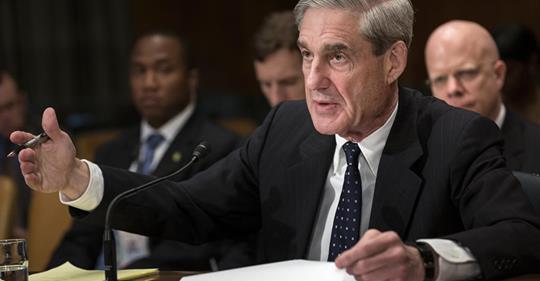
I am prepared fully to accept whatever Mueller concludes. Yes, even if it exonerates the president of any wrongdoing. I trust Mueller — a former FBI director, a former Marine, a Vietnam War combat veteran — to do a thorough job.

However, I do not want the results hidden in a vault somewhere. It’s ours to review and to determine what — if anything — we need to do about the president of the United States.